

Most Cold Outreach Messages Fail. Here's the Full System That Doesn't.
The average cold outreach message gets a 3.43% reply rate. Nearly 20% land in spam. That's not a copywriting problem - it's a systems problem.
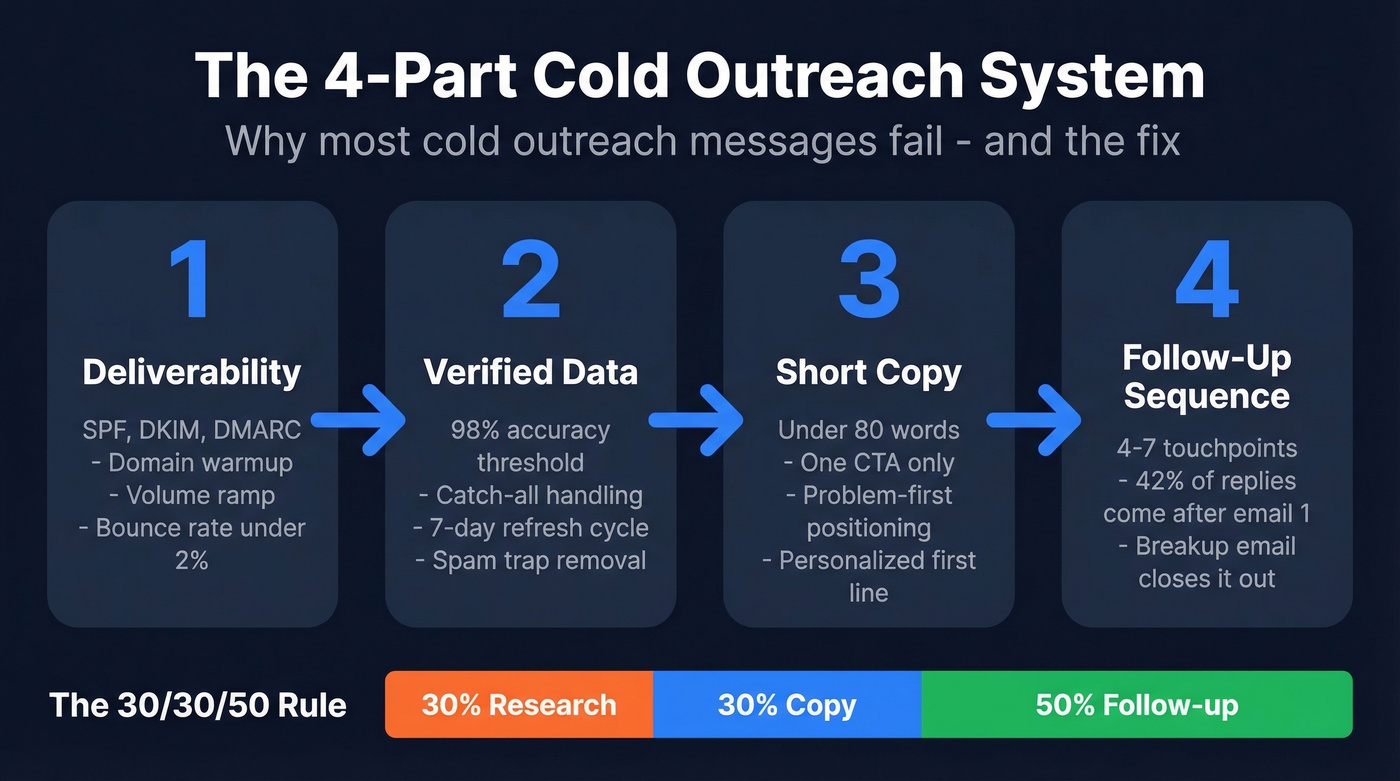
Every effective cold email depends on four parts, in order: deliverability infrastructure, verified contact data, short personalized messages, and a follow-up sequence. Think of it as the 30/30/50 rule - 30% research, 30% copy, 50% follow-up. This guide covers all four with 2026 benchmarks and templates you can send today.
2026 Cold Outreach Benchmarks
| Tier | Reply Rate |
|---|---|
| Average | 3.43% |
| Top quartile | 5.5%+ |
| Top 10% | 10.7%+ |
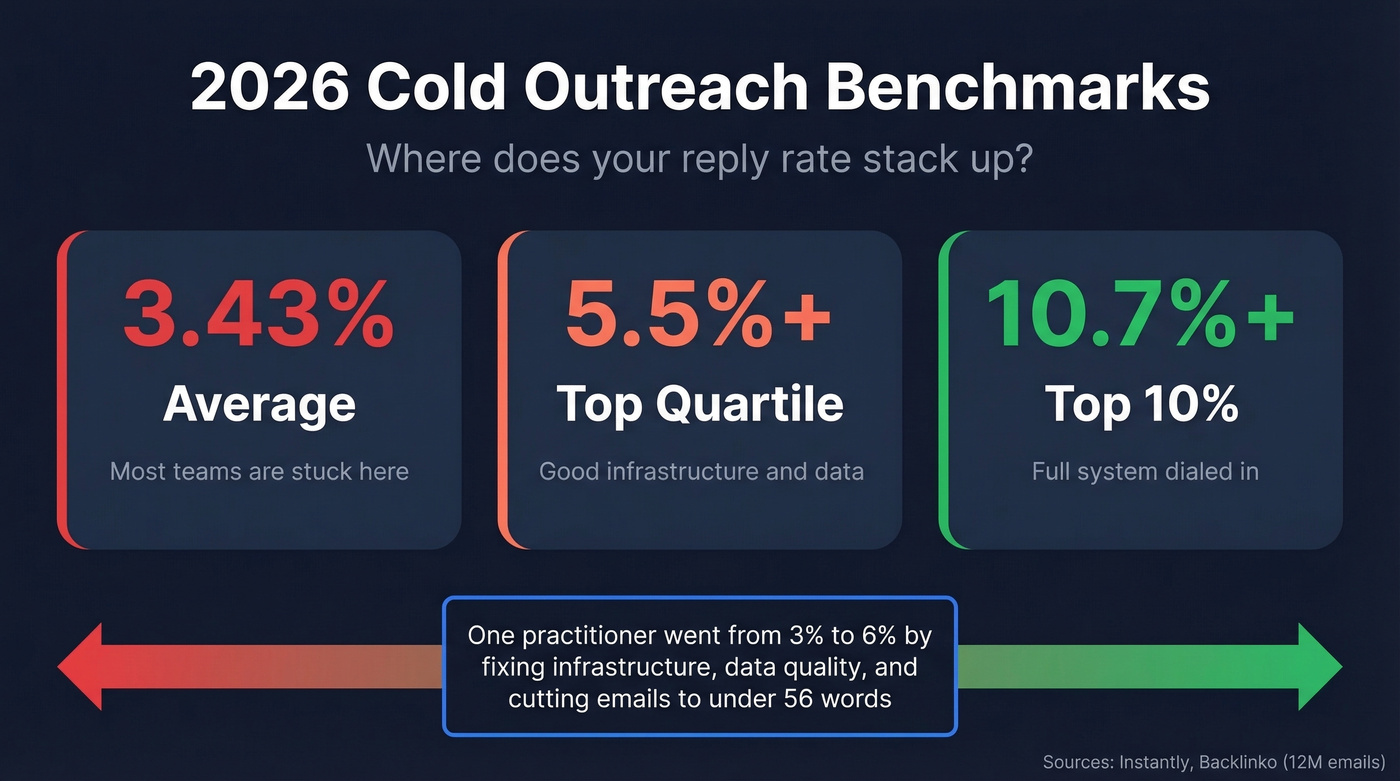
Across 12 million outreach emails, Backlinko found only 8.5% received any response. A practitioner on r/Entrepreneur moved from 3% to 6% reply rates by rebuilding infrastructure, list quality, and message brevity - cutting emails from 141 words to under 56. Total stack cost: ~$420/month generating 16 qualified leads from email alone.
That's the gap most people miss. The system around the message matters more than the message itself.
The Infrastructure Checklist
Your cold outreach message doesn't matter if it never reaches the inbox.
- SPF, DKIM, and DMARC configured on every sending domain
- Domain warmup for 2-4 weeks before production sends
- Ramp volume slowly: 5-10 emails/day, increasing over 4-6 weeks
- Bounce rate under 2%. Spam complaints under 0.3%.
- One-click unsubscribe header (RFC 8058) - required for bulk senders since May 2025
- Inbox placement at 80%+ on seed tests before you scale
That same Reddit practitioner moved from 3 to 7 sending domains, capping each at 26 emails/day. That single infrastructure change was the foundation of their reply rate doubling.
Fix Your Data First
ESPs like Mailchimp and HubSpot explicitly prohibit cold email. You need a dedicated outreach tool. But even the right tool can't save bad data - one practitioner cut their bounce rate from 11% to under 2%, and replies doubled after tightening list quality alone. Every bounced email damages your sender reputation, and the damage compounds across your entire domain.
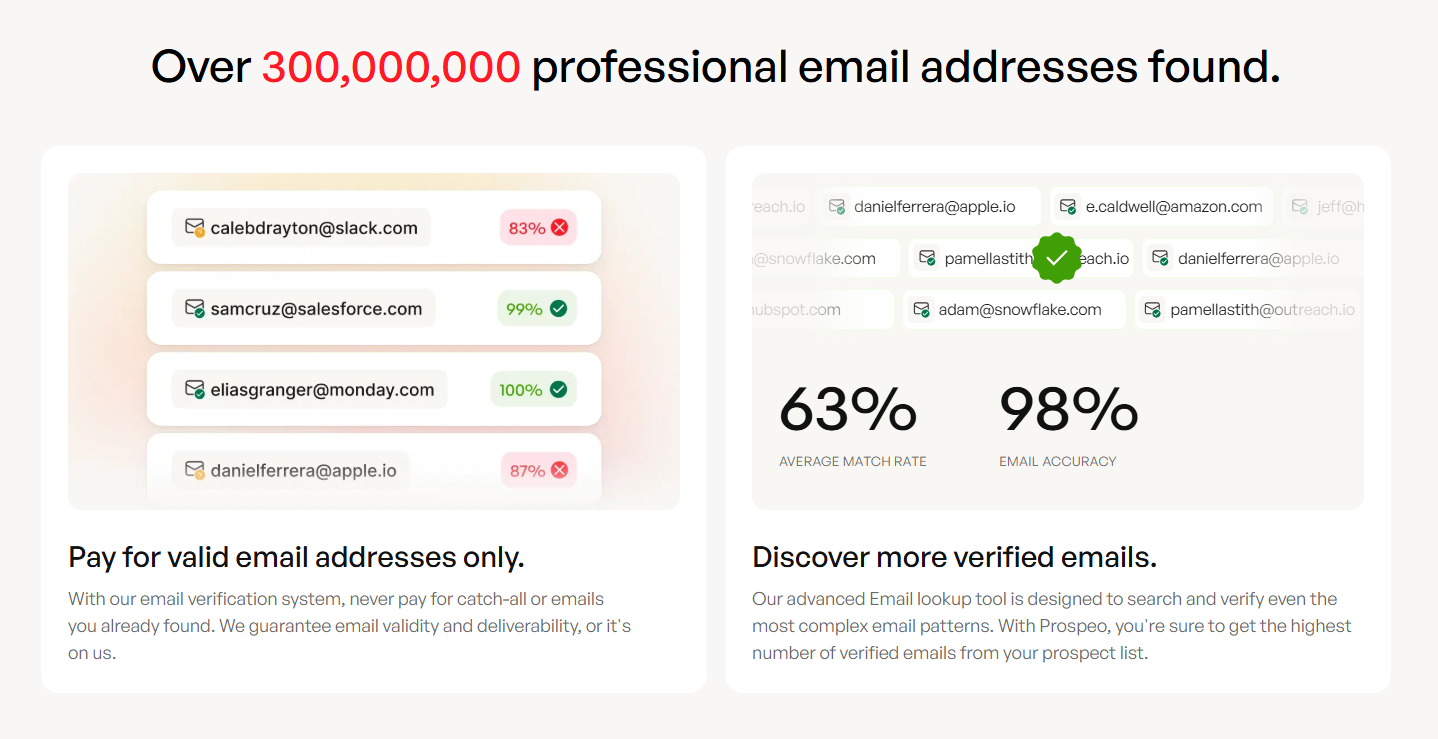
We've seen teams cut bounce rates from double digits to under 3% within a week of switching to verified data. Prospeo's email finder runs a 5-step verification process with catch-all handling, spam-trap removal, and honeypot filtering - delivering 98% email accuracy on a 7-day refresh cycle. The free tier gives you 75 verified emails per month, enough to test your first campaign without risking your domain.
Anatomy of an Effective Cold Email
One practitioner cut emails from 141 words to under 56 and saw replies double. Keep it under 80 words. One CTA. Problem-first positioning. Brevity forces clarity.
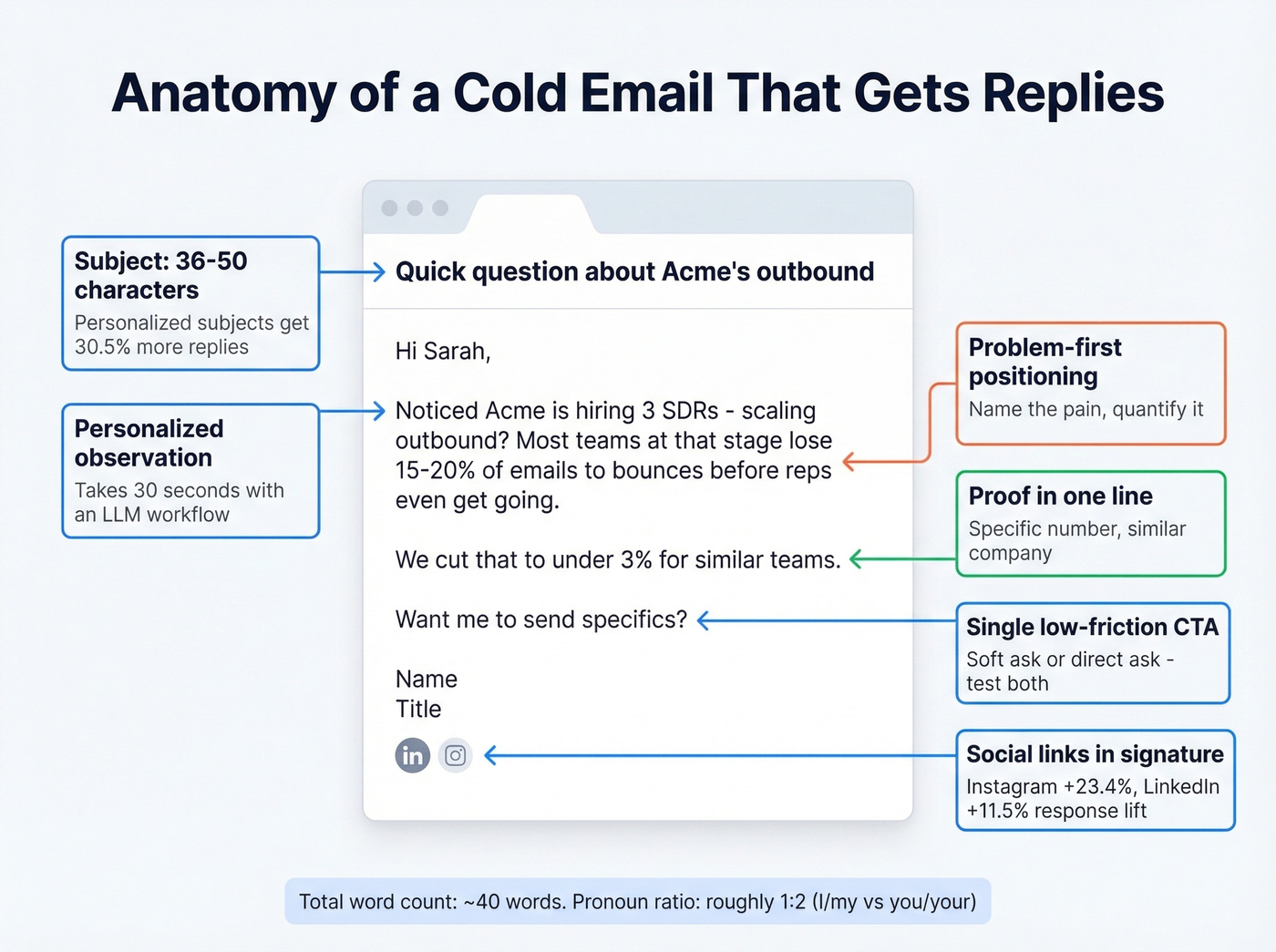
Subject lines between 36-50 characters hit the sweet spot. Personalized subject lines lift response rates by 30.5%, and personalized body copy lifts them by 32.7%. One practitioner reported "Quick question" as a subject line pulling 39% open rates - simple beats clever every time. For more ideas, pull from proven subject lines and iterate.
Here's a detail no competitor mentions: adding social links to your email signature correlates with higher response rates - Instagram (+23.4%), LinkedIn (+11.5%). It signals you're a real person, not a bot blasting a list.
Watch your pronoun ratio. Aim for roughly 1:2 between I/my and you/your. Here's an annotated example:
Subject: Quick question about {{company}}'s outbound
Hi {{first_name}},
Noticed {{company}} is hiring 3 SDRs - scaling outbound? (personalized observation)
Most teams at that stage lose 15-20% of emails to bounces before reps even get going. (problem-first) We cut that to under 3% for similar teams. (proof)
Want me to send specifics? (single, low-friction CTA)
That's about 40 words. No fluff, no "I hope this email finds you well." Test both a soft CTA ("Want me to send specifics?") and a direct ask ("Worth a 10-min call?") to see what your audience prefers.

Bad data kills cold outreach before your message even lands. Prospeo's 5-step verification delivers 98% email accuracy on a 7-day refresh cycle - so every touchpoint in your follow-up sequence hits a real inbox, not a bounce.
Stop burning your domain reputation on unverified contacts.
Templates That Actually Convert
Value-first intro - Lead with what you can do for them, not who you are.
Hi {{first_name}}, teams like {{company}} typically waste 4-6 hours/week on manual list building. We automated that for {{similar_company}} and freed up 20 hours/month. Quick call to see if it fits?
Mutual connection - Use shared context to earn attention.
Hi {{first_name}}, {{mutual_contact}} mentioned you're rebuilding your outbound stack. We helped them cut bounce rates from 30% to under 4%. Happy to share what worked - 10 minutes?
Pain-point (PAS framework) - Problem, agitate, solve. This works because it mirrors how your prospect already thinks about the issue.
Before: "Hi, we're a data company and we help with outbound. Want to chat?"
After: Hi {{first_name}}, most outbound teams at {{company}}'s stage hit a wall around 50 emails/day - deliverability tanks, replies dry up. We've helped 3 similar teams break through that ceiling. Worth exploring?
The "after" version names the specific pain, quantifies it, and offers proof in ~35 words. Use each template as a starting point, then customize the pain point and proof for your ICP.
Breakup email - In our experience, the breakup email pulls more replies than any other follow-up in the sequence.
Hi {{first_name}}, I've reached out a few times and don't want to be a pest. If outbound data quality isn't a priority right now, no worries - I'll close this out. If it is, just reply "yes" and I'll send over specifics.
The Follow-Up Sequence
58% of replies come from the first email. Skip follow-ups and you forfeit 42% of potential replies. One additional follow-up alone boosts replies by 65.8%.
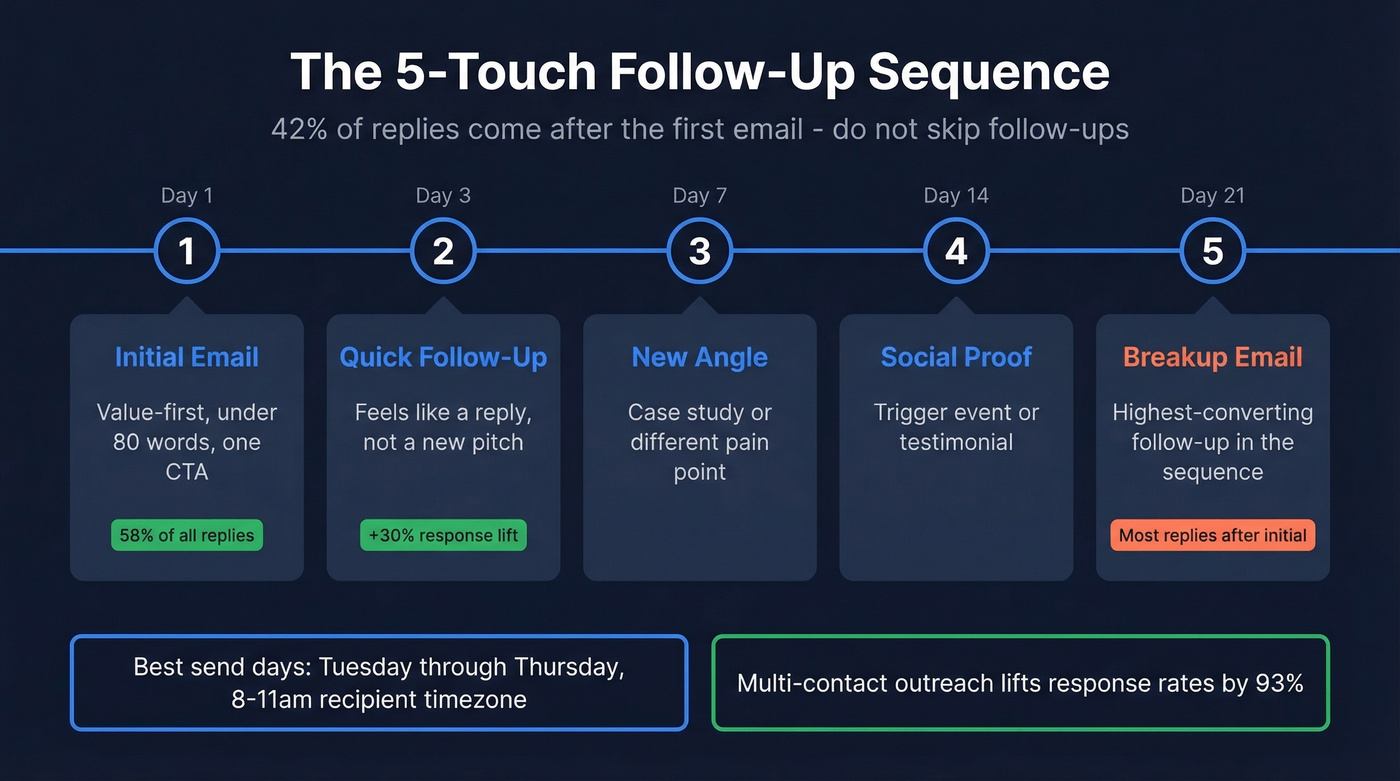
The sweet spot is 4-7 touchpoints:
- Day 1 - Initial email (value-first, under 80 words)
- Day 3 - Short follow-up that "feels like a reply" (lifts response ~30%)
- Day 7 - New angle or case study
- Day 14 - Social proof or trigger event
- Day 21 - Breakup email
Send Tuesday through Thursday, 8-11am in the recipient's timezone. Reach multiple contacts at the same org - multi-contact outreach lifts response rates by 93%, though returns diminish past 5 contacts.
Verify every contact before sending. One bad address in a 5-touch sequence hits your sender reputation five times, not once. This is why verifying contacts on a short refresh cycle matters far more in multi-touch sequences than single sends. If you want more swipeable copy, use these cold email follow-up templates.
Personalization at Scale
Let's be honest: if your deal sizes sit below five figures, you don't need hand-crafted emails. You need a repeatable personalization workflow that takes 30 seconds per prospect, not 10 minutes.
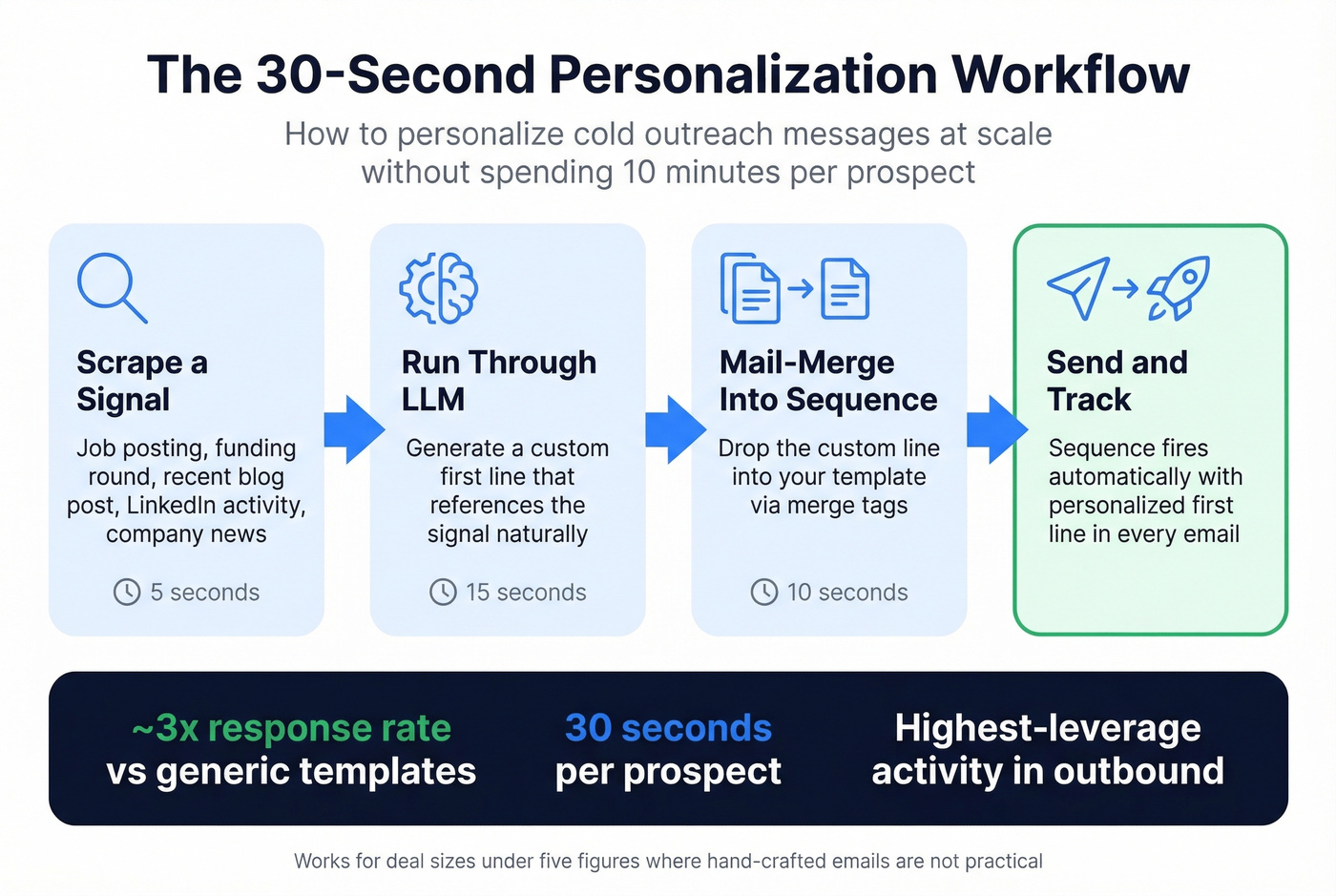
The workflow looks like this. Scrape a prospect signal - a recent post, company news, a job listing. Run it through an LLM to generate a custom first line. Mail-merge it into your sequence. Practitioners on r/coldemail report this approach delivering roughly 3x the response rate of generic templates, and it's the highest-leverage activity in outbound right now. It's what separates messages that book meetings from the ones that get archived without a second thought. For a deeper playbook, see personalized outreach.
Go Multichannel
A cold email alone leaves money on the table. An Evaboot campaign targeting 2,000+ prospects with a simple sequence - 2 emails, then a connection request, then 2 DMs - hit 55.5% acceptance and 46% reply rates. Users on r/coldemail consistently report multichannel outreach converting 2-3x better than single-channel.
Most multichannel outreach tools run $59-99/month (Lemlist, Expandi, and similar platforms). Operational guardrails: cap connection requests at 20-30/day, don't hit both channels on the same day, and warm up email first before adding social touches.
When Cold Outreach Doesn't Work
Look - cold outreach isn't magic. One founder on r/SaaS sent 2,000+ cold emails, got 6 replies, and closed zero customers. They pivoted to niche communities and SEO content, eventually reaching $4.7K MRR with ~50 signups/month.
If you're selling a product nobody's searching for, or your ICP hangs out in Slack communities rather than checking email, skip cold outreach entirely and go where your buyers already are. Cold outreach works when the system is right. Lazy execution with bought lists and generic templates doesn't just fail - it actively damages your domain for future campaigns.
Multi-touch sequences lift reply rates by 93%, but only if every contact is verified. Prospeo gives you 300M+ profiles with 30+ filters - buyer intent, job changes, technographics - so you can personalize at scale without the manual grind.
Build your entire outreach list in minutes, not hours.
FAQ
Is sending a cold outreach message legal?
Yes, under CAN-SPAM and GDPR, provided you include an unsubscribe option, identify yourself, and target relevant recipients. GDPR requires a legitimate interest basis - meaning a defensible reason the recipient would benefit. Violations can carry fines up to EUR 20M, so get compliant before you send.
How many cold emails should I send per day?
Start at 5-10 on new domains and ramp over 4-6 weeks. Established domains handle 25-50 per mailbox safely. Going faster is the fastest way to land in spam - one practitioner burned a domain in 48 hours by sending 200/day on a fresh setup.
What's the best free tool for verifying emails before outreach?
Prospeo's free tier includes 75 verified emails per month with 98% accuracy and catch-all handling - enough to test a first campaign. Hunter offers 25 free searches but caps enrichment. For teams running real sequences, a 7-day data refresh prevents the stale-data bounces that kill deliverability.
How do I personalize cold emails at scale?
Scrape a prospect signal like a job posting, funding news, or recent content. Run it through an LLM for a custom first line, then mail-merge into your sequence. Teams using this workflow report ~3x response rates versus generic templates - and it takes about 30 seconds per prospect.