Common Room vs 6sense: Which GTM Intelligence Platform Fits Your Team?
6sense is an account-level intent and ABM orchestration engine built for enterprise marketing teams. Common Room is a person-level signal aggregator designed for PLG and community-driven GTM motions. Picking between them isn't about which is "better" - it's about which GTM motion you're actually running.
The 30-second verdict:
- Enterprise ABM with $60K+ budget and mature RevOps - 6sense
- Community-led or PLG-driven GTM, teams under 50 - Common Room
What Each Tool Actually Does
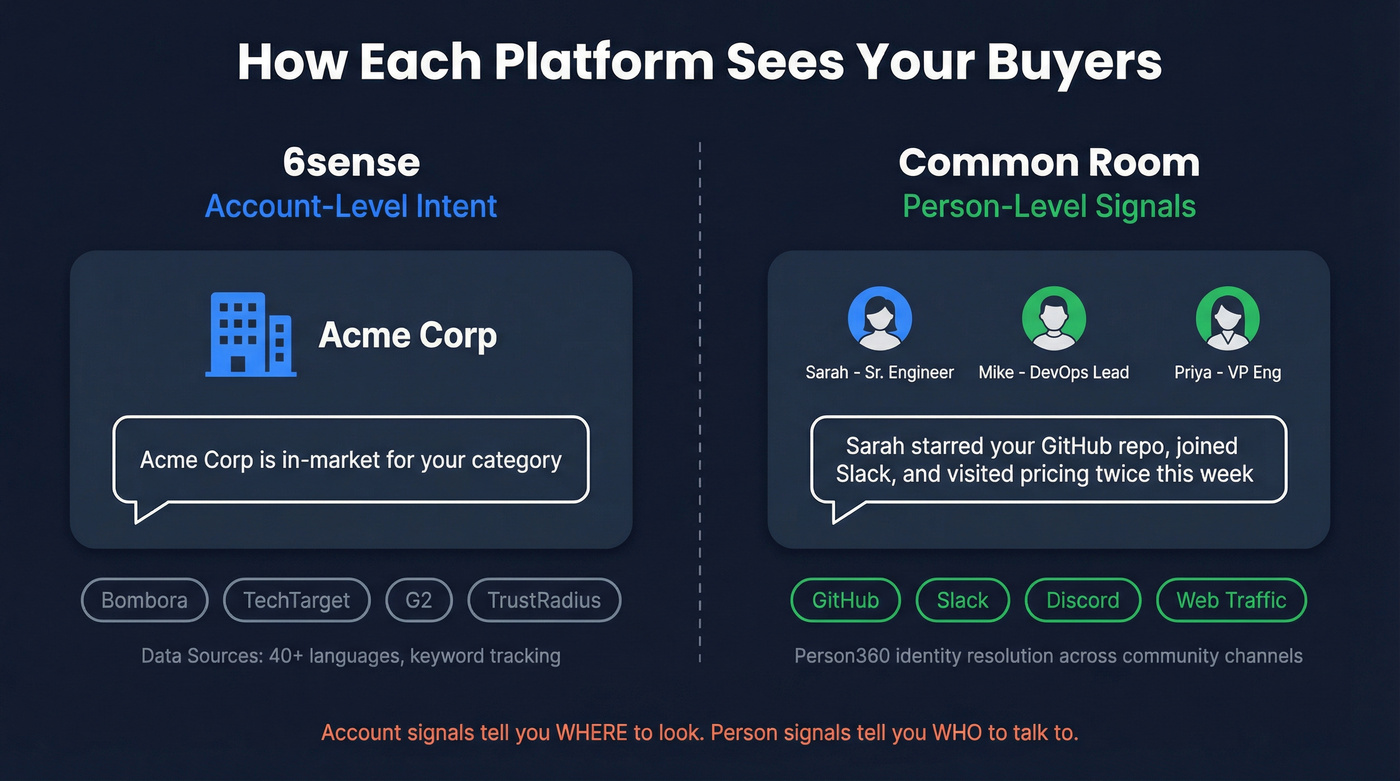
6sense operates at the account level. It tracks unlimited custom search keywords across 40+ languages, surfaces buyer intent signals within a day, and layers in data from Bombora, TechTarget, TrustRadius, and G2. The platform's core pitch is predictive scoring - identifying which accounts are actively researching solutions, then orchestrating ABM plays across advertising, conversational email, and sales intelligence. Recent updates include Connected TV advertising, proactive email validation for AI Email campaigns, and expanded EMEA intent data. It's a full ABM command center, and it's priced like one.
Here's the thing: the credit-based enrichment model can drive costs well above the initial contract. Teams frequently discover that included credits don't cover their actual enrichment volume, and that surprise hits mid-quarter when budgets are already locked.
Common Room works at the person level. It aggregates signals from community channels - Slack, GitHub, Discord - alongside web traffic and third-party intent data, then resolves those signals to individual people through Person360 identity resolution.
With buying committees averaging roughly 10 people, knowing the account is in-market isn't enough. Common Room tells you which individuals are engaged. Where 6sense says "Acme Corp is in-market," Common Room says "Sarah, a senior engineer at Acme, just starred your GitHub repo, joined your Slack, and visited your pricing page twice this week." That's a fundamentally different kind of signal, and for developer-focused or community-led companies, it's the one that actually converts.
Pricing Breakdown
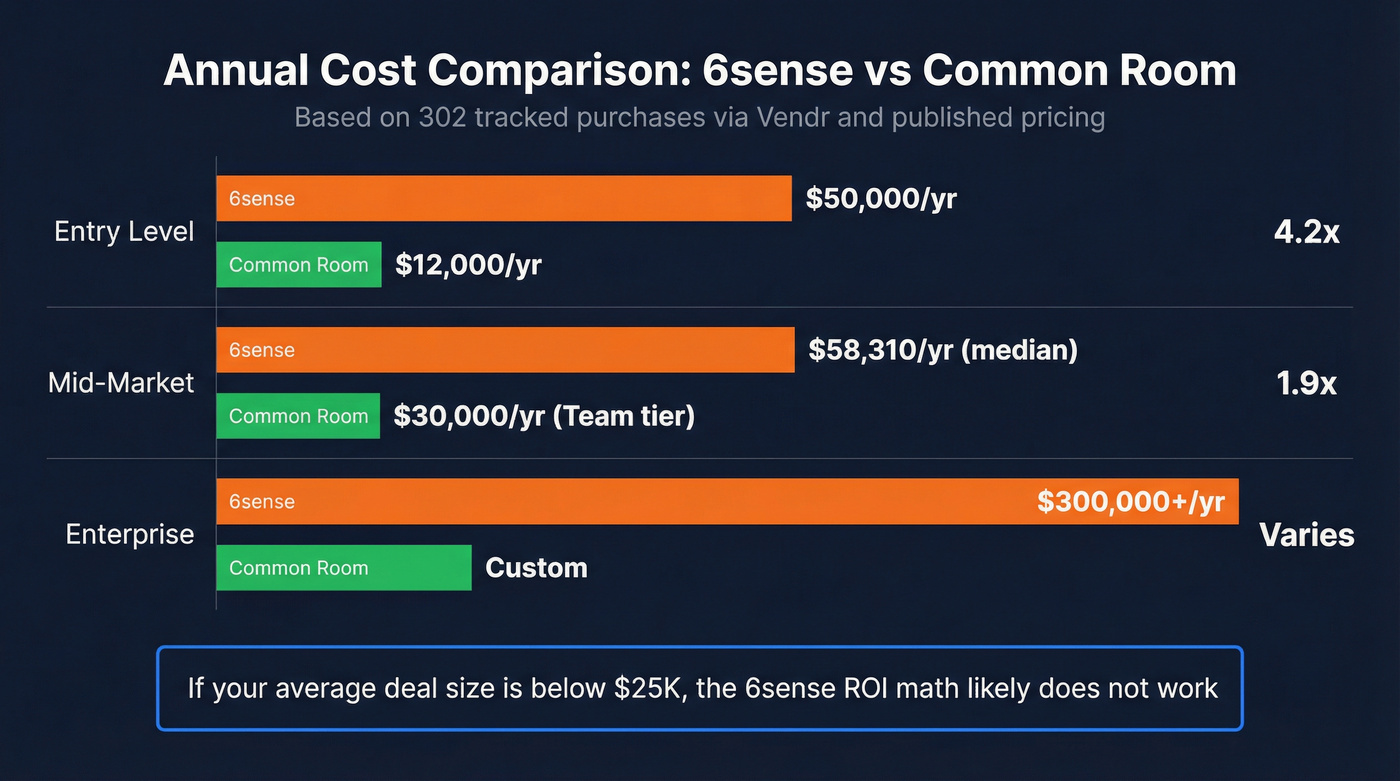
The cost gap between these two platforms is enormous.
| 6sense | Common Room | |
|---|---|---|
| Entry price | ~$50,000/yr | $12,000/yr |
| Mid-market | $58,310/yr median | ~$30,000/yr (Team tier) |
| Enterprise | $300,000+/yr | Custom |
| Pricing model | Custom quote, annual | Published tiers + custom |
| Primary value | Intent + ABM orchestration | Person-level signals |
The median 6sense buyer pays $58,310/year based on 302 tracked purchases on Vendr. Mid-market deployments monitoring 5,000-10,000 accounts typically run $60K-$100K for the core platform alone. Add Sales Intelligence, Advertising, or Conversational Email modules, and enterprise contracts push well past $300K.
Common Room's Starter tier runs $1,000/month billed annually - 35k contacts, 2 seats, 240k IP enrichments, and 6 Bombora topics. The Team plan is custom-priced, often around $2,500/month billed annually, with 100k contacts and 5 seats. Common Room also offers Premium Phone Number Enrichment as a paid add-on via FullEnrich, but it's not included in base plans. That's a 5x cost difference at the entry level, and it widens fast.
If your average deal size sits below $25K, you almost certainly don't need 6sense-level infrastructure. The ROI math just doesn't work at that contract size.
Setup and Time-to-Value
Use 6sense if you have a dedicated RevOps team and can commit to a 4-12 week implementation. Onboarding requires a Primary Administrator handling WebTag installation, CRM/MAP/SEP integration, field mapping, SSO configuration, credit distribution, and separate setup for Revenue Marketing, Sales Intelligence, and AI Email modules. We've seen teams try to force 6sense into a PLG motion and waste months before pivoting. Skip this if you don't have at least one full-time ops person who can own the rollout.
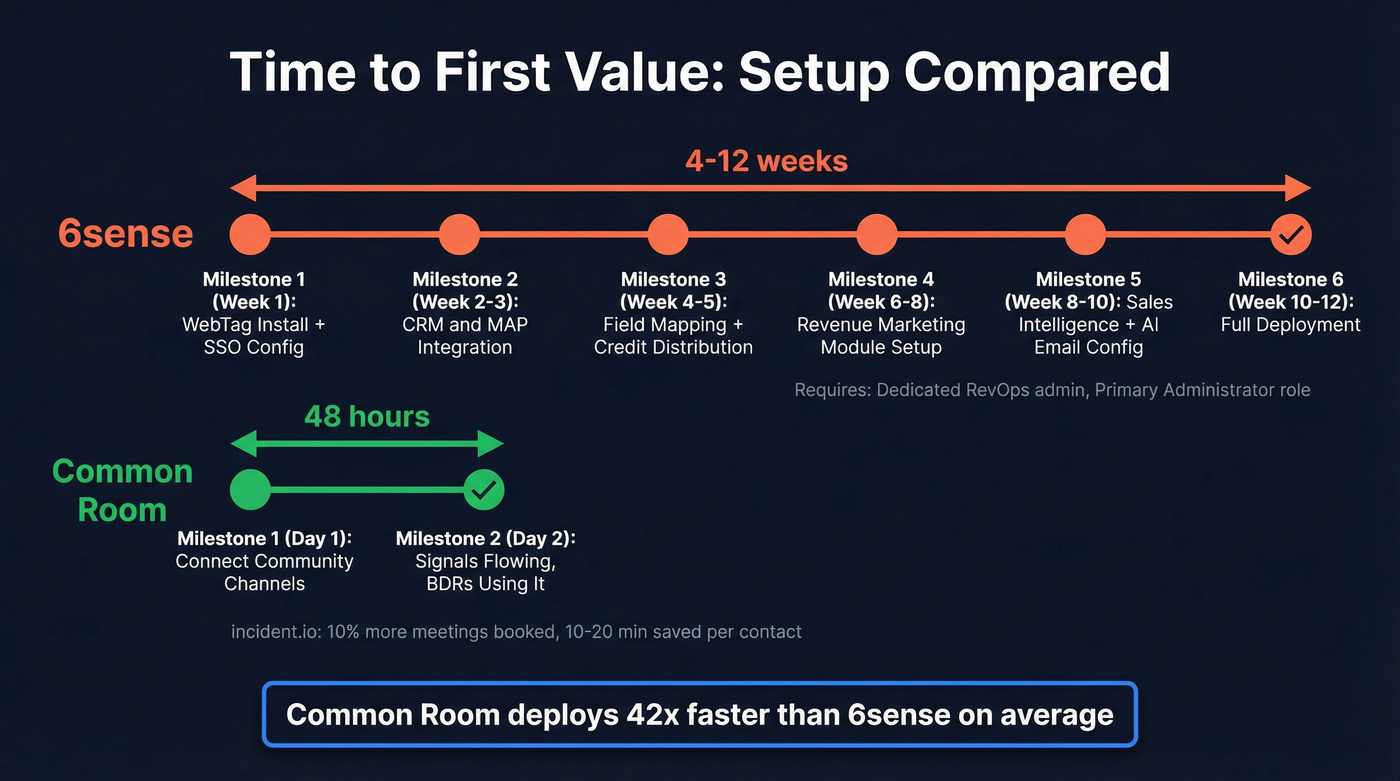
Use Common Room if you need value this week. Basic community tracking deploys in roughly 48 hours. The incident.io team reported their BDRs saved 10-20 minutes per contact using RoomieAI for research and booked 10% more meetings within six months - not after a quarter-long implementation. That speed matters when pipeline targets don't wait for your tech stack to catch up.

6sense and Common Room tell you who's in-market. Neither gives you verified contact data to reach them. Prospeo bridges that gap - 98% email accuracy, 125M+ verified mobiles, refreshed every 7 days. No $60K contracts required.
Turn intent signals into booked meetings for $0.01 per email.
What User Reviews Reveal
Common Room beats 6sense across the key G2 categories buyers care about most, though with a smaller review base. On the Revenue Marketing comparison, 6sense scores 4.3/5 across 1,310 reviews while Common Room hits 4.5/5 from 106 reviews. The gaps are consistent across support quality (9.3 vs 8.6), product direction (9.6 vs 8.5), and ease of admin (8.5 vs 8.1).
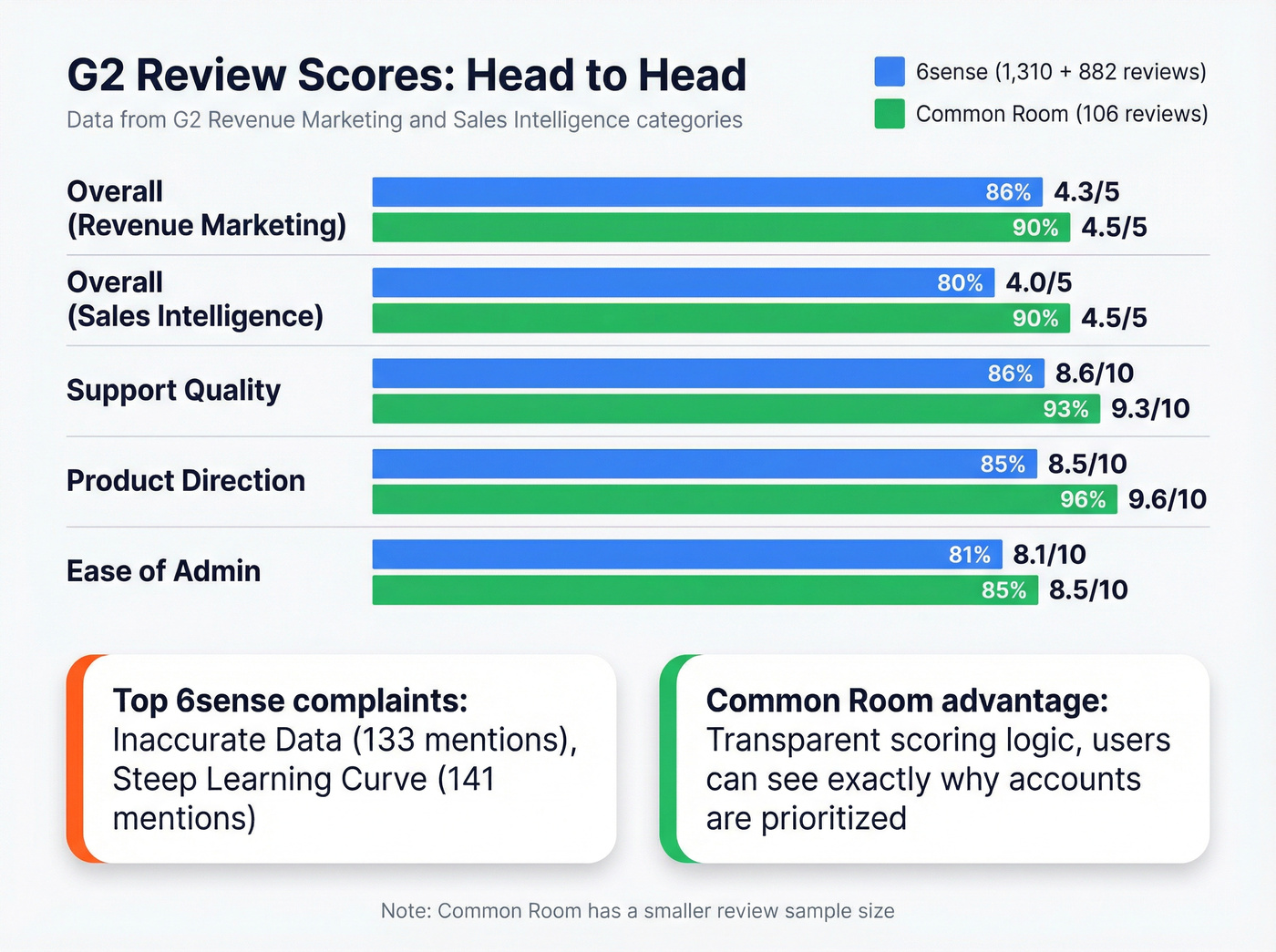
On the Sales Intelligence side, the gap widens - 6sense scores 4.0/5 from 882 reviews versus Common Room's 4.5/5. A common complaint about 6sense: inaccurate data, tagged 133 times. "Steep Learning Curve" appears 141 times on the Revenue Marketing page.
Incident.io's CMO put it bluntly: Common Room gives you visibility into why things are scored the way they are. With 6sense, that scoring logic is more opaque. For teams that need to trust and explain their prioritization, that transparency matters. We've compared both platforms' onboarding and scoring workflows, and the difference in explainability is real.
The Missing Layer: Contact Data
Neither 6sense nor Common Room is a contact database. Both tell you who to target. Neither gives you verified emails and direct dials to actually reach those people.
This is the gap that frustrates sales teams the most. You've got a beautifully scored account list, you know which individuals are engaging - and then you're stuck manually hunting for contact info or paying for yet another tool with stale data. Prospeo fills that gap with 98% email accuracy and 125M+ verified mobile numbers on a 7-day data refresh cycle. It starts free with 75 emails per month plus 100 Chrome extension credits, and scales at roughly $0.01 per email with no contracts or sales calls required.
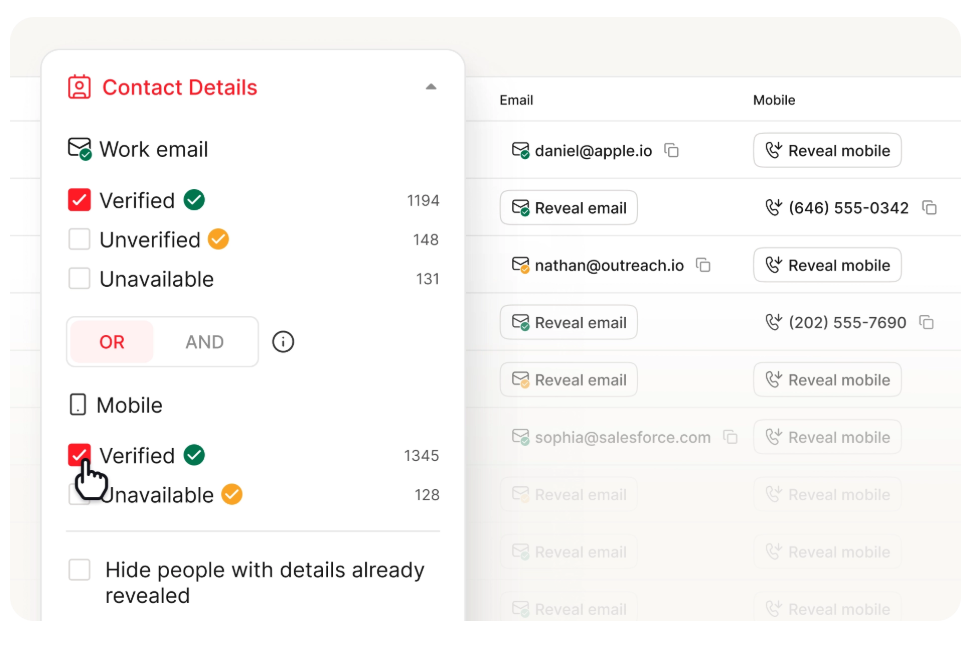
Spending months on setup and five figures on intent data means nothing if your reps can't reach the right people. Prospeo delivers verified emails and direct dials for the accounts these platforms surface - with a 30% mobile pickup rate and zero annual contracts.
Stop paying for signals you can't act on. Get the contact layer.
Final Verdict
These tools aren't interchangeable. The right choice depends entirely on your GTM motion.
Enterprise ABM with budget and mature RevOps - 6sense delivers unmatched account-level intent and orchestration, if you can absorb the $60K+ cost and multi-week implementation. Community-led, PLG, or smaller teams - Common Room gives you person-level signal intelligence at a fraction of the price, with days-not-months time to value.
Let's be honest: most teams under 200 employees don't need either platform at full scale. Start with the signals that match how your buyers actually buy, layer in verified contact data, and expand from there.
FAQ
Can Common Room replace 6sense?
Not directly - they solve different problems. Common Room excels at person-level signal aggregation from community channels, while 6sense focuses on account-level intent with predictive scoring. Many teams use 6sense for account prioritization and Common Room for individual stakeholder signals side by side.
Is 6sense worth the cost for mid-market teams?
At a median $58,310/year, 6sense requires serious RevOps maturity to justify. If you aren't running full account-based plays with dedicated ops support, Common Room's $12K/year entry point is a significantly lower-risk starting point.
How do I get verified contact data for accounts these platforms identify?
Neither platform is a contact database. Use a dedicated B2B data tool like Prospeo to get verified emails (98% accuracy) and direct dials for the people these tools surface. It starts free with 75 emails per month and requires no contracts.