

The Demand Generation Playbook: Benchmarks, Frameworks, and What Actually Works
It takes 266 touchpoints to close an average B2B SaaS deal. For $100K+ contracts, that number jumps to 417. If your marketing strategy is still built around gating an ebook and calling it a lead, you're fighting a war with a water pistol.
This playbook gives you the numbers, the framework, and the channel priorities to build demand that converts to pipeline - not a pile of unqualified MQLs your sales team ignores.
What Demand Generation Actually Means
Demand generation isn't lead generation with a fancier name. Lead gen captures contact info from the 3-5% of your market actively shopping right now. Demand gen builds awareness, trust, and preference with the other 95% - so when they enter a buying cycle, your name is already on the shortlist.
The distinction matters because it changes what you measure and how patient you need to be. MQL-chasing feels productive. But most of those leads aren't ready to buy. They downloaded a PDF. That's not intent.
A B2B demand gen framework focuses on creating real market demand, then capturing it when the timing is right. Marketing contributes nearly 50% of pipeline at most B2B companies, yet most teams still treat it as a support function.
The Quick Version
- 4 channels drive 70% of marketing-sourced pipeline: SEO, events, social, paid search. Insight Partners' survey of 100+ companies confirmed this.
- Budget benchmark: median is 10% of revenue, with demand gen taking 30% of program budgets.
- Patience window: expect zero inbound results for 3 months, then compounding kicks in.
- Start by carving out 10% of your current budget for demand gen. Run it for 6 months before judging results.
The Numbers You Need
| Metric | Benchmark | Source |
|---|---|---|
| Touchpoints to close | 266 avg / 417 for $100K+ ACV | HockeyStack |
| Impressions to close | 2,879 avg / ~5,500 for $100K+ | HockeyStack |
| YoY touchpoint increase | ~20% (impressions up 9.5%) | HockeyStack |
| Marketing budget (median) | 10% of revenue | Benchmarkit |
| Demand gen share | 30% of program budgets | Benchmarkit |
| Track cost per opportunity | Only 18% of teams | Benchmarkit |
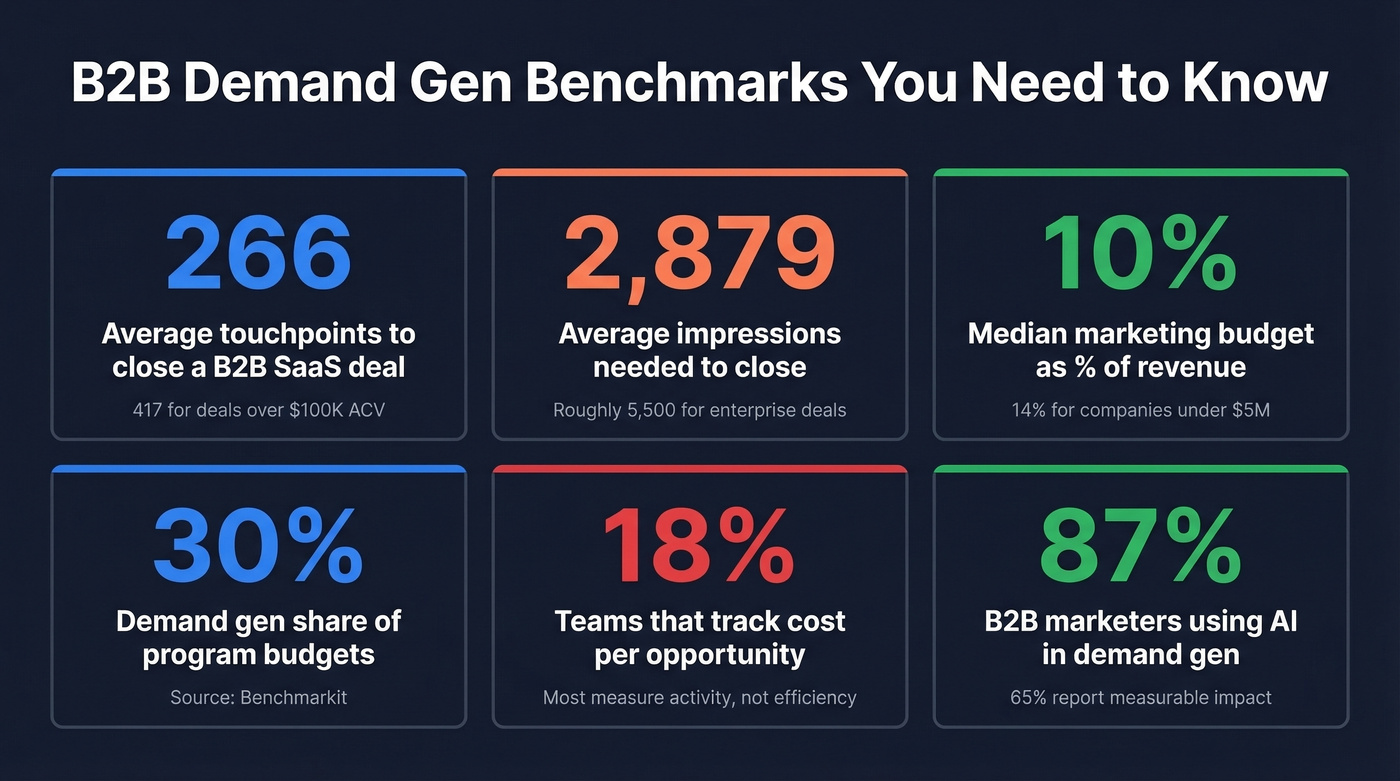
Those touchpoint numbers are staggering, and they're rising roughly 20% year over year. This is why single-touch attribution is a fantasy - with 266+ touchpoints per deal, trying to credit one channel wastes your analytics team's time and warps your budget decisions.
The measurement maturity gap is just as telling. 62% of B2B marketers track pipeline generated, but only 18% rank cost per opportunity as a top-3 metric. Teams are measuring activity, not efficiency. And 87% now use AI in demand gen execution - particularly in SEO and email marketing - with 65% reporting measurable impact.
The 5-Stage Framework
Stage 1: Define ICP and Positioning
Everything downstream fails if you get this wrong. Your ICP isn't "mid-market SaaS companies." It's "Series B-C SaaS companies with 50-200 employees, selling to enterprise, where the VP of Marketing owns the budget and the RevOps lead influences the decision."
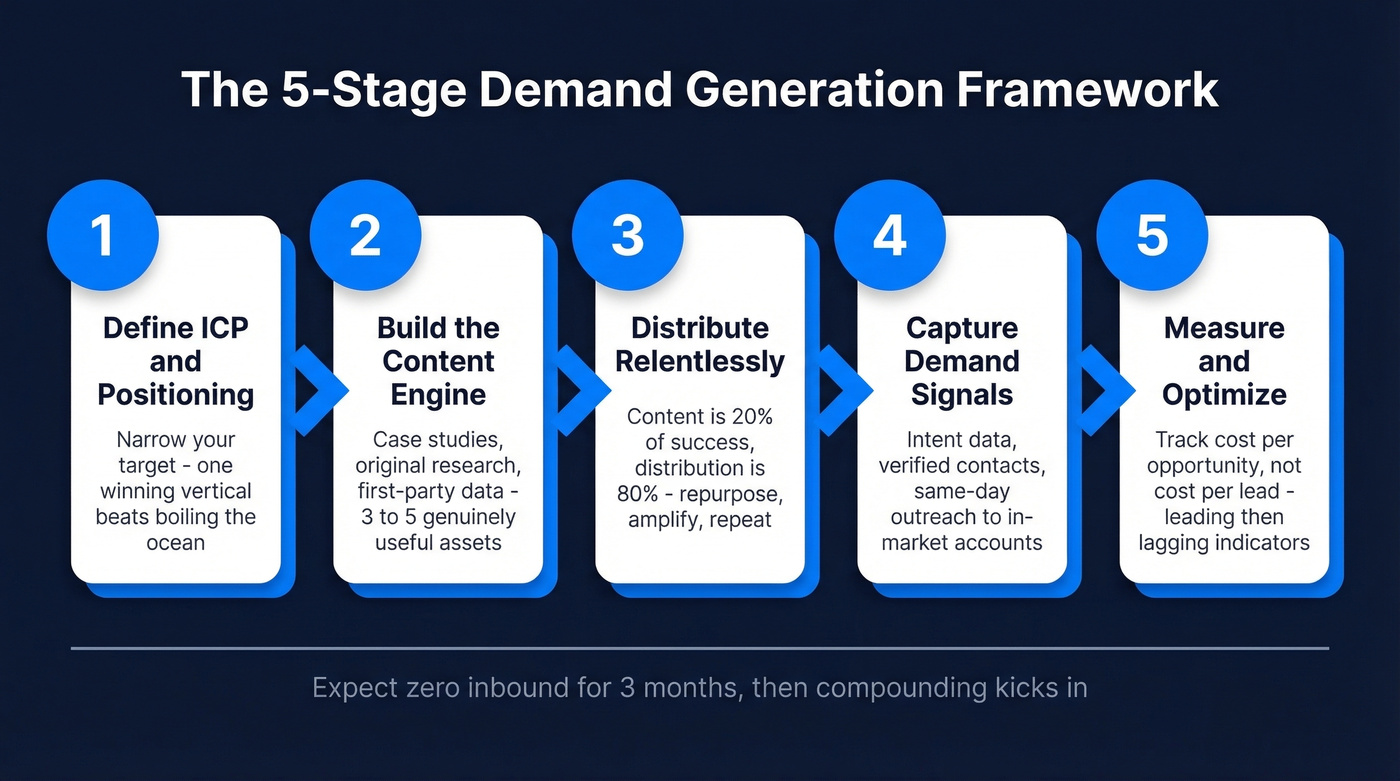
One practitioner on r/marketing described narrowing to a single winning vertical as the turning point for their entire program. Narrow beats broad every time. We've seen this firsthand - teams that try to boil the ocean with their ICP end up with messaging so generic it resonates with nobody.
Stage 2: Build the Content Engine
Case studies, first-party research, and third-party research are the top-performing content types for pipeline generation. Yet 72% of companies say they don't have enough case studies. That's a gap you can exploit immediately.
You don't need a content factory. You need 3-5 genuinely useful assets that demonstrate you understand your buyer's problem better than anyone else. One strong piece of original research will outperform twenty recycled blog posts - it gives people a reason to cite you, link to you, and remember your name when they're finally ready to buy.
Stage 3: Distribute Relentlessly
Great content is only 20% of success. The other 80% is distribution.
We've watched teams invest months building content, post it once, and wonder why nobody cares. Distribution means repurposing across channels, getting your team to amplify, running paid promotion behind your best assets, and showing up consistently. The Rule of 7 still applies: people need repeated exposure before they act. If you're not slightly embarrassed by how often you're sharing the same piece, you're probably not sharing it enough.
Stage 4: Capture Demand Signals
This is where demand gen meets revenue. When accounts show intent - researching your category, visiting pricing pages, engaging with competitor content - you need to move fast with verified contact data. Tools like Prospeo track 15,000 intent topics via Bombora and deliver 98% email accuracy on a 7-day refresh cycle, so when an account lights up with buying signals, you can pull verified emails and direct dials for the right decision-makers and get them into sequences within hours, not days.
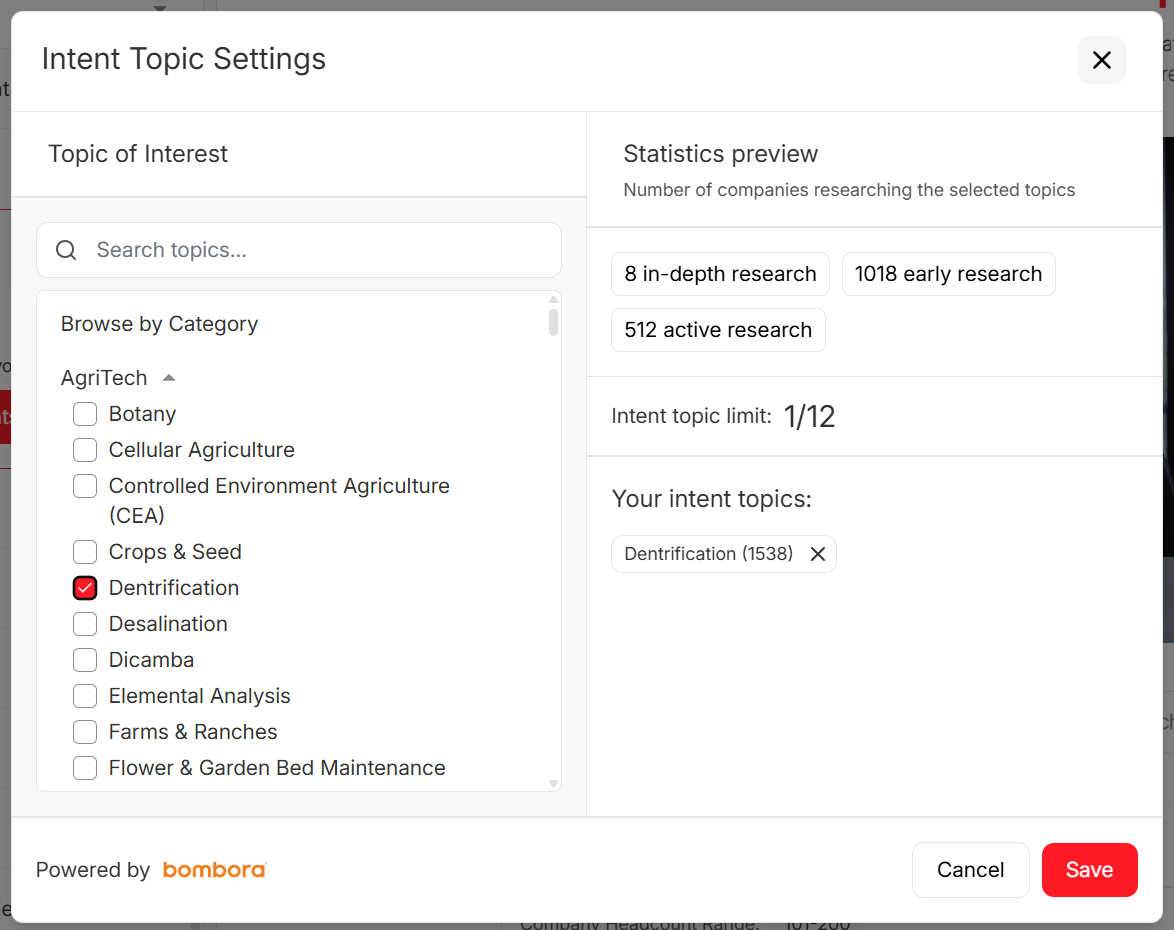
The speed matters more than most teams realize. A lead that's researching your category today is talking to your competitor tomorrow. Same-day outreach to in-market accounts isn't aggressive - it's table stakes.
Stage 5: Measure and Optimize
Focus on leading indicators early - engagement rate, content consumption, branded search volume - and lagging indicators later: pipeline generated, MQL-to-SQL conversion, revenue influenced.
The real discipline is tracking cost per opportunity, not just cost per lead. A $50 CPL that converts at 2% is worse than a $200 CPL that converts at 15%. Teams that clearly define and track their funnel metrics can boost sales productivity by 20%.

266 touchpoints to close a deal means every signal matters. Prospeo tracks 15,000 intent topics via Bombora and refreshes data every 7 days - so when an account enters a buying cycle, you reach the right decision-maker with a verified email, not a bounced one.
Turn demand signals into pipeline before your competitors do.
Channel Priorities: Do Less, Drive More
Half of companies spread their efforts across 11-15 pipeline-generating channels. That's too many.
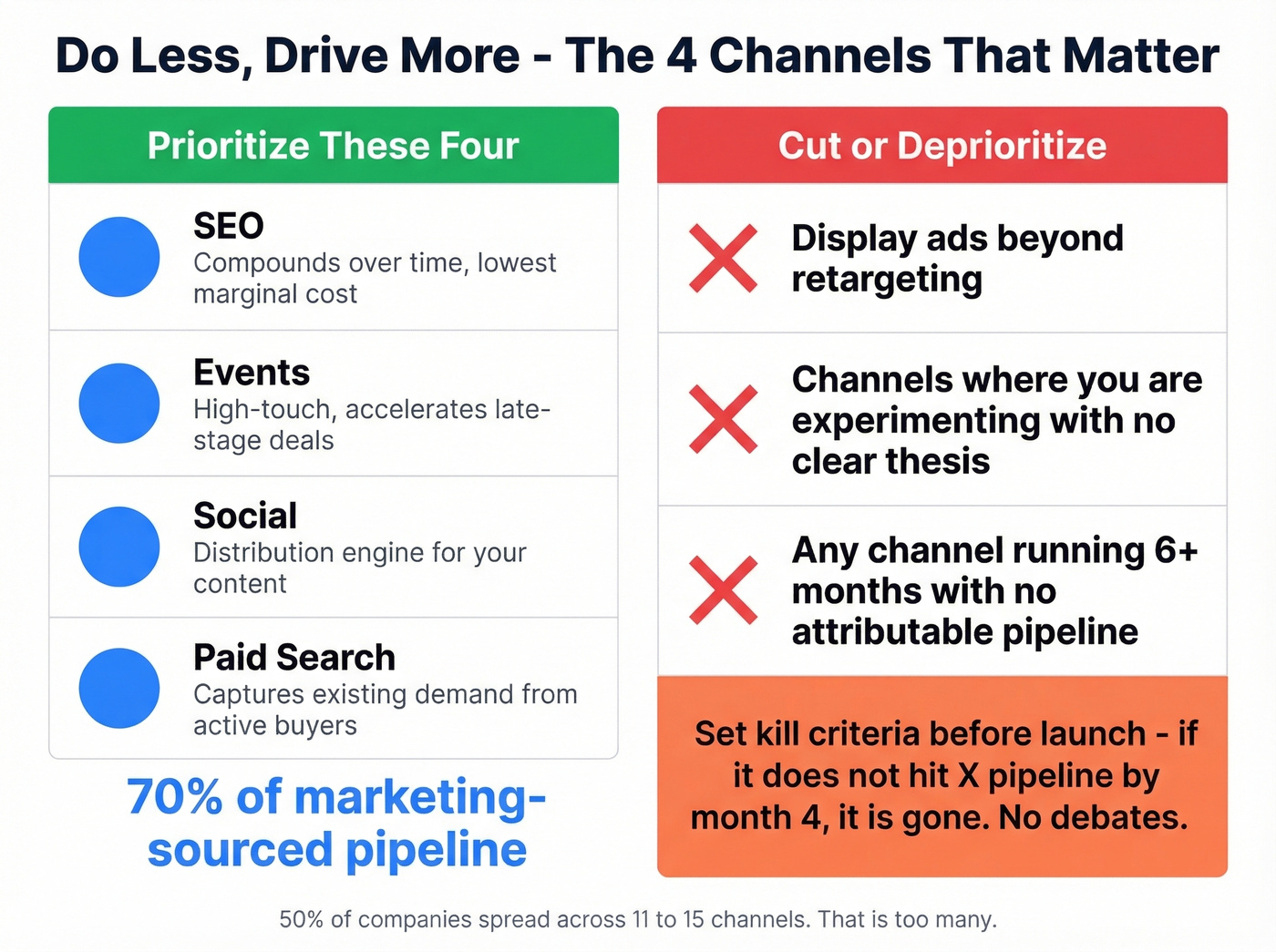
Prioritize these four:
- SEO - compounds over time, lowest marginal cost
- Events - high-touch, accelerates late-stage deals
- Social - distribution engine for your content
- Paid search - captures existing demand
Cut or deprioritize:
- Display ads beyond retargeting
- Channels where you're "experimenting" with no clear thesis
- Any channel running 6+ months with no attributable pipeline
Here's the thing: the hardest part isn't picking channels. It's killing the ones that aren't working. Every channel has an internal champion who'll argue for "just one more quarter." In our experience, setting kill criteria before launching any channel is the only way to stay honest - if it doesn't hit X pipeline by month 4, it's gone. No debates.
Your demand gen playbook falls apart at Stage 4 if your contact data bounces. Prospeo delivers 98% email accuracy and 125M+ verified mobile numbers at $0.01 per email - so when accounts light up, your sequences actually land.
Stop generating demand you can't capture. Fix the data layer.
Events Deserve Their Own Section
Events are the highest-converting channel for late-stage pipeline acceleration, and most teams still treat them as brand exercises with no follow-up plan.
A proper event motion covers three phases: pre-event outreach to target accounts so your reps aren't walking in cold, on-site engagement tactics that go beyond scanning badges, and a structured follow-up cadence within 48 hours. Not 48 business hours. 48 actual hours. The teams that integrate events into their broader demand gen motion see deals close 30-40% faster than those who treat events as isolated one-offs.
Skip this if you're pre-Series A or your ACV is under $10K - the ROI math on events doesn't work until you're closing deals large enough to justify the cost per meeting.
A Realistic Timeline
Let's be honest about what the ramp actually looks like. One team ran a demand gen program and saw zero inbound opportunities for the first three months. Nothing. Then, after staying consistent, the next three months produced 9 qualified sales opportunities, 3 new contracts at 10x their average deal size, and a 7-figure pipeline.
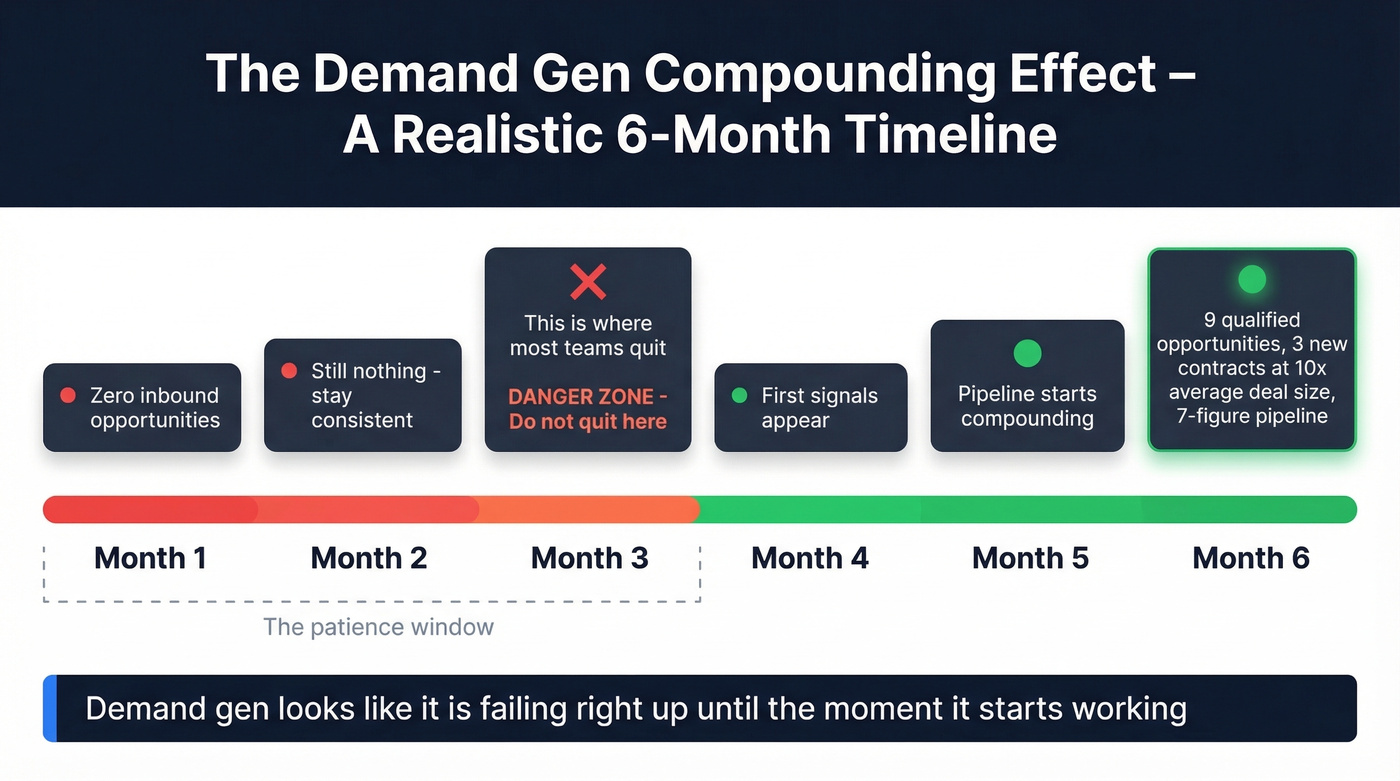
That's the compounding effect. Demand gen looks like it's failing right up until the moment it starts working, and the teams that quit at month three never see the payoff.
The attribution trap kills more programs than bad creative does. If your CFO demands channel-level attribution on a 266-touchpoint buyer journey, the problem isn't your marketing - it's the measurement framework. You wouldn't ask which raindrop caused the flood.
Budget and Tech Stack
Benchmarkit's data shows budget scales inversely with company size:
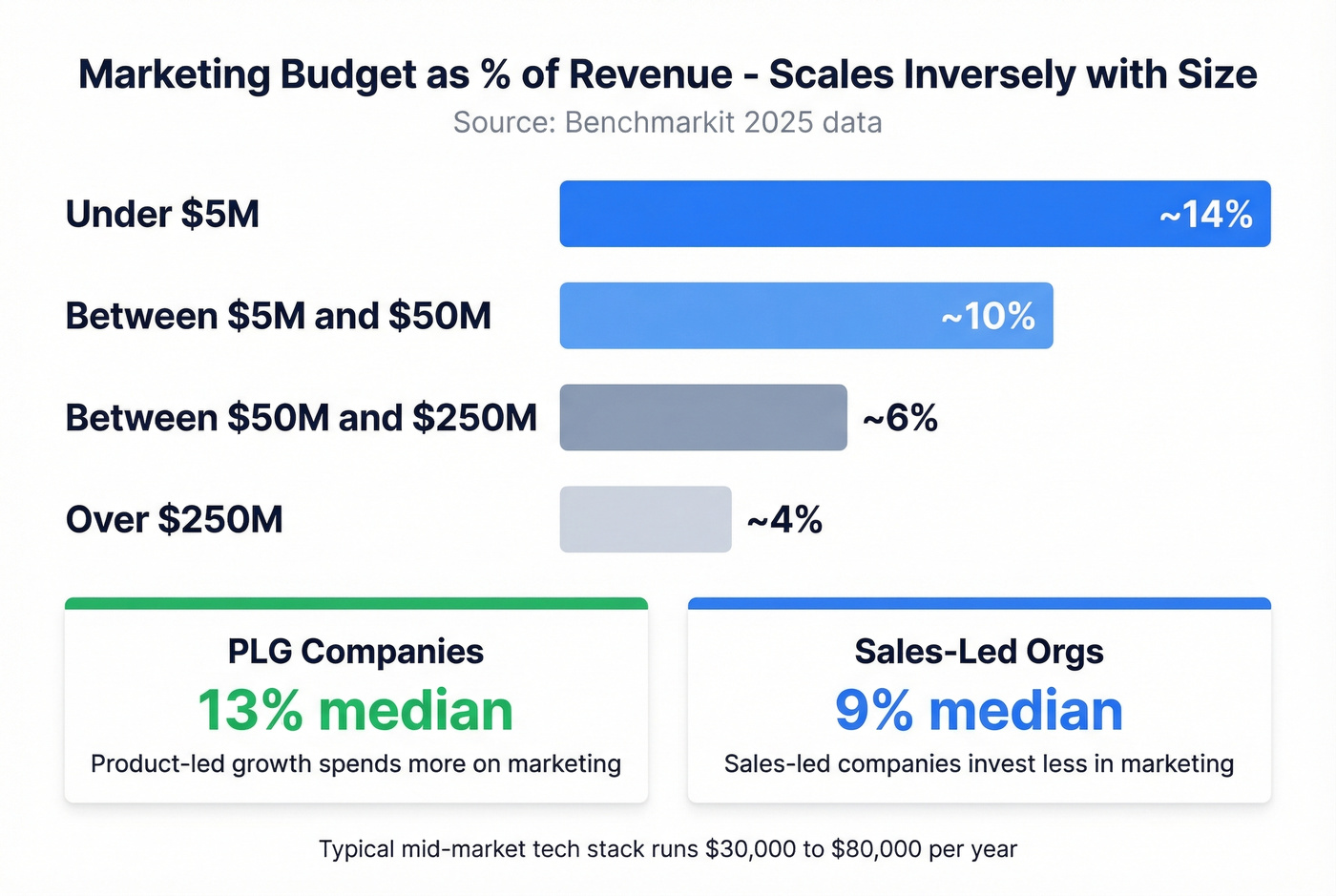
| Company Revenue | Marketing as % of Revenue |
|---|---|
| Under $5M | ~14% |
| $5M-$50M | ~10% |
| $50M-$250M | ~6% |
| Over $250M | ~4% |
PLG companies spend more on marketing (median 13% of revenue) versus sales-led orgs at 9%.
The dominant mid-market stack is HubSpot + LinkedIn Ads + Google Analytics, with 28.5% adoption. A typical mid-market tech stack runs $30,000-$80,000/year. For contact data, self-serve platforms like Prospeo start free and scale at roughly $0.01/email - a fraction of enterprise data platforms that lock you into $15K+ annual contracts before you've sent a single sequence.
Mistakes That Kill Demand Gen Programs
Quitting at month 3. Compounding requires patience. The timeline above proves it.
Attribution obsession. With 266+ touchpoints per deal, crediting a single channel is a fool's errand. Track directional trends, not last-touch credit.
Spreading across too many channels. Four channels drive 70% of marketing-sourced pipeline. Pick yours and go deep instead of going wide.
Being too salesy. Demand gen is about education and trust, not pitching. If every post reads like an ad, you've already lost the audience you're trying to build.
Ignoring cost per opportunity. Only 18% of teams track it. Don't be in the 82%.
FAQ
What should a demand generation playbook include?
A strong playbook covers ICP definition, content strategy, distribution channels, demand capture workflows, and measurement frameworks. The fact that 266 touchpoints close an average B2B deal should change how you approach attribution and patience - plan for multi-touch, not single-channel credit.
What's the difference between demand gen and lead gen?
Lead gen captures contact info from the 3-5% already in-market. Demand gen creates awareness and trust with the other 95% so they think of you when they're ready to buy. The best programs do both, but demand gen compounds over time while lead gen hits a ceiling fast.
How long does demand gen take to show results?
Expect 3-6 months before pipeline materializes. One team reported zero inbound opportunities for 3 months, then 9 qualified opportunities and 7-figure pipeline by month 6. The compounding effect is real, but only if you don't quit early.
What tools help capture demand once it's created?
You need a data platform that surfaces intent signals and delivers verified contact info fast. Pair intent data tracking with your CRM and sequencing tool for same-day outreach to in-market accounts - the speed gap between "they're researching" and "they've picked a vendor" is shrinking every year.