Dialpad vs Vonage: Honest Comparison for 2026
Dialpad and Vonage solve the same problem differently. The Dialpad vs Vonage decision comes down to one question: do you want AI-native calling or a traditional UC hub? PCMag calls Vonage the "Best for a Unified Communications Hub" and Dialpad the "Best AI Features." That framing is right. Here's how to pick.
30-Second Verdict
Pick Dialpad if you're a sales-heavy team that wants real-time transcription, call summaries, and AI coaching baked in - with Standard at $15/user/mo on an annual contract. It's the better value for what most modern teams actually need.
Pick Vonage if you need desk phone support, deep admin controls, and a traditional UC hub. Vonage Premium is the real comparison point for most teams, with pricing that ranges from $24.99-$29.99/user/mo on monthly plans (depending on seat count), or as low as $17.49/user/mo on annual promos for 20-99 users.
Skip both if you're a small team wanting dead-simple calling. OpenPhone or Google Voice will get you moving faster. And whichever system you pick, it's only as good as the contact data feeding it - more on that below.
On G2, Dialpad holds a 4.4/5 from 4,062 reviews. Vonage sits at 4.3/5 from 494.
Pricing Compared
Vonage's pricing page can look cheaper at the entry level, but the comparison is misleading. Vonage Mobile is missing several features most teams consider table stakes, so you typically end up on Premium.
Dialpad Connect shows Standard at $15/user/mo and Pro at $25/user/mo, with Enterprise as contact-sales. Standard includes real-time transcripts and instant call summaries - features Vonage doesn't offer at any tier.
| Plan | 1-4 Users (Mo.) | 5-19 Users (Mo.) | 20-99 Users (Ann.) | 100+ Users |
|---|---|---|---|---|
| Vonage Mobile | $19.99 | $17.99 | $10.49 | Contact sales |
| Vonage Premium | $29.99 | $27.99 | $17.49 | Contact sales |
| Vonage Advanced | $39.99 | $37.99 | $24.49 | Contact sales |
| Dialpad Standard | $15 | $15 | $15 | $15 |
| Dialpad Pro | $25 | $25 | $25 | $25 |
| Dialpad Enterprise | Custom | Custom | Custom | Custom |
Vonage Premium is the apples-to-apples tier because that's where you get desk phone support, video meetings up to 200 participants, SSO, and the VBC App Center with 20+ integrations. Want on-demand call recording? That's Vonage Advanced at 15 hours/month. Dialpad includes recording on Standard.
One more thing: Vonage pricing is listed as "plus taxes & fees," which can add a few dollars per seat depending on your location. Dialpad's headline numbers are what you pay.
Features Head-to-Head
Rather than a sprawling six-column table that breaks on mobile, here's what matters at each vendor's most relevant tier.
Dialpad Standard ($15) vs Vonage Premium ($17.49-$29.99):
| Feature | Dialpad Standard | Vonage Premium | Edge |
|---|---|---|---|
| Unlimited calling | ✓ | ✓ | Tie |
| SMS/MMS | ✓ | ✓ | Tie |
| Video meetings | ✓ | ✓ (up to 200) | Vonage |
| Call recording | ✓ | ✗ (Advanced only) | Dialpad |
| Desk phone support | - | ✓ | Vonage |
| CRM integrations | Pro tier | ✓ (20+ via App Center) | Vonage |
| Auto-attendant / IVR | ✓ | ✓ (multi-level) | Tie |
| Real-time transcription | ✓ | ✗ | Dialpad |
Vonage markets "40+ features" including Business Inbox for SMS and Messenger in one view, whiteboarding in Vonage Meetings, and enterprise identity tooling like SSO & SCIM support. It's a genuinely broad suite, but much of it is gated behind Premium or Advanced.
A texting warning worth flagging: one competitor breakdown of Vonage business texting notes that in-app SMS is US-only, with an account-level sending limit of 2,000 texts/day, and that A2P 10DLC registration applies with fees around $4 one-time plus $1.50/month recurring. That same breakdown describes a 2024 SMS disruption. If business texting matters to your workflow, test this carefully before committing.

Dialpad's AI transcription and Vonage's UC hub both shine - but neither matters if your reps are calling wrong numbers. Prospeo gives you 125M+ verified mobile numbers with a 30% pickup rate, so every call your team makes actually connects to a real buyer.
Stop wasting dial time. Start reaching decision-makers directly.
Dialpad's AI - Useful, Not Magic
Dialpad's AI is the main reason to pick it over Vonage. Trained on 6B+ minutes of business conversation data, it powers real-time transcription and instant post-call summaries.
In clean audio environments, it works well. Reps get live transcripts during calls, automated action items after, and sentiment tracking that helps managers coach without listening to every recording. We've seen teams cut their post-call admin time in half just with the auto-summaries.
Here's the thing: it's about 80% useful and 20% frustrating. Accuracy drops with accents, cross-talk, or noisy rooms. Numbers and email addresses get garbled regularly. Speaker labels can switch mid-call during handoffs. Go in with realistic expectations and you won't be disappointed.
Dialpad also extended its partnership with T-Mobile for three more years - a signal that enterprise and mobile-first teams are betting on the platform long-term.
Reliability and Real Reviews
Neither platform is bulletproof, but the complaint patterns differ sharply.
Dialpad's G2 reviews tag "Connection Issues" and "Call Issues" as top negatives. Call quality is polarized - some users describe zero lag, while others describe quality bad enough to revert to a prior vendor. Your mileage depends heavily on network setup.
Vonage's picture is rougher. On Trustpilot, Vonage holds a 2.5/5 from 1,534 reviews. The recurring themes: unreliable service, dropped calls, delayed messages, difficulty reaching support, billing surprises, and contract cancellation nightmares. The consensus on r/VoIP threads isn't much kinder - cancellation horror stories come up constantly.
To be fair, G2 reviewers rate Vonage higher on "meets requirements" and "product direction," and Vonage serves 120,000+ business customers processing 25B messages and minutes per year. That scale makes the reliability complaints more damning, not less.
Then there's the Ericsson question. Ericsson acquired Vonage in July 2022 for $6.2B, and the strategic focus has been squarely on CPaaS and network APIs - the communications API market Ericsson projected at $22B+ by 2025, growing 30% annually. Ericsson has said it intends to increase R&D investments to accelerate Vonage UCaaS and CCaaS. But let's be honest: the parent company's biggest strategic narrative is the API/developer side, not the business phone system.
Vonage is still a perfectly functional phone system for traditional offices. But it's a legacy product inside a company whose biggest push is elsewhere. Dialpad is a phone system inside a company that's all-in on making it better. That trajectory matters more than any feature checklist.
Which One Fits Your Team
Sales teams running outbound sequences: Dialpad. The AI transcription and summaries alone justify the price, and you're paying less for more at most seat counts. If you're building a repeatable calling motion, pair it with a real outbound calling strategy.
Traditional offices needing desk phones and a UC hub: Vonage Premium. It's the clearest option if you want desk phone support and a mature admin portal. Budget for the real monthly price - often $24.99+ per seat depending on seat band, plus taxes and fees - and test SMS thoroughly before rolling it out (especially if you're using sales text message workflows).
For teams that don't fit either profile cleanly, RingCentral and Nextiva are common alternatives offering a more balanced UCaaS platform. If you're comparing more VoIP stacks, see 3CX vs Zoom Phone.
Your Phone System Needs Good Data
You've picked the dialer. Now the question is whether the numbers in it actually connect.
Look, this is what most phone system comparisons miss entirely: teams agonize over which VoIP platform to choose for weeks, then load it with garbage contact data and wonder why connect rates sit below 5%. We've watched it happen dozens of times. The dialer isn't the bottleneck - the data is. If you're seeing decay, start with B2B contact data decay benchmarks and fixes.
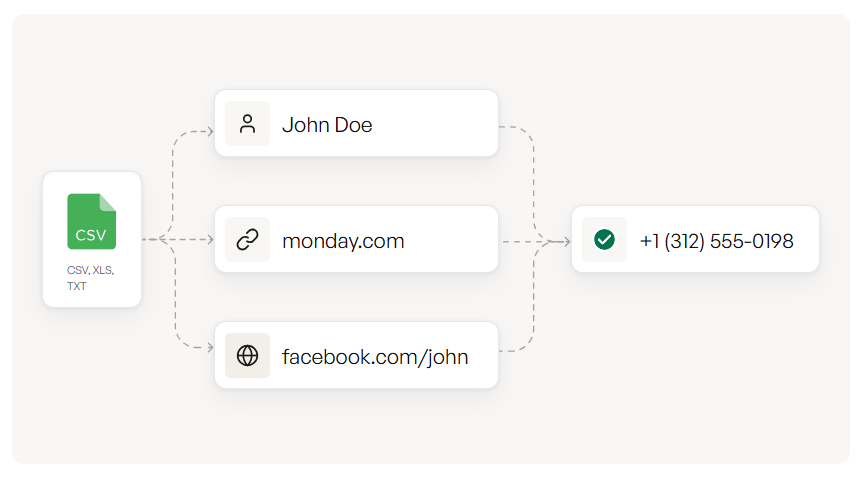
Prospeo covers 125M+ verified mobile numbers with a 30% pickup rate and 143M+ emails at 98% accuracy, all refreshed every 7 days. For outbound calling teams, it's the missing piece between choosing a phone system and actually booking meetings. The free tier gives you 75 email lookups and 100 Chrome extension credits monthly, no card required. If you want to sanity-check your list quality first, run an email validity check and tighten up CRM hygiene.
Whichever VoIP platform you choose, bad contact data kills your connect rates. Prospeo's 7-day data refresh and 98% email accuracy mean your sales team spends time selling - not chasing dead numbers and bounced emails.
Feed your phone system data that actually picks up.
FAQ
Is Dialpad or Vonage cheaper?
Dialpad Standard is $15/user/mo on an annual contract. Vonage Premium runs $24.99-$29.99/user/mo on monthly plans, or as low as $17.49/user/mo on annual promos for 20-99 users. For most teams, Dialpad delivers more features at a lower per-seat cost.
Does Vonage have AI features?
Vonage doesn't offer real-time call transcription or AI-generated summaries. Dialpad includes both on its Standard plan, trained on 6B+ minutes of conversation data. If AI coaching and automated note-taking matter, Dialpad is the clear pick.
Is Vonage reliable for business texting?
Vonage includes SMS/MMS, but in-app texting is US-only with a 2,000 texts/day cap and potential 10DLC registration fees. Trustpilot reviews frequently cite delayed messages and reliability issues. Run a real pilot before committing if texting is mission-critical.
What's a good alternative to both?
RingCentral and Nextiva are solid all-in-one UCaaS alternatives. For outbound-heavy teams, pair whichever dialer you choose with a verified data source - Prospeo's 125M+ mobile numbers at a 30% pickup rate solve the connect-rate problem most VoIP comparisons ignore.