DiscoverOrg vs Startup Tracker: They're Not Competitors - Here's What You Actually Need
Your VP of Sales wants a list of Series A fintech startups with verified emails for every founder. You search "DiscoverOrg vs Startup Tracker" and get nothing useful - because these tools solve completely different problems. When it takes 18 touches to book a single meeting, wasting time in the wrong tool is expensive.
Quick disambiguation: "Startup Tracker" here means startuptracker.io - the startup discovery platform - not the Notion template that keeps showing up in search results.
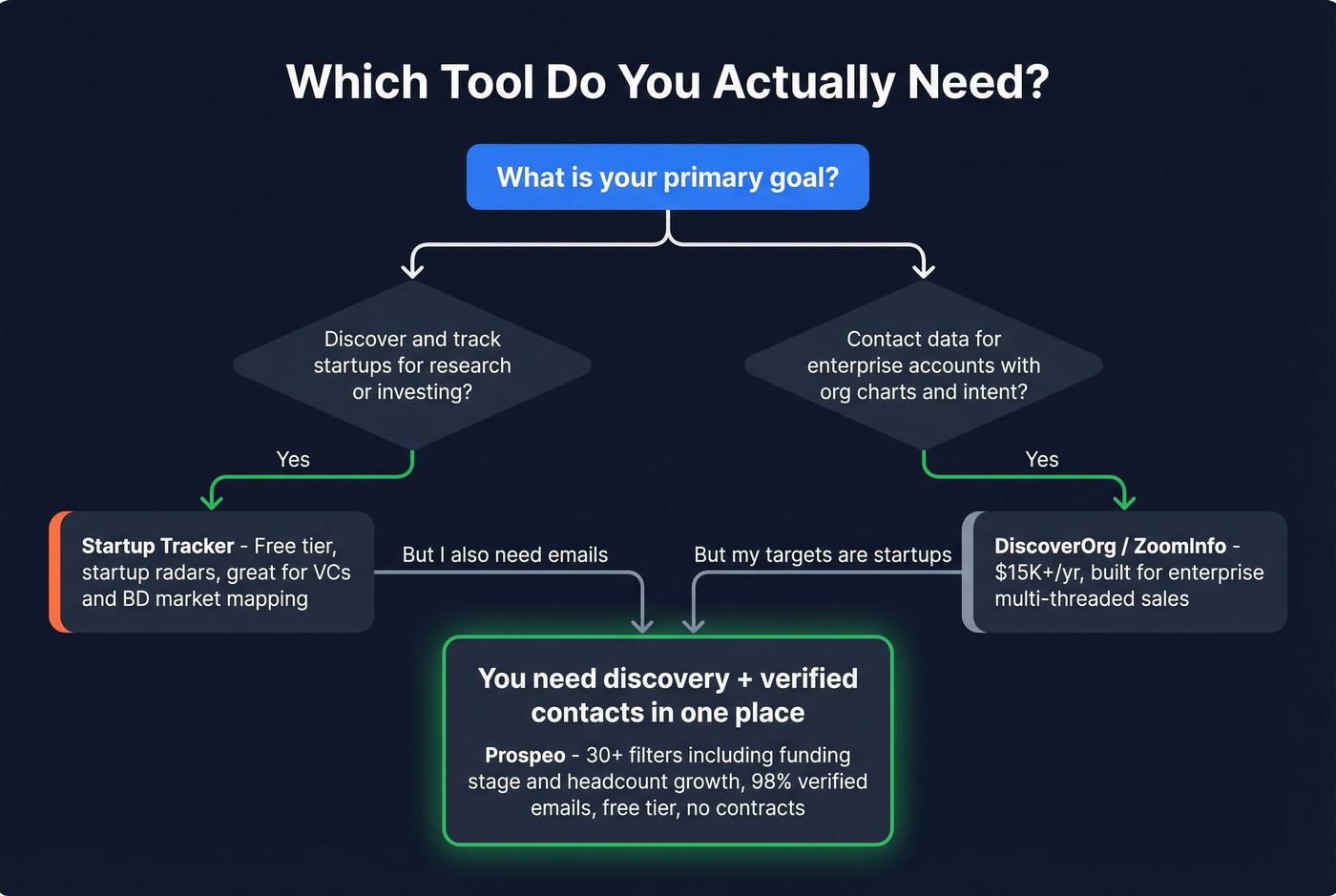
30-Second Verdict
Pick DiscoverOrg (ZoomInfo) if you're an enterprise team that needs contact data, org charts, and intent signals across large companies - and you've got $15K+/year to spend.
Pick Startup Tracker if you're a VC, BD team, or startup-focused seller who needs to discover early-stage companies, not pull contact data for outreach.
Skip both if you want startup-relevant filters and verified contact data in one self-serve platform. Prospeo covers both with 30+ filters including funding stage and headcount growth, 98% email accuracy, and a free tier to start.
What Each Tool Actually Does
DiscoverOrg (Now ZoomInfo)
DiscoverOrg merged with ZoomInfo in 2019, and the brand was fully absorbed into ZoomInfo's platform. Everything that made DiscoverOrg useful - department-level org charts, verified direct dials, technographic filters - lives within ZoomInfo today, commonly packaged under products like SalesOS.
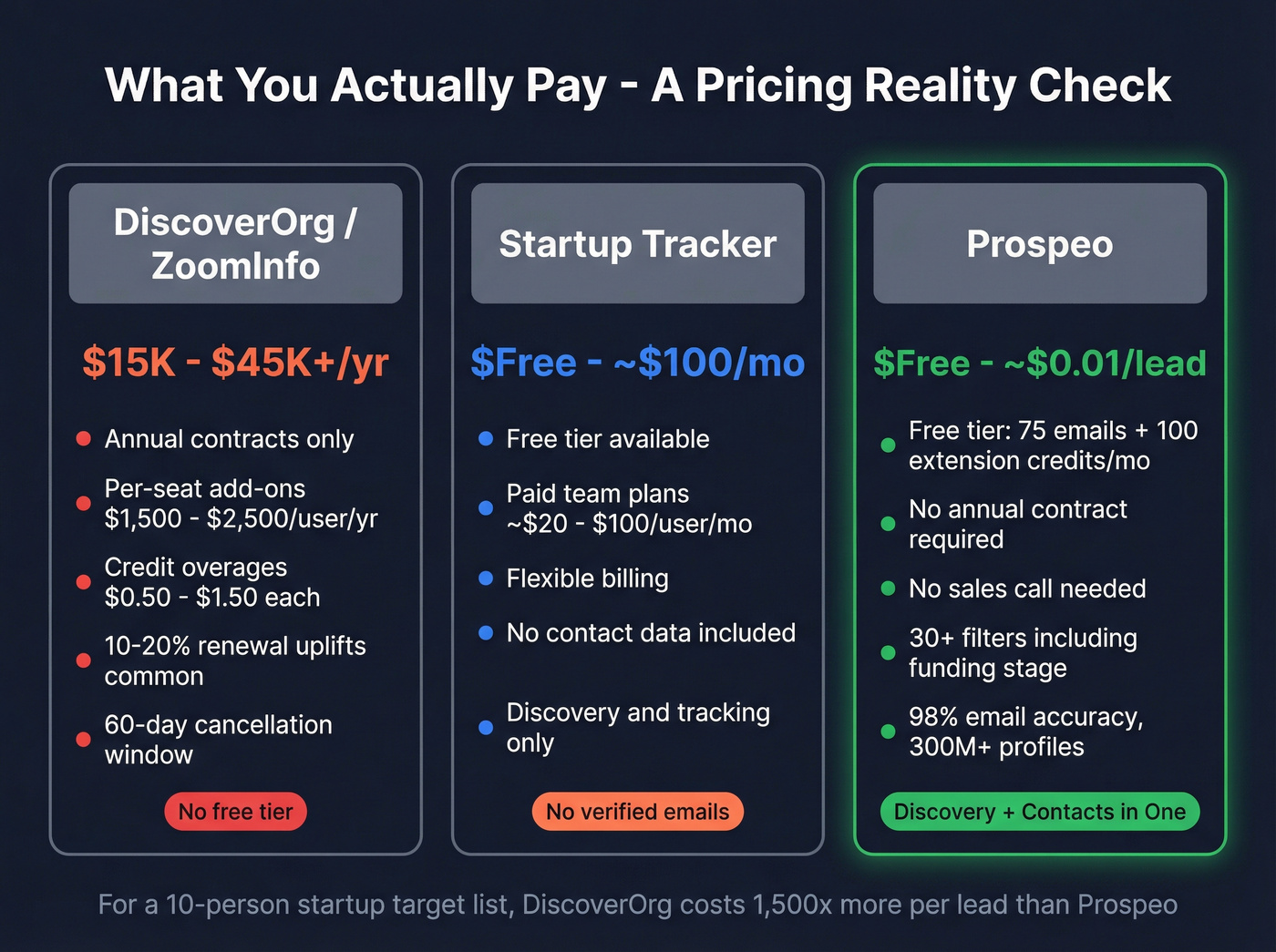
ZoomInfo is a serious enterprise tool. Intent signals, buying committee mapping, alerts on personnel changes - it's built for complex, multi-threaded sales motions. It's also priced like one:
- Professional: ~$14,995-$18,000/year
- Advanced: ~$22,000-$28,000/year
- Elite: ~$35,000-$45,000+/year
Annual contracts only. Per-seat add-ons commonly run $1,500-$2,500/user/year, credit overages cost $0.50-$1.50 each, and 10-20% renewal uplifts are a frequent complaint on r/sales. Auto-renewal terms often require cancellation around 60 days before renewal. No monthly option, no self-serve tier.
Startup Tracker (startuptracker.io)
Startup Tracker is a discovery and monitoring platform built to find and track startups from MVP to IPO. It combines data from providers like Fedger.io, Beta List, Crunchbase, Product Hunt, and social channels with information crowdsourced directly from startups themselves.
Core features include company summaries, startup radars (weekly alerts matching your criteria), shareable lists, a browser extension, and a "data on request" option for custom research. It isn't widely reviewed on major B2B software marketplaces - most social proof comes from vendor-site testimonials from folks at Techstars, Product Hunt, and SeedLegals.
Here's the thing: Startup Tracker is built for discovery and tracking, not as a verified contact database. If you're in sales, that's a dealbreaker. The free tier gets you started, and paid team plans typically run ~$20-$100/user/month.

DiscoverOrg charges $15K+ for org charts at companies with three employees. Startup Tracker finds them but can't give you emails. Prospeo gives you both - 30+ filters including funding stage and headcount growth, plus 98% verified emails at ~$0.01 per lead. No contracts, no sales calls.
Discovery and verified contacts in one platform. Start free today.
Side-by-Side Comparison
| DiscoverOrg/ZoomInfo | Startup Tracker | Winner | |
|---|---|---|---|
| Primary function | Contact data + intent | Startup discovery | Depends on goal |
| Database scope | 270M+ global contacts | Hundreds of thousands of startups | DiscoverOrg |
| Verified contacts | Yes | Not a contact database | DiscoverOrg |
| Intent data | Yes | No | DiscoverOrg |
| Startup filters | Limited | Core focus | Startup Tracker |
| Pricing | ~$15K-$45K+/yr | Free + paid from ~$20/mo | Startup Tracker |
| Contract flexibility | Annual only | Flexible | Startup Tracker |
| Chrome extension | Yes | Yes | Tie |
| Best for | Enterprise GTM | VC/BD discovery | - |
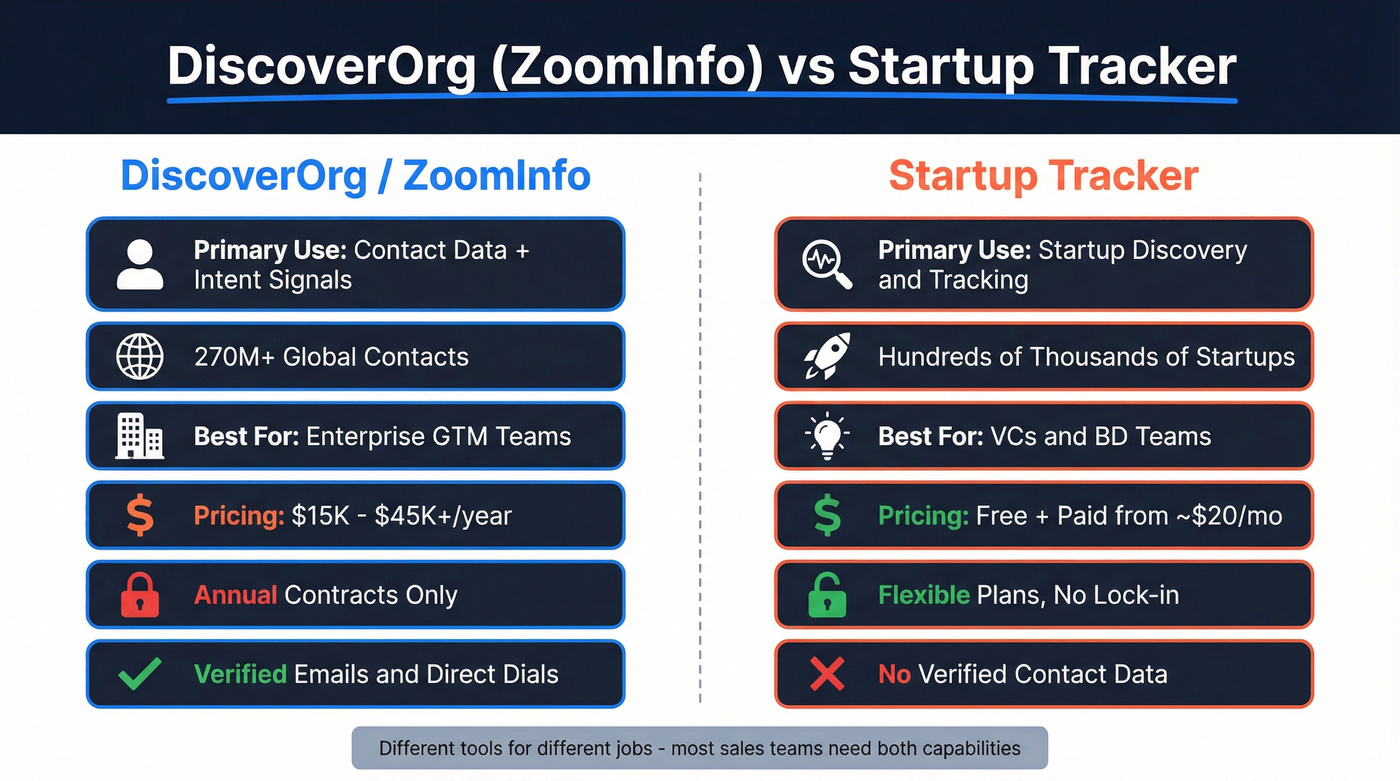
The pattern is obvious: DiscoverOrg wins on data depth, Startup Tracker wins on startup focus and cost. Neither wins on both.
When to Use Which
Choose DiscoverOrg When...
Your ICP is mid-market to enterprise. You need org charts with buying committee mapping, and you have 5+ reps who need managed seats with deep CRM integrations. If you're selling into Fortune 500 accounts, this is the tool built for that motion - and the price tag makes sense at that scale. (If you're evaluating data vendors, start with our breakdown of B2B company data.)
Choose Startup Tracker When...
Your ICP is early-stage startups - seed to Series B - and you need to find them, not contact them. Weekly radar alerts that surface new startups matching your criteria are genuinely useful for VCs and BD teams doing market mapping. For research and tracking, it's solid. For outreach? You'll hit a wall fast.
When You Need Both (Most Sales Teams)
This question comes up constantly in B2B communities: how do you find recently funded startups and actually reach the founders?
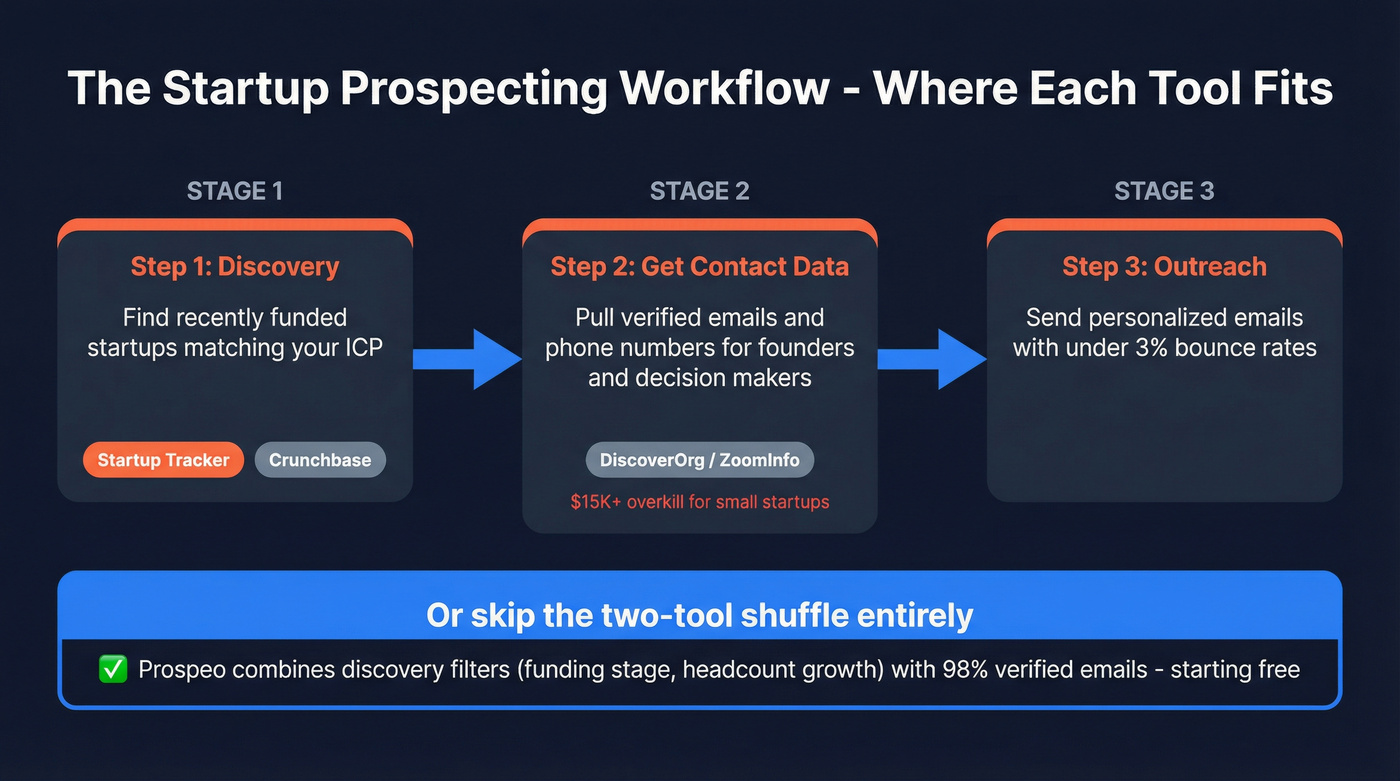
The real workflow is discovery plus contact data. In our experience, DiscoverOrg is overkill for startup prospecting. You're paying $15K+ for org charts at a company where the org chart is three people in a WeWork. We've seen teams burn a quarter of their annual ZoomInfo budget on startup contacts they could've found for pennies elsewhere.
Startup Tracker is a research tool, not a prospecting tool. If you're in sales, you'll outgrow it in a week.
Bridging Discovery and Contact Data
Use Startup Tracker or Crunchbase for discovery, then pull verified contacts through a dedicated data platform. The combined cost is a fraction of a single DiscoverOrg contract. If you want a broader shortlist, compare sales prospecting databases and free lead generation tools.
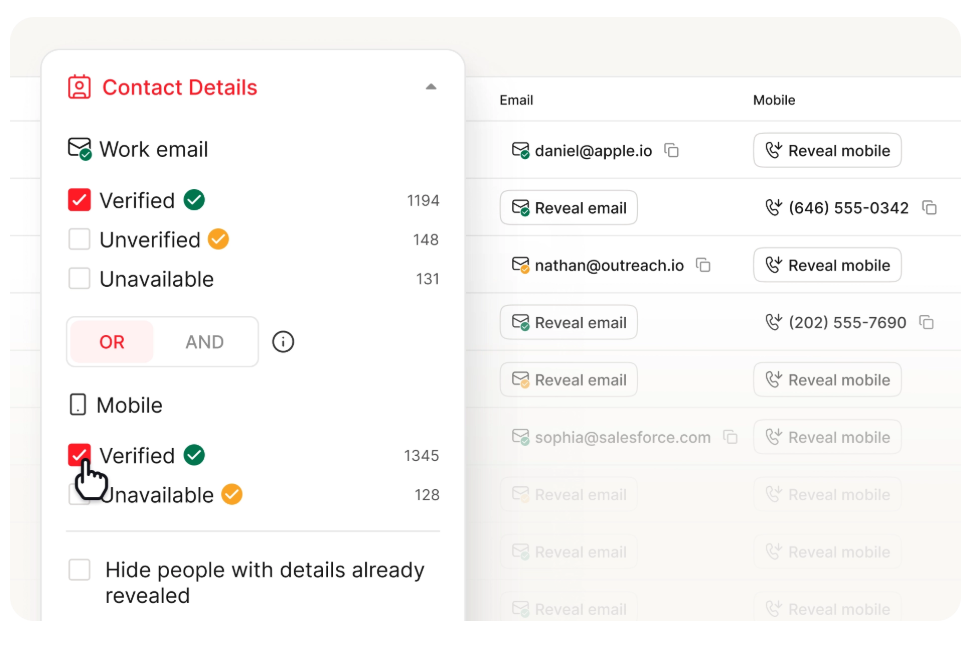
Prospeo's 30+ search filters include funding stage, headcount growth, and revenue - so you can skip the discovery layer entirely and search for startups directly. With 300M+ professional profiles refreshed on a 7-day cycle and 98% email accuracy, you get enterprise-grade data without the enterprise contract. At ~$0.01 per lead with a free tier (75 emails + 100 Chrome extension credits/month), there's no contract and no sales call required. (If you're building lists at scale, see our guide to lead enrichment and data enrichment services.)
Let's be honest: for startup-focused outbound, paying $15K/year for ZoomInfo when you're targeting 10-person companies doesn't make financial sense. One of our users at Stack Optimize built from $0 to $1M ARR running startup outreach at under 3% bounce rates - that's the kind of accuracy that matters when your list is small and every contact counts. If you're tightening your outbound motion, use these sales prospecting techniques and keep an eye on email bounce rate.
Stack Optimize built from $0 to $1M ARR running startup outreach on Prospeo with under 3% bounce rates. With 300M+ profiles refreshed every 7 days and 125M+ verified mobiles, you get the accuracy that matters when every founder on your list counts - at 90% less than ZoomInfo.
Skip the $15K contract. Reach startup founders for pennies.
FAQ
Is DiscoverOrg the same as ZoomInfo?
Yes. DiscoverOrg merged with ZoomInfo in 2019 and the brand was fully absorbed. DiscoverOrg-style features - org charts, verified contacts, intent data - all live within ZoomInfo's platform today. If you're searching for DiscoverOrg pricing in 2026, you're looking at ZoomInfo pricing starting around $15K/year.
Does Startup Tracker provide verified email addresses?
No. Startup Tracker is a discovery platform that tracks startups from MVP to IPO, not a contact data provider. You'll need a separate tool to pull verified emails and phone numbers for the people at startups you discover there.
What's the cheapest way to prospect into startups?
Use a free discovery tool - Startup Tracker or Crunchbase's free tier - to identify targets, then pull verified emails through a data platform with a free plan. Total starting cost: $0. Scale with paid plans when you need volume.
Can I replace both tools with a single platform?
For most startup-focused sales teams, yes. A platform with funding stage, headcount growth, technographic, and revenue filters lets you discover and contact startups in one workflow. You lose Startup Tracker's curated radar alerts, but you gain verified contact data and skip the two-tool shuffle entirely.