

Free Email Address Lookup: What Actually Works in 2026
You just sent 2,000 cold emails from a "verified" list and 400+ bounced. Your sender reputation is torched, your domain needs weeks of warmup, and the tool that sold you those emails still claims 98% accuracy. One poster on r/coldemail reported 20%+ bounce rates from emails their tool had marked as verified. The problem isn't that free email lookup tools don't exist - it's that most prioritize volume over accuracy, and you pay the price in bounced sends and damaged domains.
Our Picks (TL;DR)
Most freemium tools offer 5-50 free searches per month. Three are worth testing first:
- Prospeo - Best for accuracy. 98% verified email accuracy, 75 free emails/month plus 100 Chrome extension credits, 7-day data refresh. Start here if email deliverability matters more than volume.
- Apollo - Best free tier for volume. ~75-100 free email credits/month with a massive database. Great for early-stage teams who need quantity and can tolerate lower accuracy.
- Hunter - Best for simplicity. 50 free searches/month, dead-simple interface, and domain search that's useful for mapping a company's email structure.
Stop looking for a free email finder. Start looking for an accurate one.
Why Accuracy Matters More Than "Free"
The industry benchmark is clear: keep total bounces below 2% and hard bounces under 1%. Go above that and email providers start throttling you - or worse, blacklisting your domain entirely. (If you’re troubleshooting, start with bounce rate benchmarks and fixes.)
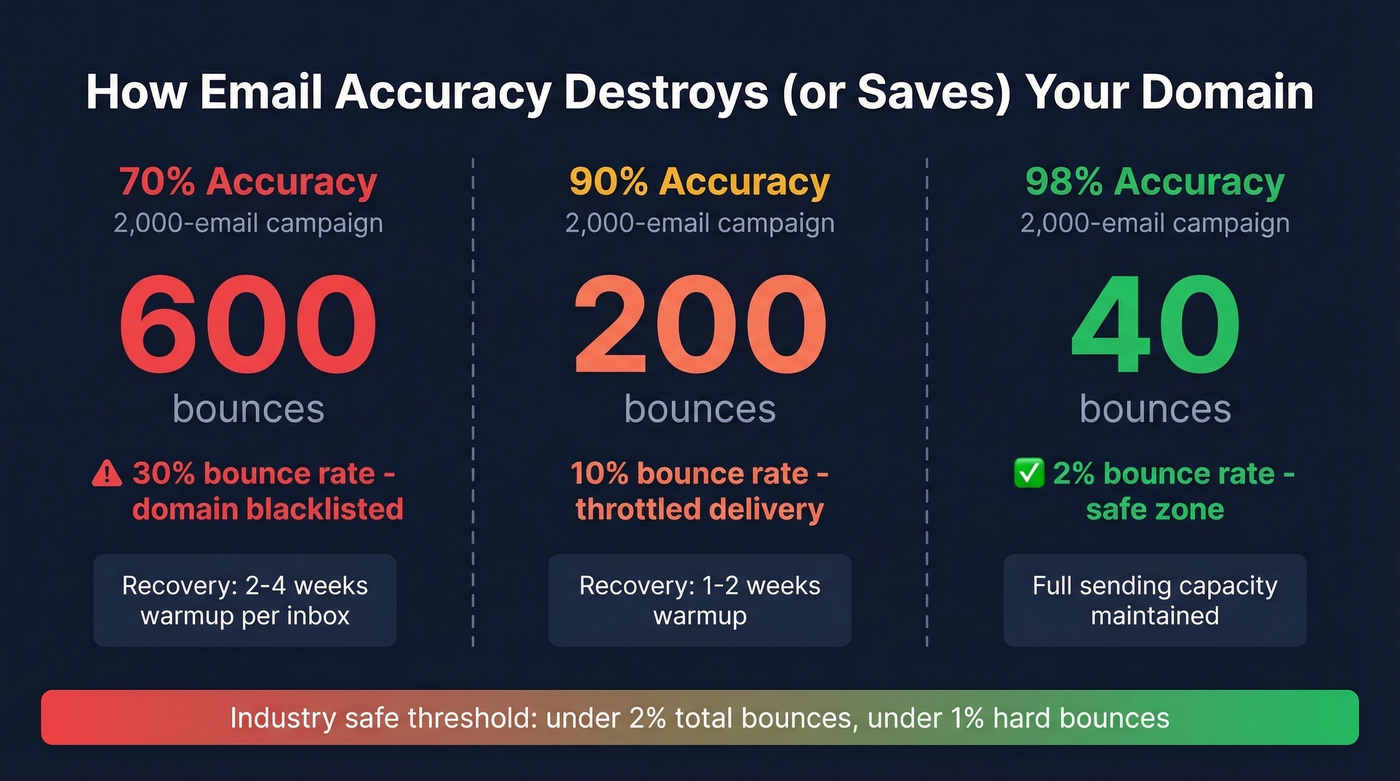
If your email finder delivers 70% accuracy, a 2,000-send campaign means roughly 600 bounces. That's a 30% bounce rate. Your domain is cooked. Recovery takes 2-4 weeks of careful warmup per inbox, and if you're running multiple inboxes, you're staring down a full month of reduced capacity - pipeline you'll never build.
Here's the thing nobody talks about: data freshness kills accuracy more than bad algorithms do. People change jobs, companies restructure, email systems get migrated. The industry average for data refresh cycles is about 6 weeks. Prospeo refreshes every 7 days. That gap matters enormously when you're prospecting into fast-moving industries like tech or startups where turnover is constant.

A tool that's 79% accurate and free isn't saving you money - it's costing you warmup time, reply rates, and deals. If your average deal size is above $5k, one missed opportunity from bad data costs more than a year of a paid email finder. We've seen teams burn through three domains before realizing the problem wasn't their copy. It was their data. (If you’re building lists at scale, see how to generate an email list.)
Best Free Email Lookup Tools Compared
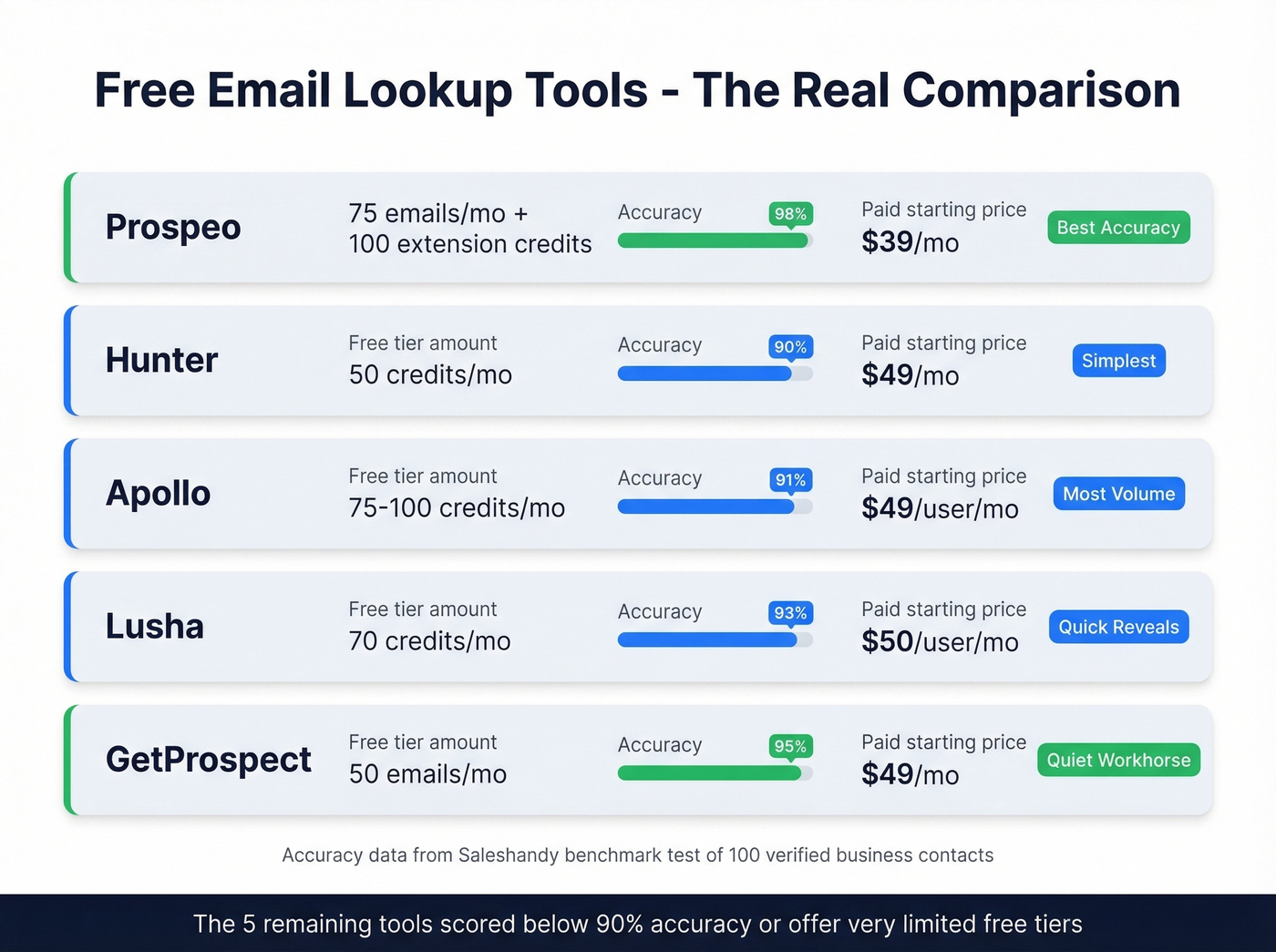
Here's how the ten tools we tested stack up on the metrics that actually matter:
| Tool | Free Tier | Accuracy | Paid From | Best For |
|---|---|---|---|---|
| Prospeo | 75 emails/mo | 98% | ~$39/mo | Accuracy + verification |
| Hunter | 50 credits/mo | 90% | $49/mo | Simplicity + domain search |
| Apollo | ~75-100 credits/mo | 91% | $49/user/mo (annual) | Volume + database size |
| Lusha | 70 credits/mo | 93% | ~$50/user/mo | Quick reveals |
| Snov.io | Free trial | 79% | ~$30/mo | Outreach combos |
| RocketReach | ~5 lookups/mo | 83% | $80/user/mo | Senior exec data |
| GetProspect | 50 emails/mo | 95% | $49/mo | Budget accuracy |
| VoilaNorbert | 50 one-time | Not benchmarked | $49/mo | Quick test |
| Clearbit Connect | 100/mo (Gmail) | Not independently tested | Free | Gmail users |
| EXPERTE.com | Unlimited verify | Verification only | Free | One-off checks |
A note on accuracy numbers: these come from a Saleshandy benchmark test that tested tools against the same list of 100 verified business contacts. Saleshandy ranked itself #1 at 98%, so calibrate accordingly - but the relative rankings across other tools are still useful for comparison.
Prospeo
Prospeo's free tier gives you 75 verified emails per month plus 100 Chrome extension credits - enough to test the tool on real prospects, not just kick the tires. The 98% email accuracy comes from a 5-step verification process that includes catch-all handling, spam-trap removal, and honeypot filtering.
The database covers 300M+ professional profiles with a 7-day refresh cycle. At ~$0.01 per email on paid plans, that's cheap insurance against bounced sends. The Chrome extension has 40,000+ users and lets you pull verified contact data from any website or professional profile in one click.
Use this if: You're running outbound and can't afford bounces. The free tier is generous enough for real testing, and the accuracy means you won't torch your domain on day one.
Skip this if: You need 500+ free lookups per month and don't care about verification depth.
Hunter
Hunter is the tool most people try first, and for good reason. Type a name and domain, get an email. It uses email format patterns, publicly available addresses, and verification to return results fast. The 50 free credits per month cover searches and verifications, and verifications only cost 0.5 credits each - a nice touch.
Where Hunter really shines is domain search. Plug in a company domain and it surfaces available email patterns and addresses associated with that domain. For mapping out an org's email structure before a targeted campaign, nothing's faster. Paid plans start at $49/mo for 2,000 credits, dropping to $34/mo on annual billing. The 90% accuracy is solid but not exceptional - verify externally before sending at scale. (If you’re comparing options, see Hunter alternatives.)

Apollo
Apollo's free tier is the most generous in the space for pure volume - roughly 75-100 email credits per month with access to a database that dwarfs most competitors. Paid plans unlock "unlimited" email credits subject to fair usage, starting at $49/user/mo annually. The 91% accuracy is respectable, and the platform doubles as a lightweight CRM and sequencing tool, which makes it attractive for teams that want everything in one place. (If you’re building a stack, start with SDR tools.)
The caveats are real, though. Apollo had data breaches in 2018 and 2021 affecting over 130M records - something to weigh if you're in a regulated industry. Once you're on a paid plan, you can't reduce seats mid-term. And at 91% accuracy, roughly 1 in 10 emails won't land, so pairing Apollo with a standalone verification step is smart.
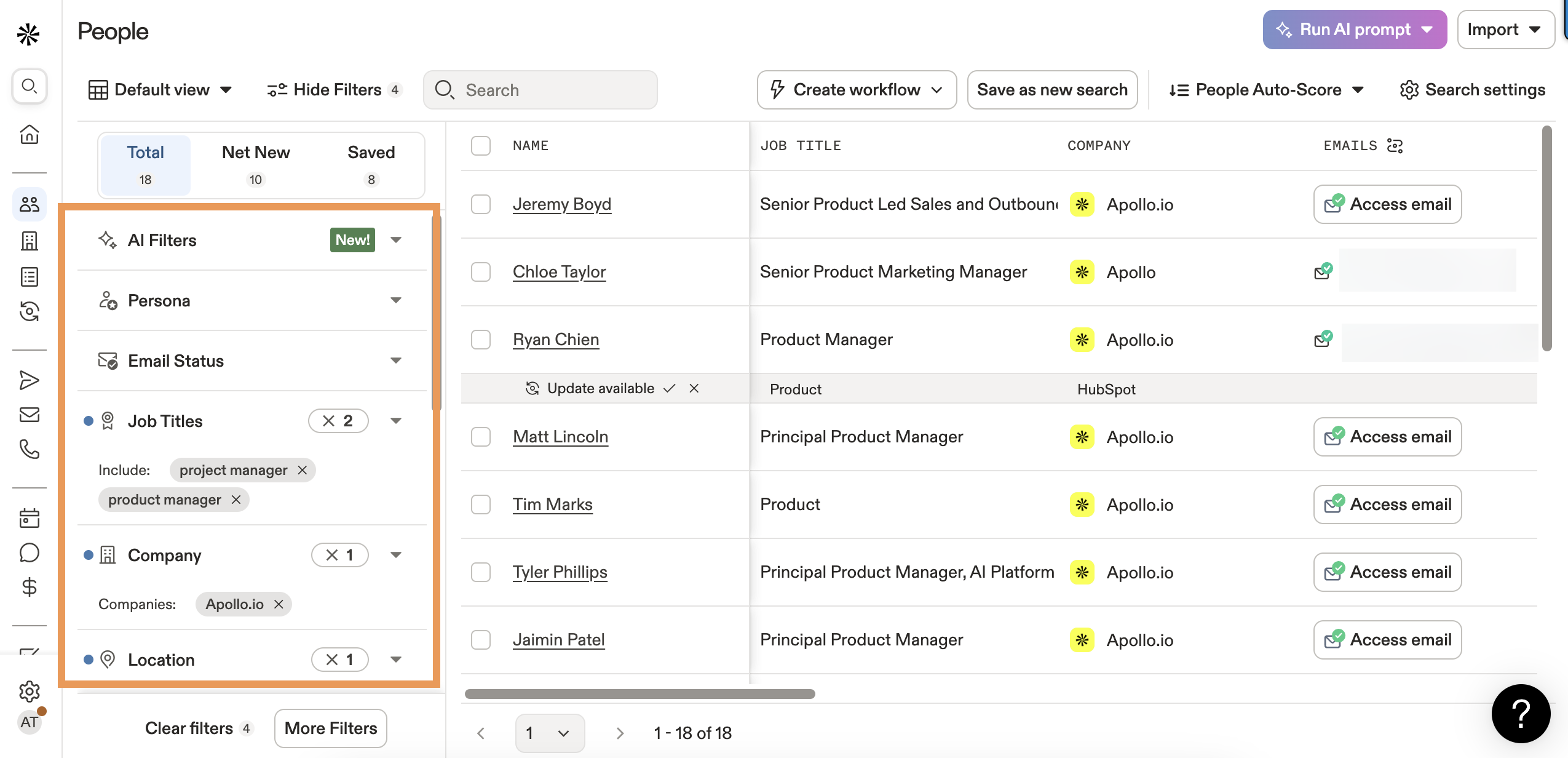
Best for: Small teams that want database + sequencing in one free tool and can tolerate some accuracy tradeoffs. Not ideal if data security is a top priority or you need >95% deliverability.
Lusha
Lusha's 70 free credits per month sounds generous until you understand the credit math. Email reveals cost 1 credit, but phone number reveals cost 10. If you're after both, those 70 credits evaporate fast - seven phone numbers and you're done.
The 93% accuracy is strong, and the interface is clean. Plans likely start around $50/user/mo based on market positioning. Lusha works best as a quick-reveal tool when you already know who you're targeting, not as a bulk prospecting engine.
Snov.io
Snov.io offers a free trial, with the Starter plan at ~$30/mo for 1,000 credits. The catch: each prospect search costs 1 credit and each verification costs another. Finding and verifying one email burns 2 credits - effectively halving your capacity.
The 79% accuracy is the lowest among the tools in the benchmark table, meaning you're spending double credits on less reliable data. Snov.io restructured plans in July 2025, moving team features to Pro+ - so the Starter plan is now solo-only. It's better as an outreach platform that happens to find emails than as a dedicated email finder. (For outreach workflows, see AI cold email outreach.)
RocketReach
RocketReach's free tier is stingy - roughly 5 lookups per month. At 83% in the benchmark, it's mid-pack on paper. Yet the Reddit sentiment tells a different story: one practitioner switched to RocketReach and reported bounce rates "dropped a lot," especially for senior exec data at mid-size SaaS companies. Paid plans run $80-$300/user/mo. Expensive, but worth testing if you're targeting hard-to-reach executives and other tools keep returning generic info@ addresses.
GetProspect
GetProspect offers 50 free emails per month with a 95% accuracy benchmark - one of the highest on this list. Paid plans start at $49/mo for 1,000 emails plus 2,000 verifications. More accurate than Apollo or Hunter, cheaper than RocketReach, and generous enough on the free tier to run a small test campaign. Not flashy, but reliable. If you want a quiet workhorse, this is it.
VoilaNorbert
VoilaNorbert gives you 50 free searches as a one-time signup bonus, not a monthly allowance. Once they're gone, you're on paid at $49/mo for 1,000 searches. Fine for a quick test. Not a long-term free solution.
Clearbit Connect
Clearbit Connect offers 100 free searches per month through a Gmail extension. If you're already living in Gmail, it's a simple way to do lightweight lookups without adding another paid tool. Standalone value is limited.
EXPERTE.com
A no-signup email verification tool that's free for one-off checks. You can't prospect with it, but if you need to quickly verify whether a specific address is valid before hitting send, it does the job without creating another account.

Every bounced email chips away at your domain reputation. Prospeo's 5-step verification and 7-day data refresh deliver 98% email accuracy - even on the free tier. 75 verified emails per month, no credit card required.
Stop paying for free tools with your sender reputation.
Most free email lookup tools refresh data every 6 weeks. By then, your prospects have changed jobs and your emails are bouncing. Prospeo refreshes every 7 days across 300M+ profiles - so the email you find today actually lands tomorrow.
Test 98% accuracy on your real prospect list for free.
Finding Emails Without Tools
You don't always need a dedicated tool. These manual methods work surprisingly well for targeted research:
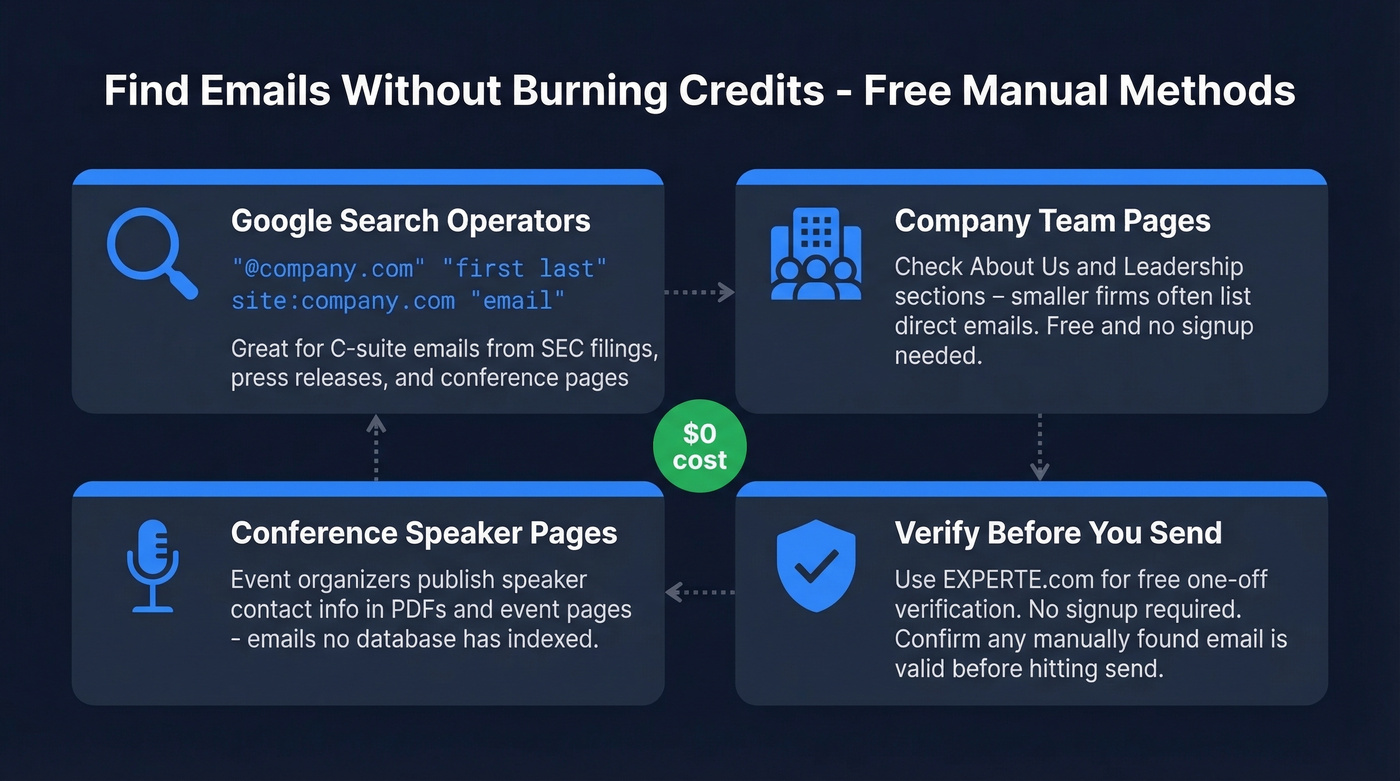
Google search operators are underrated. Try "@company.com" "first last" or site:company.com "email". Press releases, conference speaker pages, and regulatory filings often expose email addresses that aren't in any database. We've pulled C-suite emails from SEC filings that no tool had indexed.
Company team pages sometimes list direct emails, especially at smaller firms. Check the "About Us" or "Leadership" section before burning a credit.
Conference speaker pages and event PDFs are goldmines. Event organizers frequently publish speaker bios with direct email addresses. Search filetype:pdf "email" site:eventdomain.com to find them.
Email pattern guessing still works. Most companies use first.last@domain.com or first@domain.com. Guess the pattern, then verify before sending - EXPERTE.com can confirm without costing credits. (More tactics here: name to email.)
These methods are free and unlimited, but they don't scale. For anything beyond 10-20 lookups per week, you'll want a dedicated tool.
Reverse Email Lookup
Reverse email lookup - starting with an email address and finding out who it belongs to - is a different problem entirely. And in 2026, it's getting harder.
Mailmeteor offers a free reverse lookup with no signup required. Epieos remains one of the few OSINT-focused options that doesn't immediately paywall results. EmailSherlock is another option, though results vary wildly.
The frustrating pattern with most reverse lookup tools: you enter an email, see a teaser of results, then hit a paywall for the full report. Reddit's OSINT communities have flagged this repeatedly. Privacy protections have also eroded what's visible - techniques that worked in 2023 return far less data now. If reverse lookup is a core workflow, the free options are thin and getting thinner.
How to Verify After You Find
Finding an email address and verifying it are two separate steps. Most tools blur this distinction, and that's where bounce rates spike.
A basic SMTP ping - the verification method most free tools use - checks whether a mail server responds. But it can't definitively confirm mailbox existence on catch-all domains, which accept mail to any address whether the mailbox exists or not. Your tool says "valid," you send the email, and it bounces or lands in a dead inbox. This is the single biggest source of "verified" bounces we see teams complain about.
Thorough verification goes deeper: catch-all domain handling, spam-trap removal, and honeypot filtering catch the addresses that basic SMTP checks miss entirely. The distinction between "found" and "verified and deliverable" is the difference between a 2% bounce rate and a 20% bounce rate. (If you need a deeper checklist, see how to check if an email exists.)
Let's be honest: if your current tool doesn't explain its verification methodology, it's probably just running SMTP pings and calling it verified. That's not good enough for production sends.
FAQ
Can I really find someone's email address for free?
Yes - most tools offer 50-100 free lookups per month. Prospeo gives 75 verified emails plus 100 Chrome extension credits; Hunter offers 50 credits; Apollo provides ~75-100. That's enough to test accuracy and run a small campaign, but sustained outbound requires a paid plan or stacking multiple free tiers.
Which free email finder is most accurate?
In our testing, Prospeo leads at 98% verified accuracy with a 7-day data refresh cycle. GetProspect (95%) and Lusha (93%) also perform well. Accuracy depends heavily on refresh frequency - tools updating every 6+ weeks deliver stale data that tanks deliverability.
What's the difference between finding and verifying an email?
Finding generates a probable address from name, company, and known patterns. Verifying confirms the mailbox exists and accepts mail. Always do both - an unverified "found" email is a bounce waiting to happen. Tools like EXPERTE.com offer free verification if your finder doesn't include it.
Why do "verified" emails still bounce?
Most tools rely on basic SMTP pings that can't confirm mailbox existence on catch-all domains, which accept all inbound mail regardless of whether the specific address is real. Stale databases refreshed every 6+ weeks compound the problem. Choose tools with catch-all handling and weekly refresh cycles to minimize this.
Is it legal to look up someone's email address?
Generally yes for B2B outreach in most jurisdictions. GDPR requires legitimate interest and easy opt-out for EU contacts. CCPA has similar requirements in California. The legal risk isn't in finding the email - it's in how you use it. Include an unsubscribe link and honor opt-outs immediately.