

Getro vs Apollo.io: Different Tools for Different Jobs
Getro and Apollo.io typically aren't direct competitors. G2 categorizes Getro as Job Board Software - its peer set includes Hireology and Zoho Recruit. Apollo is a sales intelligence and engagement platform often compared with ZoomInfo and Cognism. Comparing Getro vs Apollo.io is like comparing Greenhouse to Outreach. They share a Venn diagram sliver around contact data, but the core jobs are completely different.
We've seen VC platform teams try to use Apollo for portfolio hiring. It doesn't work. Let's sort this out so you pick the right tool.
30-Second Verdict
| Getro | Apollo.io | |
|---|---|---|
| Category | Job board + network CRM | Sales intelligence + sequencing |
| Best for | VC/PE platform teams, network operators | Outbound sales teams |
| Starting price | $210/mo | Free; paid from $49/user/mo (annual) |
| Database focus | 3.5M open jobs, 800M+ people on Scale plan | 275M contacts, 70M companies |
| Key feature | Warm intro automation | Email sequences + prospecting |
Choose Getro if you're running a talent network for portfolio companies. Choose Apollo if you're building outbound pipeline.
What Is Getro?
Getro is built for network operators - primarily VC/PE platform teams, chambers of commerce, and professional communities - who need to turn their networks into hiring engines. Since Findem acquired Getro in December 2025, the product has expanded to include AI-powered recruiting agents alongside its core modules: AI Job Board, Talent Network CRM, Warm Intro Automations, and Intelligent Job Posts.
The platform powers 800+ networks representing 3.5 million open jobs. Its job board auto-pulls postings from career pages, Indeed, and Notion daily, so portfolio companies don't manually post anything. Sapphire Ventures, a growth-stage VC with 100+ portfolio companies, has used Getro for seven years. Their platform team calls the job board "table stakes" that frees bandwidth for higher-value work like tracking hiring trends and prioritizing executive searches. When up to 75% of applicants aren't a fit for any given role, that automated filtering saves real hours.

Rated 4.7/5 across 25 reviews on G2, users call the UX "clean, intuitive, and polished" with praise for onboarding speed. Implementation takes about a month, with ROI hitting around the 10-month mark.
Use Getro if you're a platform team managing hiring across a portfolio. Skip it if you need to prospect, sequence, or close deals.
What Is Apollo.io?
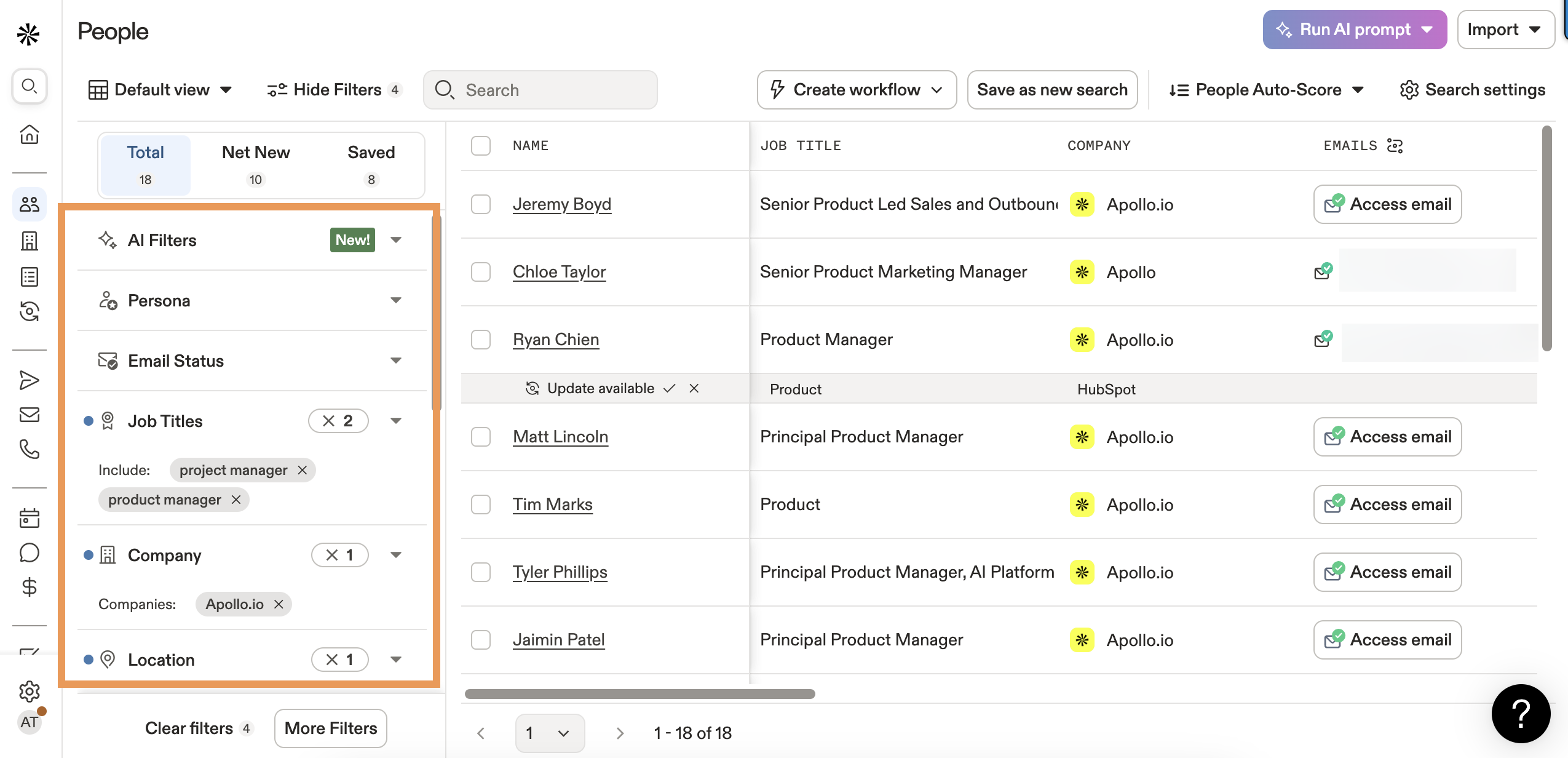
Apollo is the default starting point for SMB and mid-market outbound teams. Its database covers 275M contacts across 70M companies, bundling prospecting, email sequencing, and basic intent data into one platform. Rated 4.7/5 across 9,500+ reviews on G2, SoftwareReviews scores it 8.6/10 with 97% of users planning to renew.
Here's the thing: data quality is Apollo's weak spot. On G2, 503 reviews flag inaccurate data and 597 flag missing features. Reddit threads in r/coldemail and r/Recruitment describe outdated titles, ghost contacts at companies they left months ago, and emails bouncing even after Apollo's built-in verification. If you're running high-volume outbound, those bounces add up fast and torch your domain reputation (see email deliverability and email bounce rate).
Use Apollo if you need an affordable all-in-one for outbound. Skip it if data accuracy is non-negotiable.

Apollo users flag 503 G2 reviews about inaccurate data. Prospeo delivers 98% email accuracy with a 7-day refresh cycle - so you reach people where they actually work, not where they worked last quarter. Teams book 35% more meetings switching from Apollo.
Stop verifying Apollo's data with a second tool. Start with data that's already right.
Feature Comparison
| Feature | Getro | Apollo.io |
|---|---|---|
| Primary use case | Network hiring + intros | Outbound sales prospecting |
| Contact database | 800M+ on Scale plan | 275M contacts |
| Job aggregation | Auto-scraped daily | None |
| Outbound sequences | No | Yes |
| Warm intros | Core feature | No |
| CRM integrations | Zapier, API | HubSpot, Salesforce, Zapier |
| AI features | Intelligent Job Posts | AI email writing |
| Contact accuracy | N/A - recruiting tool | Mixed - 503 G2 flags |
These tools overlap on exactly one thing: contact data. But the overlap is superficial. Getro's data serves network-driven recruiting - matching talent to portfolio jobs, surfacing warm introductions through existing relationships. Apollo's data feeds outbound sales sequences and cold prospecting workflows (more on sales prospecting techniques and sequence management). Apollo uses a credit model for exports and mobile numbers, where a common example is 1 credit for an email and 5 credits for a phone number. Getro's Intelligent Job Posts credits are purchased through their sales team.
Pricing Side-by-Side
| Plan | Getro | Apollo.io |
|---|---|---|
| Entry | Manage: $210/mo | Free (1 user) - unlimited email credits, 5 mobile credits/mo, 10 exports/mo |
| Mid | Connect: $525/mo | Basic: $49/user/mo (annual) |
| Pro | Scale: $759/mo | Professional: $79/user/mo (annual) |
| Top | Enterprise: custom | Organization: $119/user/mo (annual), 3-seat minimum |
Getro's pricing reflects its enterprise-network buyer. Apollo's free tier is genuinely useful for solo prospectors, but watch credit consumption on paid plans - and you can't reduce seat count until your payment term ends.
Which Tool Should You Choose?
For VC/PE platform teams managing hiring across portfolio companies, Getro is the clear pick. It handles automated job aggregation, warm intro workflows, and the kind of hiring trend intelligence that Sapphire Ventures has relied on for seven years. Nothing else on the market does this job as well.
Apollo makes sense for SDR and AE teams building outbound pipeline on a budget. The free tier gets you started, and the sequencing tools are solid. But I'll be direct: if your deals typically close under $10k and your outbound volume is high, Apollo's data quality issues will cost you more in bounced emails and wasted rep time than you save on the subscription. The consensus on r/coldemail backs this up - teams running 1,000+ emails per week consistently report needing a secondary verification layer on top of Apollo's data (see email reputation tools).
If your core problem is actually verified contact data - for recruiting outreach or sales campaigns - neither tool specializes in accuracy. Prospeo's 98% email accuracy and 7-day data refresh cycle address the exact "outdated titles" and "emails bouncing after verification" complaints that fill Reddit threads about other platforms. Our customers report booking 35% more meetings compared to Apollo users, largely because fresher data means fewer bounces and more live conversations.
The Contact Data Layer Matters Independently
Whether you're running Getro for portfolio hiring or Apollo for outbound sales, the quality of your contact data is a separate problem from your workflow tool. The data freshness gap is the single biggest factor in reducing bounces - a 7-day refresh cycle versus the 6-week industry average means you're reaching people where they actually work, not where they worked last quarter. If you're evaluating providers, start with a shortlist of data enrichment services and a dedicated sales prospecting database.

Whether you use Getro for portfolio hiring or Apollo for outbound, bad contact data kills your results. Prospeo's 300M+ profiles are refreshed every 7 days - not every 6 weeks - at $0.01 per email. No contracts, no sales calls required.
Fix the data layer underneath your workflow tools. Your bounce rate will thank you.
FAQ
Can you use Getro and Apollo.io together?
Yes - they solve different problems. Getro manages network job boards and warm intros for portfolio hiring. Apollo handles outbound sales prospecting and sequencing. Some VC teams run Getro for talent operations while using a dedicated data tool for verified recruiter outreach alongside Apollo for pipeline generation.
Is Getro a sales intelligence tool?
No. G2 categorizes it as Job Board Software alongside Hireology and Zoho Recruit. It's built for network operators and talent communities managing portfolio hiring, not outbound sales prospecting or sequencing.