

The Best Go-to-Market Tools for 2026: Pricing, Benchmarks, and What to Actually Buy
Your reps spend roughly 40% of their time actually selling. The rest goes to toggling between tabs, updating CRMs, chasing bad phone numbers, and figuring out which of your 12 GTM tools is supposed to do what. The average enterprise runs 120+ marketing applications and uses barely a third of them. The recurring complaint on r/sales and r/salesoperations is blunt: teams buy 8-15 tools and actively use maybe four. That's not a stack - it's a junk drawer.
Here's the thing: 42% of sales reps feel overwhelmed by their tools, and overwhelmed sellers are 45% less likely to hit quota. The problem isn't that good tools don't exist. It's that most teams buy too many, integrate too few, and end up paying enterprise prices for startup-grade results. We've organized the tools below by category, included real pricing for each one, and built three budget-tiered stacks so you can stop guessing and start buying.
Skip to the budget stacks if you already know what you need.
What Changed for GTM Software in 2026
GTM buying behavior shifted hard this year. Three trends are driving every decision worth having.

AI went from experiment to line item. A Felicis survey of 40 GTM leaders found 80% plan to use AI for sales and marketing functions, with 13.5% of budgets now allocated specifically to AI tools. Over half expect ROI in under a year - and 30% expect it within months. Meanwhile, 58% of leaders say their AI budgets are increasing. That's not hype. That's procurement behavior.
Consolidation is winning. Revenue leaders are tired of buying multiple tools that do overlapping things. The workflow automation market hit an estimated $26B in 2026, growing at roughly 10% CAGR, and the winners are platforms that collapse three or four point solutions into one.
Data quality became the differentiator. When every team has access to sequencing, intent signals, and AI-written copy, the variable that actually moves pipeline is whether your contact data is accurate. Bad emails tank deliverability. Wrong numbers waste rep time. The tools that verify and refresh data aggressively are pulling ahead of the ones that just have big databases.
Our Picks (TL;DR)
If you don't read another word, here's where to start.
| Tool | Best For | Starting Price | Standout Feature |
|---|---|---|---|
| Prospeo | Data accuracy | Free / ~$0.01/lead | 98% email accuracy, 7-day refresh |
| Apollo | All-in-one outbound | Free / $49/user/mo | Sequencing + enrichment |
| Clay | RevOps workflows | Free / $134/mo | Waterfall enrichment + AI |
| HubSpot | CRM + marketing | Free / $20/seat/mo | Ecosystem breadth |
| Gong | Conversation intel | ~$65K/yr (50 users) | Deal intelligence + coaching |
Prospeo leads on data quality. Apollo leads on value-per-dollar for outbound teams. Clay leads on flexibility for ops-heavy workflows. The rest of this guide breaks down the tools across six categories with pricing you can actually use.
Best Go-to-Market Tools by Category
B2B Data & Enrichment
Prospeo is the tool we'd hand to any team whose pipeline is bottlenecked by bad contact data. The database covers 300M+ professional profiles, 143M+ verified emails, and 125M+ verified mobile numbers - all refreshed on a 7-day cycle, compared to the 6-week industry average. Email accuracy runs 98%, and mobile pickup rates hit 30% across regions.

The economics are hard to argue with. At roughly $0.01 per lead, it runs 90% cheaper than ZoomInfo on a per-contact basis. Snyk's 50-person AE team switched and saw bounce rates drop from 35-40% to under 5%, generating 200+ new opportunities per month. Integrations cover Salesforce, HubSpot, Clay, Zapier, Make, Outreach, and Salesloft - so it slots into whatever sequencing or CRM setup you're already running. Pair it with Apollo or Outreach for sequencing and you've got a complete outbound stack without locking your data layer into an annual contract.

Apollo is the obvious starting point for budget-conscious outbound teams who want prospecting, sequencing, and enrichment in one platform. The free tier gives you 10,000 email credits per month, plus 5 mobile credits and 10 export credits, which is genuinely useful for testing. Paid plans run $49/user/month (Basic), $79 (Professional), and $119 (Organization) on annual billing - $59, $99, and $149 if you go monthly.
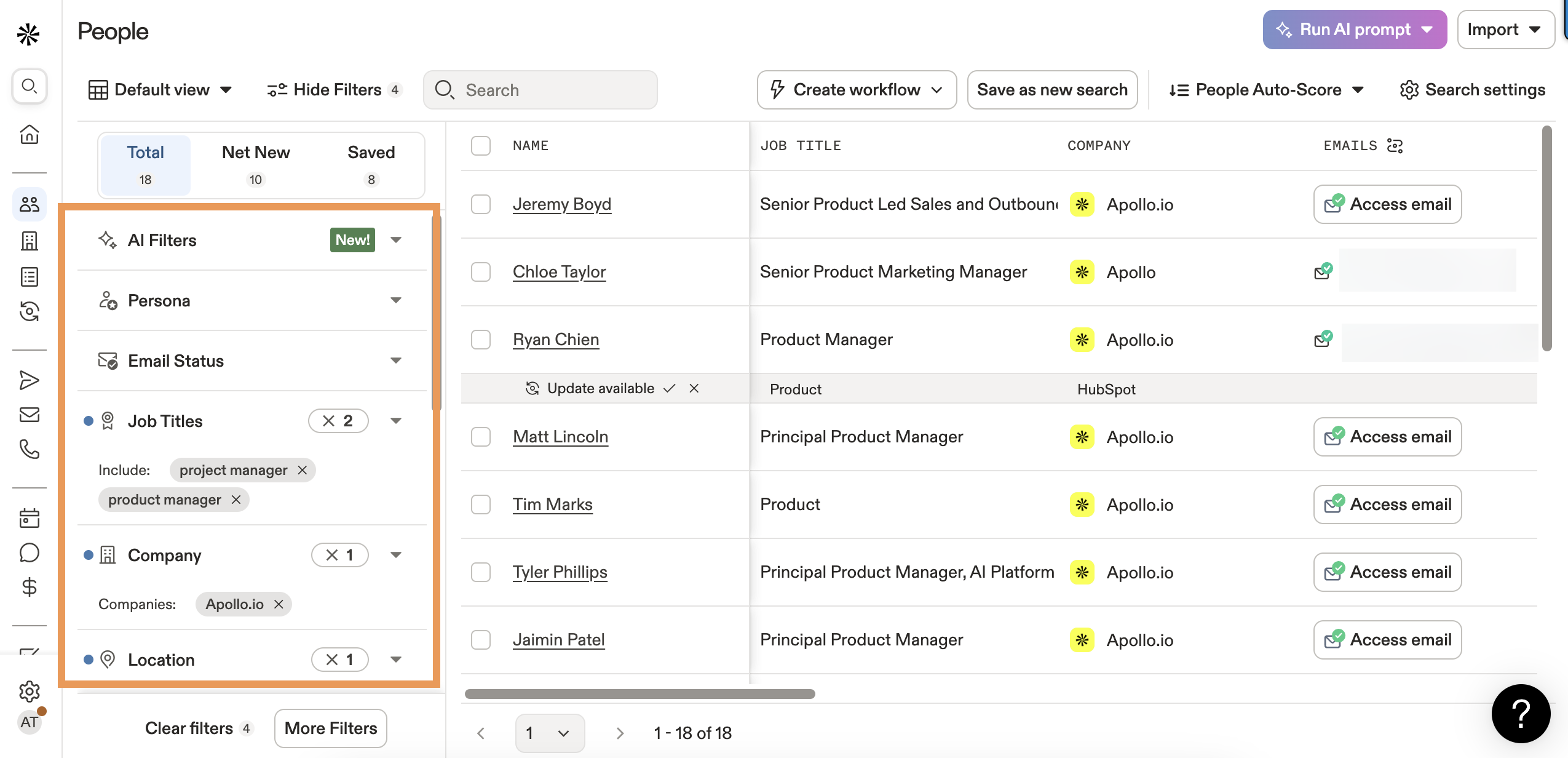
The catches are real, though. Mobile reveals cost 8 credits each, and credits don't roll over. Overages hit $0.20/credit with minimum purchase requirements. The dialer needs Professional tier, international calling needs Organization, and Organization requires at least three users. For a solo founder or small team, Basic is a steal. For a 20-person SDR floor burning through mobile credits, the math gets expensive fast.
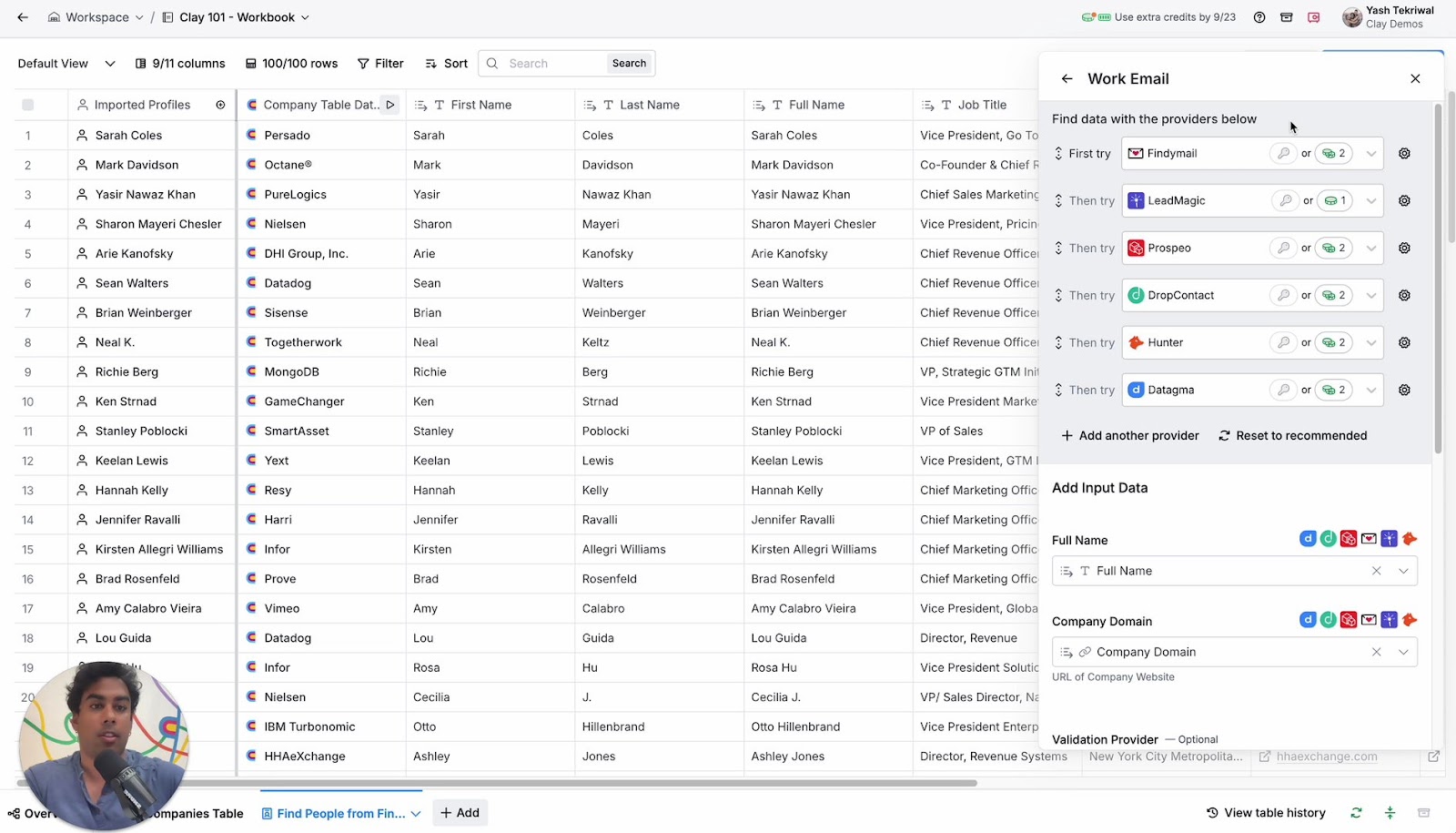
Clay is the RevOps power tool that everyone on GTM Twitter won't shut up about - and for good reason. It's a workflow builder that chains together 100+ enrichment providers in a waterfall sequence, meaning if Provider A doesn't find an email, Provider B tries, then Provider C, and so on. Add AI agents that can research companies, score leads, and write personalized snippets, and you've got something that replaces an entire ops person's manual workflow.
Pricing runs Free (100 credits/month), Starter at $134/month, Explorer at $314/month, Pro at $720/month, and Enterprise custom. Every plan includes unlimited users and rollover credits capped at 2x your monthly allocation. The catch - and it's a meaningful one - is credit consumption. Failed lookups still burn credits, and typical failure rates run 20-30% for basic enrichment, 25-35% for email finding, and 30-40% for phone enrichment. Top-up credits carry roughly a 50% markup over base plan rates. A team on Starter can see total annual spend land around $4,200-$9,600 once top-ups and failed lookups are factored in. Budget for the plan above what you think you need.
ZoomInfo remains the enterprise incumbent. The database is massive, the intent data is deep, and the workflow breadth is unmatched. But a mid-market contract typically runs $15-40K/year, and enterprise deployments with intent and mobile modules can hit $40-100K+. That works out to roughly $1/lead - fine if you're a 200-rep org with dedicated ops. For everyone else, the per-lead economics don't pencil out. The ZoomInfo GTM tools guide is worth reading for their perspective on the category, even if you don't buy the platform.
Clearbit integrates deeply with HubSpot and is commonly used inside HubSpot workflows. Custom pricing starts around $20K/year. It's strong for real-time website visitor enrichment but increasingly less relevant as a standalone play - most teams access it through HubSpot directly.
CRM
HubSpot earns its spot because the free CRM is genuinely usable - not a demo, not a trial, but a real product that teams under 10 reps can run on for months. Sales Hub Starter costs $20/seat/month, Professional jumps to $100, and Enterprise is $2,000+/month per hub. Marketing Hub Professional runs $800/month.
The sweet spot is teams under 200 reps who want CRM and marketing automation in one ecosystem without the implementation overhead of Salesforce. HubSpot's PLG-friendly architecture means you can start free and upgrade incrementally, which is exactly how most startups should buy software.
Use Salesforce if you're enterprise-scale with complex workflows and dedicated admins. Skip it if you're under 50 reps and don't have an ops team. Sales Cloud Starter runs $25/user/month, Professional $100, Enterprise $175, Unlimited $350. Budget for implementation and ongoing admin headcount - the license is the cheap part.
Sales Engagement
Outreach doesn't publish pricing, which is frustrating for a tool this widely used. Expect $100-160/user/month with $1,000-$8,000 in implementation fees and a 10+ seat minimum. It's the enterprise sequencing standard - powerful, complex, and built for large SDR teams with dedicated ops support. If you're running fewer than 10 reps, you're overpaying for capabilities you won't use.

Salesloft competes directly with Outreach and the choice usually comes down to CRM ecosystem fit. Essentials runs ~$140/user/month, Advanced ~$180/user/month, Premier is custom. Teams buying 100+ seats commonly negotiate significant volume discounts. The Salesforce integration is particularly tight. We've seen teams flip a coin between these two and be happy either way - the differentiation is narrower than either vendor wants to admit.
Conversation Intelligence
A RevOps lead at a mid-market SaaS company told us Gong is "the tool that pays for itself if your ACV is high enough, and bankrupts you if it isn't." That's about right.

Gong doesn't publish pricing, but Vendr's benchmarks give us real numbers. A 50-user deployment runs about $65K/year at median. A 100-user deployment lists at $206K and negotiates down to roughly $140K. The best discounts - 15-25% off - come in December and January when Gong's fiscal calendar works in your favor.
The product itself is unmatched for deal intelligence, coaching, and pipeline visibility. If your team sells deals above $50K and call quality directly impacts close rates, Gong is worth the investment. Below that threshold, you're paying for insights on transactions that don't justify the per-seat cost.
ABM & Intent
6sense runs enterprise pricing, typically $30-100K+/year. The predictive analytics and AI-driven scoring are powerful, but user reviews consistently flag data freshness issues and confusing duplicate records. It's a tool that demands a dedicated ABM ops person to get value from - without that, you're paying six figures for a dashboard nobody trusts.
Demandbase occupies similar budget territory at $30-100K+/year with a different philosophy: full-lifecycle ABX orchestration spanning marketing, sales, and CS. Choose 6sense if you prioritize predictive scoring. Choose Demandbase if you want lifecycle orchestration. Both require significant implementation time and executive sponsorship to succeed. As HockeyStack's comparison notes, these are enterprise-grade platforms with enterprise-grade complexity.
Routing & Scheduling
Default positions itself as a unified routing, enrichment, and scheduling layer - and the pitch is compelling. Growth tier starts at $500/month, Scale is custom, with usage-based add-ons for intent tracking. They aim to consolidate dozens of point solutions under a single GTM control layer, which reflects the real trend toward platform consolidation. Strong for mid-market teams drowning in point solutions for lead routing.
Chili Piper costs $45/user/month plus platform fees ranging $225-$1,500/month. ChiliCal runs $22.50/user/month. Best for inbound-heavy teams that need instant meeting booking from form submissions - it does one thing and does it well.
Sales Enablement
Highspot runs custom pricing, typically $30-60/user/month for mid-market deployments. Content management, buyer engagement, and rep training in one platform. Worth evaluating if you've got 50+ reps and content governance has become a real problem. Below that size, Google Drive and a good naming convention will get you surprisingly far.

You just read that 42% of reps feel overwhelmed by their tools - and bad data makes it worse. Prospeo gives your GTM stack a clean foundation: 300M+ profiles, 98% email accuracy, and a 7-day refresh cycle so reps stop chasing dead contacts and start booking meetings.
Fix your data layer first. Everything else compounds from there.
The Hidden Cost of Bad Data
Most GTM tool guides skip the single biggest line item in your stack: the cost of bad data flowing through good tools.
Hunter's 15-tool email verification benchmark tested 3,000 real business emails across providers. The top performers - Hunter itself, Clearout, Kickbox - hit 68-70% accuracy. That means even the best mainstream verifiers let 30%+ of questionable addresses through. When those addresses bounce, your domain reputation takes the hit, your sequences land in spam, and every dollar you spent on sequencing tools is wasted.

Prospeo's proprietary email-finding system doesn't rely on third-party providers - every address goes through catch-all handling, spam-trap removal, and honeypot filtering before it reaches your CRM. When the industry benchmark tops out at 70% accuracy and you're getting 98%, that gap is the difference between a sequence that books meetings and one that burns your domain.
What to Buy: Stacks by Budget
The right stack depends on your team size and budget, not on which vendor has the best marketing. Let's break this down into three tiers that actually work.

$500/mo - Startup (1-5 reps)
Prospeo's free tier or Starter plan for data accuracy, Apollo Basic ($49/user/month) for sequencing, and HubSpot CRM (free). Total: ~$100-$300/month for a solo founder, under $600/month for a five-person team. This stack punches way above its price point. If you're closing deals under $10K, this is probably all you need. Period.
$2K/mo - Mid-Market (5-20 reps)
A verified data enrichment platform, HubSpot Sales Hub Starter ($20/seat/month) for CRM, Salesloft or Outreach for sequencing, and Default ($500/month) for routing. Total: ~$1,500-$2,500/month. You get verified data, proper sequencing, CRM automation, and intelligent lead routing without crossing into enterprise pricing territory.
$10K+/mo - Enterprise (50+ reps)
Salesforce Enterprise ($175/user/month) plus your choice of data provider based on budget, Gong (~$5,400/month for 50 users), 6sense or Demandbase for ABM, Outreach for sequencing. Total: $8,000-$15,000+/month. At this scale, the question isn't which tools to buy - it's whether you have the ops team to make them work together. The rise of revenue workflow platforms in 2026 means even enterprise teams can reduce manual handoffs, but only if the integrations are configured properly from day one.
Snyk's 50 AEs dropped bounce rates from 35% to under 5% and generated 200+ new opportunities per month. At $0.01/lead with no annual contract, Prospeo slots into any GTM stack - Clay, HubSpot, Outreach, Salesforce - without blowing your 2026 budget.
Stop paying enterprise prices for data that bounces.
Go-to-Market Tools FAQ
What's the difference between a GTM tool and a CRM?
A CRM stores and organizes customer data as the system of record. GTM tools are the broader stack that feeds the CRM and acts on data inside it - enrichment, sequencing, intent signals, routing, and analytics. Think of the CRM as the warehouse and GTM tools as the supply chain.
How many GTM tools does a team need?
Most effective teams run 3-5 core tools: a CRM, a data/enrichment platform, a sequencing tool, and optionally conversation intelligence or ABM. More than that usually means overlap and shelfware. The Cognism GTM tools roundup covers the full category if you want to explore further.
Which GTM tool has the most accurate email data?
Prospeo delivers 98% email accuracy with a 7-day refresh cycle - significantly higher than the 68-70% top scores in Hunter's 15-tool verification benchmark. That accuracy comes from proprietary 5-step verification infrastructure, not just database size.
Is it worth paying for enterprise GTM platforms under 50 reps?
Rarely. ZoomInfo, Gong, and 6sense are built for scale - under 50 reps, the per-seat economics and implementation overhead usually don't justify the cost. Start with self-serve tools and upgrade when you genuinely outgrow them.
How much should a startup budget for GTM software in 2026?
A functional outbound stack starts at $0-$500/month using free tiers. Budget $1,000-$2,500/month once you have 5-10 reps and need dedicated sequencing, routing, or conversation intelligence.