

How to Define Your Ideal Customer (And Actually Use the Profile)
Most companies have an ICP document. It lives in a Google Slide somewhere between the brand guidelines nobody reads and last year's QBR deck. A common critique on r/b2bmarketing is blunt: most ICPs turn into "fairytale personas" built without talking to a single customer or sales rep. New Breed's case study shows what happens when you actually disqualify poor-fit segments - average deal size was 152% higher in early 2019 than in 2016. The ICP isn't the issue. The process is.
Here's the short version:
- Analyze your last 50-100 closed-won deals. 70-80% share 3-5 common traits.
- Score every account on a 100-point rubric and tier them A/B/C.
- Turn the profile into a filtered prospect list - don't let it die in a slide deck.
What an ICP Actually Is (and Isn't)
These three terms get used interchangeably, and they shouldn't. As HubSpot frames it: "Personas tell you who you're speaking to. ICPs tell you which companies are worth speaking to."
| Term | What It Defines | Example |
|---|---|---|
| ICP | Company-level fit | SaaS, 50-200 employees, Series B, uses Salesforce, uses Salesforce |
| Buyer Persona | Individual decision-maker | VP of Sales, 8+ years experience, reports to CRO |
| Target Market | Total addressable universe | All B2B SaaS companies in North America |
The average B2B software buying committee involves five decision makers. Define the company first, then the people inside it.
Build Your Ideal Customer Profile in 5 Steps
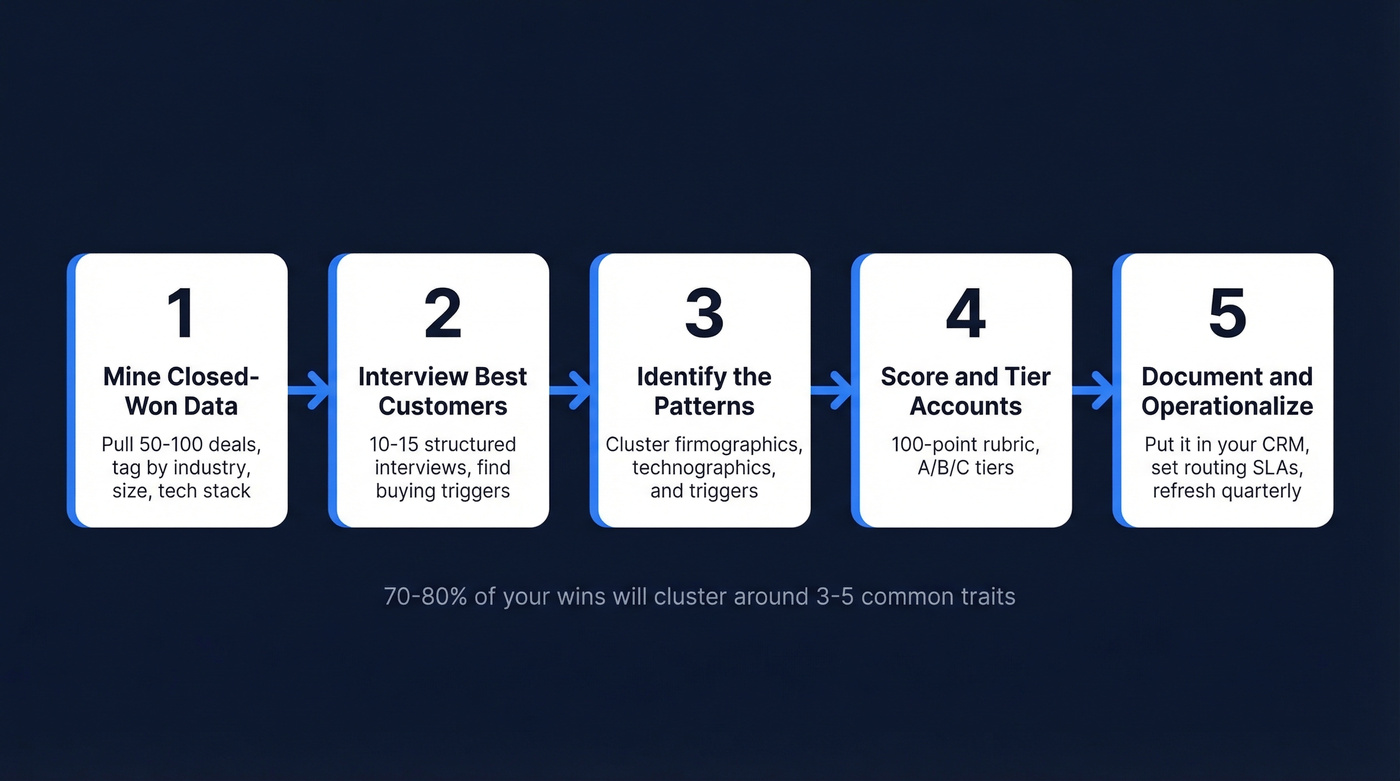
1. Mine Your Closed-Won Data
Pull your last 50-100 wins from the past 12 months. Tag each deal by industry, headcount, tech stack, funding stage, and pain urgency. When we've run this exercise with teams, 70-80% of wins cluster around 3-5 common traits - those clusters are your ICP draft, not a brainstorm on a whiteboard. If your CRM data is thin, start with whatever you have; even 20 deals will reveal patterns that gut instinct misses.
2. Interview Your Best Customers
Pick 10-15 customers who've been with you longer than 12 months and spend above your average. Use structured questions drawn from Leah Tharin's interview framework:
- Where do you learn about new tools?
- What are the biggest challenges in your industry right now?
- Who else was involved in the buying decision?
- What triggered the search?
- What was the "aha moment" that made you commit?
The answers reveal buying triggers that firmographics alone can't capture.
3. Identify the Patterns
Cluster the attributes you've collected. For B2B, that means firmographics + technographics + buying triggers. For B2C, it's demographics + psychographics + behavioral signals.
One nuance most articles miss: in B2B, the person who signs the contract, the person who pays, and the person who uses the product daily are often three different people. Build your ICP with all three roles in mind, or your outreach hits the wrong inbox every time.
4. Score and Tier Your Accounts
Don't just describe your ICP - quantify it. Assign a 100-point score to every account using the rubric in the next section. Tier A = 80-100, Tier B = 50-79, Tier C = 0-49. This isn't optional. Without scoring, "ideal" stays subjective and every rep argues their pet account deserves attention.
5. Document and Operationalize
Put the ICP in your CRM, not a slide deck. Set routing SLAs based on tier scores. Refresh quarterly, or whenever win rates shift - an ICP that's six months stale is barely better than no ICP at all.

Your ICP scoring rubric is only as good as the data behind it. Prospeo tracks intent across 15,000 Bombora topics, flags job changes and funding events, and layers technographic filters - so every dimension of your rubric maps to a real, searchable signal. Emails verify at 98% accuracy on a 7-day refresh cycle.
Score accounts on paper. Reach them with Prospeo.
The Copy-Paste Scoring Rubric
Businesses using account scoring see a 77% boost in lead generation ROI. Here's a six-dimension model you can adapt today:
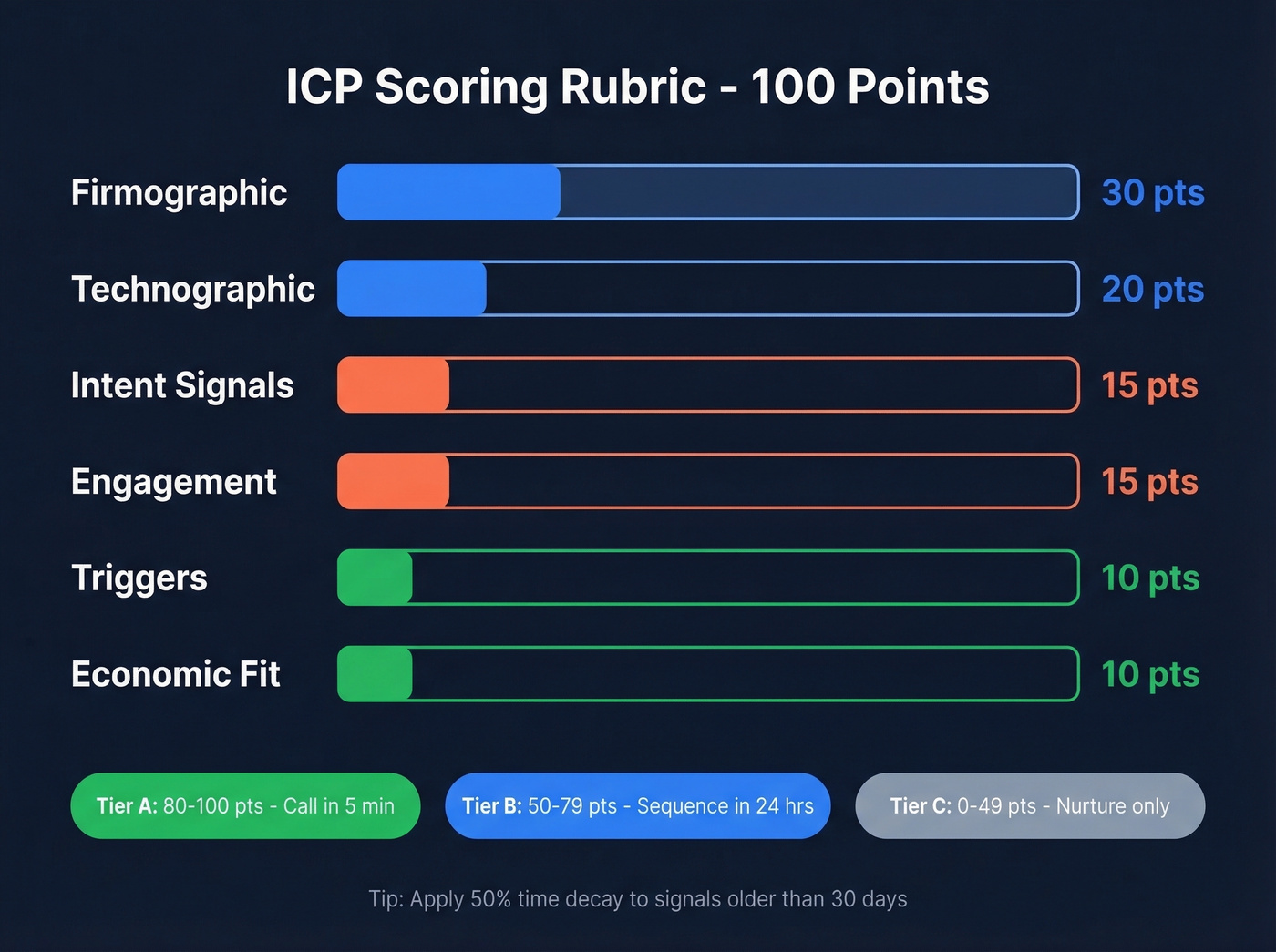
| Dimension | Weight | Ideal (full pts) | Acceptable (half) | Low (zero) |
|---|---|---|---|---|
| Firmographic | 30% | Exact industry + size | Adjacent vertical | Outside ICP |
| Technographic | 20% | Uses key tech stack | Partial overlap | Irrelevant stack |
| Intent | 15% | Active topic surge | Moderate signals | No signals |
| Engagement | 15% | Pricing page + reply | Webinar or open | No activity |
| Triggers | 10% | Funding/job change | Hiring signals | None detected |
| Economic | 10% | High LTV segment | Average LTV | Below threshold |
Two rules separate this from a vanity exercise. First, apply time decay: signals older than 30 days lose 50% of their value. Second, tie scores to routing SLAs - 80-100 gets a call within 5 minutes, 60-79 enters a sequence within 24 hours, below 60 goes to nurture.
In our experience, Tier A accounts close at 1.5-2x the rate of Tier B with 15-20% shorter cycles. That gap alone justifies the hour it takes to build this rubric.
5 ICP Mistakes That Kill Your Pipeline
Let's be honest: most pipeline problems aren't lead volume problems. They're targeting problems. Here are the five we see over and over.
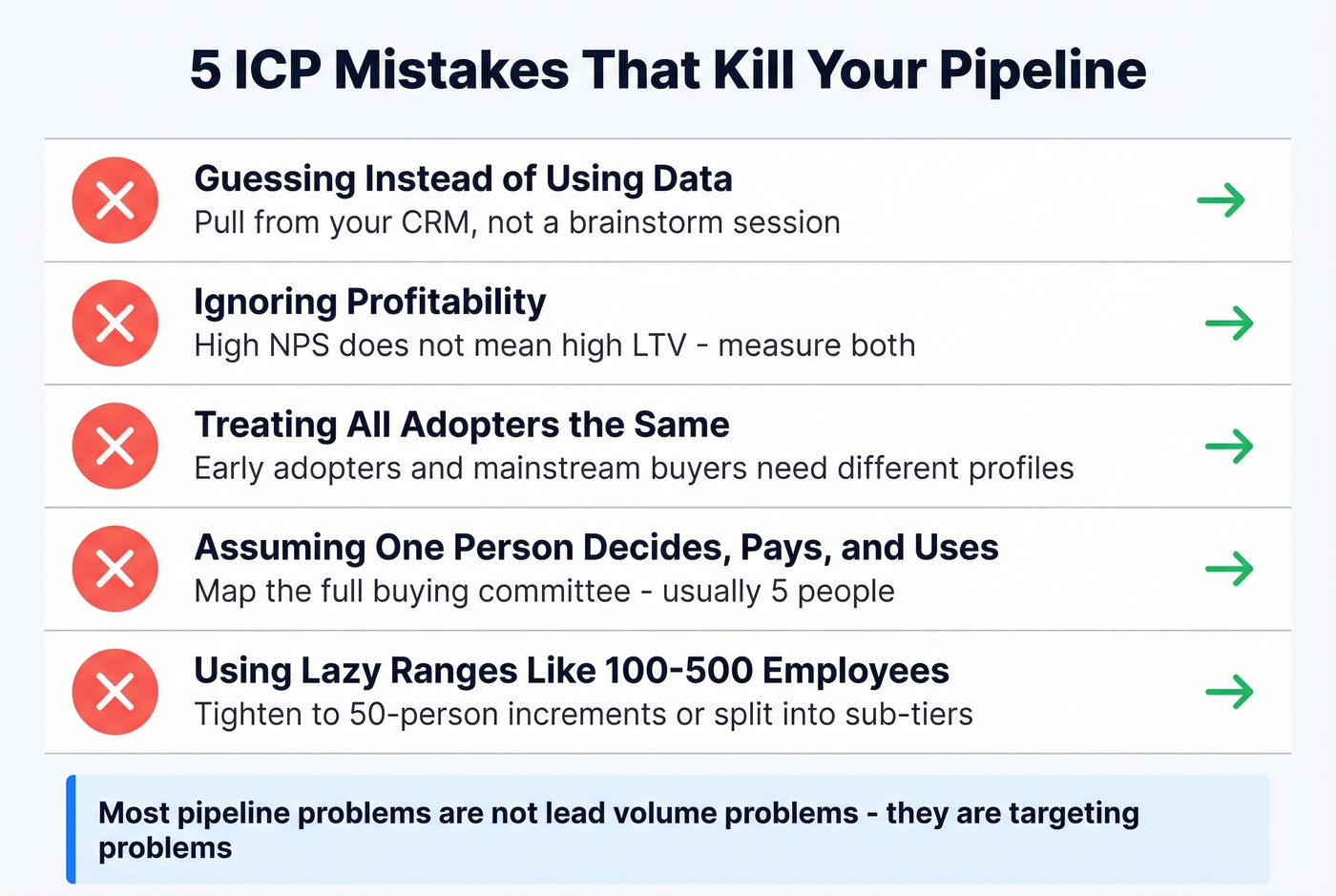
1. Guessing instead of using data. If your ICP came from a brainstorm and not your CRM, it's fiction. Determining ideal customer traits from actual deal data is the single biggest improvement you can make to pipeline quality.
2. Ignoring profitability. A segment can love your product and still churn. One founder on r/SaaS put it simply: "Indie hackers won't pay $20/mo." High NPS doesn't mean high LTV.
3. Treating all adopters the same. Early adopters tolerate rough edges; mainstream buyers expect polish. Your ICP should reflect which wave you're targeting right now, not some aspirational future state.
4. Assuming one person is decider, payer, and user. Map the buying committee. Skip this and your best email lands in the inbox of someone who can't sign anything.
5. Using lazy ranges. "100-500 employees" is useless. A 101-person startup and a 499-person enterprise have nothing in common operationally, financially, or in terms of buying behavior. Tighten your bands to 50-person increments, or at least split into sub-tiers.
Turn Your ICP Into a Prospect List
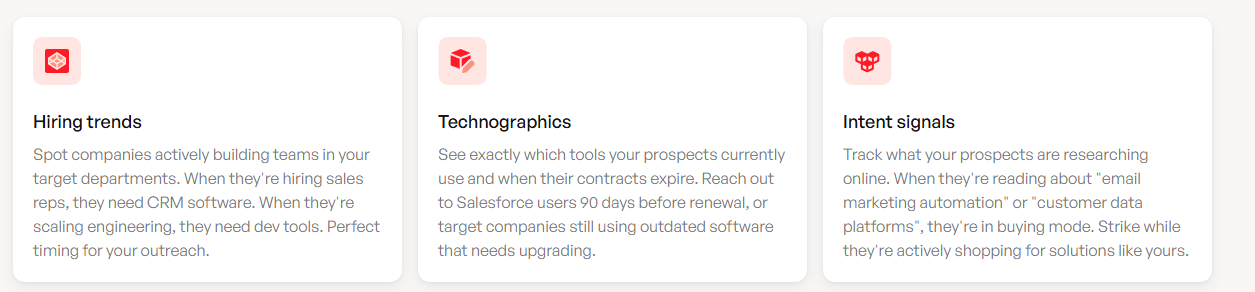
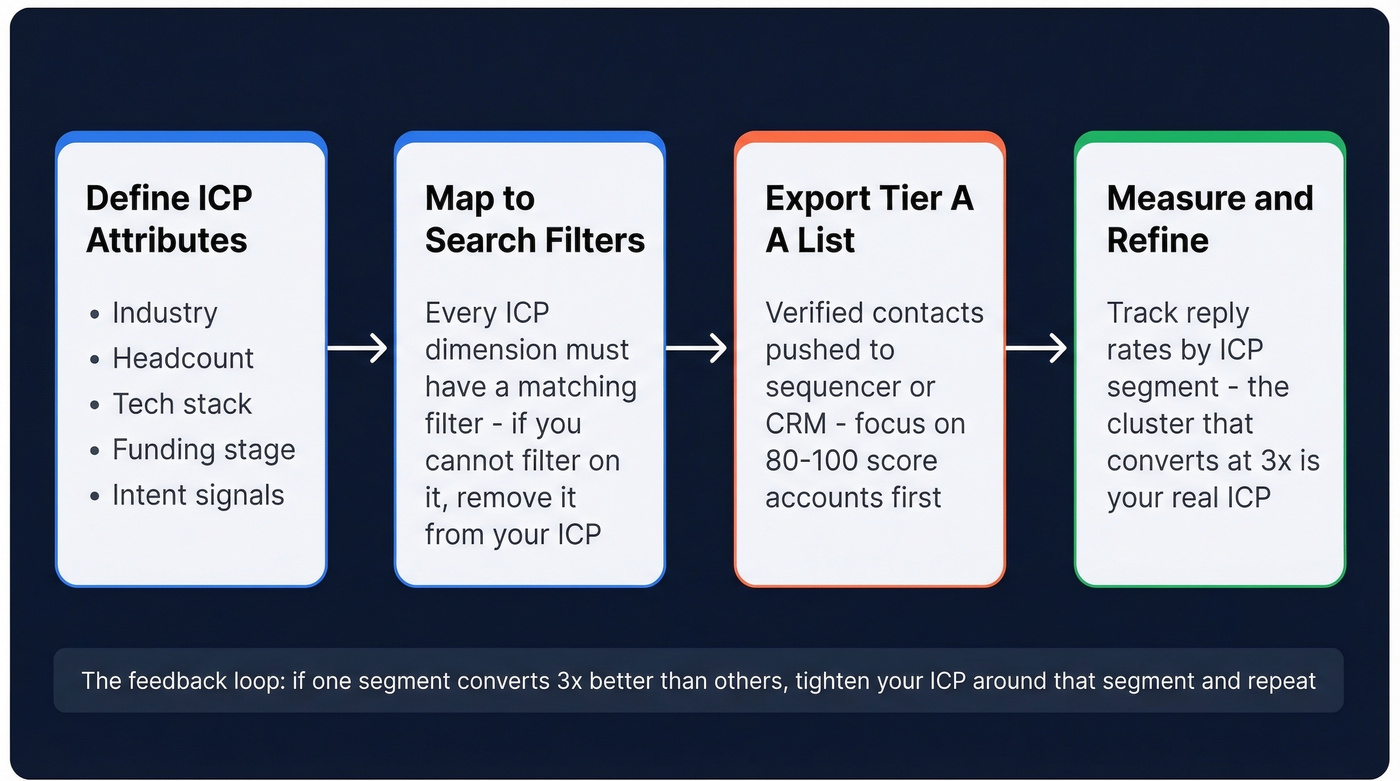
This is where most ICP guides end - and where the actual work begins. Every attribute you've defined should map directly to search filters in a B2B database. Industry, headcount, tech stack, funding stage, intent signals - if you can't filter on it, it doesn't belong in your ICP.
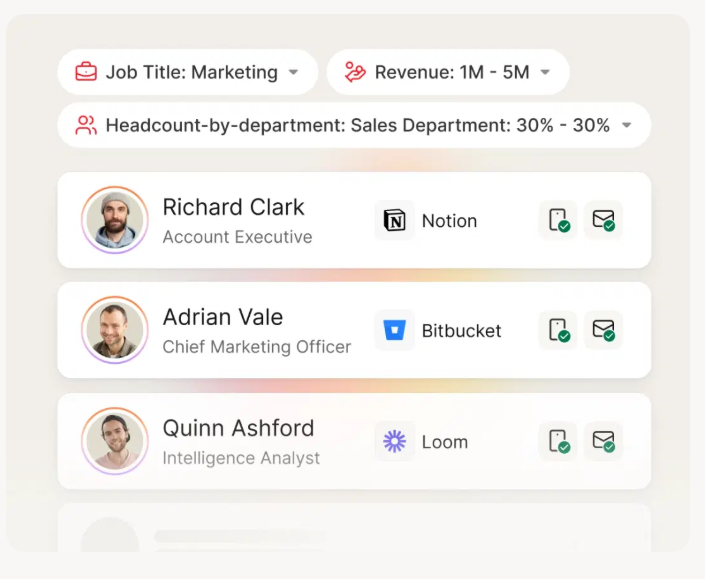
Prospeo's database covers 300M+ professional profiles with 30+ filters that mirror these ICP dimensions, including technographics, headcount growth, and intent data across 15,000 Bombora topics. Emails verify at 98% accuracy on a 7-day refresh cycle, and the free tier gives you 75 emails per month to test whether your ICP hypothesis converts before you commit budget.
For teams running outbound at scale, the workflow looks like this: export your Tier A list, push it into your sequencer, and measure reply rates by ICP segment. If one cluster converts at 3x the others, that's your real ICP - the data told you, not a whiteboard session. We've seen teams go from a vague "mid-market SaaS" definition to a razor-sharp profile in two weeks just by running this loop.
Most ICP guides stop at the definition. Prospeo's 30+ search filters - industry, headcount growth, tech stack, funding stage, buyer intent - turn your profile into a Tier A prospect list in minutes, not days. 75 free verified emails per month so you can test whether your ICP actually converts.
Stop defining ideal customers. Start reaching them.
FAQ
How often should I update my ICP?
Refresh quarterly, or whenever win rates drop more than 10%. Markets shift, competitors emerge, and buying committees change. An ICP older than six months is costing you pipeline without you noticing.
What's the difference between an ICP and a buyer persona?
An ICP defines the company worth targeting - industry, headcount, tech stack. A buyer persona describes the individual decision-maker inside that company - title, goals, pain points. Always define the company profile first to avoid wasting outreach on individuals at poor-fit accounts.
How do I turn my ICP into a prospect list?
Map each ICP attribute to a search filter in a B2B database: industry, headcount, tech stack, funding, intent signals. Then export verified contacts into your sequencer or CRM. The key is making sure every ICP dimension has a corresponding filter - if it doesn't, the attribute is decorative, not operational.
Why should I define my ideal customer before running campaigns?
Without a validated profile, you're spending ad budget and rep time on accounts that'll never close. Teams that nail their ICP upfront consistently see higher win rates, shorter sales cycles, and lower CAC because every touchpoint is aimed at companies that actually fit.