

How to Respond to an Intro Email Without Overthinking It
You just got an intro email and you've been staring at it for 20 minutes. You're toggling between "reply all" and "reply," wondering if you should thank the introducer first or address the new contact. Nobody teaches this stuff. Let's fix that - including how to respond to an intro email you'd rather decline, something every other guide skips.
What You Need (Quick Version)
- Reply within 24 hours using the "You, Me, We" structure - research them, state your intent, propose a next step.
- Reply-all once, thank the introducer by name, then take the thread 1:1 with the introducer off-thread.
- Propose two or three specific times - never write "let me know what works."
That's the whole playbook. Everything below is the why and the how.
Reply Speed Beats Reply Quality
The average email response time is 12 hours. For intro emails, that's too slow. In sales contexts, a 1-minute response leads to 391% more conversions - and while intro emails aren't sales pitches, the psychology is identical. People are warmest right after they've been introduced. That window closes fast.
Here's the thing: a mediocre reply sent in 2 hours beats a polished one sent in 3 days. The person on the other end doesn't remember your phrasing. They remember whether you seemed interested enough to respond quickly. And if you need a follow-up later, even one follow-up email increases your reply rate by 22%. Speed first, polish second.
The "You, Me, We" Framework
This structure separates good intro replies from forgettable ones. It comes from Claire Carroll's breakdown of tech intro etiquette, and we've seen it work across networking, investor, and sales contexts.
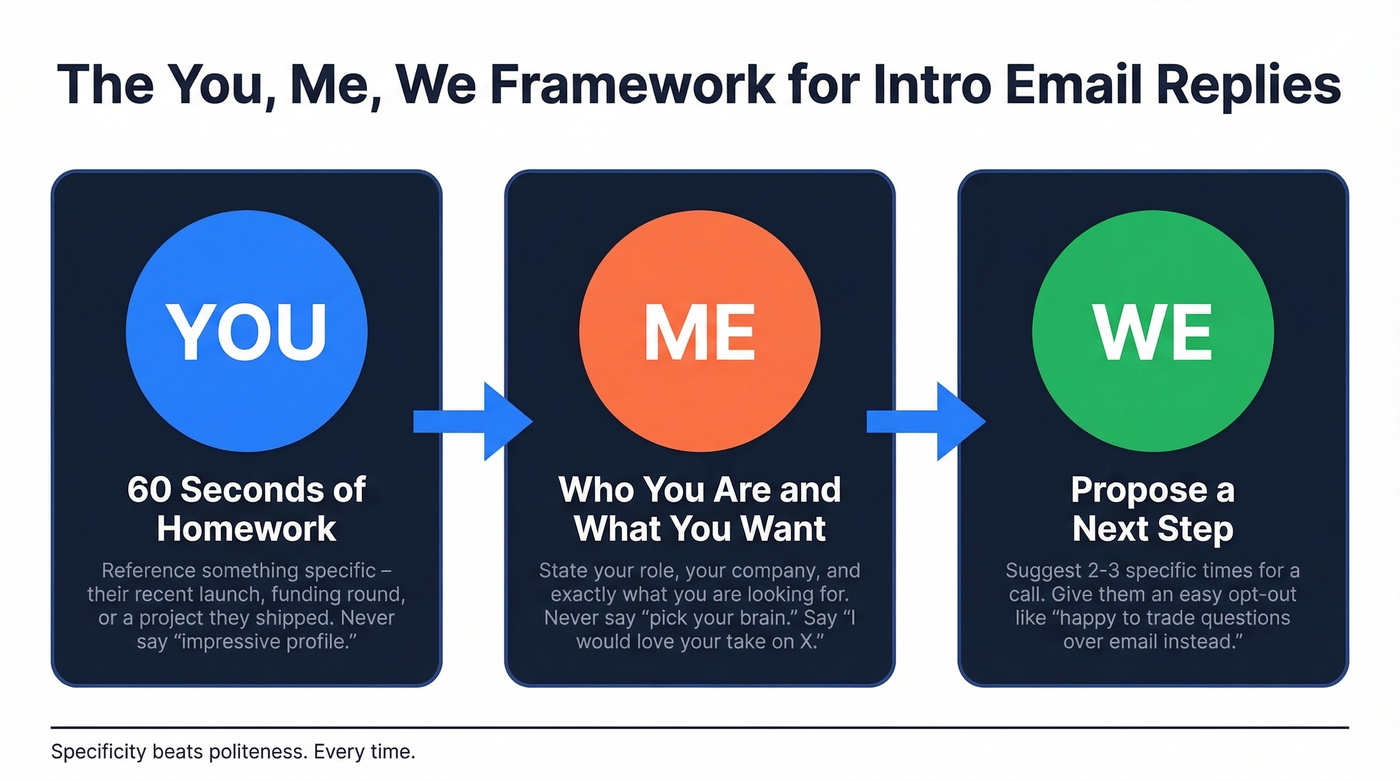
You - Show you did 60 seconds of homework. Not "I checked out your profile and it's impressive." More like "I saw your team just launched the API marketplace - that's a space I've been watching closely."
Me - Who you are and what you want. Never say "pick your brain." Say "I'm building X and would love your take on Y." (If you need help tightening this, borrow from these elevator pitches.)
We - Propose a next step and give them an opt-out. "Would a 20-minute call next Tuesday or Thursday work? If timing's off, happy to trade a few questions over email instead."
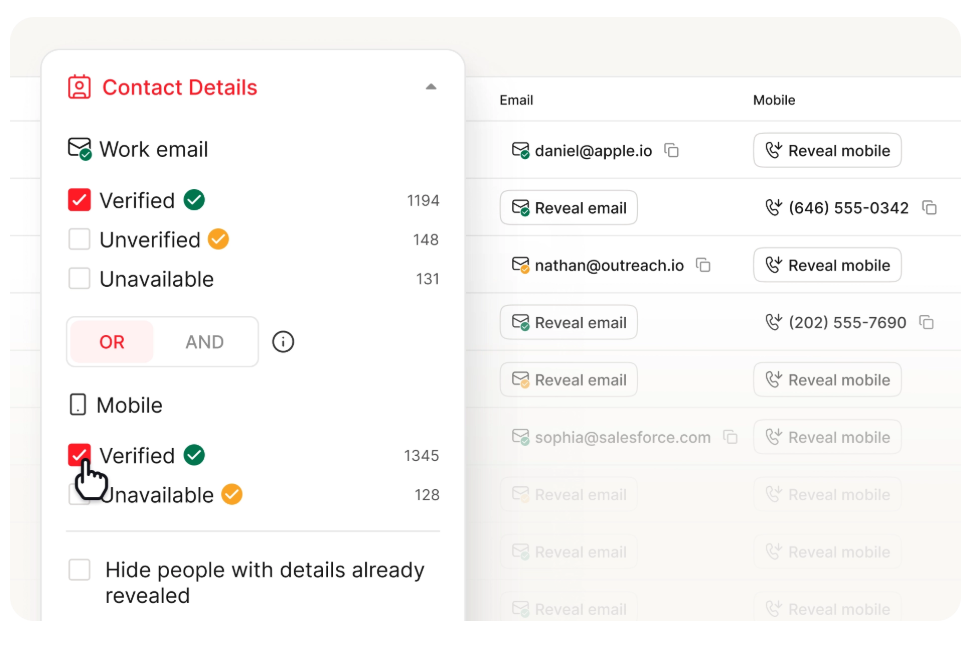
When the intro email is light on context, tools like Prospeo can help you pull verified contact details and company background so your "You" section references something specific, not generic. (This is basically lightweight data enrichment for your reply.)
Bad reply: "Hey! Great to e-meet you. Would love to connect sometime. Let me know what works!"
Good reply: "Hi Sarah - thanks for the intro, Mark. (Moving you to BCC, Mark!) Sarah, I saw Acme just closed a Series B - congrats. I'm running growth at Bolt and we're solving a similar distribution problem. Would a 20-minute call work next Tuesday at 2pm or Thursday at 10am ET?"
The difference isn't length. It's specificity.
Reply-All, BCC, or New Thread?
This generates the most confusion - and the most Reddit debates. The consensus on r/sales and r/Entrepreneur is pretty clear, and it matches what we've found works best. Here's the definitive sequence:
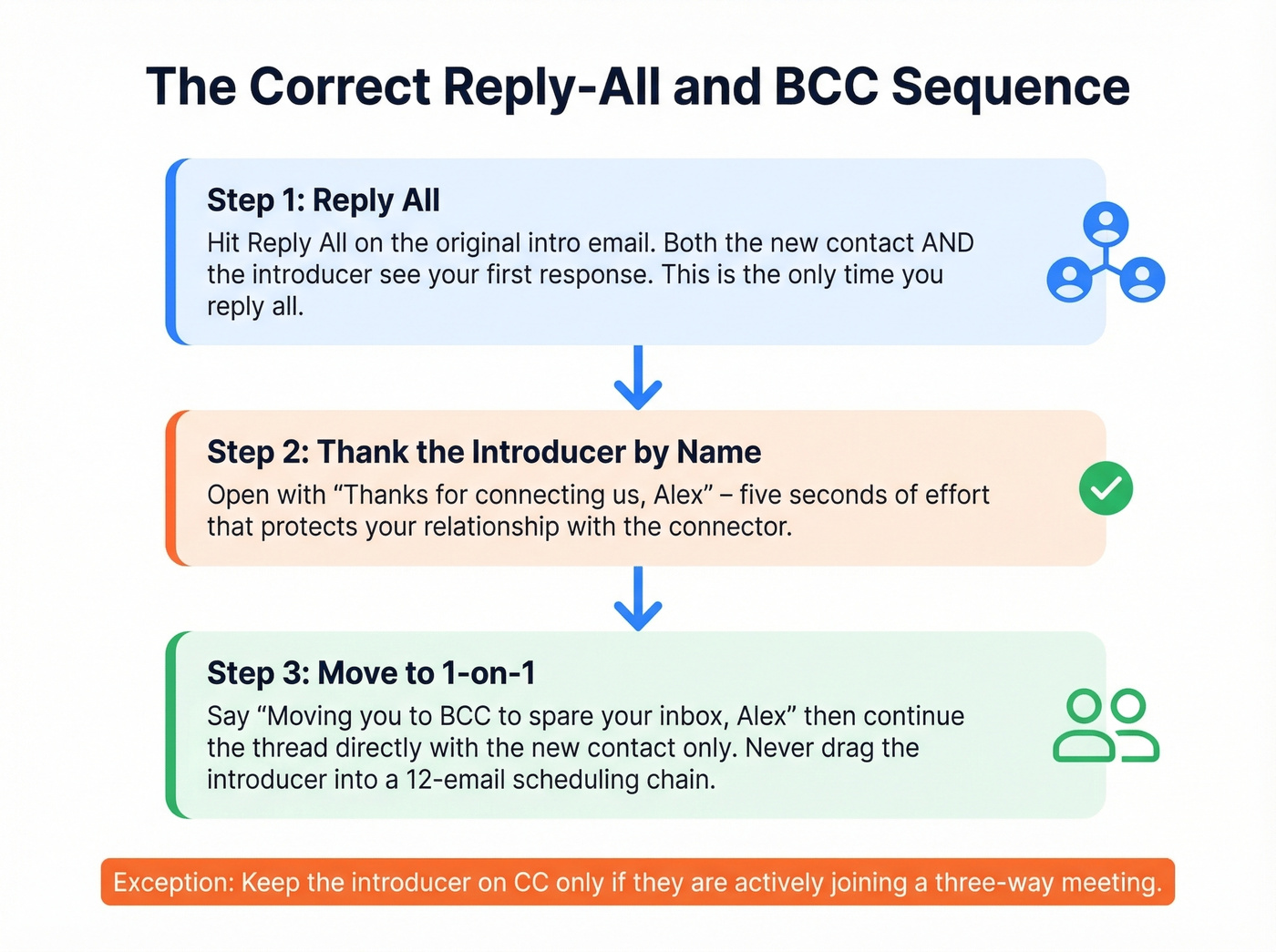
- Reply-all to the original intro email. Both the new contact and the introducer should see your first response.
- Thank the introducer by name in the opening line. "Thanks for connecting us, Alex" takes five seconds and matters more than you think.
- Then take it 1:1. After your first reply, continue the conversation directly with the new contact. If you want to close the loop without dragging the introducer into scheduling, say: "Moving you to BCC to spare your inbox, Alex - thanks again!"
Keep the introducer on CC only if they're actively facilitating a three-way meeting. Otherwise, they should never be stuck on a 12-email scheduling thread.

The "You, Me, We" framework only works when your "You" section is specific. Prospeo gives you 50+ data points per contact - company funding, headcount growth, tech stack, recent job changes - so every intro reply references something real, not generic.
Stop guessing. Research any contact in seconds before you hit reply.
What's a Double Opt-In Intro?
A double opt-in introduction is when the introducer asks both parties separately before connecting them. Both people consent, both know the context, and the actual intro email is just the formality.
This changes how you reply. If you received a double opt-in intro, skip the "who are you" phase entirely - you already agreed to this conversation. Go straight to scheduling.
If the intro was unsolicited, you have the right to decline. Double opt-in should be the default. If someone intro'd you without asking, that's their mistake, not your obligation.
Sample Replies for Every Scenario
Networking Intro
Hi [Name] - thanks for the intro, [Introducer]. Moving you to BCC, [Introducer]!
[Name], I've been following [specific thing - their podcast, a recent launch, their writing]. I'm [your role] at [company], working on [relevant overlap].
Would a 20-minute call work next week? I'm free Tuesday at 3pm or Thursday at 11am ET. If timing's tight, happy to connect over email.
Job Referral Intro
The person asking for the favor replies first - always. Don't wait for the other person to reach out. In our experience, the biggest reason referral intros stall is that the asker sits back and waits.
Hi [Name] - [Introducer] speaks highly of the team at [Company]. Moving you to BCC, [Introducer] - thank you!
I'm a [role] with [X years] in [relevant domain]. I'd love to learn more about what you're building and how the [specific team] is structured.
Would a 15-minute call work next week? Open Tuesday or Wednesday afternoon.
Investor or VC Intro
Investors see hundreds of intro replies. The ones that get meetings include numbers and specific times:
Hi [Investor] - thanks for the intro, [Introducer]. Moving you to BCC!
Quick context: [Company] does [one sentence]. We're at $[X] ARR, growing [Y]% MoM, with [social proof].
I'd love 20 minutes to walk through what we're building. Available Tuesday 2-4pm or Friday 10am-12pm ET. What works?
No fluff. Traction stats, social proof, specific times.
Sales or Vendor Intro
For these, hit all four points and nothing else:
- Thank the introducer and take them off-thread after the first reply
- State your use case in one sentence
- Ask one qualifying question about their product
- Propose a single time for a 15-minute walkthrough
How to Decline Gracefully
This is the section most guides skip. Look - you don't owe anyone a meeting just because someone CC'd you. But you do owe the introducer a respectful close.
Don't ignore the email entirely and hope everyone forgets. They won't, and the introducer will think twice before helping you again.
Do this instead:
Hi [Name] - thanks for the intro, [Introducer]. I appreciate you thinking of me.
[Name], your work at [Company] looks interesting. I'm heads-down on [project/reason] right now and can't take on new conversations this quarter. I'd love to revisit in [timeframe] if you're open to it.
Acknowledge the effort, explain you can't take the meeting, leave the door open. Three sentences, done.
When They Don't Reply
You replied three days ago. Radio silence. Here's the recovery cadence:
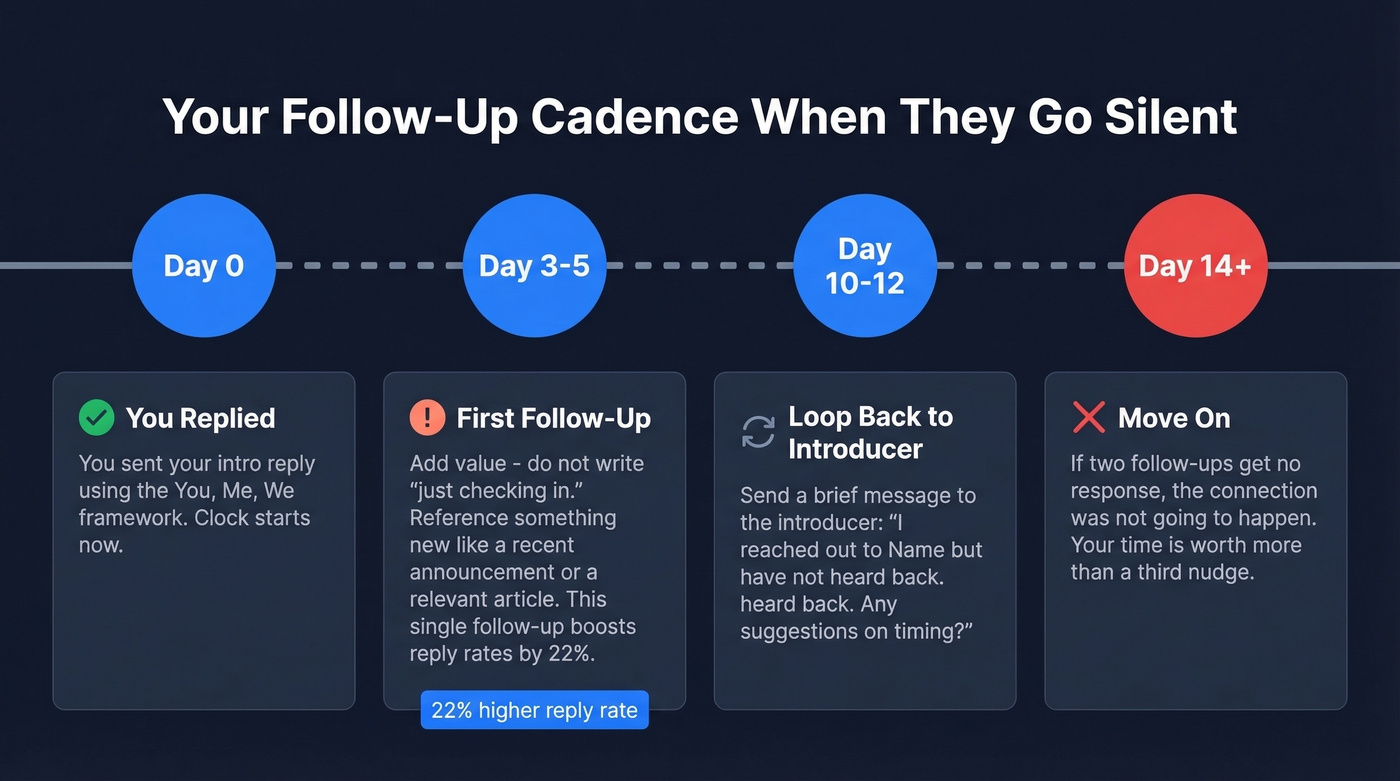
Wait 3-5 business days. Don't panic. People are busy.
Send one follow-up that adds value. Not "just checking in" - reference something new. "Saw your team just announced X - congrats. Still happy to connect if timing works better now." That single follow-up increases your reply rate by 22%. (If you want more options, use these sales follow-up templates as a base.)
If still nothing after another week, loop back to the introducer briefly: "Hey [Introducer], I reached out to [Name] but haven't heard back. Any suggestions on timing?" (More timing guidance here: When Should You Follow Up on an Email?.)
If your intro thread dies after two follow-ups, the connection probably wasn't going to happen. Move on. Your time is worth more than a third nudge to someone who isn't interested.
Mistakes That Kill Intro Replies
Every guide tells you to "be professional and express interest." Here's what to actually avoid:
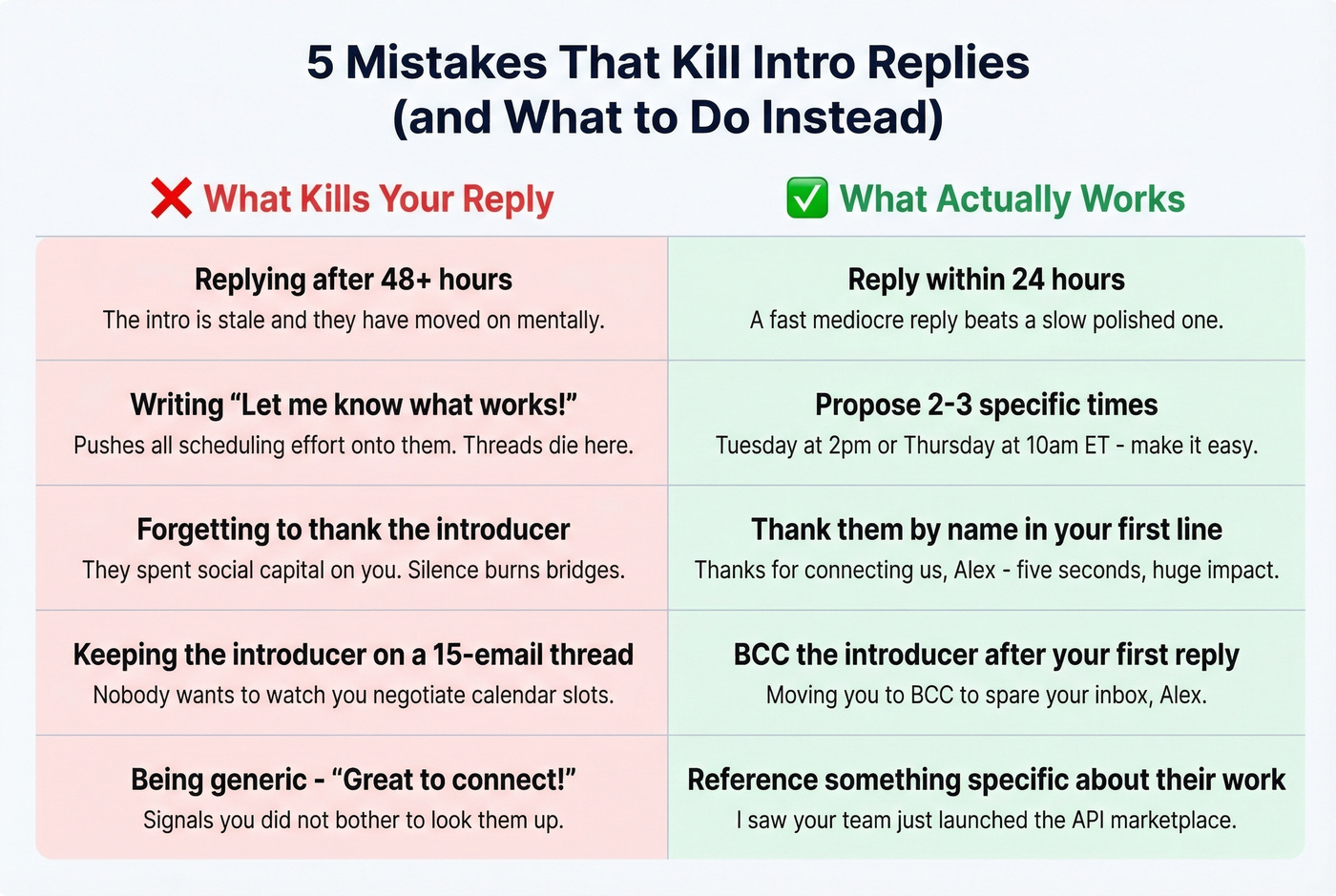
- Replying too late (>48 hours). The intro is stale. The other person has moved on mentally. (If you're doing this at scale, you need better sequence management.)
- "Let me know what works!" This pushes all the scheduling work onto the other person. Propose specific times. We've watched intro threads die because someone wrote this instead of suggesting a Tuesday at 2pm. (Use a simple email call to action instead.)
- Forgetting to thank the introducer. They spent social capital on you. Acknowledge it.
- Keeping the introducer on a 15-email scheduling thread. BCC them after the first reply. Always.
- Being generic. "Great to connect!" with zero reference to the person's work signals you didn't bother to look them up. Sixty seconds of research changes everything. (A quick personalized outreach checklist helps.)
FAQ
Who should reply first to an intro email?
The person who stands to gain more from the connection replies first. In finance, the junior person goes first. In tech, the asker goes first. When in doubt, reply first - waiting signals low interest.
Should I change the subject line?
No. Keep the original subject line so everyone can track the thread. Change it only once you've moved past introductions into a specific topic, like scheduling a demo or sharing a document.
How long should I wait before following up?
Wait 3-5 business days before sending one follow-up. Don't write "just checking in" - add a specific reason to reconnect, like congratulations on a recent milestone or a relevant article you came across.
How do I research someone quickly before replying?
Check their company page and recent news for a personalization hook. Prospeo gives you verified emails, direct dials, and company intel from 300M+ professional profiles, so you can personalize your reply with real context instead of filler. The free tier includes 75 lookups per month.
Following up on an intro that went cold? Before you send that second message, make sure you have the right email. Prospeo's 98% verified email accuracy means your follow-up actually lands - not bounces. 300M+ profiles, refreshed every 7 days.
Verify their email before your follow-up disappears into the void.