

How to Sell High Ticket Products: A Practitioner's Playbook
The difference between closing a $500 deal and a $50,000 deal usually isn't the product, the price, or the funnel. It's the conversation.
If you're figuring out how to sell high ticket products, the answer almost always starts with your discovery call. Teams that run a structured discovery process - instead of jumping straight into a standard demo - consistently convert better because they uncover real pain, real urgency, and real decision dynamics before they present anything. We've watched this play out across dozens of sales orgs, and the pattern holds whether you're selling enterprise software or high-end consulting.
Why Selling High-Ticket Items Is Different
"High ticket" means different things depending on your market. In eCommerce, it's $200+ physical goods. In B2B services, coaching, or SaaS, it starts around $1,000 and runs into six figures. The common thread: buyers don't impulse-purchase at these price points.
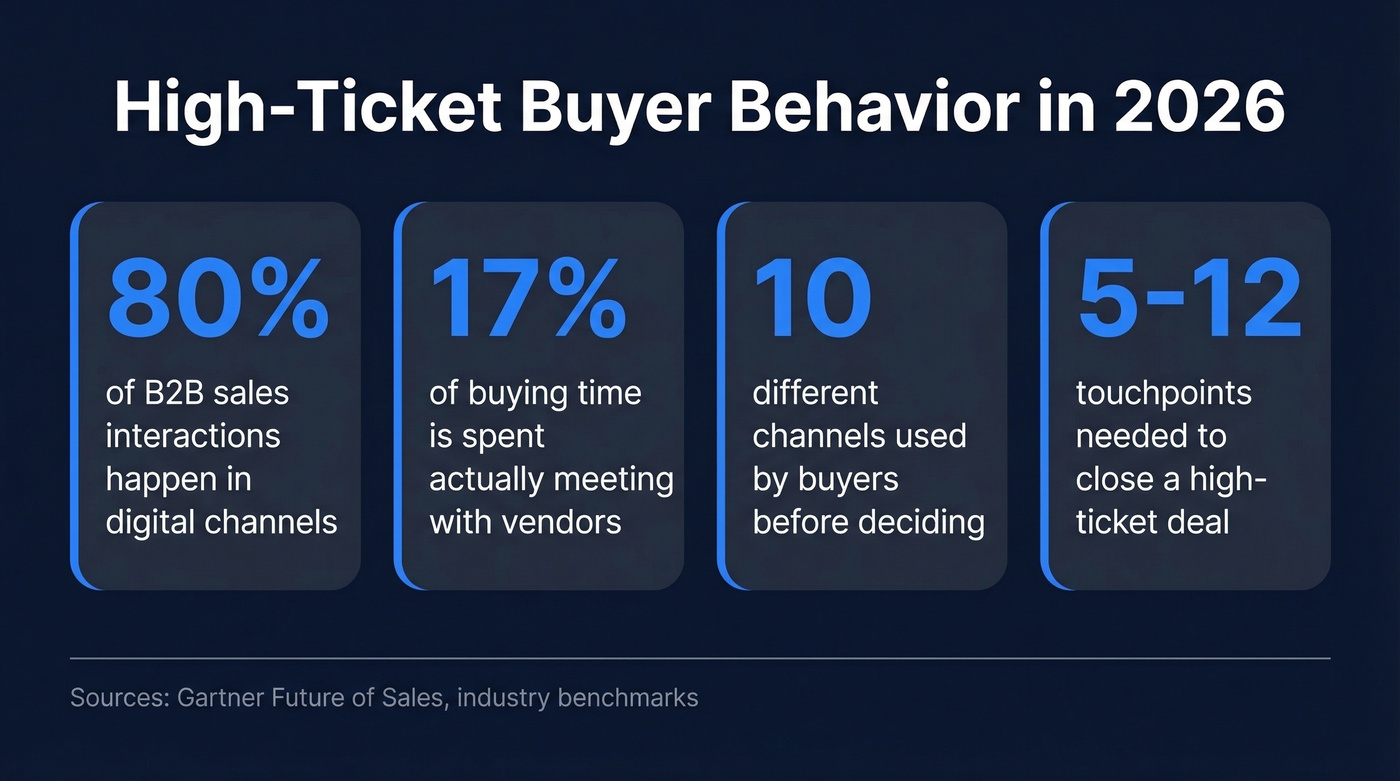
Buying behavior has shifted hard toward digital. 80% of B2B sales interactions now happen in digital channels, and buyers use roughly 10 different interaction channels before deciding. They spend only 17% of their buying time meeting with vendors - which means your prospect has already formed an opinion before you get on a call.
Most deals require 5-12 touchpoints to close. The entire process runs 1-3 months for most B2B deals, with about 8% of high-value deals stretching past five months. For physical high-ticket goods, the same trust-building principles apply, but fulfillment guarantees and returns policies become critical trust signals.
What Actually Moves the Needle
Short on time? Fix these three things first:
- Qualify ruthlessly. Most high-ticket failures happen before the pitch, not during it. Stop booking calls with people who can't buy.
- Use a discovery framework. SPIN Selling beats winging it every time. Structure your questions or you'll miss the real pain.
- Follow up 5-12 times. Not once. Not twice. The data is clear.
If you only fix one thing, fix your discovery call. The fanciest funnel in the world just delivers more people you'll fail to convert.
Build a Funnel That Earns Trust
High-ticket buyers don't go from stranger to $5,000 customer in one step. The Ascension Path Model works because it mirrors how trust actually builds: start with a gateway offer, prove your value, then present the core offer.
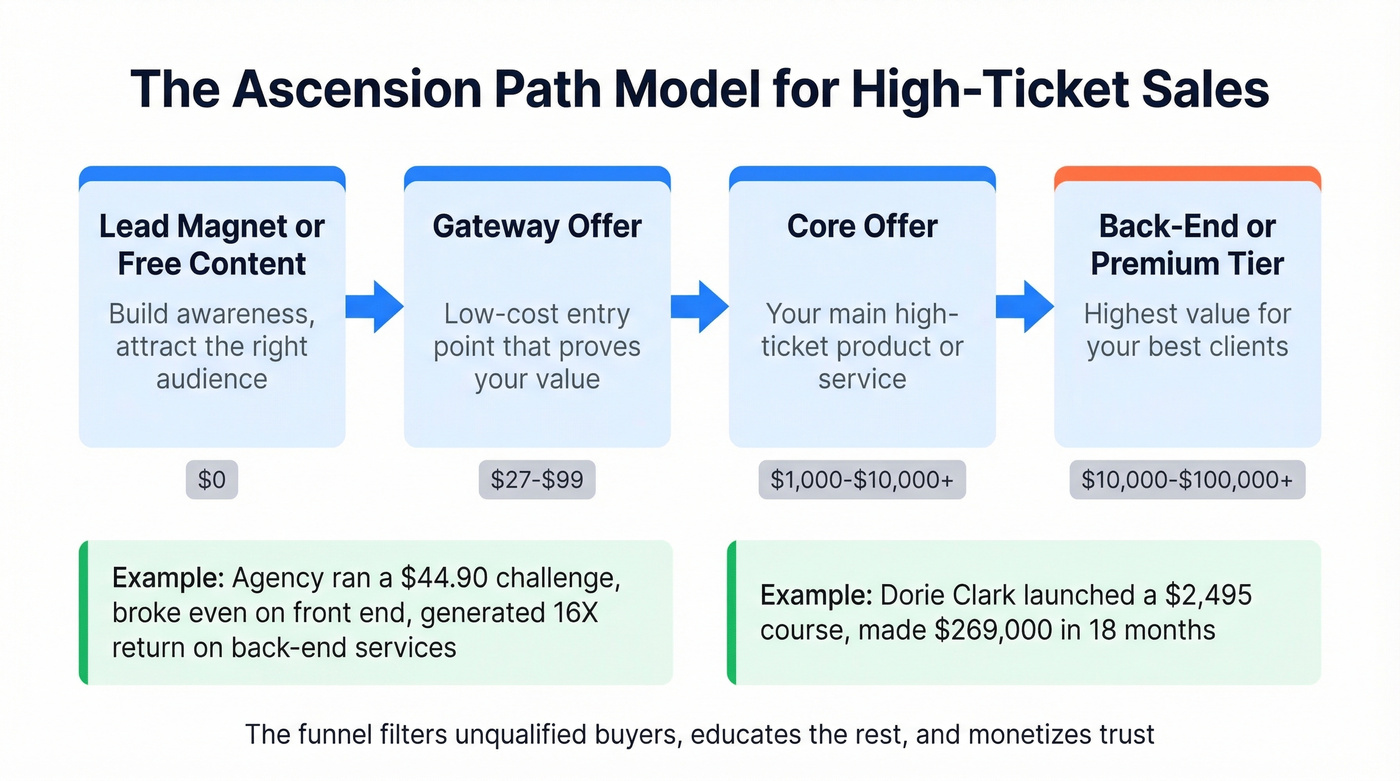
One agency ran a $44.90 paid challenge with a $49 VIP upsell - broke even on the front end and generated a 16X return on back-end services. Dorie Clark launched a $2,495 "Recognized Expert" course and made $269,000 in 18 months. A good funnel does three jobs: it filters unqualified buyers, educates the ones who remain, and monetizes the trust it's built. These are high-ticket sales examples worth studying because they show how the ascension model works across very different markets.
Here's what industry benchmarks look like from SQL to Closed Won:
| Vertical | SQL to Closed Won |
|---|---|
| B2B SaaS | 37% |
| eCommerce | 60% |
| Real Estate | 53% |
Those numbers assume qualified leads. Garbage in, garbage out - which brings us to research.

You just read that 74% of buyers get frustrated by generic outreach and 50% of deals go to the first vendor who responds. Prospeo gives you buyer intent signals, verified emails, and direct dials across 300M+ profiles - so you walk into every high-ticket discovery call with the research already done.
Stop winging discovery calls. Start them with real buyer intelligence.
Research Prospects Before the Call
Every high-ticket sales guide says "research your prospects." Almost none tell you how.
Before any call, look for company size, recent funding rounds, hiring signals, tech stack, and intent data showing they're actively researching solutions like yours. 74% of customers feel frustrated when communication isn't personalized, and up to 50% of sales go to the first vendor to respond. Speed plus relevance is everything.
Prospeo makes this practical - search 300M+ professional profiles using 30+ filters including buyer intent, technographics, job changes, headcount growth, and funding signals, then pull verified emails and mobile numbers before you pick up the phone. With 98% email accuracy and a 7-day data refresh cycle, you walk into every call knowing who you're talking to and what they care about.

Run Discovery Calls Using SPIN
The SPIN framework (Situation, Problem, Implication, Need-Payoff) was built for complex, high-value sales. Here's how it sounds in practice:
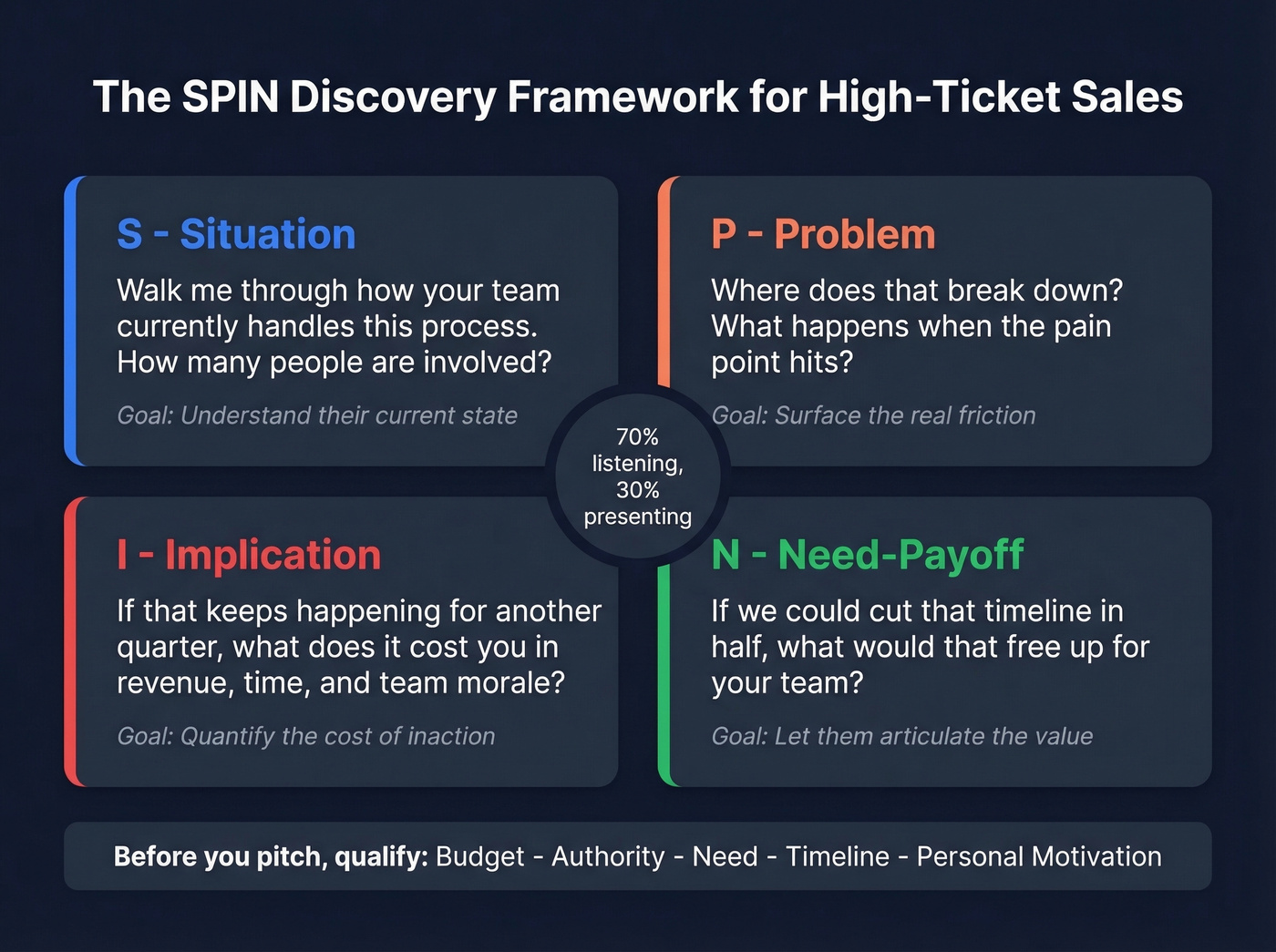
Situation: "Walk me through how your team currently handles [process]. How many people are involved?"
Problem: "Where does that break down? What happens when [specific pain point] hits?"
Implication: "If that keeps happening for another quarter, what does that cost you - in revenue, in time, in team morale?"
Need-Payoff: "If we could cut that timeline in half, what would that free up for your team?"
Before you pitch, run a qualification check: budget reality, decision-making authority, genuine need, timeline, and personal motivation. Why does this person care about solving this problem?
Use video for discovery calls whenever possible - eye contact and visual connection improve closing success. Keep your presentation short. In our experience, the reps who close the most high-ticket deals spend 70% of the call asking questions and the remaining 30% presenting only what matches the prospect's stated challenges. Personalized scripts drive 20-30% higher conversion rates than generic pitches, but "personalized" doesn't mean memorized - it means your questions prove you've done the research.
Let's be honest: the sale is won or lost during qualification, not during the presentation.
Scripts That Save High Ticket Deals
When They Say "Too Expensive"
Validate, isolate, reframe. Don't argue price - shift the frame.
You: "I completely understand. If price wasn't an issue, is this the solution you'd choose?"
Prospect: "Yeah, probably."
You: "Then let's look at the cost of not fixing this. If that broken process costs you $15,000 a month in lost deals, and we solve it in 60 days, you're looking at a 6X return on a $5,000 investment."
The goal isn't to discount. It's to make the ROI undeniable.
When They Say "Next Quarter"
You: "What's going to change in 90 days that makes this a better time?"
(Pause. Let them answer.)
You: "If we wait, that's another $45,000 in lost pipeline. Is that a trade-off you're comfortable with?"
Quantifying the cost of delay is the single most effective move against timing objections. We've seen teams flip "next quarter" prospects into same-month closes just by doing this math live on the call.
When They Need Boss Approval
Don't let your champion walk into that conversation unarmed. Three steps:
- Ask what questions their boss will raise that you haven't covered yet.
- Address each one together on the call.
- Offer to build a one-pager with the ROI numbers - send it by end of day.
You're not selling harder. You're making it easier for them to sell internally.
When They Ghost
Most sellers give up after one follow-up. That's a mistake when 5-12 touchpoints are the norm. Keep it short, specific, and guilt-free:
"Hey [Name] - I put together a quick summary of the ROI we discussed: [one-line recap]. Worth 5 minutes this week, or should I check back in two weeks?"
Give them an easy on-ramp back into the conversation.
Mistakes That Kill High Ticket Deals
A thread on r/Entrepreneurs nailed it: selling high ticket products isn't about pressure - it's about process. Here are the four mistakes that kill the most deals:
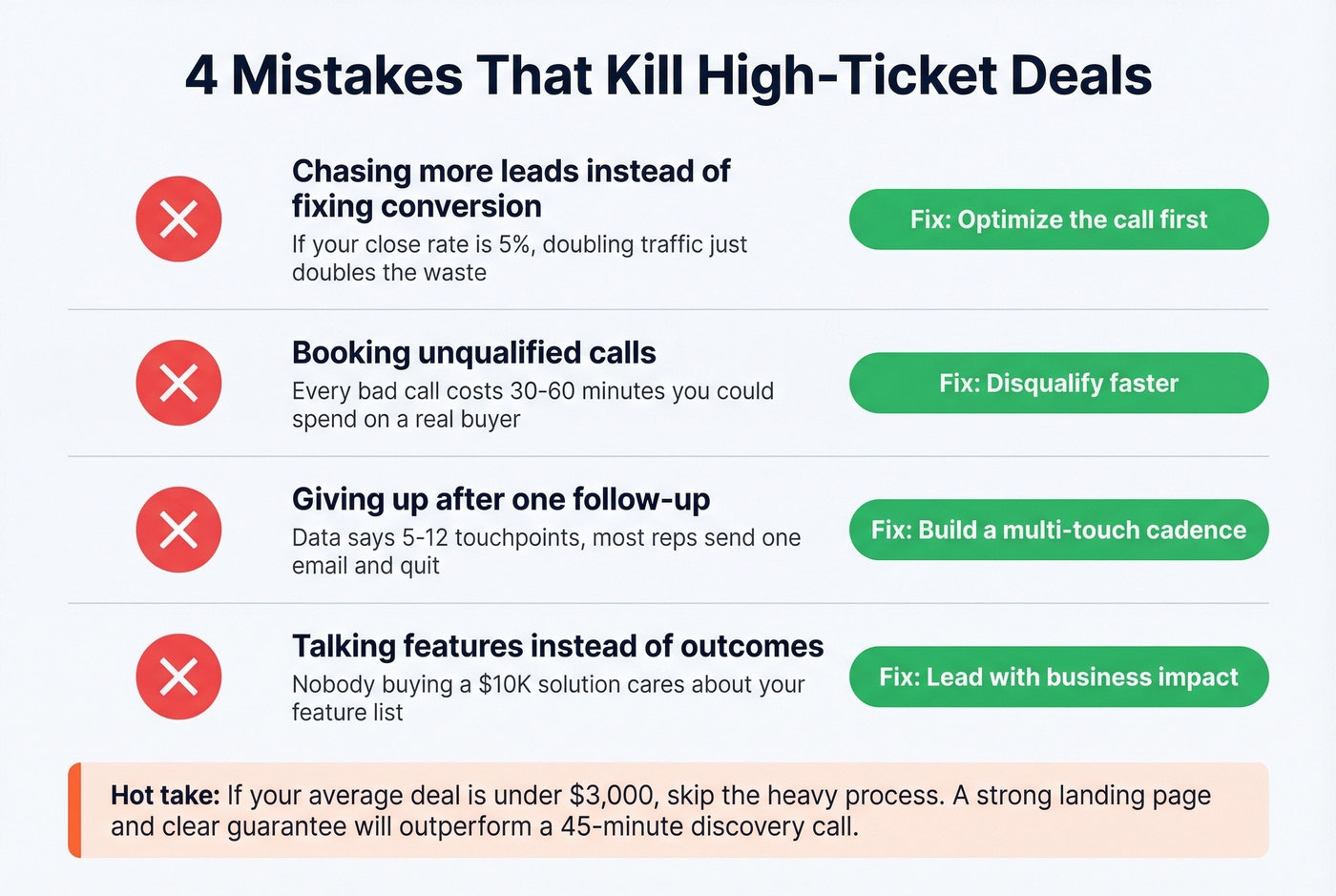
- Chasing more leads instead of fixing conversion. If your close rate is 5%, doubling traffic just doubles the waste. Fix the call first.
- Booking unqualified calls. Every unqualified call costs 30-60 minutes you could've spent on a real buyer. Disqualify faster.
- Giving up after one follow-up. The data says 5-12 touchpoints. Most reps send one email and move on. (If you need a starting point, steal a few follow-up templates.)
- Talking features instead of outcomes. Nobody buying a $10,000 solution cares about your feature list. They care about what changes in their business.
Here's my hot take: if your average contract value is under $3,000, you probably don't need a sophisticated high-ticket sales process. A strong landing page and a clear guarantee will outperform a 45-minute discovery call at that price point. Save the heavy process for deals where the stakes justify it. Skip the SPIN framework, skip the multi-touch cadence - just make the offer clear and the risk low.
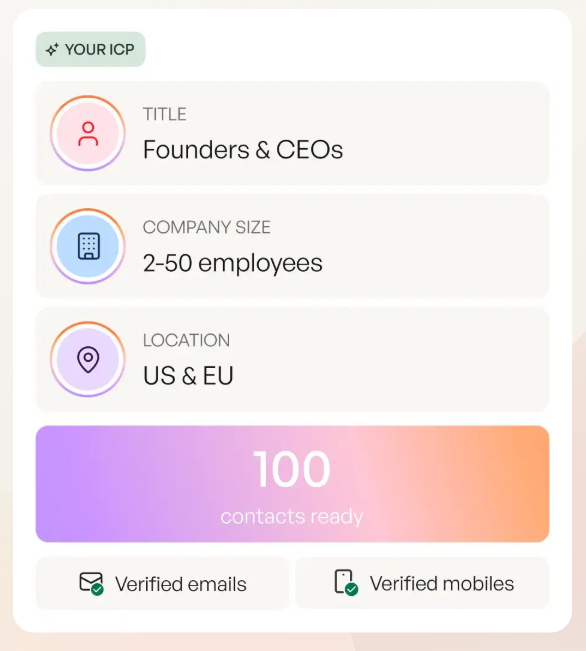
High-ticket deals die when you can't reach the decision-maker. Prospeo delivers 98% accurate emails and 125M+ verified mobile numbers with a 30% pickup rate - so your follow-up sequence actually lands. At $0.01 per email, the ROI math on a $50K deal is absurd.
Reach the buyers who can actually sign the check.
FAQ
What counts as a high ticket product?
$200+ for physical goods, $1,000+ for services or B2B solutions. The defining trait is that buyers need trust and justification before purchasing, so the sales process matters more than the marketing. Common examples include enterprise software, luxury goods, professional coaching, and B2B consulting.
How long does a high ticket sales cycle take?
Most B2B high-ticket deals close in 1-3 months, with about 8% stretching past 5 months. More touchpoints typically mean a longer cycle but a higher close rate - plan for 5-12 touches minimum.
How do I find qualified prospects for high ticket offers?
Use intent data and verified contact databases to identify in-market buyers before outreach. Tools like Prospeo let you filter by buyer intent across 15,000 topics, company growth signals, and technographics, then pull verified emails and direct dials so you're contacting decision-makers from day one.
What's the biggest mistake in high-ticket selling?
Pitching before qualifying. Reps who skip structured discovery waste 30-60 minutes per unqualified call. Use a framework like SPIN to uncover budget, authority, need, and timeline before presenting anything - your close rate will improve even if your lead volume stays flat.