

Inbound Lead Generation: Strategies, Benchmarks & Operations That Drive Pipeline
A VP of Marketing walks into a QBR with 2,000 MQLs on the slide. Sales worked 400 of them. Twelve became pipeline. The CEO asks the obvious question: "Why are we spending $180k a year on content if this is what we get?"
The answer isn't that inbound lead generation doesn't work. It's that most teams generate leads just fine - they can't manage them afterward.
What Is Inbound Lead Generation?
Inbound lead generation is the process of attracting potential buyers to you - through content, search, referrals, events, and brand presence - rather than interrupting them with cold outreach. The prospect initiates contact. That distinction changes everything downstream: conversion rates, cost per lead, sales velocity, and close rates.
But here's the strategic reality most guides skip. The B2B Institute's 95/5 rule says only about 5% of your addressable market is actively buying at any given time. The other 95% are future buyers who'll need what you sell eventually but aren't shopping today. A strong inbound strategy serves both groups: it captures the 5% who are ready and builds trust with the 95% who aren't.
This matters more than most marketers realize. Bain & Company found that 80-90% of B2B buyers already have a vendor shortlist before they start researching. Ninety percent choose from that "day one list." If you're not on it, your content isn't even getting a fair read. Inbound isn't just about generating leads - it's about being known before the buying cycle starts.
The alternative? 97% of people ignore cold calls. Outbound still works, but it's expensive ($150-700+ per lead) and doesn't compound. Inbound, especially SEO-driven content, builds an asset that generates leads at $30-90 CPL and gets cheaper over time. That's the economic argument. The strategic argument is that inbound creates the brand familiarity that makes every other channel - including outbound - work better.
Inbound vs. Outbound at a Glance
| Dimension | Inbound | Outbound |
|---|---|---|
| Who initiates | Buyer | Seller |
| Typical CPL | $30-150 | $150-700+ |
| Compounds over time | Yes (SEO, content) | No (linear spend) |
| Lead-to-MQL rate | ~31% overall; 41% (SEO); 38% (email) | 10-20% |
| Best for | Demand capture, brand building | Targeted ABM, new markets |
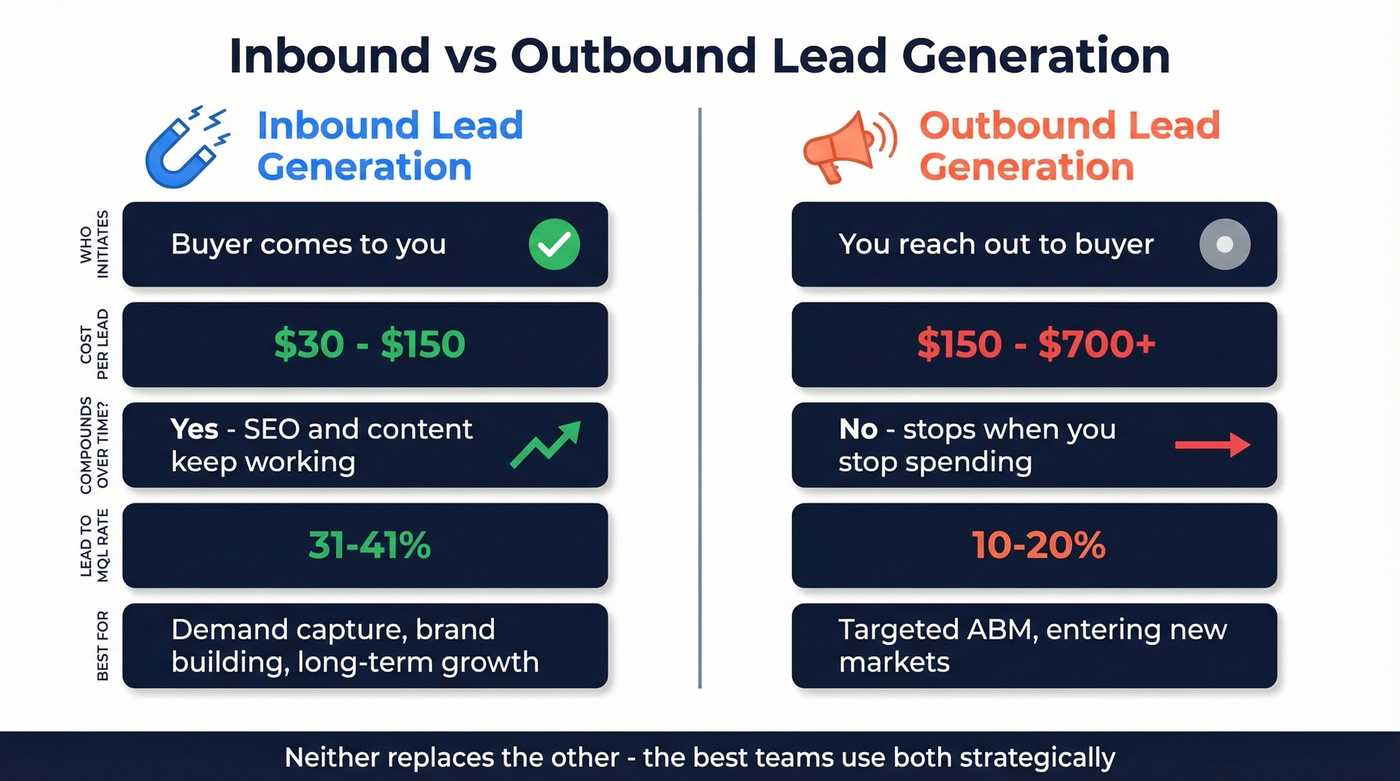
Neither replaces the other. But if you're spending on outbound before your inbound engine is producing, you're paying a premium for leads you could be earning.
The Numbers You Should Benchmark Against
Most inbound guides are lists of tactics with zero benchmarks. Let's fix that.
- Start with SEO and content. SEO-driven leads run $30-90 CPL, with a 41% lead-to-MQL rate. It compounds. Every other channel is linear.
- Fix your speed-to-lead. Leads contacted within 5 minutes are 21x more likely to qualify than those contacted after 30 minutes. The average business takes 42-47 hours. That gap is where pipeline goes to die.
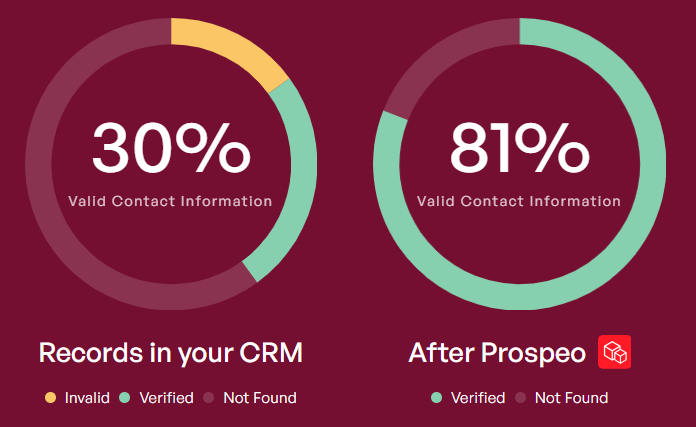
- Clean your data before routing. Here's the silent killer: bad contact data. If 30% of your inbound leads have invalid emails or missing phone numbers, your SDRs are wasting a third of their time. Lead enrichment tools verify and complete contacts before they hit your CRM - so sales gets actionable records from the start.
How the Process Works Stage by Stage
Let's put real numbers on each stage so you can benchmark your own performance.
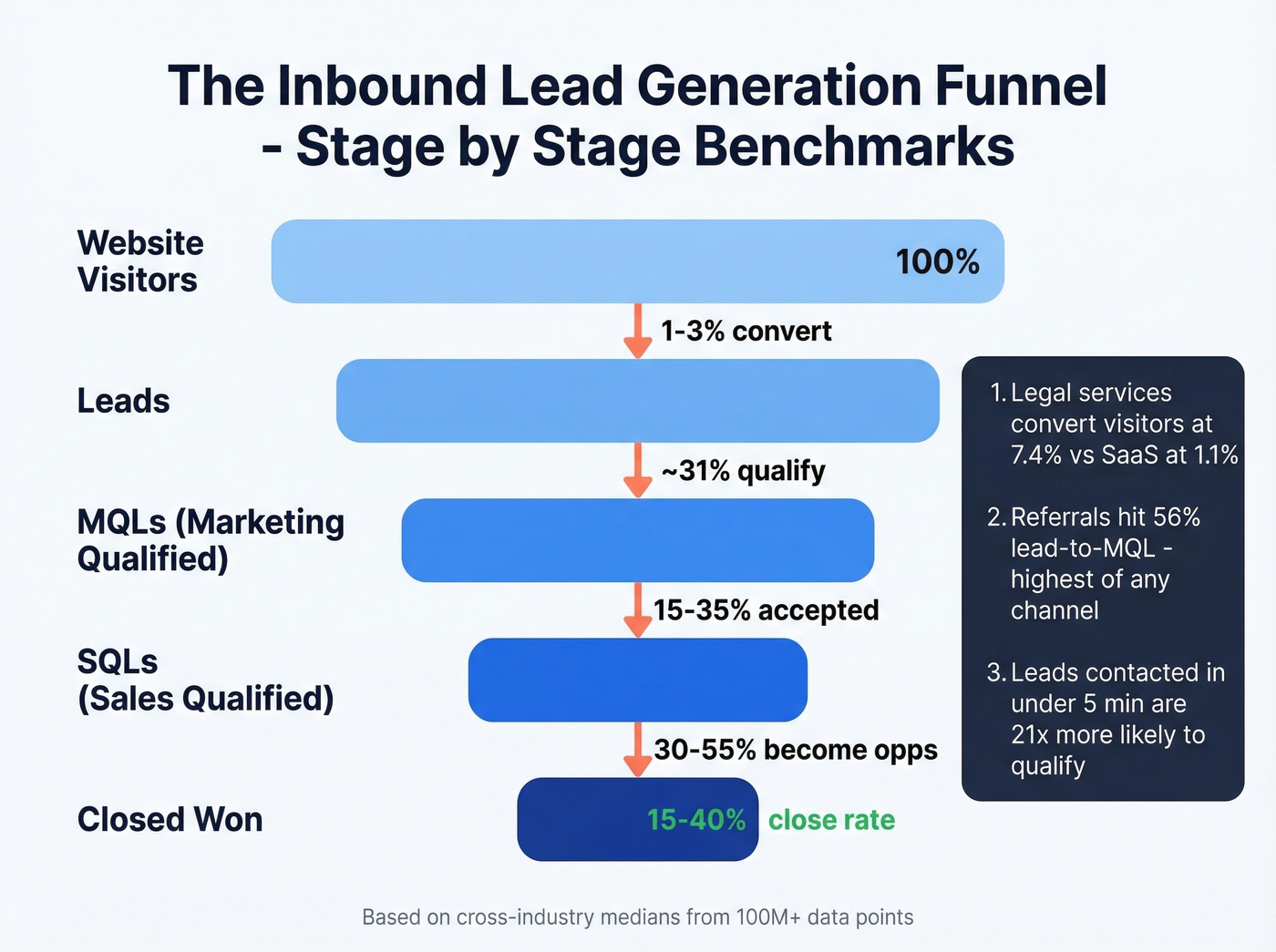
| Stage | Benchmark Range |
|---|---|
| Visitor to Lead | 1-3% |
| Lead to MQL | ~31% |
| MQL to SQL | 15-35% |
| SQL to Opportunity | 30-55% |
| Opp to Close (SaaS) | 15-40% |
These are cross-industry medians drawn from 100M+ data points. Your numbers will vary by vertical. Legal services convert visitors to leads at 7.4% - nearly seven times the B2B SaaS average of 1.1%. Manufacturing sits at 2.2%. Financial services at 1.9%.
Your company stage matters just as much. Early-stage SaaS companies close 1-2% of MQLs. Growth-stage hits 2-4%. At scale, expect 3-5%. Enterprise teams reach 4-7%. If you're early-stage and expecting enterprise close rates, your forecasts are fiction.
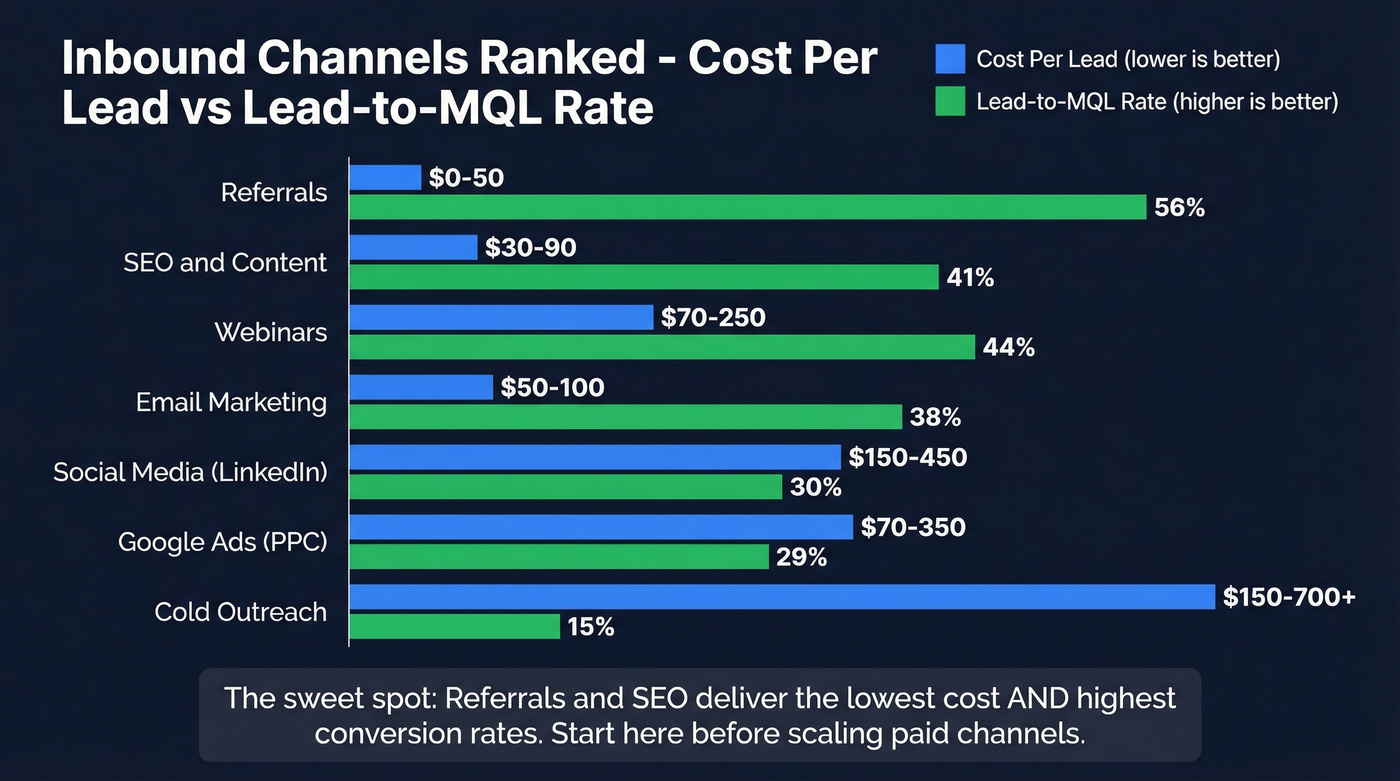
Channel matters too. Referrals convert leads to MQLs at 56% - the highest of any channel. SEO hits 41%. Webinars land at 44%, and in B2B SaaS benchmarks they also show the highest opportunity-to-close rate (40%). PPC? Just 29% lead-to-MQL.
These benchmarks expose where your funnel is actually broken. If your visitor-to-lead rate is 2% but your lead-to-MQL rate is 12%, you don't have a traffic problem - you have a lead scoring problem. The funnel math tells you where to invest. A study of 100 B2B software websites found that once you cross 25,000 monthly visitors, the visitor-to-demo-request rate drops below 1%. More traffic doesn't automatically mean more pipeline. Conversion operations do.
For context, organizations generate 1,877 leads per month on average. If you're well below that, your top-of-funnel needs work. If you're above it but pipeline is flat, the problem is downstream.
Strategies That Actually Build Pipeline
If you're spending on LinkedIn Ads before your SEO program is producing, you're burning cash. Here's how the channels that drive inbound pipeline stack up.
SEO and Content Marketing
SEO is the compounding channel. It costs $30-90 per lead, delivers a 41% lead-to-MQL rate, and - unlike paid - the asset keeps working after you stop spending. 76% of marketers use content to generate leads, and the ones doing it well are building organic traffic that feeds pipeline for years.
The key is matching content to buying stage. Top-of-funnel blog posts build brand awareness (remember the 95/5 rule). Mid-funnel comparison pages and case studies capture the 5% who are actively evaluating. Bottom-of-funnel pages like pricing and demo requests convert. Most teams over-invest in top-of-funnel and under-invest in the pages that actually generate SQLs.
We've seen this pattern repeatedly: a company publishes 200 blog posts, drives 50,000 monthly visitors, and wonders why pipeline is flat. Then they audit their content and realize they have zero comparison pages, one outdated case study, and a pricing page that hasn't been touched in 18 months. Start by auditing your content mix across all three tiers.
Email Marketing and Newsletters
Email runs $50-100 CPL with a 38% lead-to-MQL rate. 88% of B2B marketers use email for lead generation, making it the most widely adopted channel in the space. Once someone's on your list, the marginal cost of reaching them is near zero.
The mistake most teams make is treating newsletters as broadcast channels. Segment by intent signal - pages visited, content downloaded, engagement recency - and your conversion rates jump. Generic blasts to your entire list are the fastest way to tank deliverability.
Webinars and Virtual Events
Webinars cost more upfront ($70-250 CPL) but deliver elite downstream performance. In B2B SaaS benchmarks, webinars show a 40% opportunity-to-close rate. For complex B2B sales where buyers need education before they commit, webinars compress the trust-building timeline.
The operational trap: a webinar with 300 registrants where the SDR team gets the attendee list three days later. By then, the intent signal has decayed. Route attendees to sales within hours, not days.
Social Media (LinkedIn-First)
78% of B2B marketers use social media for lead generation, and among those, 97% use LinkedIn. The lead-to-MQL rate is 30% - lower than SEO or email, but LinkedIn works best as a distribution layer for your content engine, not as a standalone channel. Organic posts from founders and sales leaders drive awareness. LinkedIn Ads ($150-450+ CPL) work for retargeting and ABM but are expensive for cold audiences.
AI Chatbots
AI chatbots have moved past the "How can I help you?" pop-up. The best ones now qualify visitors in real time, score intent dynamically, and route high-fit prospects straight to a rep's calendar. Picture this: a visitor lands on your pricing page, the chatbot identifies their company via reverse IP, asks two qualifying questions, and books a meeting before they leave.
Pricing is accessible. Tidio starts at $29/mo, Landbot at $45/mo, Botpress at $89/mo. For teams without the budget for Drift or Qualified, these tools deliver real-time qualification at a fraction of the cost.
Referral Programs
Referrals convert leads to MQLs at 56% - the highest of any channel - at a CPL of $0-50.
The math is almost unfair. A structured referral program with clear incentives (discounts, credits, co-marketing) turns your existing customers into your best acquisition channel. The challenge is building the system. Most teams know referrals work but never operationalize them beyond "ask happy customers to introduce you." If you haven't formalized your referral process, that's probably your single biggest missed opportunity.
Lead Magnets and Interactive Tools
Gated content isn't dead, but it's fading. The 95/5 rule means most visitors aren't ready to trade their email for your ebook - and the ones who do are often just curious, not buying. Interactive tools like ROI calculators, assessment quizzes, and benchmarking tools perform better because they deliver immediate value. The lead magnet itself becomes the product experience.
Landing page conversion rates hinge on message match - the headline should mirror the ad or content that brought the visitor there. One clear next step, not five competing CTAs.
Intent Data and Signal-Based Targeting
This is the modern inbound layer most teams haven't adopted yet. Instead of waiting for someone to fill out a form, intent data platforms track which companies are researching topics related to your product. You can identify in-market accounts before they ever visit your site, then target them with content, ads, and outreach that meets them where they already are.
It blurs the line between inbound and outbound - and that's the point. The best strategies in 2026 don't just wait for leads. They detect buying signals and create pathways for those buyers to find them.

You read it above: 30% of inbound leads have invalid emails or missing phone numbers. Prospeo enriches every lead with 50+ data points at a 92% match rate - verified emails, direct dials, job titles, and intent signals - before they hit your CRM. At $0.01 per email, fixing your post-capture data gap costs less than one wasted SDR hour.
Stop routing broken leads to sales. Enrich them first.
What Does It Cost?
The global average cost per lead across all industries is around $200, with HubSpot pegging the mean at $198.44. But averages hide massive variation by channel and industry.
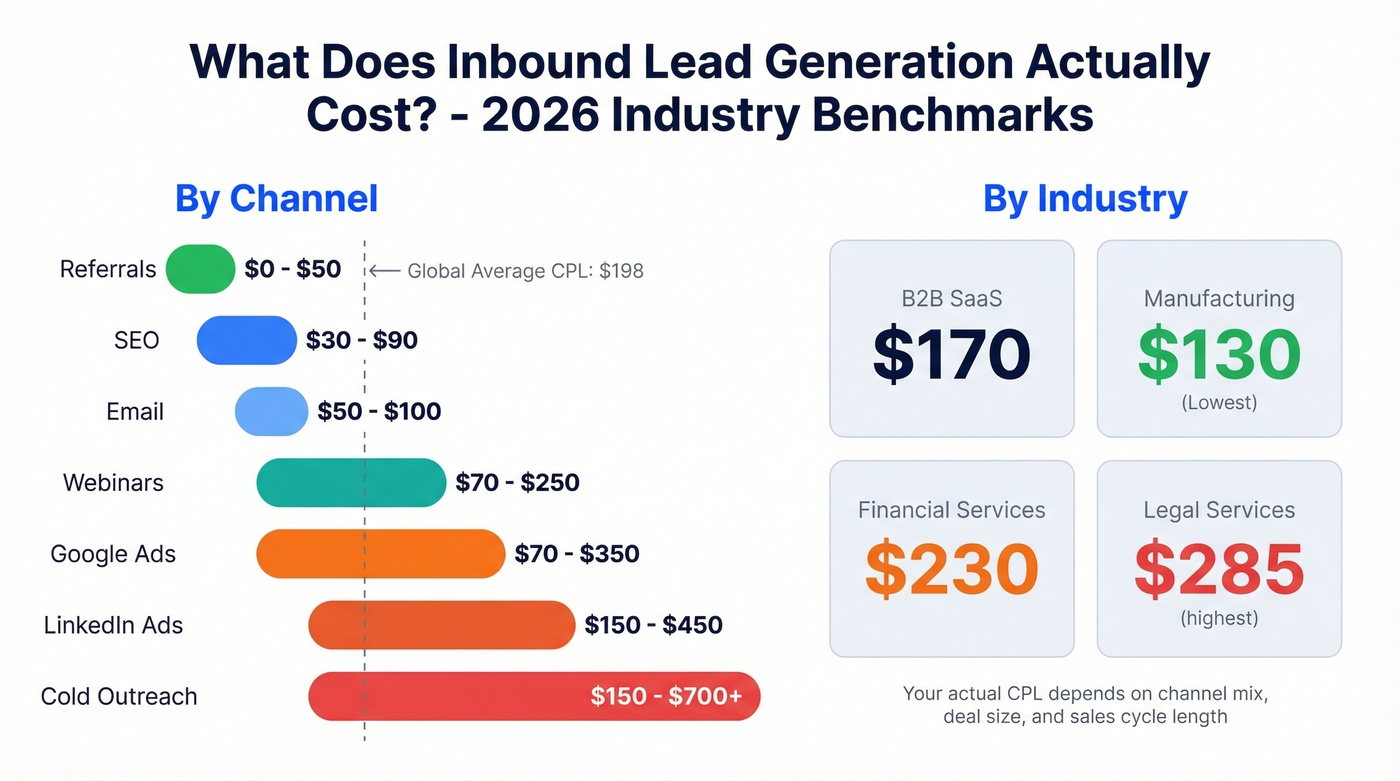
| Channel | CPL Range |
|---|---|
| Referrals | $0-50 |
| SEO / Organic | $30-90 |
| Email marketing | $50-100 |
| Webinars | $70-250 |
| Google Ads | $70-350+ |
| LinkedIn Ads | $150-450+ |
| Cold outreach | $150-700+ |
Industry blended CPLs tell a different story. B2B SaaS averages $170. Manufacturing runs $130. Legal hits $285. Financial services lands at $230. Your actual CPL depends on your channel mix, content maturity, and how well your post-capture operations convert leads into pipeline.
The ROI Math
Say you're a B2B SaaS company with 25,000 monthly organic visitors. At a 1% visitor-to-lead conversion rate, that's 250 leads per month. Apply the ~31% lead-to-MQL benchmark: 77 MQLs. A 25% MQL-to-SQL rate gives you 19 SQLs. At a blended SQL-to-close rate of 12-15%, you're closing 2-3 deals per month.
At a $15,000 ACV, that's roughly $30,000-$45,000 in new ARR every month - from organic alone. The CPL on those leads? $40-60 once your content program is mature. Compare that to LinkedIn Ads at $300+ per lead and the compounding argument for SEO becomes obvious.
Here's the thing: if your average deal size is under $10k, you probably don't need a $50k/year ABM platform or a six-figure content syndication budget. A well-executed SEO program, a decent email nurture, and clean data will outperform most enterprise playbooks at a fraction of the cost.
The 5-Minute Rule: Post-Capture Operations
Here's where most inbound programs fall apart. You've spent months building content, optimizing landing pages, and driving traffic. A qualified lead fills out your demo form. And then... nothing happens for 42-47 hours. That's the average response time across multiple studies. Forbes reports that 48% of businesses fail to respond within 24 hours.
Leads contacted within 5 minutes are 21x more likely to qualify than those contacted after 30 minutes. That's not aspirational - it's table stakes. Your competitors are engaging that lead while your SDR is finishing lunch.
The fix isn't motivational. It's operational. This 6-step post-capture workflow is what separates teams that generate leads from teams that close them.
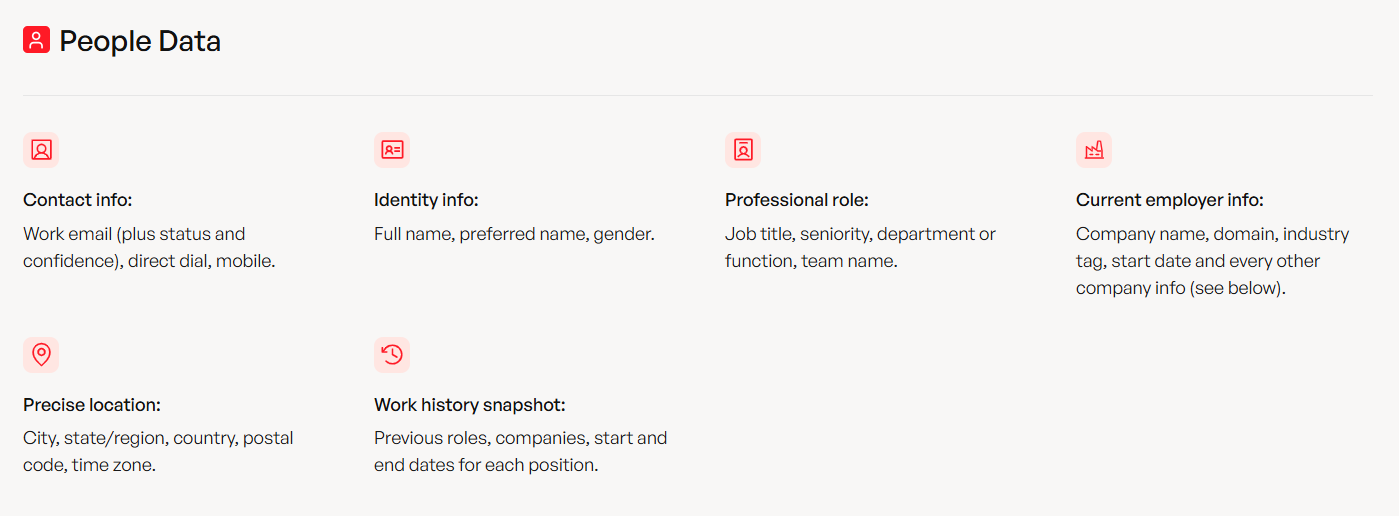
- Enrich. The moment a lead comes in, enrich it with verified contact data - direct dial, title, company size, tech stack, and intent signals when available. A form submission gives you a name and email. Enrichment gives you everything sales needs to have a real conversation. Tools like Prospeo handle this automatically: push leads via API and each contact comes back with 50+ data points, including verified email, direct mobile, and company firmographics. With a 92% API match rate, the vast majority of your leads come back complete.
- Qualify. Score the lead against your ICP. A practical scoring model: +10 for VP+ title, +15 for ICP industry, +20 for pricing page visit, +5 for company size match, -10 for student email domain, -15 for non-target geography. Leads above threshold go to sales. Below threshold goes to nurture.
- Route. Assign to the right rep based on territory, segment, or round-robin - automatically. Manual routing is where the 47-hour delay lives.
- Schedule. Use Calendly or a similar tool embedded in the follow-up email so the lead can book immediately. Remove friction.
- Nurture. Leads below the scoring threshold get intent-based sequences, not generic drip campaigns. Segment by the content they consumed and the pages they visited.
- Pipeline. Once a meeting is booked, the lead enters your CRM as an opportunity with full context - enrichment data, scoring rationale, content engagement history. The AE walks into the call prepared.
In our experience, teams that nail steps 1-3 in under five minutes see a 2-3x improvement in SQL conversion rates compared to teams that route manually. That's how you double pipeline without doubling your budget.
Five Mistakes That Kill Inbound ROI
You don't have a lead generation problem. You have a lead management problem. Remember the VP with 2,000 MQLs and 12 pipeline deals? Here's why that happens.
1. Misaligned marketing-to-sales handoffs. Marketing and sales don't agree on what "qualified" means. There's no shared SLA. Follow-ups happen hours or days too late - if they happen at all. Fix this with a written MQL definition both teams sign off on, a response-time SLA under 5 minutes for high-score leads, and shared dashboards that track handoff speed.
2. Low-quality placements inflating volume. Vanity metrics are the enemy. Buying leads from content syndication vendors who deliver volume but zero intent creates a waterfall of unqualified contacts that buries your SDR team. If your lead-to-MQL rate is below 15%, audit your sources before spending another dollar on top-of-funnel.
3. Fragmented data and broken attribution. Your CRM says one thing. Your marketing automation platform says another. Your intent data tool has a third version of reality. When data is fragmented, you can't attribute pipeline to channels, you can't score leads accurately, and you can't trust your dashboards. A common failure mode: SDRs get a name and email with zero context, then waste hours researching before making a call. Clean, enriched data at the point of capture eliminates that problem entirely.
4. Slow lead activation. Manual routing, approval chains, and "I'll get to it after this meeting" culture are pipeline killers. Automate routing. Set SLAs. Measure response time weekly. If you want to scale inbound volume, you have to scale your activation speed first.
5. No real nurture after capture. A lead downloads your ebook and gets three generic emails over two weeks. Then silence. That's not nurture - it's abandonment. Build sequences triggered by intent signals: if a nurtured lead visits your pricing page, that's a buying signal. Route them back to sales immediately. Most teams give up on leads that aren't ready today, forgetting that 95% of their market is in the "not yet" category. Effective nurture is how you create pipeline from visitors who weren't ready the first time around.
The 2026 Inbound Tool Stack
You don't need 15 tools. You need the right tool in each category, connected properly.
| Category | Tool | Starting Price |
|---|---|---|
| CRM | HubSpot | Free; paid plans ~$20/mo |
| CRM | Salesforce | ~$25/user/mo |
| SEO | Semrush | ~$140/mo |
| SEO | Ahrefs | ~$129/mo |
| Chat / AI | Tidio | $29/mo |
| Chat / AI | Intercom | ~$39/seat/mo |
| Mailchimp | Free; paid ~$13/mo | |
| Scheduling | Calendly | Free; paid ~$10/user/mo |
| Automation | Zapier | Free; paid $19.99/mo |
| Enrichment | Prospeo | Free (75 emails/mo); ~$0.01/email |
Most stacks stop at capture. Your CRM gets a name and email - and that's not enough for sales to work with. The enrichment layer fills that gap by returning verified contact data, firmographics, and intent signals on every lead before it reaches a rep. Skip this if your team is small enough that reps can manually research every lead, but once you're processing more than 50 leads a week, manual research becomes the bottleneck.
The key principle: every tool in your stack should either generate leads, enrich leads, route leads, or engage leads. If a tool doesn't clearly fit one of those four functions, cut it.
If you’re evaluating vendors, start with a shortlist of data enrichment services and a practical set of SDR tools that support fast routing and follow-up.
Speed-to-lead kills pipeline when your SDRs are chasing bad numbers. Prospeo delivers 125M+ verified mobile numbers with a 30% pickup rate and 98% email accuracy - refreshed every 7 days, not every 6 weeks. Your inbound MQLs deserve contact data that actually connects.
Turn every inbound lead into a reachable buyer in seconds.
FAQ
What's the difference between inbound and outbound leads?
Inbound leads come to you through content, SEO, referrals, or events - the prospect initiates contact. Outbound leads are sourced proactively via cold email, cold calls, or paid outreach. Inbound typically costs less ($30-90 CPL for SEO vs. $150-700+ for cold outreach) and converts at higher rates because the buyer already has intent.
How long does it take to see results?
SEO and content programs typically take 6-12 months to produce consistent pipeline - slow to start, but the asset appreciates over time. Paid channels like webinars and Google Ads generate leads within weeks at higher CPL. Most teams run both in parallel: paid for near-term pipeline, organic for long-term economics.
What's a good conversion rate?
Visitor-to-lead: 1-3%. Lead-to-MQL: roughly 31%. MQL-to-SQL: 15-35%. These vary significantly by industry - legal services convert visitors at 7.4%, while B2B SaaS averages 1.1%. Benchmark against your vertical, not cross-industry averages.
How do you qualify leads effectively?
Use a scoring model combining firmographic fit (industry, company size, job title) with behavioral signals (pages visited, content downloaded, time on site). Route leads scoring above your threshold to sales within 5 minutes. Below-threshold leads enter nurture sequences segmented by intent.
What tools help keep lead data clean?
Enrich every lead at capture with a verification tool that returns complete contact records - not just email validation. Look for platforms that offer a 7-day data refresh cycle (the industry average is 6 weeks), high match rates on API enrichment, and native CRM integrations so the data flows directly into your reps' workflow without manual imports.