

The 7 Inbound SDR Metrics That Actually Predict Pipeline
Your VP asks why inbound conversion is "only 12%." Nobody mentions that the number blends demo requests with whitepaper downloads - two completely different buyer signals mashed into one meaningless metric. Meanwhile, the average B2B company takes 42 hours to respond to an inbound lead. Not minutes. Hours. By then, the prospect has booked a demo with your competitor.
Inbound and outbound SDR metrics get blended constantly, which makes both useless. The three inbound SDR metrics that actually predict pipeline are qualified-to-booked rate, meeting show rate, and SAL-to-SQL conversion. Everything else is a leading indicator. If you fix one thing this quarter, fix speed-to-lead - you lose 80% of conversion potential after 10 minutes.
The Short Version
Track seven metrics. Three predict pipeline directly: qualified-to-booked rate (median 62%), meeting show rate (~80%), and SAL-to-SQL conversion (~50%). The other four - speed-to-lead, qualification rate, lead-to-meeting conversion, and pipeline sourced - are leading indicators that tell you where the funnel leaks.
Time to first response is the single highest-leverage fix. Leads contacted within 5 minutes are 21x more likely to qualify than those contacted after 30 minutes.
The 7 KPIs That Matter in 2026
Time to First Response (Speed-to-Lead)
Formula: timestamp of first meaningful response minus lead creation timestamp. The original Oldroyd/HBR study - 2.2M leads across 1,200 companies - established the decay curve, and it's brutal. Response within 5 minutes yields roughly a 21x qualification advantage over 30-minute response. By 10 minutes, you've already lost significant ground. By 30 minutes, qualification rate drops to around 1%. After an hour, less than 0.5%.
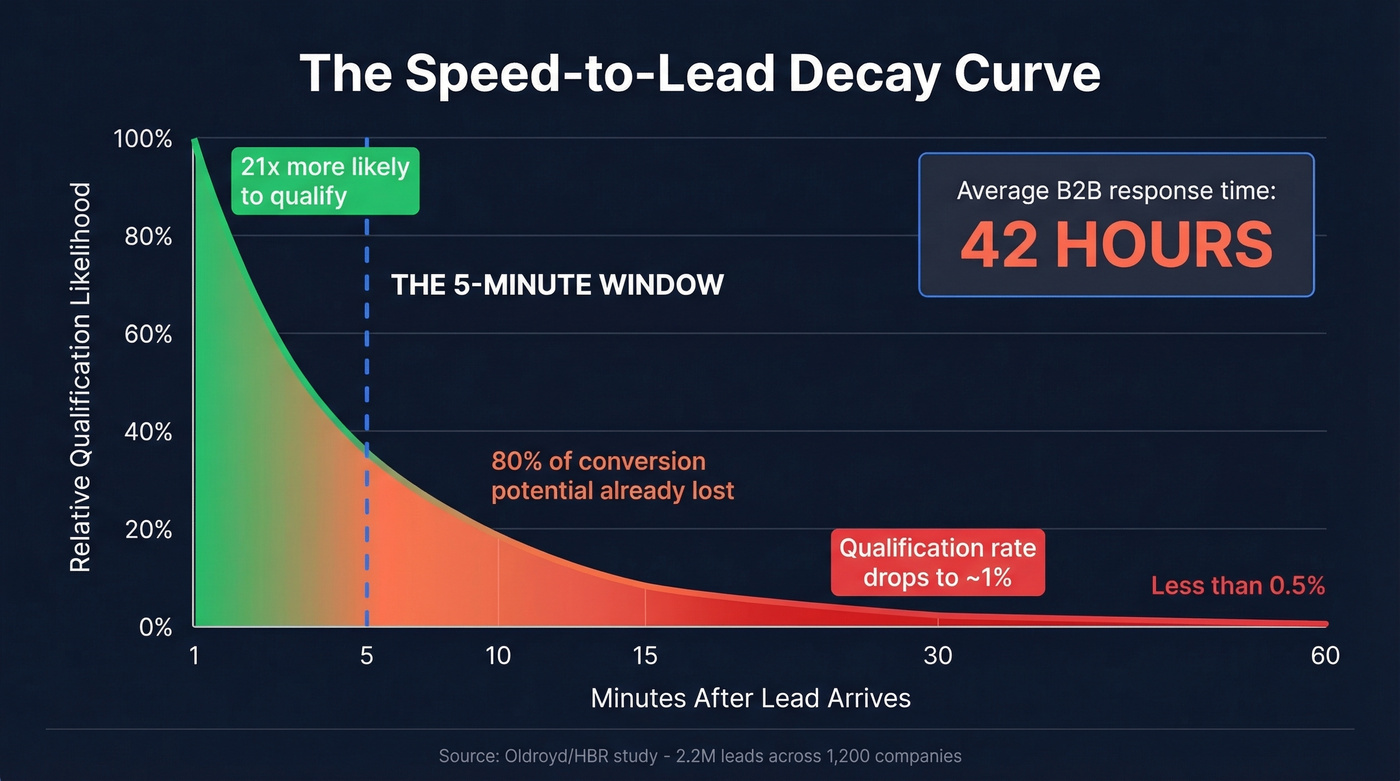
That's a step function, not a slope.
The 42-hour average across B2B means most companies aren't even playing the same game as the teams that respond in under five minutes - they're just watching leads decay in a queue while reps finish lunch or clear their inbox.
Lead Qualification Rate
Formula: qualified leads / total inbound leads. An Operatix study across 150 SDRs found roughly 27% of inbound leads are ICP-fit. If your qualification rate is well above that, your definition of "qualified" is probably too loose. If it's well below, your marketing is attracting the wrong audience or your SDRs are disqualifying too aggressively.
Lead-to-Meeting Conversion
This one's meaningless unless you segment by intent tier. Low-intent leads like ebook downloads and webinar registrations convert at 5-10%. High-intent leads - demo requests, pricing page inquiries - convert at 75-80%. If your team reports "22% lead-to-meeting," ask which bucket that's coming from. A blended number tells you nothing actionable.
Qualified-to-Booked Rate
A RevenueHero dataset of 1M+ B2B SaaS form submissions puts the median at 62%, top quartile at 72%, and top 10% at 78%+. The stage segmentation is revealing: Seed-stage companies hit 63.6%, Series A drops to 53.6%, and Series D/PE-backed companies recover to 66.8%. Why the dip? Series A teams scale faster than their routing and scheduling processes can handle - they add reps before they fix the plumbing.
Meeting Show Rate
Target ~80%. The Operatix study found roughly 12 meetings held out of 15 set per month. Track meetings held, not meetings set. A "set" meeting that no-shows is a vanity metric. If your show rate is below 75%, the problem is usually confirmation cadence: no pre-meeting email, no calendar reminder, no agenda sent 24 hours before.
SAL-to-SQL Conversion
Sales Accepted Lead to Sales Qualified Lead conversion runs about 50% - roughly 1 in 2 meetings leads to a genuine next step. If your number is well below that, the problem is usually upstream: qualification criteria are too loose, or SDRs are booking meetings with non-decision-makers to hit activity targets. Tighten your lead scoring so "accepted" actually means something.
Pipeline Sourced
The Bridge Group's 2026 SDR benchmark data puts average pipeline per SDR at $3M/year. This is the metric your CFO cares about. Use influenced pipeline with contact-role association, not just first-touch or last-touch attribution. Single-touch models systematically undercount SDR contribution and make it harder to justify headcount.

Speed-to-lead dies when reps waste minutes Googling a prospect's title and phone number. Prospeo enriches inbound leads on arrival - 92% match rate, 50+ data points per contact, verified emails and direct dials - so your SDRs call back in under 5 minutes with full context.
Stop losing the 5-minute window to incomplete form data.
2026 Benchmark Table
| Metric | Formula | Benchmark | Source |
|---|---|---|---|
| Speed-to-lead | First response - created | < 5 min | Oldroyd/HBR |
| Qualification rate | Qualified / total | ~27% | Operatix |
| Lead-to-meeting | Meetings / leads | 5-10% low intent / 75-80% high | Crunchbase |
| Qualified-to-booked | Booked / qualified | 62% median | RevenueHero |
| Show rate | Held / booked | ~80% | Operatix |
| SAL-to-SQL | SQL / SAL | ~50% | Bridge Group |
| Pipeline sourced | $ attributed | $3M/yr per SDR | Bridge Group |
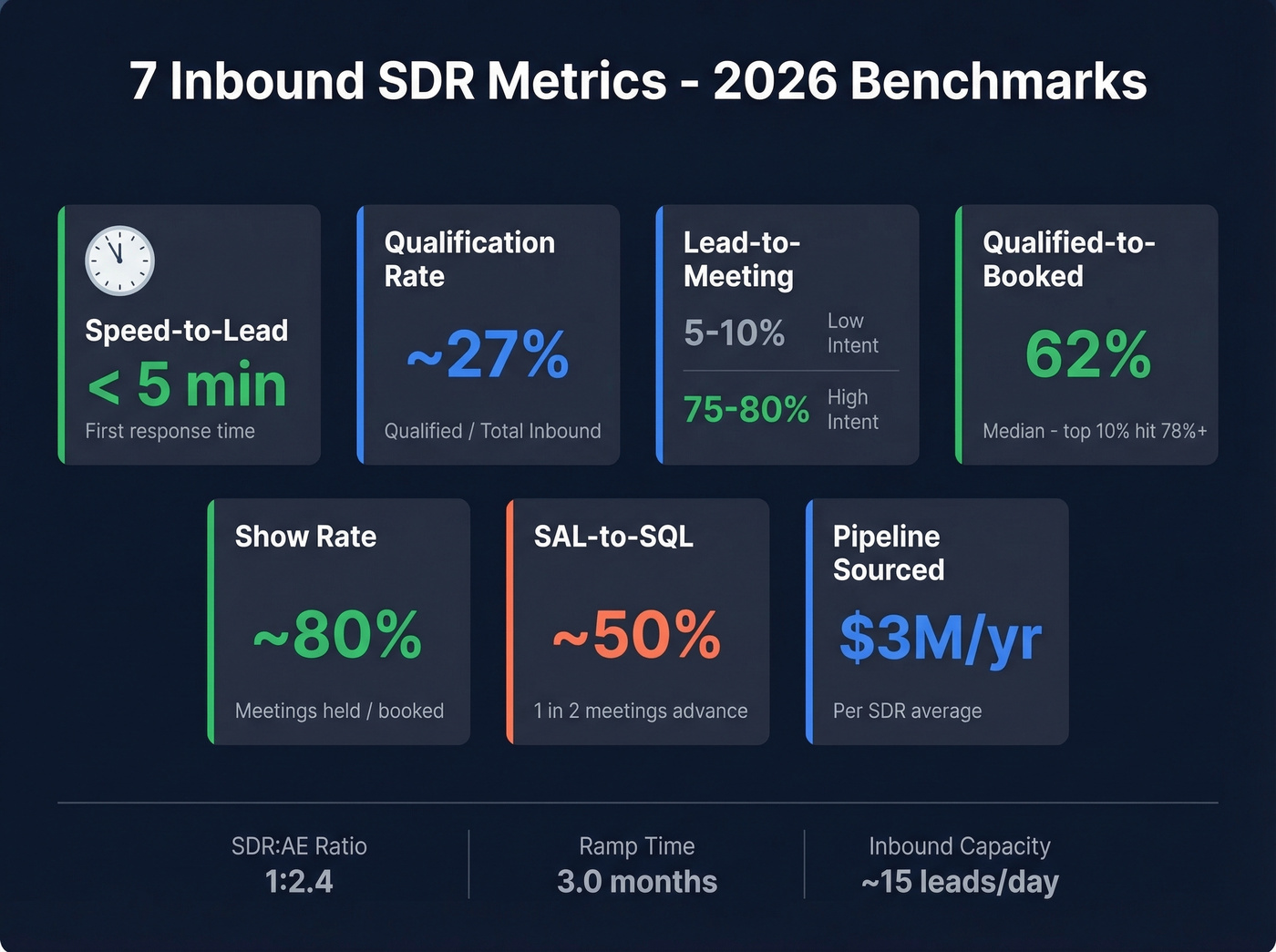
Additional capacity benchmarks worth noting: SDR:AE ratio of 1:2.4, ramp time of 3.0 months, inbound capacity of ~15 leads/day (~300/month).
How to Measure These Metrics
Benchmarks are useless if your CRM can't produce them. Among B2B software sites with 25K+ monthly visitors, fewer than 1% submit a demo request - which is why the metrics that matter start after the form fill. Here's the instrumentation that separates teams who track metrics from teams who actually trust them.
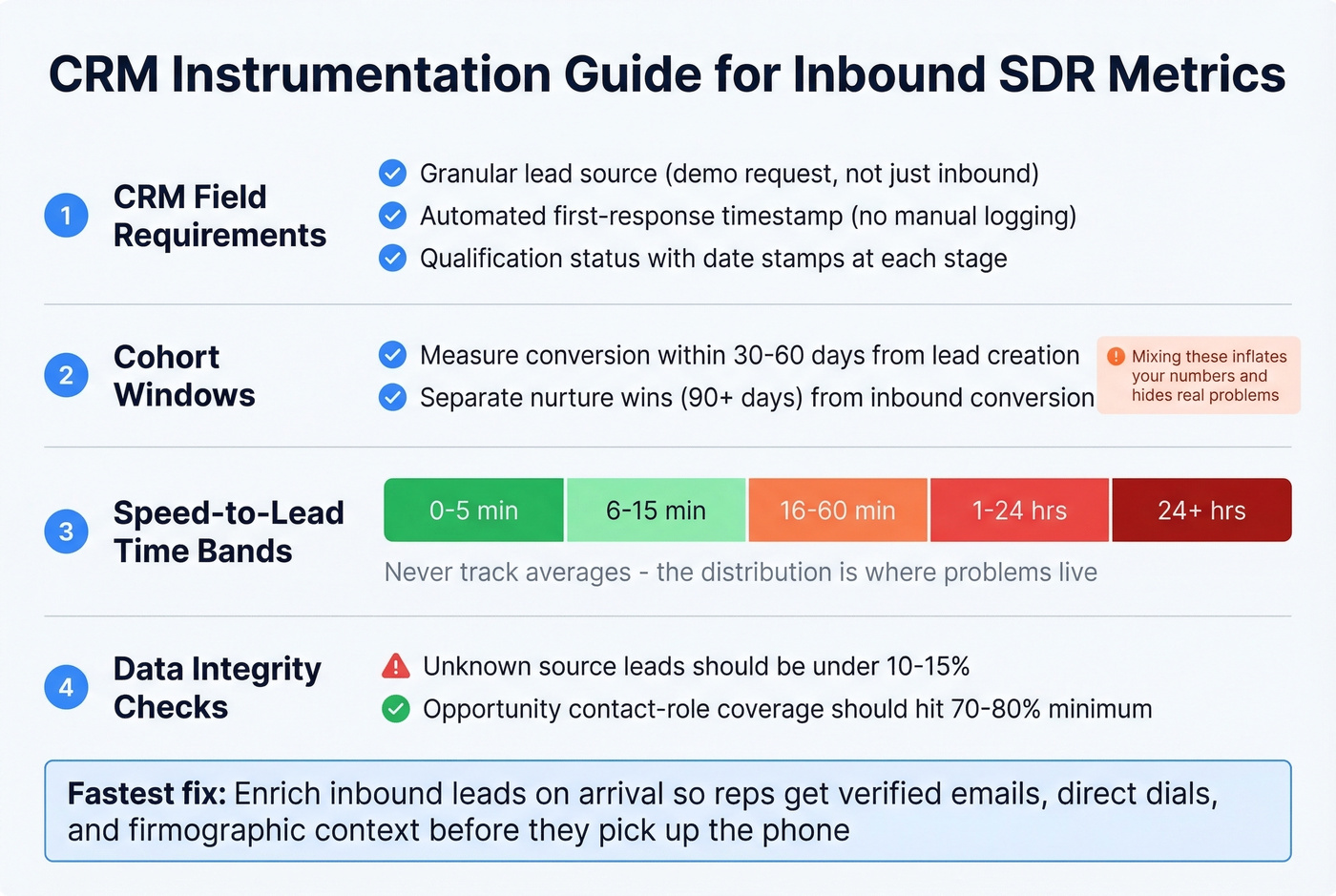
CRM field requirements. Every lead needs a granular lead source ("demo request," not just "inbound"), an automated first-response timestamp, and qualification status with date stamps at each stage transition. If reps manually log response times, your speed-to-lead data is fiction. If you need a baseline, start with these examples of a CRM setups and required fields.
Cohort windows. Measure conversion within 30-60 days from lead creation. A lead that converts 90 days later is a nurture win, not an inbound conversion win. Mixing the two inflates your numbers and hides real problems.
Speed-to-lead time bands. Don't track average response time. Break it into bands: 0-5 minutes, 6-15, 16-60, 1-24 hours, 24+. The average hides the distribution, and the distribution is where problems live. We've seen teams with a "12-minute average" where 40% of leads waited over an hour - the fast responses from auto-replies dragged the mean down.
Data integrity checks. If more than 10-15% of leads have "unknown" source, your attribution is broken. Opportunity contact-role coverage should hit 70-80% minimum. And 89% of inbound teams already use call recording and conversation analytics - if you're not analyzing call outcomes alongside conversion metrics, you're behind the majority.
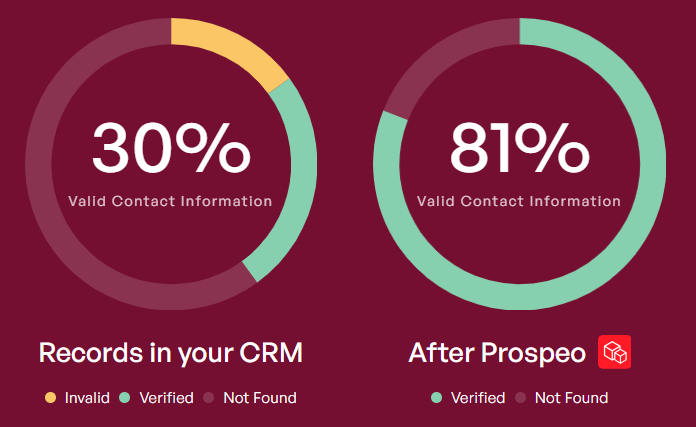
The fastest fix for data gaps is enrichment on arrival. Run inbound leads through an enrichment layer so reps get verified emails, direct dials, and firmographic context before they pick up the phone. When your form only captures name and company email, enrichment fills in job title, department headcount, tech stack, and phone number - the context SDRs need to qualify in under five minutes. Prospeo's enrichment API returns 50+ data points per contact at a 92% match rate, which is the kind of coverage that turns a bare form submission into a complete prospect profile. If you're evaluating vendors, compare data enrichment services before you commit.
Mistakes That Tank Your Numbers
Treating all inbound leads the same. A demo request and a whitepaper download require completely different response cadences, messaging, and SLAs. Lumping them together inflates your denominator and makes every conversion metric look worse than it is.
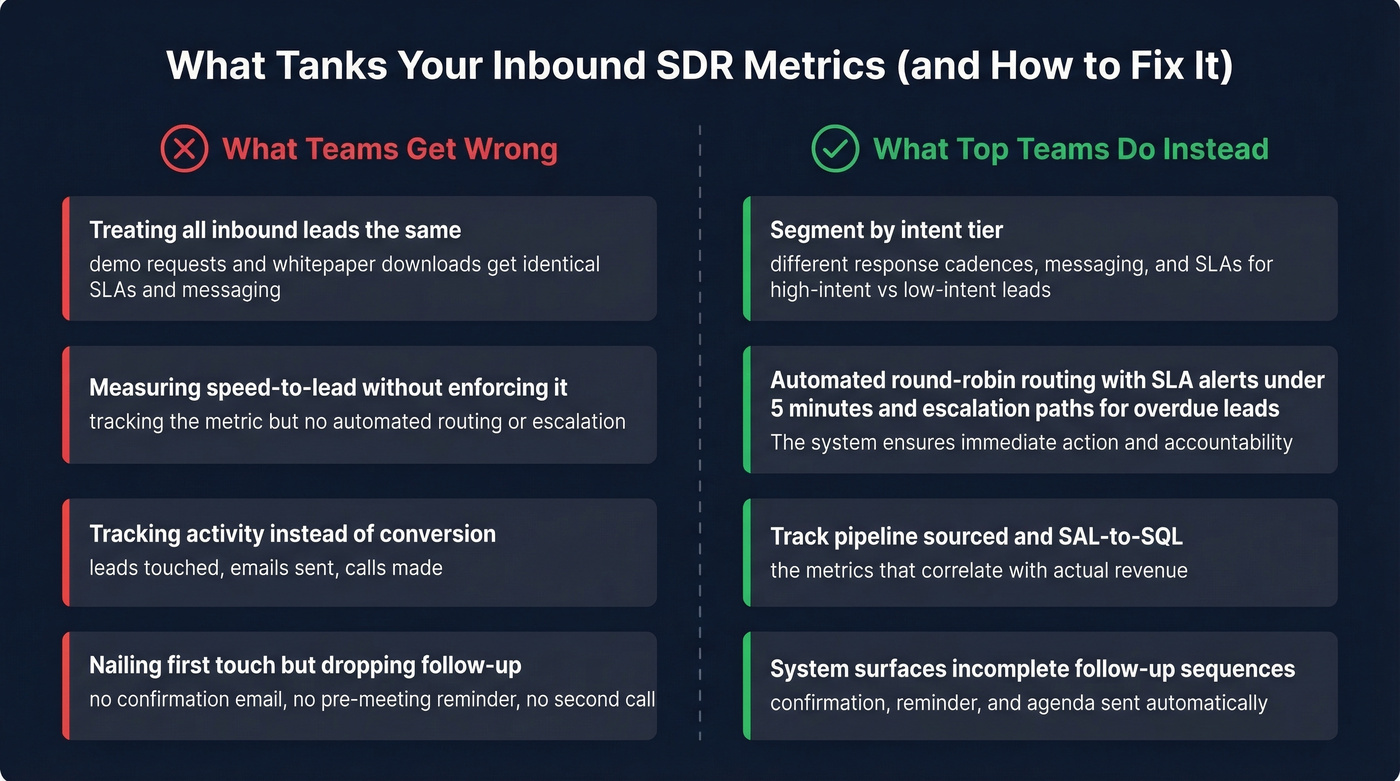
Measuring speed-to-lead without enforcing it. Tracking the metric without automated routing, alerts, and escalation paths is just watching yourself lose. The same applies to overdue follow-up tasks - if they pile up without escalation triggers, leads age out before anyone touches them.
Tracking activity instead of conversion. The consensus on r/sales is clear: activity-over-conversion tracking is the number one SDR frustration, and they're right. Leads touched, emails sent, and calls made are input metrics. They tell you reps are busy, not effective. Pipeline sourced and SAL-to-SQL are the metrics that correlate with revenue. If you need a clean taxonomy, use these sales activities examples to separate inputs from outcomes.
Ignoring follow-up consistency. Speed-to-lead gets all the attention, but what happens after the first touch matters just as much. If reps nail the initial response but drop the ball on the second call, the confirmation email, or the pre-meeting reminder, show rates crater and qualified-to-booked rate suffers. Build a system that surfaces incomplete follow-up sequences so no lead slips through. Standardize your messaging with proven sales follow-up templates.
Let's be honest: if your average deal size is under $15k, you probably don't need seven dashboards. Nail speed-to-lead and qualified-to-booked rate. Those two KPIs alone will tell you whether your inbound motion is working or bleeding money. In our experience, qualified-to-booked rate is the metric most teams discover they've never actually tracked - and it's the one that changes behavior fastest once they start.
Your SAL-to-SQL rate tanks when SDRs book meetings with the wrong contacts. Prospeo gives your team 125M+ verified mobiles and 98%-accurate emails so reps reach actual decision-makers - not gatekeepers. At $0.01 per email, fixing data quality costs less than one lost meeting.
Reach decision-makers directly and watch your show rate hit 80%+.
FAQ
How many inbound leads should one SDR handle per day?
About 15 per day (~300/month). Exceeding this consistently degrades response time and qualification quality - the two highest-leverage metrics in your funnel.
What's a good lead-to-meeting conversion rate?
Segment by intent before benchmarking. Low-intent leads (ebooks, webinars) convert at 5-10%, while high-intent leads (demo requests, pricing inquiries) convert at 75-80%. A blended number masks real performance.
Which inbound SDR metrics matter most for pipeline?
Qualified-to-booked rate (62% median), meeting show rate (~80%), and SAL-to-SQL conversion (~50%) are the three direct pipeline predictors. Fix speed-to-lead first - it's the upstream lever that moves all three.
How can I improve speed-to-lead without adding headcount?
Automate lead routing and enrich on arrival. Fill in job title, direct dial, and firmographics the moment a form is submitted so reps can qualify immediately instead of researching manually. Pair that with round-robin routing and SLA alerts under 5 minutes.