

Informal Email Introduction Samples That Work in 2026
Formality isn't binary - it's a scale. Purdue OWL's writing framework nails this: your audience and your purpose determine where you land on that scale. A first message to a new teammate sits in a completely different spot than a cold email to a VP you've never met. Get the tone wrong and even a well-crafted intro feels off.
The good news: informal intros are easier to write than formal ones. The bad news: most people still blow them by writing too much, skipping the ask, or sending to an address that bounces. Here's a framework plus copy-paste samples for every common scenario, so your introductions actually arrive and actually get replies.
The Five-Part Framework
Every good informal intro email has five elements:
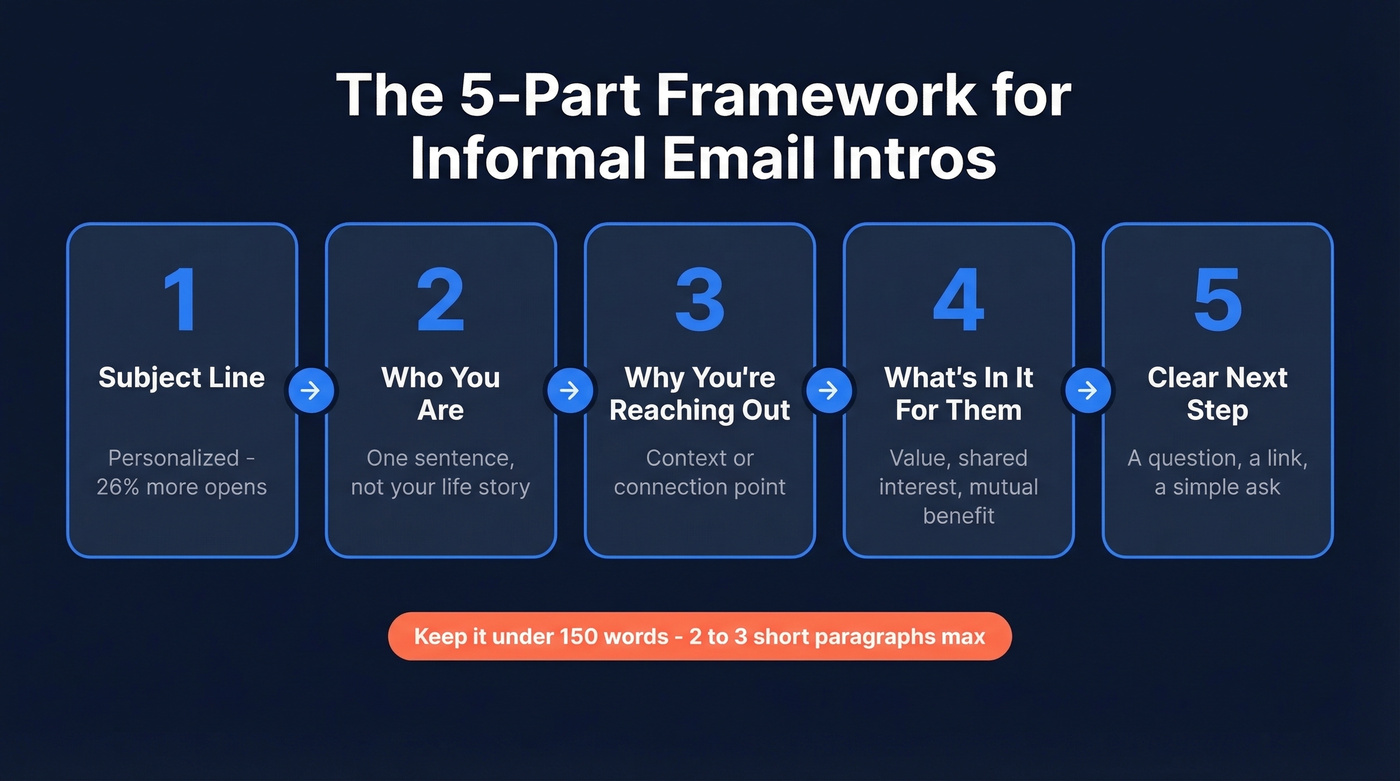
- Specific subject line - personalized subject lines get 26% more opens, per Campaign Monitor data
- Who you are - one sentence, not your life story
- Why you're reaching out - context or connection point
- What's in it for them - value, shared interest, or mutual benefit
- Clear next step - a question, a calendar link, a simple ask
Keep the whole thing under 150 words. Two to three short paragraphs. If you're writing more than that for a first introduction, you're writing too much.
One thing people forget: your email signature matters as much as the body. Include your full name, job title, company, and one contact link. Optionally add pronouns. A simple rule that comes up constantly in real-world email etiquette: write like a normal person would speak, and let your signature match that tone.
Jump to the sample you need: New Team | [Networking](#networking - event-follow-up) | Outreach | Mutual Connection
Informal Email Introduction Samples by Scenario
New Team Introduction
Subject: Hey team - new [role] starting today
Hi everyone,
I'm [Your Name], and I just joined as [role] on the [department] team. I'll be working on [one-sentence scope], so you'll probably see me popping up in Slack and meetings starting this week.
A little about me outside of work: I'm a terrible but enthusiastic cook, and I have a golden retriever named Biscuit who occasionally crashes my video calls.
Looking forward to meeting everyone - feel free to say hi anytime.
Best, [Your Name]
The fun-fact line isn't filler - it gives people something to actually respond to. You don't need to list every achievement. A small personal detail breaks the ice better than a paragraph about your credentials.
One quick note on group greetings: "Hi everyone" or "Hi team" works better than "Hey guys," which can feel exclusionary. Small thing, but people notice.
Want a slightly more polished version? Swap "Hey team" for "Hello [department] team," drop the pet anecdote, and keep the scope sentence. Same structure, different register.
Networking / Event Follow-Up
For event follow-ups, speed matters. We've seen this play out dozens of times in our own outreach - if you wait more than 48 hours, the connection fades and your name blurs into every other person they met that day.
Subject: Sarah - quick intro from the Austin conference
Hi Sarah,
We chatted briefly at [event name] last week about [topic]. I really enjoyed your take on [specific thing they said], and I wanted to follow up while it's still fresh.
I'm [Your Name], [one-line role description]. I'd love to continue the conversation - would you be open to a 15-minute call next week?
Thanks, [Your Name]
Reference the shared moment before you ask for anything. You're not a stranger - you're the person from that specific conversation. That's your social currency, and it expires fast.
Outreach for an Opportunity
Before the template, here's what NOT to send:
"Dear Professor, I am writing to express my interest in potential opportunities within your esteemed laboratory. My extensive coursework in molecular biology and my passion for scientific discovery make me an ideal candidate..."
That reads like a cover letter, not a human being. Compare:
Subject: [Your Name] - [university/company], interested in [specific area]
Hi Dr. [Name],
I'm [Your Name], a [year] [major] student at [university]. I've been following your work on [specific project or paper], and I'm particularly interested in [specific angle].
I'm looking for [internship/research opportunity/informational interview] this [semester/summer]. Would you have 15 minutes for a quick call or coffee? I'd love to hear more about your current projects.
Thank you for your time, [Your Name]
Here's the thing about internship and research outreach: getting ghosted is the norm, not the exception. One practical fix is to follow up. If you don't hear back in a week, send one polite nudge. Most busy people aren't ignoring you - they just forgot. A single follow-up doubles your reply rate in our experience. (If you want more examples, borrow a structure from these sales follow-up templates.)
Mutual Connection Introduction
Lead with the mutual connection's name. In the subject line. In the first sentence. That's your credibility - everything else is secondary. I'd go so far as to say a mediocre email with a strong mutual connection outperforms a brilliant cold email every time.
Subject: [Mutual contact's name] suggested I reach out
Hi [Name],
[Mutual contact] mentioned you'd be a great person to talk to about [topic]. I'm [Your Name] - I [one-line context about what you do and why it's relevant].
I'd love to pick your brain for 15 minutes if you're open to it. No pressure either way.
Thanks, [Your Name]
Pro tip: Before making this introduction, ask your mutual contact if they're comfortable being named. A quick "Mind if I mention you?" text takes 10 seconds and prevents awkwardness.

You just wrote the perfect informal introduction. Don't let it bounce. Prospeo verifies emails with 98% accuracy using a 5-step verification process - catch-all handling, spam-trap removal, and honeypot filtering included. At $0.01 per email, verifying before you send costs almost nothing. Getting ghosted because of a bad address costs everything.
Verify your contact's email before you hit send.
Subject Lines That Get Opened
| Subject Line Example | Why It Works |
|---|---|
| Sarah - quick intro from Austin | Personal, specific, short |
| [Mutual name] suggested I reach out | Instant credibility |
| New on the team - hi from [Name] | Clear context, friendly |
| [Bracket tag] Your talk on X | Brackets hit 52% open rates in BuzzStream's dataset |
| Quick question about [specific topic] | Curiosity + low commitment |
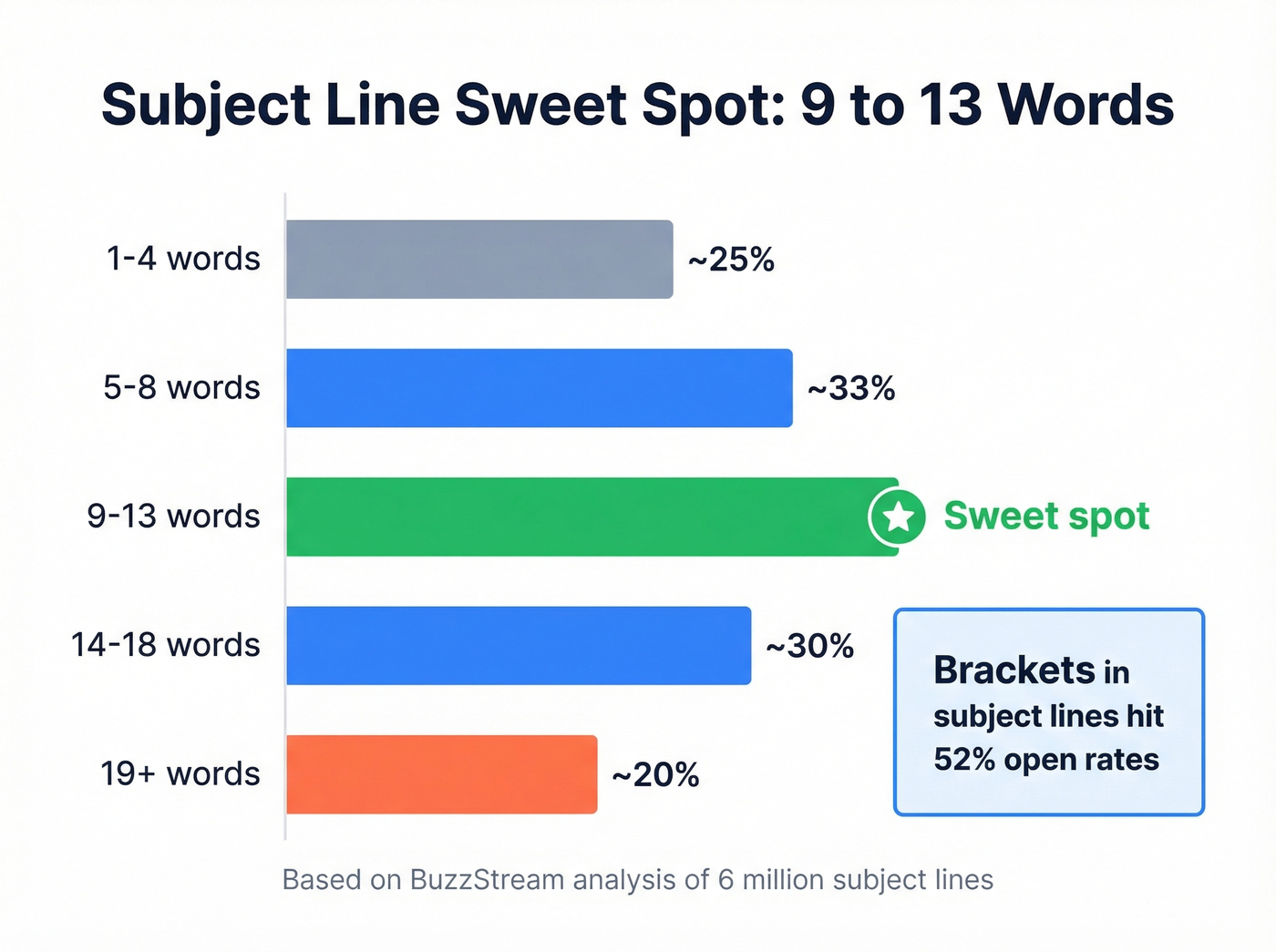
That same BuzzStream analysis of 6 million subject lines found the sweet spot for length is 9-13 words, with open rates around 40%. Specificity beats cleverness every time. (Need more options? Steal from these email subject line examples.)
Mistakes That Kill Replies
Skip the bare-name greeting. Starting with just "John," and no "Hi" reads as abrupt. A lot of people strongly dislike it. "Hi John," takes almost no effort and completely changes the tone.
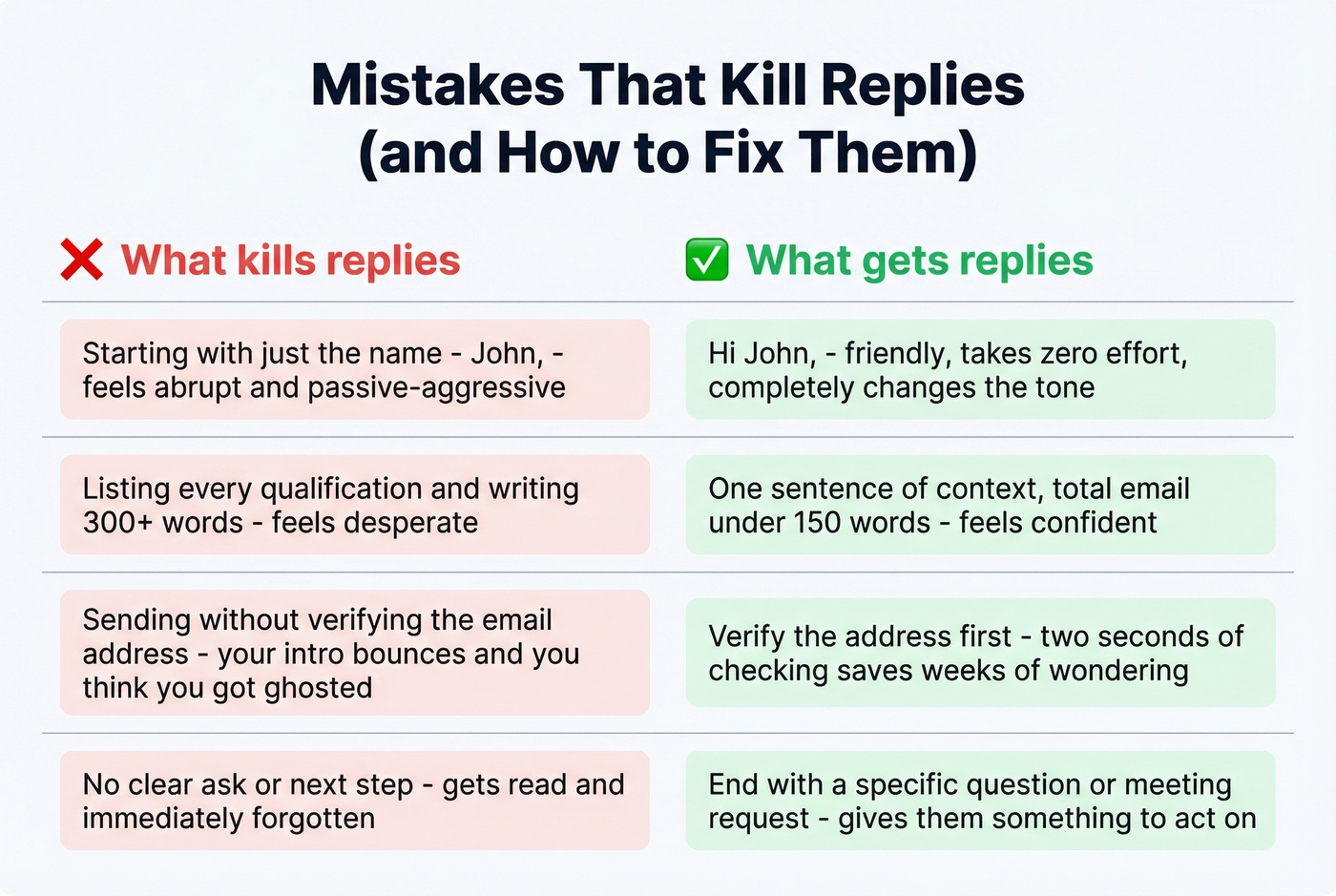
Instead of listing every qualification, keep it to one sentence of context. Short, calm introductions feel confident. Long ones feel desperate. If your intro email is longer than the reply you're hoping for, cut it in half.
Let's be honest about the most common failure mode we see: someone writes a strong email, sends it to an outdated address, and assumes they got ignored. They didn't get ignored - they got bounced. Before you send any warm introduction or cold email, verify the address. Prospeo's Email Finder covers 143M+ verified emails at 98% accuracy, with a free tier of 75 emails per month. Two seconds of verification saves weeks of wondering why nobody replied. (If you're troubleshooting bounces, start with email bounce rate benchmarks and fixes.)

And every intro email needs a clear next step. A question, a meeting request, something concrete. Without it, even a well-written email gets read and forgotten. If you want to tighten your ask, use these email call to action rules.
Tone Calibration Matters More Than Templates
Most people looking for an informal email introduction sample don't actually need a template - they need a tone calibrator. Here's the scale we use:
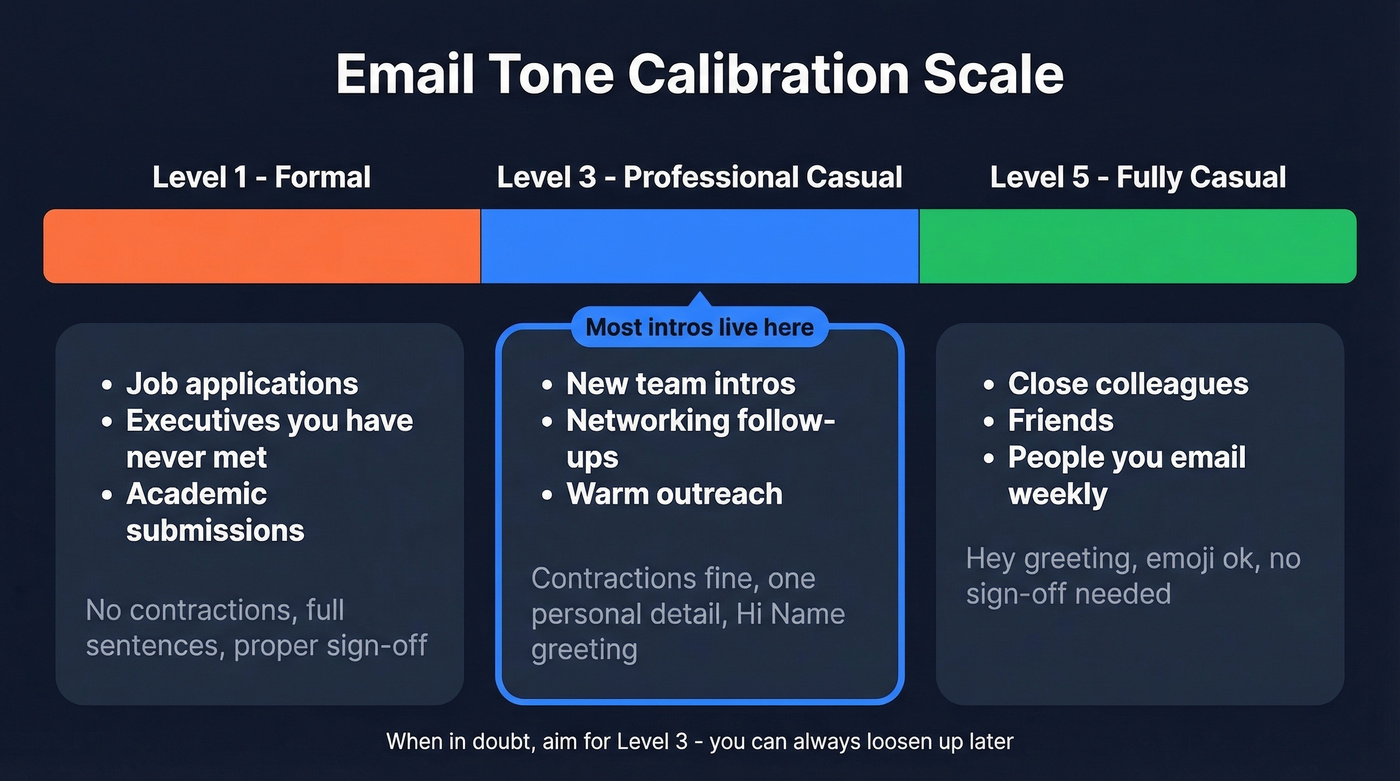
Level 1 - Formal: Job applications, executives you've never met, academic submissions. Full sentences, no contractions, proper sign-off.
Level 3 - Professional-casual: New team intros, networking follow-ups, warm outreach. Contractions are fine, one personal detail, "Hi [Name]" greeting. This is where most of the samples above live.
Level 5 - Fully casual: Close colleagues, friends, people you email weekly. "Hey," emoji acceptable, no sign-off needed.
The mistake isn't being too casual or too formal - it's misjudging which level the situation calls for. An informal intro to a new teammate is great. An informal intro on a job application is a red flag. When in doubt, aim for Level 3. You can always loosen up after the first exchange. (For more guidance on writing intros that convert, see emails that get responses.)
The article above gives you the words. Prospeo gives you the addresses. Search 300M+ professional profiles with 30+ filters to find the exact person you want to introduce yourself to - then get their verified email in one click with our Chrome extension, used by 40,000+ professionals.
Find verified emails for anyone you want to reach.
FAQ
How long should an informal introduction email be?
Aim for 75-150 words - two to three short paragraphs. State who you are, why you're writing, and one clear next step. Shorter emails respect the reader's time and consistently get more replies than longer ones.
Is "Hey" an appropriate email greeting for introductions?
"Hey" works for people you already know well, but "Hi [Name]" is safer for a first introduction - friendly without being too casual. Avoid using just the recipient's name with no greeting, which many people find abrupt or passive-aggressive.
How do I make sure my intro email reaches the right person?
Use an email verification tool before hitting send. A perfectly written intro is wasted on a bounced or outdated inbox. Prospeo's Email Finder verifies against 143M+ emails at 98% accuracy, and the free tier gives you 75 lookups per month - enough to validate every important introduction.