

Inside Sales Rep vs Outside Sales Rep: What Actually Matters in 2026
A RevOps lead we know got promoted three times in three years - Inside Sales Rep, then Sales Engineer, then Account Manager. His day-to-day didn't change once. Same calls, same CRM, same quota. The only thing that shifted was the title on his business card.
That's the state of the inside sales rep vs outside sales rep debate right now: the labels are blurring, but the economics aren't. Comp, cost-per-rep, ramp time, and daily activity volume still diverge meaningfully between the two models. Let's break it down.
The Short Version
- Choosing a career? Start inside. You'll master high-volume prospecting, CRM discipline, and objection handling faster. Move outside later if you want bigger deals and more autonomy.
- Building a team? Default to hybrid. Inside reps handle qualification and pipeline generation; outside reps handle the highest-ACV, highest-complexity deals where face-to-face still moves the needle.
- Optimizing spend? The comparison table below has the numbers that drive the decision.
Definitions, No Filler
Inside sales reps sell remotely via phone, email, and video. They run higher volume, shorter cycles, and smaller deals. The work is structured, repetitive, and measurable - think 60 calls a day, sequences running in the background, and a CRM that tracks every touch.
Outside sales reps sell in the field with in-person meetings. They run lower volume, longer cycles, and larger deals. The work is autonomous, relationship-heavy, and harder to measure on a daily basis. The current US workforce split sits at 53.7% inside vs 46.3% outside, and that gap keeps widening - inside reps are being hired at a 10:1 ratio compared to field reps.
How Buyers Actually Buy in 2026
Most career guides define inside sales as "selling from an office" and outside sales as "selling in person," then pad 2,000 words around those definitions. Here's what they miss: the buyer doesn't care which model you run. They care about convenience.
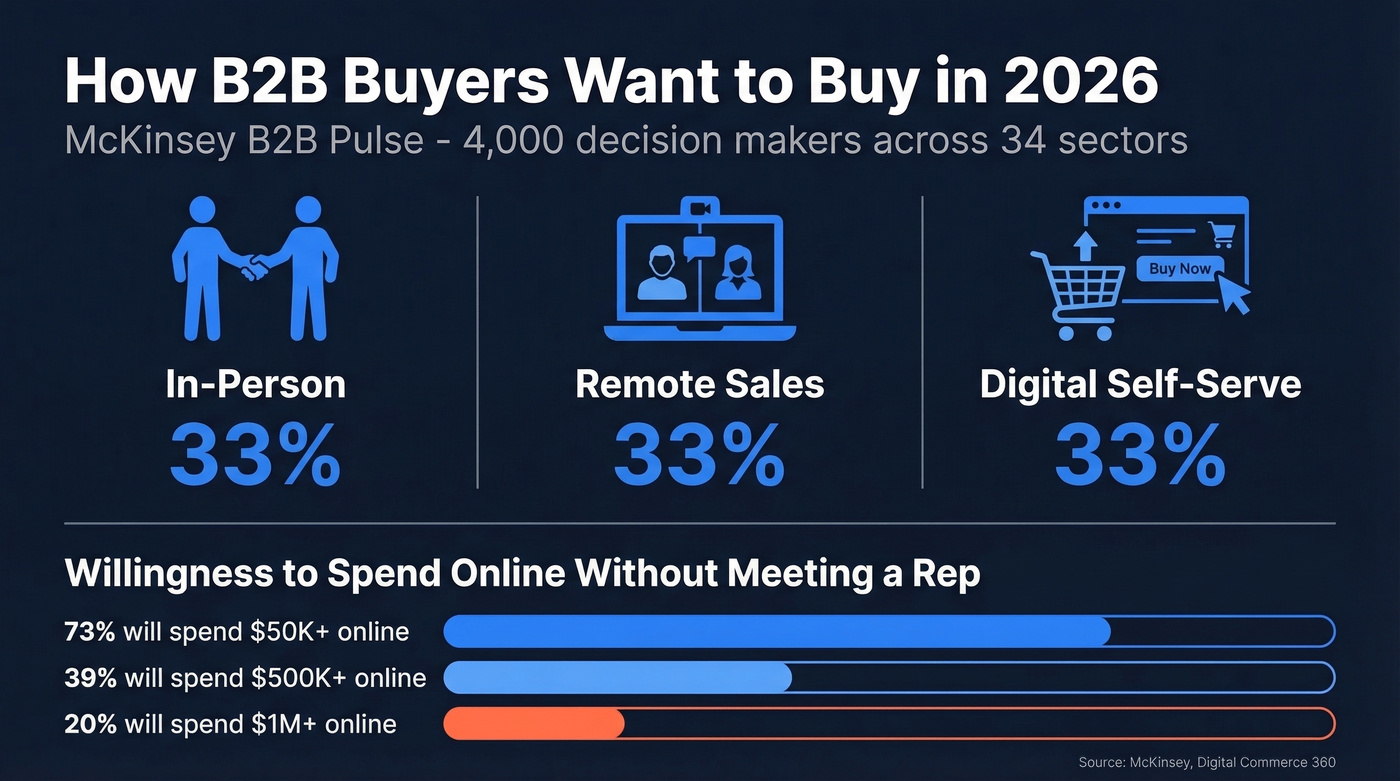
McKinsey's ninth B2B Pulse survey - nearly 4,000 decision-makers across 34 sectors and 13 countries - found a persistent "rule of thirds." At any buying stage, roughly one-third of buyers prefer in-person interaction, one-third prefer remote, and one-third prefer digital self-serve. This held across geographies, industries, and company sizes.
The channel expansion is measurable. B2B buyers now use an average of ten interaction channels, up from five in 2016. Comfort with remote purchasing has shifted dramatically: 73% of buyers will spend $50K+ online (up from 59% two years prior), 39% will spend $500K+, and 20% will spend $1M+ without ever meeting a rep in person.
The takeaway isn't that field sales is dead. It's that the threshold for "this deal requires a plane ticket" keeps rising.
The Full Comparison
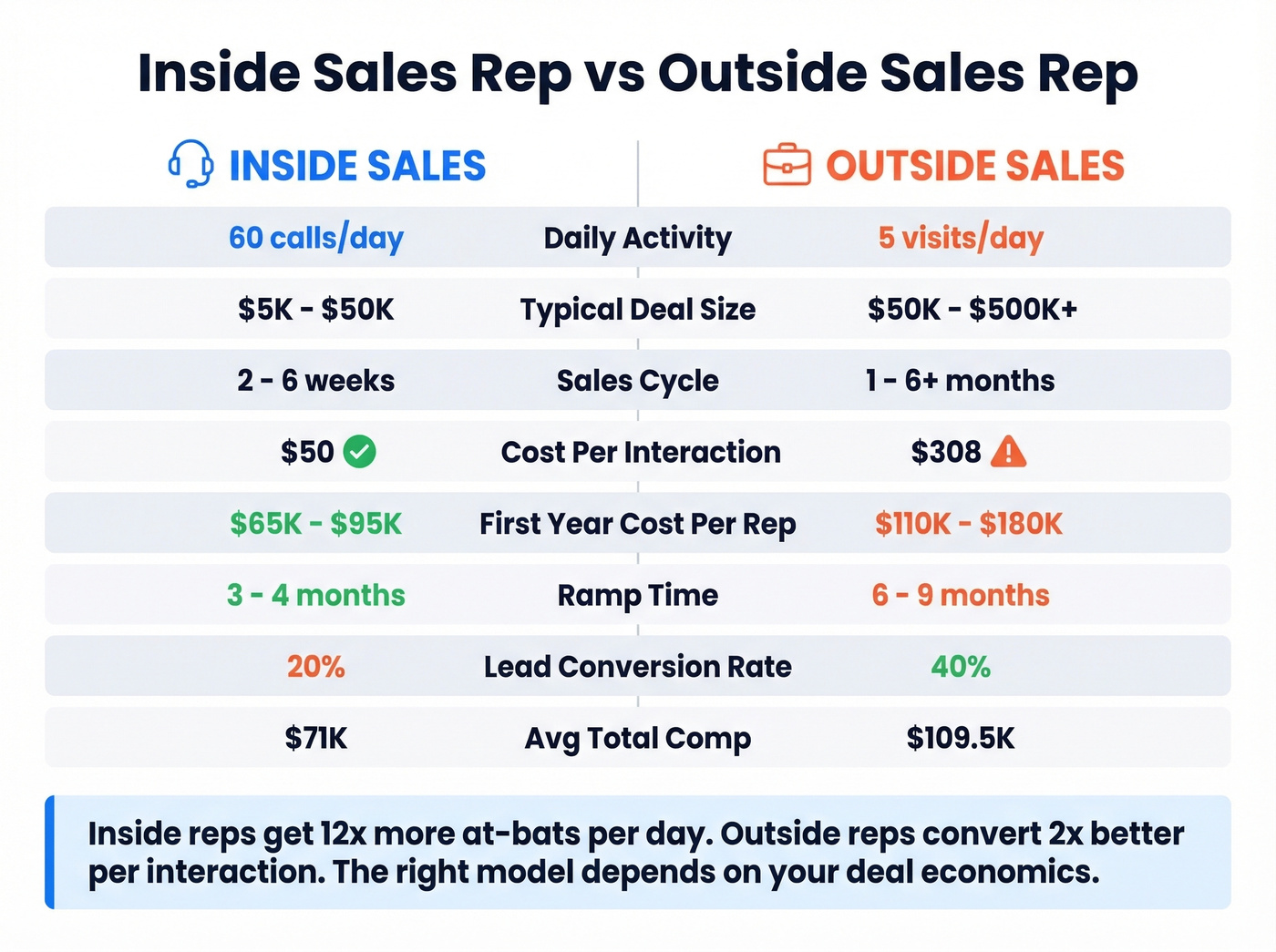
These numbers draw from SPOTIO's cost benchmarks, RepMove's activity data, and comp figures from Indeed and HubSpot via Gallagher/AJG.
| Dimension | Inside Sales | Outside Sales |
|---|---|---|
| Work environment | Remote / office | Field / client sites |
| Daily activity volume | ~60 calls/day | ~5 visits/day |
| Deal size (typical) | $5K-$50K | $50K-$500K+ |
| Sales cycle length | 2-6 weeks | 1-6+ months |
| Cost per interaction | ~$50 | ~$308 |
| First-year cost per rep | $65K-$95K | $110K-$180K |
| Annual expenses (non-comp) | $2K-$3K (tech) | $15K-$40K (travel + tech) |
| Ramp time | 3-4 months | 6-9 months |
| Qualified lead conversion | ~20% | ~40% |
| Avg base salary | $59K | $87K |
| Avg commission | $12K | $22.5K |
Picture this: you're an inside rep grinding through 60 calls a day, and you just found out the field rep on your team makes 36% more in base salary for five client visits. Feels unfair - until you do the math.
Outside reps show higher qualified lead conversion (40% vs 20%), but inside reps get twelve times more at-bats per day. When you multiply volume by conversion, inside sales can generate more total pipeline opportunities per dollar spent. That 10:1 hiring ratio reflects this reality.
Here's a concrete example. A team of five inside reps at $80K all-in costs $400K and produces roughly 300 calls per day. Two outside reps at $150K all-in costs $300K but produces about ten visits per day. The inside team creates more pipeline opportunities by an order of magnitude - even with the lower per-interaction conversion rate. But if your average contract value is $200K and requires multi-stakeholder buy-in with a physical demo, the $308 cost per visit pays for itself on a single close.
The model you choose depends on your deal economics, not on which sounds more modern.

Your inside reps make 60 calls a day. How many connect? Prospeo gives them 98% accurate emails and verified direct dials from 300M+ profiles - so every at-bat counts. At $0.01 per email, scaling volume doesn't scale cost.
Turn your inside team's volume advantage into actual pipeline.
Compensation Breakdown
Outside sales base salary runs 36% higher than inside sales on average. Inside reps average $59K base plus $12K in commissions, while outside reps pull $87K base plus $22.5K in commissions.
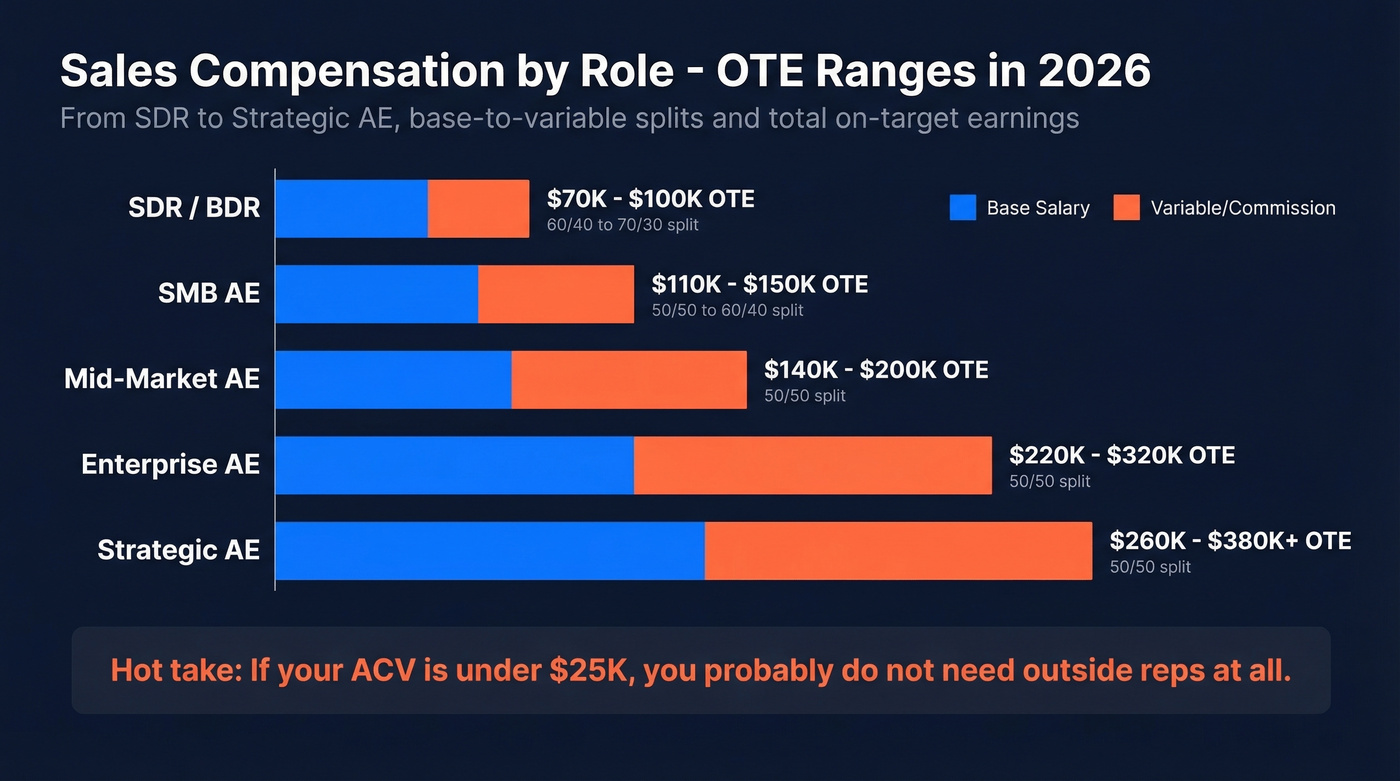
That gap narrows - and sometimes disappears - at the enterprise level. An inside AE closing six-figure SaaS deals can out-earn a field rep covering a low-density territory.
| Role | OTE Range | Typical Base/Variable |
|---|---|---|
| SDR / BDR | $70K-$100K | 60/40 to 70/30 |
| SMB AE | $110K-$150K | 50/50 to 60/40 |
| Mid-Market AE | $140K-$200K | 50/50 |
| Enterprise AE | $220K-$320K | 50/50 |
| Strategic AE | $260K-$380K+ | 50/50 |
SDR and BDR roles skew toward higher base ratios because the variable component ties to meetings booked rather than revenue closed. Field and enterprise AEs run 50/50 with larger accelerators - the upside on a $300K deal is what makes the travel worth it. In hot markets like SF or NYC, enterprise AEs regularly clear $350K+ once accelerators kick in.
Hot take: If your ACV is under $25K, you probably don't need outside reps at all. The comp premium, travel budget, and longer ramp time only make sense when individual deal values justify the investment. Most companies adopt field sales too early because it feels more serious, not because the math supports it.
What It Actually Feels Like
Inside Sales
The upside: No travel. Faster ramp (3-4 months vs 6-9). Geographic flexibility - you can work from anywhere with decent WiFi, and lower cost-of-living arbitrage is real. Higher volume means more at-bats, faster learning loops, and quicker pattern recognition on what messaging works.
The grind: The volume cuts both ways. We're talking 100+ cold calls and 200+ emails per week. One Reddit poster described inside sales as a "hamster wheel," reporting that roughly 80% of inbound calls at their company were hostile - though they attributed part of that to working for a sketchy outfit. Screen fatigue is the other silent killer. Eight hours of Zoom, dialer, and CRM with no change of scenery grinds people down in ways no job description captures.
Outside Sales
The upside: Autonomy. Relationship depth that's hard to replicate over video. Higher comp. Genuine variety in your day - no two client visits feel the same, and the physical movement breaks up the monotony that inside reps battle constantly.
The grind: Travel fatigue compounds fast. Prioritizing which accounts get your limited daily visits becomes a strategic exercise - get it wrong and you've burned a full day on low-potential meetings. The daily capacity ceiling is brutal: outside reps average 5.1 visits per day, with the bottom decile managing just 2.07. As one Reddit commenter put it, "outside sales is just inside sales with a car allowance" - which is increasingly true for roles where travel happens twice a month at most.
When to Choose Which
Your product needs a physical demo
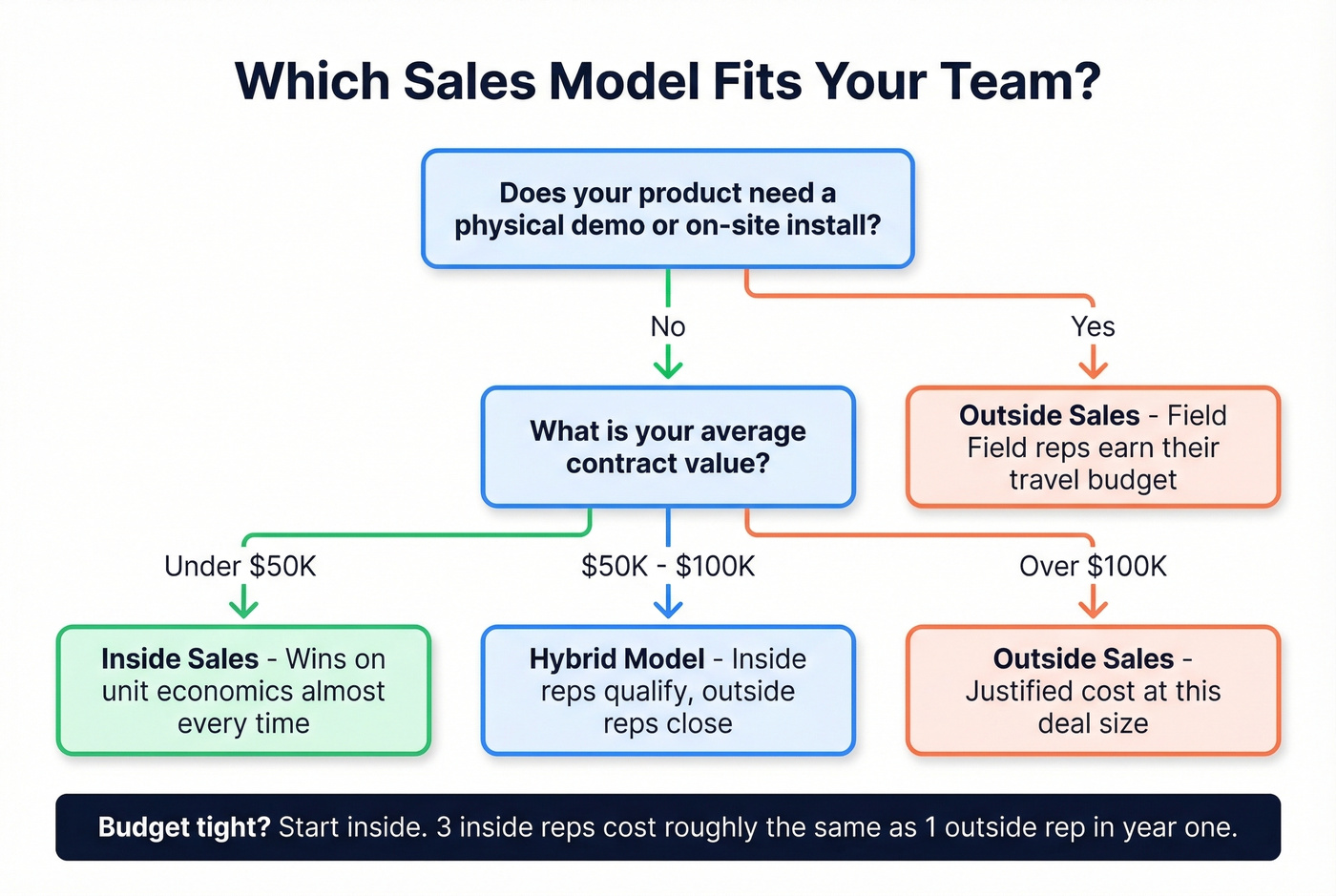
If your product requires on-site installation or multi-stakeholder workshops that don't translate to Zoom, outside reps earn their travel budget. If you can demo via screen share and close over a video call, inside is the default.
Your ACV is under $50K
Inside sales wins on unit economics almost every time. Over $100K, outside reps justify their cost. The $50K-$100K range is hybrid territory - inside reps qualify and nurture, outside reps close.
You're selling to SMB vs enterprise
SMB buyers expect fast, digital-first interactions. Enterprise buyers with $500K+ procurement processes expect face time, especially for initial relationship building.
Budget is tight
Start inside. An inside team of three costs roughly what one outside rep costs in their first year. Add field reps for strategic accounts once you've proven the motion.
Academic research on inside-outside collaboration found that intensive coordination between the two roles can increase revenue up to 5.5% on accounts with complex product needs. The models aren't competing - they're complementary.
The Hybrid Model (and Why It Won)
A 2022 Gallagher survey found 85% of organizations expected hybrid sales to dominate - and the data says they were right. 40% of high-growth teams already run hybrid, and 45% are using hybrid AI-SDR models where automation handles initial outreach and qualification before a human rep takes over. McKinsey also found that teams implementing genAI in their sales process are 1.7x more likely to grow market share - another reason hybrid models with AI-SDR layers are pulling ahead.
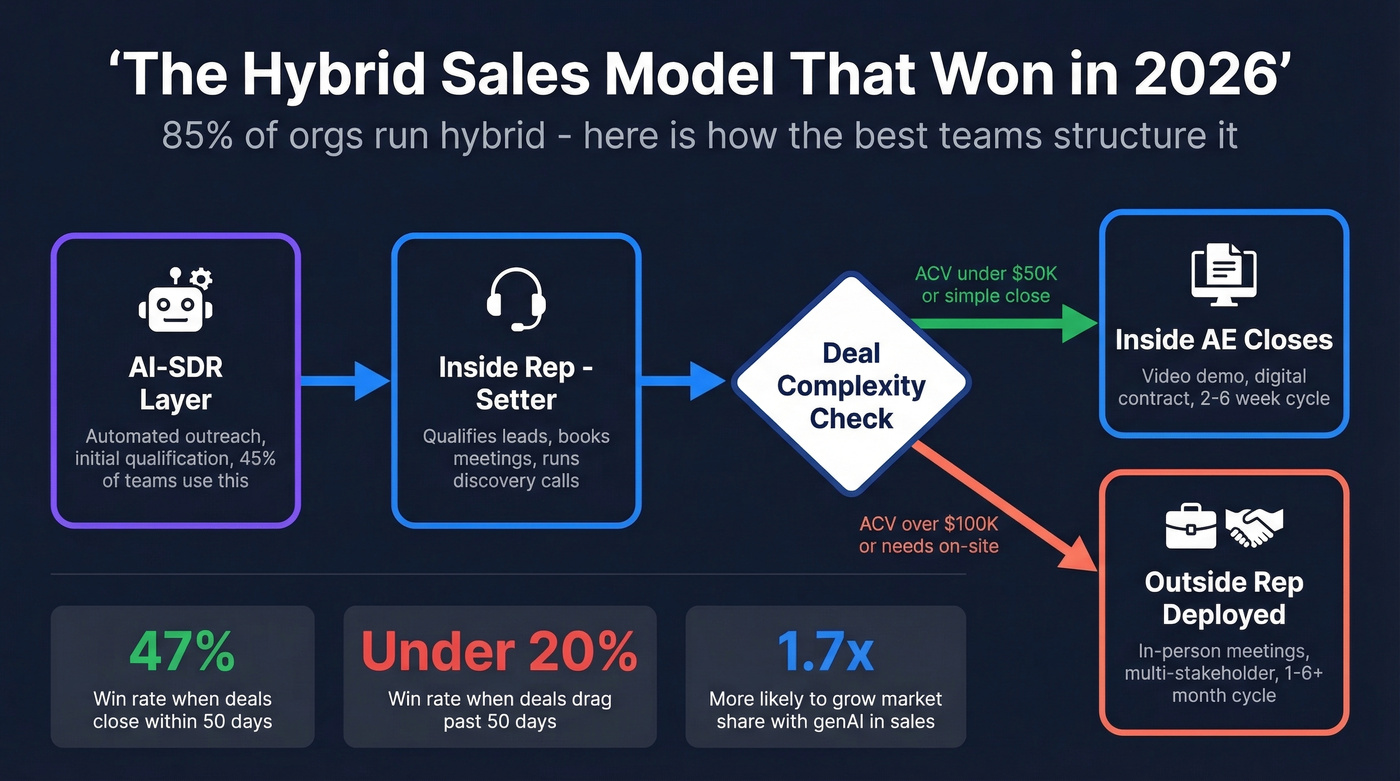
In our experience, the hybrid model works best when inside reps own qualification and outside reps are deployed surgically. The ActiveCampaign playbook illustrates this well: "setter" reps qualify inbound leads, then hand off to AEs who close. That model helped fuel their growth to a $240M Series C at a $3B valuation. The speed advantage is measurable - deals closed within 50 days carry a 47% win rate, while anything past 50 days drops below 20%.
Outside sales isn't dying. It's being reserved for deals that actually deserve a plane ticket.
Tools That Power Each Model
Outside sales stack: Mobile CRM, route planning software, presentation tools, expense management, and field activity tracking.
Both need: Verified contact data - the unsexy bottleneck nobody talks about.
Look, if inside reps make 60 calls a day, every bad number is a wasted dial that steals time from real conversations. Multiply that across a five-person team and you're burning hundreds of dials a week on people who changed jobs last month. We've seen teams cut bounce rates from 35% to under 4% just by switching to a provider with a weekly data refresh cycle instead of the six-week industry average.
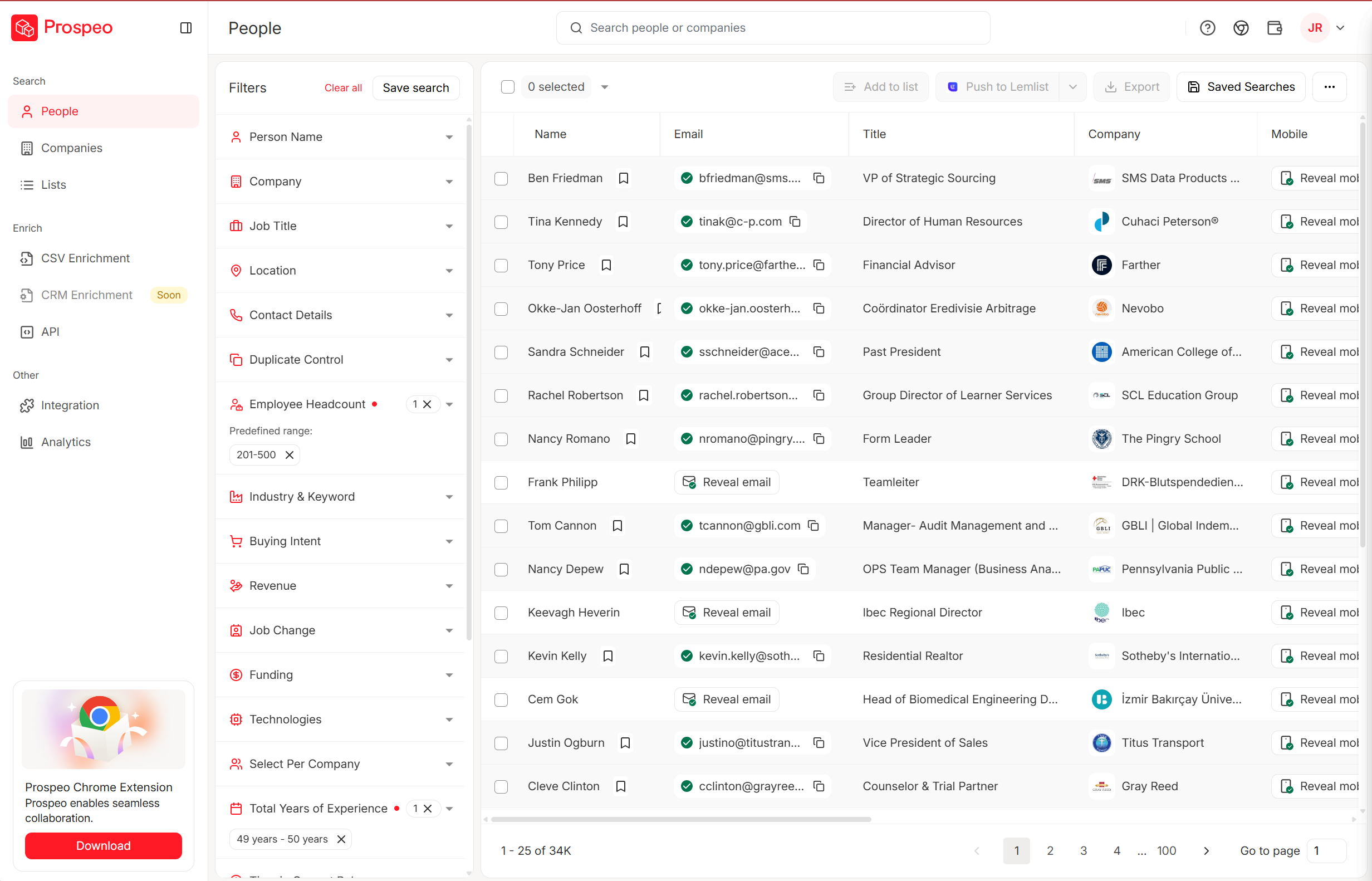
Whether you're building an inside team, a field team, or a hybrid - bad data burns budget on both sides. Prospeo's 7-day data refresh and 125M+ verified mobiles with a 30% pickup rate mean your reps reach real buyers, not dead numbers.
Stop paying $308 per field visit only to reach the wrong person.
FAQ
Is inside sales easier than outside sales?
The stress profiles differ, not the difficulty. Inside reps face higher rejection volume - 60+ calls a day, most going nowhere - but ramp faster at 3-4 months vs 6-9 for field reps. Outside reps deal with travel fatigue and intense pressure on each individual meeting since they only get about five per day.
Can you switch from inside to outside sales?
Yes, and inside-to-outside is the more natural path. You've already mastered high-volume prospecting, CRM discipline, and rapid objection handling - all transferable skills. The reverse is harder because outside reps often struggle with the pace of 60+ daily dials and rigid sequence cadences.
Which pays more - inside or outside sales?
Outside sales base salary averages 36% higher ($87K vs $59K). That said, inside AEs at the enterprise level ($220K-$320K OTE) can match or exceed field comp. Role level and deal size matter far more than the inside/outside label.
Is outside sales dying?
No - but it's being rationed. McKinsey data shows one-third of buyers still prefer in-person interaction at every buying stage. Field sales is increasingly reserved for high-ACV, complex deals that justify the travel investment. The 10:1 inside-to-outside hiring ratio reflects economics, not extinction.
What tools do inside sales reps need most?
CRM, email sequencing, video conferencing, and verified contact data. Bad data is a productivity killer - when your team's bounce rate sits above 30%, you're not just wasting dials, you're torching sender reputation on the email side too. A weekly data refresh cycle fixes most of that.