

Lead Generation Technology: Build a Stack That Actually Works in 2026
Forty-one percent of B2B buyers already have a single vendor in mind before they start evaluating. Ninety-two percent have a shortlist. If your lead generation technology isn't putting you on that shortlist early, you're fighting for scraps at the end of a decision that's already been made.
Cold email reply rates dropped 15% year-over-year from 2023 to 2024 - from 6.8% to 5.8% - and the average B2B org runs 12-20 marketing tools with 65.7% reporting integration pain. Even worse, 32% of teams admit they aren't using the full capabilities of the tools they already own.
More tools isn't the answer. Better tools, wired together correctly, is.
The Quick Version: Stop Buying, Start Fixing
Fix your data first. Every sequencer, every AI agent, every ABM play is only as good as the contact data feeding it. Here's what a functional stack looks like at three budget levels:
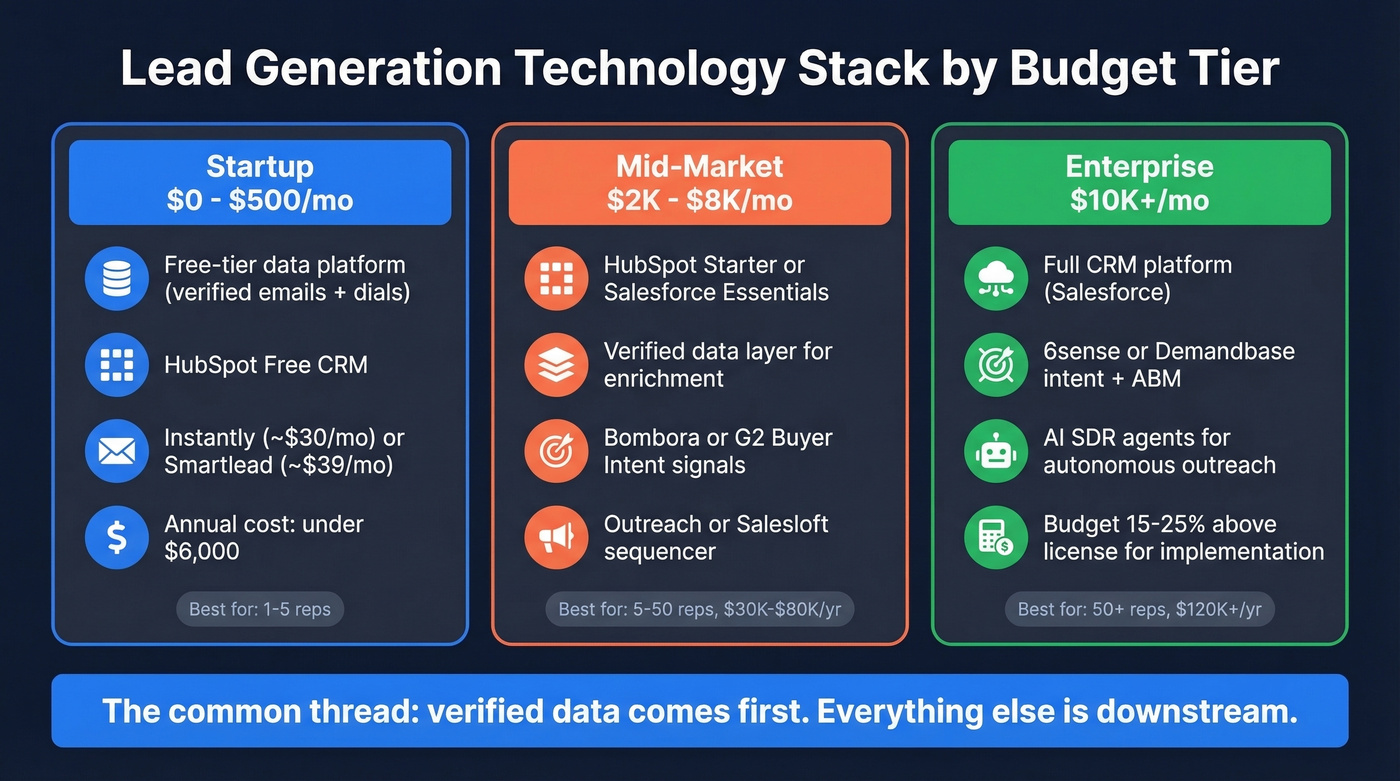
- Startup ($0-$500/mo): Free-tier data platform for verified emails and direct dials + HubSpot free CRM + Instantly or Smartlead for cold outreach. Total cost can land under $200/mo.
- Mid-market ($2K-$8K/mo): Verified data layer + HubSpot or Salesforce + Bombora or G2 Buyer Intent for signal-based targeting + a multi-channel sequencer like Outreach or Salesloft.
- Enterprise ($10K+/mo): Full CRM platform + intent data (6sense or Demandbase) + AI SDR agents + ABM orchestration. Budget 15-25% above license costs for implementation.
The common thread: verified data comes first. Everything else is downstream.
The 8 Core Tool Categories
Lead gen tech isn't one tool - it's a stack of interconnected layers. Here are the eight categories that matter, what they cost, and where to start.
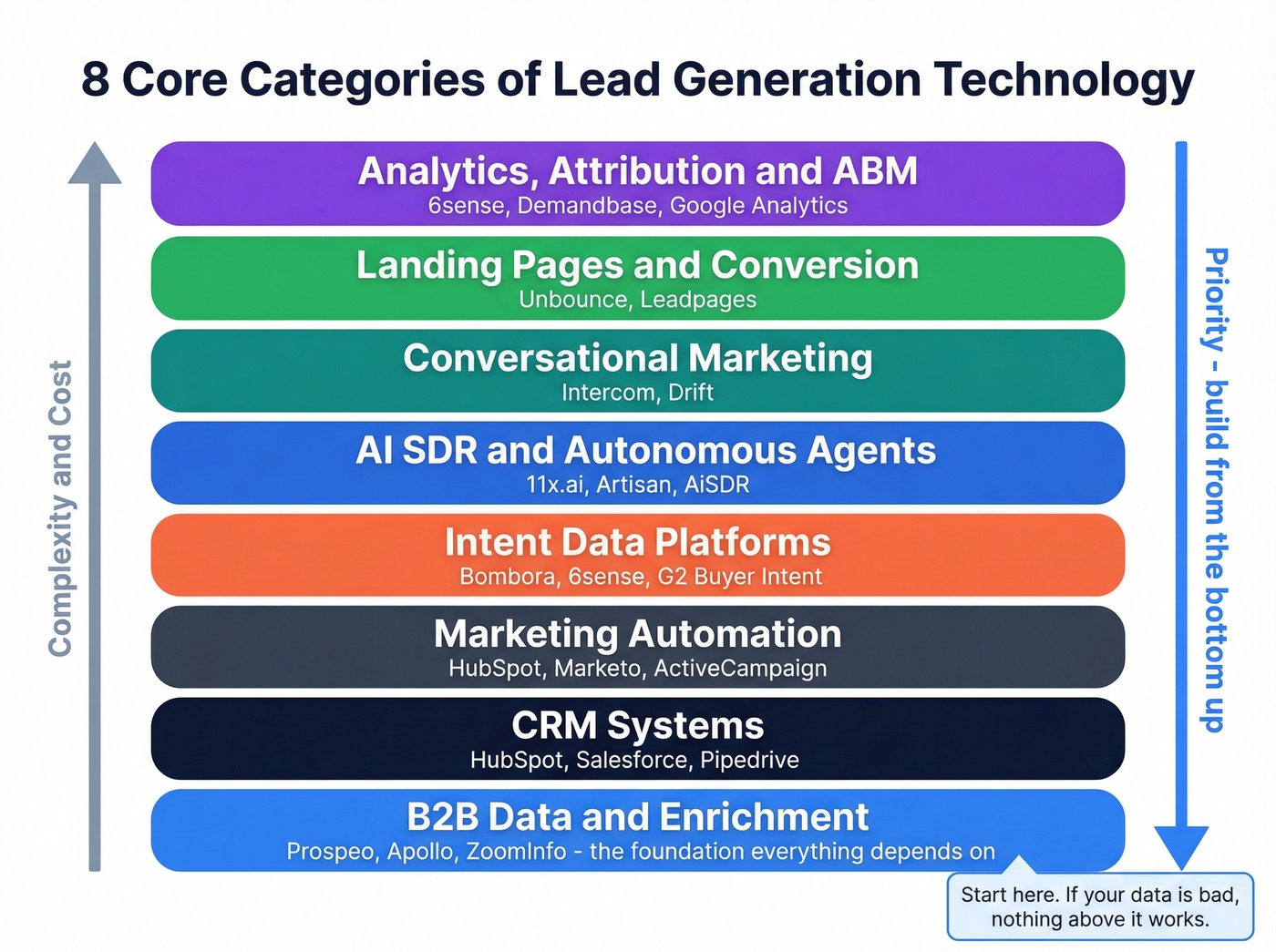
B2B Data & Enrichment
This is the foundation. Your SDR team loads 5,000 "verified" contacts, bounce rate hits 28% by Thursday, and your domain gets flagged. The problem isn't your sequencer - it's your data.
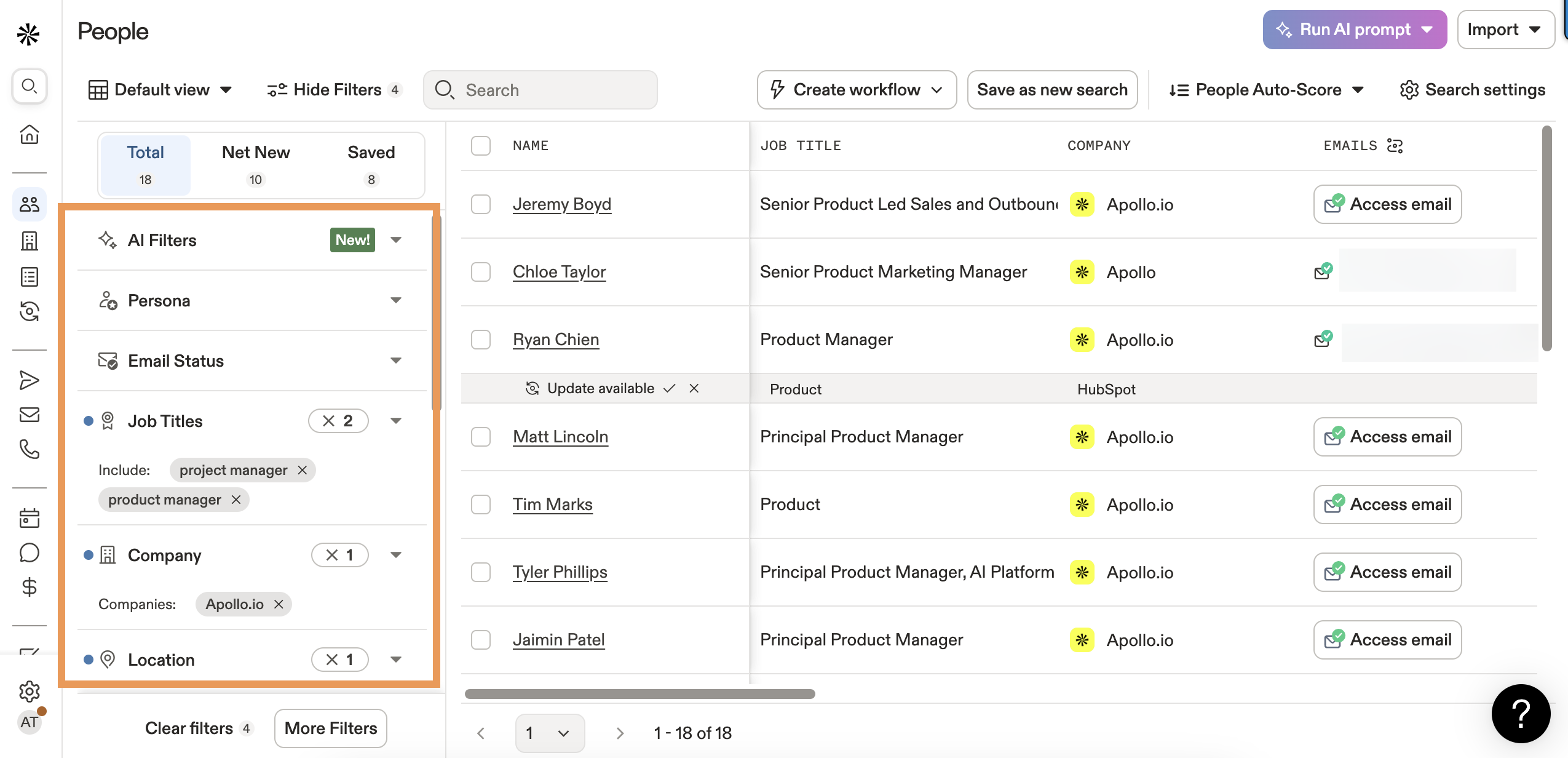
The consensus on r/sales and r/agency is clear: the most common complaint about enterprise data tools is pricing. Users constantly ask for "something lighter than ZoomInfo" that still delivers accurate contacts. Prospeo fits that gap with 300M+ professional profiles, 98% email accuracy, 143M+ verified emails, and 125M+ verified mobile numbers, all refreshed on a 7-day cycle. The industry average for data refresh is six weeks, which means most providers are serving you contacts for people who changed jobs last month. At roughly $0.01 per email with a free tier available, it's a fraction of what enterprise alternatives charge. Snyk's 50-person AE team cut bounce rates from 35-40% to under 5% and grew AE-sourced pipeline 180% after switching their data layer - that's the kind of impact clean data delivers.

Apollo is the obvious second option, especially for teams that want prospecting and sequencing in one platform. Free tier available, paid plans from ~$49-$99/mo per user. The database is large, but email accuracy runs lower than a dedicated verification platform, so expect higher bounce rates than you'd see with real-time verification.
ZoomInfo is one of the deepest US databases at $15K-$40K/year, but the pricing makes it impractical for many smaller teams. Cognism is strong for EMEA coverage and GDPR-focused workflows, with custom pricing that typically lands in the $15K-$50K/year range. Lusha handles quick lookups with a free tier and paid plans from around $30+/user/mo. Clearbit (now integrated into HubSpot) handles real-time enrichment in marketing workflows. Clay has become a favorite in the RevOps community for building enrichment workflows that chain multiple data sources together, starting around $149/mo.
CRM Systems
Your CRM is the system of record, not the system of intelligence. Don't overthink this.
HubSpot's free CRM handles most startup needs and scales into paid tiers starting around $20/mo. Salesforce dominates mid-market and enterprise at $25/user/mo and up - powerful but requires dedicated admin time. Pipedrive is the lean option at around $14/user/mo, built for small sales teams that want simplicity over customization.
If you’re still comparing options, here are more examples of a CRM with real pricing.
Marketing Automation
This is where leads get nurtured after capture. HubSpot Marketing Hub handles both CRM and automation in one platform, which reduces integration headaches. Marketo typically runs $1,000-$3,000+/mo and is the enterprise standard for complex nurture flows. ActiveCampaign offers strong email automation at around $29-$149/mo without the Marketo price tag. Mailchimp still works for early-stage teams with a free tier and paid plans that scale with list size.
Intent Data Platforms
Intent data tells you which companies are actively researching topics related to your product. It's the difference between cold outreach and warm outreach - but only if your team can act on signals within 24-48 hours. Teams using intent data see a 10-30% improvement in meeting rates, which is the clearest ROI justification for the investment.
Here's a stat worth internalizing: companies that recently raised funding are 2.5x more likely to buy new solutions. That kind of signal changes your entire prioritization model.
Bombora tracks across 5,000+ B2B websites covering 12,000+ intent topics, with 70% of its dataset exclusive. Starting price is ~$25K/year. 6sense runs ~$35K/year and Demandbase ~$40K/year - both bundle intent with ABM orchestration. G2 Buyer Intent is a more accessible entry point at ~$10K/year. ZoomInfo Streaming Intent starts at ~$7.2K/year for mid-market.
Budget 15-25% above license cost for implementation and integration. Intent data that sits in a dashboard nobody checks is just an expensive subscription.
If you want a practical way to operationalize signals, use intent based segmentation to route accounts into the right plays.
AI SDR & Autonomous Agents
Look, AI SDRs are real but overhyped. Tools like 11x.ai, Artisan AI, AiSDR, Amplemarket, and Salesforge promise autonomous prospecting and outreach. Pricing runs $500-$2,000/mo for SMB and mid-market; enterprise deployments hit $20K-$60K/year.
The economics look compelling on paper - a human SDR costs $75K-$100K/year all-in, while an AI SDR platform totals ~$28K/year. But there's a hidden cost: 40-60 hours of data preparation before launch, plus ongoing monitoring. These aren't set-and-forget. Start with 100-200 test accounts and expect 3-6 months to see positive returns.
Skip this category entirely if your data layer isn't clean. An AI agent sending emails to bad addresses at scale will torch your domain faster than a junior SDR ever could.
If you’re evaluating vendors, start with a shortlist of SDR tools and map them to your workflow.
Conversational Marketing
Intercom starts around $29/user/mo and handles real-time chat and bot-driven qualification. Drift typically starts around $2,500/mo for its Pro tier. These tools work best for inbound-heavy sites where visitors are already in research mode.
Landing Pages & Conversion
Unbounce starts around $99/mo and Leadpages starts around $49/mo after a 14-day free trial. Both let marketing teams build and test landing pages without engineering support. The real win here is testing - 3-field forms convert 27% better than 5-field forms in most B2B contexts.
Analytics, Attribution & ABM
Google Analytics is free and handles baseline traffic and conversion tracking. 6sense and Demandbase pull double duty as both intent data platforms and ABM orchestration tools, which is why enterprise teams default to them despite the $35K-$40K/year price tags. If you're running account-based plays, the analytics and intent layers need to live in the same platform.
| Category | Top Tools (Our Pick in Bold) | Starting Price | Best For |
|---|---|---|---|
| Data & Enrichment | Prospeo, Apollo, ZoomInfo | Free tier / ~$0.01 per email; ZoomInfo $15K-$40K/yr | Verified contacts at scale |
| CRM | HubSpot (startup), Salesforce (enterprise) | Free; Salesforce from $25/user/mo | Pipeline management |
| Marketing Automation | HubSpot, Marketo, ActiveCampaign | Free-$1K+/mo | Nurture flows |
| Intent Data | Bombora, 6sense, G2 | ~$7.2K-$40K/yr | In-market signals |
| AI SDR | 11x.ai, Artisan, AiSDR | $500-$2K/mo | Autonomous outreach |
| Conversational | Intercom, Drift | ~$29/user/mo | Live chat + bots |
| Landing Pages | Unbounce, Leadpages | ~$49-$99/mo | Conversion testing |
| Analytics & ABM | GA, 6sense, Demandbase | Free-$40K/yr | Attribution + ABM |

The article says it clearly: fix your data first. Prospeo gives you 300M+ profiles, 98% email accuracy, and 125M+ verified mobiles - all refreshed every 7 days, not every 6 weeks. At ~$0.01/email, it's the foundation your entire stack depends on.
Stop building on bad data. Start with the layer that actually works.
Benchmarks That Actually Matter
Knowing what "good" looks like prevents you from optimizing the wrong metric.
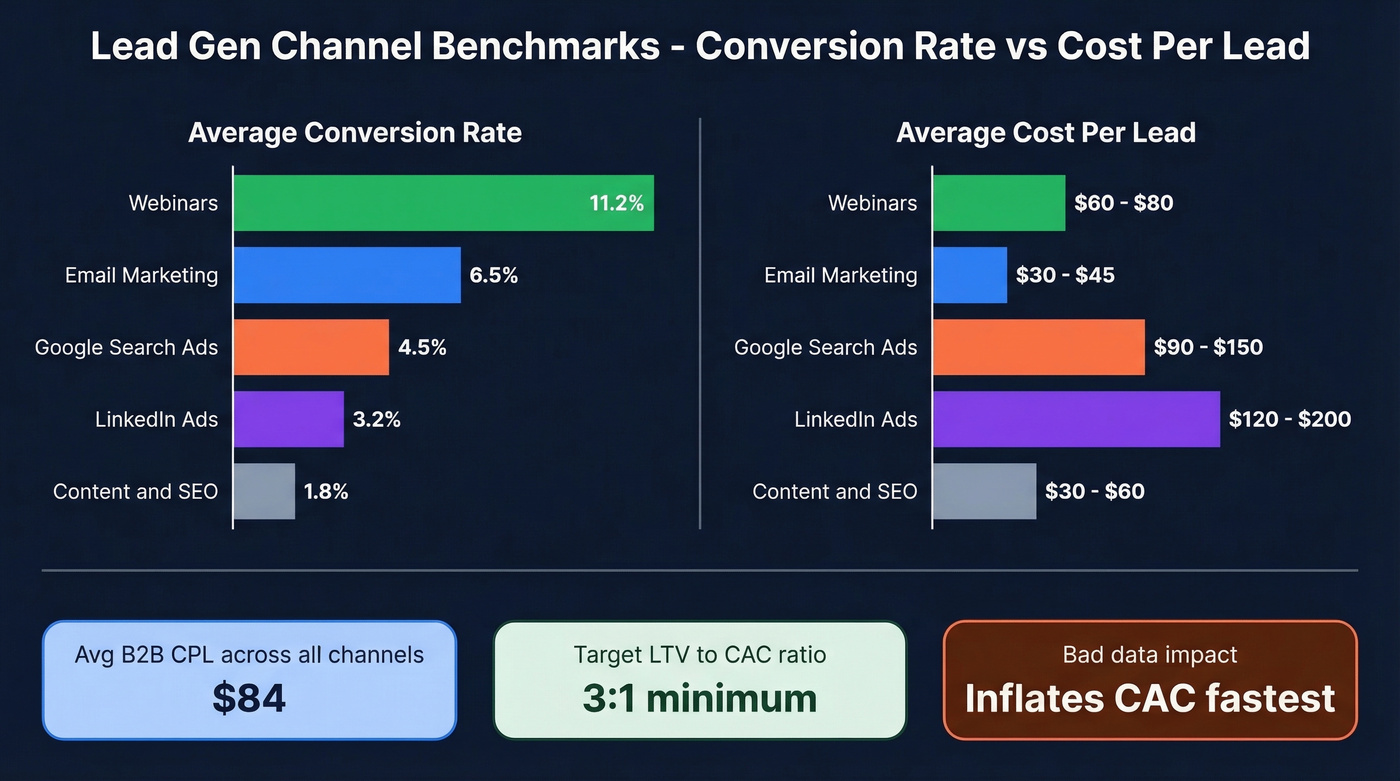
| Channel | Avg Conversion Rate | Avg CPL |
|---|---|---|
| Email marketing | 6.5% | $30-$45 |
| Webinars | 11.2% | $60-$80 |
| Google Search Ads | 4.5% | $90-$150 |
| LinkedIn Ads | 3.2% | $120-$200 |
| Content/SEO | 1.8% | $30-$60 |
The average B2B CPL across all channels is $84. But CPL alone is misleading - a $30 content lead that never converts costs more than a $150 LinkedIn lead that closes. Track cost-per-opportunity instead.
If you need a clean KPI set, align on lead generation metrics before you start optimizing.
| Industry | Avg CR | Avg CPL | Lead-to-Customer |
|---|---|---|---|
| SaaS | 5.1% | $85 | 17% |
| Manufacturing | 2.7% | $75 | 8% |
| Professional Services | 6.0% | $60 | 20% |
The benchmark that matters most: LTV:CAC ratio of at least 3:1. If you're below that, you're either acquiring the wrong leads or spending too much to get them. Bad contact data inflates CAC faster than any other single variable.
Build Your Stack by Budget
Startup Tier ($0-$500/mo)
A free-tier data platform for verified emails and direct dials, HubSpot free CRM, and a basic sequencer like Instantly at ~$30/mo or Smartlead at ~$39/mo. Annual cost: under $6,000. This stack handles prospecting, outreach, and pipeline management for teams of 1-5 reps. Don't add intent data yet - at this stage, your ICP knowledge and manual research are your intent signal.
If you’re building outbound from scratch, use these sales prospecting techniques to keep activity focused.
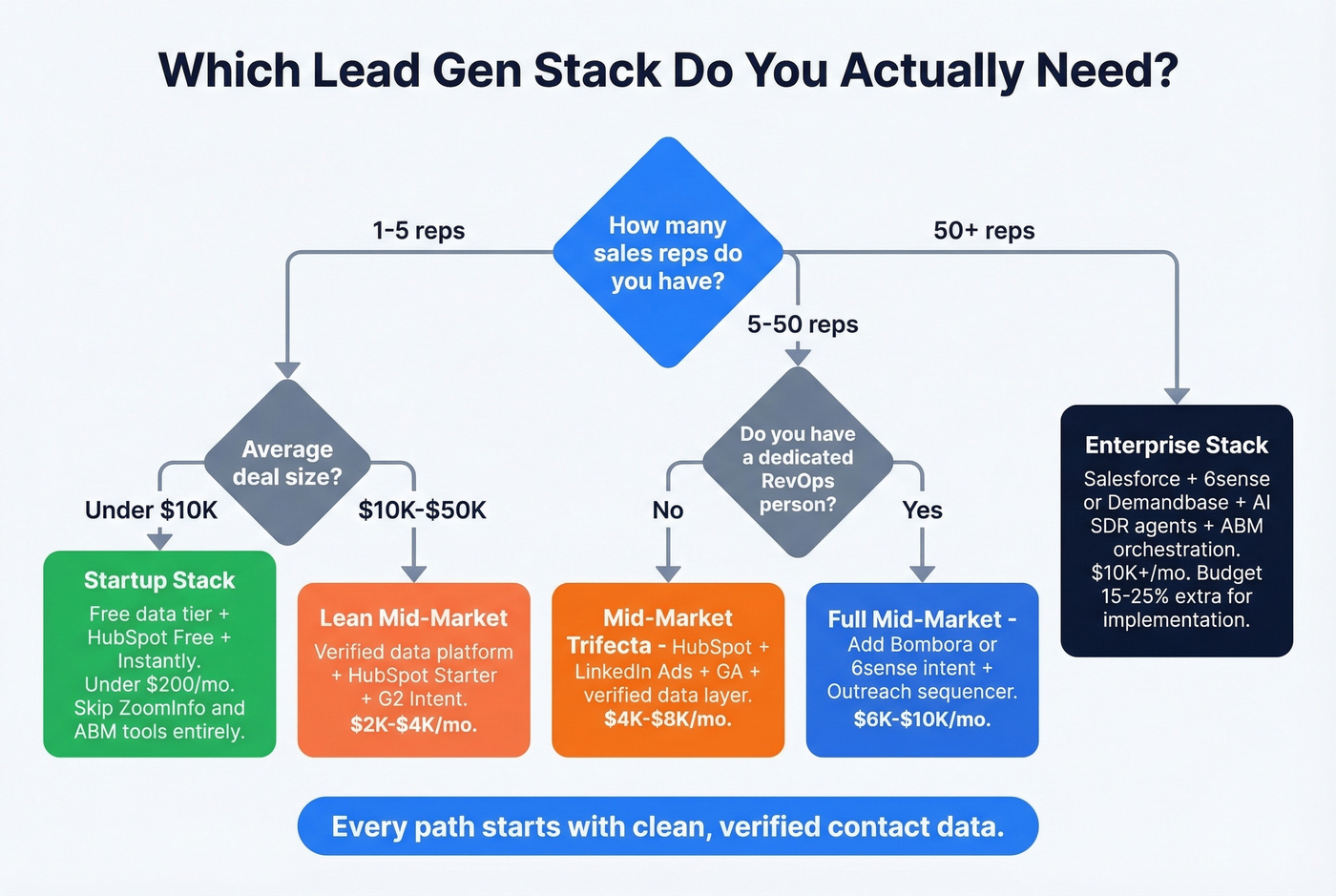
Hot take: if your average deal size is under $10K, you probably don't need ZoomInfo-level data or an ABM platform. A Chrome extension, a verified email finder, and disciplined outreach will outperform a $40K/year stack that nobody fully uses.
If you’re staying lean, start with free lead generation tools and upgrade only when you hit limits.
Mid-Market Tier ($2K-$8K/mo)
28.5% of mid-market companies run the "trifecta stack" - HubSpot + LinkedIn Ads + Google Analytics - spending $30K-$80K/year. That trifecta gets you visibility but not pipeline. Adding a proper data layer and intent signals is where the real gains come from.
The mid-market stack: CRM (HubSpot Starter or Salesforce Essentials) + verified data platform for enrichment + G2 Buyer Intent or Bombora for signal-based targeting + a multi-channel sequencer. Annual cost: $24K-$96K. We've found that teams at this tier get the most ROI from intent data when they pair it with a clean contact database - the signals are useless if you can't reach the right person at the account that's showing intent.
To keep the stack from turning into tab chaos, follow a defined lead generation workflow and map tool ownership.
Enterprise Tier ($10K+/mo)
Salesforce or HubSpot Enterprise + 6sense or Demandbase for intent and ABM + AI SDR platform + dedicated analytics. Annual cost: $120K+. At this level, the question isn't "which tools" but "how do they integrate." We've seen teams spend $150K/year on tools and still have reps manually copying data between tabs because nobody mapped the workflows.
If you’re implementing a sequencer at this tier, plan it like a project: implementing a sales engagement platform is where most rollouts fail.
Finance is going to ask why you're paying $35K/year for a platform only 4 people log into. Have the utilization data ready before the renewal conversation.
Snyk cut bounce rates from 35-40% to under 5% and grew AE-sourced pipeline 180%. Stack Optimize built a $1M agency with sub-3% bounce rates. The difference wasn't their sequencer or their CRM - it was verified data refreshed every 7 days.
Every tool in your stack performs better when the data feeding it is accurate.
What's Changing in 2026
Lead gen tools are shifting in four directions at once, and teams that don't adapt risk building stacks around capabilities that are already becoming commoditized.
Autonomous Lead Agents
AI agents are compressing speed-to-lead from hours to seconds. When a prospect hits your pricing page at 2 AM, an AI agent can identify the account, enrich the contact, and trigger a personalized sequence before your SDR's alarm goes off. The economics are compelling - ~$28K/year for an AI SDR vs. $75K-$100K for a human - but the 40-60 hours of data prep and 3-6 month ramp time are real costs that vendors don't emphasize.
Signal-Layered Qualification
Static lead scoring is dying. Instead of "downloaded a whitepaper = 10 points," teams are stacking behavioral signals, firmographic triggers like funding rounds and headcount growth, and technographic data into composite scores. This is where zero-party data - information prospects voluntarily share through interactive assessments, preference centers, and product quizzes - becomes a powerful qualification layer on top of third-party intent signals.
AI Visibility as a Channel
Here's one most teams are sleeping on: LLM-powered search engines like ChatGPT, Perplexity, and Gemini are becoming a discovery channel for B2B buyers. If your product doesn't show up when a buyer asks an AI "what's the best tool for X," you're invisible to a growing segment of researchers. Optimizing for AI visibility - structured content, clear product positioning, authoritative backlinks - is becoming as important as traditional SEO.
Zero-Click Lead Capture
Buyers complete nearly 70% of their journey anonymously, and with millennials and Gen Z now making up over two-thirds of B2B buying committees, the expectation is self-serve research with minimal friction. U.S. B2B digital ad spend is expected to reach $19.22B in 2026, yet more of that spend is going toward awareness and intent capture rather than gated content.
The KPIs are evolving too. SAL velocity, cost-per-opportunity, buying group depth, and in-market coverage are replacing MQL volume as the metrics that matter. If your lead generation technology can't measure these, it's already outdated.
FAQ
What is lead generation technology?
Software that helps businesses identify, capture, qualify, and convert potential customers. It spans data enrichment platforms, CRMs, marketing automation, intent data, AI SDR agents, conversational tools, landing page builders, and analytics - typically layered into an integrated stack.
What's the best lead gen tool for small businesses?
Start with HubSpot's free CRM and a verified data platform like Prospeo (free tier: 75 emails/month). Add a basic sequencer like Instantly or Smartlead. Total cost: under $200/month, with enough capacity for a 1-5 person team running real outbound campaigns.
How much does a lead gen tech stack cost?
Startups can run a functional stack for $0-$500/month. Mid-market stacks typically run $2,000-$8,000/month including CRM, data enrichment, and intent signals. Enterprise stacks with ABM orchestration and AI SDR agents cost $10,000+/month - budget an extra 15-25% for implementation.
What is intent data and do I need it?
Intent data tracks which companies are actively researching topics related to your product. It's worth the investment if your team can act on signals within 24-48 hours. Entry-level options like G2 Buyer Intent start at ~$10K/year; Bombora and 6sense serve larger teams at $25K-$35K/year.
How do I know if my lead gen stack is working?
Track cost-per-opportunity (not just CPL), LTV:CAC ratio (target 3:1 or higher), and lead-to-customer conversion rate by channel. If your email bounce rate exceeds 5%, fix your data layer first - bad contact data inflates acquisition costs faster than any other variable.