

LeadEngine.ai vs ReachInbox: Which Cold Email Tool Actually Wins?
Nobody's written a real comparison of these two. The directory sites have auto-generated feature tables with zero analysis, and there isn't a single Reddit thread or blog post that puts LeadEngine.ai and ReachInbox side by side. So we did the work ourselves.
30-Second Verdict
ReachInbox wins for most teams. It's cheaper at the entry level, transparent on pricing, has 71 G2 reviews averaging 4.6/5, and handles everything from warmup to sequencing without LeadEngine's "dedicated infrastructure" price premium.
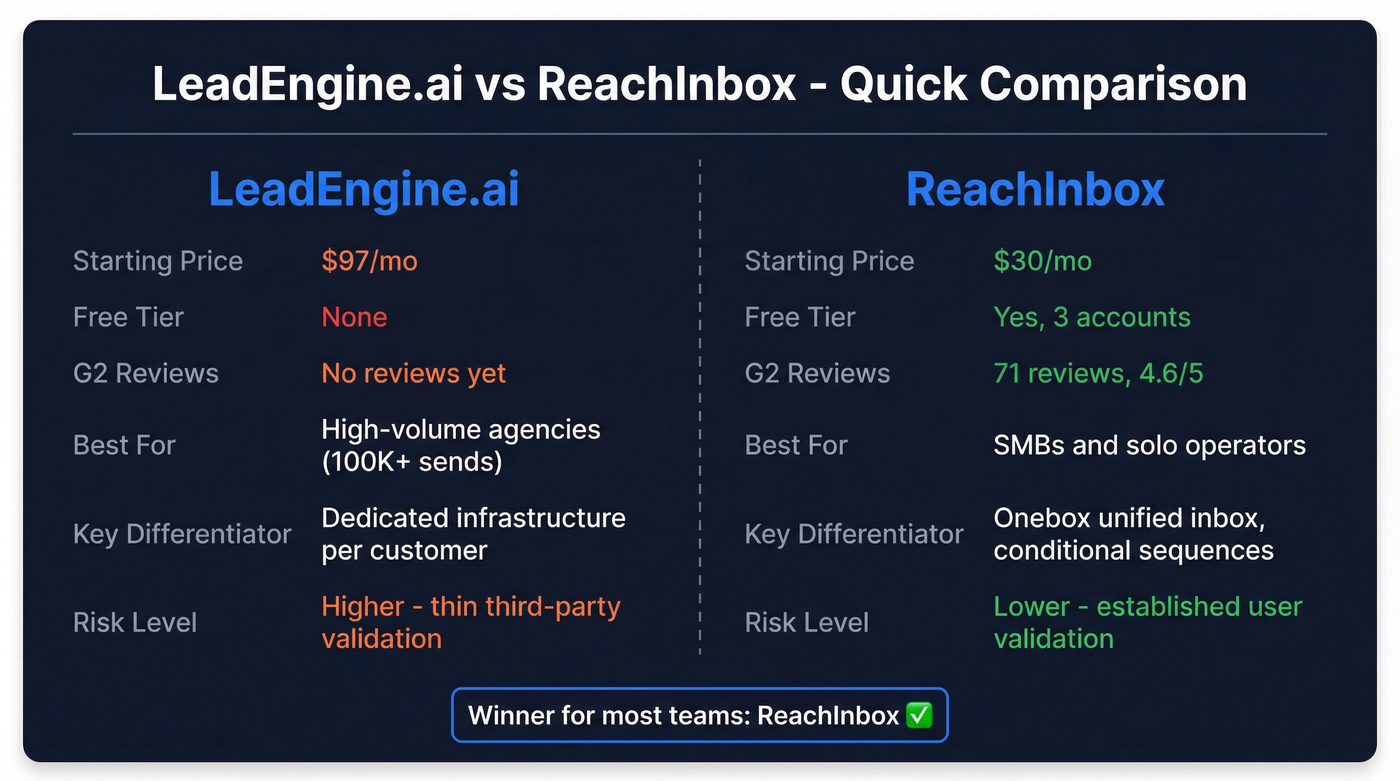
LeadEngine.ai wins a narrower race - high-volume agencies sending 100K+ emails per month who want dedicated infrastructure and workspace isolation. But you're buying on vendor messaging alone, with no established third-party review footprint to validate real-world results.
Skip both if your real problem is bad contact data. Neither tool finds or verifies emails. If your lists bounce, no sequencer saves your domain reputation. That's where a dedicated data layer like Prospeo fits - 143M+ verified emails at 98% accuracy, starting free.
What Each Tool Does
LeadEngine.ai
LeadEngine positions itself as an all-in-one cold email platform with a twist: every customer gets dedicated backend infrastructure. The founder's pitch centers on a 4-tier server architecture - separate servers for sending, receiving replies, webhooks, and the core email engine - plus auto-rotating dedicated IPs.
It bundles waterfall lead enrichment, AI copywriting, sequencing, warmup, and reply automation into a single platform. LeadEngine claims mainstream tools lose 2-3x positive replies because shared infrastructure creates detectable fingerprinting patterns. It also offers an "Autopilot" mode that auto-replies to prospects and refuels campaigns by finding lookalike leads from your best performers. Ambitious scope, but a lot of it rests on claims we can't independently verify yet.
ReachInbox
ReachInbox is a more conventional AI cold email platform that competes on affordability and ease of use. It carries a 4.6/5 rating from 71 reviews on G2, with users consistently praising setup speed and customer support.
The feature set covers warmup, sequencing, AI-generated copy, and multi-workspace management. Paid plans include "unlimited email accounts" with fair-usage limits, while the Free plan caps you at 3 accounts.
Two features stand out against LeadEngine:
- Onebox - a unified inbox that aggregates replies across connected accounts
- Conditional sequence logic - pause or trigger follow-ups based on prospect behavior
ReachInbox is built for SMBs and solo operators who want campaigns running fast without a steep learning curve.
Pricing Breakdown
This is where the gap gets obvious.
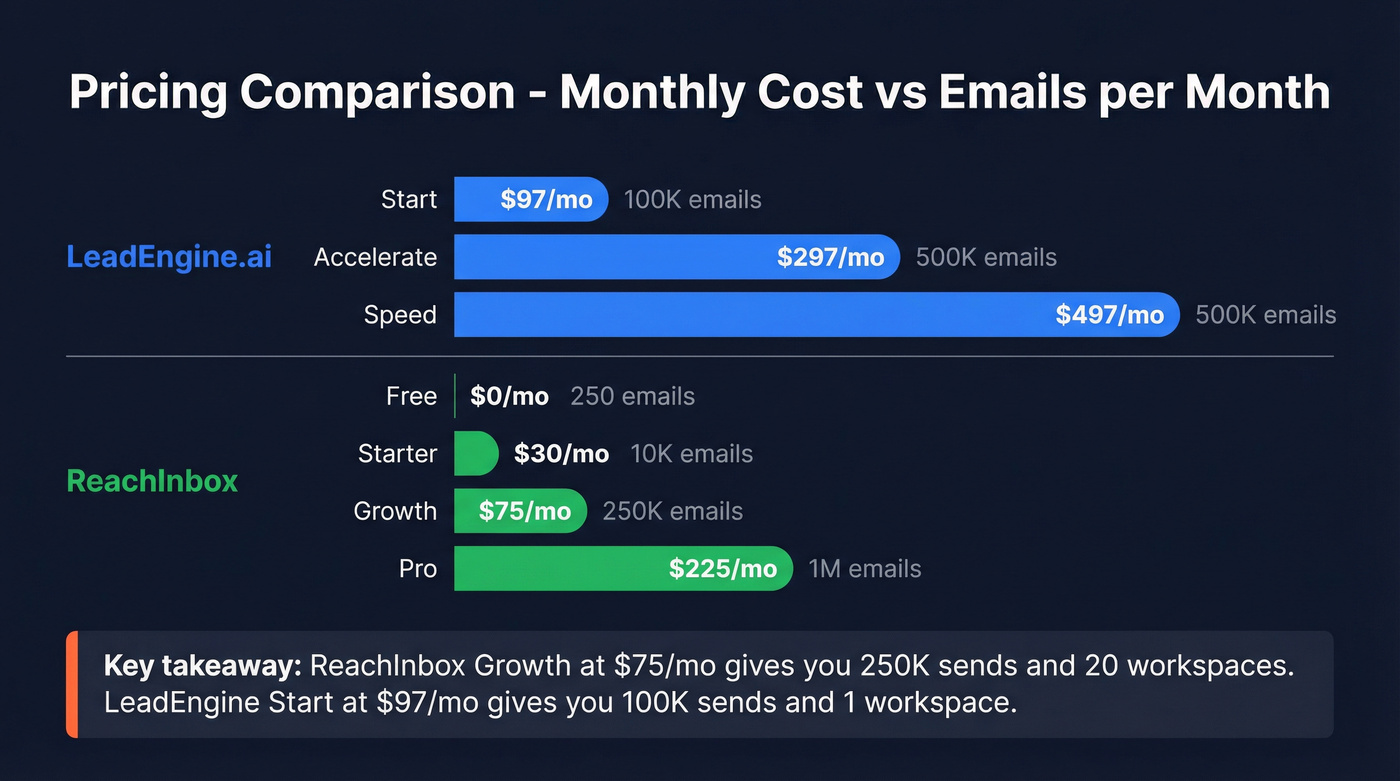
LeadEngine.ai Pricing
| Start | Accelerate | Speed | |
|---|---|---|---|
| Monthly | $97 | $297 | $497 |
| Emails/mo | 100K | 500K | 500K |
| Lead storage | 25K | 100K | Unlimited |
| Workspaces | 1 | 3 | Unlimited |
LeadEngine's /pricing page returns a 404, but the homepage lists these monthly plans. Annual billing saves roughly 33%, dropping Start to about $65/mo.
ReachInbox Pricing
| Free | Starter | Growth | Pro | Enterprise | |
|---|---|---|---|---|---|
| Monthly | $0 | $30 (annual) | $75 (annual) | $225 (annual) | Starts at $999 |
| Emails/mo | 250 | 10K | 250K | 1M | Custom |
| Active leads | 50 | 2K | 50K | 200K | Custom |
| Workspaces | 1 | 1 | 20 | 50 | Custom |
LeadEngine's floor is $97/mo - over 3x ReachInbox's Starter at $30/mo. ReachInbox also offers a free tier that LeadEngine doesn't match. Even with LeadEngine's annual discount bringing Start to about $65/mo, ReachInbox's Growth plan at $75/mo includes 250K sends and 20 workspaces. For most SMB setups, ReachInbox is the better value at comparable tiers.

LeadEngine and ReachInbox send emails. Neither one finds or verifies them. Bad data means bounces, and bounces torch the domain reputation both tools promise to protect. Prospeo delivers 143M+ verified emails at 98% accuracy - starting free, at roughly $0.01 per lead.
Fix your data before you pick a sequencer.
The Infrastructure Question
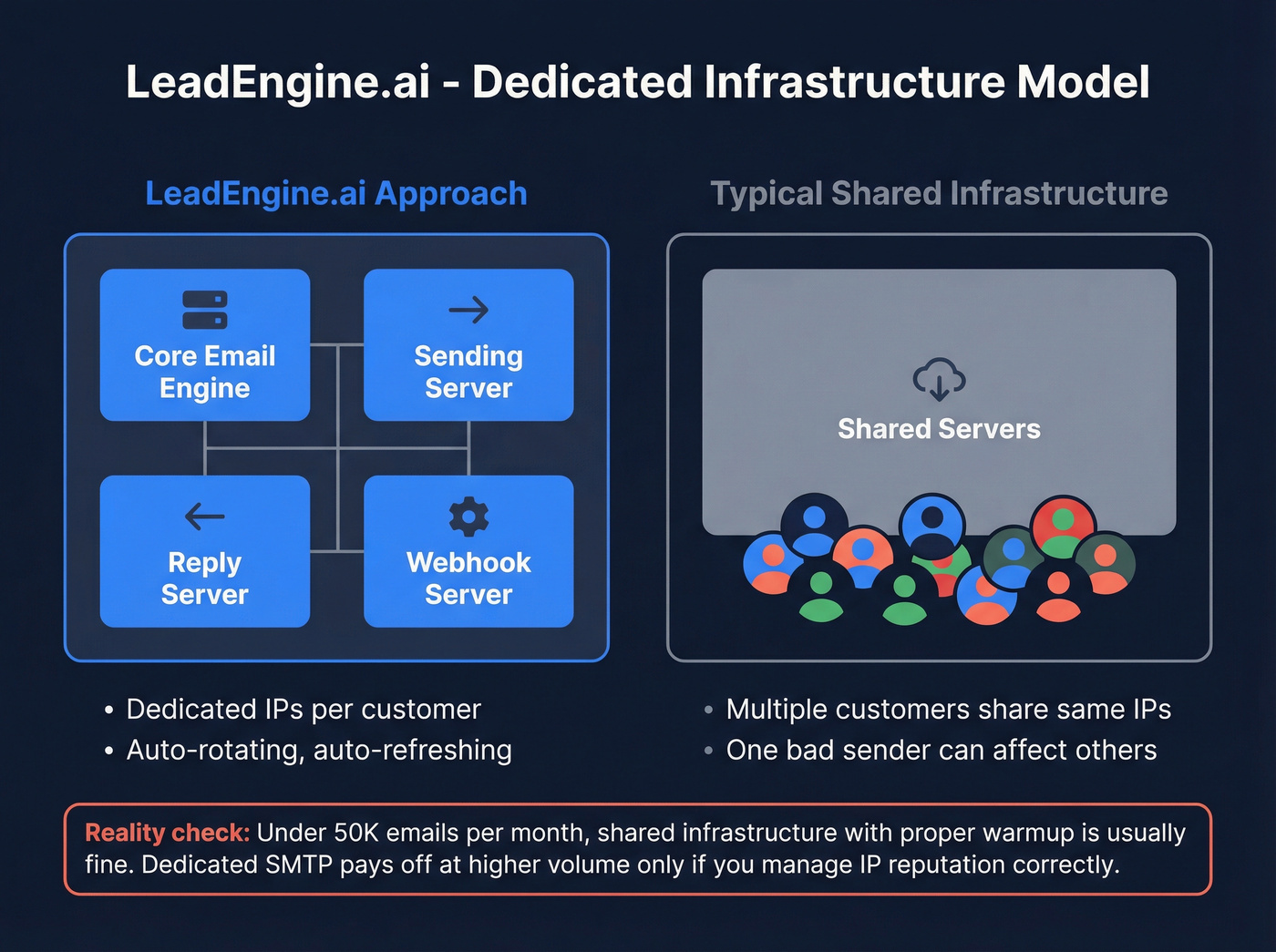
LeadEngine's real differentiator isn't features - it's architecture. The founder's breakdown describes four dedicated servers per customer: Core Email Engine, Sending Server, Reply Server, and Webhook Server. IPs auto-rotate and auto-refresh. Client workspaces run on isolated infrastructure, so one client's bad campaign can't tank another's.
LeadEngine also avoids link tracking, images, and attachments entirely - a deliverability-first approach that trades analytics for inbox placement. If you're trying to reduce risk at scale, it helps to understand email velocity and how it interacts with sender reputation.
That sounds compelling. But let's ground it.
A practitioner breakdown on r/coldemail lays out the threshold clearly: under ~50K emails/month, shared infrastructure with proper warmup is usually fine. Dedicated SMTP starts paying off at higher volume, and only if you actually know how to manage IP reputation. Dedicated infrastructure alone typically runs $350-$650/month before you add any tool costs on top.
Here's the thing: most cold emailers don't have an infrastructure problem. They have a data and copy problem. Dedicated servers won't save a campaign built on unverified emails and generic templates. If you're burning domains, fix the upstream inputs first - starting with email deliverability fundamentals and list hygiene.
What Real Users Say
ReachInbox: Validated and Improving
The G2 profile tells a clear story. Out of 71 reviews, ease of use gets 16 mentions and customer support gets 12. On the negative side, six reviewers flag a learning curve and five mention pricing feels steep for beginners - though "steep" at $30/mo is relative.
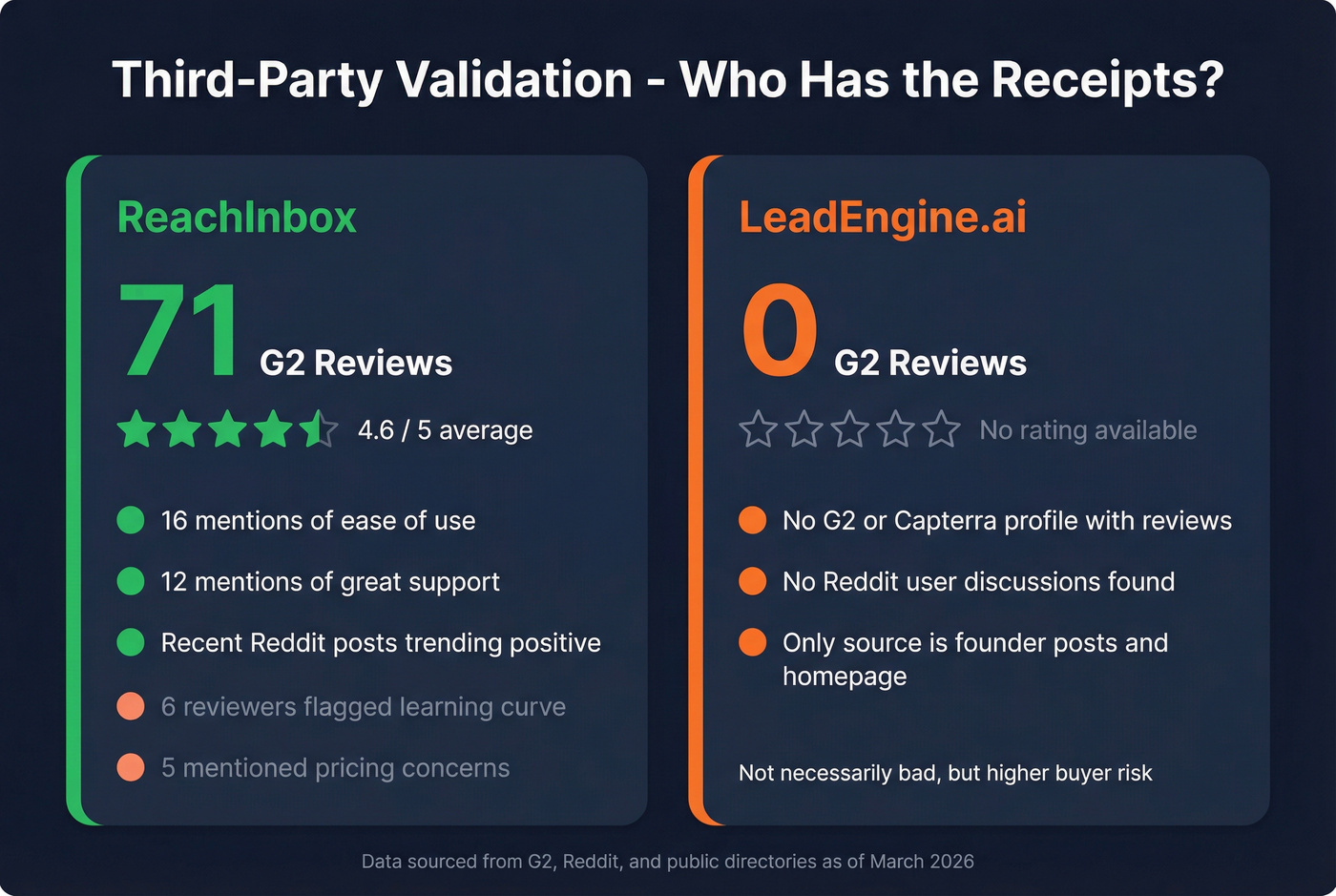
Reddit sentiment is mixed but trending positive in recent posts. One user warmed 36 inboxes over 30 days and reported clean deliverability across most accounts. A separate user praised the fast setup and solid deliverability but wanted deeper analytics and reporting. An older thread from roughly 1.5 years ago flagged poor deliverability tied to warmup and an unstable API, but that was a lifetime deal user experience and doesn't reflect the current product based on newer feedback.
LeadEngine.ai: Thin Third-Party Validation
LeadEngine doesn't have a meaningful public review footprint in the places most buyers check first. A SalesForge directory listing explicitly notes "limited reviews" and lists pricing as "contact for pricing." The only detailed product information comes from the founder's own posts and the homepage.
That doesn't mean LeadEngine is bad. It means you're buying primarily on vendor positioning. For a $97-$497/mo commitment, that's a real tradeoff. We've seen promising tools with thin review profiles before - some turned out great, others didn't. Without independent validation, you're taking on more risk than you need to.
Who Should Pick Which
Pick ReachInbox if you're budget-conscious, want a tool with real user validation, and you're sending under 250K emails per month. The Growth plan at $75/mo covers most teams generously. If you need help tightening your messaging, start with proven cold email follow-up templates.
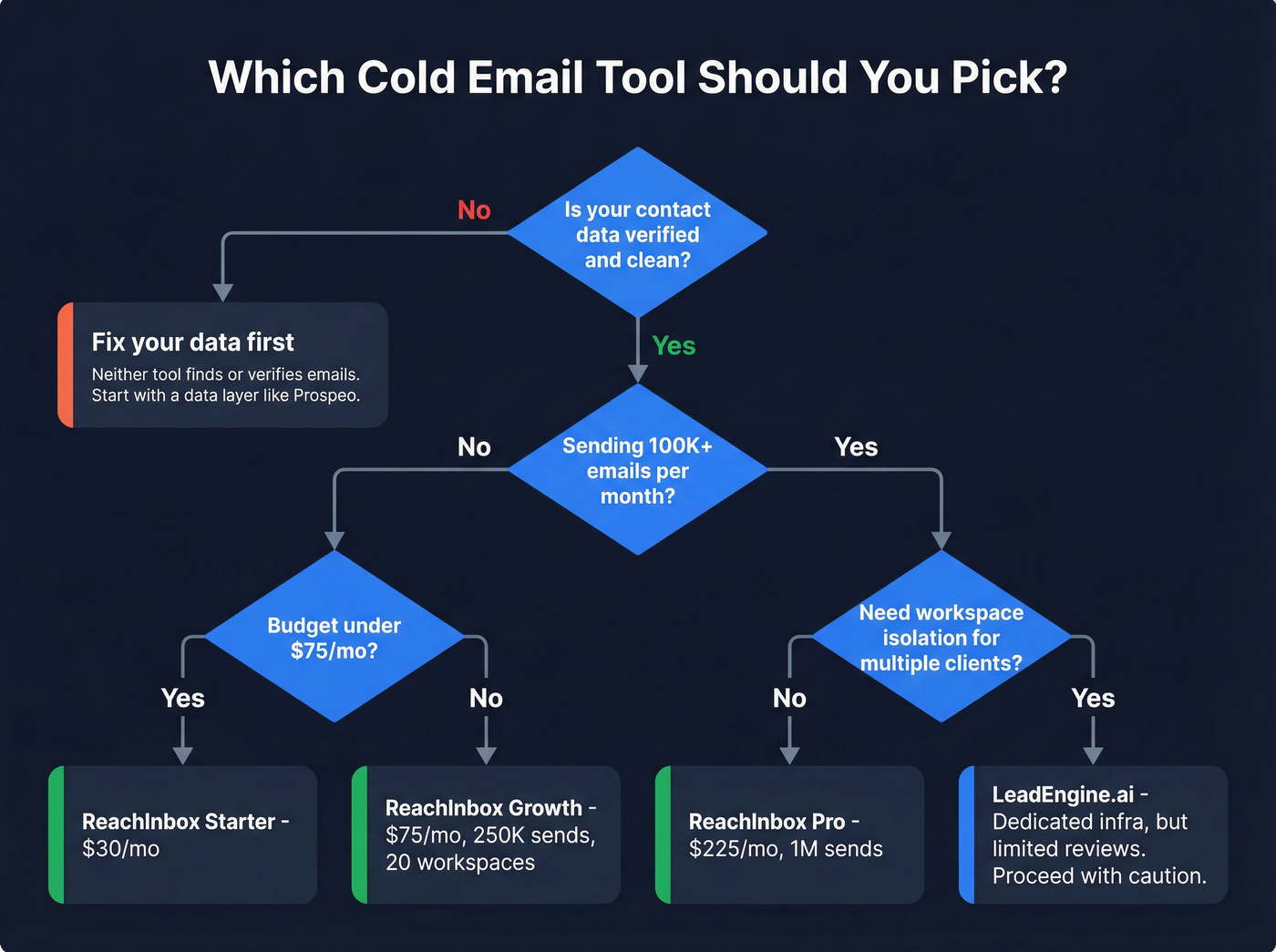
Pick LeadEngine.ai if you're an agency running 100K+ sends per month across multiple clients, you need workspace isolation with dedicated IPs, and you're comfortable being an early adopter without strong third-party validation.
Skip both if your real bottleneck is contact data quality, not the sequencer. Both tools send emails. Neither is built to be your email-finding and verification layer.
The Missing Piece: Contact Data
Every deliverability problem starts upstream. Bounces destroy domain reputation faster than any sequencer can repair it, and neither LeadEngine nor ReachInbox is the tool you buy to fix bad data.
We've tested this firsthand with our own outbound - swapping in verified data dropped bounce rates from double digits to under 4% before we changed anything else about our campaigns. Prospeo handles that layer: 300M+ professional profiles, 143M+ verified emails with 98% accuracy, 125M+ verified mobiles, and a 7-day data refresh cycle. At roughly $0.01 per lead with a free tier of 75 emails per month, it's the cheapest insurance policy for your sending reputation. It also integrates natively with Smartlead and Instantly, the same ecosystem most cold emailers already use. If you're evaluating options, compare dedicated verifiers in our guide to the best data enrichment services and bounce prevention tactics like spam trap removal.
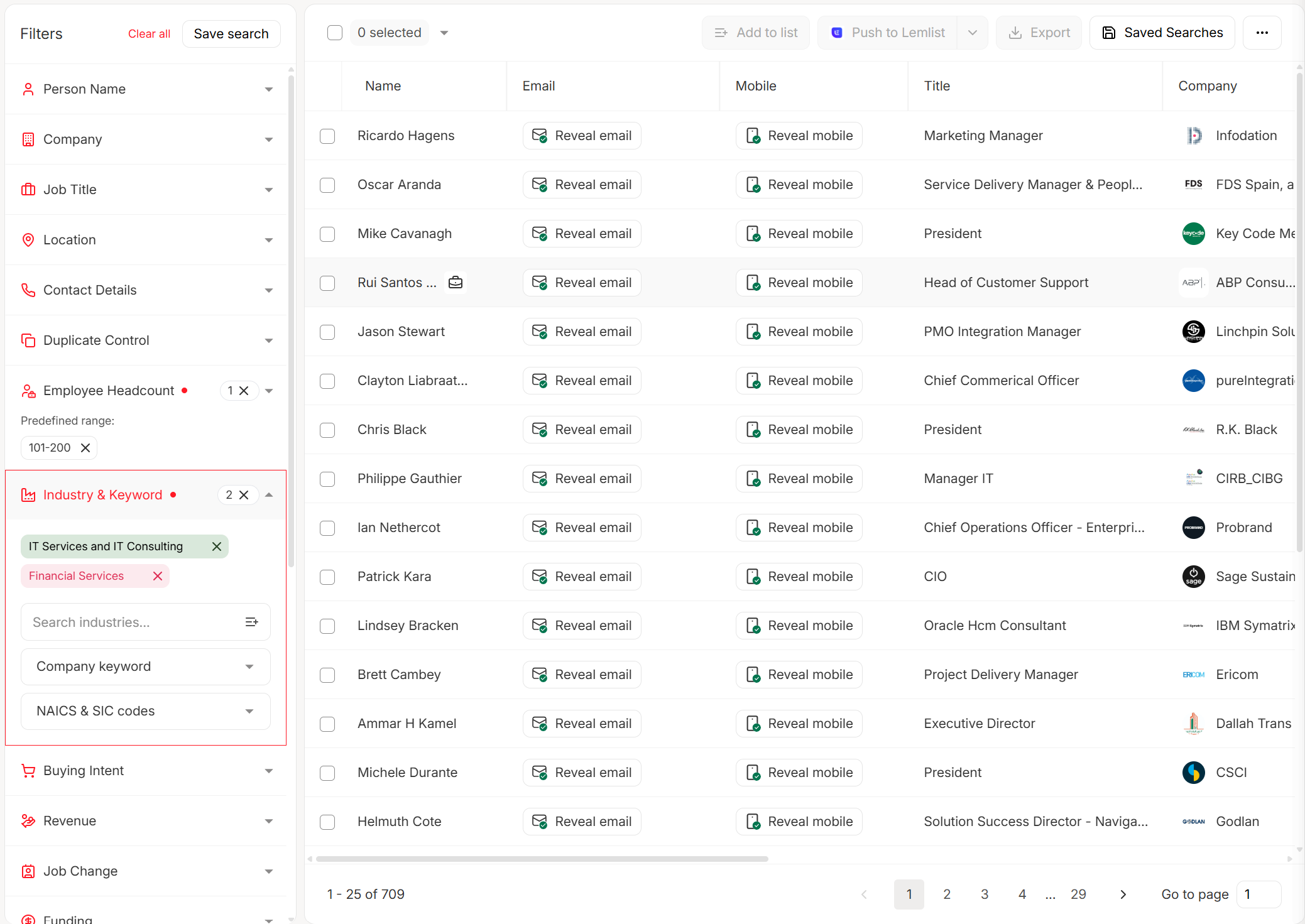
Dedicated infrastructure won't save campaigns built on unverified lists. Prospeo's 5-step verification with catch-all handling and spam-trap removal keeps bounce rates under control - so whichever sending tool you choose actually performs.
Clean data in, booked meetings out. It's that simple.
FAQ
Is LeadEngine.ai worth 3x the price of ReachInbox?
Only if you're sending 100K+ emails per month and need dedicated infrastructure with workspace isolation. For teams under that threshold, shared infrastructure with proper warmup works fine - ReachInbox's Growth plan at $75/mo gives you 250K sends with 20 workspaces.
Does ReachInbox have good deliverability in 2026?
G2 reviews and recent Reddit posts are generally positive. One user warmed 36 inboxes over 30 days and reported clean inbox placement across most accounts. Older posts raised warmup and API concerns, but recent sentiment is noticeably more favorable.
How do I improve cold email deliverability regardless of which tool I pick?
Start with verified contact data - bounces destroy domain reputation faster than any tool can fix it. Pair clean data with proper warmup, content variation, and sending limits under 20-25 emails per inbox per day. The sequencer matters less than the inputs you feed it.