

Best LeadsFinder Alternatives in 2026
LeadsFinder does one thing well: it scrapes Google Maps and charges $0.15 per lead. No subscription, credits don't expire, simple model. But at scale, that per-lead cost adds up fast - 10,000 leads runs you $1,500. And the data you get back is business-level: phone numbers, addresses, websites. Not the decision-maker's email. Not a direct dial. If you're doing outbound, that's a gap, and it's exactly why people start looking for alternatives.
Our Picks (TL;DR)
- Prospeo - Best when you need verified decision-maker emails and direct dials, not just business listings. 98% email accuracy, free tier, no contract.
- Outscraper - Best for high-volume Google Maps scraping at the lowest per-record cost (from $0.003/record, dropping to $0.001 at 100k+ volume).
- Lead Scrape - Best for bulk desktop scraping with built-in email verification, up to $247/year.
Quick Comparison
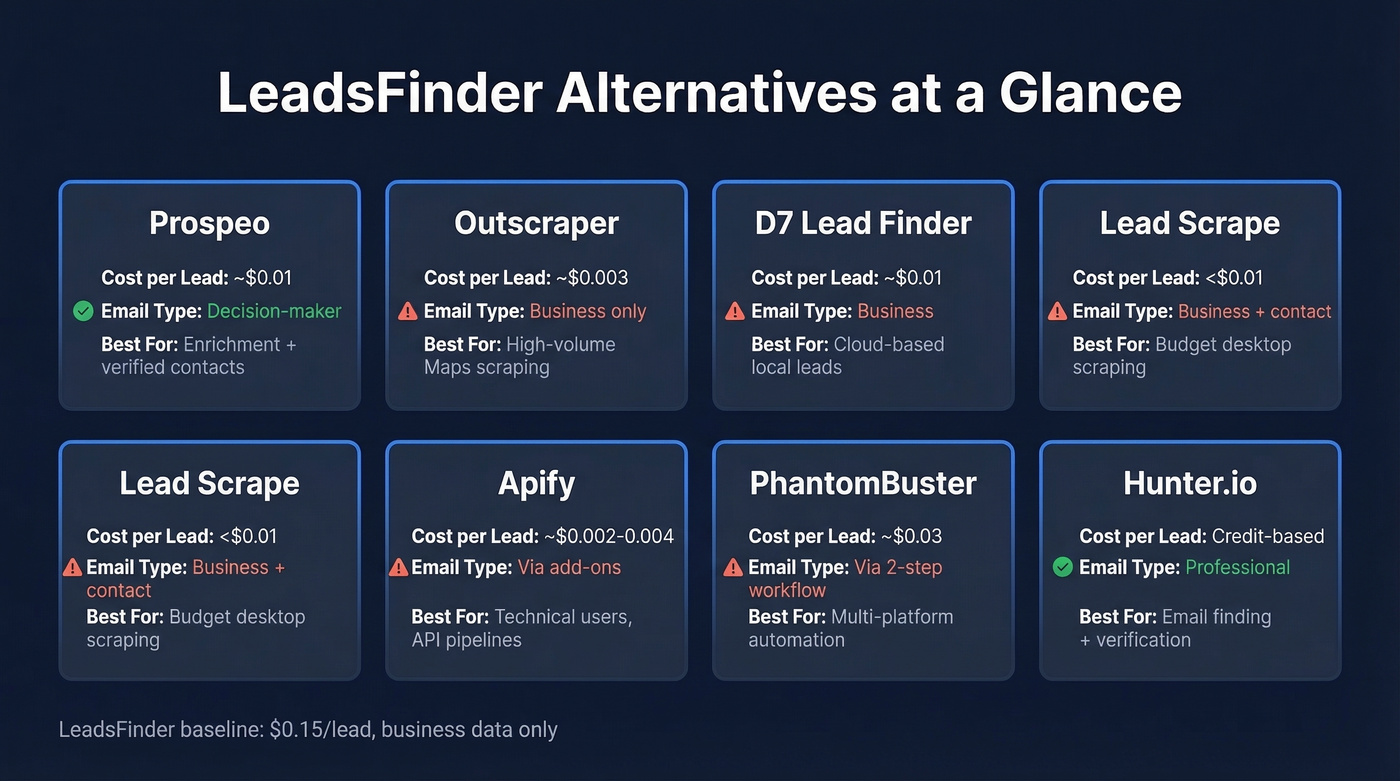
| Tool | Pricing | ~Cost/Lead | Emails | Note |
|---|---|---|---|---|
| Prospeo | Credit-based | ~$0.01 | Decision-maker | Enrichment, not scraping |
| Outscraper | Pay-per-record | ~$0.003 (or ~$0.001 at 100k+) | Business only | Slow on large queries |
| D7 Lead Finder | $44.99-$120/mo | ~$0.01 | Business | Daily search caps |
| Lead Scrape | $97-$247/year | <$0.01 | Business + contact | Desktop only |
| Apify | Usage-based | ~$0.002-0.004 | Via add-ons | Requires technical setup |
| PhantomBuster | From EUR69/mo | ~$0.03 | Via 2-step workflow | ~120 listings/query cap |
| Hunter.io | Credit-based | Credit-based | Professional | Email finder only |

LeadsFinder charges $0.15/lead for business listings. Prospeo charges ~$0.01 for the decision-maker's verified email - with 98% accuracy and a 92% enrichment match rate. Upload your Maps export, get back direct emails and mobile numbers.
Turn business listings into pipeline for a fraction of the cost.
The 7 Best LeadsFinder Alternatives
Prospeo
Maps scrapers give you business listings. Prospeo gives you the decision-maker's verified email and direct dial. That's a fundamentally different output, and it's the difference between having a spreadsheet and having a pipeline.
The database covers 300M+ professional profiles, 143M+ verified emails, and 125M+ verified mobile numbers - all refreshed on a 7-day cycle. The Chrome extension has 40,000+ users and lets you pull contact data from any company website in one click. For bulk workflows, upload a CSV of businesses you've scraped from Maps and Prospeo enriches them with decision-maker contacts at a 92% match rate. We've run this exact workflow internally, and the enrichment step is what turns a list of restaurants into a list of restaurant owners with direct emails.
If you're comparing enrichment vendors, start with data enrichment and a practical lead enrichment workflow before you pick a scraper.
Use it if: You've already got business listings from a Maps scraper and need verified professional emails and mobile numbers for the people behind those businesses.
Skip it if: You only need business-level data and don't do outbound email or cold calling.
Pricing starts free with 75 emails and 100 Chrome extension credits per month. Paid plans run from ~$39/mo with no annual contract.
Outscraper
Outscraper is the volume play. If you're pulling 10,000+ records a month from Google Maps, nothing else touches its per-record economics. It’s a solid fit for web scraping lead generation when you care more about coverage than contacts.
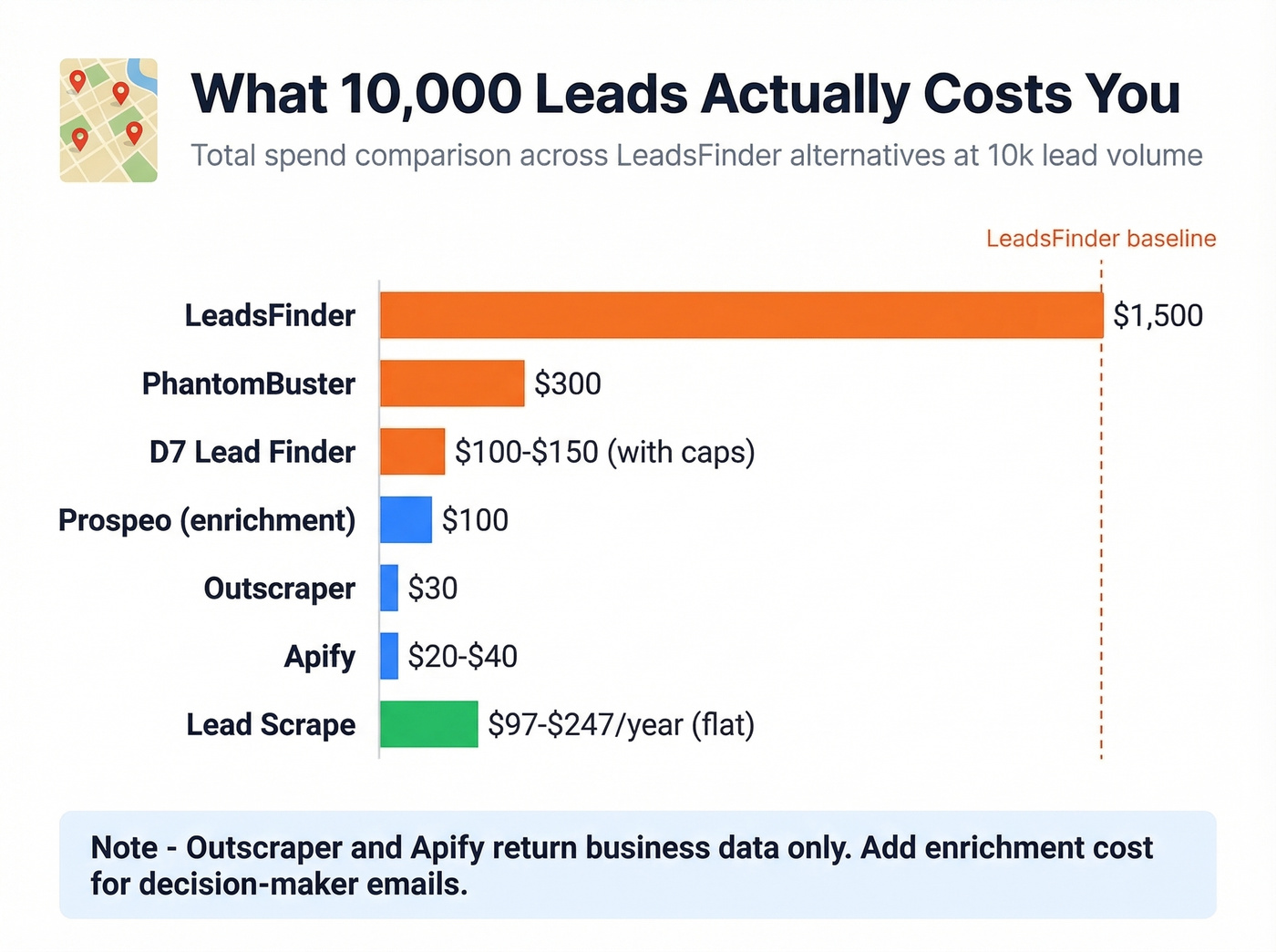
Pricing is straightforward: first 500 businesses free, then $3 per 1,000 records up to 100k, dropping to $1 per 1,000 after that. No subscription required. API access and export formats like CSV, Excel, Parquet, and JSON are included on paid tiers. They also offer a separate Emails & Contacts Scraper with the same tiering, plus an Email Verifier that's free up to 25 emails and then $3 per 1,000.

The catch? Speed. Queries around 400 results can take 20-25 minutes based on published benchmarks. That's fine for batch jobs, less fine if you're impatient.
Use it if: You need raw Maps data at scale and want a pay-as-you-go model.
Skip it if: You need decision-maker emails as the default output. Outscraper's Maps scraper returns business listing data; for personal emails you'll need a separate enrichment step.
D7 Lead Finder
D7 is the closest direct competitor to LeadsFinder - cloud-based, focused on local leads, no software to install. Plans run $44.99-$120/month with daily search caps of 10, 30, or 100 searches depending on tier. Each search returns roughly 300-1,200 leads depending on niche and location.
The feature set goes beyond basic scraping: social profiles, ad detection, review scores, and website scan data are all included. The limitation is volume. In one published comparison, D7 returned 1,773 results for "Restaurants in New York" versus 9,665 from Lead Scrape. If you're working large metro areas, those search caps will bottleneck you.
If you're building a repeatable outbound motion, pair your scraper choice with proven sales prospecting techniques so the list actually converts.
Use it if: You want a LeadsFinder-like experience with global coverage and richer data fields.
Skip it if: You need high-volume scraping in dense markets.
Lead Scrape
Lead Scrape's annual pricing is hard to beat: $97-$247/year for unlimited scraping across 50+ countries, with built-in email verification claiming 97%+ deliverability. It returns contact names alongside business data, not just generic info@ addresses. Capterra rating sits at 4.7/5 across 35 reviews.
The tradeoff is real, though. It's a desktop app. Your PC must be running during scrapes, there's no cloud option, and team collaboration isn't built in. For solo operators or small agencies running local lead gen campaigns on a budget, it's worth testing. For distributed teams, look elsewhere.
If you need more options for pulling emails from sites, see our guide to a free email scraper.
Apify
Here's the thing about Apify: its Google Maps Scraper actor bypasses the ~120 results limit that caps most Maps scrapers. That alone makes it worth the technical setup if you know your way around APIs.
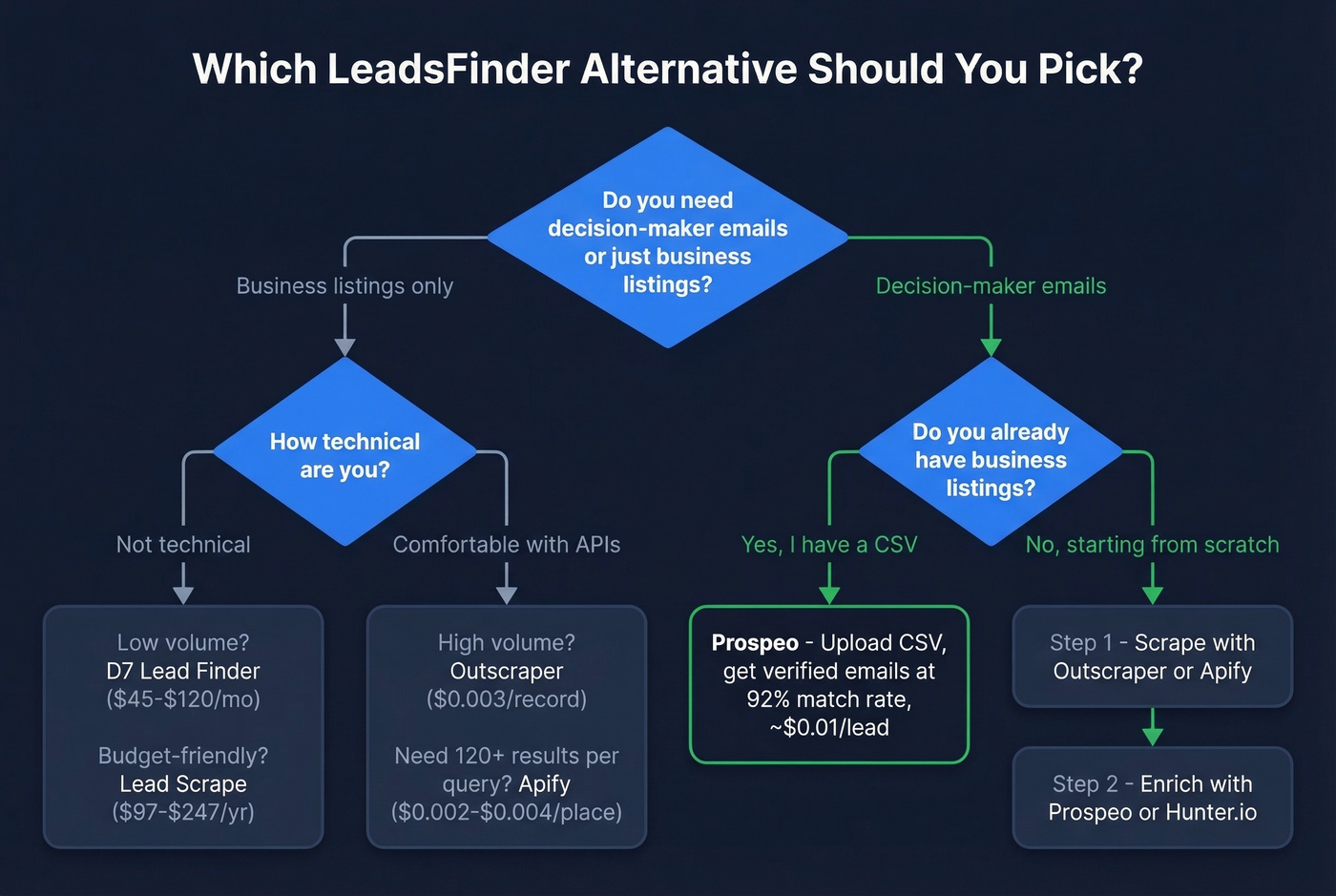
Pricing starts at $2.10 per 1,000 places, and the output includes dozens of fields - business name, category, coordinates, phone, website, reviews, opening hours, popular times, and more. Export to JSON, CSV, or Excel. One practitioner on r/coldemail built a full pipeline using Apify plus website crawling plus AI extraction for about $0.008 per lead with 36 fields of enrichment and 70-75% usable emails. That's the ceiling of what's possible when you're willing to wire things together yourself.
Skip it if: You want something you can use in 5 minutes without reading documentation. Apify has a learning curve.
PhantomBuster
PhantomBuster makes sense if you already use it for other automations and want to add Google Maps to the mix. The workflow is two steps - export Maps results, then crawl websites for emails and socials. In one published example, 201 restaurants yielded 178 emails. G2 rating sits at 4.4/5 across 112+ reviews.
But let's be honest: at EUR69/month with a 20-hour execution cap and a ~120 listings per query limitation, you're paying a premium for PhantomBuster's 130+ other automations whether you use them or not. If Maps scraping is your primary use case, this isn't the right tool.
Hunter.io
Hunter isn't a Maps scraper - it's an email finder and verifier you pair with one. Free tier gives you 50 credits/month; paid plans start at $34/month on annual billing. Feed it the websites from any Maps export and it returns professional emails.
If you're evaluating similar tools, compare options in our roundup of Hunter alternatives.
Think of it as a complementary tool, not a standalone alternative. It fills a specific gap in the pipeline but won't replace LeadsFinder on its own.
Business Listings Aren't Leads
Here's the hot take most Maps scraping tools won't tell you: if your deal size is above $5k, a business listing is not a lead. A lead has a name, a verified email, and ideally a direct phone number. Google Maps gives you the business's generic info@ address and front desk number. That's a starting point, not a finish line.
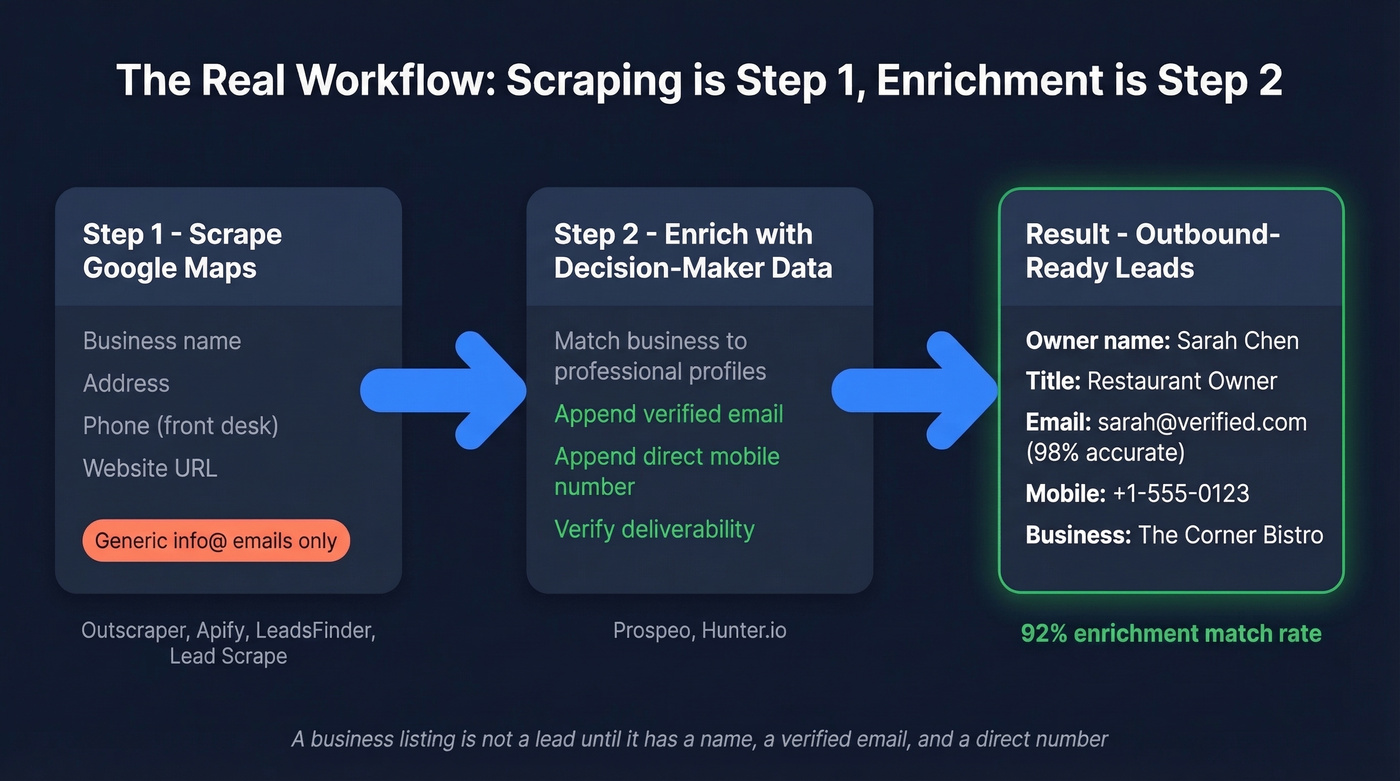
In our experience, the real workflow is always two steps. First, scrape your business listings with Outscraper, Apify, or whatever fits your budget. Second, run that export through an enrichment tool to append verified decision-maker emails and direct dials. We ran 500 restaurant listings through this kind of pipeline and got decision-maker emails for 92% of records - that's how you turn a spreadsheet of restaurants into a pipeline of booked meetings with owners.
To operationalize it, map the steps to a repeatable lead generation workflow and track the right lead generation metrics as you scale.
The consensus on r/coldemail backs this up: the scraping is the easy part, and the enrichment is where campaigns succeed or fail.
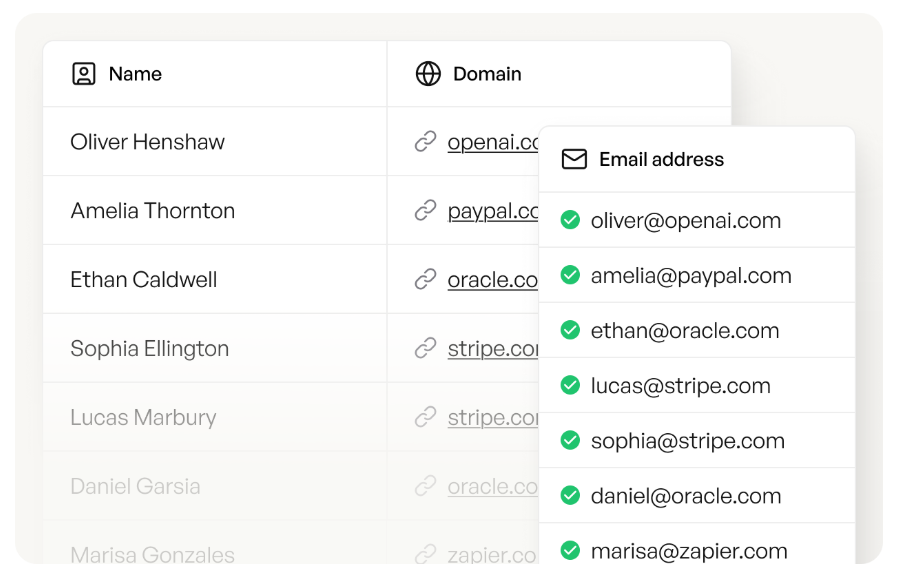
Every Maps scraper on this list gives you the same output: business names, addresses, and generic phone numbers. Prospeo fills the gap with 143M+ verified emails and 125M+ direct dials - refreshed every 7 days, not every 6 weeks.
Stop emailing info@ addresses. Reach the actual decision-maker.
FAQ
Is LeadsFinder free?
No. LeadsFinder charges $0.15 per lead - 60 credits for $9. Credits don't expire, but there's no free tier. Outscraper offers 500 free records and Prospeo includes 75 free verified emails per month, making both viable starting points at zero cost.
What's the cheapest Google Maps scraping tool?
Outscraper at ~$0.003/record (dropping to ~$0.001 after 100k) or Apify at ~$0.002-0.004/place for raw scraping. For a full enrichment pipeline, Reddit practitioners report all-in costs as low as $0.008 per lead with 36 fields using Apify plus website crawling and AI extraction.
How do I get decision-maker emails from Google Maps leads?
Maps scrapers return business data, not personal contacts. Upload your scraped CSV to an enrichment platform that matches businesses to professional profiles and returns verified emails and direct dials. That second step is what turns business listings into outbound-ready leads.