


MagicCRM Alternatives: 5 CRMs Worth Your Time in 2026
Why Look for Alternatives?
MagicCRM has exactly two reviews on G2 - a 4.3/5 rating built on a sample you can count on one hand. Both are from 2021. The vendor profile hasn't been active in over a year, and there's no public pricing on any major directory. If you're searching for MagicCRM alternatives, you already sense the problem: building your sales stack around a CRM with almost zero visible momentum is a bet most teams shouldn't make.
The two reviewers who did weigh in praised MagicCRM's all-in-one scope - marketing automation, pre-sales, document management - and called the price "inexpensive." That's genuinely useful for a small Italian operation that needs BPM and commesse modules baked in. But with a review sample this thin and no recent activity, you need a CRM with an actual ecosystem behind it.
For Italian SMBs specifically: if you need fatturazione elettronica, SDI integration, or an Italian-language UI, check that your replacement CRM supports these natively or via marketplace plugins before you migrate.
Name confusion alert: MagicCRM (the Italian CRM on G2) is a completely different product from Digital Magic ($250/mo marketing CRM) and "Magic" on GetApp/Capterra ($159/mo local business platform). Directory sites mix these up constantly. Make sure you're looking at the right one.
Our Picks at a Glance
Pick based on what you actually need, not feature counts.
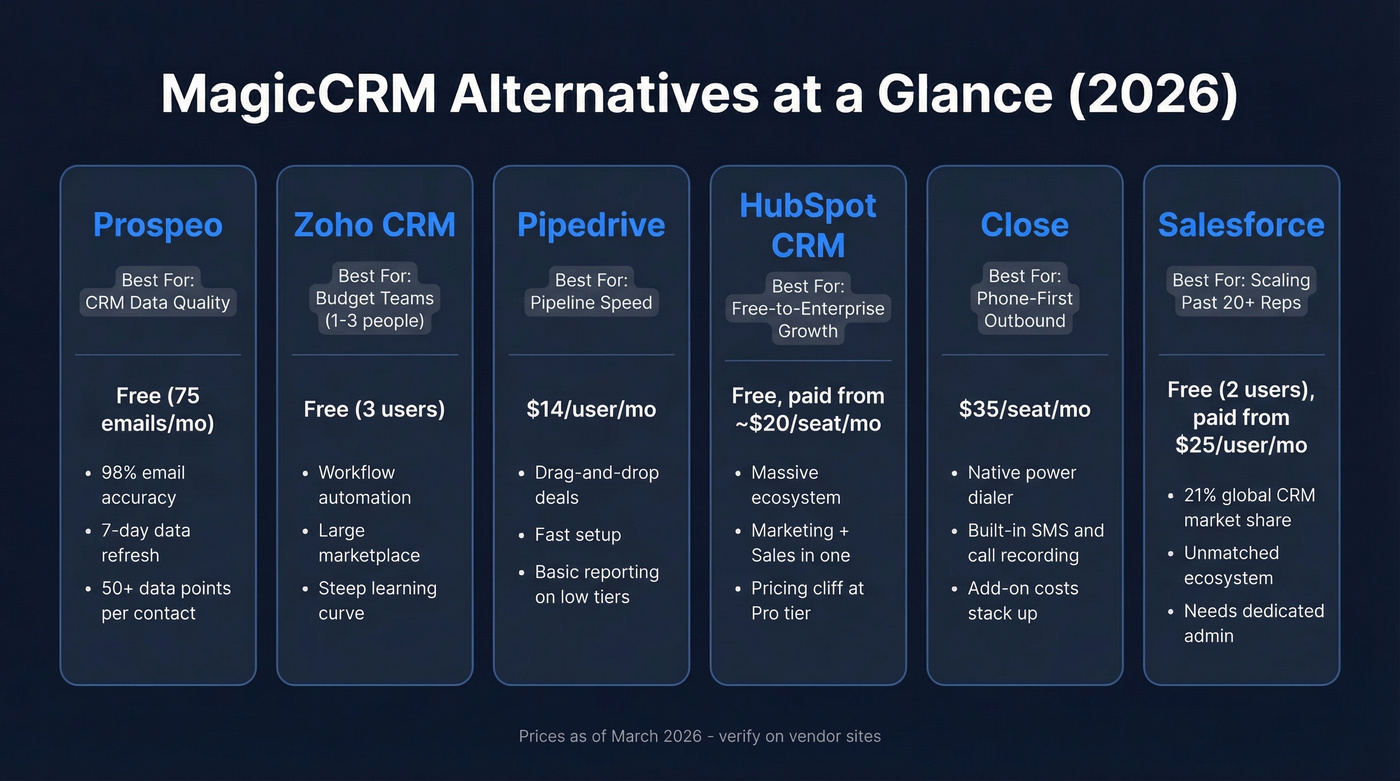
| Tool | Best For | Starting Price |
|---|---|---|
| Prospeo | CRM data quality | Free (75 emails/mo) |
| Zoho CRM | Budget teams (1-3 people) | Free (3 users) |
| Pipedrive | Pipeline-focused sales | $14/user/mo |
| HubSpot CRM | Free-to-enterprise growth | Free; paid from ~$20/seat/mo |
| Close | Outbound calling teams | $35/seat/mo |
| Salesforce | Scaling past 20+ reps | Free (2 users); paid from $25/user/mo |

Every CRM on this list is only as good as the data inside it. Prospeo enriches your contacts with 50+ data points at a 92% match rate, refreshed every 7 days - not 6 weeks. Start with 75 free verified emails.
Migrate to your new CRM with contacts that actually connect.
The Best CRMs to Replace MagicCRM
Prospeo - Best for CRM Data Quality
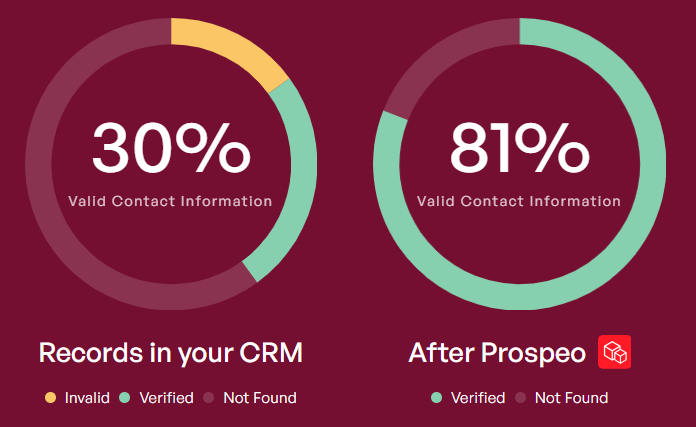
Here's the thing most people get wrong about CRM migrations: they obsess over which platform to pick and completely ignore the data going into it. Every CRM on this list is only as good as the contacts inside it. Import a list of stale emails from your old system and you'll tank deliverability on day one, regardless of whether you picked Zoho, Pipedrive, or Salesforce.
If you're planning to enrich and validate records during the move, start with a clear data enrichment plan before you import anything.
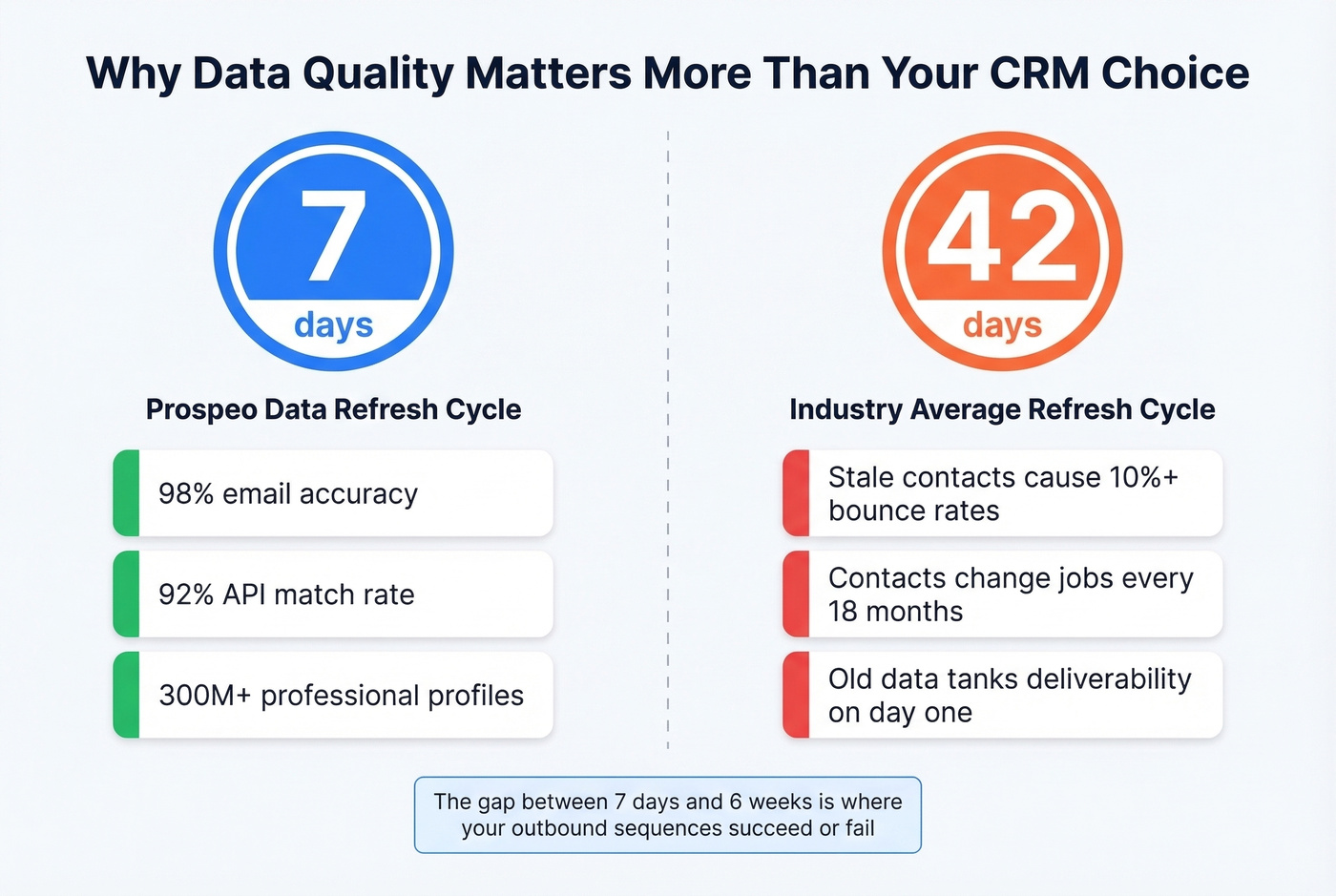
We've seen this pattern dozens of times. A team spends weeks evaluating CRMs, migrates their contacts, launches outbound sequences - and bounce rates spike above 10% because half the records are outdated. Prospeo's database covers 300M+ professional profiles with 98% email accuracy and a 7-day data refresh cycle. The industry average for refresh is six weeks. That gap matters when contacts change jobs every 18 months and you're running sequences at scale.
If you're trying to keep bounce rates down after a migration, use email deliverability best practices from day one.
CRM enrichment returns 50+ data points per contact at a 92% API match rate, and it plugs directly into Salesforce, HubSpot, Zapier, and Make. The free tier gives you 75 verified emails per month - enough to test data quality before committing. Paid plans start around $39/mo with no annual contract required.
Zoho CRM - Best Free Option for Small Teams
Use this if you're a team of 1-3 and don't want to pay anything for your CRM. Zoho's free tier covers three users. Paid plans start at roughly $14/user/month for Standard (pricing varies by region), and Enterprise runs around $40/user/month. The feature set is genuinely broad: workflow automation, scoring, forecasting, and a large marketplace of integrations that keeps growing.
If you're mostly looking for a lightweight way to organize leads and accounts, compare it against other contact management options too.
Skip this if you want a dead-simple UI. Zoho packs a lot in, and the learning curve reflects that. Teams that just want a clean pipeline view will find it overwhelming - we've watched reps spend their first two weeks just figuring out where things live in the navigation.

Pipedrive - Best for Pipeline Speed
Pipedrive does one thing exceptionally well: it makes your pipeline visible and fast. The drag-and-drop deal board is one of the quickest ways to get a sales team operating inside a CRM within a day. Starts at $14/user/mo, no free tier, but you get a 14-day trial.
If your main goal is to fix pipeline execution (not add more features), it helps to map your sales pipeline challenges before you migrate.
Where Pipedrive falls short is anything beyond pipeline management. Reporting is basic on lower tiers, and if you need marketing automation or a help desk, you're bolting on other tools. For pure sales velocity, though, it's hard to beat. The consensus on r/sales tends to agree - Pipedrive comes up constantly as the "just works" recommendation for teams under ten reps.
HubSpot CRM - Free-to-Enterprise Growth Path
The free CRM is genuinely generous - contact management, deal tracking, email templates, and meeting scheduling all included. It's one of the best "start free, grow into paid" paths in the market, and the ecosystem is massive: Marketing Hub, Service Hub, Content Hub, all connecting natively. If you want one platform for sales and marketing, HubSpot is the default choice for good reason.
If you're building outbound alongside HubSpot, keep a library of proven sales follow-up templates so reps don’t reinvent messaging during the transition.
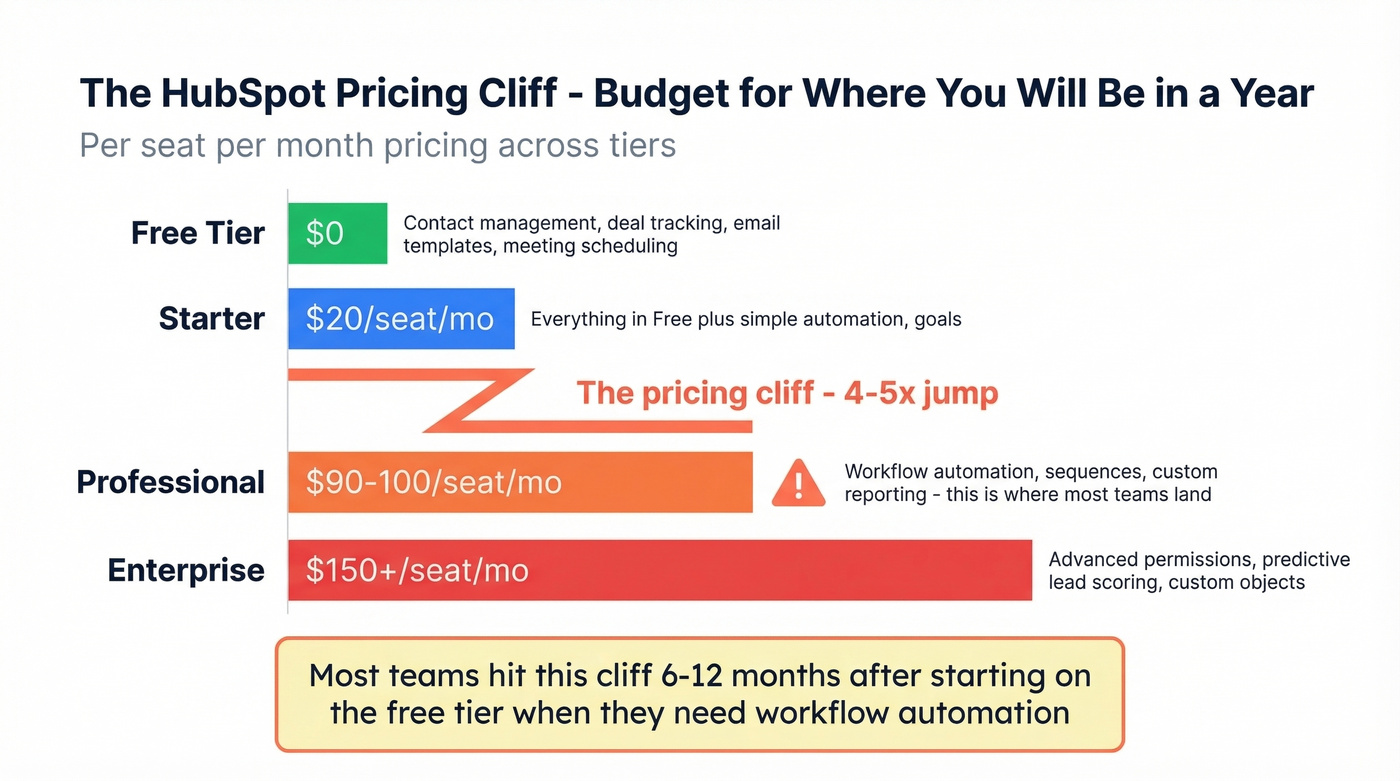
The catch is the pricing cliff. Starter runs around $20/seat/mo, but Professional tiers commonly land in the $90-$100/seat/mo range depending on which Hub you're buying and what's bundled. Budget for where you'll be in a year, not where you are today. We've talked to teams who started on the free tier, loved it, then got sticker shock when they needed workflow automation six months later.
Close - Best for Phone-First Outbound
Close is the only CRM on this list built for teams that live on the phone. Built-in power dialer, call recording, SMS - all native, not bolted on. There's a Solo plan at $9/seat/mo for single users (limited to 10K leads), but most teams start at Essentials for $35/seat/mo on an annual plan.
If your motion is call-heavy, it’s worth standardizing a cold calling system before you switch tools.
Watch the real cost, though. Premium phone numbers add $19/line/mo, and the Call Assistant (AI transcription and summaries) runs $50/mo per org plus $0.02 per minute. A five-rep team doing heavy calling can easily add $200-300/mo in add-ons on top of seat costs. Still cheaper than buying a CRM plus a separate dialer, but budget for the full stack before you commit.
Salesforce Sales Cloud - For Scaling Past 20 Reps
The enterprise default. Salesforce holds roughly 21% of the global CRM market, and for teams scaling past 20 reps, the ecosystem is unmatched. What most people don't know: there's a Free Suite for two users, and Starter runs $25/user/mo. Pro Suite jumps to $100/user/mo, Enterprise hits $175/user/mo - both requiring annual contracts.
If you’re comparing tiers and total cost, see our breakdown of Salesforce pricing.
Only consider Salesforce if you're building for scale. The admin overhead isn't worth it for a five-person team. Let's be honest: if you don't have a dedicated Salesforce admin (or at least someone who enjoys configuring things), you'll end up with a bloated instance that nobody trusts.
How to Pick the Right One
Don't overthink this. Match the CRM to your biggest constraint.
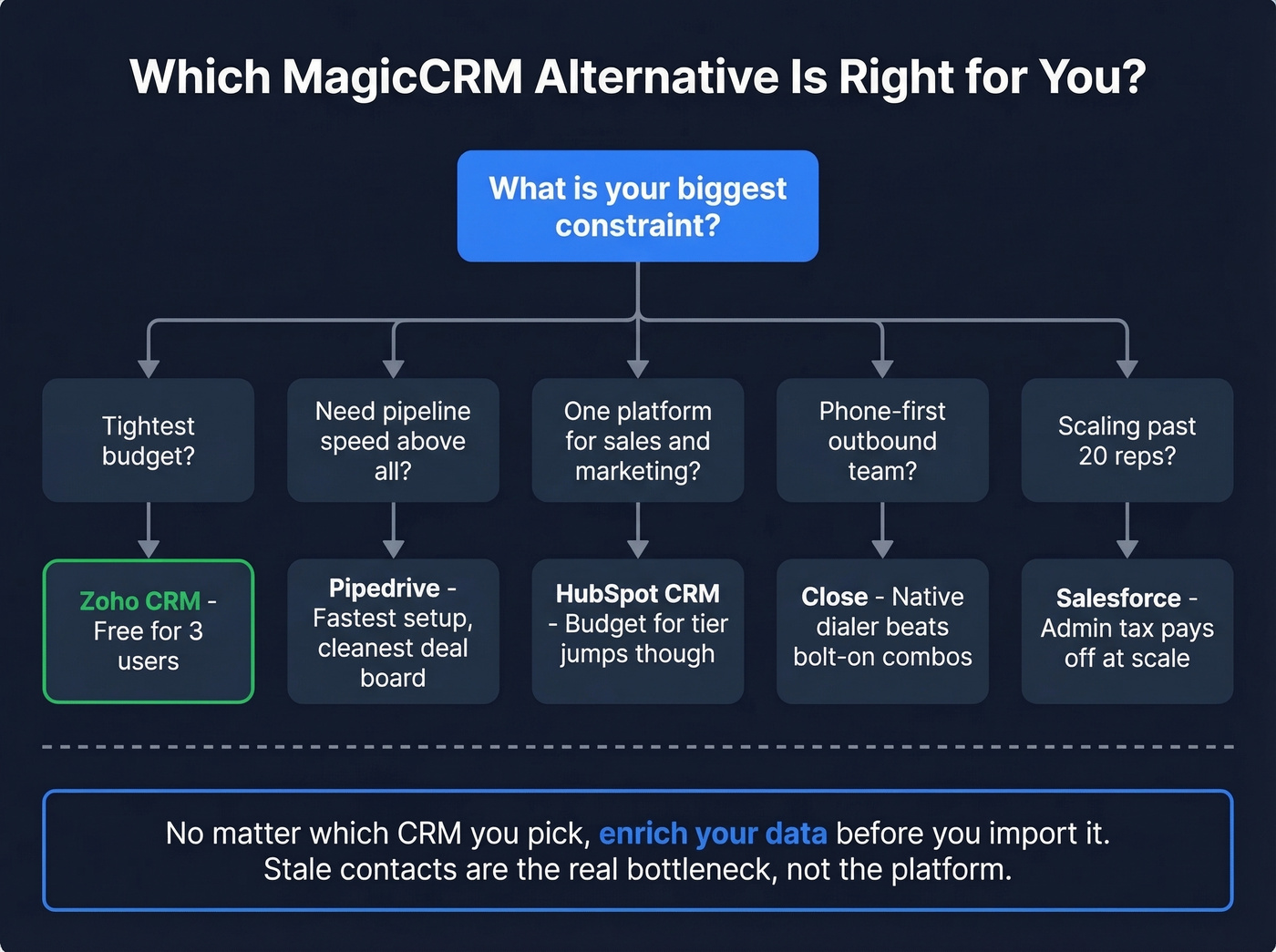
Tightest budget? Zoho CRM - free for three users, and the paid tiers stay affordable. Pipeline speed above all else? Pipedrive - fast setup, cleanest deal board in the category. One platform for sales and marketing? HubSpot - just budget for the jump into higher tiers. Phone-first outbound team? Close - native dialer beats any CRM-plus-integration combo. Scaling past 20 reps? Salesforce - the admin tax pays off at scale.
For Italian SMBs needing invoicing compliance, verify SDI and fatturazione elettronica support via your chosen CRM's marketplace before committing. None of these tools handle it natively the way MagicCRM did, so you'll likely need a plugin or a third-party integration like Fatture in Cloud.
Our honest take: if your average deal size is under EUR 10K and your team is under five people, you don't need Salesforce. You need Pipedrive or Zoho and the discipline to keep your data clean. We've helped teams migrate off niche CRMs before, and the data cleanup is always the bottleneck - not the CRM itself.
If you’re rebuilding your outbound motion after the switch, use a few proven sales prospecting techniques to keep pipeline moving while the new CRM settles.
Bounce rates above 10% after a CRM migration mean your old data was the problem, not the platform. Prospeo's 98% email accuracy and direct integrations with Salesforce, HubSpot, Zapier, and Make keep your new CRM clean from day one.
Stop importing stale records into a fresh CRM - enrich them first.
FAQ
Is MagicCRM still actively maintained?
MagicCRM's G2 profile shows only two reviews, both from 2021, and the vendor profile has been inactive for over a year with no public pricing listed. It may still serve some Italian SMBs, but the lack of recent activity on major review platforms is a serious red flag for anyone evaluating it in 2026.
What's the cheapest alternative?
Zoho CRM is free for up to three users, and Salesforce offers a Free Suite for two users. Both are fully functional CRMs that outpace MagicCRM in ecosystem support, integrations, and community resources. HubSpot's free tier is another strong option if you want marketing tools included from day one.
How do I keep my CRM data accurate after switching?
Verify and enrich your contacts before importing them into your new CRM. Stale data from your old system will undermine any new tool on day one - this is the single most common mistake we see in CRM migrations. A data enrichment tool with a short refresh cycle catches job changes and bounced emails before they damage your sender reputation, and that cleanup step matters more than which CRM you choose.