


MapsScraper Review: Pricing, Reviews, Pros & Cons (2026)
You need local business leads from Google Maps, and you don't want to spend $99/month to get them. MapsScraper advertises unlimited searches and data extraction for $19/month - but "unlimited" doesn't mean what you think. Here's what you're actually getting, what real users say, and where this tool fits in a crowded scraper market.
What Is MapsScraper?
MapsScraper is a Chrome extension that pulls business data from Google Maps searches - names, phone numbers, addresses, ratings, review counts, and categories. It can also extract emails when they're available on the business website and grab social links if they're listed. You export everything to CSV, Excel, or JSON. Search Google Maps, click the extension, download your list. We've tested several Chrome-based scrapers, and MapsScraper's setup is genuinely the simplest we've seen.
30-Second Verdict
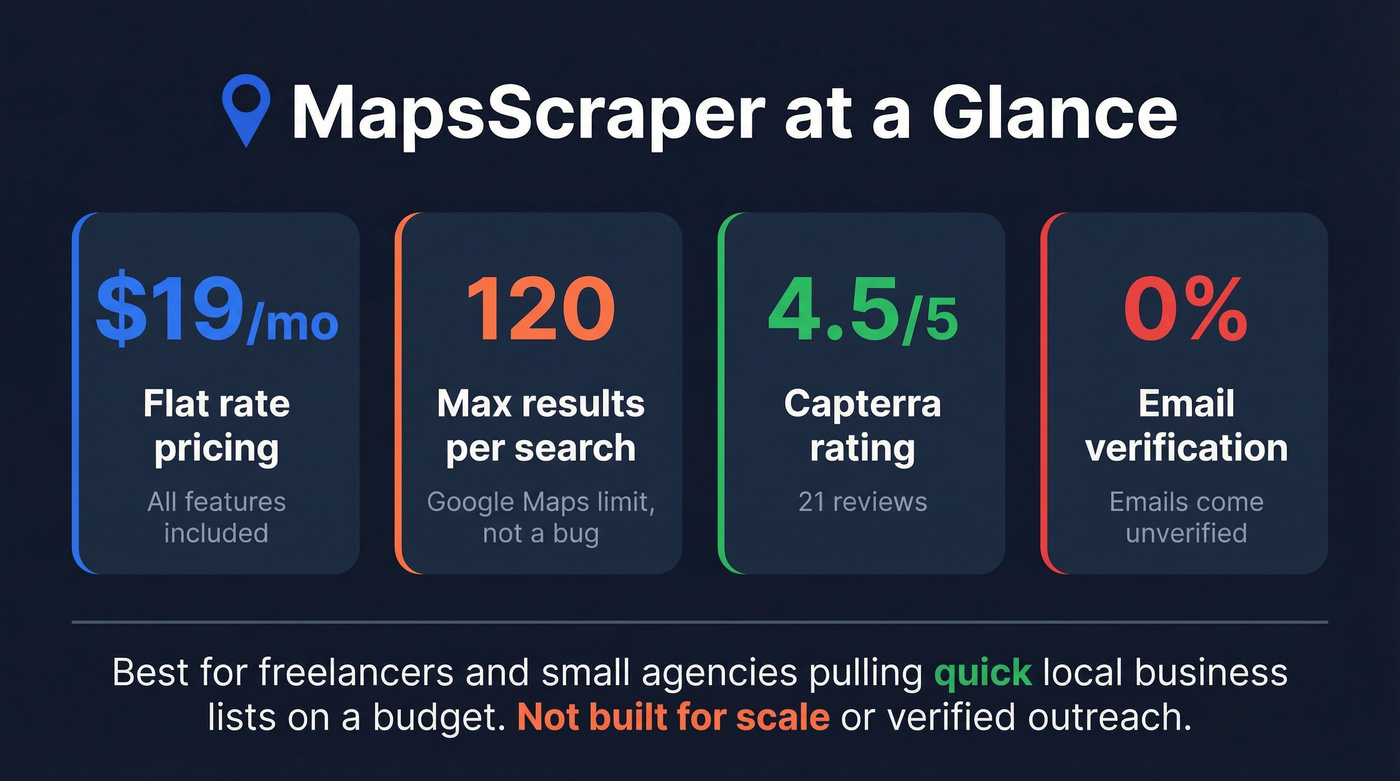
$19/month gets you a fast, easy Chrome extension for pulling local business data from Google Maps. The catch: Google Maps caps results at 120 per search, so "unlimited" really means unlimited searches, not unlimited results per search. Best for freelancers and small agencies pulling quick local lists. Not built for scale, and the emails come unverified.
MapsScraper Pricing Breakdown
| Plan | Price | Billing |
|---|---|---|
| Monthly | $19/mo | Cancel or pause anytime |
| 3 Months | $57 one-time | No subscription |
| One Year | $190/yr | ~$15.83/mo, 2 months free |
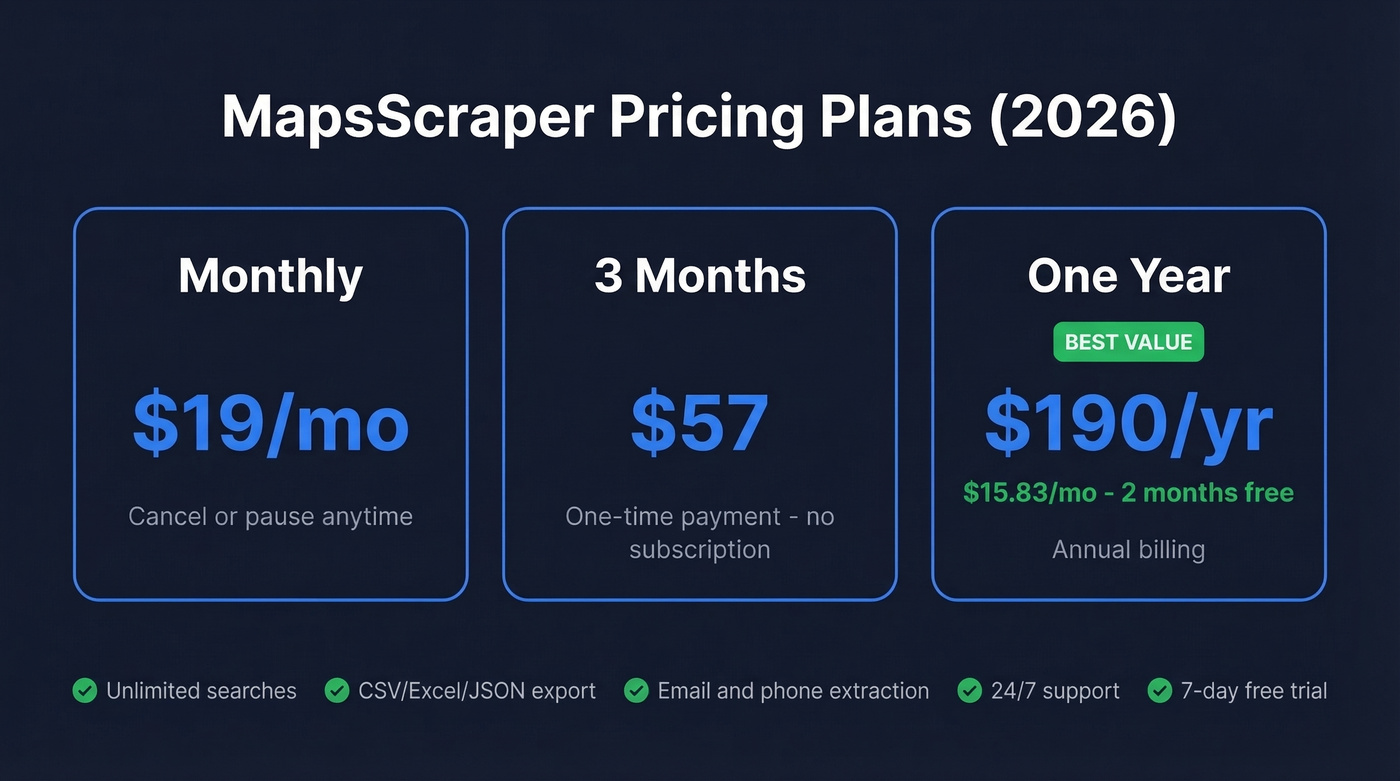
Every tier includes the same features: unlimited searches and data extraction, CSV/Excel/JSON export, email and phone extraction, and 24/7 support. There's a 7-day free trial and a 3-day money-back guarantee on paid plans. Payment options cover cards, PayPal, Apple Pay, Google Pay, Alipay, WeChat Pay, Cash App Pay, and crypto via support.
Here's the thing most people miss. Google Maps itself caps search results at 120 per query. For context, Google's own Places API tops out at about 60 results per Text or Nearby Search query - so the 120-result Maps ceiling is actually more generous than the official API. But if you need 500 plumbers in Chicago, you're running multiple narrower searches and deduplicating manually. In our testing, the 120-cap was the single biggest limitation.
At $19/month, it's cheaper than G Maps Extractor ($39-$99/month) and PhantomBuster (plans starting around $69/month).

MapsScraper gives you raw business data - but raw data destroys sender reputation. Prospeo verifies emails at 98% accuracy and finds direct dials for decision-makers across 125M+ verified mobiles. At $0.01 per email, cleaning your scraped lists costs less than a single bounce.
Stop blasting unverified scrapes. Verify first, outreach second.
User Reviews: Pros and Cons
MapsScraper holds a 4.5/5 rating on Capterra from 21 reviews. The sentiment is consistent: cheap, fast, easy - but not perfect.
What users like:
- Extremely low price point compared to alternatives charging $39-$99/month
- Simple UI that non-technical users pick up in minutes
- One reviewer noted it "saved our staff hundreds of hours"
- Multiple users describe it as "cheap, fast and easy to use"
- Broad export options across CSV, Excel, and JSON
What frustrates them:
- Email formatting is clunky - the tool can generate 1-3 emails for one organization, making CRM imports messy
- Accuracy issues in some regions, including duplicates and outdated listings
- High data usage when running; struggles on poor internet connections
- The 120-result cap per search creates false "unlimited" expectations
- Emails are unverified - you get whatever's available on the business website
One Capterra reviewer estimated the data at "95% accurate," but that same review flagged duplicates and outdated businesses. Let's be honest: 95% is optimistic for any tool pulling from public listings without verification. Expect to clean your lists. Reddit threads about Google Maps scraping rarely mention MapsScraper by name - most discussions center on Outscraper, Apify, and PhantomBuster, which tells you something about where power users land.
Our take: MapsScraper is the right tool for the wrong expectations. Treat it as a quick-and-dirty list builder, not a lead gen platform, and it delivers solid value at $19/month. The moment you expect verified, outreach-ready data, you'll be disappointed.
How MapsScraper Compares
| Tool | Price | Best For | Free Tier | Limits |
|---|---|---|---|---|
| MapsScraper | $19/mo | Budget local lists | 7-day trial | 120 results per search (Google Maps limit) |
| G Maps Extractor | $39-$99/mo | Mid-volume teams | Free plan (1,000 leads/mo) | 100K-500K leads on paid tiers |
| Maps Scraper AI | ~$19.9/mo or $37 lifetime | One-time purchase fans | 1,000 leads/mo | Free export limited to 15 records |
| Outscraper | ~$3/1K records | API-driven scale | 500 free results | Pay-as-you-go per record |
| PhantomBuster | ~$69/mo | Multi-platform automation | Free plan available | Execution-time billing |
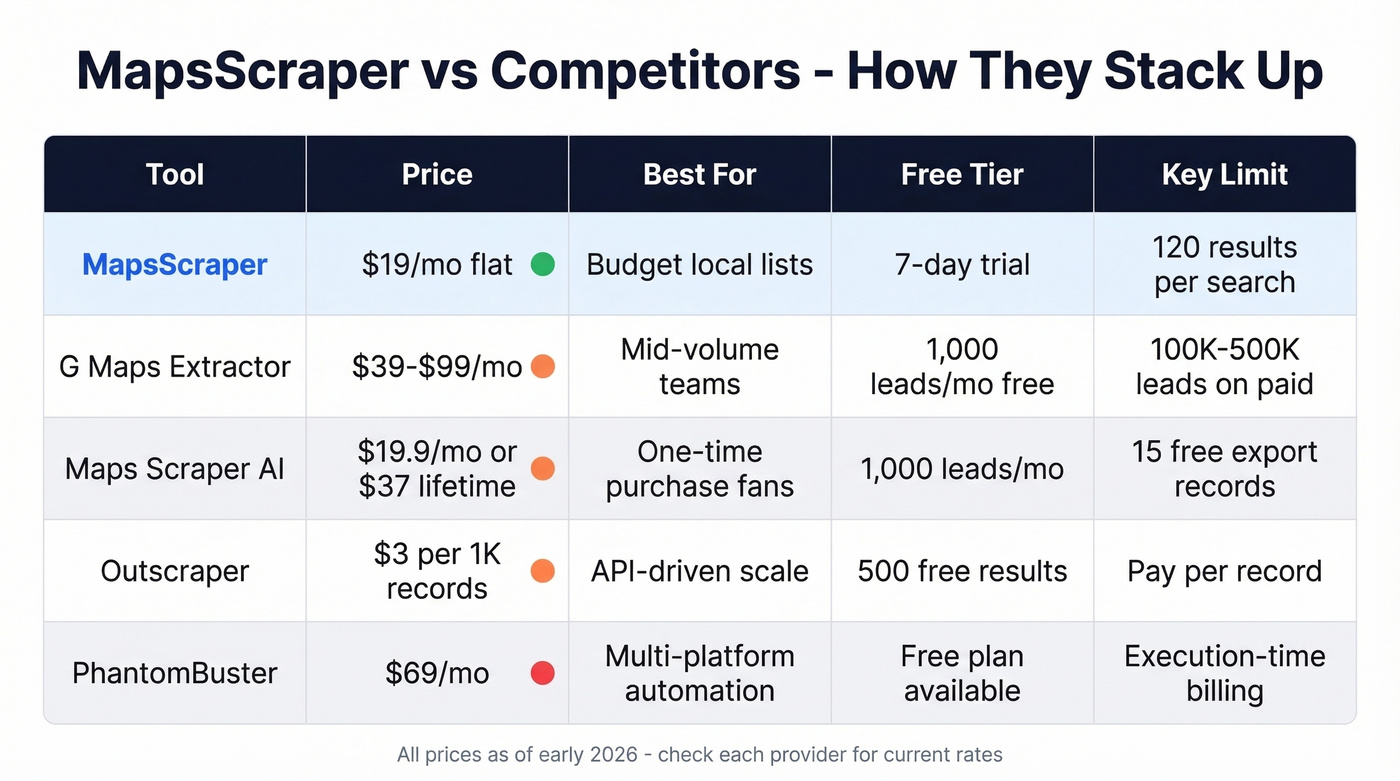
MapsScraper's flat-rate model is its biggest advantage over quota-based tools. G Maps Extractor charges $39/month but gives you up to 100,000 leads - overkill for a freelancer, better value at scale. Maps Scraper AI has a $37 lifetime deal that undercuts everyone if it sticks around. Outscraper's pay-per-record model makes more sense for high-volume, API-driven pipelines.
An AIMultiple benchmark based on 100 searches per provider across 10 categories (4,000 business listings analyzed) found that SerpApi hit a 100% success rate, while Octoparse managed just 47%. If you're building a long-term, high-volume workflow, API-based approaches tend to be more reliable than browser-driven scraping.
What Happens After You Scrape
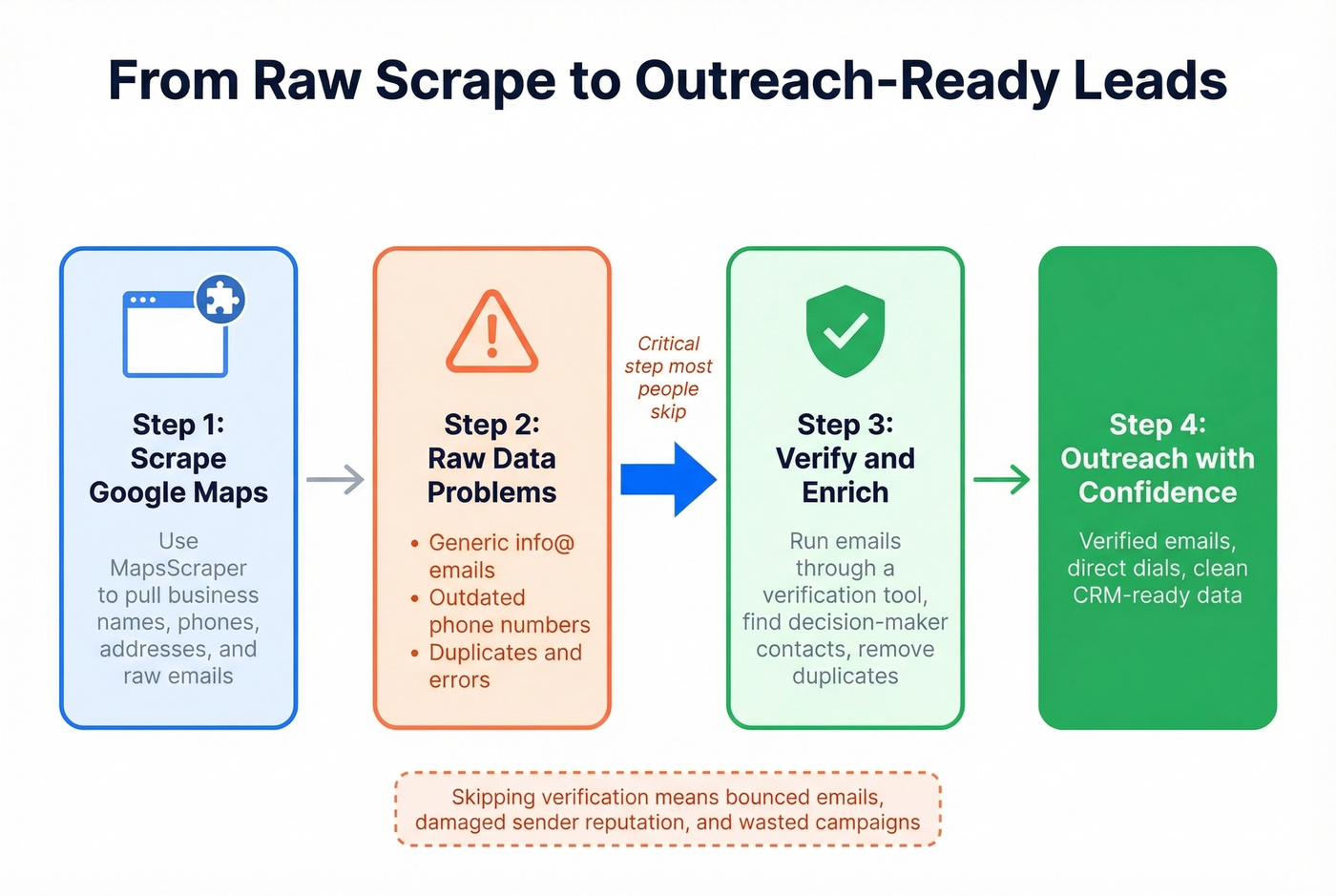
Every Google Maps scraper shares the same blind spot: the data is raw. You scrape hundreds of businesses, blast the list, and bounces spike. The emails are generic (info@, contact@), phone numbers are outdated, and nothing's verified. We've seen teams torch their sender reputation in a single campaign because they skipped this step.
If you're doing web scraping lead generation at any real volume, you also need a plan for lead enrichment and email deliverability before you send.
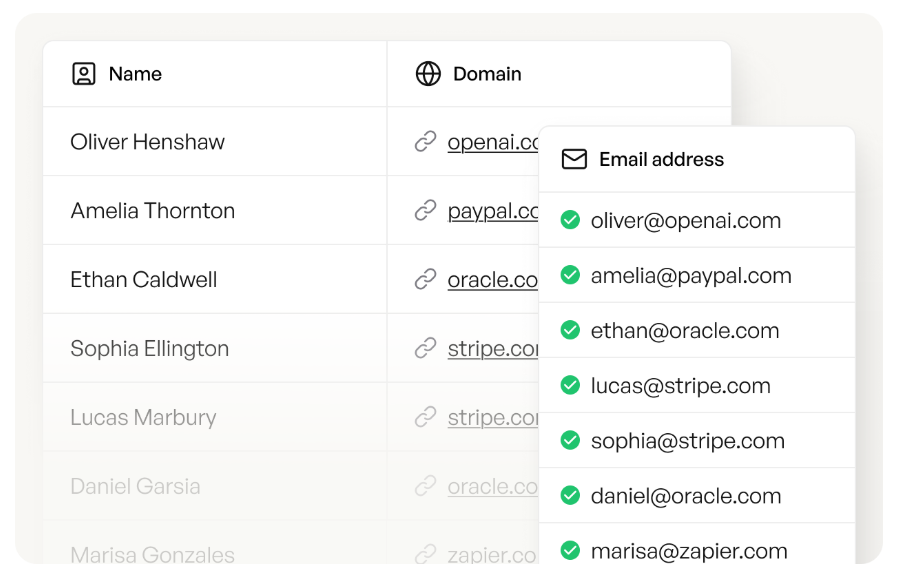
Google Maps caps you at 120 results per search with generic info@ emails. Prospeo's database has 300M+ profiles with 30+ filters - find the actual decision-makers behind those local businesses, with verified emails and direct dials already attached. No scraping, no deduplication, no cleanup.
Skip the scrape. Search 300M+ verified contacts directly.
Who Should Use MapsScraper?
Use it if you're a freelancer or small agency doing local lead gen on a budget. You need quick lists of under 120 businesses per search, you don't mind running multiple queries, and you're pairing it with a verification tool before outreach.
If you're building a repeatable outbound motion, it helps to standardize your lead generation workflow and use proven sales prospecting techniques to avoid wasting sends.
Skip it if you need thousands of leads per city, verified emails ready for cold outreach, or direct dials for decision-makers. At that point, an API-based scraper like Outscraper plus a verification layer is the better path.
FAQ
Is MapsScraper free?
There's a 7-day free trial, then $19/month. The annual plan runs $190/year (~$15.83/month). A 3-day money-back guarantee covers paid plans. A free version exists but it's limited to 20 results per search.
Does MapsScraper extract verified emails?
No. It extracts emails found on business websites, but they come unverified and sometimes grouped together. Run them through a verification tool before any outreach to avoid bounces and domain reputation damage.
Why does MapsScraper only return 120 results?
That's a Google Maps limitation, not a MapsScraper bug. Google caps search results at roughly 120 per query. To build larger lists, run narrower searches by neighborhood or zip code, then combine and deduplicate your exports.
How does MapsScraper compare to Outscraper?
MapsScraper costs a flat $19/month with unlimited searches; Outscraper charges ~$3 per 1,000 records on a pay-as-you-go model. For under 500 leads/month, MapsScraper is cheaper. Above that volume, Outscraper's API-driven approach scales better and typically returns more consistent data.