

The Data-Backed Playbook for Generating Marketing Agency Leads
$15,000 on a database. $2,000/month on a directory listing. A content calendar that hasn't been touched since Q2. And your pipeline is still a ghost town.
Here's the thing: 61% of marketers say lead quality is their top challenge, and reply rates across B2B outbound dropped 12% in 2025 compared to the year before - a trend that's only continued into 2026. The generic advice - "post on social media," "ask for referrals," "try cold email" - isn't wrong. It's just useless without numbers behind it. Which channels actually convert? What should marketing agency leads cost you? What separates agencies booking 1 call per month from agencies booking 23?
Generating leads for a marketing agency is a different animal from most B2B lead gen. You're selling expertise and relationships, not software licenses. Every prospect wants proof you understand their industry before they'll hand over a retainer. Your positioning, your proof, and your data quality matter more than your ad spend - and most agencies get all three wrong.
This playbook answers the hard questions with real benchmarks, practitioner data, and the specific strategies that separate shops drowning in low-quality prospects from those building predictable pipelines.
What You Need (Quick Version)
If you're short on time:
- Build a structured referral program first. Referrals cost $25 per lead and close at 25.56% on sales calls. Nothing else comes close on both cost and conversion.
- Run cold email with a low-commitment intro offer and verified data. The difference between 1 and 23 booked calls per month is your offer and your list quality - not your subject line.
- Publish SEO content consistently for 12+ months. It compounds. Content marketing runs $30-$60 CPL and eventually becomes your cheapest lead source.
Small agencies (1-10 people) should target 10-30 qualified leads per month. Mid-size shops (10-50) should aim for 30-100. If you're below those numbers, something in your funnel is broken. Let's figure out what.
Before You Generate Leads - Fix Your Positioning
Every agency owner wants to skip straight to tactics. Run ads. Send emails. Build a funnel. But if your positioning is vague, every lead you generate costs more and converts worse.

There's a persistent debate in agency circles: niche by industry or niche by service? Both work, but having some form of specialization is non-negotiable. One agency owner on Reddit does lead generation across home services, real estate, fintech, and crowdfunding - niched by service, not industry. Works great. Another agency does only SEO for law firms. Also works great. What doesn't work: "We're a full-service digital marketing agency that does everything for everyone."
The pro-niche argument is compelling. Specializing - "SEO for lawyers," "paid media for SaaS" - positions you as the expert who understands the client's world. Clients prefer specialists who won't ruin their branding or waste three months learning the industry. The counter-argument from larger agencies is that niching limits your TAM. But here's the reality: you're not a large agency yet. And generalist positioning is the #1 reason small agencies struggle to differentiate in cold outreach.
If your average contract value is under $3K/month, you almost certainly need to niche. Generalist agencies can survive at higher price points because the deal size justifies longer sales cycles and lower close rates. Below that threshold, you need every conversion advantage you can get - and specialization is the biggest one available.
Treat Your ICP as a 90-Day Experiment
Don't try to nail your ideal client profile on day one. Draft it in Month 1 based on your best current clients. Refine it in Month 3 using data from your outreach - who replied, who booked calls, who closed. By Month 6, double down on the segments that actually convert and cut the rest.
Your ICP is a living document, not a one-time exercise.
Two Quick Wins for Your Website
Add a "Who We're NOT a Fit For" section. This sounds counterintuitive, but it filters out bad leads before they waste your time. "We're not a fit for businesses spending under $5K/month on marketing" saves you dozens of unqualified discovery calls per quarter.
Be transparent about pricing. Not exact numbers - ranges. "Most clients invest between $3,000-$8,000/month" or "Packages from $2,500/month." Agencies that hide pricing attract tire-kickers who disappear after the proposal. Agencies that publish ranges attract buyers who've already self-qualified on budget. Spread your social proof everywhere - homepage, service pages, proposals, even your email signature. Don't hide case studies on a single testimonials page nobody visits.
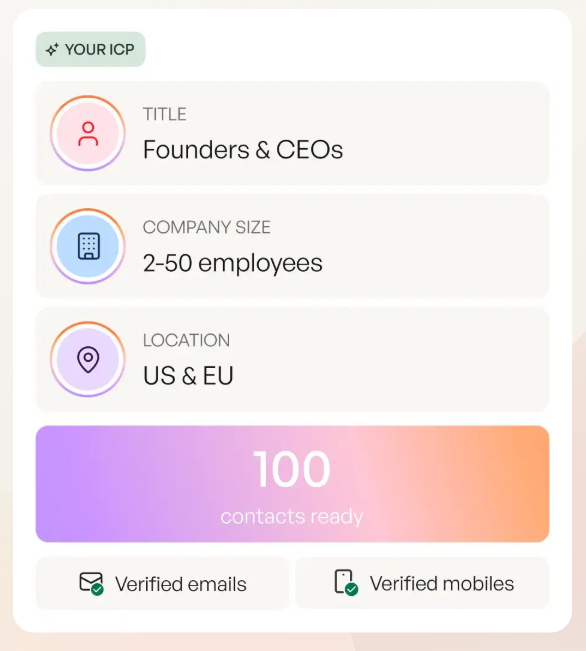

This playbook shows cold email books 23 calls/month when your list quality is right. Prospeo delivers 98% email accuracy with 7-day data refresh - so your agency outreach hits real inboxes, not bounce logs. At $0.01 per verified email, your CPL stays well below that $225 benchmark.
Stop paying enterprise CPLs on a boutique agency budget.
What Marketing Agency Leads Actually Cost - Channel Benchmarks
Most agency owners have no idea what a lead should cost them. They're either overpaying and don't know it, or they're underinvesting in channels that would actually scale.
Cost Per Lead by Channel
This data comes from Sopro's 2025 benchmarking report, covering thousands of B2B campaigns:

| Channel | Avg CPL | Best For |
|---|---|---|
| Referrals | $25 | Any agency, any size |
| Affiliate marketing | $73 | Agencies with partners |
| Paid Facebook | $142 | Local/SMB agencies |
| Multi-channel prospecting | $188 | Mid-size agencies |
| SEO | $206 | Long-term investment |
| Cold email | $225 | Outbound-first teams |
| Direct mail | $250 | High-ACV agencies |
| Webinars | $267 | Thought leadership |
| Cold calling | $300 | Enterprise agencies |
| Paid LinkedIn | $408 | B2B niche targeting |
| PPC (Google) | $463 | High-intent capture |
| Trade shows | $840 | Enterprise/brand play |
A few things jump out. Referrals at $25 CPL are absurdly cheap - and most agencies don't have a structured program. They just hope referrals happen. Meanwhile, agencies dumping $400+ per lead into LinkedIn ads or Google PPC often can't justify the ROI unless their average deal size is north of $5,000/month.
One agency achieved a $55 CPL in an industry where the average was $431. That's not magic - it's channel selection and targeting done right.
Businesses with fewer than 50 employees typically pay $146 per lead. Enterprises over $500M revenue pay $429. If you're a 15-person agency paying enterprise-level CPLs, something's off.
Conversion Rates by Channel
CPL only tells half the story. A $60 webinar lead that converts at 11.2% is worth more than a $30 email lead that converts at 6.5% - depending on your deal size.

Note: "Conv. Rate" below is the lead-to-MQL conversion rate (how many raw leads become marketing-qualified). "Sales Call Close Rate" is the percentage of sales conversations that result in a closed deal. These measure different stages of your funnel.
| Channel | Conv. Rate (Lead to MQL) | CPL Range | Sales Call Close Rate |
|---|---|---|---|
| Webinars | 11.2% | $60-$80 | ~24% |
| Email marketing | 6.5% | $30-$45 | 22.83% |
| Google PPC | 4.5% | $90-$150 | 15.73% |
| Content/SEO | 1.8% | $30-$60 | 21.22% |
| Organic social | 1.2% | ~$0 direct | 11.56% |
| LinkedIn ads | 3.2% | $120-$200 | ~15% |
| Cold calling | N/A* | $250-$350 | 9.38% |
*Cold calling skips the traditional lead-to-MQL stage - calls go directly to a live conversation, so the conversion metric doesn't apply the same way.
The sales call close rates tell the real story. Referral-sourced leads close at 25.56%. Cold calling? 9.38%. That's nearly a 3x difference. Email marketing lands at 22.83%, and SEO-sourced leads close at 21.22% - both strong because the prospect came to you with intent.
Price point matters too. Deals under $10K close at 25.73%. Deals between $50K-$100K close at 20.24%. If you're pitching $4K/month retainers (roughly $48K/year), you're in the sweet spot where close rates are still healthy.
What a Healthy Agency Funnel Looks Like
Using B2B SaaS benchmarks from First Page Sage (the closest proxy for agency services):

| Funnel Stage | Conv. Rate | "Good" Looks Like |
|---|---|---|
| Lead to MQL | 39% | 40%+ |
| MQL to SQL | 38% | 40%+ |
| SQL to Opportunity | 42% | 45%+ |
| SQL to Closed | 37% | 40%+ |
Lead-to-MQL is typically the leakiest stage. If you're converting fewer than 30% of raw leads to marketing-qualified, your targeting is off - you're generating volume, not quality.
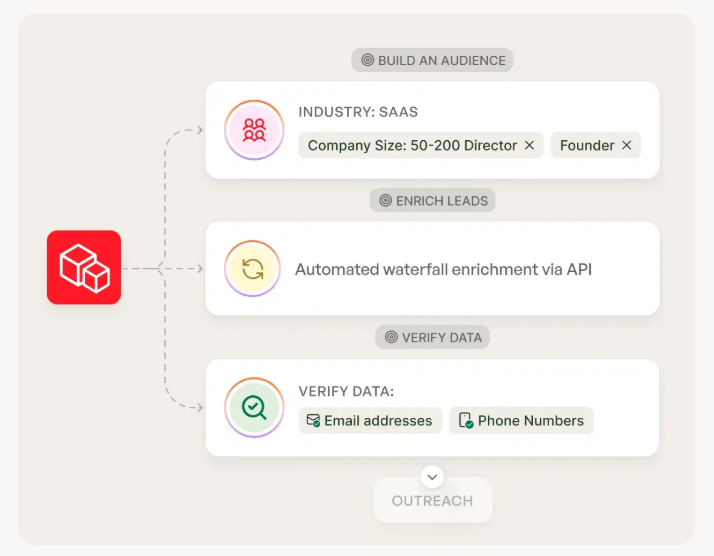
Real talk: most agencies don't track these stages at all. They know how many leads came in and how many deals closed. Everything in between is a black box. If that's you, fixing your funnel tracking will do more for your pipeline than any new lead source.
Inbound Strategies That Compound Over Time
Inbound is slow. Everyone knows this. But the agencies that invested in inbound 18-24 months ago are now generating qualified prospects at a fraction of the cost of outbound-only shops. The key word is compound.
Content Marketing + SEO
The Madison Marketing / Stangl Law case study is the best illustration I've seen of content compounding. Madison shifted a law firm from wasted Google Ads spend to content marketing plus hyper-focused PPC on high-intent keywords. The results over 10 years: a 549% increase in annual inbound lead volume, over 7,000 leads generated, and page-1 rankings for 700+ legal keywords driving an estimated 10,530 organic sessions per month.

That's a law firm, not an agency. But the methodology is identical. Publish keyword-focused content consistently. Target the questions your prospects are actually Googling. Let it compound.
Content marketing CPL runs $30-$60 with a 1.8% conversion rate. That conversion rate looks low until you realize the volume is essentially free after the initial investment. And here's the stat that matters most: buyers complete up to 80% of their decision-making before talking to sales. Your content is your sales team's first impression whether you like it or not.
The catch? You need 12+ months of consistency before SEO content becomes a reliable lead source. Most agencies quit at month 4. The ones that don't end up with the cheapest, highest-quality leads in their pipeline.
Referral Partnerships
At $25 CPL and a 25.56% close rate - the best numbers of any channel we've covered - referrals are the clear winner. Yet most agencies treat them as something that happens passively. "Oh, a client mentioned us to someone." That's not a referral program. That's luck.
The Haus Advisors framework breaks it into four steps:
- Identify partners who share your audience but don't compete. If you're a paid media agency, partner with web development shops, CRM consultants, or branding firms.
- Pitch it as a business deal with clear value exchange. Not "let's refer each other sometime" - that dies in a week.
- Set expectations on what a good referral looks like and how you'll track it.
- Measure and tune with actual KPIs.
Here's an example pitch that actually works: "We often work with founders who need UX research before we write code. I'd refer them to you. When you have clients ready to build, we'd love to be your go-to dev partner."
Track four things: referrals sent and received, referral-to-lead conversion rate, close rate on referred leads, and retention from referred clients. One high-trust niche partner can be worth more than a generalist agency with a massive client list.
The biggest mistake? Not giving before asking. Send three referrals before you expect one back. That's how trust compounds.
Landing Pages and Lead Magnets
Your website's job is to convert visitors into leads. If you don't have a clear CTA on every page, you're leaking pipeline.
Industry benchmarks put the median landing page conversion rate at 6.6% across all industries. That's your baseline. If you're below it, your pages need work.
One quick fix: simplify your forms. Three-field forms convert 27% better than five-field forms. Name, email, company. That's it for the first touch. You can qualify later. Instant routing tools like Chili Piper can convert 50-60% of form fills directly to booked meetings without human delay - worth the investment if you're generating consistent inbound volume.
Every service page needs a specific CTA - not just "Contact Us." "Get a free audit of your Google Ads account" converts better than "Schedule a call" because it promises value before asking for time.
Directory Listings - An Honest Assessment
Look, I've seen the Reddit threads. Agency owners asking about Clutch, DesignRush, UpCity, and the rest. The consensus is blunt: directory leads are "very low quality." People reach out, then ghost.
My recommendation: maintain free listings on Clutch and G2. They're worth the 30 minutes to set up because they help with SEO and social proof. But paid listings at $500-$2,000/month? Skip them unless you have 50+ reviews and a high enough average deal size that even one closed deal per quarter justifies the spend. For most small agencies, that budget is better spent on content or outbound.
How to Get Marketing Agency Leads With Outbound in 2026
Inbound compounds. Outbound accelerates. The best agencies run both, but if you need pipeline now, outbound is where you start.
Cold Email - The 1-to-23 Calls/Month Playbook
We've seen data from a lead gen consultant who ran cold email campaigns for four different marketing agencies. The results ranged from 1 booked call per month (worst) to 23 booked calls per month (best) - same competitive industry. Same channel, wildly different outcomes. The difference came down to three things.
Sales assets. The best-performing agency had a library of case studies, guides, and checklists available as PDFs and videos. They didn't "pitch slap" - they offered value upfront. The worst-performing agency had nothing. Just a cold email asking for a meeting.
The offer. The best agency led with an intro offer - a lower-priced one-off service like landing page builds or lead list creation, priced between $500-$1,500. Not a $4K/month retainer pitch to a stranger. The worst agency offered a 3-month contract with no guarantees. Nobody wants to be locked in with an unknown agency.
The second-best agency used a revenue-share model combined with a unique mechanism. That worked too - it removed risk from the prospect's side.
The sales process. The best agency spent 30 minutes researching each prospect before the call. Personalized insights. Natural conversation. The worst? Two founders reading through a 30-minute PowerPoint with zero research. Their close rate was around 10%.
The formula: sales assets library + low-commitment intro offer + researched sales process = the difference between 1 and 23 calls per month.
Why Data Quality Makes or Breaks Your Outbound
Your SDR just burned through 500 emails and 180 bounced. Your domain reputation is tanking. Your next campaign lands in spam for everyone - including the prospects who would've replied.
This is the unsexy reality of outbound: your data quality determines your ceiling. A 35% bounce rate doesn't just waste credits - it destroys the domain you need for every future campaign. And once your domain is flagged, recovery takes weeks.
Stack Optimize built from $0 to $1M ARR running outbound for clients. Their secret wasn't a magic subject line. It was 94%+ deliverability, bounce rates under 3%, and zero domain flags across all client campaigns. That's what clean data looks like in production.

Agencies that niche down need laser-targeted prospect lists to match. Prospeo's 30+ filters - industry, headcount, tech stack, funding, intent signals - let you build lists that mirror your exact ICP. 300M+ profiles, 143M+ verified emails, zero guesswork.
Turn your ICP doc into a pipeline in minutes, not months.
LinkedIn Outreach
Cold LinkedIn messages average 7-15% reply rates - roughly double most cold email campaigns. Highly personalized sequences push past 25%.
But LinkedIn is getting stricter. The platform penalizes mass messaging, and connection request limits are tighter than they were even a year ago. The spray-and-pray approach that worked in 2022 will get your account restricted in 2026.
What works now:
- Profile optimization first. Your headline should speak to the problems you solve, not your job title. "Helping B2B SaaS companies cut CAC by 40% through paid media" beats "Founder & CEO at XYZ Agency." Banner image reinforcing your positioning. Social proof in your About section.
- Sales Navigator for segmentation. Filter by title keywords, years in role, team size, recent job changes. The targeting is the strategy.
- Pre-engagement before the pitch. Engage with 5-10 of their posts over two weeks before sending a connection request. Comment with something substantive, not "Great post!" When you reach out, you're not a stranger - you're someone they recognize.
The key tradeoff: LinkedIn outreach is high-touch and low-volume. You're not sending 500 messages a day. You're sending 20-30 highly personalized ones. For agencies selling $5K+/month retainers, the math works. For agencies selling $500 projects, it doesn't.
The Indeed.com Tactic Nobody Talks About
This one comes from an agency owner who described it as generating an "insane" number of meetings. The logic is simple: companies posting job listings for "SEO Specialist" or "Ad Specialist" on Indeed are admitting they have a problem to solve. They've already decided they need the capability. They just haven't considered outsourcing it yet.
The pitch framework: "Instead of hiring full-time at $52K+ with benefits, outsource to us at $3K/month - that's $36K/year with no onboarding, no benefits overhead, and no risk if it doesn't work out."
Search different metro areas across the country. Filter by job titles that match your services. The leads are pre-qualified by definition - they're actively spending money to solve the exact problem you solve.
It's not scalable to thousands of leads per month, but it's a reliable source of highly qualified conversations each week if you're consistent. The close rate tends to be high because you're reframing a decision they've already made, not creating demand from scratch.
Mistakes That Kill Your Pipeline
I've watched agencies make the same mistakes repeatedly. Here are the ones backed by data.
1. Giving up too early. 44% of sales reps give up after one follow-up. But 80% of deals require five or more touches. If you're sending one email and moving on, you're leaving the majority of your pipeline on the table. Build a 5-7 touch sequence minimum.
2. Chasing volume over intent. B2B lead costs balloon from $40 to over $300 when you're targeting low-intent audiences. A hundred unqualified leads cost more than ten qualified ones - in time, in sales resources, and in opportunity cost.
3. Targeting only the CEO. The average B2B buying group is 10-11 people. The CEO signs the contract, but the CMO cares about strategy, the CFO cares about ROI, and the marketing manager cares about whether you'll actually make their life easier. Multi-thread your outreach across the buying committee.
4. Blasting sales-heavy emails. Email overload leads to spam flags. If every email you send is a pitch, you're training inbox providers to filter you out. Focus on value-first nurturing - insights, case studies, relevant data - with a clear but soft CTA.
5. No clear CTA on your website. This sounds basic, but I've audited agency websites where the only way to contact them is a generic "Contact Us" form buried in the footer. Every page should have a specific next step. "Get a free PPC audit." "Download our SEO case study." "Book a 15-minute strategy call." Make it obvious.
6. Treating all leads the same. A referral from a trusted partner and a cold inbound from a directory listing aren't the same lead. They need different follow-up cadences, different messaging, and different qualification criteria. Behavioral signals - pages visited, content downloaded, email engagement - tell you more about intent than a job title ever will.
Tools for Agency Lead Generation
You don't need ten tools. You need three or four that work together.
Quick-Reference Comparison
| Tool | Best For | Starting Price | Key Differentiator |
|---|---|---|---|
| Prospeo | Verified outbound data | Free / ~$39/mo | 98% email accuracy, 7-day refresh |
| Apollo | All-in-one on a budget | Free / ~$49/mo | Database + sequencing + CRM |
| Clay | Technical enrichment | ~$149/mo | Custom workflows, waterfall data |
| HubSpot CRM | Pipeline tracking | Free / $20/mo | Ecosystem + marketing automation |
| Hunter | Quick email lookups | ~$49/mo | Simple, fast, reliable |
Prospeo - Verified Contact Data
Prospeo is the accuracy backbone for outbound. 300M+ professional profiles with 98% email accuracy, all on a 7-day refresh cycle. The difference between this and providers refreshing monthly is the difference between 3% bounce rates and 15%. Starts free with 75 emails per month, paid plans from ~$39/month at roughly $0.01 per email. No contracts, no sales calls.
Apollo - Your First Outbound Stack
If you're running outbound for the first time and need everything in one place, start here. Apollo bundles a database, email sequencing, and a basic CRM for ~$49-$99/month per user (free tier available). I've seen it work great for US-based tech companies and struggle with niche verticals like construction or healthcare. The data quality is mixed - verify your lists before sending - but the convenience of one platform is hard to beat when you're a two-person team figuring out your process.
Clay - Skip This If You're Not Technical
Custom ICP filters and enrichment recipes from multiple data providers. Waterfall enrichment pulls the best data from each source automatically. Usage-based pricing runs ~$149-$349/month depending on volume, and it pairs well with Prospeo or Apollo as a data source.
One-line verdict: The most powerful enrichment tool available, but it requires someone who can build workflows. If that's not on your team, you'll pay $149/month for a tool you never configure properly.
HubSpot CRM - You Probably Already Have This
Free CRM tier handles contact management and basic pipeline tracking. Marketing Hub starts at $20/month per seat for email automation and landing pages. The real value isn't the features - it's that HubSpot forces you to track which funnel stages are leaking. Most agencies already have it. If you don't, the free tier takes 30 minutes to set up and immediately makes your pipeline visible.
Other Tools Worth Knowing
Hunter - quick email lookups, ~$49/month. Dependable utility tool for one-off searches. Cognism - best phone data for European prospects, expect $1,000-$3,000/month based on team size. Calendly - scheduling links, free tier works fine. Smartlead ($39-$94/month) and Instantly ($30-$77.6/month) - cold email sending infrastructure. Pick one based on your volume needs.
FAQ
How many leads should a marketing agency generate per month?
Small agencies (1-10 people) should target 10-30 qualified leads monthly; mid-size shops (10-50) should aim for 30-100. Work backward from your revenue goal using your close rate - 25% for referrals, 10-15% for outbound.
What's the cheapest way to get leads for an agency?
Referrals at $25 CPL with a 25.56% close rate beat every other channel on cost and conversion. Build a structured referral program with complementary service providers before investing in paid channels. Content marketing ($30-$60 CPL) is second cheapest but requires 12+ months to compound.
Does cold email still work for agencies in 2026?
Yes, but the bar is higher than ever. Agencies still winning have verified data (bounce rates under 3%), a low-commitment intro offer instead of a retainer pitch, and a library of sales assets that demonstrate expertise before the call.
Should I niche down my agency to get more leads?
Some form of specialization is essential - either by industry ("SEO for law firms") or by service ("lead generation only"). Both work. "Full-service digital marketing for everyone" doesn't. Specialization makes your outbound sharper, your content more targeted, and your close rates measurably higher.
How do I make sure my outbound emails don't bounce?
Use a verification tool with a 7-day data refresh cycle - stale data from providers refreshing monthly is the #1 cause of high bounce rates. Aim for under 3% bounce rate on every campaign. Anything above 5% risks domain damage that affects all future sends.
The agencies that consistently win at generating marketing agency leads aren't doing anything exotic. They're doing the basics - referrals, verified outbound, consistent content - with better data and more discipline than everyone else. Start with one channel, measure it honestly, and expand from there.