

Cold Calling for Introverts: A Data-Backed Guide
Your team's top performer rattled off 80 dials before lunch and booked 3 meetings. You made 25 calls, had 4 real conversations, and booked 2. Your manager congratulated the other rep. Nobody mentioned your better conversion rate.
Most cold calling advice is written by extroverts for extroverts. It assumes you thrive on volume, feed off rejection, and recharge between calls by chatting with the person next to you. If that's not you - if picking up the phone feels like lifting a barbell with your nervous system - this guide is built around how you actually work.
You're Not Broken. The Data Backs That Up.
A September 2024 study in the Journal of Retailing analyzed 260+ salespeople and found introversion can actually improve sales performance. The mechanism? Introverts with strong team relationships receive higher-quality advice - and they're better at acting on it. A separate meta-analysis of roughly 4,000 salespeople across 35 studies found zero correlation between extraversion and sales outcomes. None.
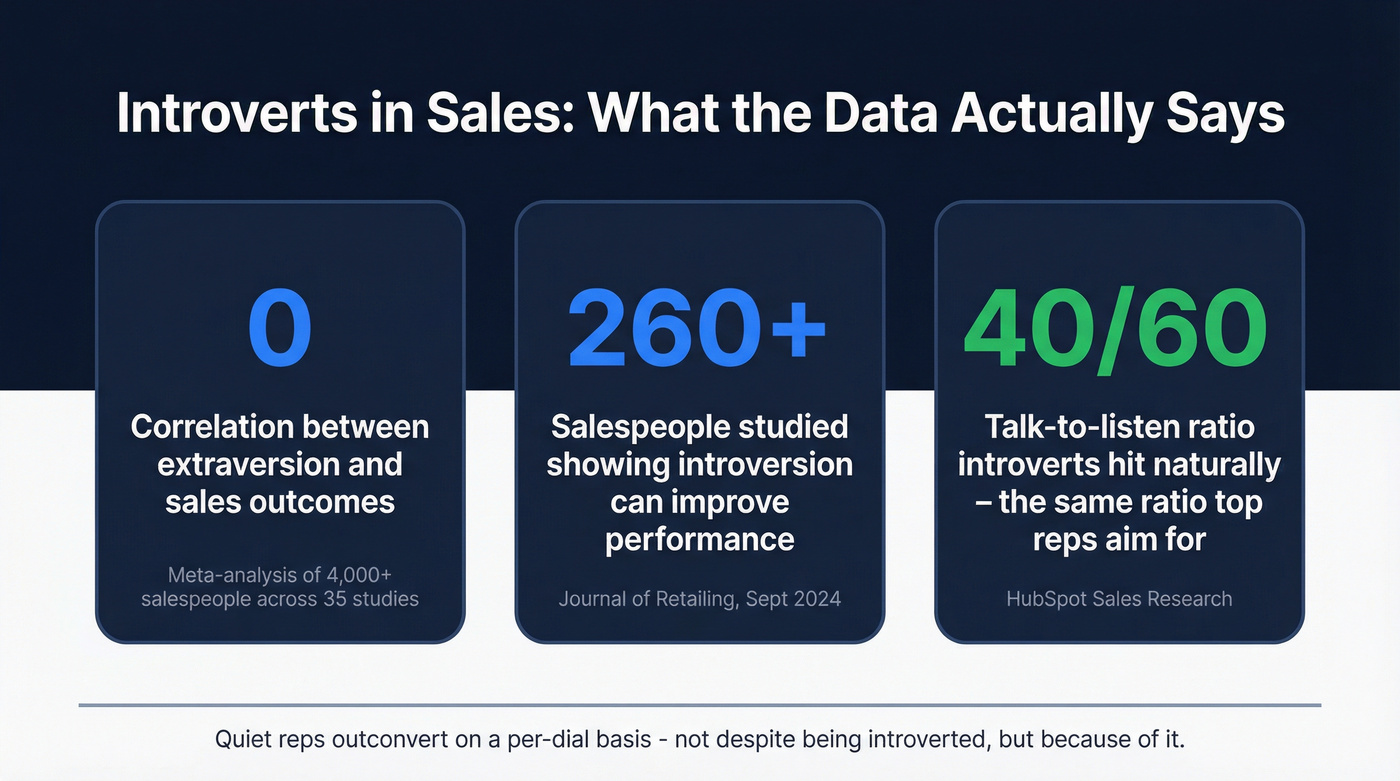
Your real advantages: deeper preparation, genuine listening, a calm demeanor that doesn't trip a prospect's "I'm being sold to" alarm. We've watched introverted SDRs consistently outconvert their louder teammates on a per-dial basis - not despite being quiet, but because of it.
Your Pre-Call System
Every wasted dial costs you more than it costs an extrovert. Not in money - in emotional energy. Protecting that energy is the single most important thing you can do before you pick up the phone.
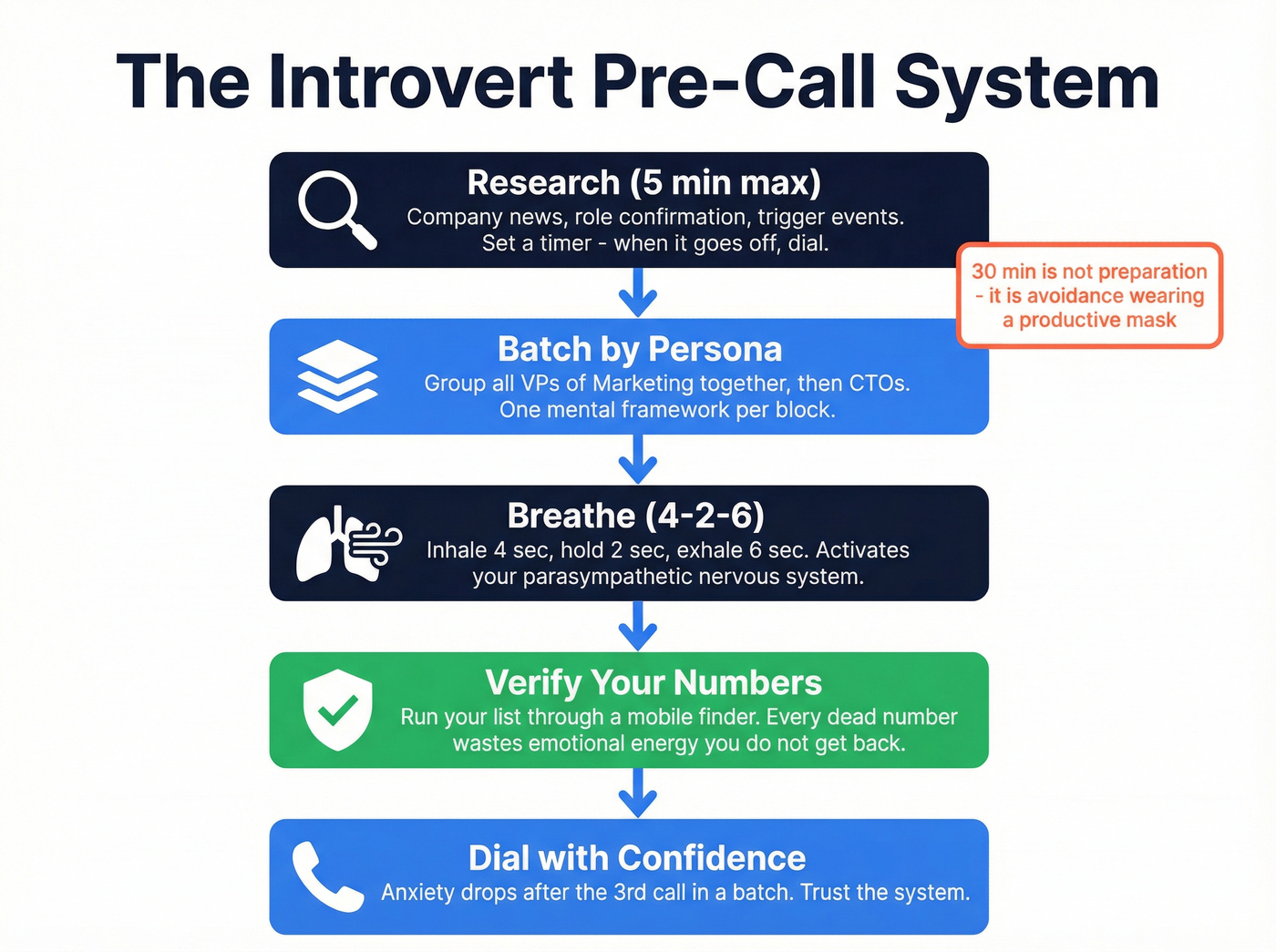
Five-minute research rule. Check recent company news, confirm the prospect's role, scan for trigger events. Five minutes buys you a real edge. Set a timer - when it goes off, dial. Thirty minutes isn't preparation. It's avoidance wearing a productive mask. (If you want a tighter workflow, use this pre-call research playbook.)
Batch by persona. Call all VPs of Marketing first, then all CTOs. You stay in one mental framework, refine your pitch with each dial, and build momentum without context-switching. In our experience, anxiety drops noticeably after the third call in a batch because you've already handled the same objections twice.
Breathing cadence. Before your first block, try the 4-2-6 technique: inhale 4 seconds, hold 2, exhale 6. This activates your parasympathetic nervous system and takes the edge off that pre-dial dread.
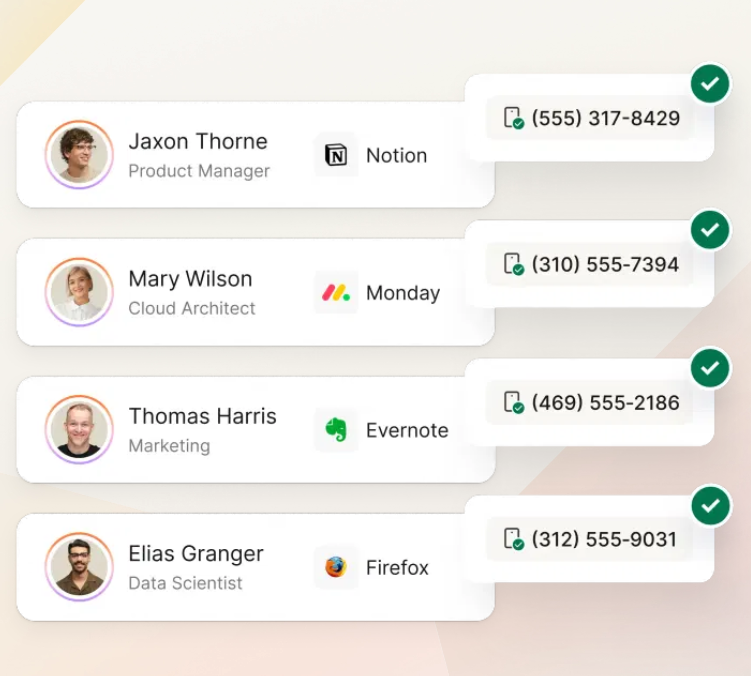
Verify your list. Every dead number is wasted emotional energy you don't get back. Run your call list through Prospeo's mobile finder before dialing - 125M+ verified mobile numbers with a 30% pickup rate, and a free tier to test. When every dial reaches a real person, you preserve your social battery for conversations that matter. (If you're building a process around this, start with direct dial basics.)
Introvert-Friendly Scripts
These aren't scripts you read verbatim. They're structures - a safety net so your brain doesn't freeze when someone picks up. For more options, pull a few frameworks from this B2B cold calling guide.
The Time-Boxed Opener
"Hi [Name], this is [Your Name] from [Company]. I'll be brief - in three minutes, I want to share how we helped [similar company] cut [specific metric] by [result]. Does that sound fair?"
This respects their time, gives you a defined window, and invites a micro-commitment without being pushy. It also gives you a finish line, which is surprisingly calming when you're the one who dreads open-ended phone conversations.
The Discovery-Led Opener
"Hi [Name], I know you're busy, so I'll be brief. I'm calling because [relevant trigger - new funding, job posting, tech change]. How are you currently handling [pain point]?"
You talk for two sentences, then hand the conversation to them. Listening mode - your natural habitat. (If you want better prompts, steal a few from these cold call qualifying questions.)
The Warm Follow-Up
"[Name], this is [Your Name]. [Mutual connection] suggested I reach out - they mentioned you're looking at [problem area]. Do you have 20 minutes Thursday or Friday?"
Two specific time options force a decision rather than a vague "let's connect sometime." If you prefer to confirm by email, use a booking an appointment email template.

Every dead number costs you more than a dial - it costs emotional energy you can't get back. Prospeo's mobile finder gives you 125M+ verified numbers with a 30% pickup rate, so every call in your block reaches a real person. Fewer wasted dials. More real conversations. Exactly how introverts win.
Protect your social battery - start every call block with verified numbers.
Handling Objections Quietly
Use the Acknowledge, Respond, Redirect framework. (If you want more reps-ready language, see this cold call rejection guide.)
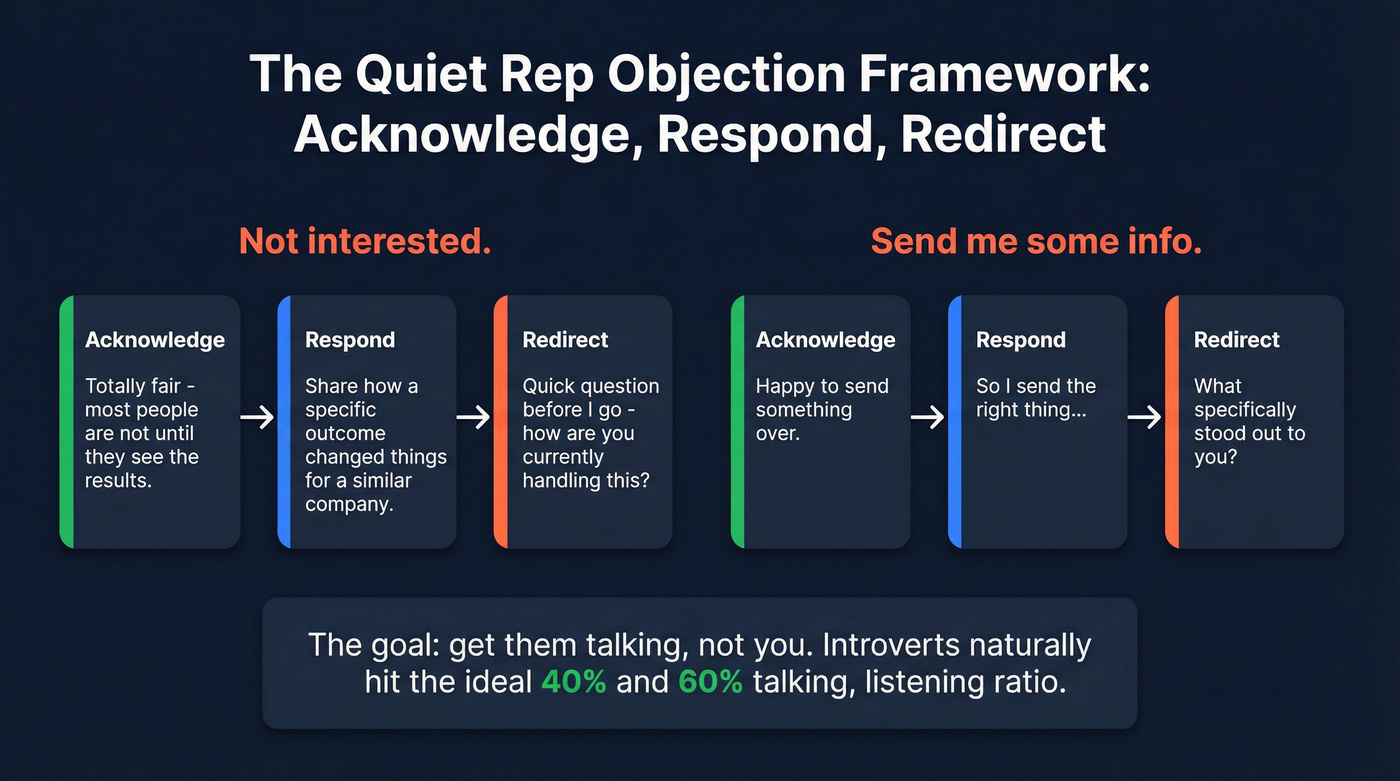
"Not interested."
"Totally fair - most people aren't until they see how [specific outcome] changed things for [similar company]. Quick question before I go: how are you currently handling [pain point]?"
You've acknowledged their position, offered proof, and pivoted to a question. Now they're talking, not you.
"Send me some info."
"Happy to. So I send the right thing - what specifically stood out to you?"
This separates genuine interest from a polite brush-off. Here's the thing: introverts naturally gravitate toward a 40/60 talk-to-listen ratio, which is exactly what top-performing reps aim for. You're already wired for the optimal conversation balance.
Three Mistakes That Drain Introverts
Permission-seeking openers. "Did I catch you at a good time?" feels polite. It's self-sabotage - you're handing the prospect an easy exit before delivering any value. Instead: "I know you're busy, so I'll be brief." (More on this in our cold calling advice breakdown.)
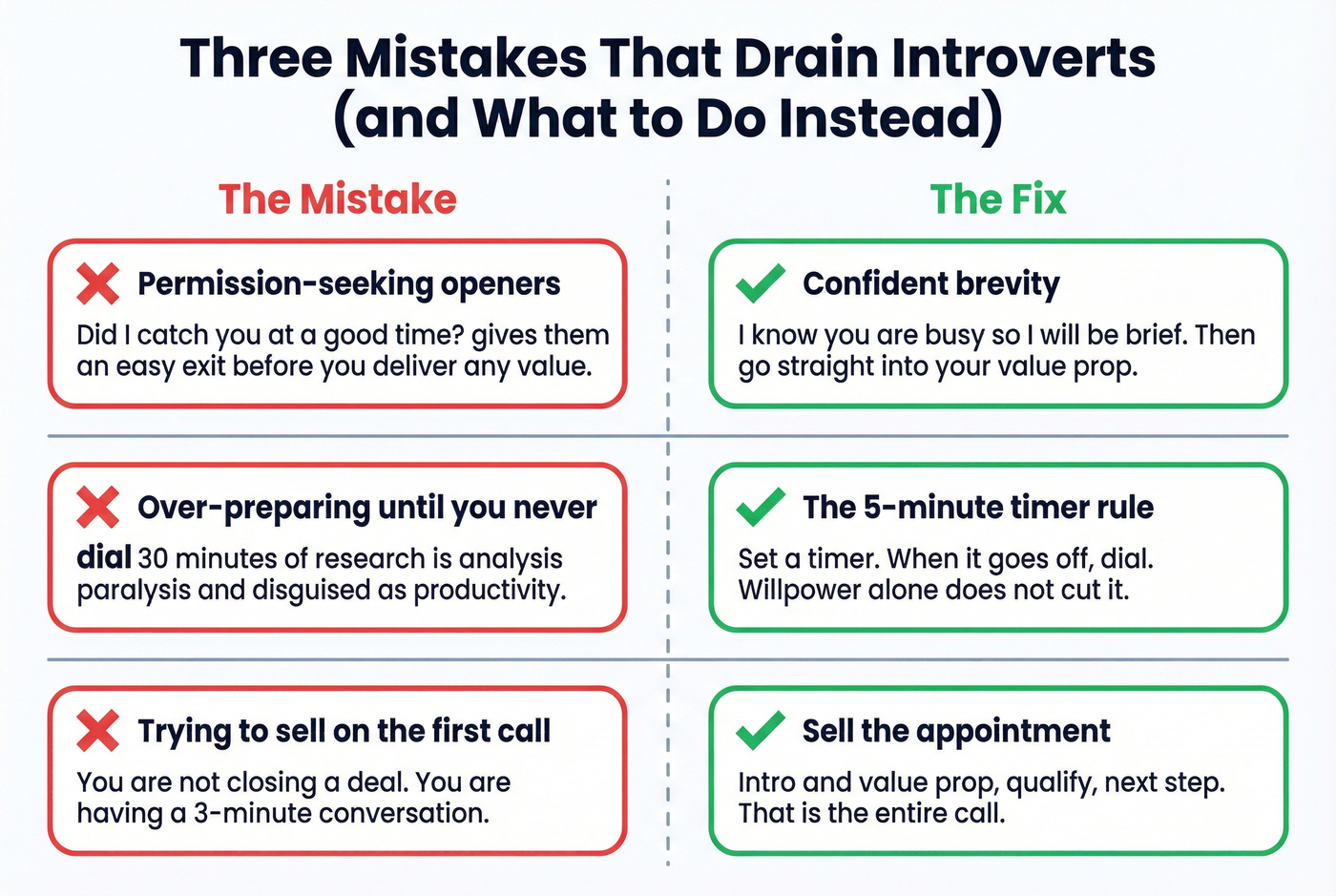
Over-preparing until you never dial. Let's be honest - this is the introvert's most expensive habit. Five minutes of research is preparation. Thirty minutes is analysis paralysis. I've caught myself doing it more times than I'd like to admit. The timer trick from the pre-call section exists because willpower alone doesn't cut it. (Use this pre call research checklist if you need guardrails.)
Trying to sell on the first call. Your goal isn't to close. It's to book a meeting. The 3-minute call structure keeps you focused: intro and value prop, qualify, next step. Sell the appointment, not the software. If you want a cleaner close, borrow a few lines from how to end a sales call.
Your Daily Call Block Structure
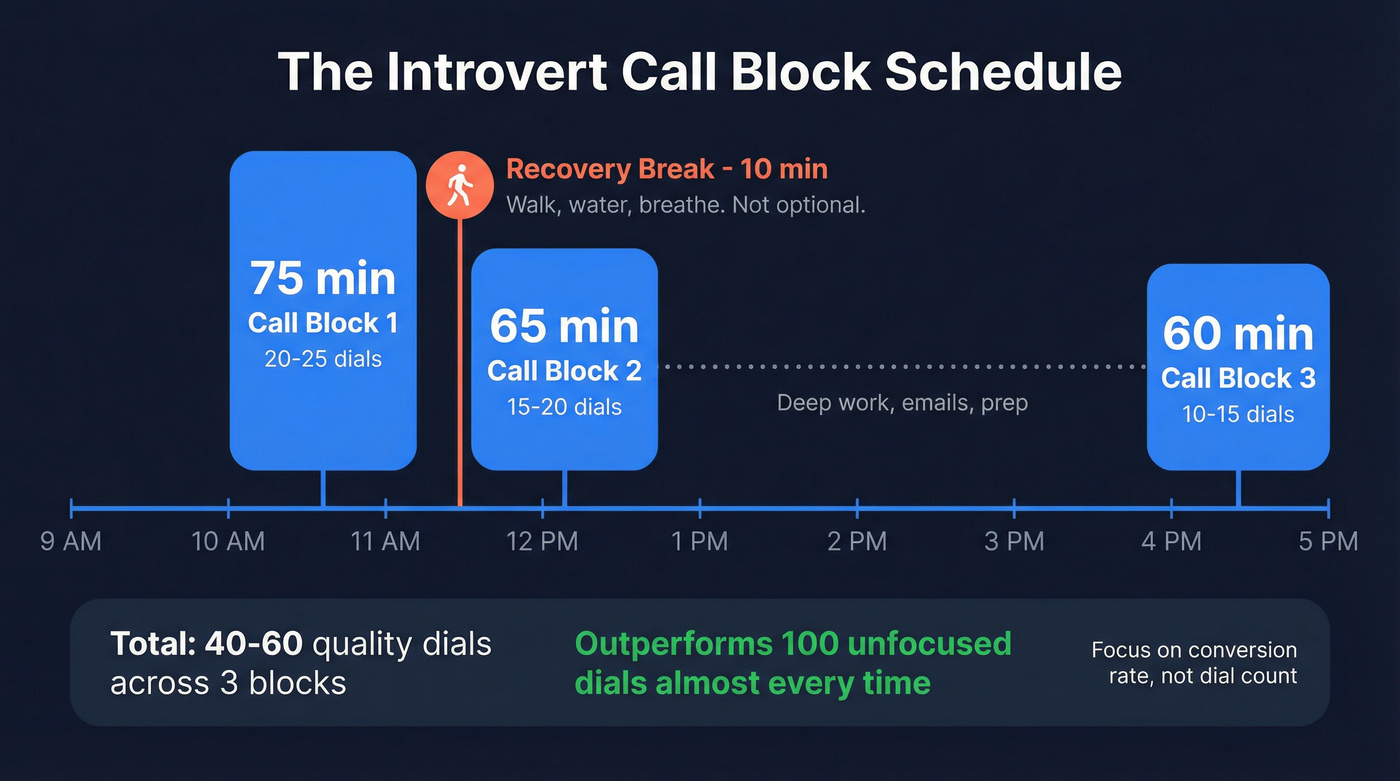
Don't grind through four hours of continuous dialing. That's a system designed for someone else.
| Time | Activity | Duration |
|---|---|---|
| 10:00-11:15 AM | Call Block 1 | 75 min |
| 11:15-11:25 AM | Recovery break | 10 min |
| 11:25 AM-12:30 PM | Call Block 2 | 65 min |
| 4:00-5:00 PM | Call Block 3 | 60 min |
The late-morning and late-afternoon windows tend to show strong connect rates. Recovery breaks aren't optional - walk, drink water, do your breathing. We've found that two to three focused blocks at 40-60 total dials outperform 100 unfocused dials almost every time. (If you need benchmarks, see how many cold calls a day.)
If your manager measures you purely on dial volume, that's a management problem, not a you problem. Conversion rate is the number that actually drives revenue. The consensus on r/sales backs this up - threads about introvert cold calling consistently point to quality-over-quantity as the approach that sticks. (This is also the core argument in cold calling quality vs quantity.)
Introverts outconvert on a per-dial basis when they prepare. Prospeo gives you 30+ search filters to batch prospects by persona, trigger events, and buyer intent - plus 98% accurate contact data so your five-minute research rule actually pays off. Build tighter lists, dial with confidence, book more meetings in fewer calls.
Fewer dials, better conversations, more meetings booked.
FAQ
Can introverts succeed at cold calling?
Yes. A meta-analysis of roughly 4,000 salespeople found zero correlation between extraversion and sales performance. Introverts' natural listening skills and thorough preparation often produce higher conversion rates than high-volume dialers.
How many cold calls should an introvert make per day?
Aim for 40-60 quality dials across 2-3 structured blocks with 10-minute recovery breaks between each. Conversion rate matters more than dial count - focused sessions consistently outperform marathon dialing.
How do I reduce phone anxiety before calls?
Verify your data so you're not burning energy on dead numbers, use 4-2-6 breathing before each block, and batch similar prospects together. Confirming mobile numbers are live before you dial removes the dread of reaching disconnected lines and keeps your momentum intact.
What's the best talk-to-listen ratio for cold calls?
Top-performing reps aim for 40% talking, 60% listening. Introverts hit this ratio naturally - it's one of the reasons quiet reps often outconvert extroverted peers on a per-dial basis.
Should I skip cold calling entirely and just email?
Don't write off the phone. Cold calls still convert at roughly 2x the rate of cold emails for booking meetings. The trick isn't avoiding calls - it's structuring them so they work with your energy instead of against it.