How to End a Sales Call So the Deal Actually Moves Forward
You've had a great conversation. The prospect seemed engaged, asked smart questions, even laughed at your joke about their legacy CRM. Then they said "this is really interesting - send me some more info" and you never heard from them again. 40-60% of "lost" deals end exactly this way - not as a "no," but as a slow fade into no-decision. That's how most reps learn the hard way that knowing how to end a sales call matters more than any pitch deck or demo script you'll ever build.
Stop relying on closing phrases. Set an upfront contract at the start of every call, recognize buyer signals instead of your own pitch momentum, and co-create the next step live. The framework below, backed by Gong's analysis of 1M+ sales calls, replaces the 30-phrase listicles that don't actually work.
Why Most Calls End Badly
No clear outcome gets agreed before the call starts, so both sides drift toward a polite, noncommittal ending. Reps mistake interest for intent - a prospect asking good questions doesn't mean they're ready to move forward. And reps fear being "too salesy" when asking for next steps, so they default to "I'll follow up" and hope for the best.
We've all been there. The data backs it up: 80% of successful sales require 5-12 follow-ups, yet 44% of reps quit after one touch. Average B2B win rates hover around 20%. When deals are lost, the majority end as no-decision - not a hard "no." That gap between "interested" and "committed" is where revenue goes to die.
What Gong's Data Actually Shows
Here's the thing most sales content gets wrong: your closing technique barely matters. Gong analyzed over 1 million sales call recordings, including 42,945 closing calls. Successful and unsuccessful closing calls look nearly identical when you measure rep behavior - talk/listen ratio, questions asked, speaker switches.
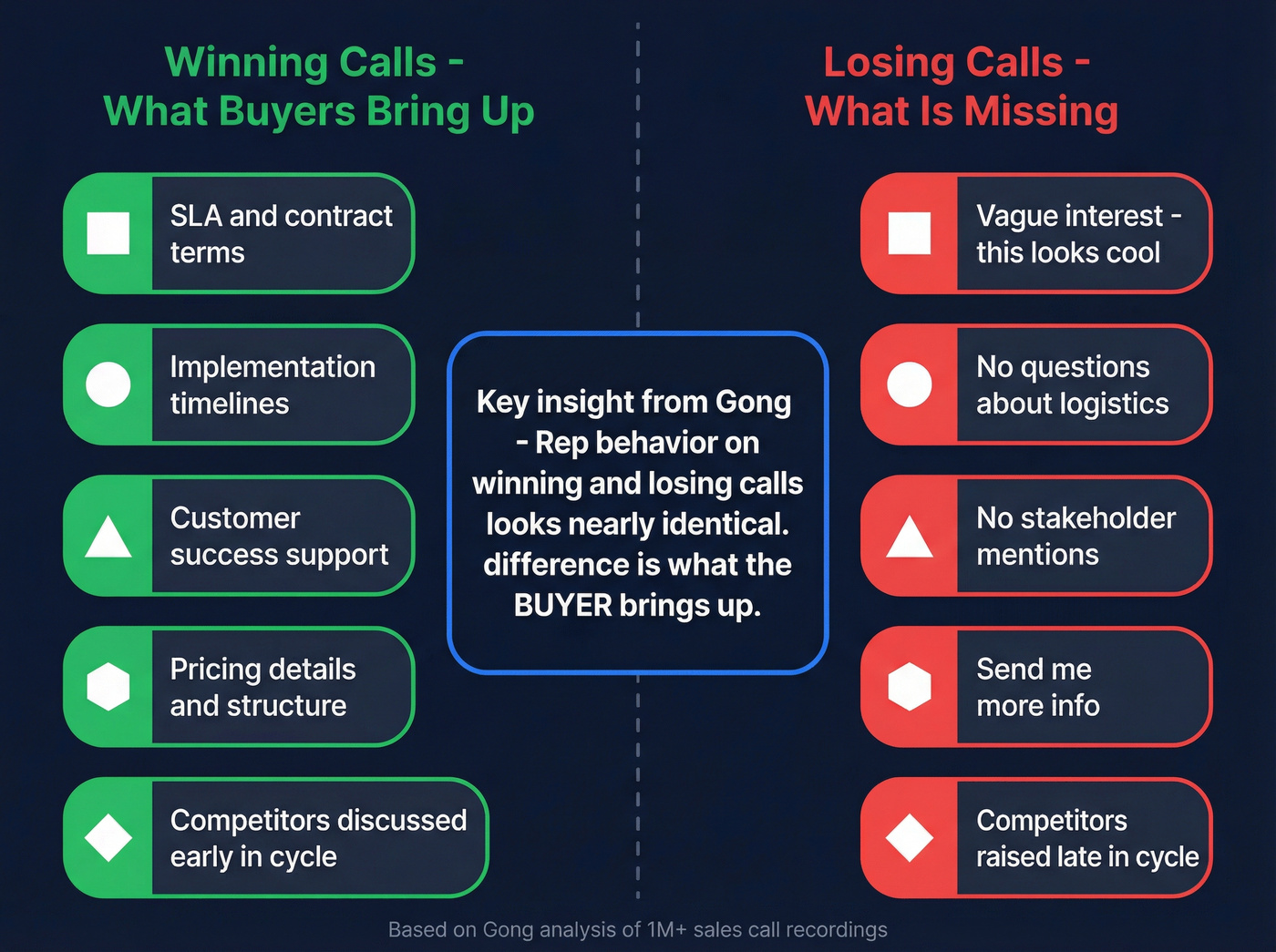
The difference is what the buyer brings up.
On winning calls, prospects raise what Gong calls "pre-purchase jitter" topics: SLAs, implementation timelines, customer success support, pricing details, agreement terms. These signal a buyer who's mentally moving forward and seeking reassurance. Your job at that point isn't to keep selling - it's to answer directly and stop pitching. Gong also found that discussing competitors early in the sales cycle increases win likelihood, while bringing them up late correlates with losing. In our experience testing this with outbound teams, the reps who internalize these signals close far more consistently than the ones memorizing scripts.
How to End a Sales Call in 5 Steps
1. Set the Upfront Contract
The ending of your call is decided in the first two minutes. This is straight from the Sandler playbook: "At the end, we can decide together if it makes sense to keep going - or part ways. Either is totally fine."
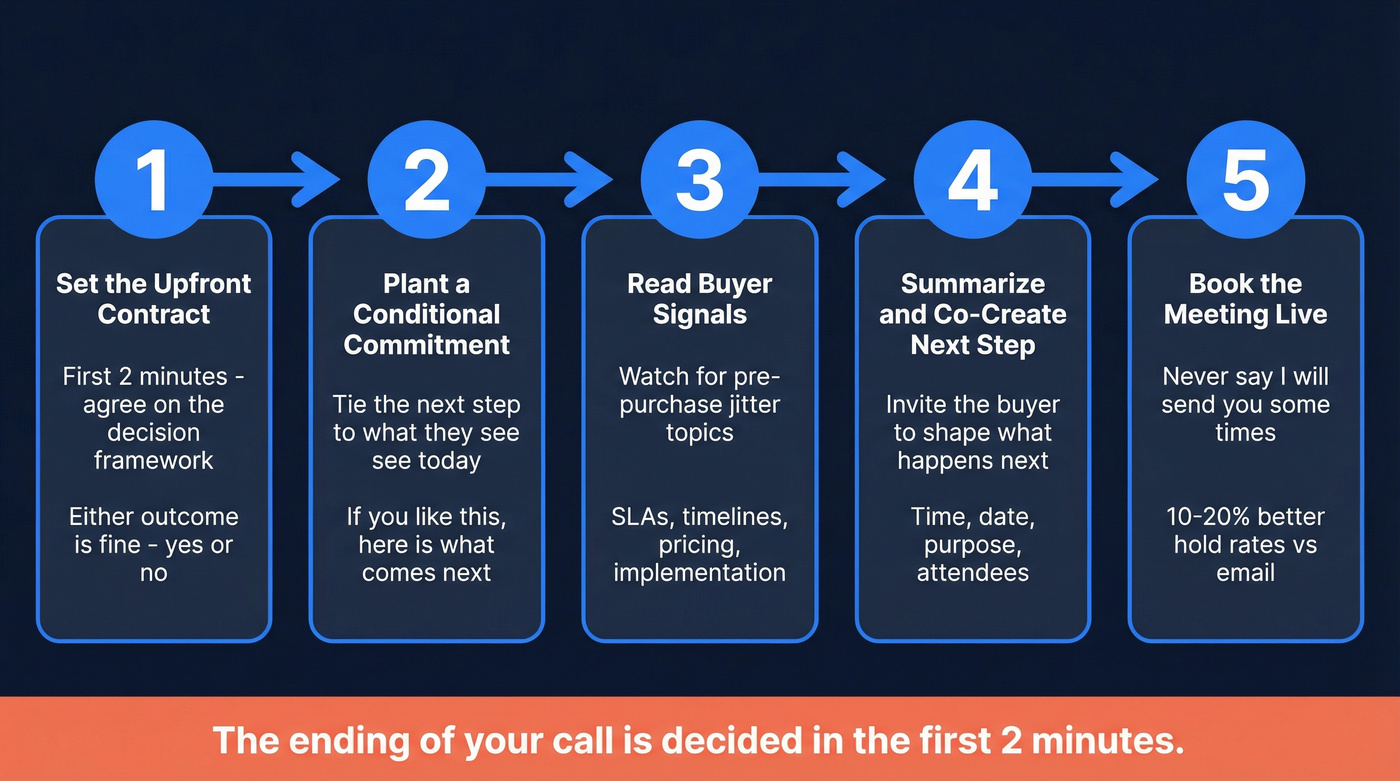
That single sentence eliminates the awkward "so... what do you think?" moment because both parties already agreed on the decision framework. It also gives the prospect permission to say no, which paradoxically makes them more likely to say yes. One tactical note: prospects are 30% more likely to show up for calls booked at 4 PM versus 8 AM, so schedule accordingly.
2. Plant a Conditional Commitment Early
After setting the agenda, plant a conditional next step: "If you like what you see today, we can schedule a deeper dive with your team - or start discussing pricing direction."
This makes the wrap-up feel like completing a story you opened, not an awkward pivot to "the ask." Self-check after every call: Did the buyer co-create the next step, or just agree to it? There's a massive difference between those two things.
3. Read Buyer Signals Correctly
| ✅ Do | ❌ Don't |
|---|---|
| Answer implementation/SLA questions directly | Launch into another feature demo |
| Reassure on pricing and timeline concerns | Pitch harder when you sense hesitation |
| Move to the next step once signals appear | Wait for the "perfect" moment to ask |
When your prospect asks about implementation timelines or customer success resources, they're telling you they're close. Respond to what they're actually asking. Don't treat it as an opening to cram in three more features.
4. Summarize and Co-Create the Next Step
Don't just propose a next step - invite the buyer to shape it. "Based on what we covered, what would be most useful next?" Then lock it down with specifics: time, date, purpose, who needs to be there. Send a written recap within an hour.
Let's be honest - most reps skip the recap because it feels like busywork. It's not. That email is your insurance policy against the "I don't remember agreeing to that" conversation two weeks later.
5. Book the Meeting Live
Never say "I'll send you some times." Booking the next meeting on the call improves hold rates by 10-20% versus email-only scheduling. The average buying journey runs about 211 days with 31 touchpoints - every locked calendar invite compounds. Pull up the calendar while you're still talking. Make it frictionless.

A perfect call close means nothing if you never reach the buyer. Prospeo gives you 125M+ verified mobile numbers with a 30% pickup rate - so your upfront contracts and co-created next steps land with actual decision-makers, not gatekeepers.
Stop perfecting your close on people who can't sign the deal.
Scripts by Call Type
| Call Type | Goal | Script |
|---|---|---|
| Cold call | Earn the next conversation | "A 20-min deep dive on [pain] - does Thursday at 2 work?" |
| Discovery | Confirm problem + lock next step | "If we solve [problem] in the demo, should we bring [stakeholder]?" |
| Demo | Feature to decision | "Which of these 3 would most impact [goal]? Let's get [DM] on a call." |
| Closing | Direct ask + fallback | "Ready to move forward? If something's holding you back, let's discuss now." |
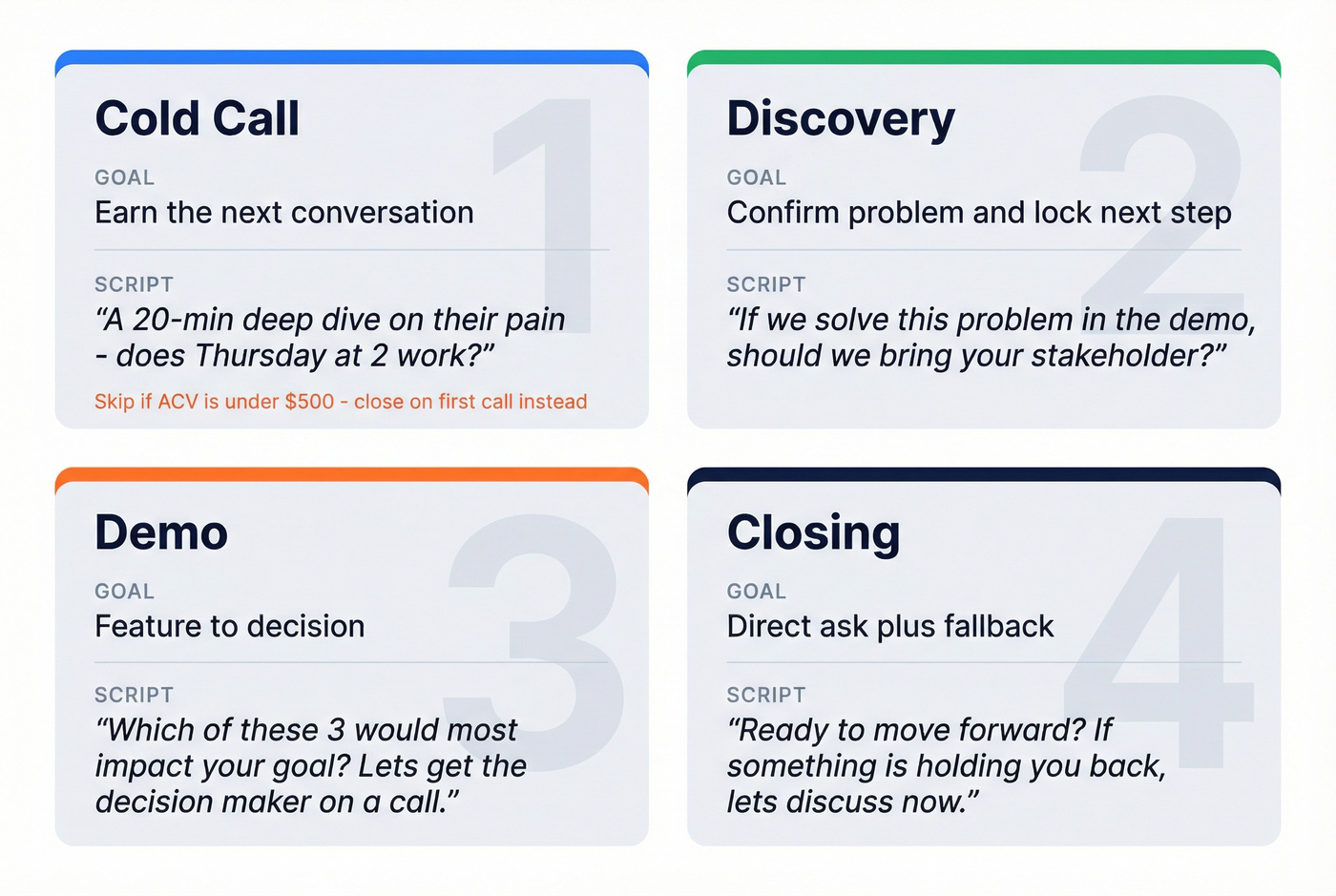
Skip the cold call script if you're selling a product under $500 ACV - at that price point, you should be closing on the first call, not booking a second one.
What NOT to Say
Assumptive closes backfire when mistimed. HubSpot's research shows that jumping to "Send me your financial info and I'll get the paperwork ready" before the buyer is there creates skepticism, not momentum. Psychologically, buyers resist when they feel their autonomy is threatened - pressure triggers reactance, not action.
Bryan Vasquez at LinkBuilder.io replaced urgency-based CTAs with data-backed proposals and tailored value maps, resulting in a 20% win-rate increase over two quarters. Specificity beats pressure every time.
And "just checking in" as a follow-up? Dead phrase. Replace it with something that references a specific conversation point or delivers new value. "Saw [competitor] just raised their prices - here's how that changes the ROI calc we discussed" beats "circling back" every single time.
Hot take: If your average deal size is under $10k, you don't need a 12-step closing framework. You need a clear upfront contract and the discipline to book the next meeting before you hang up. That's it.
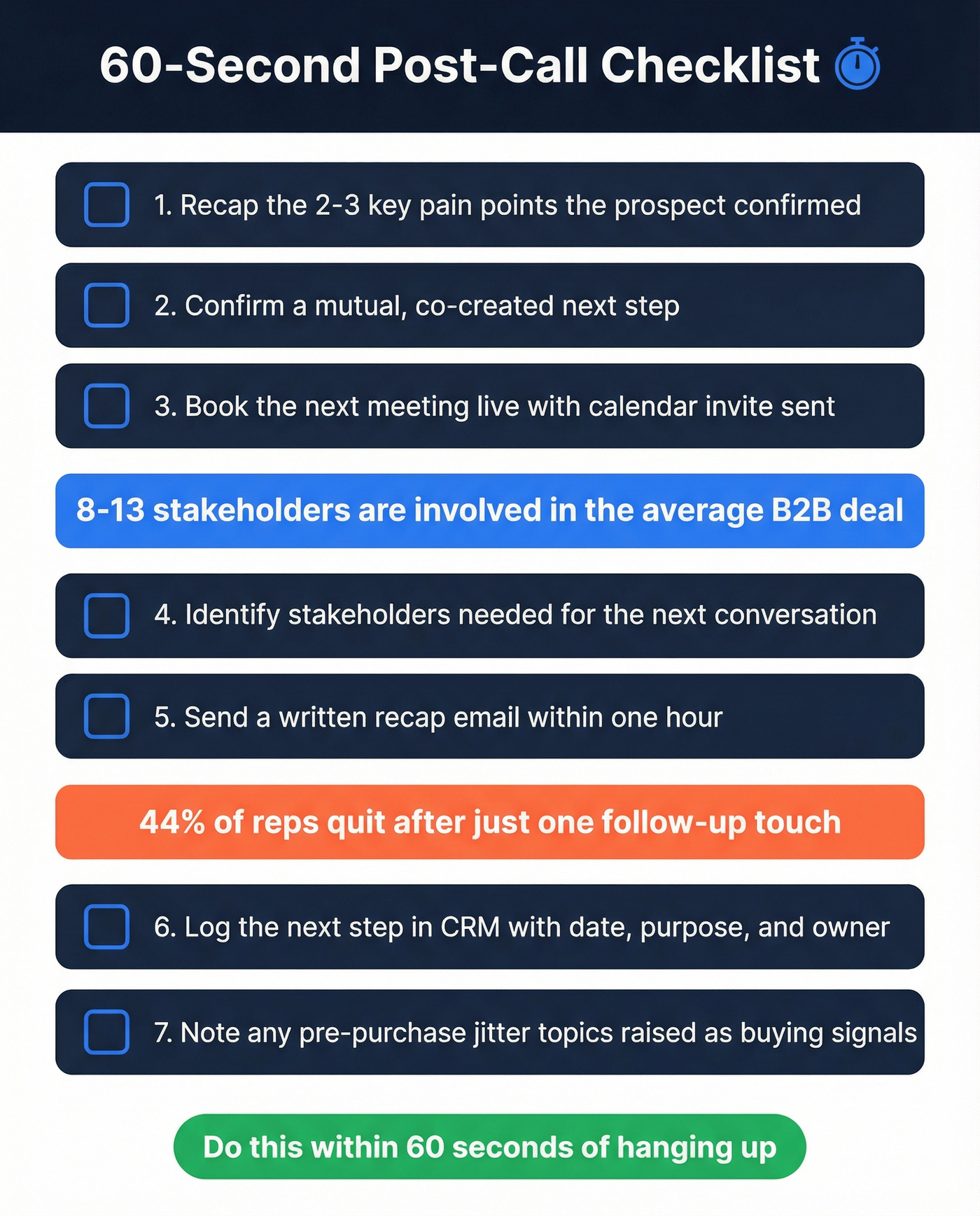
The 60-Second Post-Call Checklist
- ☐ Recap the 2-3 key pain points the prospect confirmed
- ☐ Confirm a mutual, co-created next step
- ☐ Book the next meeting live with calendar invite sent
- ☐ Identify stakeholders needed for the next conversation - tools like Prospeo can surface verified emails and direct dials across the buying committee
- ☐ Send a written recap email within one hour
- ☐ Log the next step in CRM with date, purpose, and owner
- ☐ Note any "pre-purchase jitter" topics raised - these are buying signals for next time
One thing we've seen trip up even experienced reps: they nail the call ending but then multi-thread into the wrong stakeholders. B2B deals typically involve 8-13 stakeholders, and reaching the right ones fast is what separates a stalled deal from a closed one.
You just learned that the average buying journey takes 211 days and 31 touchpoints. Every touchpoint needs accurate contact data. Prospeo's 98% email accuracy and 7-day data refresh means your follow-up recaps and calendar invites actually reach the prospect - not a dead inbox.
Book the next meeting with contacts that don't bounce.
FAQ
How do you end a sales call when the prospect says "just send me more info"?
Treat it as a soft objection. Respond: "Happy to - what specifically would help? Let's book 15 minutes next week to walk through it together." This converts a brush-off into a committed meeting with a clear agenda. If they push back on even that, you've got a disqualification signal, not a pipeline opportunity.
Should you try to close on the first sales call?
Rarely in B2B. The average buying journey takes 211 days and 31 touchpoints. Your goal on any single call is earning the next conversation with a locked calendar invite - not a signature. The exception is low-ACV products where a single call is the entire sales cycle.
How do you follow up after a call with multiple stakeholders?
Send a recap within an hour, then multi-thread into the buying committee. B2B deals typically involve 8-13 stakeholders, so your follow-up needs to actually reach the right people. That means having verified contact data for decision-makers beyond your initial champion.
What's the single biggest mistake reps make when ending calls?
Leaving without a specific, calendar-booked next step. Vague commitments like "let's circle back next week" have a near-zero conversion rate. Always lock a date, time, purpose, and attendee list before you hang up.