

The Now-or-Never Close: Using Urgency Without Destroying Trust
A lot of reps reach for the now-or-never close at the wrong moment - when they need the deal more than the buyer does. This technique works best when the constraint is genuine and the buyer is already close to yes. In most other scenarios, you're better off with a takeaway close or a mutual action plan.
What This Urgency Close Actually Is
The now-or-never close creates urgency through a time-sensitive offer or constraint that motivates the buyer to act immediately. "Our pricing resets April 1 - locking in now saves you 20% for the full contract." You're tapping into loss aversion, the fear of missing out on something concrete, to move a ready buyer past final hesitation.
A 2026 study surveying 400 online buyers found that urgency and scarcity produce stronger purchase-intent effects than personalization strategies. But SQL-to-close rates vary wildly. HVAC closes at 29% because a broken furnace is real urgency. B2B SaaS sits at 12%. The more inherent urgency exists in the buying situation, the less you need to manufacture it.
Scripts and Steps That Keep It Ethical
Five steps keep this close effective without torching trust:
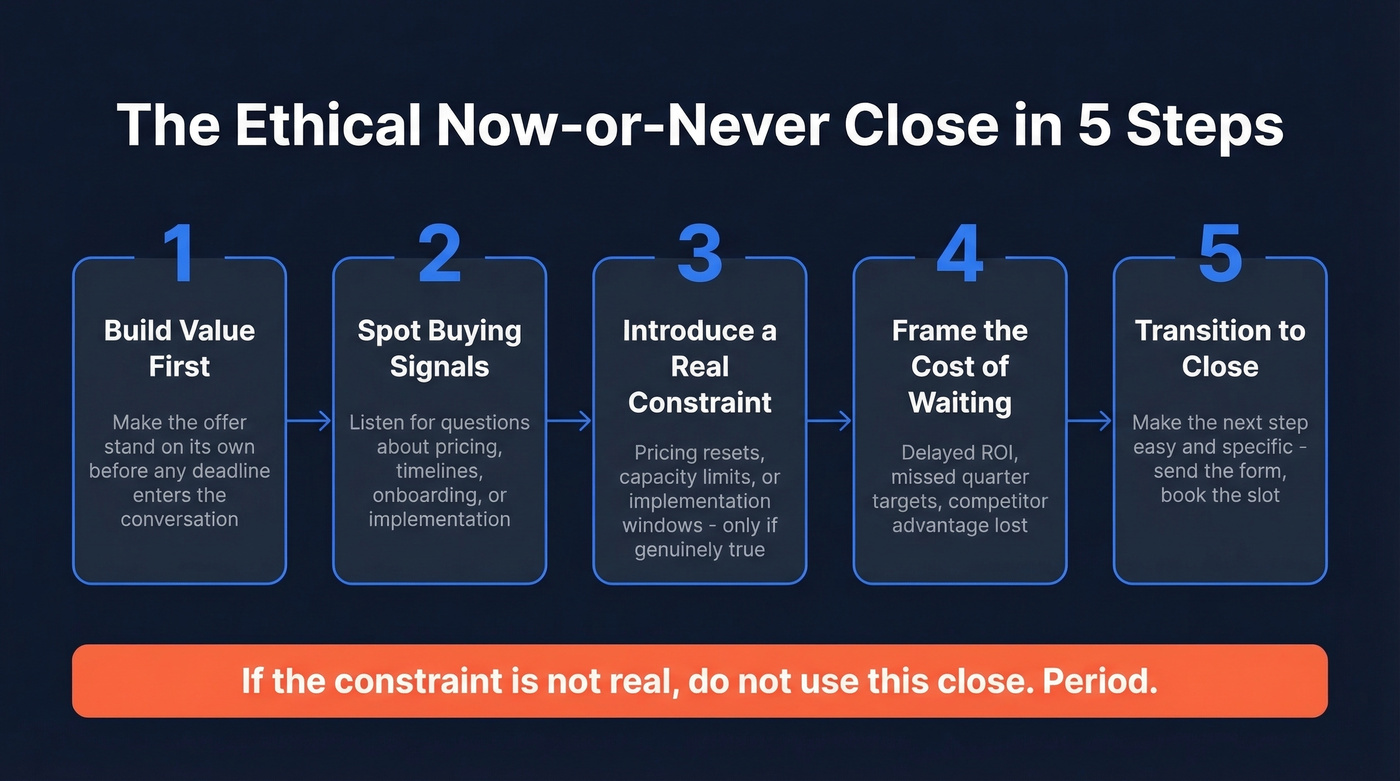
- Build value first. Never lead with urgency. The offer should stand on its own merits before you introduce a deadline (here’s a deeper guide on how to add value in sales).
- Spot buying signals. Questions about implementation timelines, pricing, or onboarding mean they're close (use a simple rubric for identifying buying signals). As Ziglar framed it, the best urgency is the buyer's own.
- Introduce a genuine constraint. Pricing changes, capacity limits, implementation windows. If it isn't real, don't say it. In relationship-based cultures, soften the framing - lead with priority access or preferred onboarding rather than hard deadlines.
- Emphasize what they lose by waiting. Frame the cost of inaction in their terms: delayed ROI, missed quarter, competitor advantage.
- Transition to close. Make the next step easy and specific (if you want a broader framework, follow these steps to close a sale).
B2B SaaS script:
"We've got pricing locked through March. After that, the new tier kicks in - roughly $4,800 more annually for your team size. Want me to send the order form today so you're grandfathered in?"
Services script:
"We've got two implementation slots for Q2. Confirm by Friday and your team is live before your board meeting in June. Should I pencil you in?"

Real urgency starts with reaching real decision-makers. Prospeo's 300M+ profiles refresh every 7 days, so your closing conversations happen with buyers who are actually reachable - not bounced inboxes that waste your best scripts.
Stop perfecting your close on contacts that don't exist.
When It Works vs. When It Backfires
Use it when the deadline is genuinely real, the buyer has expressed clear intent and is stalling on logistics (not fit), and you're in a transactional or mid-complexity sale with a single decision-maker. Time-bound offers often lift short-term conversion by around 5-20% depending on baseline intent and trust.
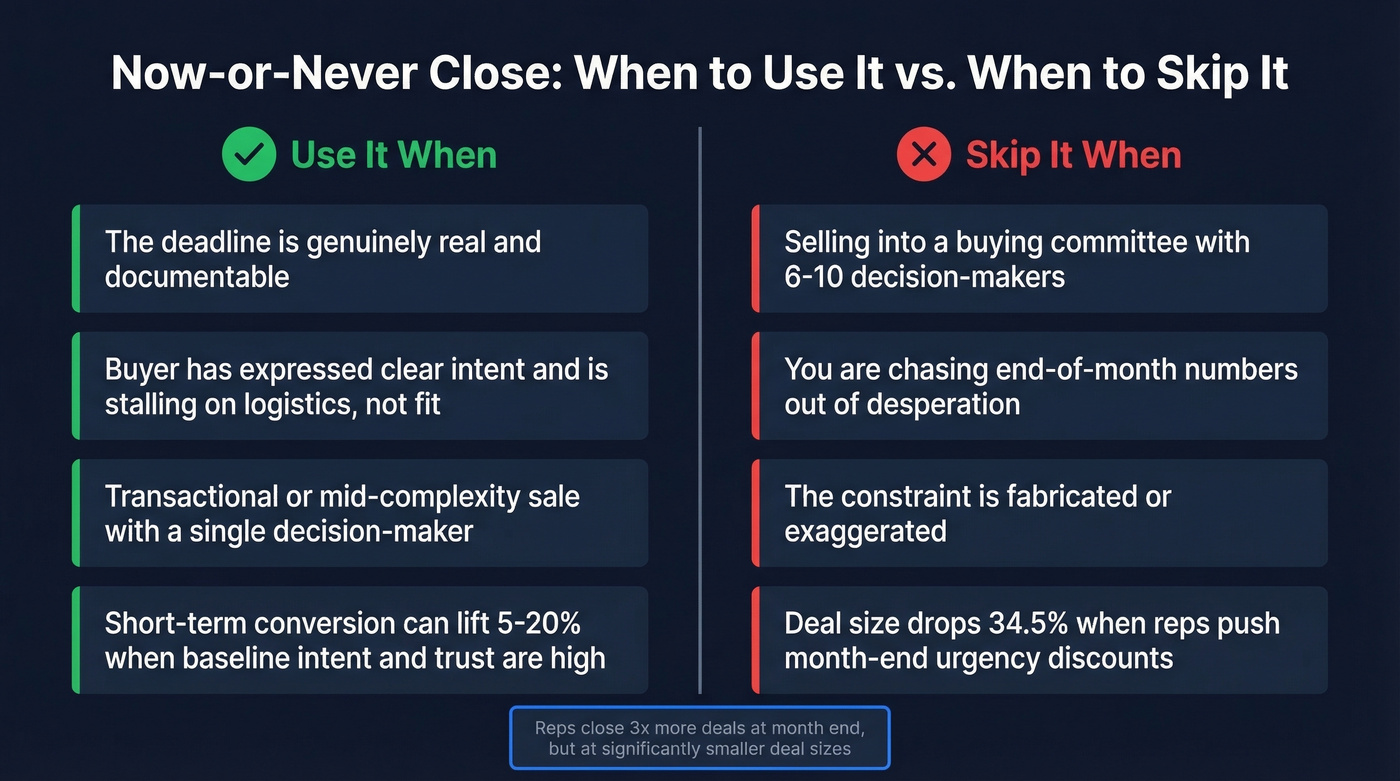
Skip it when you're selling into a buying committee. B2B deals average 6-10 decision-makers, so one urgency play aimed at a champion won't close a deal that needs procurement and legal sign-off. Also skip it when you're chasing end-of-month numbers. Reps close 3x as many deals at month's end, but deal size drops 34.5%. You're closing smaller deals and training buyers to wait for desperation discounts.
Here's the thing most reps won't admit: the pressure to use these tactics is real. You watch peers cut corners and seemingly earn more, and it's tempting to follow. But fake deadlines backfire fast in serious deals, especially when the buyer's timeline is driven by approvals you can't rush (this is where ethics in sales stops being theoretical).
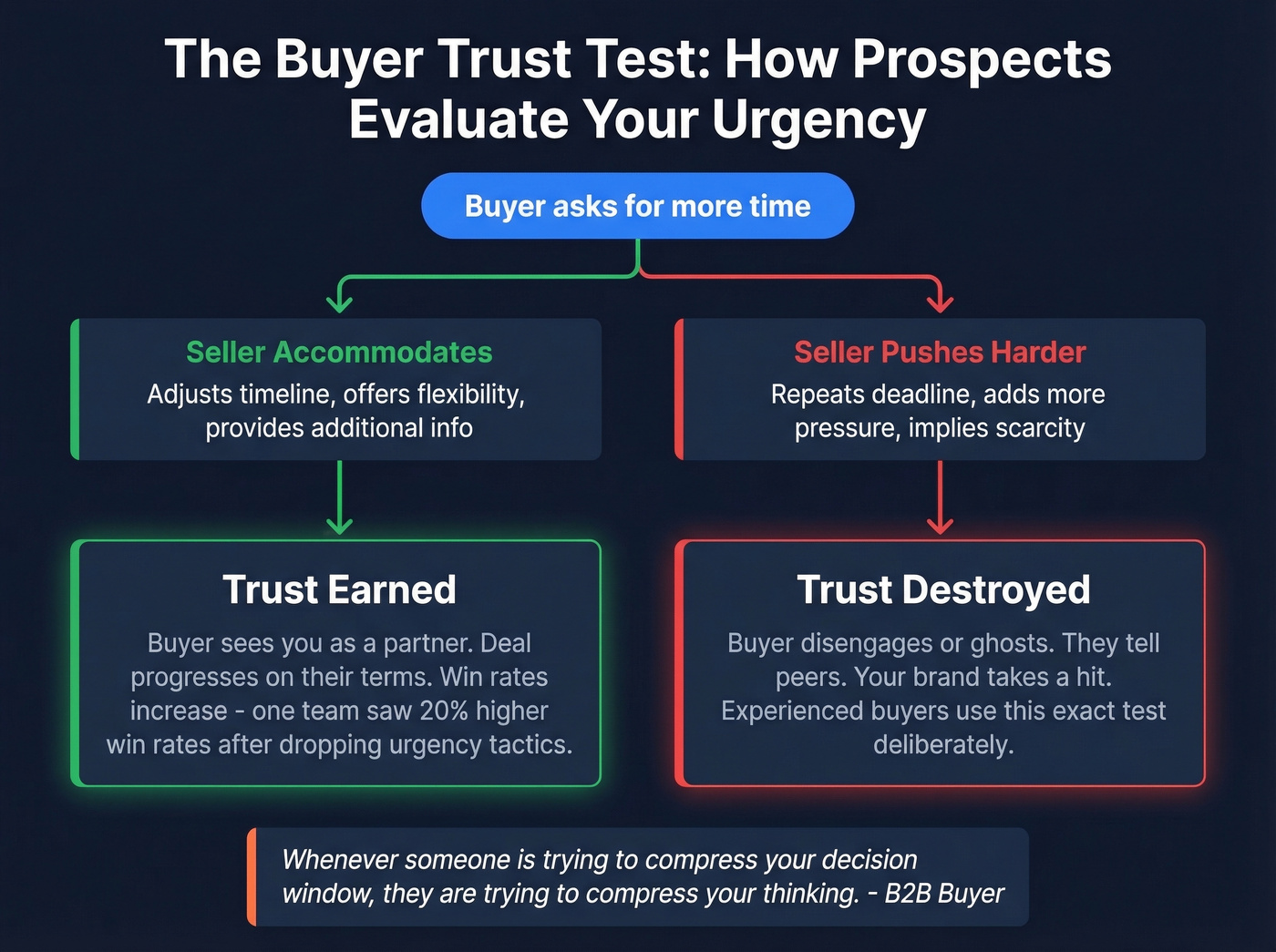
Bryan Vasquez, Head of Sales at LinkBuilder.io, replaced urgency-based CTAs with data-backed proposals and saw a 20% win-rate increase over two quarters. That isn't marginal. That's a signal that manufactured pressure actively costs you deals.
How Buyers Actually React
"Whenever someone's trying to compress your decision window, they're trying to compress your thinking." That line, from a buyer on r/DarkPsychology101, captures how experienced buyers react to manufactured urgency. They've been burned, and they've learned a simple test: ask for time and watch the reaction. Sellers who accommodate are trustworthy. Sellers who push harder are telling on themselves.
The extreme version? One rep on r/sales admitted to inflating quotes by a couple thousand dollars, then "discounting" back with a fake deadline - locking in a 25% deposit on a $14,200 device the buyer thought was $15k. The actual price was $12,500. That's not closing. That's fraud with extra steps.
Look - we've seen this play out dozens of times in our own outbound work. If your deal size is under $15k and your sales cycle is under 30 days, the now-or-never close usually isn't the tool to reach for first. You don't have enough deal value to absorb the trust damage when it misfires. Use it for bigger deals with real procurement deadlines, or don't use it at all.
Alternatives That Still Create Urgency
The takeaway close - "honestly, I'm not sure we're the best fit" - triggers FOMO without pressure. Reps use it because it increases closes while keeping the tone low-stakes.
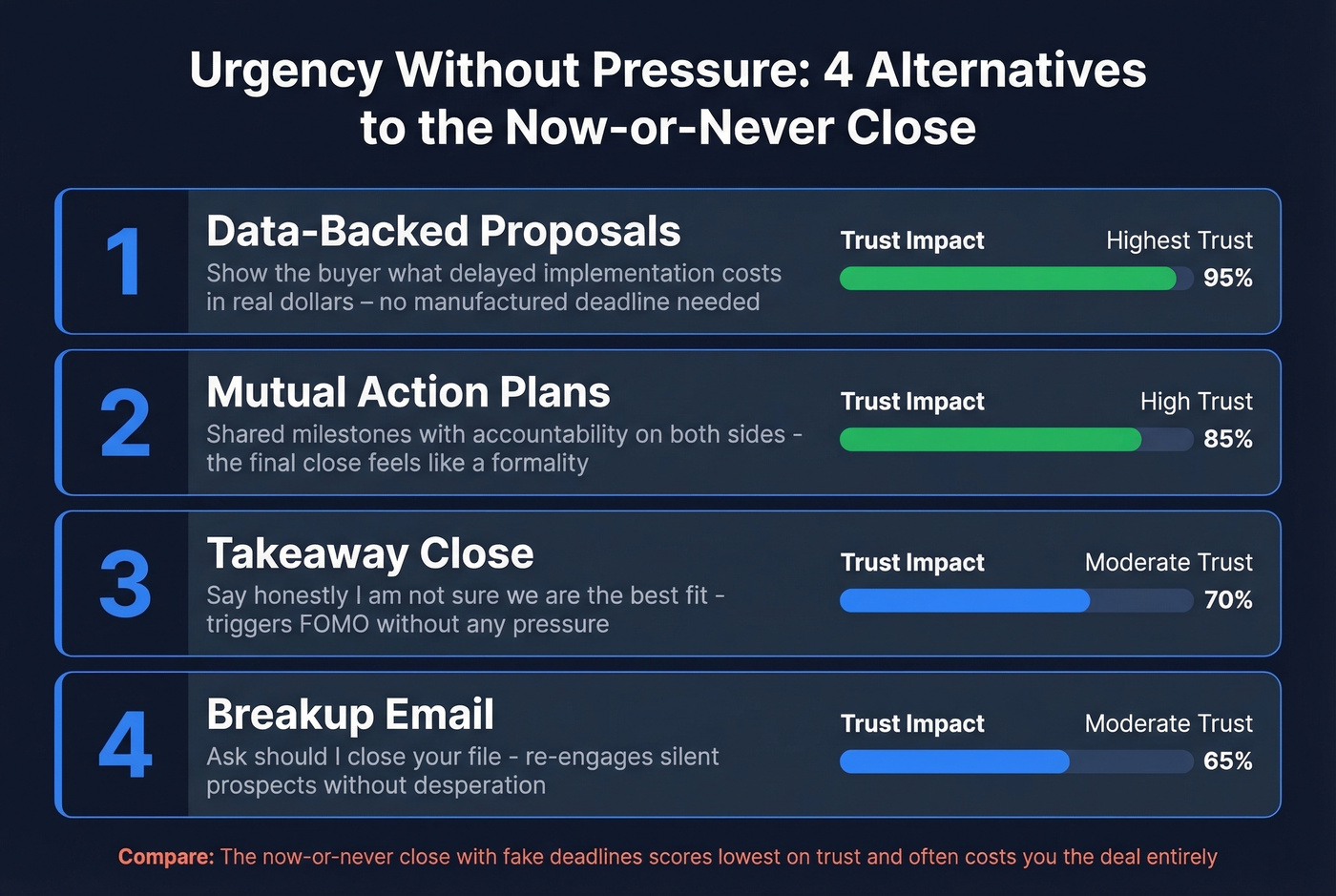
The better approach in complex B2B: build a series of small commitments throughout the cycle so the final close feels like a formality, not a pressure play. Mutual action plans with shared milestones create accountability on both sides. If a prospect goes silent, a breakup email - "Should I close your file?" - often re-engages without pressure (use these sales follow-up templates to keep it clean). And data-backed proposals beat manufactured deadlines every time: show the buyer what delayed implementation costs in real dollars.
Of course, none of these closing techniques matter much if your pipeline is full of bad data. We've watched teams burn hours crafting the perfect close only to discover half their contacts had bounced (track and fix email bounce rate before it wrecks your deliverability). Prospeo verifies emails in real time with 98% accuracy and refreshes data every 7 days, so your closing conversations actually happen with real decision-makers instead of dead inboxes.
You don't need manufactured deadlines when your pipeline is full of verified, in-market buyers. Prospeo surfaces intent data across 15,000 topics so you close on the buyer's urgency - not yours. 98% email accuracy, $0.01 per lead.
Let buyer intent create the urgency for you.
FAQ
Is the now-or-never close manipulative?
Only when the urgency is fabricated. If the deadline, pricing change, or capacity limit is real, you're helping the buyer make a timely decision - not tricking them. The ethical line: can you document the constraint? If yes, you're fine.
Does this close work in B2B sales?
Rarely on its own. B2B deals involve 6-10 decision-makers on average, so a single urgency play aimed at one champion won't move procurement and legal. Pair it with mutual action plans and multi-threaded engagement instead.
How do I create urgency without lying?
Use real constraints: quarterly pricing resets, implementation capacity, or upcoming product changes. Intent data tools can surface when a prospect is actively researching your category - that's genuine, buyer-driven urgency you can reference without manufacturing anything.