

Oracle NetSuite vs Salesforce: Which One Do You Actually Need?
You're comparing an ERP with a CRM bolted on to a pure CRM that dominates its category. That's the core tension here, and it changes everything about how you evaluate them. Salesforce owns 20.7% of the global CRM market - #1 for the 12th straight year per IDC. NetSuite isn't trying to compete on that axis. It's an enterprise resource planning platform that happens to include CRM as a module.
Most teams we talk to don't realize this until they're already deep into a vendor evaluation. Let's save you that confusion upfront.
30-Second Verdict
Need CRM only? Salesforce. Not close. Starter Suite at $25/user/month gets you running fast.
Need unified finance + sales + inventory? NetSuite. The CRM is a bonus inside a platform that handles your entire back office.
Under 50 people and just need verified contacts to prospect? A free CRM tier paired with clean data from Prospeo covers most early-stage teams without a five-figure platform spend.
Quick Feature Comparison
| Salesforce | NetSuite | |
|---|---|---|
| G2 Rating | 4.4/5 (25,480 reviews) | 4.1/5 (4,581 reviews) |
| Gartner Peers | 4.4/5 (1,927 ratings) | 4.3/5 (182 ratings) |
| Starting Price | $25/user/mo (Starter) | ~$1,000/mo base |
| Ease of Setup | 7.8/10 | 6.5/10 |
| Best For | CRM, sales ops, marketing | ERP + CRM + finance |
| Go-Live Timeline | 4-12 weeks | 3-9 months |
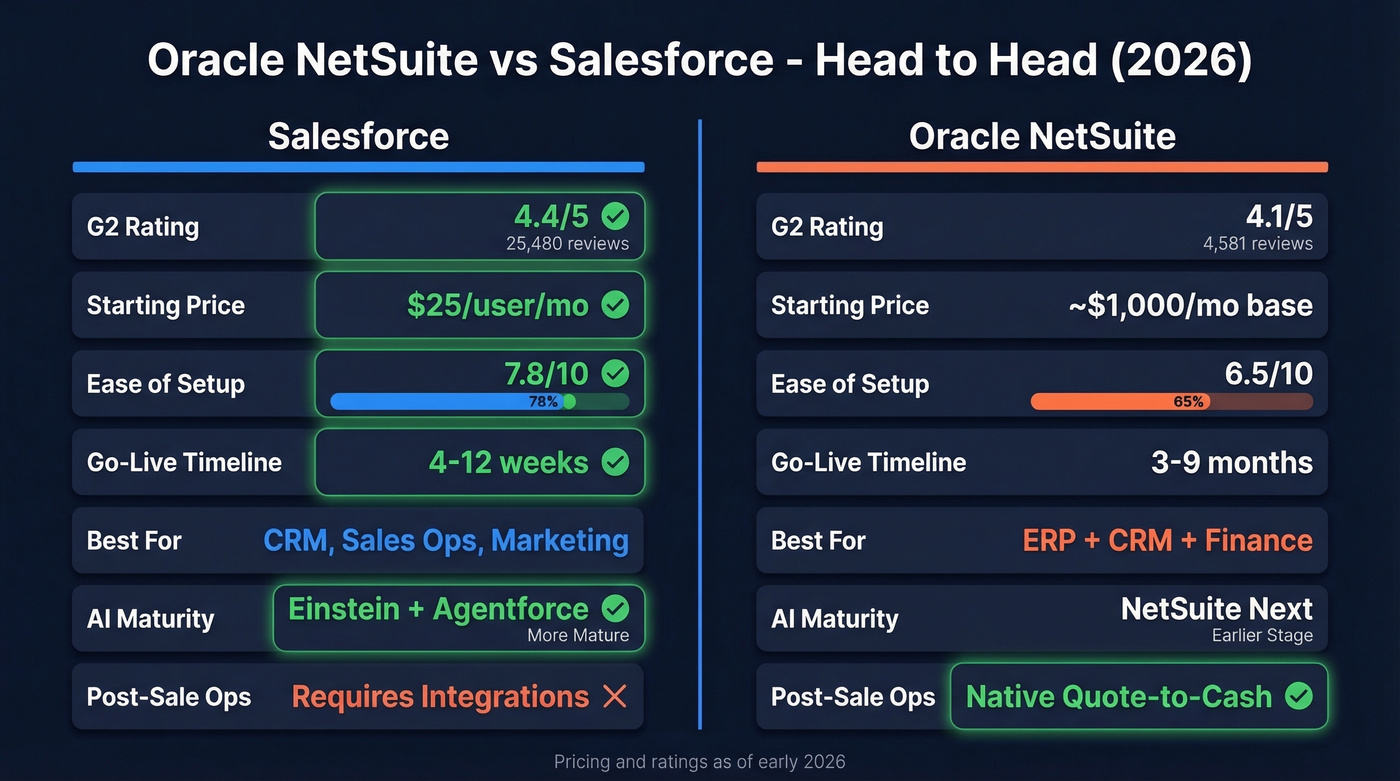
Salesforce wins on ease of setup, ease of use, support quality, and sheer review volume. NetSuite's strength shows up once you need financials, inventory, and order management under one roof.
What You'll Actually Pay
Salesforce Pricing
Salesforce lists three tiers that matter right now:
- Free Suite: $0/user/month with 2 user licenses. CRM basics with built-in AI.
- Starter Suite: $25/user/month.
- Pro Suite: $100/user/month, billed annually, contract required.
Premier Support adds 30% of net license fees. A 10-person team on Pro Suite runs about $12,000/year in licenses before add-ons - which is where costs start creeping.
NetSuite Pricing
NetSuite doesn't publish pricing, which is frustrating. Here's what we've seen in practice:
- Starter Edition: ~$1,000/month base
- Mid-Market: ~$2,500/month base
- Enterprise: ~$5,000/month base
Full user licenses run $129/user/month (up from $99 recently). Advanced modules cost $499-$899/month each. Service tiers scale from 100 users up to 4,000 users, with storage and transaction limits scaling accordingly. Annual contracts are required.
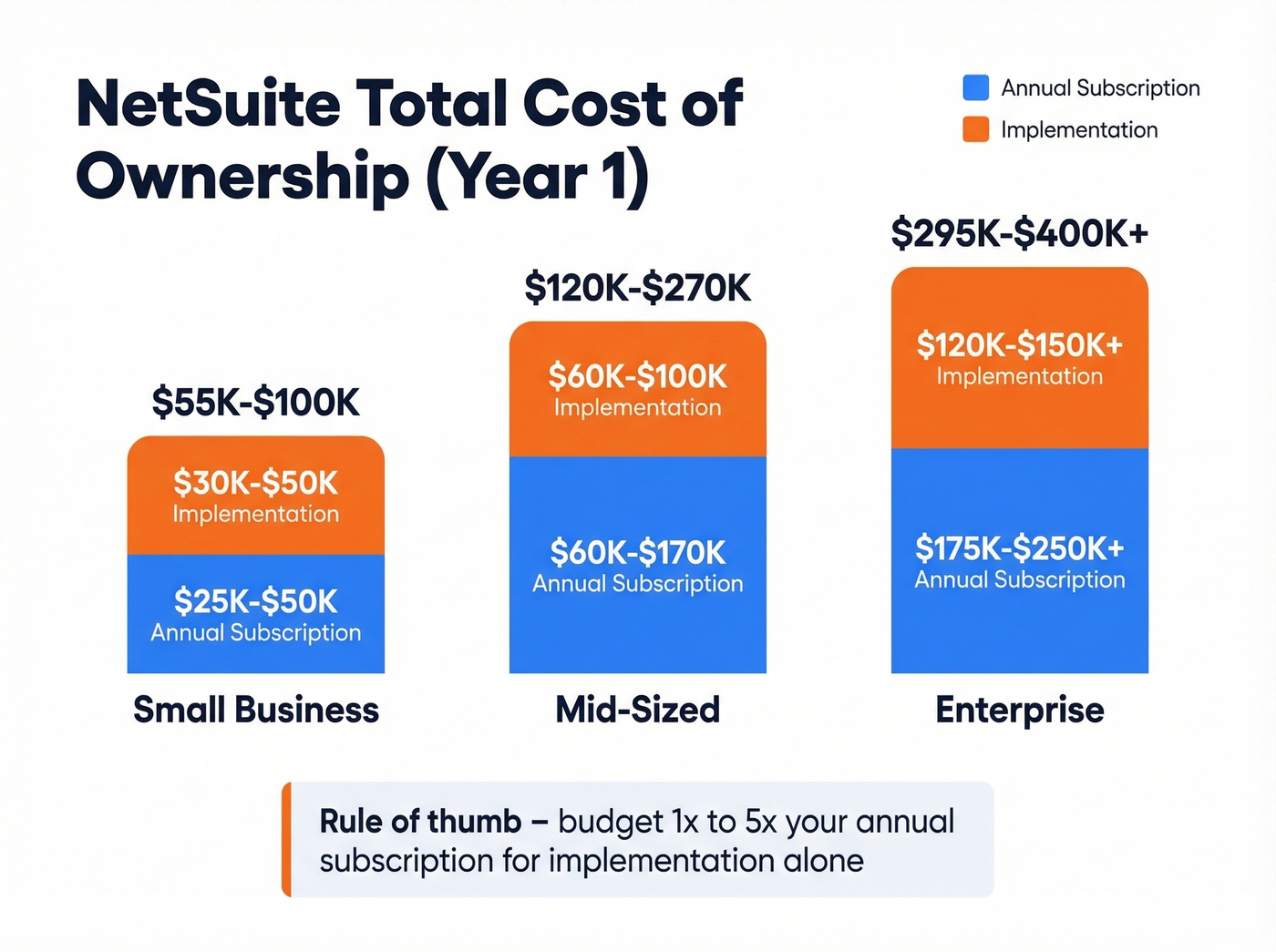
The real kicker is implementation. Budget $30,000-$150,000+ depending on complexity - and that's not an exaggeration. Rule of thumb: budget 1x to 5x your annual subscription for implementation alone.
| Company Size | Annual Subscription | Implementation |
|---|---|---|
| Small | $25K-$50K | $30K-$50K |
| Mid-sized | $60K-$170K | $60K-$100K |
| Enterprise | $175K-$250K+ | $120K-$150K+ |
NetSuite CRM is almost always tied to a NetSuite ERP rollout. That's the fundamental cost difference between these two platforms.

You're evaluating platforms that cost $25K-$250K/year. But neither Salesforce nor NetSuite generates the contact data your reps actually prospect with. Prospeo fills both with 98% accurate emails at $0.01 each - a rounding error on your CRM budget that prevents the 35%+ bounce rates killing your pipeline.
Don't pour six figures into a CRM and fill it with bad data.
Feature Breakdown
Sales, Marketing & Service
Salesforce goes deeper on pure CRM. Sales Cloud, Marketing Cloud, and Service Cloud are each mature products with dedicated ecosystems, and the AppExchange has thousands of integrations vs. NetSuite's SuiteApp marketplace - a significant gap if your stack relies on third-party tools. NetSuite CRM covers sales force automation, customer service, marketing automation, and partner management, but as modules within the ERP rather than standalone products.
Where NetSuite genuinely wins: quote-to-cash and order management. When a deal closes and needs to flow into invoicing, fulfillment, and revenue recognition without middleware, NetSuite handles that natively. Salesforce typically requires integrations for most post-Closed Won back-office steps, and those integrations aren't free.
If you're still deciding what "CRM" even means in practice, see these examples of a CRM and how they map to real workflows.
AI Capabilities
Salesforce is further ahead here. Einstein handles lead scoring, deal forecasting, and automated case resolution. Agentforce adds autonomous agents that can take actions inside your CRM. The catch: many advanced AI features are tied to higher-tier editions and add-ons, and there's genuine pricing confusion around credits vs. conversations vs. per-user SKUs.
NetSuite Next - Oracle's AI play - includes conversational intelligence, agentic workflows, and natural-language search. It's earlier-stage. Here's the thing: most teams won't meaningfully use AI features from either platform for another year or two. Don't let AI be the deciding factor in a six-figure purchase.
If you're evaluating AI for outreach and follow-ups (not just CRM UI), this guide on AI sales follow-up is a better starting point.
When to Use Both
A common real-world pattern is Salesforce handling everything through Closed Won, then NetSuite taking over for invoicing, fulfillment, and financial reporting. We've seen this work well at mid-market companies with complex order flows. It works, but it isn't cheap.
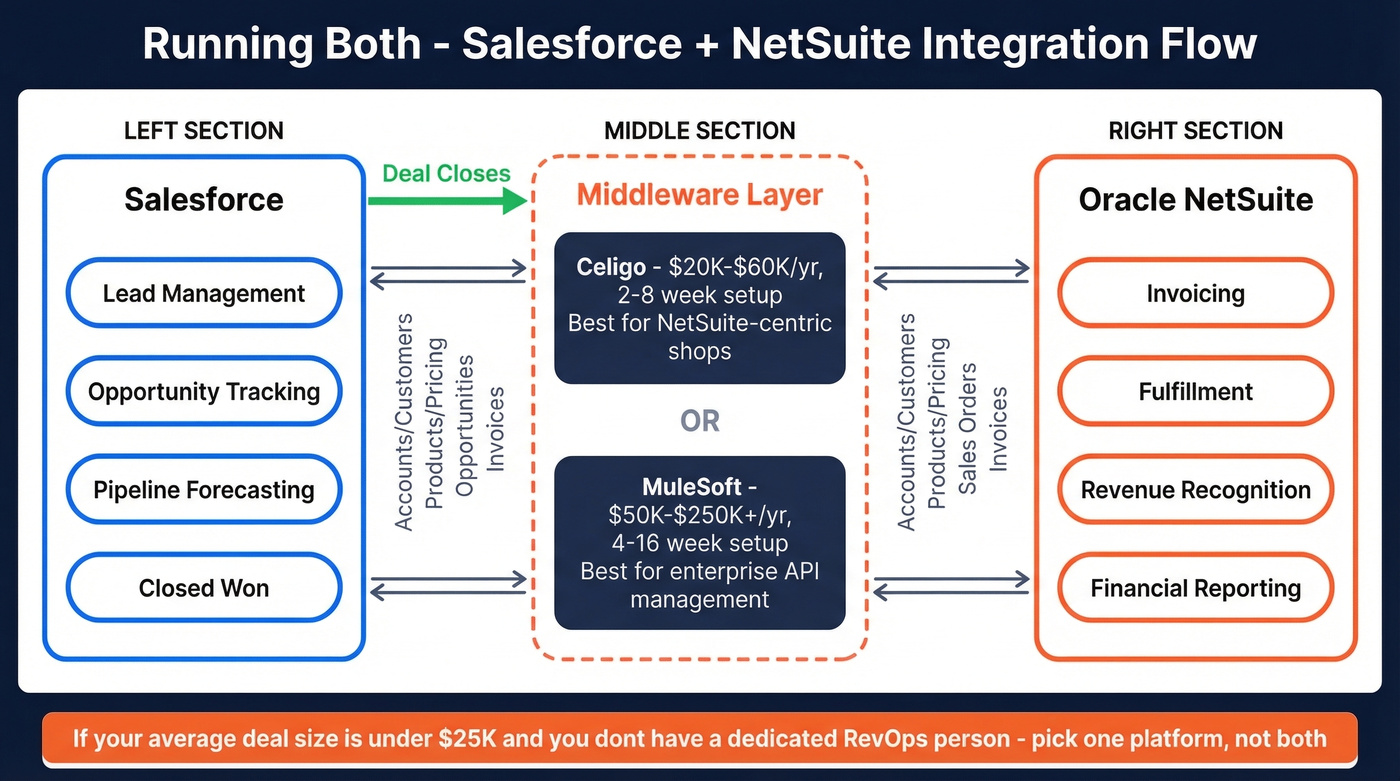
Middleware is the hidden line item. Celigo runs ~$20K-$60K/year with 2-8 week implementation per integration. MuleSoft runs $50K-$250K+/year with 4-16 week timelines. Celigo is the better fit for NetSuite-centric shops with pre-built flows; MuleSoft makes sense for enterprise-wide API management across dozens of systems. Recommended sync order: accounts/customers, then products/pricing, then opportunities, then sales orders, then invoices.
If your average deal size is under $25K and you don't have a dedicated RevOps person, running both platforms will cost more in integration overhead than the efficiency gains justify. Pick one.
The Data Problem Neither Solves
Neither Salesforce nor NetSuite generates the contact data that goes into them. You can spend $25K-$250K on platform licenses and still have reps working off bounced emails and disconnected phone numbers. Bad data propagates - and if you're syncing between both platforms, it propagates twice as fast.
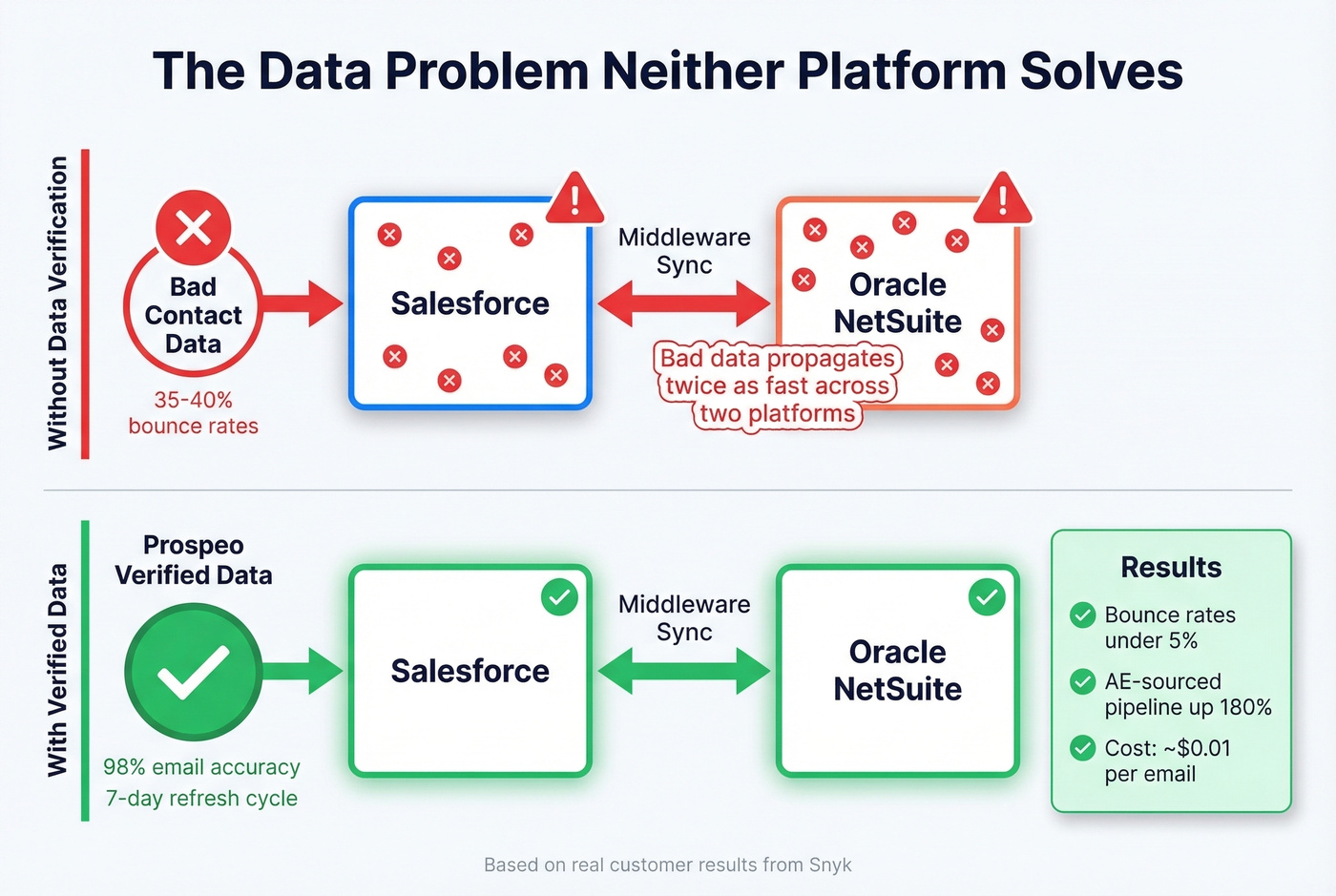
This is where we've seen teams waste months of CRM investment. One customer, Snyk, had 50 AEs dealing with 35-40% bounce rates before switching their data source. After cleaning up their pipeline data, bounce rates dropped under 5% and AE-sourced pipeline jumped 180%.
Prospeo's native Salesforce integration handles this layer with 98% email accuracy and a 7-day refresh cycle. At ~$0.01 per email, it's a rounding error compared to your platform spend. Don't pour six figures into CRM infrastructure while ignoring the data quality that makes it productive.
If you're fighting bounces specifically, start with email bounce rate benchmarks and fixes, then move to data enrichment services to keep records fresh.
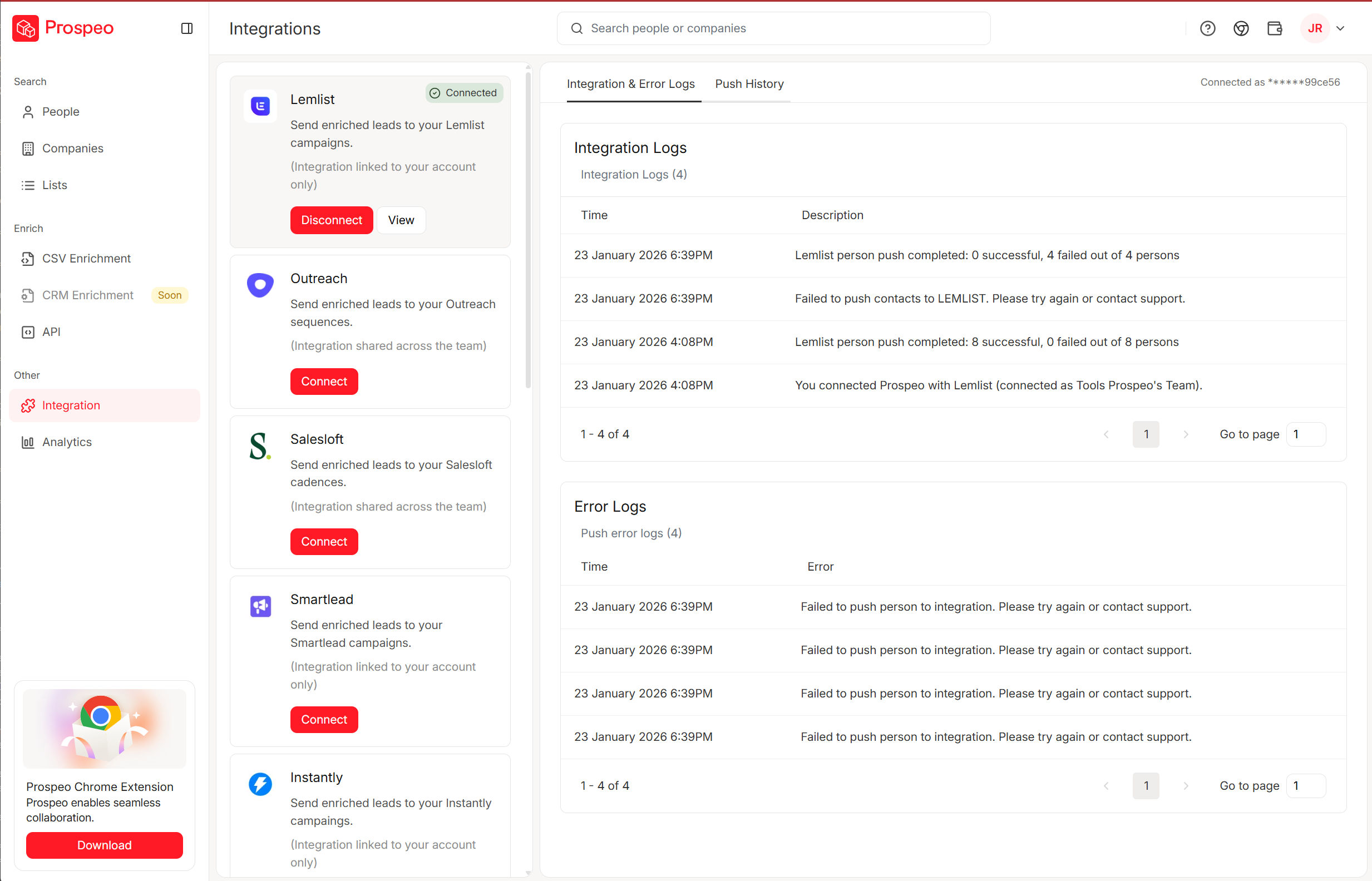
Syncing Salesforce and NetSuite? Bad data propagates twice as fast across two platforms. Prospeo's native Salesforce integration enriches contacts with 98% verified emails, 125M+ direct dials, and refreshes every 7 days - so your quote-to-cash pipeline starts with real buyers, not bounced emails.
Start with 75 free verified emails - no contract, no sales call.
Our Verdict
Choosing between Oracle NetSuite and Salesforce comes down to scope, not quality.
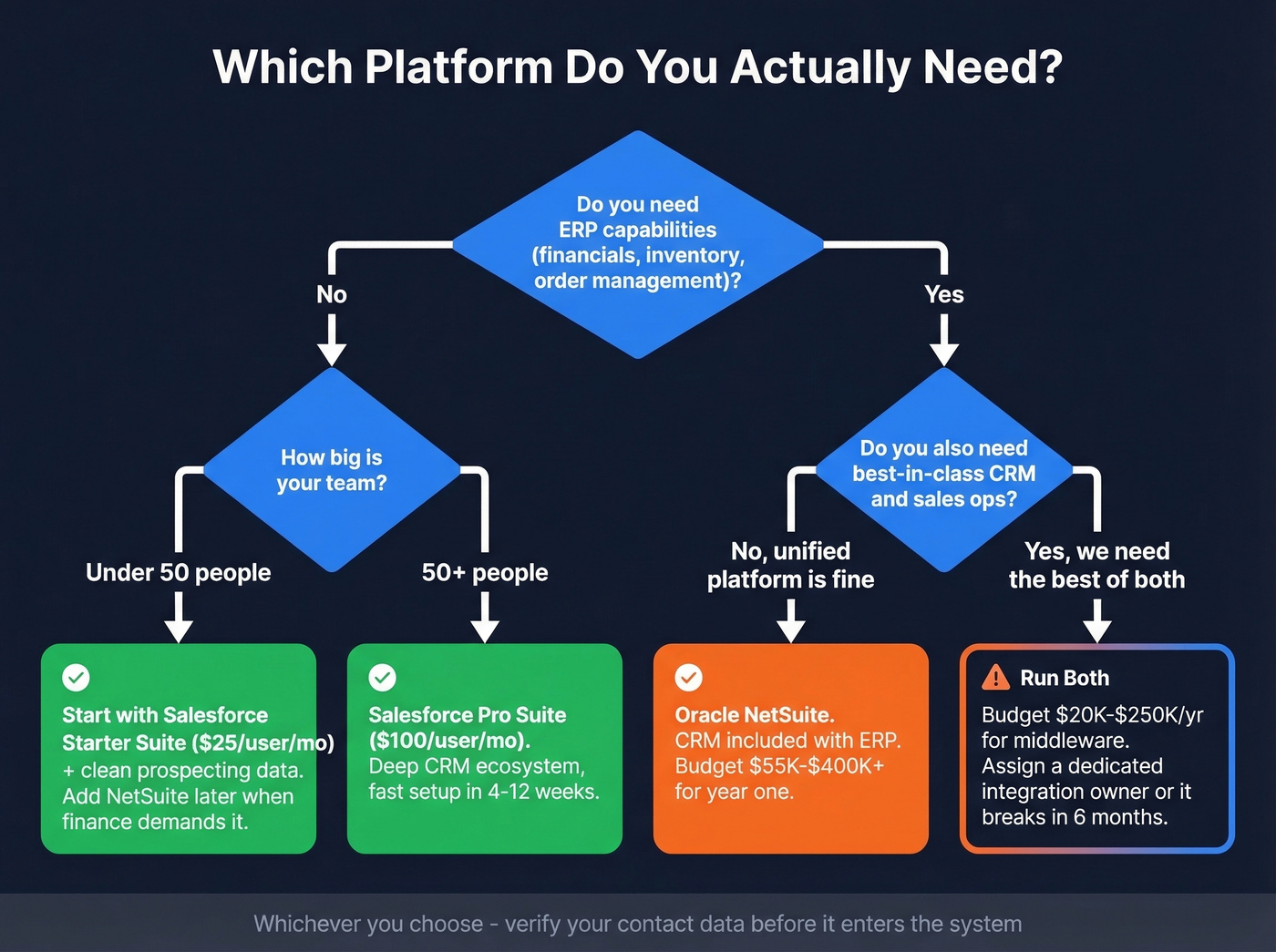
CRM only: Salesforce. Starter Suite at $25/user/month is the obvious entry point, and the ecosystem around it is unmatched.
If you want the deeper cost breakdown and what users complain about most, see our Salesforce pricing guide.
Unified operations: NetSuite. If you need financials, inventory, and CRM under one platform, it's the right call despite the higher cost and longer implementation timeline.
Under 50 people: Don't overthink it. Start with Salesforce and clean data. You can always add NetSuite when your finance team demands it.
If you're building pipeline from scratch, pair that with proven sales prospecting techniques so the CRM isn't just a database.
Running both: Budget $20K-$250K/year for integration middleware and assign a dedicated owner. Skip this if you don't have someone who can own the sync full-time - it'll break within six months.
FAQ
Can NetSuite replace Salesforce as a CRM?
Only if you also need ERP capabilities. NetSuite CRM is bundled with the ERP platform, so it makes sense when you're already running NetSuite for financials and inventory. For pure CRM functionality, Salesforce is deeper, cheaper, and faster to deploy.
Is NetSuite more expensive than Salesforce?
Yes - nearly always. NetSuite starts at ~$1,000/month base plus $129/user, while Salesforce starts at $25/user/month. The gap widens further when you factor in NetSuite's $30K-$150K+ implementation costs. NetSuite only justifies the premium when you need full ERP.
Can I integrate Salesforce with NetSuite?
Yes, via iPaaS tools like Celigo ($20K-$60K/year) or MuleSoft ($50K-$250K+/year). Most teams need middleware for reliable bidirectional sync of accounts, orders, and invoices between the two platforms. The consensus on r/salesforce is that native connectors aren't reliable enough for production use - budget for proper middleware from day one.
How do I keep CRM data accurate across platforms?
Verify contacts before they enter your CRM. A 98% email accuracy rate and weekly data refresh cycle prevent bad records from propagating - especially critical when syncing data between Salesforce and NetSuite, where duplicates and stale contacts multiply fast.