

Outbound Marketing: What It Is, What Works, and How to Do It Right in 2026
Your SDR team sent 5,000 emails last month and booked three meetings. The VP of Sales is asking what's broken. The honest answer? Probably everything - targeting, data quality, message, and channel mix. Average cold email reply rates dropped from 6.8% to 5.8% in a single year, a 15% decline. Lazy outbound marketing is dead. But the discipline itself? It's the highest-ROI channel in B2B when you run it right.
Here's what "right" looks like.
What You Need (Quick Version)
Proactive prospecting through cold email, cold calls, paid ads, and direct mail - that's the core of outbound. Here's what actually works in 2026:
- Signal-based targeting over spray-and-pray. Only 3-5% of your market is buying right now. Signals help you find them.
- Short sequences. 3-4 emails max. Email #1 does most of the work.
- Verified data. If your bounce rate is above 3%, your domain reputation gets crushed and nothing downstream works.
- Multi-channel cadences. Email + calls + social touches over 2-3 weeks.
Cold email benchmarks to calibrate against: 15-25% open rates, 1-5% reply rates. Signal-personalized outreach pushes reply rates to 15-25%, versus the 3-5% average for generic blasts.
What Is Outbound Marketing?
Outbound marketing is any tactic where you initiate the conversation with a prospect who hasn't asked to hear from you. You're pushing a message out rather than waiting for someone to find you. HubSpot frames it well: outbound is "buying attention" versus inbound's "earning attention."
The traditional examples still exist - TV ads, billboards, trade show booths, direct mail. But modern B2B outbound looks different. The channels that drive pipeline today are cold email, cold calling, paid social ads, retargeting, podcast sponsorships, and strategic gifting campaigns.
What unifies all of them is intent from the seller's side. You're choosing who to reach, when to reach them, and with what message. That's the core advantage: control. You don't wait for a prospect to Google your category. You go find the VP of Engineering who just raised a Series B and tell them exactly how you solve their scaling problem.
The tradeoff is straightforward. Outbound requires more precision to work. A blog post that's 80% relevant still attracts readers. A cold email that's 80% relevant gets deleted. The bar for relevance, timing, and data quality is simply higher when you're interrupting someone's day.
Outbound vs. Inbound Marketing
The debate isn't which is better - it's which to deploy when.
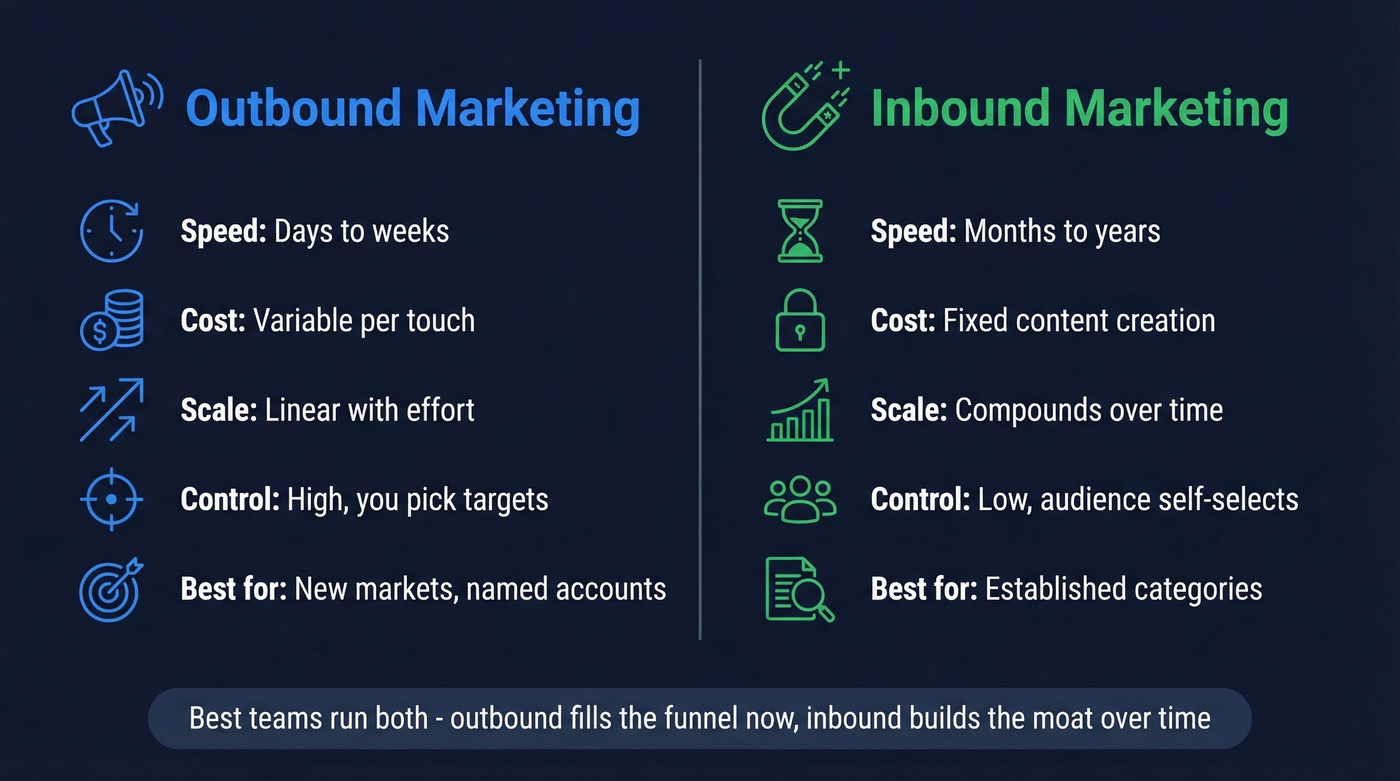
| Dimension | Outbound | Inbound |
|---|---|---|
| Speed to results | Days to weeks | Months to years |
| Cost structure | Variable (per touch) | Fixed (content creation) |
| Scalability | Linear (more reps/sends) | Compounding over time |
| Control | High - you pick targets | Low - audience self-selects |
| Best for | New markets, named accounts | Established categories |
Outbound gets you pipeline this quarter. Inbound builds a moat over years. The best teams run both, and they're not shy about it - outbound fills the top of funnel while inbound content nurtures and converts the middle.
96% of marketers say personalized experiences increase the likelihood of a sale, with 44% calling the impact significant. That stat matters because generic blast emails aren't just annoying - they're measurably worse at converting. The teams winning in 2026 treat every touchpoint like a personalized inbound experience, just delivered proactively.
When to lean outbound:
- Entering a new market with no brand awareness
- Launching a product with zero search demand
- Targeting enterprise accounts by name
- Need pipeline faster than SEO can deliver
When to lean inbound:
- Established category with high search volume
- Can afford to wait 6-12 months for compounding returns
- Strong content team already producing thought leadership
Channels That Drive Pipeline in 2026
It takes an average of 8-12 touchpoints to engage a B2B prospect. No single channel carries that load alone. Here's what's working and where each fits.
Cold Email
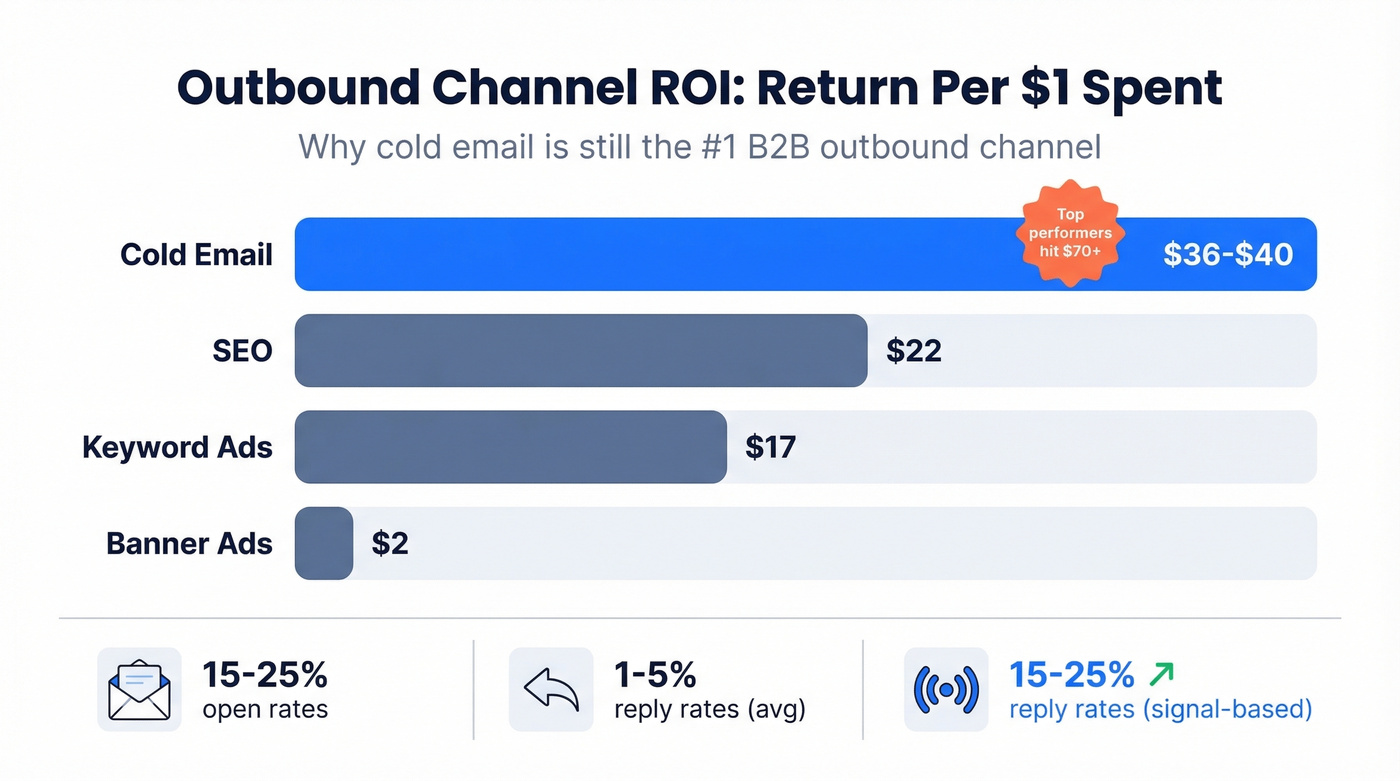
Still the #1 B2B outbound channel by ROI, and it's not close. Email marketing returns $36-$40 for every $1 spent - compared to ~$22 for SEO, ~$17 for keyword ads, and ~$2 for banner ads. Top-performing programs push past $70 per dollar. The economics are unmatched, which is why every outbound program starts here.
The catch: deliverability is harder than ever, and inbox providers are getting smarter about filtering low-quality sends. If your bounce rate is above 3%, fix your data before you touch a single subject line.
Cold Calling
Skip this channel if you don't have verified mobile numbers. Direct dials to mobiles connect far more often than calling through switchboards, which is why mobile data quality matters so much. Calling works best as a complement to email, not a standalone channel. The play: send a cold email, then call the same prospect 24-48 hours later referencing the email. That one-two punch consistently outperforms either channel alone. If calling is a core motion for your team, budget for a parallel dialer like Orum or Nooks.
Paid Social and Retargeting
LinkedIn ads let you target by title, company size, and industry with precision no other platform matches. Google Ads capture intent when prospects are actively searching for solutions. But the real play is retargeting: serve ads to prospects who've opened your emails or visited your site but haven't replied. It keeps you visible across channels without requiring another cold touch.
Direct Mail
Not dead - just repositioned. Modern B2B direct mail means handwritten notes, curated gift boxes, or personalized packages for enterprise accounts. Response rates for well-targeted direct mail run 2-5% in B2B, which can beat cold email for high-value accounts where a $30 send is justified by a $50K+ deal size. It's the most tactile outbound method, and sometimes the most memorable.
Events and Trade Shows
In-person pipeline generation is back, and the ABM tie-in is powerful. Identify target accounts attending a conference, run pre-event email sequences, book meetings on-site, and follow up with personalized recaps. Events aren't scalable like email, but once you're in the room, conversion tends to be stronger than digital-only outreach.
Outbound Benchmarks Worth Tracking
Numbers to calibrate your program against:
| Metric | Average Range | Top Performers |
|---|---|---|
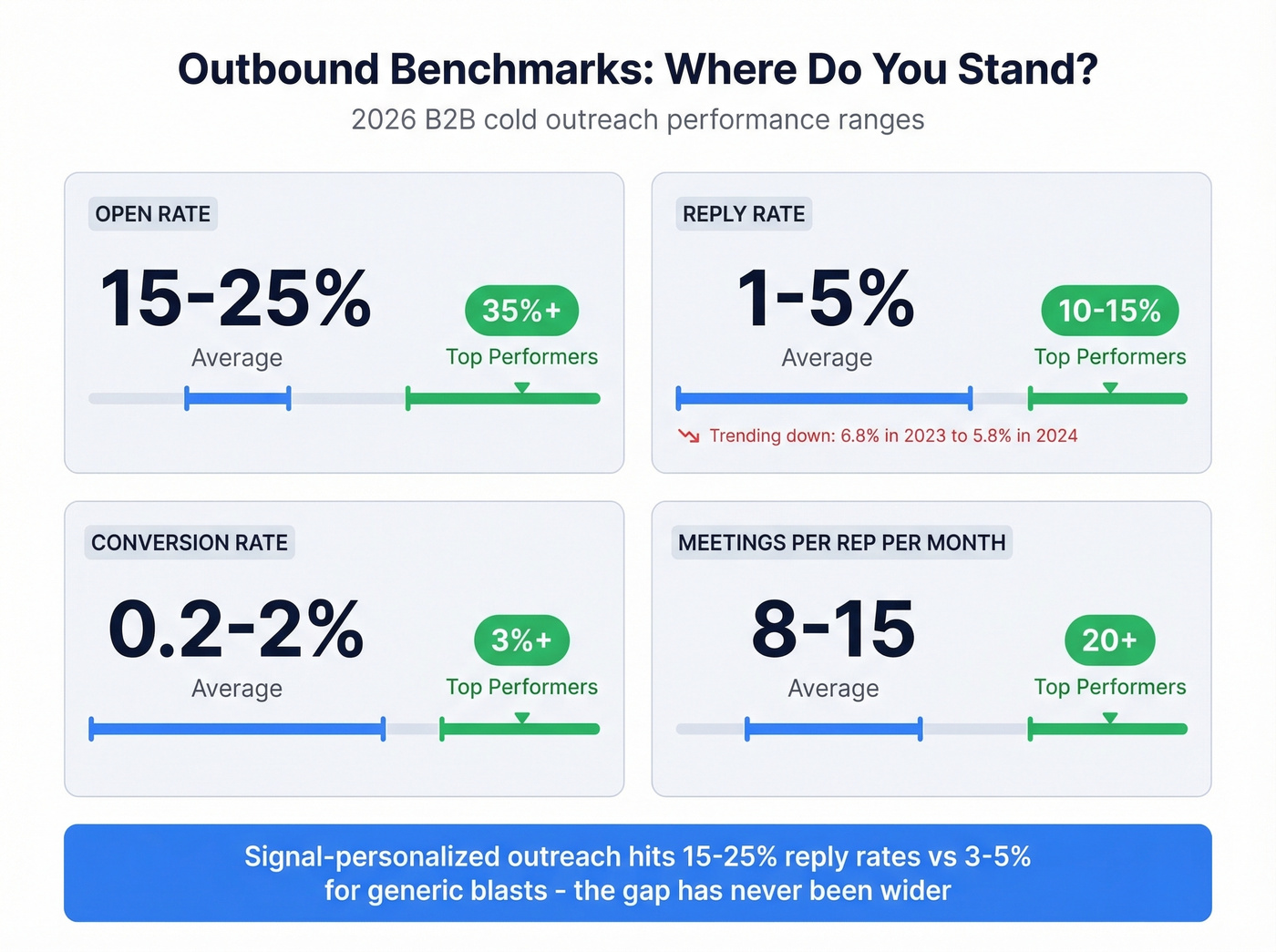
| Open rate | 15-25% | 35%+ |
| Reply rate | 1-5% | 10-15% |
| Conversion rate | 0.2-2% | 3%+ |
| Meetings/rep/month | 8-15 | 20+ |
The reply rate trend is heading the wrong direction - 6.8% in 2023, 5.8% in 2024. But that's the average, and averages include every spray-and-pray campaign dragging the number down. Signal-personalized outreach hits 15-25% reply rates versus the 3-5% industry average. The gap between good and bad has never been wider.
Sequences with 4-6 emails see up to 50% higher reply rates than single-touch campaigns. But there's a ceiling: we've seen diminishing returns after email #3 or #4 in most B2B sequences. Email #1 does the heavy lifting. If your first email doesn't earn a reply, emails #5 through #9 won't save it.

You read it above: bounce rates above 3% crush your domain reputation and kill outbound before it starts. Prospeo's 5-step email verification delivers 98% accuracy on 143M+ verified emails - refreshed every 7 days, not 6 weeks. Teams using Prospeo book 35% more meetings than Apollo users.
Stop bleeding deliverability. Start with data that actually connects.
How to Build a B2B Outbound Program
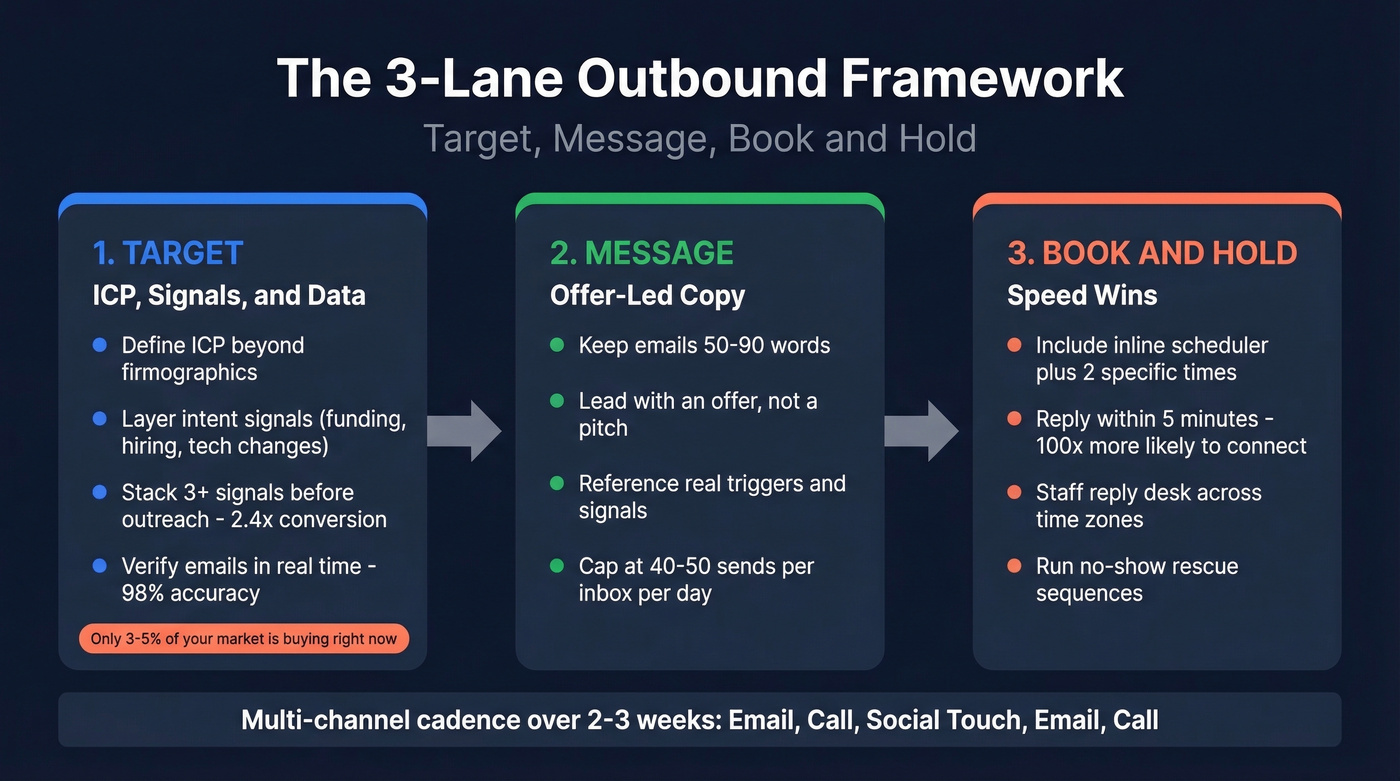
We use a three-lane framework: Target, Message, Book & Hold. Each lane has distinct inputs, outputs, and failure modes.
Target: ICP, Signals, and Data
Start with a high-definition ICP using the STP model - segmentation, targeting, positioning. Go beyond firmographics. Layer in tech stack data, hiring patterns, funding events, and buyer intent signals. The reason: only 3-5% of your market is buying right now. Another 7% is open to a conversation. Signals help you find that ~10% instead of blasting the other 90%.
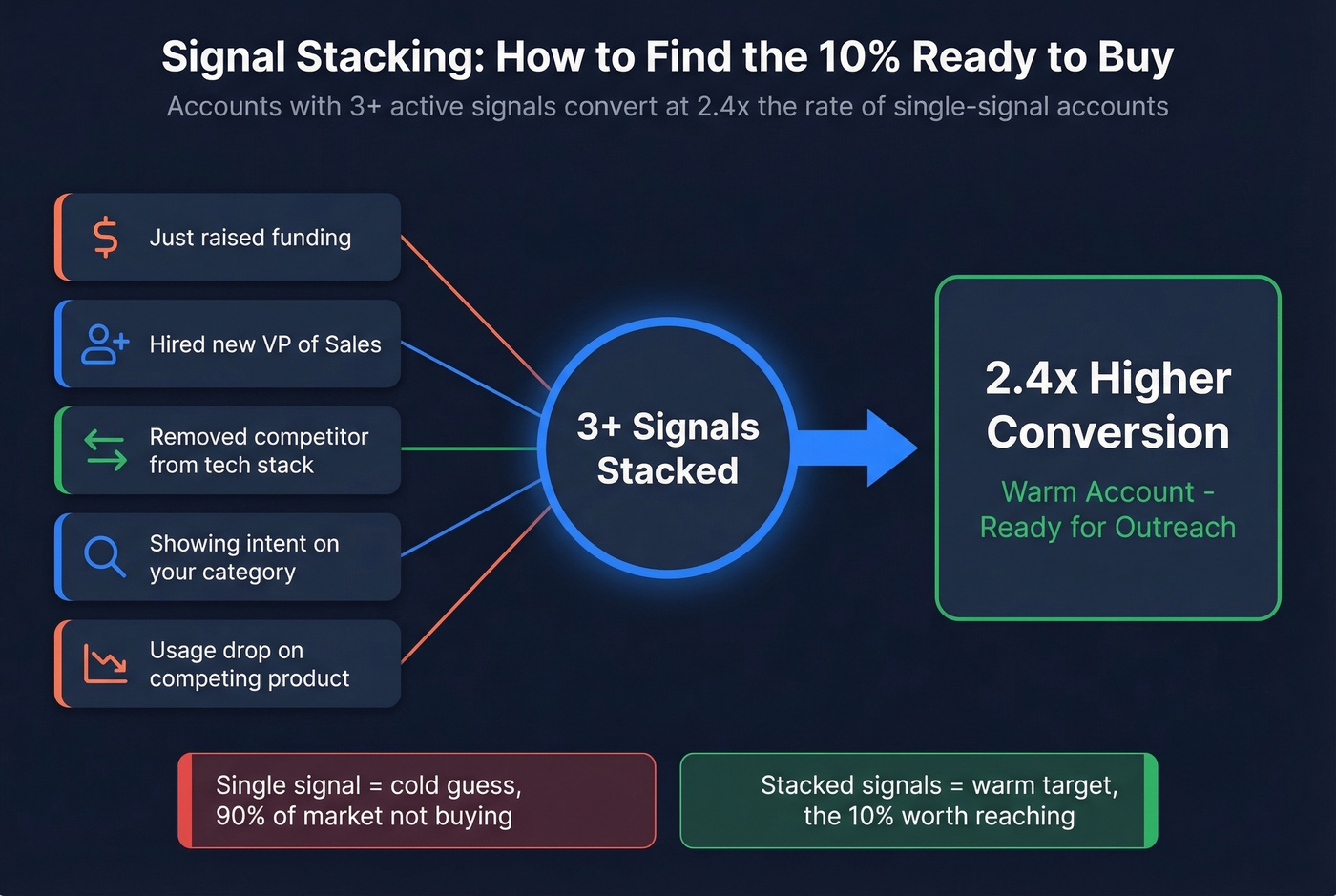
Stack multiple signals before outreach. A company that just raised funding, hired a new VP of Sales, removed a competitor from their tech stack, and is showing intent on your category topic? That's a warm account. A company showing a usage spike followed by a sudden drop on a competing product? Even warmer. Accounts with 3+ active signals convert at 2.4x the rate of single-signal accounts. Don't act on one trigger alone - combine them.
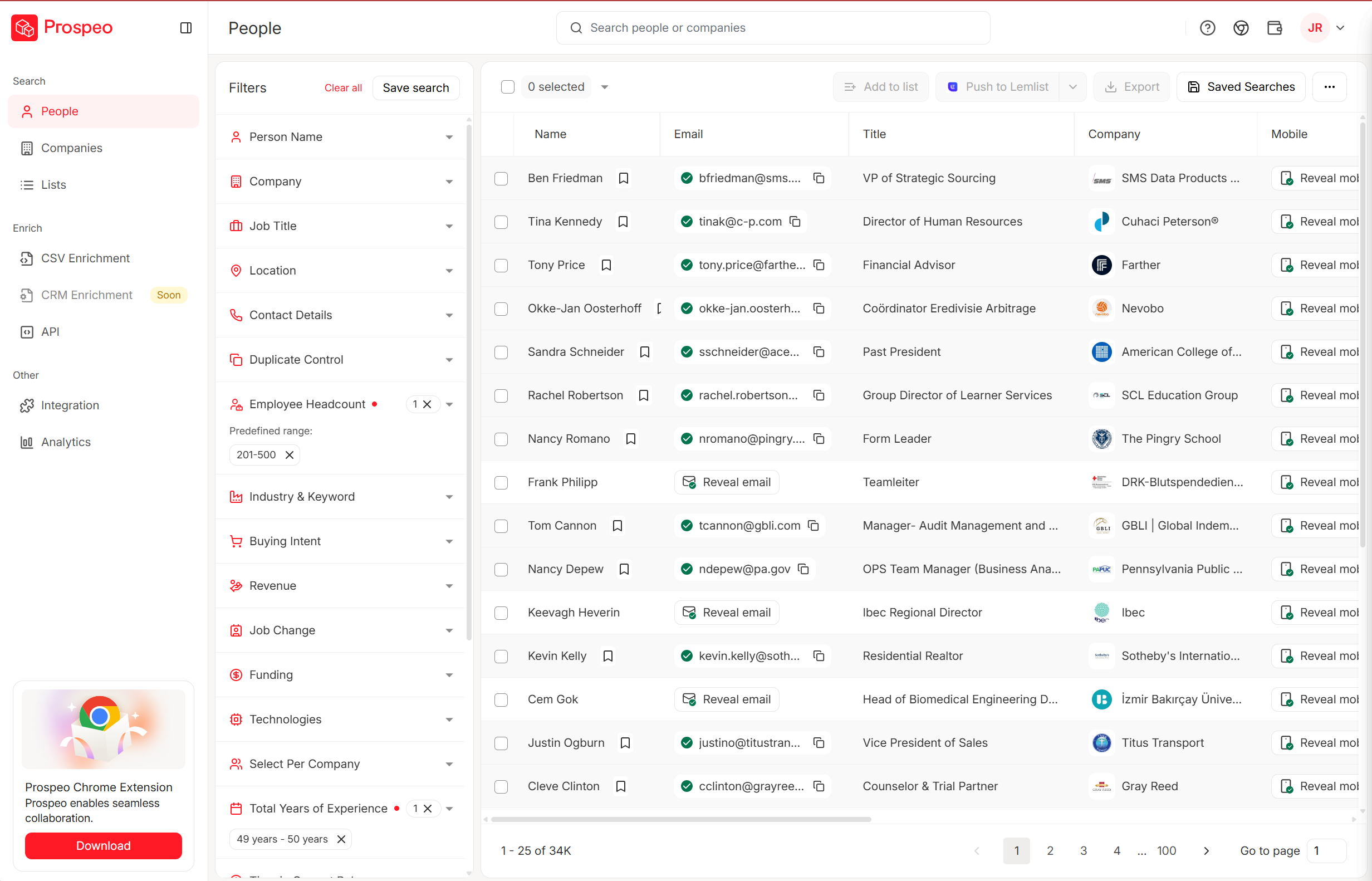
Your outbound stack starts with data. If the emails aren't real, nothing downstream matters. Prospeo verifies emails in real time with 98% accuracy and refreshes its database every 7 days, compared to the 6-week industry average. With 300M+ profiles and 30+ search filters including buyer intent and technographics, it's the intelligence layer that keeps your sequences hitting real inboxes.
Message: Offer-Led Copy
Keep emails between 50 and 90 words. Lead with an offer, not a pitch. Compare these two approaches:
Generic: "We're a leading provider of onboarding solutions trusted by 500+ companies..."
Signal-based: "Saw you just migrated off [competitor] - here's how [similar company] handled the same transition and cut ramp time by 3 weeks. Want the playbook?"
The second email works because it references a real trigger and offers something concrete. The consensus on r/sales and r/Entrepreneur is clear: the biggest lever is what you're offering, not how you phrase the subject line. Try "save time" versus "make money." Try case-study-first versus pain-first. Try different persona angles for the same product.
Cap at 40-50 emails per inbox per day. Run 3-4 email sequences max. Build a multi-channel cadence over 2-3 weeks: email, call, social touch, email, call. The channel rhythm matters more than any individual message.
Book and Hold: Speed Wins
Calendar-first flows win. Include an inline scheduler link plus two specific suggested times in your CTA. "Does Thursday at 2pm or Friday at 10am work?" converts better than "Let me know when you're free."
Staff a reply desk with coverage across time zones. A prospect who replies at 7am EST and doesn't hear back until 2pm has already moved on. Speed-to-lead applies to outbound replies too - Drift's data showed that responding within 5 minutes makes you 100x more likely to connect than waiting 30 minutes.
Run no-show rescue sequences: a quick "Looks like we missed each other, here's a new link" email sent 5 minutes after a missed meeting recovers 20-30% of no-shows. Measure meetings held and next steps created, not opens and clicks. Opens are directional. Held meetings are revenue.
The Outbound Tech Stack
The average B2B company uses 87 software tools, but only 23% directly impact revenue. Winners in 2026 run 5-7 integrated platforms. Here's the four-layer framework:
| Layer | Purpose | Tools | Starting Price |
|---|---|---|---|
| Intelligence | Data + signals | Prospeo, Apollo, ZoomInfo, Ocean.io | Free-$12K+/yr |
| Sequencing | Email automation | Smartlead, Instantly, Lemlist | ~$30-79/mo |
| Dialing | Calls + voicemail | Orum, Nooks, PhoneBurner | ~$50-150/mo |
| CRM | Pipeline + nurture | HubSpot, Salesforce | Free-$75+/mo |
The intelligence layer is where most teams get the economics wrong. ZoomInfo starts at $12,000+/year and makes sense for large orgs that need the full GTM suite. Apollo starts at $59/mo and offers solid US coverage. Ocean.io starts at $79/mo and is strong for lookalike audience building. At ~$0.01 per verified email versus $1+ per lead at enterprise providers, Prospeo's unit economics make it the obvious choice for teams that need accuracy without the enterprise price tag - and its native integrations with Smartlead, Instantly, Lemlist, HubSpot, and Salesforce mean verified contacts flow directly into sequences without CSV exports.
Here's the thing: if your average contract value is under $15K, you almost certainly don't need ZoomInfo-level spend on data. A leaner stack built around a high-accuracy data provider and a good sequencer will outperform an expensive all-in-one platform that your team only uses 20% of.
Integrated stacks are 42% more likely to increase sales productivity. The key word is integrated. Five tools that don't talk to each other create more work than three tools that do.
Multi-channel outbound needs verified mobiles and emails in the same workflow. Prospeo gives you both - 143M+ verified emails and 125M+ verified mobile numbers with a 30% pickup rate. Layer in buyer intent across 15,000 topics to find the 3-5% of your market that's actually buying right now.
Build signal-based outbound lists in minutes, not hours.
Why Your Outbound Isn't Working
If your reply rate is below 1%, it's usually deliverability - not messaging. Before you rewrite a single email, check your bounce rate. Above 3%? Your data is stale and your domain reputation is eroding with every send.
Here's the diagnostic checklist we run through with teams:
- Wrong accounts. You're emailing companies that have no reason to care about your product. Go back to ICP.
- No segmentation within ICP. A 50-person startup and a 500-person scaleup need different messages, even if both "fit" your ICP.
- Ignoring personas. The CFO and the VP of Engineering have different pain points. One email doesn't serve both.
- Generic messaging. No reference to triggers, context, or anything specific to the prospect. This is the #1 complaint on r/Entrepreneur about prospecting emails they receive.
- One channel only. Email alone won't cut it. Layer in calls and social touches.
- Volume over fit. Sending 5,000 emails to a loosely defined list will always lose to 500 emails to a tightly targeted one.
- Stale ICP. Markets shift. Recycle your TAM every 6 months with new angles and updated signals.
- Pitching too early. Leading with a demo request before establishing relevance is the fastest way to get ignored.
Most outbound problems are targeting problems disguised as messaging problems. Fix #1 and #2, and everything else gets easier.
Compliance Rules You Can't Ignore
Let's be honest - the legal side got significantly more complex, and 2026 is tightening further. TCPA litigation surged nearly 95% versus the prior year. The Supreme Court's McLaughlin v. McKesson decision means district courts aren't bound by FCC interpretations in civil TCPA cases, creating more variability by jurisdiction.
| Regulation | Scope | Max Penalty |
|---|---|---|
| TCPA | US calls/SMS | $500-$1,500/violation |
| CAN-SPAM | US email | Up to $53,088/email |
| GDPR | EU/EEA data | 4% of revenue or EUR 20M |
| CCPA | California data | $2,663-$7,988/violation |
At least 15 states now have mini-TCPA laws. Texas SB 140 expanded solicitation definitions and added registration requirements. Virginia SB 1339 requires honoring text opt-outs for 10 years. Connecticut SB 1058 requires prior express written consent for any telephonic sales call, with penalties up to $20,000 per violation.
The practical rules: include an unsubscribe mechanism in every email. Process opt-outs within 10 business days. Respect quiet hours - 8am to 9pm local time for calls. The FCC's consent revocation rules, effective April 2025, mean consumers can revoke consent by any reasonable method. Don't assume silence means continued consent.
The fact that compliance is this fragmented across states is genuinely frustrating for teams operating nationally. But the penalties are real, and one class-action TCPA suit can cost more than your entire annual outbound budget.
Outbound Trends for 2026
81% of sales teams have implemented or are experimenting with AI, and 22% have fully replaced human SDRs with AI agents. AI-adopting teams are 1.3x more likely to see revenue growth. But here's the uncomfortable truth from r/b2bmarketing: ~90% of AI-generated emails are still garbage. Not because the AI is bad, but because the inputs are bad. Feed an AI model a vague ICP and generic value props, and you'll get polished-sounding emails that say nothing.
The quality arms race isn't about better AI - it's about better signals and sharper positioning fed into AI. The AI SDR market is projected to hit $15B by 2030, growing at 29.5% CAGR. Only 25% of B2B companies currently use intent and signal data tools, which means there's still a significant early-adopter edge for teams that invest in signal-based prospecting now.
Other trends worth watching: narrower ICPs with local-market focus instead of country-wide blasts. CRM process fixes like replacing "Closed Lost" with "Closed Lost - Nurture" to preserve learnings and future timing. And the continued shift from activity KPIs to outcome KPIs - measuring meetings held and pipeline created, not emails sent and calls made.
FAQ
Is outbound marketing still effective in 2026?
Yes - email alone returns $36-$40 for every $1 spent, making it the highest-ROI channel available. Signal-personalized outreach hits 15-25% reply rates. The channel isn't dying; lazy execution is. Teams that invest in targeting, data quality, and multi-channel cadences are booking more meetings than ever.
What's the difference between outbound and inbound?
Outbound pushes messages to prospects who haven't asked to hear from you - cold email, ads, cold calls. Inbound pulls prospects in through content they find on their own - SEO, blogs, social media. Best-performing teams run both, using outbound for speed and inbound for compounding returns.
How many emails should a sequence have?
Three to four emails max. Email #1 does most of the work - if it doesn't earn a reply, emails #5 through #9 won't save the campaign. Sequences with 4-6 emails see up to 50% higher reply rates than single-touch sends, so don't stop at one.
What tools do I need to get started?
A data provider for verified contacts and buyer signals, a sequencing tool like Smartlead or Instantly for email automation, and a CRM like HubSpot or Salesforce. Add a parallel dialer when you're ready to layer in cold calls.
How do I avoid legal trouble with outbound?
Follow CAN-SPAM for email - include an unsubscribe link and honor opt-outs within 10 business days. Respect TCPA rules for calls and SMS, including quiet hours and consent requirements. If you're targeting EU prospects, GDPR compliance is mandatory. Penalties reach $50,000+ per violation, so this isn't optional.