

Outreach: Strategy, Channels, and Tools That Actually Work in 2026
You loaded 500 contacts into your sequencer, hit send, and 47 bounced in the first hour. Your domain reputation just took a hit, your reply rate is tanking, and you're wondering if cold outreach even works anymore.
It does - but only if you stop treating it like a volume game and start treating it like a precision discipline.
The Short Version
Outreach is the discipline of proactively reaching prospects through email, phone, or social. Three things matter: verified data so your emails actually land, personalized messaging so they get opened, and a disciplined cadence so you stay top of mind without spamming.
Your minimum stack is a data provider for verified contacts, a sequencer like Instantly or Smartlead, and your CRM. Everything else is optimization.
One stat to anchor this: Meritt tripled their pipeline from $100K to $300K per week after fixing their data quality alone. The rest of this guide covers how to execute each step, what benchmarks to aim for, and which mistakes will silently kill your campaigns.
What Does Outreach Actually Mean?
Outreach is the act of proactively reaching out to people who haven't asked to hear from you - yet. In a business context, it's how you start conversations with potential buyers, partners, journalists, or anyone whose attention you need to earn. Outside of business, the term also covers social services and community programs, but that's a different world entirely.
Quick clarification: Outreach.io is a sales engagement platform - one tool in the ecosystem. This guide covers the strategy. We'll mention the tool later when we get to the stack.
The discipline spans several flavors, and they're more different than people realize. Sales prospecting is the most common - SDRs and AEs contacting prospects to book meetings and build pipeline. PR and media campaigns target journalists and editors to earn coverage. Link-building is an SEO play, reaching webmasters for backlinks. Partnership development connects you with potential channel or integration partners. Community engagement builds relationships in industry groups, Slack channels, and forums. Each type has its own rules, but the underlying mechanics are the same: identify the right person, craft a relevant message, deliver it through the right channel, and follow up with discipline.
For the rest of this guide, we're focused on sales-driven prospecting - the kind that fills pipeline and generates revenue.
Why It Still Works in 2026
"Is cold outreach dead?" gets asked every year. Every year, the answer is the same: lazy prospecting is dead. Targeted, well-executed campaigns are thriving.
The spray-and-pray era - blasting 10,000 generic emails and hoping for 50 replies - is genuinely over. Email providers got smarter, spam filters got aggressive, and buyers got allergic to templated pitches. But that's not the discipline dying. That's bad execution dying. Good riddance.
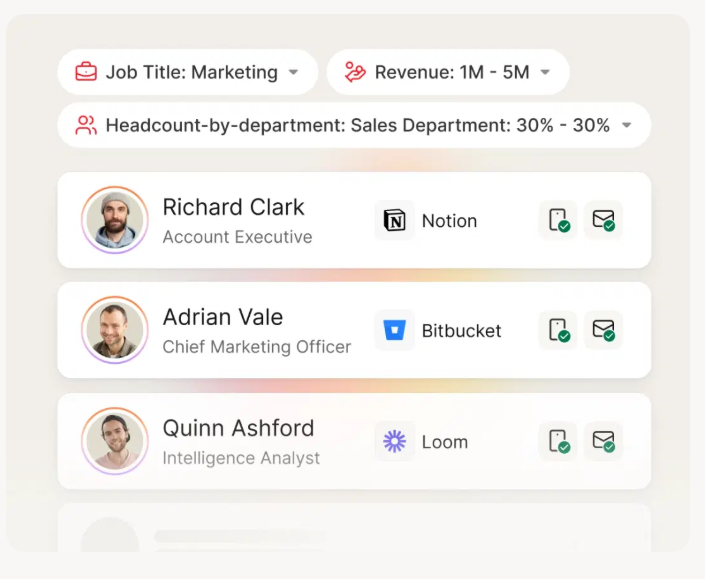
What shifted in 2026 isn't whether proactive prospecting works, but what "good" looks like. Precision replaced volume. A rep sending 50 hyper-relevant emails to verified contacts with personalized angles will outperform a rep blasting 500 generic templates every single time. The economics flipped: it's now cheaper to send fewer, better messages than to deal with the deliverability fallout of mass sends.
The teams winning right now share three traits. They obsess over data quality - verified emails, fresh records, accurate titles. They personalize beyond "Hi {first_name}" - referencing specific triggers like job changes, funding rounds, or tech stack signals. And they run disciplined multi-touch cadences across channels instead of relying on email alone.
Here's the thing: if your average deal size is under $5K, you probably don't need a $130/seat enterprise sequencer. A $30/month tool with clean data will outperform it. The bottleneck is never the sequencer - it's the data feeding it.
The 7-Step Framework
Every effective campaign follows the same basic structure. Skip a step and you'll feel it downstream - usually in your bounce rate or your reply rate.
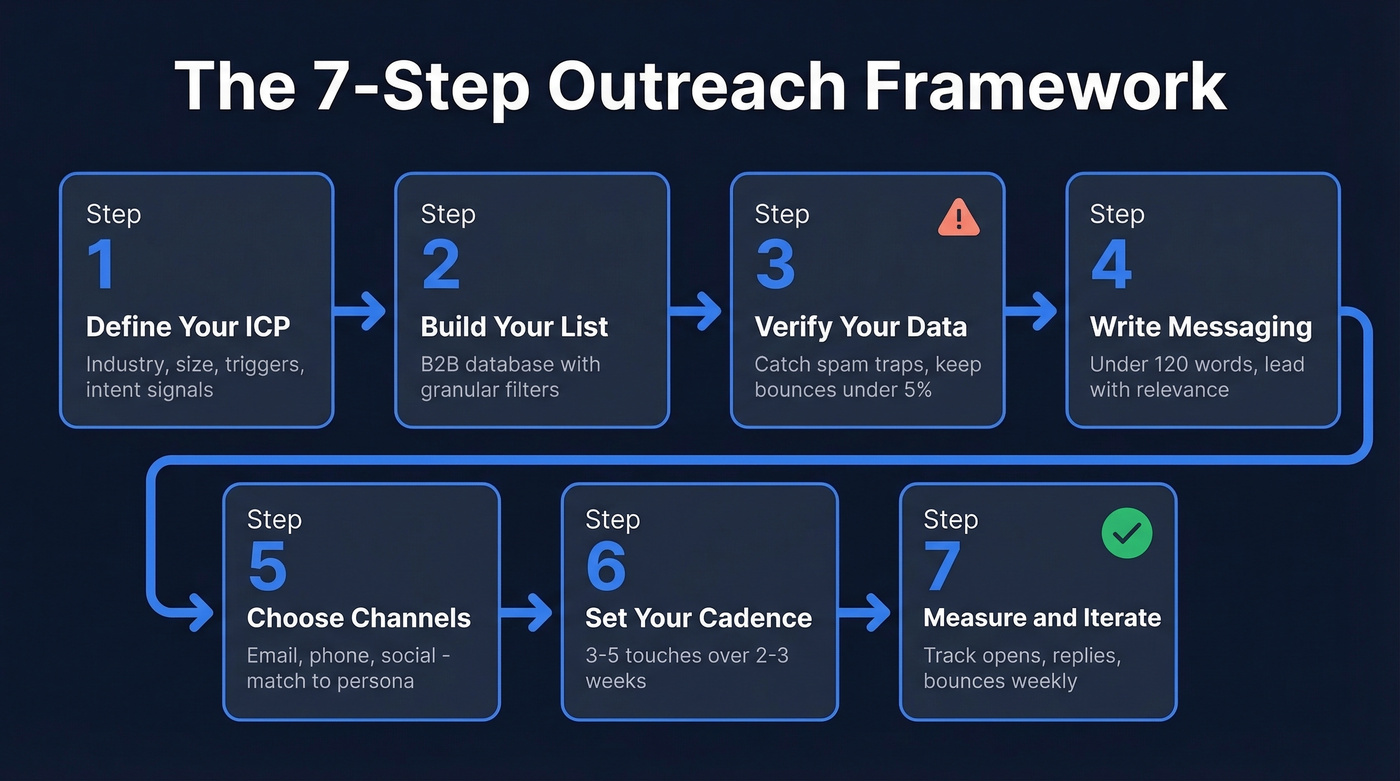
Step 1: Define Your ICP
Get specific about who you're targeting. Industry, company size, revenue range, job titles, geography - and ideally, buying triggers like recent funding, hiring surges, or tech adoption. A vague ICP produces vague results.
"VP of Sales at B2B SaaS companies with 50-200 employees who just raised Series A" is an ICP. "Decision-makers at tech companies" isn't.
Layer in intent signals to prioritize prospects who are actively researching solutions like yours. Platforms tracking buyer intent across thousands of topics let you separate tire-kickers from in-market buyers before you ever send a message.
Step 2: Build Your List
Use your ICP criteria to pull a targeted list from a B2B database with granular filters - buyer intent, technographics, job changes, headcount growth, funding signals. The more precise your search, the less cleanup you'll do later. Prioritize prospects showing active buying signals over static firmographic matches.
Step 3: Verify Your Data
This is where most teams cut corners and pay for it later. Run every list through real-time verification before sending. You need a process that catches catch-all domains, spam traps, and honeypots - the stuff that silently kills your sender reputation. Keep bounce rates under 5%. Anything above that and you're actively damaging your domain.
Step 4: Write Your Messaging
Personalization isn't optional - it's the difference between a 2% reply rate and a 10% one. Reference something specific: a recent company milestone, a mutual connection, a pain point relevant to their role. Keep the first email under 120 words. Lead with relevance, not your product pitch.
Step 5: Choose Your Channels
Email is the backbone, but don't stop there. Layer in phone touches for high-value prospects and social engagement for warming up cold contacts. Match the channel to the persona - C-suite prospects often respond better to phone, while directors and managers tend to engage more over email.
Step 6: Set Your Cadence
The sweet spot is 3-5 touches over 2-3 weeks. Many replies come on the 2nd or 3rd touch, not the first. Space follow-ups 2-4 days apart. After 5 touches with no response, move the prospect to a nurture track or let them go.
Persistence works. Pestering doesn't.
Step 7: Measure and Iterate
Track open rates, reply rates, bounce rates, and meetings booked. Review weekly. Low open rates point to subject line or deliverability problems. High opens but low replies mean your messaging isn't resonating. High bounces mean your data is broken. Every metric points to a specific fix.

You just read how Meritt tripled pipeline from $100K to $300K/week by fixing data quality. That's what happens when bounce rates drop from 35% to under 4%. Prospeo's 5-step verification, catch-all handling, and spam-trap removal keep your sender reputation intact - so every outreach sequence actually reaches real inboxes.
Stop burning domains. Start every campaign with 98% verified emails.
Channels Compared
Not every channel works for every audience. Here's how they stack up.
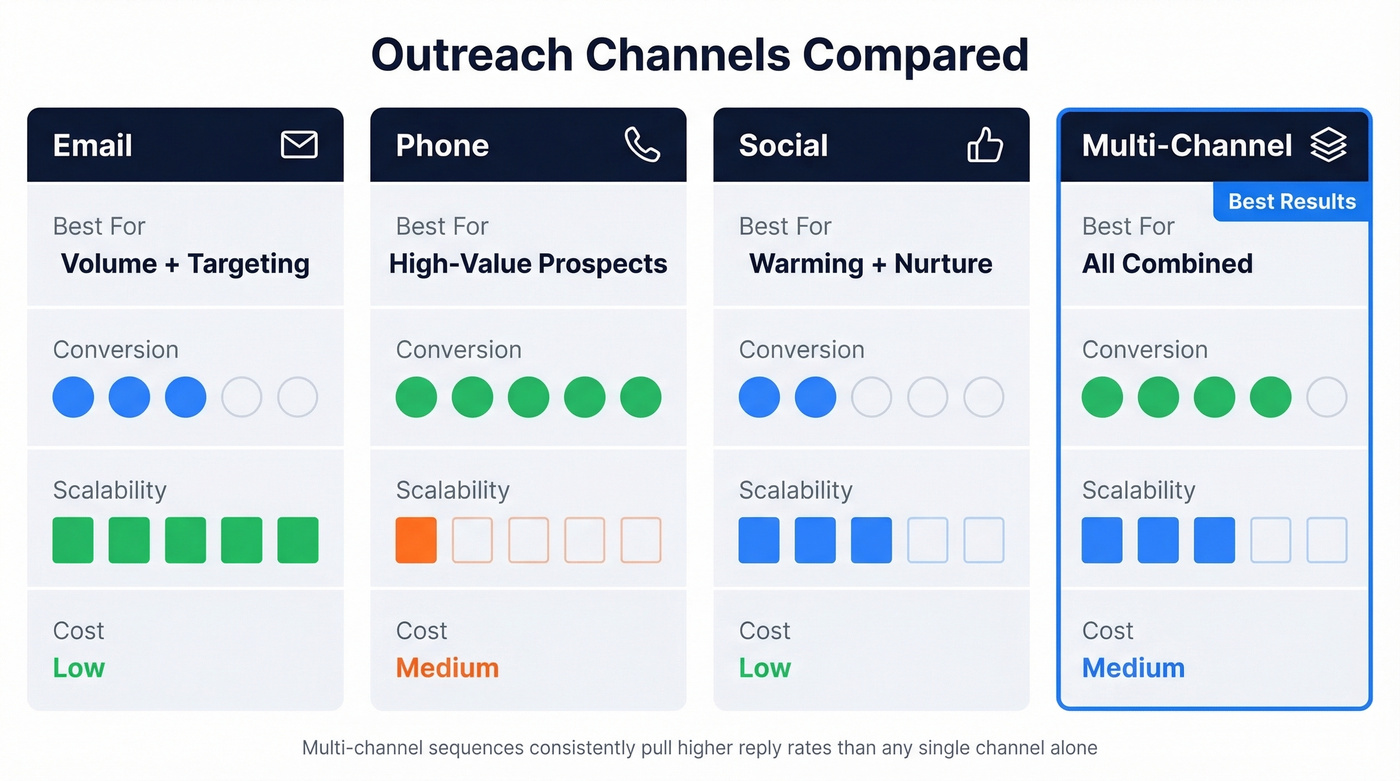
| Channel | Best For | Typical Outcome | Cost | Scalability |
|---|---|---|---|---|
| Volume + targeting | Strong at scale | Low | High | |
| Phone | High-value prospects | High conversion per connect | Medium | Low |
| Social | Warming + nurture | Best as a complement | Low | Medium |
| Multi-channel | All above combined | Higher replies than single-channel | Medium | Medium |
Email remains the workhorse - it scales, it's measurable, and it's often the preferred channel for initial B2B contact. The limitation is inbox competition. Your prospect gets dozens of cold emails daily, so standing out requires sharp copy and verified delivery.
Phone has the highest conversion per touch but the lowest scalability. Reserve it for your top-tier accounts where a live conversation can accelerate the deal. Cold calling isn't dead - it's just expensive per contact, so you need to be selective about who gets a dial.
Social touches work best as a complement, not a standalone channel. Engaging with a prospect's content before emailing them can increase replies. It's the warm-up, not the main event.
The real win is multi-channel. We've seen teams running coordinated sequences across email, phone, and social consistently pull higher reply rates than single-channel campaigns. The compound effect of multiple touchpoints across different contexts builds familiarity faster than any single channel can.
Why Most Campaigns Fail
Let's be honest about the deliverability death spiral, because it's the single biggest reason campaigns fail before they ever get a chance to work.
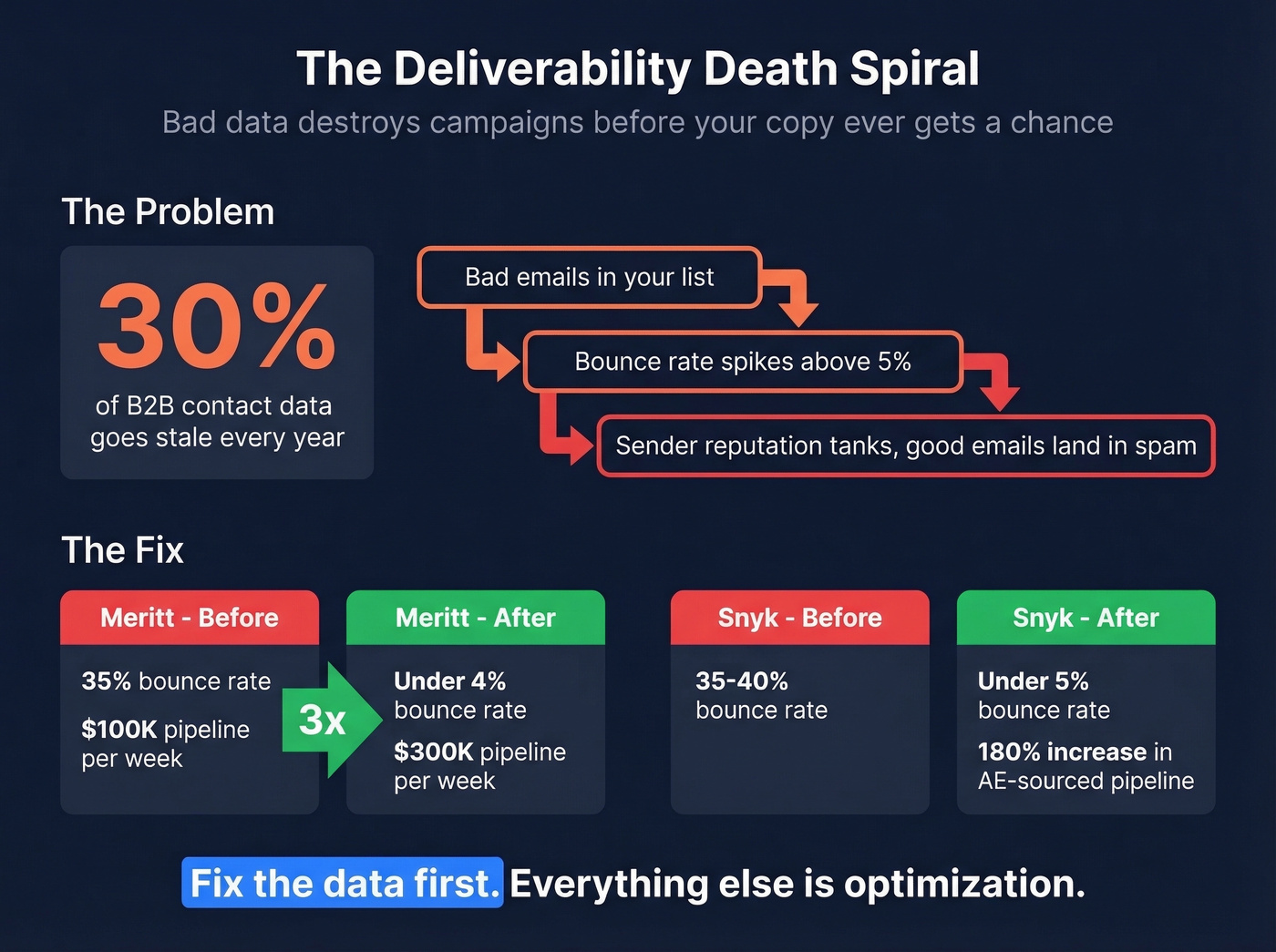
Roughly 30% of B2B contact data goes stale every year. People change jobs, companies get acquired, email servers get reconfigured. If you're pulling lists from a provider that refreshes data on a 6-week cycle - the industry average - you're sending to ghosts.
The math is brutal. A 10% bounce rate doesn't just mean 10% of your emails failed. It means your sender reputation took a hit that affects the other 90%. Email providers like Google and Microsoft track bounce patterns aggressively. Once you're flagged, even your good emails start landing in spam. We've seen open rates collapse in a single week because of one bad list - and recovery can take weeks of careful warm-up.
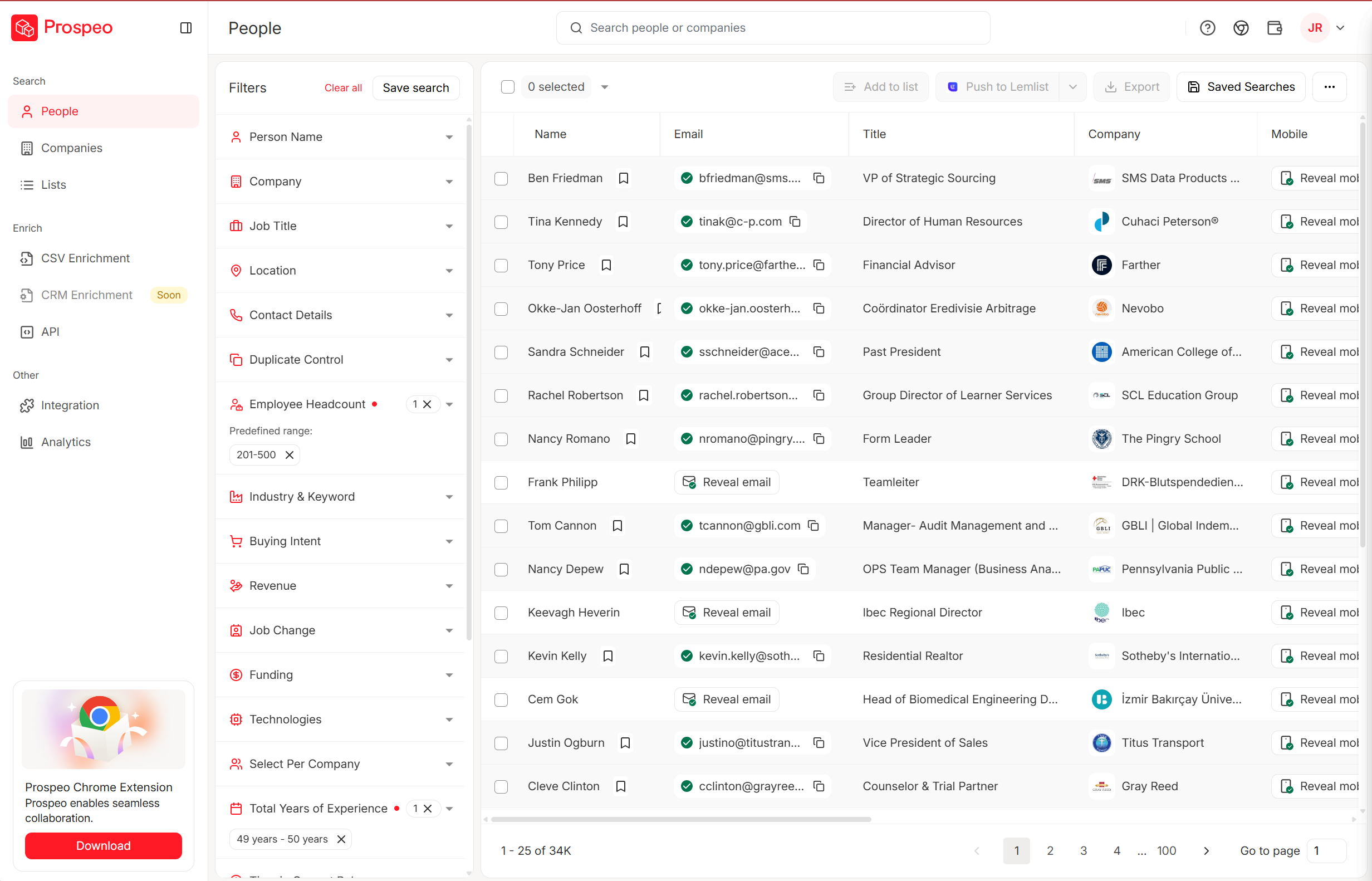
The results speak for themselves. Meritt went from a 35% bounce rate to under 4% after switching their data source, and their pipeline tripled from $100K to $300K per week. Snyk saw similar results at enterprise scale - 50 AEs dropped their bounce rate from 35-40% to under 5%, and AE-sourced pipeline jumped 180%.
You can have the best copy, the sharpest ICP, and the most sophisticated cadence in the world. If 15% of your list bounces, none of it matters. Fix the data first.
Building Your Stack
You need three tools, not thirteen. A data provider for verified contacts, a sequencer for sending, and a CRM for tracking. That's the minimum viable system, and most teams don't need much more.
If you need a clean handoff between your sequencer and CRM, follow a simple setup guide before you add more tools.
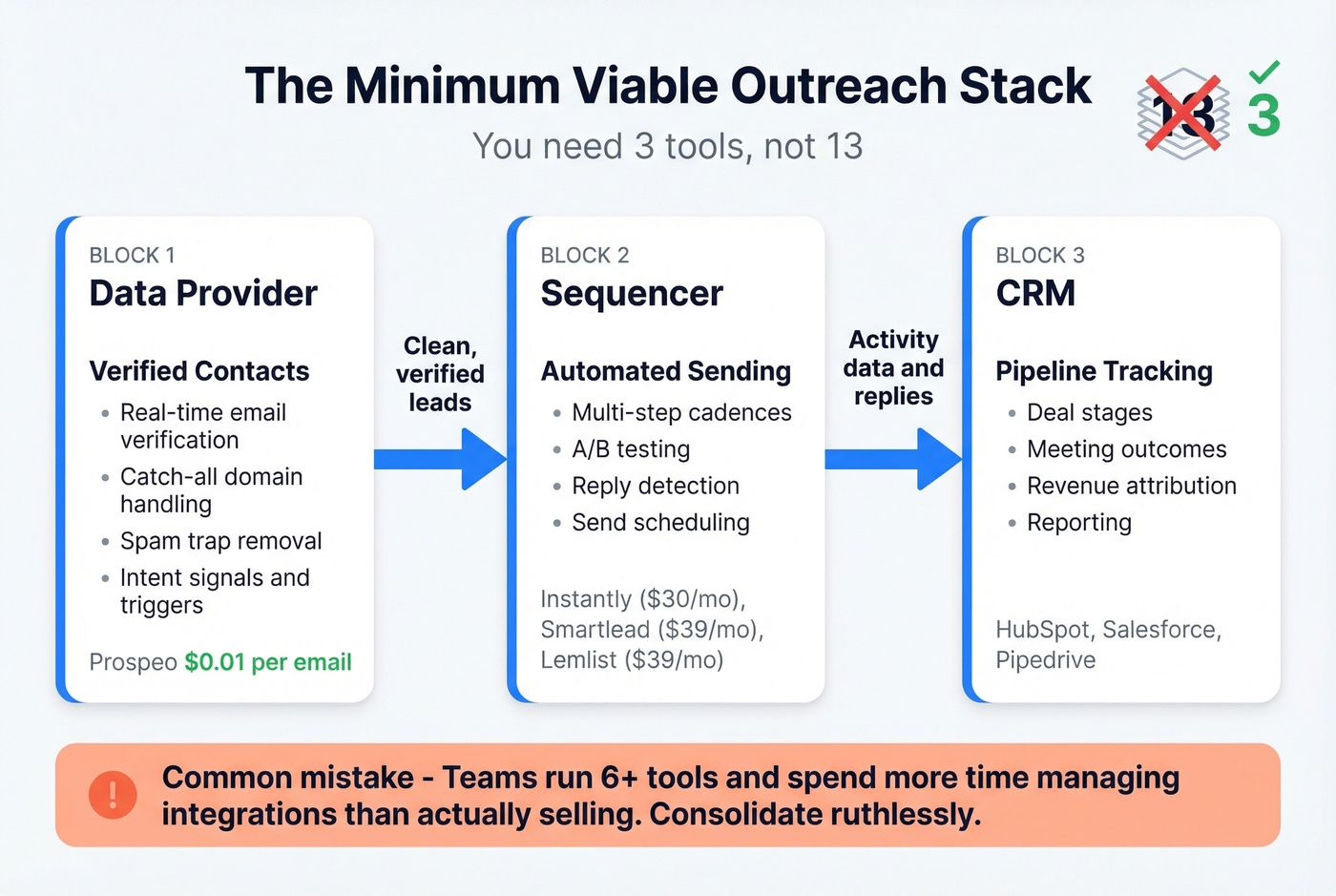
We've seen teams running six different platforms - a database, an enrichment tool, a sequencer, a dialer, an intent provider, and a "workflow automation" layer - spending more time managing integrations than actually selling. Consolidate ruthlessly.
For sequencing, your choice depends on team size and budget:
| Tool | Category | Starting Price | Notes |
|---|---|---|---|
| Prospeo | Data Provider | Free (75/mo), ~$0.01/email | No contracts, self-serve |
| Apollo.io | Data + Sequencer | Free, $49-99/user/mo | Lower data accuracy |
| Instantly | Sequencer | $30-97/mo | Lead DB add-on extra |
| Smartlead | Sequencer | $39-94/mo | Sending-focused |
| Lemlist | Sequencer | $39-159/user/mo | Personalization features |
| Outreach.io | Sequencer | ~$100-130/user/mo | Annual, enterprise |
| Salesloft | Sequencer | ~$100-150/user/mo | Annual, enterprise |
| Clay | Enrichment | ~$150-500/mo | Workflow automation |
Instantly and Smartlead are popular in the SMB space with strong deliverability features and aggressive pricing. Outreach.io and Salesloft own the enterprise segment with deeper analytics and coaching features, but they come with annual contracts and higher per-seat costs. Apollo.io tries to be both database and sequencer - a solid starting point for teams that want one tool, though the data accuracy doesn't match dedicated providers.
Skip Lemlist if you're not planning to use image or video personalization in your sequences - you'd be paying for features you won't touch. Skip Clay if you don't have a RevOps person who enjoys building Zapier-style workflows - it's powerful but overkill for most teams under 10 reps.
The sequencer matters less than the data feeding it. A $30/month sequencer with verified contacts will outperform a $130/month enterprise platform running on stale lists every time.
The framework above works - but only if Step 2 and Step 3 are bulletproof. Prospeo gives you 300M+ profiles with 30+ filters including buyer intent, job changes, and technographics, refreshed every 7 days. Layer in intent data across 15,000 topics to prioritize prospects who are actively in-market - not just matching firmographics.
Send 50 precision emails that outperform 500 generic blasts. Start free.
Metrics and Benchmarks
If you're not tracking these numbers weekly, you're flying blind.
| Metric | Poor | Average | Good | Elite |
|---|---|---|---|---|
| Open Rate | <30% | 30-40% | 40-60% | >60% |
| Reply Rate | <2% | 2-5% | 5-15% | >15% |
| Bounce Rate | >5% | 3-5% | 1-3% | <1% |
| Meeting Rate | <0.5% | 0.5-1% | 1-3% | >3% |
If your bounce rate is above 5%, stop everything and fix your data before optimizing anything else. No amount of subject line testing will save a campaign that's destroying your sender reputation with every send.
Open rates are your subject line and deliverability check. Below 30% means either your emails aren't reaching inboxes or your subject lines aren't compelling enough to click. Test both before assuming it's one or the other - starting with proven subject line examples.
Reply rate is where the real signal lives. Under 2% means your targeting, data, or messaging needs work - probably all three. The jump from 2% to 8% usually comes from better data and sharper personalization, not clever copywriting tricks. Going from 8% to 15%? That's about nailing your ICP and timing - reaching the right person when they're actually in-market.
Cost per meeting is the number your CFO cares about. Track it. If you're spending $200+ per booked meeting through outbound, either your data costs are too high or your conversion rates need work. Teams running verified data through efficient sequencers typically land in the $50-150 range.
Mistakes That Kill Campaigns
These are the errors we see repeatedly - and they're all fixable.
Sending without verification. Every unverified list is a gamble with your domain. One bad send can take weeks to recover from. Verify every list, every time. The consensus on r/coldemail is pretty clear on this: if you're not verifying, you're not serious. (If you need a deeper playbook, start with an email deliverability guide.)
Skipping personalization. "Hi {first_name}, I noticed your company is growing" isn't personalization. Reference a specific trigger - a recent hire, a funding round, a tech stack change. Something that proves you spent 30 seconds researching them. If you want a system for this, use a personalized outreach framework.
Wrong cadence. Too aggressive and you get marked as spam. Too passive and you miss the 2nd-3rd touch where most replies happen. Three to five touches over two to three weeks is the sweet spot for most B2B sequences. If you're stuck, borrow proven sales follow-up templates.
Ignoring compliance. CAN-SPAM requires opt-out links and real sender information. GDPR requires legitimate interest or consent for EU prospects. Don't skip this.
Single-channel only. Email-only campaigns leave money on the table. Even adding one phone touch or social interaction to your sequence lifts reply rates. If you're building a calling motion, start with a cold calling system.
Trusting pre-built lists blindly. That "10,000 verified contacts" list you bought might be six months old. Data decays 30% annually. Re-verify before loading. If you're comparing vendors, use a shortlist of email list providers.
FAQ
What does outreach mean in sales?
Proactively contacting potential buyers through email, phone, or social channels to start a sales conversation. It combines verified contact data, personalized messaging, and structured follow-up cadences to generate pipeline and book meetings.
How many follow-ups should I send?
Three to five over two to three weeks. Most replies come on the 2nd or 3rd touch, not the first. After five touches with no response, move the prospect to a nurture track rather than continuing to ping them.
Is cold email legal?
Yes, with rules. CAN-SPAM requires opt-out links and a physical address. GDPR requires legitimate interest or consent for EU contacts. Always include an unsubscribe option and honor opt-outs immediately.
What's a good cold email reply rate?
Five to fifteen percent for targeted campaigns with verified data. Under 2% means your targeting, data quality, or messaging needs work. Teams switching to 98%-accuracy data providers often double reply rates simply by ensuring emails actually reach inboxes.
What tools do I need to get started?
Three: a verified data provider for contacts, a sequencer like Instantly or Smartlead for sending, and a CRM for tracking. Master those before adding intent data, dialers, or workflow automation - most teams overcomplicate the stack too early.