

Pipeline Hygiene: The 2026 Playbook for Clean Data
It's Monday morning. The CRO pulls up the forecast dashboard, sees $4.2M in pipeline for the quarter, and starts planning headcount. By Friday, half those deals have gone dark, two close dates have slipped for the third time, and the "committed" number drops by 40%. Poor pipeline hygiene is the root cause - and it's far more common than anyone admits. One sales manager on r/sales running a 150-person team reported pipeline inflated by roughly 60%. That's not an outlier. That's the norm at orgs without a system.
What You Need (Quick Version)
Keeping your pipeline clean comes down to five things: buyer-evidence stage criteria, close-date discipline, a 45-minute weekly review, CRM automation for stale deals, and clean upstream contact data. This guide gives you the benchmarks, templates, and automation recipes to implement all five.
What Is Pipeline Hygiene?
Pipeline hygiene is the practice of keeping every opportunity in your CRM accurate, current, and reflective of real buyer intent - not rep optimism. It's distinct from "pipeline health," which measures outcomes like velocity and win rates. Hygiene is the input. Health is the output. When sales pipeline quality degrades, every downstream metric - from forecast accuracy to rep morale - takes the hit.
Scratchpad's framework highlights core cleanliness signals: deal velocity, aging, conversion rates by stage, pipeline distribution, and stalled opportunities. Monitor those and you've got a clean pipeline. Only look at total dollar value and you're flying blind.
What Bad Hygiene Costs You
A 3x coverage ratio is meaningless if 60% of it is fiction. That's what practitioners describe on r/sales and r/hubspot regularly - wrong dollar values, outdated close dates, deals with no buyer contact in weeks, all sitting in "Stage 3" because nobody cleaned house.
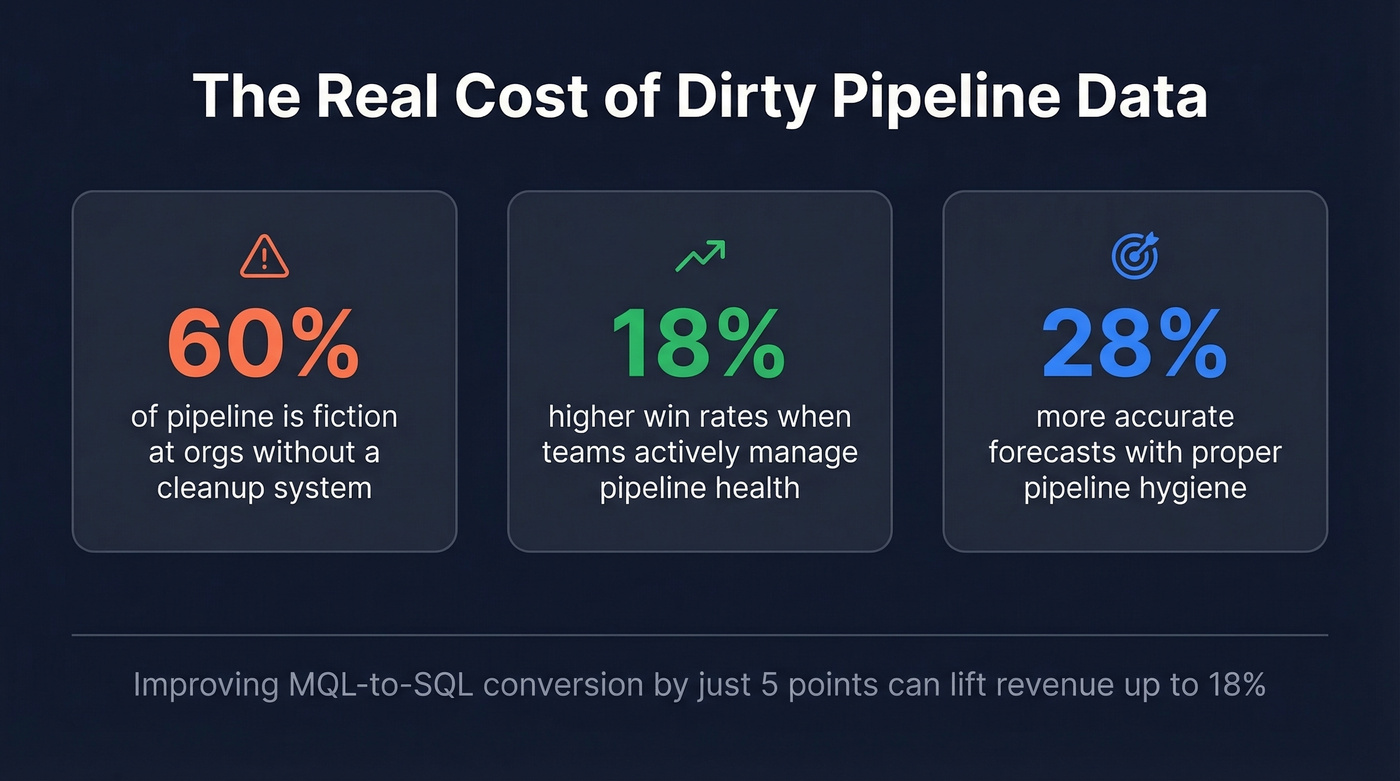
Unqualified leads inflate coverage numbers while masking the real shortfall in qualified opportunities that reps can actually close. Teams that actively manage pipeline health metrics achieve 18% higher win rates and 28% more accurate forecasts, and improving MQL-to-SQL conversion by just 5 points can lift revenue up to 18%. Dirty data doesn't just embarrass you in forecast calls. It costs real revenue by hiding where deals actually stall, and it destroys sales prioritization - when reps can't tell which deals are real, they spread effort evenly across live and dead opportunities alike.
The system is broken at the foundation, not at the reporting layer. RevOps teams spend hours each week chasing reps to update fields and then get blamed when forecasts miss. We've seen this pattern at dozens of companies, and it always starts the same way: nobody owns the cleanup process.
Benchmarks That Actually Matter
These benchmarks are drawn from mid-market B2B SaaS data published in 2025-2026:
| Metric | Benchmark | Flag Threshold |
|---|---|---|
| Coverage ratio | 3x (stable) / 4-5x (early) | Below 2.5x |
| Win rate | 20-30% | Below 15% |
| Median sales cycle | 84-90 days (optimal: 46-75) | Over 100 days |
| MQL-to-SQL conversion | 15-21% | Below 12% |
| Opp-to-Close (SMB) | ~39% | Below 25% |
| Opp-to-Close (Enterprise) | ~31% | Below 20% |
| Stage duration: Negotiation | Varies | Flag at 75+ days |
| Stage duration: Proposal | Varies | Flag at 45+ days |
These aren't aspirational targets. They're baselines. If you're significantly below any of them, you've got a hygiene problem masquerading as a performance problem.
Five Standards for a Clean Pipeline
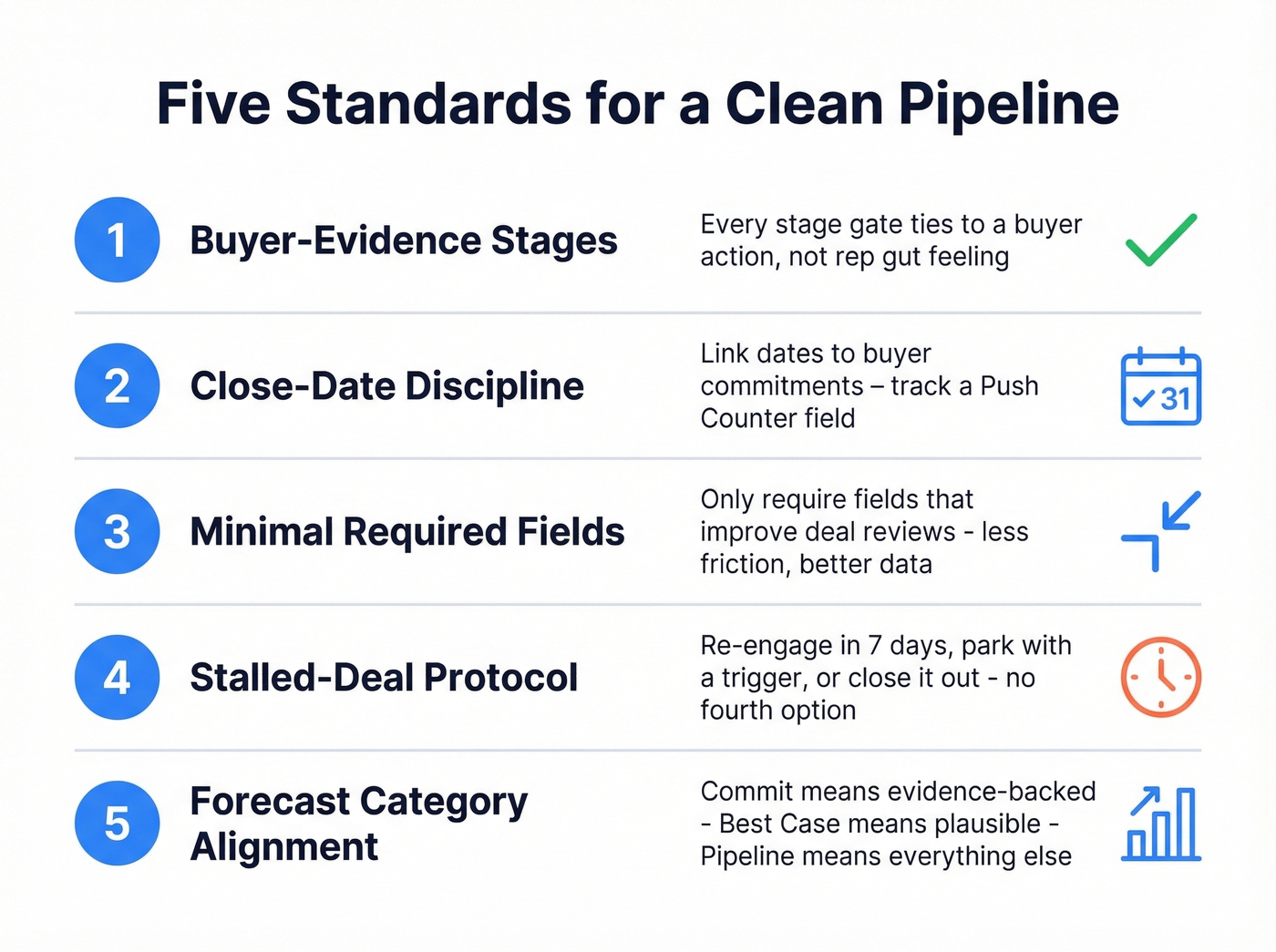
Buyer-Evidence Stages
Every stage gate ties to a buyer action, not a rep's gut feeling. "Sent proposal" isn't a stage - "buyer confirmed evaluation criteria and requested pricing" is. This is the single most effective defense against deal gaming, where reps advance opportunities based on their own activity rather than verified buyer commitment. In our experience, teams that switch to buyer-evidence stages see win rates climb within a single quarter because the pipeline finally reflects reality.
Close-Date Discipline
Close dates should link to a buyer commitment - a scheduled decision meeting, a procurement deadline, something concrete. Track a "Push Counter" field that increments every time a close date slips. Three pushes without new buyer evidence? That deal needs a hard conversation.
Minimal Required Fields
Only require fields that improve deal reviews. Reps aren't lazy - your CRM is hostile. Every unnecessary field is friction that degrades data quality across the entire org.
Stalled-Deal Protocol
Every stalled deal gets one of three outcomes: re-engage by booking a buyer meeting within 7 days, park it with a trigger event and review date, or close it out. No fourth option. Idle opportunities are the silent killers of forecast accuracy - they sit in pipeline for months, consuming mindshare without advancing.
Forecast Category Alignment
Commit means evidence-backed: a verbal yes, a signed order form in legal, a PO number. Best Case means plausible with identified next steps. Pipeline means everything else. If your team can't agree on these definitions, start there before touching anything else.

Pipeline hygiene starts before deals enter your CRM. When 60% of your pipeline is fiction, the root cause is often bad contact data - wrong emails, dead numbers, outdated titles. Prospeo's 7-day data refresh and 98% email accuracy mean every opportunity is built on verified buyer data, not stale records that inflate your coverage ratio.
Stop scrubbing dead deals. Start with clean data from day one.
The Weekly Pipeline Review
Here's the thing: if your pipeline review is reps reading CRM notes aloud while a VP nods, you're wasting everyone's time. The goal is to clear fiction from your pipeline so the team can focus on winnable deals. Here's a 45-minute framework that works.
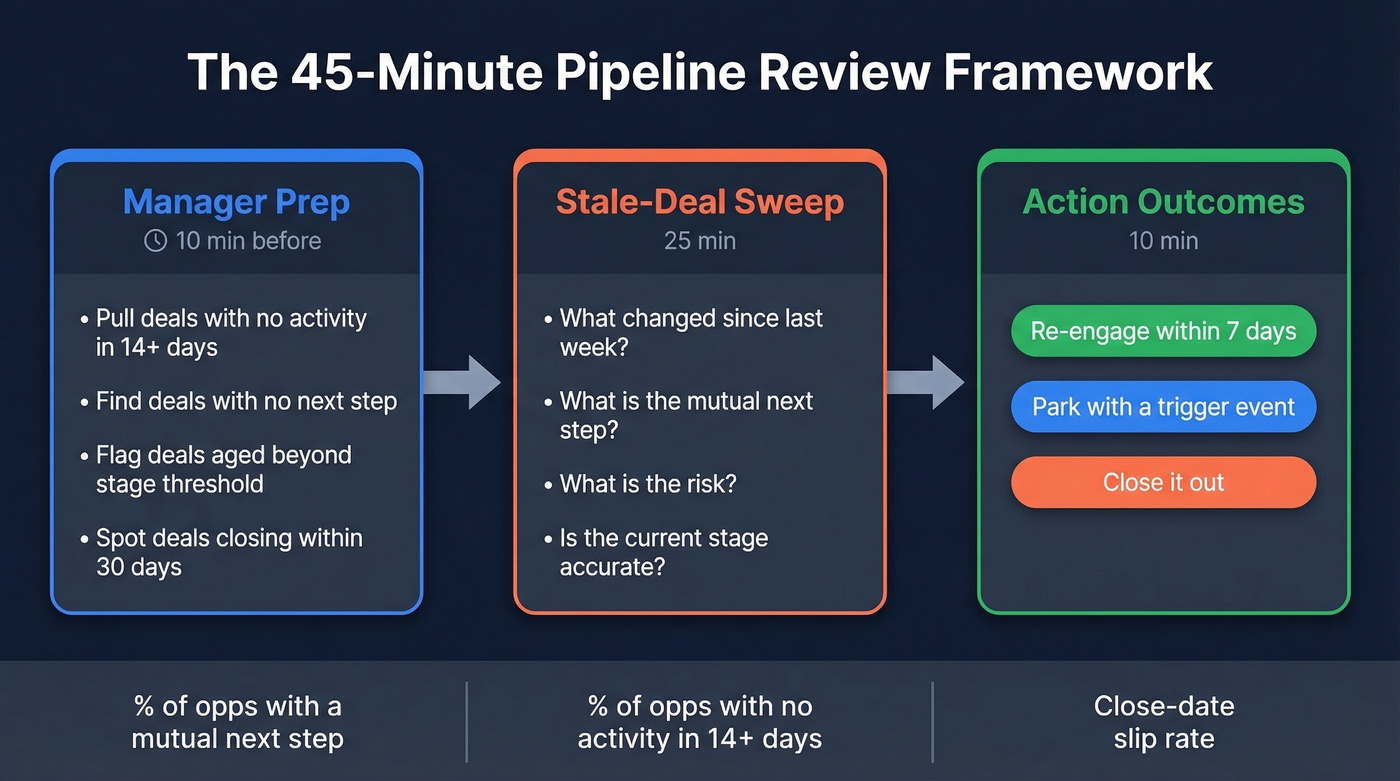
Manager prep (10 min before). Pull four lists - deals with no activity in 14+ days, deals with no next step, deals aged beyond stage threshold, and deals closing within 30 days. Also flag any opportunities not in CRM, the deals reps mention in Slack or standups that haven't been logged yet.
Stale-deal sweep (25 min). For each flagged deal, ask four questions: What changed since last week? What's the mutual next step? What's the risk? Is the current stage accurate? Don't let reps narrate - interrogate the data.
Action outcomes (10 min). Every flagged deal exits with a decision: re-engage within 7 days, park with a trigger, or close out.
Scorecard metrics to track weekly:
- % of opps with a mutual next step
- % of opps with no activity in 14+ days
- Close-date slip rate
Review Cadence Model
| Review Type | Frequency | Duration | Focus |
|---|---|---|---|
| Rep-manager 1:1 | Weekly | 30-45 min | 3-5 high-value/at-risk deals |
| Team review | Bi-weekly | 60-90 min | Patterns + shared learning |
| Forecast review | Monthly | 90-120 min | Leadership commitments |
| Pipeline planning | Quarterly | Half-day | RevOps + sales leadership |
The weekly 1:1 is non-negotiable. Skip it and you're back to status theatre within two weeks.
Automate Your Pipeline Cleanup
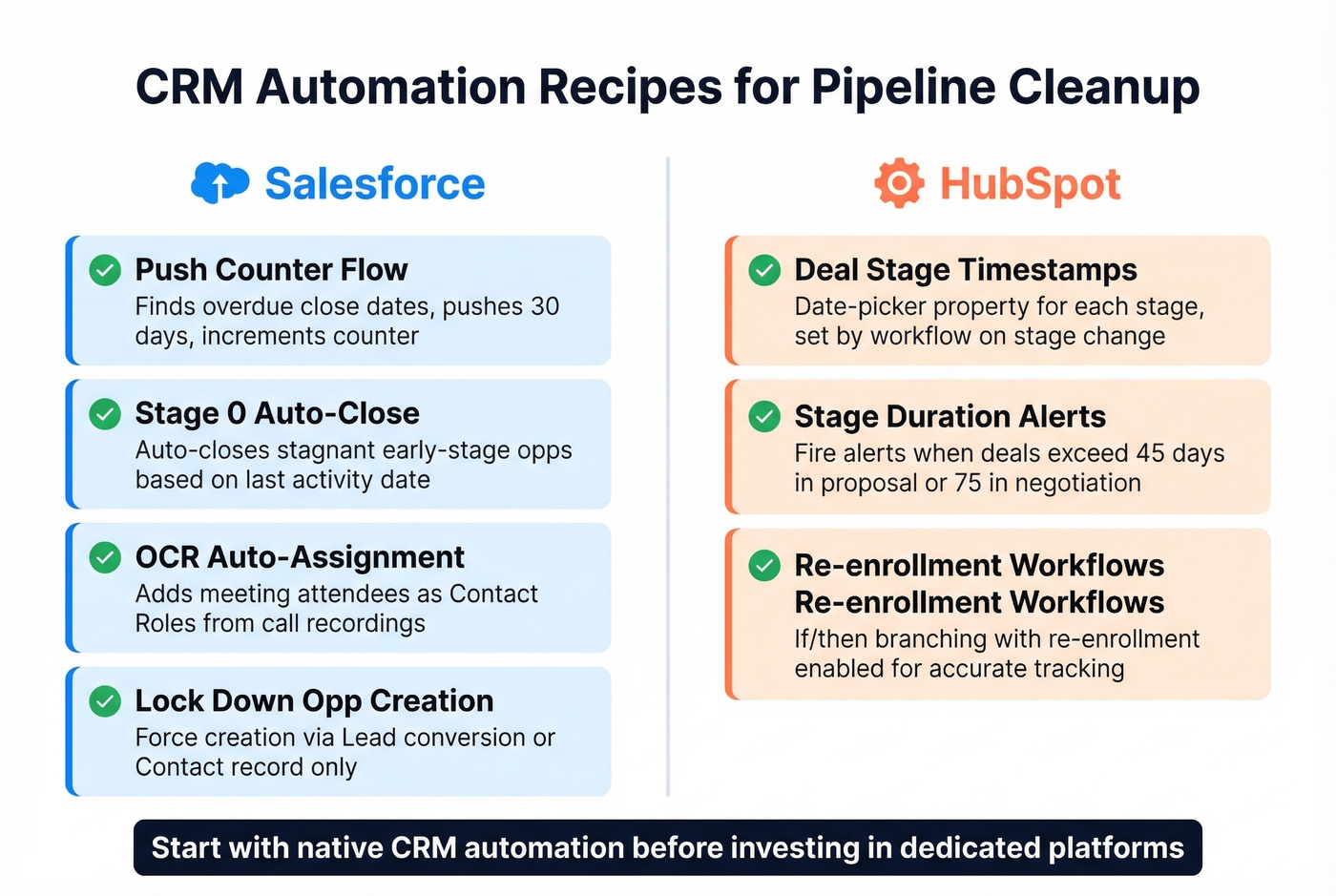
Most teams should start with native CRM automation before investing in dedicated pipeline management platforms, which often run mid-four to low-five figures annually. The goal is automated deal hygiene - systems that enforce standards without relying on rep discipline. If you're mapping this to broader sales process optimization, treat automation as enforcement, not reporting.
Salesforce Automation Recipes
These Salesforce automations from RevOps Co-op work in production:
Push Counter flow. A scheduled flow finds open opps with close dates in the past, pushes the date out 30 days, and increments a Push Counter field. Managers filter by push count to find chronically slipping deals. Simple, effective, and it takes about 20 minutes to build.
Stage 0 auto-close. A scheduled flow references last activity date - not last modified - to auto-close stagnant early-stage opps. Stage 0 often becomes "dibs" territory. This prevents hoarding.
OCR auto-assignment. Use call recording tools to add meeting attendees as Opportunity Contact Roles automatically. Include a domain exclusion list so internal employees don't get added.
Manager override checkbox. Before auto-closing later-stage deals, send a warning email and provide a Manager Override checkbox. Only managers can check it, preserving legitimate deals while clearing the rest.
Lock down opportunity creation. Remove the "New Opportunity" button from the Opportunity tab entirely. Force reps to create opps via Lead conversion or from a Contact record. This single change prevents phantom pipeline from ever entering your CRM - no more "dibs" deals with no associated contact or qualifying activity. We've seen teams cut phantom pipeline by 30% in the first month with this change alone.
HubSpot Automation Recipes
HubSpot's approach emphasizes time spent in deal stages as a key health signal. Create a "Deal Stage Timestamp" date-picker property for each stage, build workflows that trigger on deal stage change with re-enrollment enabled, and use if/then branching to set the correct timestamp.
Once timestamps are in place, fire alerts when deals exceed expected stage duration - 45 days in proposal, 75 days in negotiation. Reps don't have to do anything. The system tracks stage time automatically and flags problems before they compound. This kind of quality improvement compounds over quarters, with each cycle starting cleaner than the last.
Fix Your Upstream Data
Let's be honest about something: most pipeline hygiene advice focuses on cleaning stale deals. That's reactive. The proactive move - the one that actually prevents the problem - is ensuring contacts are verified before they ever enter the pipeline.
The pattern is always the same. An SDR books 15 meetings in a month, but 9 of those contacts had bad emails, disconnected phones, or outdated job titles. Those "meetings" become phantom pipeline, deals that were dead on arrival because the underlying contact data was garbage. That's not a process problem. That's a data problem.
Prospeo catches this at the source with 98% email accuracy, a 7-day data refresh cycle, and native Salesforce and HubSpot integrations so enrichment happens inside your CRM - no CSV exports, no manual cleanup. One customer, Meritt, dropped their bounce rate from 35% to under 4% after switching their data source. Their pipeline tripled from $100K to $300K per week.
Pipeline hygiene isn't just about stage discipline - it's about whether the contacts in your pipeline are reachable. Clean the upstream data, and half your downstream problems disappear. If you're evaluating vendors, start with a shortlist of data enrichment services and compare coverage vs verification.
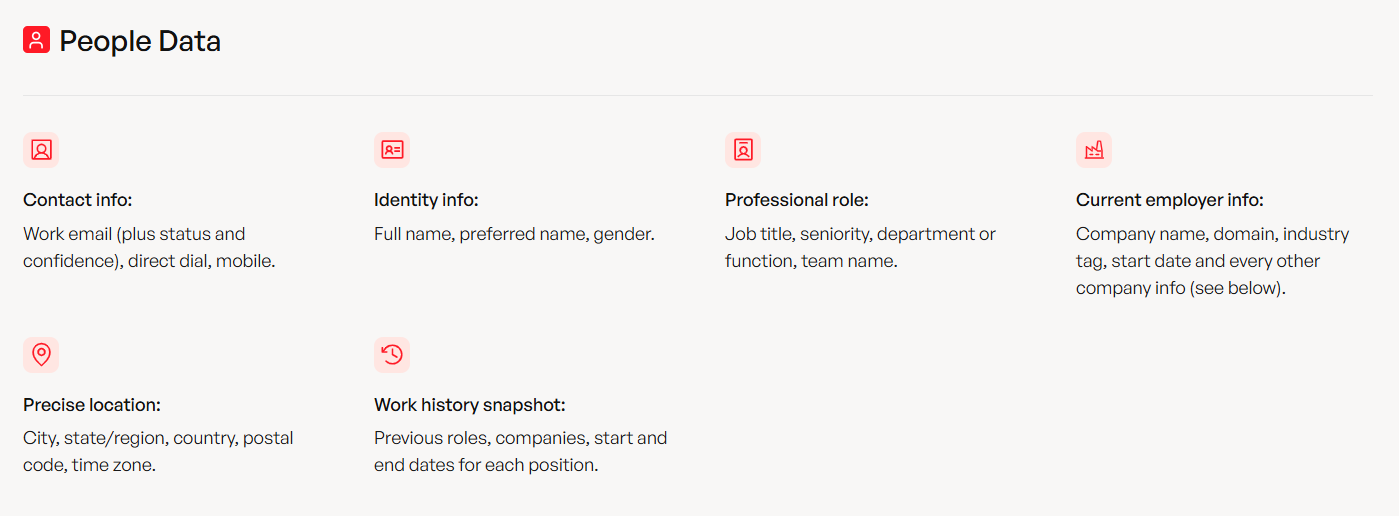
Your CRM enrichment workflow is only as good as the data feeding it. Prospeo returns 50+ data points per contact at a 92% match rate - job titles, direct dials, verified emails - so your stale-deal sweeps actually surface real opportunities instead of ghosts with outdated info.
Enrich your CRM with data that's never more than 7 days old.
Pipeline Hygiene Scorecard
Track these six KPIs monthly. If more than two are red, stop selling and start cleaning.
| KPI | Target | Red Flag |
|---|---|---|
| % opps with mutual next step | >80% | Below 60% |
| % no activity 14+ days | <15% | Above 25% |
| % aged beyond stage threshold | <10% | Above 20% |
| Close-date slip rate | <20% | Above 35% |
| Contact data completeness | >90% | Below 75% |
| Pipeline coverage ratio | 3x-5x | Below 2.5x |
Contact data completeness is the one most teams ignore. If 25% of your pipeline contacts are missing verified emails or direct dials, your reps are wasting cycles on unreachable buyers. Run CRM enrichment quarterly against your existing records to plug the gaps. If you need a broader baseline, compare against sales pipeline benchmarks before you reset targets.
FAQ
How often should you clean your sales pipeline?
Weekly at minimum. Run a 45-minute review each week to catch stale deals, verify next steps, and update close dates. Layer in bi-weekly team reviews and monthly forecast sessions for leadership alignment. Consistent cleanup prevents the end-of-quarter scramble where managers spend days reconciling fantasy numbers with reality.
What's a good pipeline coverage ratio?
3x quota for stable mid-market SaaS teams. Early-stage companies or teams with sub-20% win rates should target 4x-5x. But coverage only matters if the pipeline is honest - inflated numbers create false confidence and misallocate resources. If your team hasn't done a proper cleanup in months, skip the coverage ratio and audit deal quality first.
How do you prevent bad data from inflating your pipeline?
Verify contact data before it enters your CRM. Tools like Prospeo check emails and phone numbers with 98% accuracy on a 7-day refresh cycle, so deals are built on reachable contacts from day one. Pair verification with stage-gate criteria that require buyer evidence, and you'll build a qualified pipeline instead of a wish list.
What CRM automations improve pipeline quality fastest?
A push-counter flow and a stale-deal auto-close rule deliver the most immediate impact. The push counter flags deals that have slipped three or more times, while auto-close removes early-stage opportunities with no activity in 30+ days. Together they cut phantom pipeline by 20-40% within the first quarter. Start there, then layer in stage-duration alerts and locked opportunity creation as your team matures.