

How to Build a Prospect Persona Your Sales Team Will Actually Use
Your SDR manager told the team to "personalize more." Nobody got a framework for who they're personalizing to. Reps guess, sequences sound generic, and reply rates keep sliding - from a healthy 5-10% to sub-1% for most outbound teams today. Somewhere in a shared drive sits a beautiful prospect persona doc that marketing spent weeks on. Nobody's opened it since the all-hands where it debuted.
Let's fix that.
What Is a Prospect Persona?
Three terms get tangled constantly, so let's untangle them once.
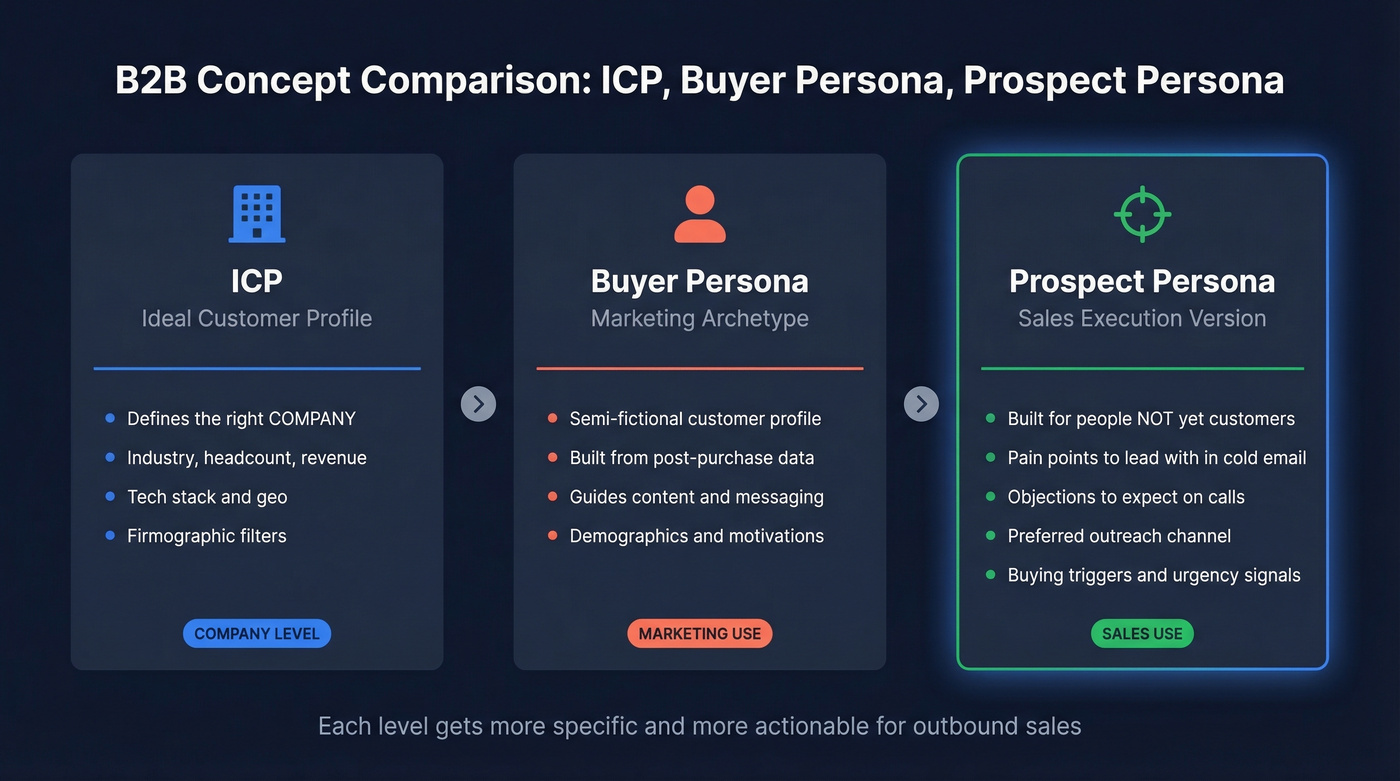
Your ICP defines the right company - industry, headcount, revenue, tech stack. Your buyer persona defines the right individual - a semi-fictional archetype built from existing customer data. A prospect persona is the sales-execution version of that buyer persona, built specifically for people who aren't customers yet.
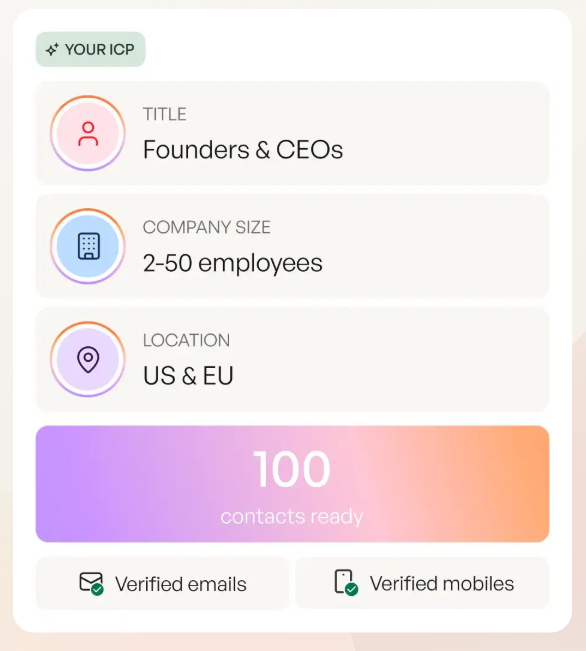
The difference matters more than most teams realize. A buyer persona tells marketing how to write blog posts. A prospect persona tells an SDR what pain to lead with in a cold email, what objections to expect, and which channel this person actually responds on. With B2B buying committees now averaging 6-10 stakeholders, you need distinct personas for the key seats at the table - not just the signer.
Why Prospect Personas Matter
71% of companies that exceeded revenue and lead goals had documented personas. Teams that align outreach to persona needs report 56% higher lead quality and 36% shorter sales cycles.
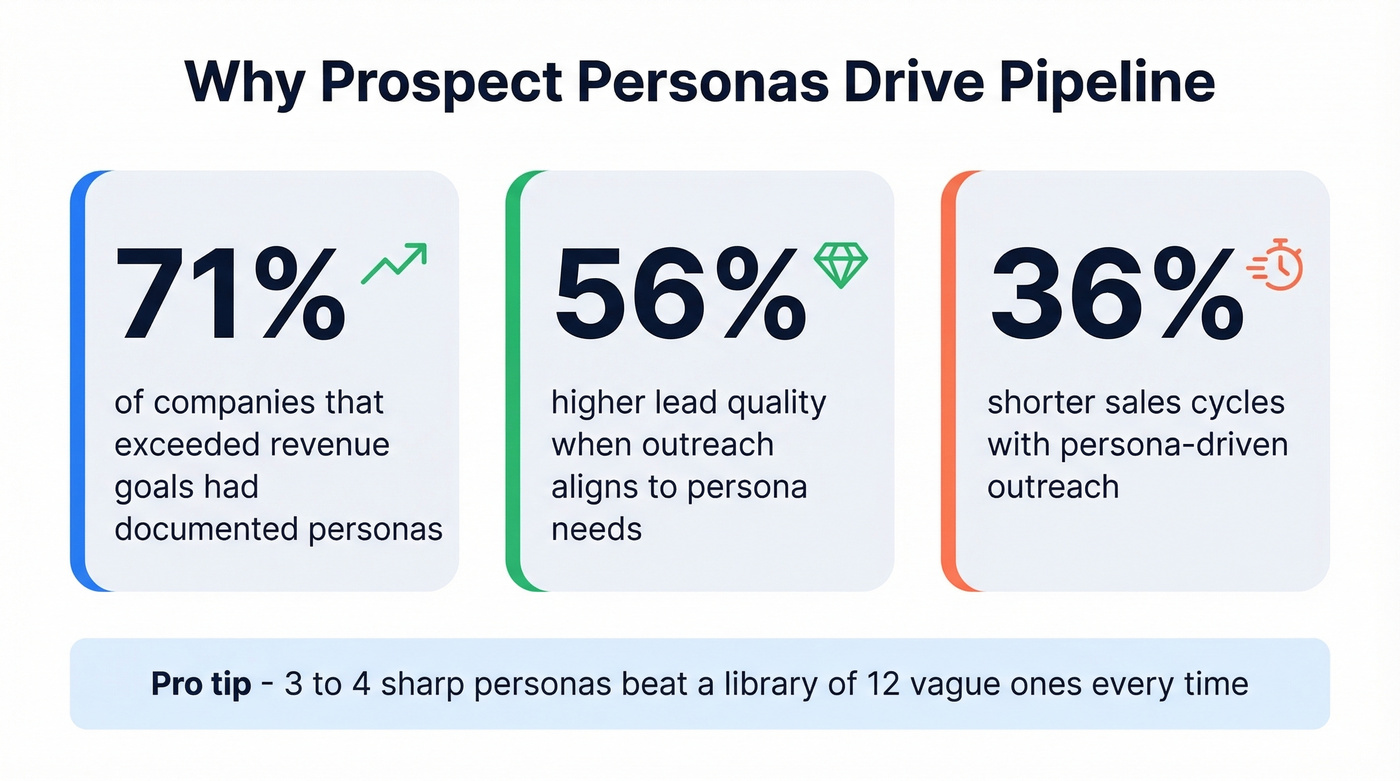
Here's the thing: 3-4 sharp personas beat a library of 12 vague ones. Every time. More personas means more dilution, more confusion for reps, and less adoption. Pick the buying roles that matter to your deal and go deep on those.
Ready-to-Use Template
The Fields
| Field | What to Capture |
|---|---|
| Firmographics | Industry, headcount, revenue, geo |
| Job title & seniority | Exact titles + seniority level |
| KPIs they own | Metrics that define their success |
| Pain points | Frustrations your product solves |
| Common objections | Why they say no or stall |
| Buying triggers | Urgency events: funding, hiring, churn |
| Decision criteria | How they evaluate vendors |
| Preferred channels | Email, phone, social, events |
| Buying committee role | Champion, evaluator, buyer, blocker |
Filled Example - "Director Dana"
Name: Director Dana
Title: Director of Revenue Operations
Company: B2B SaaS, 150-500 employees, Series B/C
KPIs: Pipeline velocity, CRM hygiene, rep ramp time
Pain points: Reps waste 4+ hours/week on manual research. Enrichment tools return stale data.
Objections: "We already have a data vendor." "No bandwidth for another tool."
Buying triggers: New CRO hire, missed pipeline target, CRM migration
Decision criteria: Data accuracy, stack integration, time-to-value
Preferred channels: Email first, then a short demo - hates cold calls
Buying committee role: Champion / evaluator
We've used "Director Dana" internally for months. She shows up in pipeline reviews, in email copy critiques, in objection-handling practice. That's the test of a good persona - people reference it by name without being asked to.
The Negative Persona
Not every lead deserves a sequence. Build an exclusionary persona too: companies under 10 employees with no sales team, individuals with zero budget authority, industries where you have no case studies. Disqualifying early saves reps from chasing dead ends, and it protects your domain reputation from bounces and spam complaints.

Your negative persona protects domain reputation - but so does data accuracy. Prospeo's 5-step email verification delivers 98% accuracy and sub-4% bounce rates, so your carefully built personas don't get wasted on dead addresses.
Stop sending persona-perfect copy to invalid emails.
How to Build One Step by Step
When You Have Customer Data
Stop building personas in a vacuum. Build them backward from your last 20 closed-won deals. Pull the contacts, look at titles, seniority, and the objections that surfaced during the sales cycle. Patterns emerge fast.
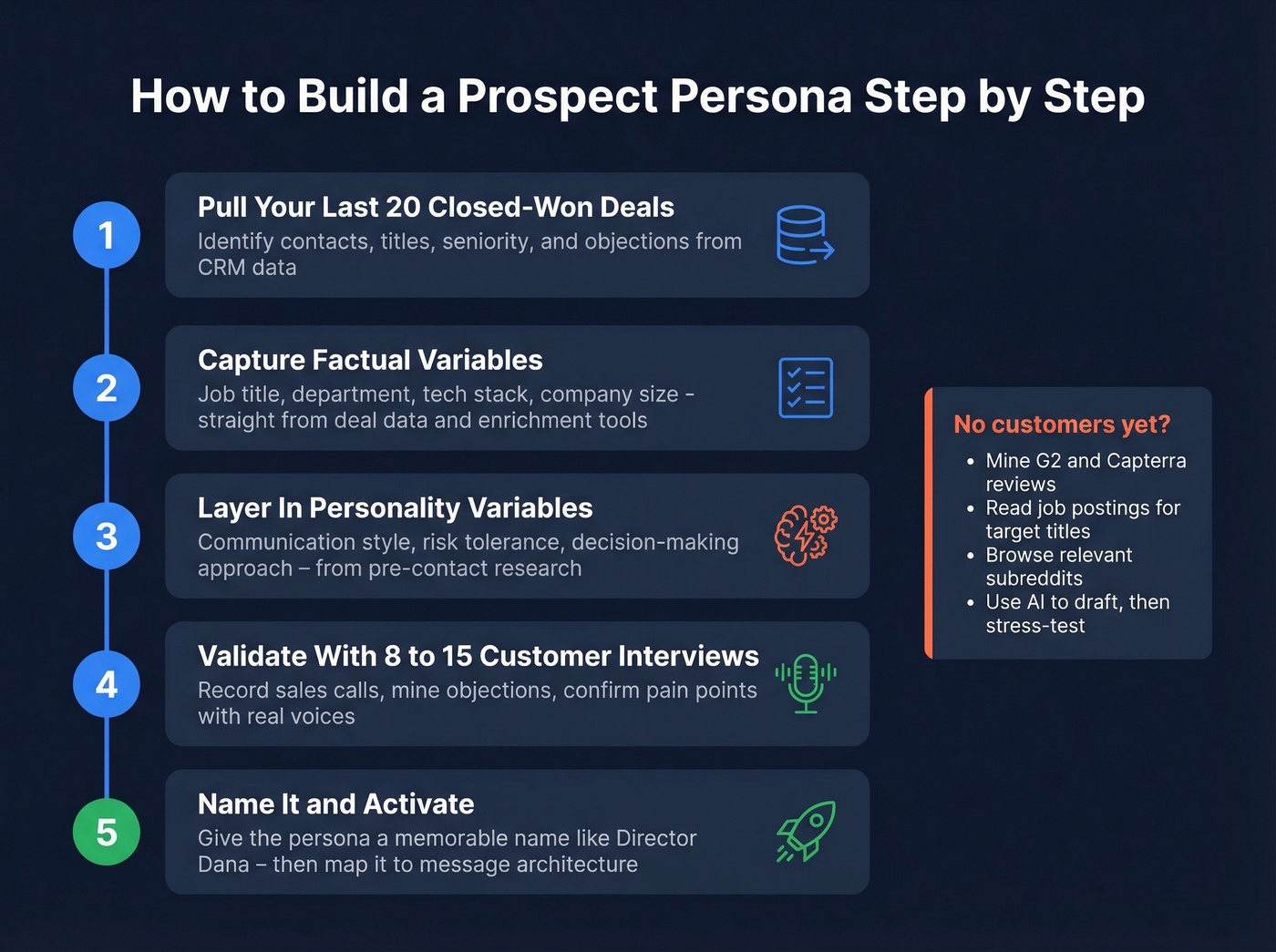
Think of it as a two-step process. First, capture the factual variables - job title, seniority, department, tech stack, company size - from deal data and enrichment tools (see data enrichment). Then layer in personality variables through pre-contact research: communication style, risk tolerance, how they make decisions. Teams who separate these two steps build sharper profiles in half the time, because they're not guessing at firmographics and psychology simultaneously.
Customer interviews are the gold standard for persona research. A practical target is 8-15 interviews per persona, then ongoing validation through recorded sales calls. The objections reps hear daily are persona research hiding in plain sight.
When You Have Zero Customers
This is the pain point nobody talks about on Reddit - most persona guides assume a CRM full of closed-won data. If you're launching from scratch, you don't have that luxury.
Workarounds that actually work: mine competitor reviews on G2 and Capterra for pain-point language. Read job postings for your target title - the responsibilities section is a cheat sheet for KPIs. Browse subreddits where your prospects vent. Use enrichment data to validate assumptions about titles and seniority at target accounts. And lean on AI to generate draft personas you can stress-test against real conversations.
Activate Your Persona in Outbound
A persona without verified contact data is just a creative writing exercise.
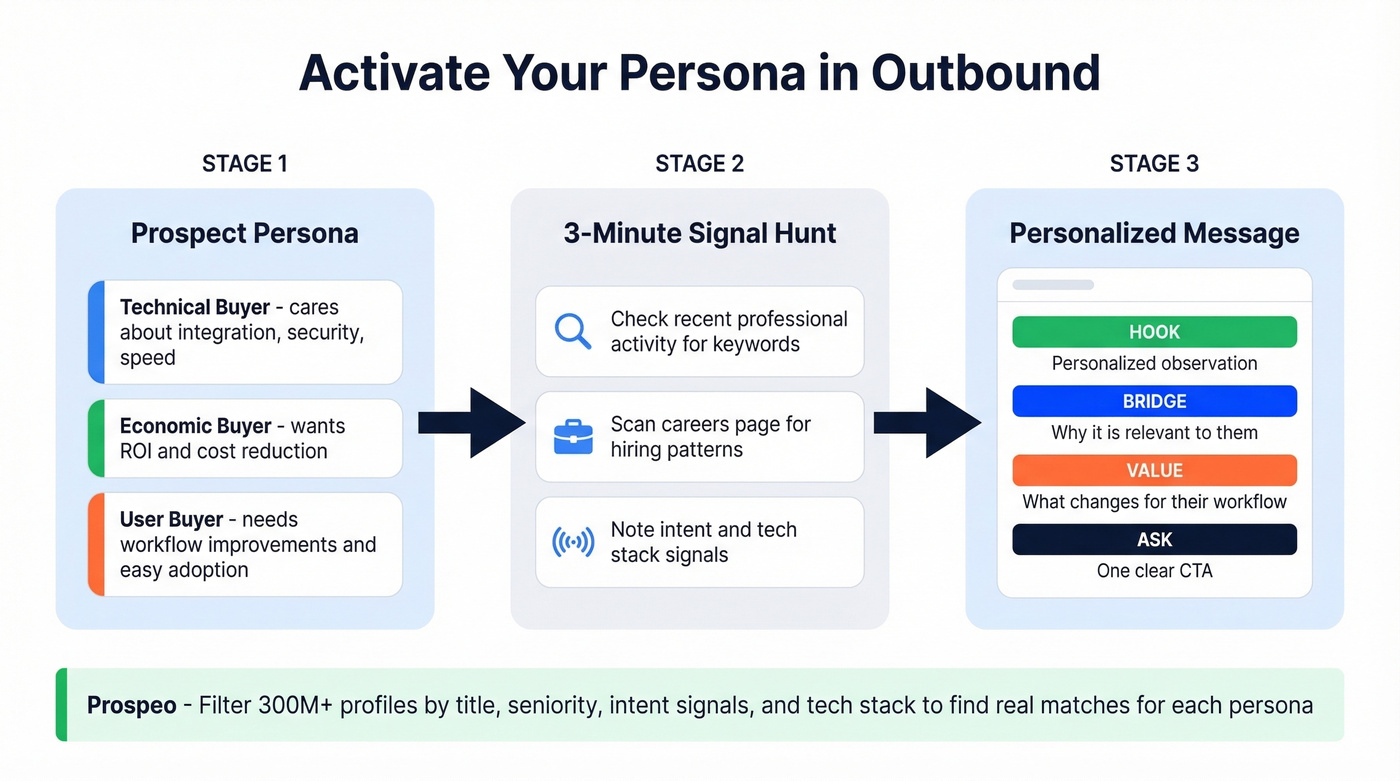
Map each persona to a message architecture. Your technical buyer cares about integration, security, and speed - personalize to their tech stack. Your economic buyer wants ROI and cost reduction - lead with numbers. Your user buyer needs workflow improvements and easy adoption. One tip that's surprisingly effective: subscribe to the same trade publications your persona reads. When you reference an article their peers are sharing, you stop sounding like a cold emailer and start sounding like an insider.
Before writing a single email, run a 3-minute signal hunt. Check recent professional activity for keywords, scan the company's careers page for hiring patterns, and note any intent or tech stack signals. Then structure your message: Hook (personalized observation), Bridge (why it's relevant), Value (what changes), Ask (one clear CTA). If you need more ways to source those signals, use these sales prospecting techniques.
Now the data step. In Prospeo's database, filter 300M+ profiles by job title, seniority, intent signals, and tech stack to find real people who match your persona. Export verified emails with 98% accuracy and direct dials. The 7-day data refresh cycle means you're not messaging someone who changed jobs weeks ago.
You just mapped Director Dana's title, seniority, tech stack, and buying triggers. Prospeo lets you filter 300M+ profiles by all of those - plus intent data across 15,000 topics - so every export is a persona-matched list with verified emails and direct dials.
Turn your persona template into a pipeline list in minutes.
Common Mistakes
- Using a B2C model for B2B. Consumer personas focus on demographics and lifestyle. B2B personas need buying committee roles, decision criteria, and budget cycles (use MEDDIC sales qualification to keep it grounded).
- Not involving sales. Marketing builds the doc; SDRs ignore it. Listen to sales calls for real objections instead of guessing at them (a simple sales enablement loop helps).
- Not naming your personas. "Director Dana" gets referenced in pipeline reviews. "Persona #3" doesn't.
- Building once and forgetting. Annual refresh minimum. Quarterly is better.
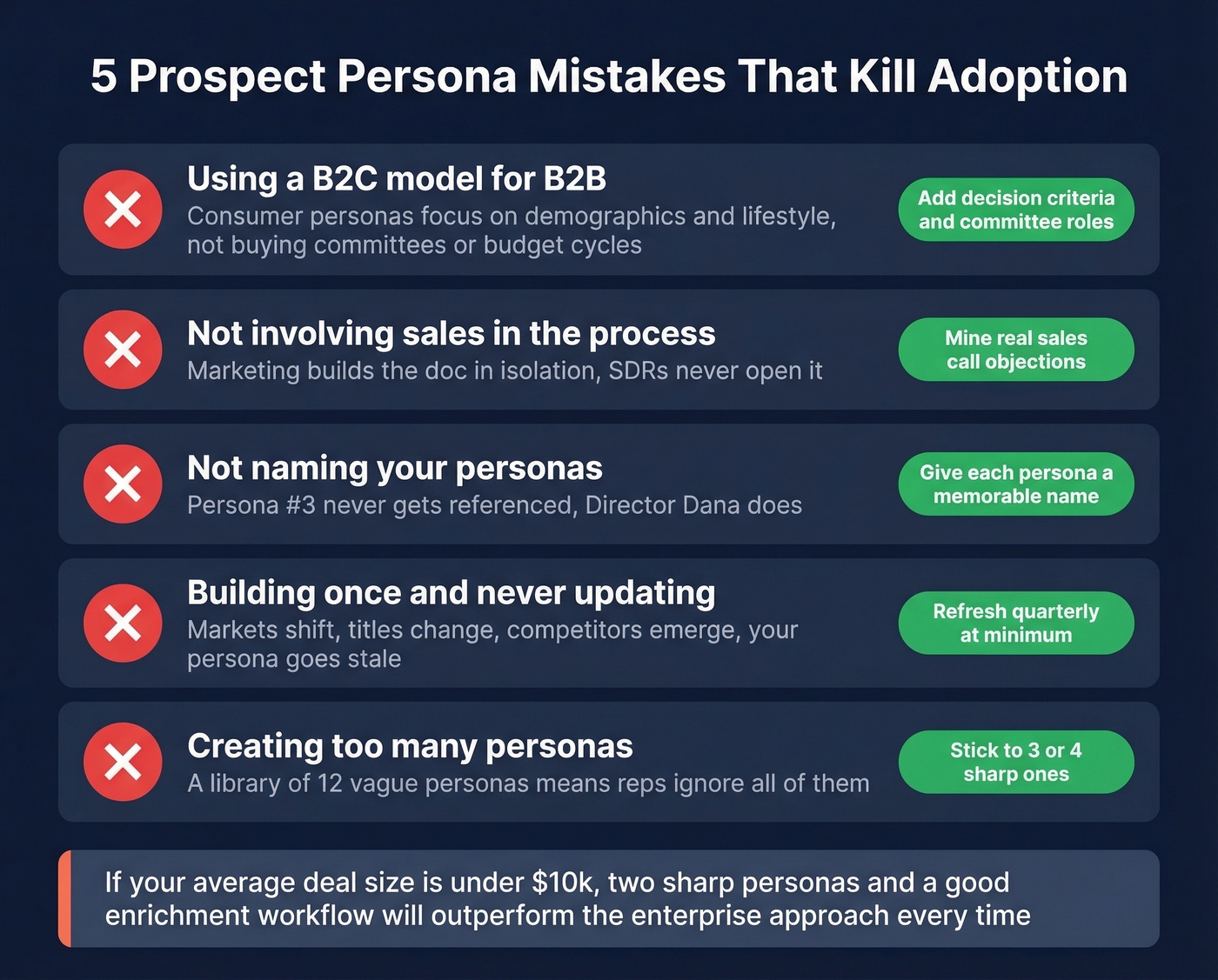
Look, if your average deal size is under $10k, you don't need 8 personas and a 40-page playbook. Two sharp prospect personas and a good enrichment workflow will outperform the enterprise approach every time. Complexity is where persona adoption goes to die. If you're struggling to operationalize it, tighten your lead generation workflow first.
Use AI to Stress-Test Personas
Generate 5-10 draft personas in ChatGPT, then run your cold email copy through each one. Ask the AI to respond as that persona - buy or no-buy, and why. You'll surface objections and copy gaps you'd never catch in a team brainstorm. For a free starting point, HubSpot's Make My Persona tool walks you through the fields and exports a shareable PDF.
Personas are outdated the moment you create them. Markets shift, titles change, competitors emerge. Use AI to regenerate and pressure-test quarterly - not just when someone remembers the doc exists. In our experience, the teams that treat personas as living documents instead of one-time deliverables are the ones that actually see pipeline impact.
Skip the AI step if you already have 15+ customer interviews recorded. Real voice-of-customer data beats synthetic stress-testing. Use AI when you're filling gaps, not replacing research.
FAQ
What's the difference between a prospect persona and a buyer persona?
A buyer persona represents your existing customer archetype, built from post-purchase data. A prospect persona is the sales-execution version - focused on outreach triggers, likely objections, and preferred channels for people who aren't customers yet. Both share demographic fields, but the prospect version prioritizes actionable outbound signals over marketing messaging.
How many prospect personas does a B2B team need?
Three to four - one per distinct buying role such as technical evaluator, economic buyer, end user, and internal champion. More than four and SDR adoption drops sharply. Reps default to ignoring all of them.
How do I validate a persona with real contact data?
Enrich a sample of 200-500 target contacts and compare actual job titles, seniority levels, and tech stacks against your assumptions. Where patterns diverge by more than 20%, adjust the persona. Data beats intuition every time.