

How to Write a Rejection Follow Up Email That Keeps Doors Open
You poured hours into interviews, nailed the case study, got the "we loved meeting you" email - and then the rejection hit. Most people close the tab and move on. That's a mistake. A 60-second rejection follow up email can be the difference between a dead end and a door that reopens six months later.
61% of job seekers report being ghosted after an interview. Reply rates to rejection emails sit in the single digits. That gap is your opportunity.
What You Need (Quick Version)
- Reply within 24 hours, keep it under 150 words, and match the channel they used.
- If you only send one type of reply, use the final-round template with a feedback ask - that's where the relationship equity is highest.
- After you've replied, go on offense: find hiring managers at your next target companies directly instead of waiting for another application black hole.
When to Reply (and When to Skip It)
Reply if the rejection came from a real person you spoke with - a recruiter or hiring manager - and it arrived from a named email address, not a no-reply inbox. Reply within 24 hours while you're still fresh in their mind.
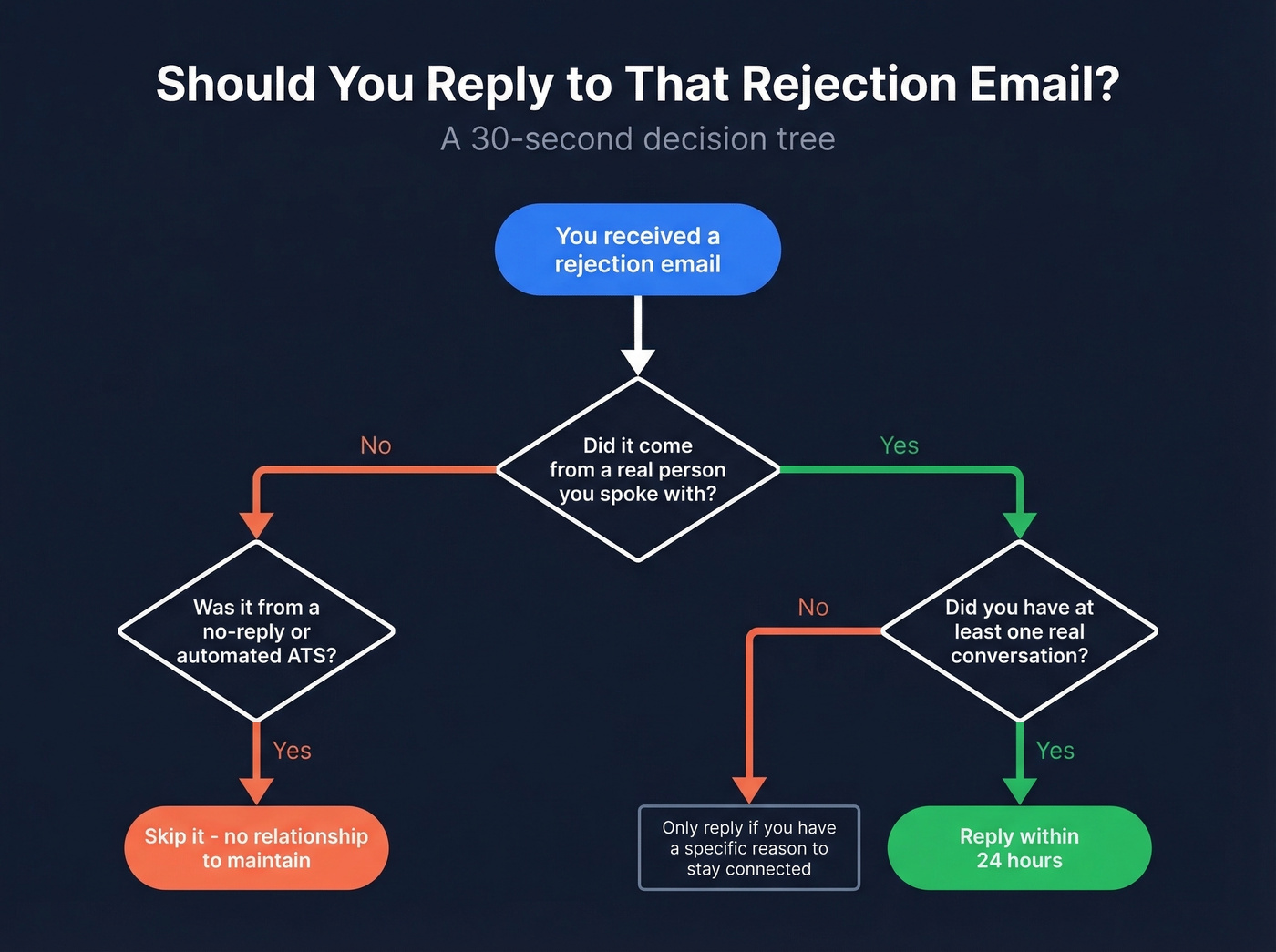
Skip it if it's an automated form letter from an ATS you never interacted with beyond clicking "apply." A firm, automated "no" with no relationship behind it isn't worth chasing.
Length, Tone, and Subject Line Rules
- 75-150 words. Recruiters juggle 10-20 open roles. Respect their time.
- Subject line: don't create one. Hit reply on the same thread so the recruiter has context without searching. (If you need ideas, borrow from these email subject line examples.)
- Match the channel. Reply to the email, return the voicemail, or ask on the call - use whatever medium they used.
- One exclamation mark max. Three makes you look unhinged.
5 Templates That Actually Get Read
These are copy-paste ready. Adjust the bracketed sections and send.
Early-Stage Graceful Exit
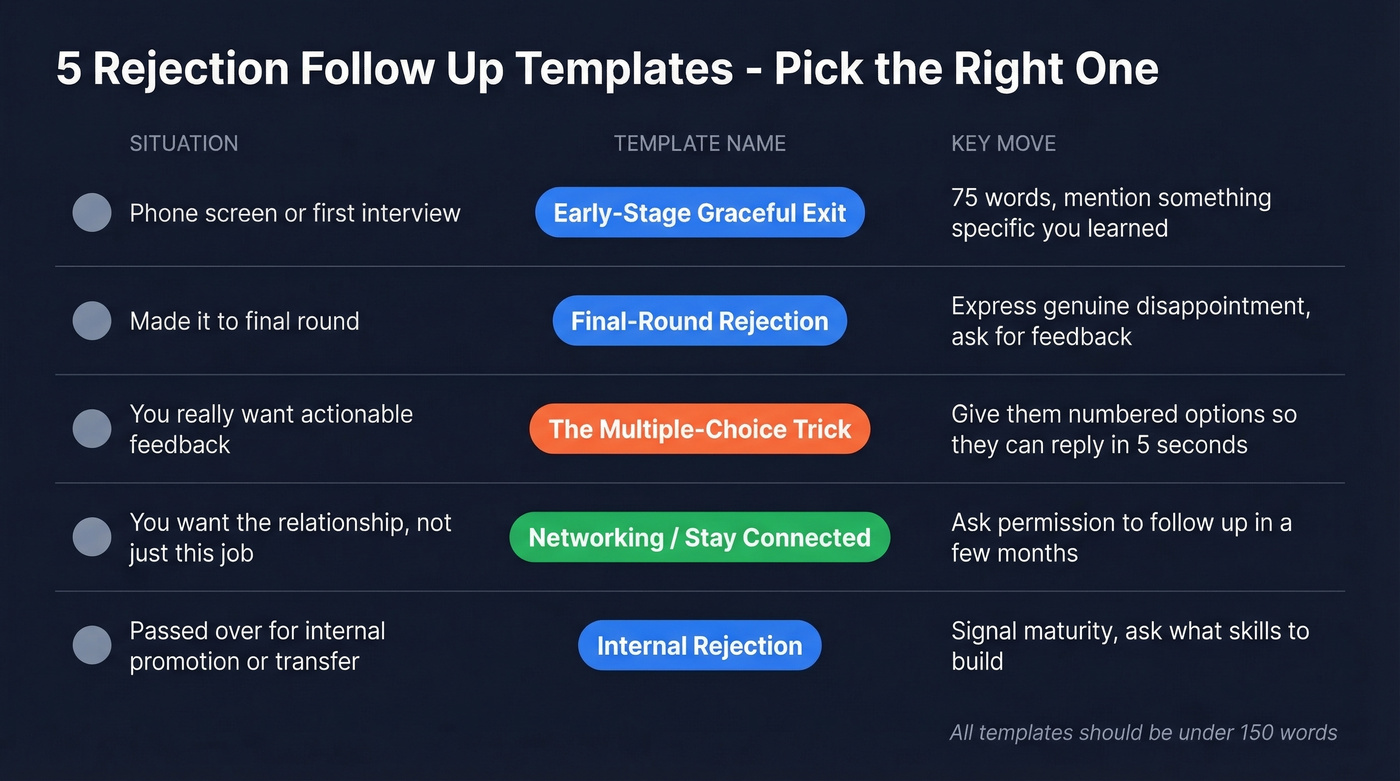
Use this after one or two conversations. One candidate on r/jobhunting sent exactly this kind of reply and got a call back weeks later when a new spot opened.
Hi [Name],
Thanks for letting me know, and for taking the time to speak with me about the [Role] position. I enjoyed learning about [specific thing - the team's approach to X, the product roadmap, etc.].
If anything changes or a similar role opens up, I'd love to be considered.
Best, [Your name]
After a Final-Round Rejection
Final rounds often come down to two or three top candidates. You're the silver medalist - stay gracious and you stay first in line when offers fall through.
Hi [Name],
I appreciate you letting me know. While I'm disappointed - I was genuinely excited about the role and the team - I understand these decisions are never easy.
I'd welcome any feedback you're able to share on how I could strengthen my candidacy for future opportunities. Either way, I'd love to stay connected.
Thanks again, [Your name]
Feedback Request (The Multiple-Choice Trick)
Here's the thing: only 17% of employers give feedback to external candidates. The problem isn't willingness - it's effort. This format, inspired by a popular r/recruitinghell thread, lets them reply with a single number instead of composing a diplomatic paragraph from scratch.
Hi [Name],
Thanks for the update. I'd love to improve for next time - if you have 30 seconds, could you reply with the number that best applies?
- Other candidates had more relevant experience
- I was missing a key skill (which one?)
- Another candidate was already further along in the process
- My communication of [X skill/experience] wasn't clear enough
- Something else entirely
No pressure at all. Thanks either way.
[Your name]
We've seen this multiple-choice approach work well in cold outreach too - reducing friction on the reply is half the battle, whether you're selling or job hunting. (If you want more reply-driving formats, these sales follow-up templates use the same principle.)
Networking / Stay Connected
This isn't about the job you didn't get. It's about the next one. This kind of reply leads to three common outcomes: a candidate hired into a different role months later, another referred to a partner company, and a third called back when the first choice declined.
Hi [Name],
Thanks for the transparency. I really enjoyed getting to know the team and learning about [specific initiative].
I'd love to stay in touch. Would it be alright if I reached out in a few months?
Best, [Your name]
Internal Rejection (Promotion or Transfer)
You still work there tomorrow. You'll see the hiring manager in the hallway. Signal maturity without pretending you aren't disappointed.
Hi [Name],
Thanks for considering me for the [Role]. I'm disappointed, but I appreciate the transparency.
I'd value any guidance on what I could develop to be a stronger candidate next time. I'm committed to growing here and want to make sure I'm building the right skills.
Thanks, [Your name]

Rejection follow ups keep doors open - but why wait for doors at all? Prospeo gives you direct emails for hiring managers at your target companies. 300M+ profiles, 98% email accuracy, 30+ filters to find exactly the right person.
Skip the application black hole and reach decision-makers directly.
Why Replying Works: The Silver Medalist Effect
Most candidates vanish after a rejection. One recruiter on r/recruiting sent personalized rejections to four candidates - with reasons and an offer to help with resumes - and got zero responses. Not one.
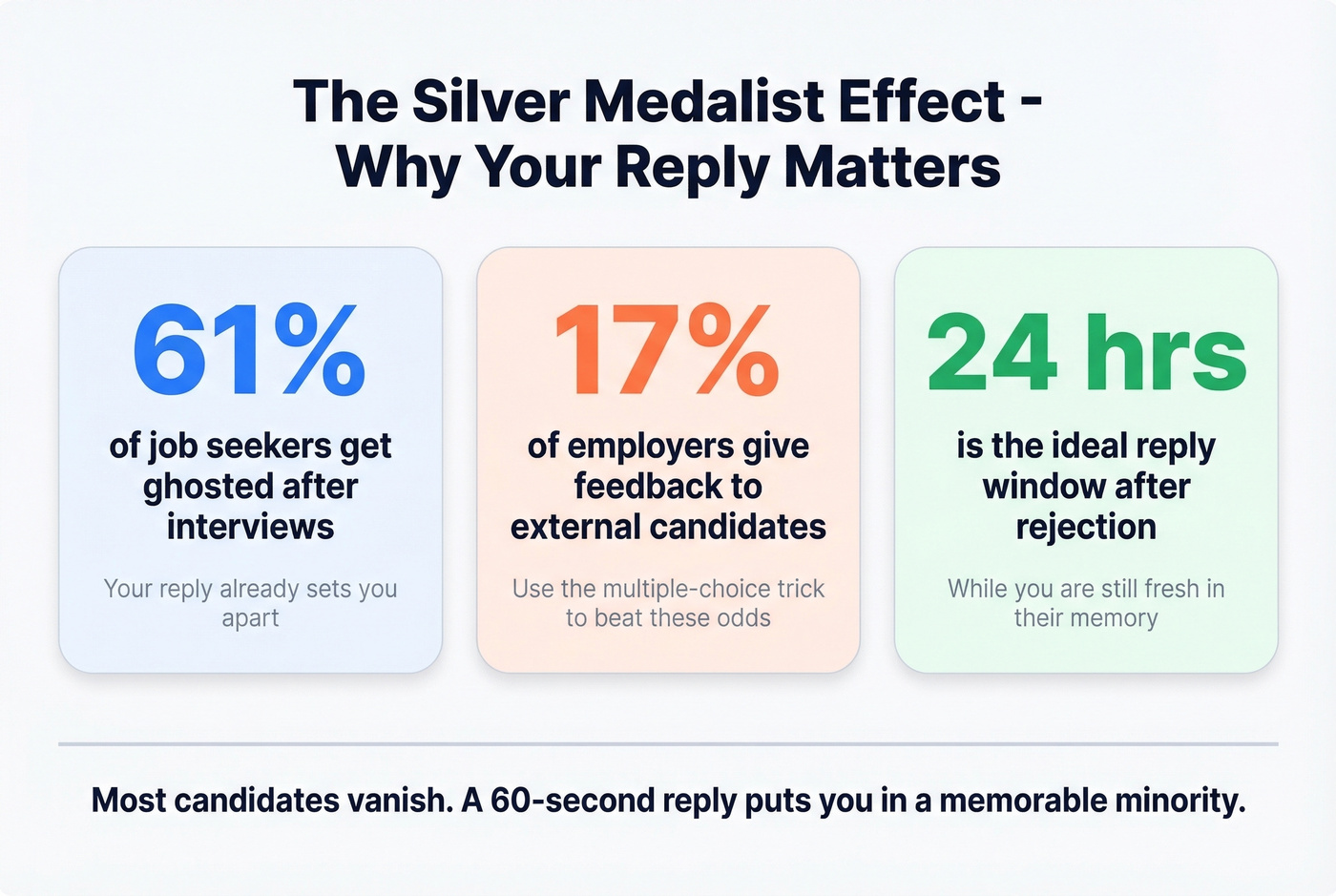
A short, professional reply puts you in a memorable minority. First choices decline offers, fail background checks, or leave within weeks of starting. Roles reopen. Budgets get approved. The person who replied graciously three months ago is the first call.
Replying won't get you hired tomorrow. But every gracious response adds a contact who thinks of you when something opens up, and that compounding effect is real. (This is the same dynamic behind the importance of follow-up in any relationship-driven process.)
Mistakes That Burn Bridges
Don't write a defensive rebuttal explaining why they made the wrong choice. Don't ask them to reconsider - you're maintaining a relationship, not negotiating a contract. And don't vent, even subtly. "I'm confused by this decision given the feedback I received" reads as passive-aggressive, not professional.
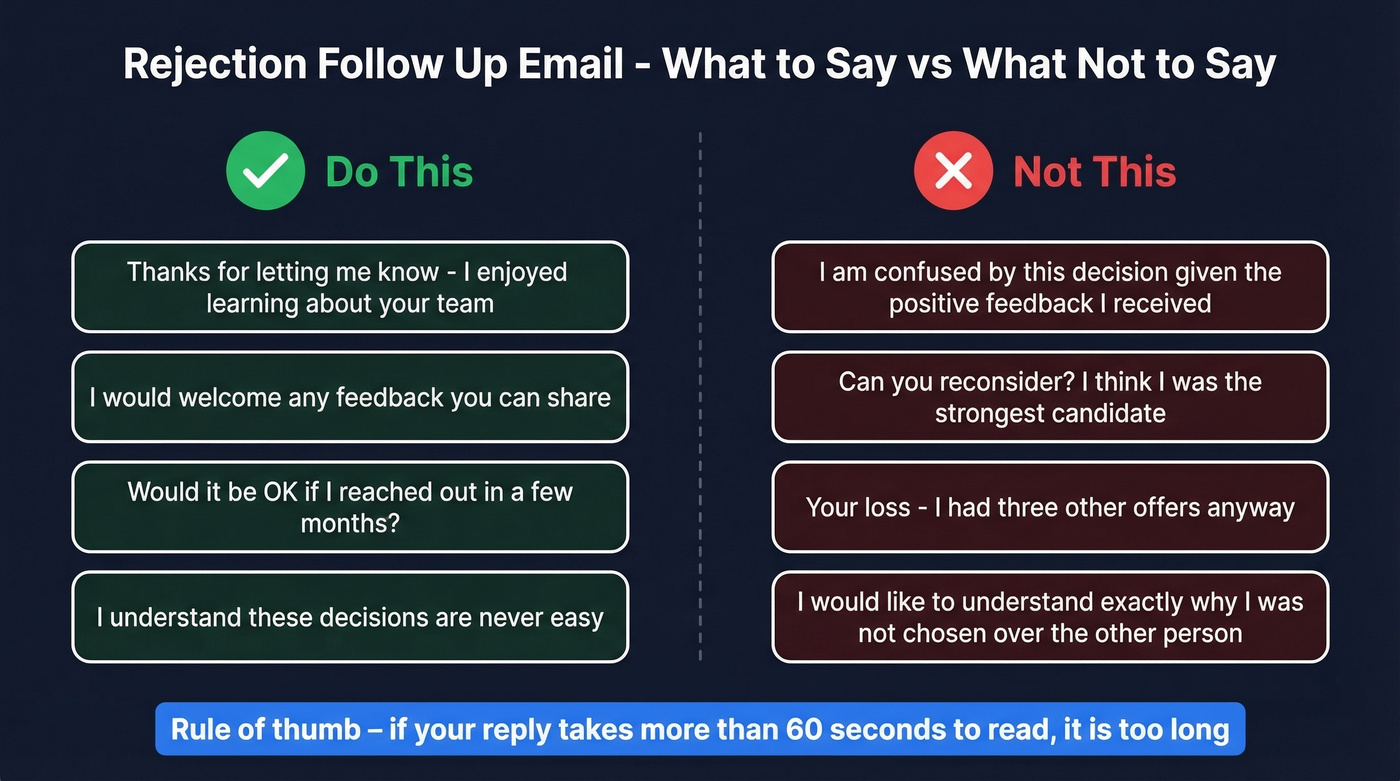
If your reply takes more than 60 seconds to read, it's too long. One r/recruitinghell post featured a draft that insulted the company and wished them harm. Funny to read. Career suicide to send. (If you tend to over-explain, use a simple email copywriting checklist to tighten it.)
Why You Won't Get Feedback (and That's OK)
Sometimes the rejection has nothing to do with you. An HR professional on Reddit described choosing an internal candidate over a strong external one - not because the external candidate was weaker, but because the internal hire was a known quantity. Recruiters also face legal risk giving specific feedback. Expect low response rates, especially for early-stage rejections. It isn't personal.
What to Do Next: Go on Offense
Let's be honest: the best response to rejection isn't the reply - it's lining up the next opportunity before the sting fades. Most candidates go back to submitting applications into an ATS and waiting. That's the slow lane.
Instead of refreshing your inbox, find the hiring manager's email directly. Tools like Prospeo give you 75 free email lookups a month - enough to reach decision-makers at your top-choice companies without waiting for a job posting to appear. A direct, personalized email to a hiring manager lands differently than application #347 in their ATS queue. (If you want a repeatable system, start with these sales prospecting techniques and adapt them to job search outreach.) One candidate sent a 15-minute Loom video after being told they were too junior - and got offered the job. Creative outreach works when you're reaching the right person. If you want to go deeper on that tactic, see this Loom video cold email playbook.
The best job search strategy isn't replying to rejections - it's never entering the ATS lottery. Use Prospeo to find verified emails for hiring managers, VPs, and founders at companies you actually want to work at. 143M+ verified emails, refreshed every 7 days.
Stop applying into the void. Start reaching the right people directly.
FAQ
Should I reply to every rejection email?
No. Reply when the rejection comes from a real person you actually spoke with. Skip automated no-reply messages where you never interacted with anyone. Your response only has value when there's a genuine relationship to maintain.
How long should my response be?
Keep it between 75 and 150 words. A short, gracious reply gets read and remembered. A 500-word essay explaining your qualifications gets skimmed and forgotten. Say thank you, express continued interest, and stop.
Is it OK to ask why I wasn't selected?
Reframe the question. Instead of "why wasn't I selected?" ask "what's one thing I could improve for next time?" The first sounds like a challenge. The second sounds like growth. Even then, expect silence - only 17% of employers give feedback to external candidates.
Can responding to a rejection actually get me hired?
Yes, but not immediately. Candidates have been hired into different roles months later, referred to partner companies, and called back when the first-choice candidate declined - all because they sent a short, professional reply. A well-crafted rejection follow up email puts you in a memorable minority that recruiters think of first when new roles open.