

RingCentral vs Vonage: The Comparison Neither Vendor Wants You to Read
Your office manager just forwarded you the Vonage renewal quote with six line items you don't recognize. Or maybe it's the RingCentral invoice where the "AI Receptionist" add-on costs more than the base plan itself. Either way, the sticker price on these platforms stopped matching reality a long time ago.
We're going to break down what you'll actually pay, what you'll actually get, and which one deserves your signature - if either does.
30-Second Verdict
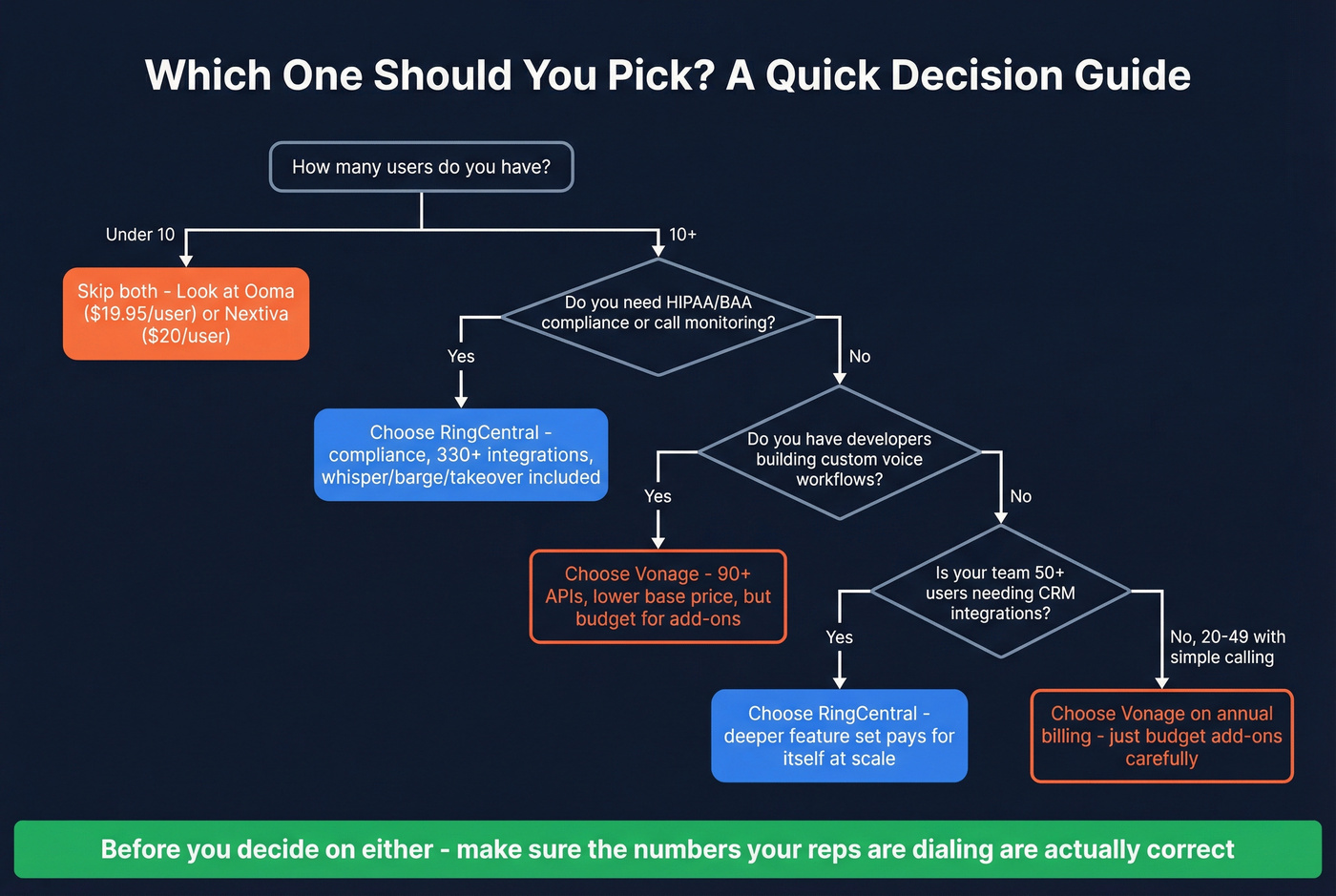
RingCentral wins for: Growing teams (50+), CRM-heavy workflows, regulated industries needing HIPAA/BAA compliance, and environments that need 330+ plug-and-play integrations.
Vonage wins for: Cost-conscious teams of 20+ with straightforward calling needs on annual billing - as long as you've budgeted for the add-on model that makes everything else extra.
Skip both if: Your team is under 10 users. Ooma at ~$19.95/user or Nextiva at ~$20/user are better fits. Or if your real problem isn't the phone system - it's that your reps are dialing wrong numbers. Fix your data layer first before spending another dollar on telephony.
Side-by-Side Snapshot
| RingCentral | Vonage | Edge | |
|---|---|---|---|
| Base price (typical annual) | $20-$35/user/mo | $10.49-$24.49/user/mo (20-99 users, annual) | Vonage (on paper) |
| Integrations | 330+ across 200+ companies | 40+ integrations, 90+ communications APIs | RingCentral |
| Video participants | Up to 200 standard (500 with add-on) | Up to 25 simultaneous video (up to 200 total depending on plan) | RingCentral |
| Uptime SLA | 99.999% | 99.999% | Tie |
| Support | 24/7 options | Varies by plan/add-ons | RingCentral |
| Key strength | All-in-one with depth | Lower entry price + APIs | - |
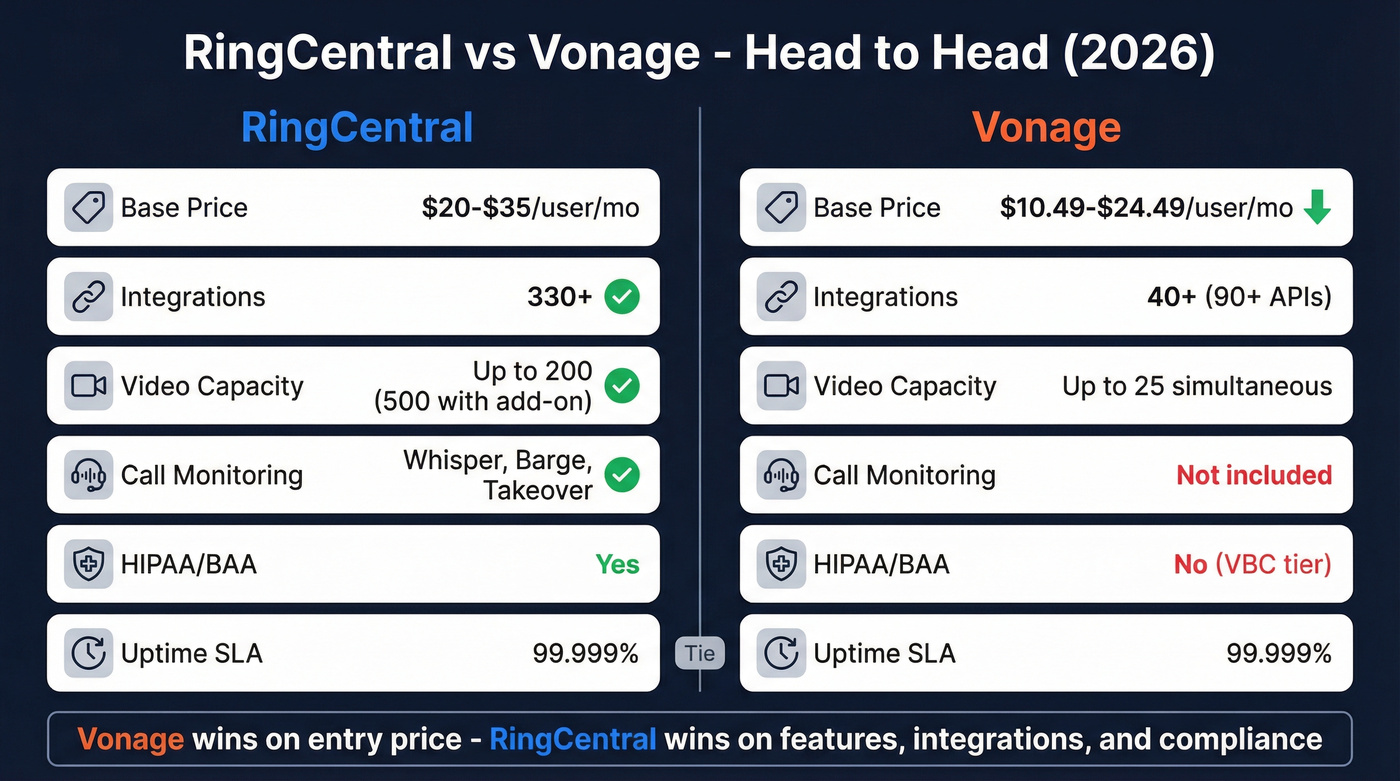
The headline numbers favor Vonage on price and RingCentral on everything else. But headlines lie.
Pricing - What You'll Actually Pay
Neither vendor makes it easy to calculate your real monthly cost. We did the math so you don't have to.
RingCentral Pricing
RingCentral's RingEX plans break into three tiers. Annual billing saves up to 33% versus monthly rates.
| Tier | Annual | Monthly |
|---|---|---|
| Core | $20/user/mo | $30/user/mo |
| Advanced | $25/user/mo | $35/user/mo |
| Ultra | $35/user/mo | $45/user/mo |
There's a 14-day free trial for up to 20 phone lines. SMS isn't available during the trial, and trial hardware must be returned within 21 days to avoid charges.
Now here's where it gets expensive:
- AI Receptionist: starts at $39/user/mo
- Business SMS Booster: $25/mo
- Call Queues Booster: $35/mo
- AI Conversation Expert: starts at $60/user/mo
That $20/user Core plan becomes $55+ once you add AI features and call queues. The base price is a floor, not a ceiling.
Vonage Pricing
Vonage's pricing page looks cheaper until you notice the volume tiers and the add-on model underneath.
| Users | Mobile (mo/yr) | Premium (mo/yr) | Advanced (mo/yr) |
|---|---|---|---|
| 1-4 | $19.99 / $13.99 | $29.99 / $20.99 | $39.99 / $27.99 |
| 5-19 | $17.99 / $12.59 | $27.99 / $19.59 | $37.99 / $26.59 |
| 20-99 | $14.99 / $10.49 | $24.99 / $17.49 | $34.99 / $24.49 |
All prices are "plus taxes & fees." That $10.49 headline requires 20+ users on annual billing. A 4-person team on monthly billing pays $19.99 - nearly double.
The add-ons that turn Vonage's low base price into something else entirely:
- On-demand call recording: $4.99/mo
- Automatic call recording: $49.99/mo
- Call queue: $14.99/mo
- Toll-free number: $39.99/mo
- Business inbox: $9.99/mo
A 20-person team adding call queues, automatic recording, and a toll-free number pays $105+/month on top of base pricing. The Advanced tier's included on-demand recording is capped at 15 hours per month. And Vonage's early termination fee can run up to the total remaining contract value.
Total Cost Scenarios
10-person startup (monthly billing, calling + messaging + on-demand recording):
- RingCentral Core: ~$300/mo base - recording included, so $300/mo total
- Vonage Mobile: ~$180/mo base + $4.99 recording - ~$185/mo total
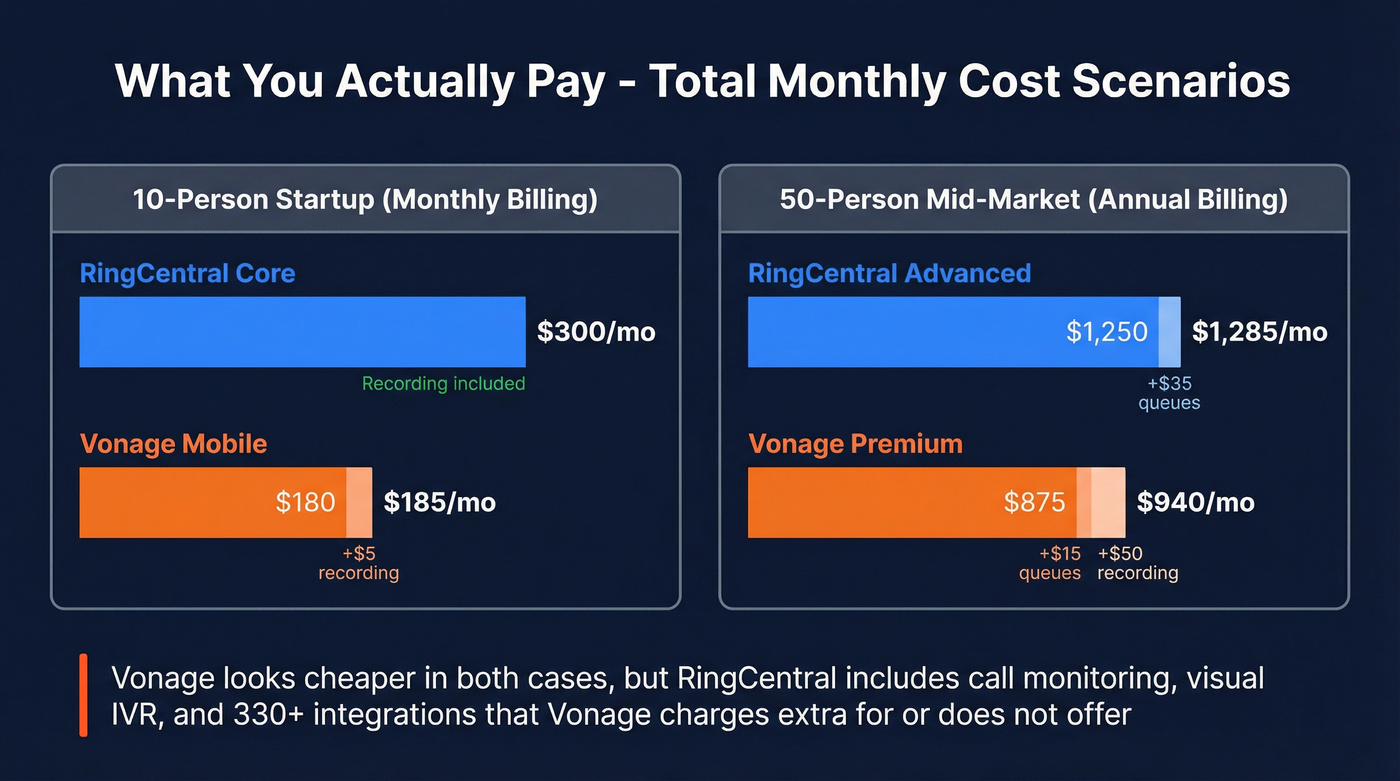
50-person mid-market (annual billing, IVR + call queues + recording + CRM integration):
- RingCentral Advanced: $1,250/mo base + $35 call queues - ~$1,285/mo
- Vonage Premium: $875/mo base + $14.99 queues + $49.99 recording - ~$940/mo
Vonage looks cheaper in both scenarios. But RingCentral includes a deeper admin and supervision feature set - call monitoring, a visual IVR editor, 330+ integrations - while Vonage pushes more advanced call management into paid extras.
Features That Actually Matter
| Feature | RingCentral | Vonage | Winner |
|---|---|---|---|
| Call monitoring | Whisper/barge/takeover | Not included | RingCentral |
| Visual IVR editor | Yes | No | RingCentral |
| Call delegation | Yes | No | RingCentral |
| IP phone paging | Standard | Up to 500 recipients | Vonage |
| Shared line appearance | Yes | Yes | Tie |
| Video meetings | Up to 200 (500 with add-on) | Up to 25 simultaneous video | RingCentral |
| Breakout rooms | Yes | No | RingCentral |
| Analytics | Advanced | Basic | RingCentral |

RingCentral's feature advantage is clearest in two areas: call supervision and video. If your team runs any kind of supervised calling - sales floors, support queues, training - whisper, barge, and takeover aren't nice-to-haves. They're how managers coach reps in real time. Vonage doesn't include them natively in VBC.
Video is the other gap. Vonage Meetings tops out at 25 simultaneous video participants, lacks breakout rooms, and doesn't include end-to-end encryption. If video is secondary for you, this won't matter. If you're running all-hands or client presentations, it's a dealbreaker.
Where Vonage holds its own: IP phone paging to 500 recipients is genuinely useful for warehouse or retail environments, and shared line appearance works well for small reception teams.
What Users Actually Complain About
The same patterns show up across review sites and Reddit threads: Vonage buyers get frustrated by billing surprises - add-ons they didn't realize were paid, invoices that don't match the quoted price. RingCentral buyers complain about support friction and hold times. Both platforms draw complaints about number porting headaches, though that's an industry-wide problem more than a vendor-specific one.

You're comparing phone systems, but the real cost killer is bad data. When reps dial wrong numbers, no UCaaS platform can save your connect rate. Prospeo delivers 125M+ verified mobile numbers with a 30% pickup rate - that's 3x what most providers achieve.
Fix the numbers your reps dial before upgrading the system they dial from.
AI Add-Ons - The New Arms Race
The UCaaS market grew 5.7% in 2024 to $33.4B but is forecast to grow at just 1.1% CAGR over the next five years. That slow growth explains why every vendor is racing to monetize AI features as paid add-ons.
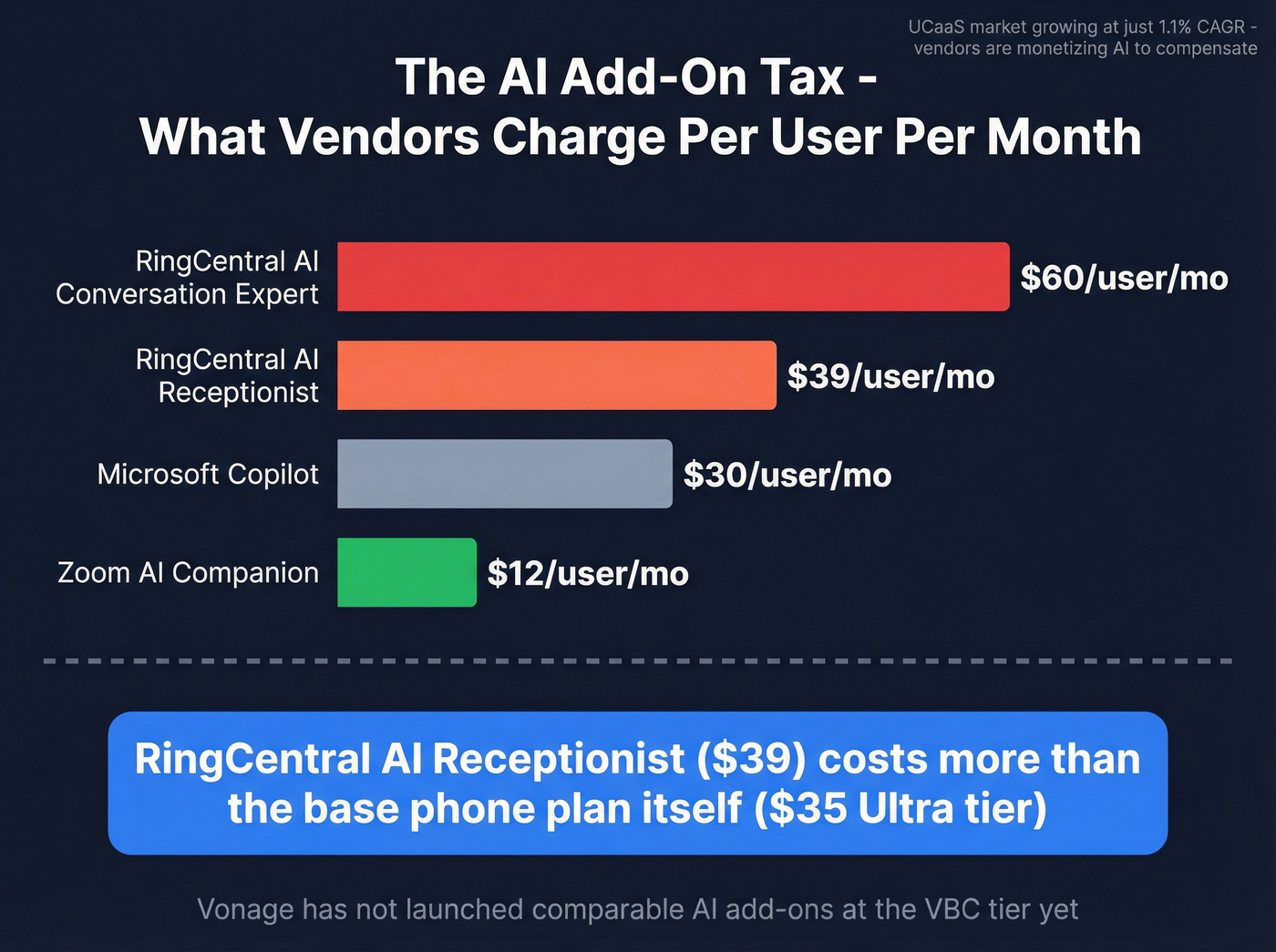
RingCentral's AI Receptionist starts at $39/user/mo. Their AI Conversation Expert starts at $60/user/mo. For context, Zoom's AI Companion is $12/user/mo and Microsoft Copilot is $30/user/mo.
Let's be honest: a $39/user AI add-on on top of a $35/user plan is absurd. You're paying more for the AI than for the phone system itself.
Vonage hasn't rolled out comparable AI add-ons at the VBC tier, which is either a feature gap or a bullet dodged depending on how you feel about paying double for AI that half your team won't use. We've watched teams buy these add-ons only to discover adoption stalls after the first month.
Most teams under 100 users don't need AI telephony features at all. The ROI math doesn't work when your reps are still manually logging calls in spreadsheets. Spend that $39/user on better data or better training before you spend it on an AI receptionist.
Integrations, Security, and Compliance
Integrations
RingCentral offers 330+ integrations across 200+ companies, including Microsoft Teams and open APIs. If you're running Salesforce, HubSpot, or any major CRM, RingCentral connects natively without middleware.
Vonage takes a different approach: 40+ integrations but 90+ communications APIs for custom development. Got a dev team building custom workflows or embedding voice into your product? Vonage's API-first model is strong. Just want your CRM to log calls automatically? RingCentral wins.
Security and Compliance
RingCentral holds HITRUST, GDPR, PCI, and HIPAA certifications, and it'll sign a Business Associate Agreement (BAA). Vonage includes SSO starting on Premium but doesn't offer a comparable BAA at the VBC tier. If you're in healthcare or any regulated environment where a BAA is non-negotiable, RingCentral is the safer choice. Full stop.
Vonage's Corporate Future
Here's the risk nobody mentions in comparison articles.
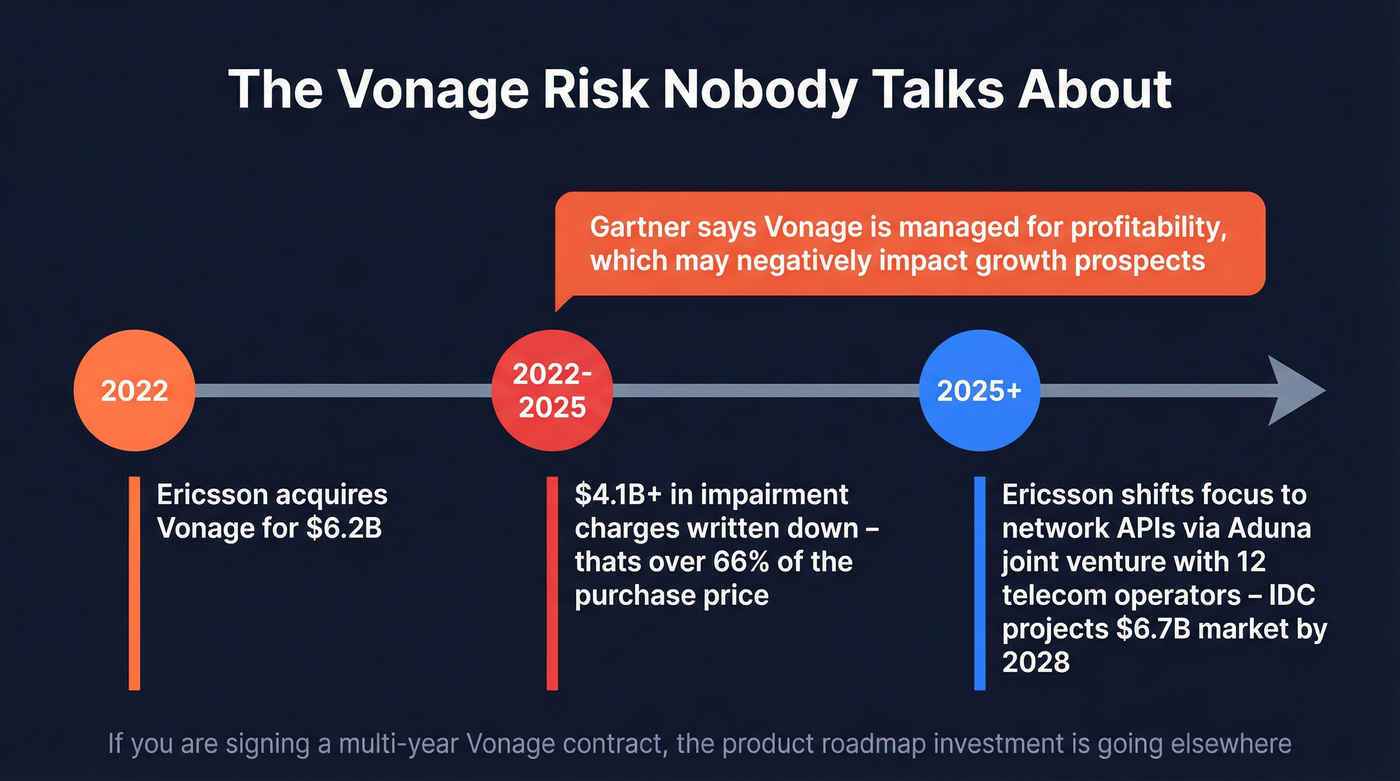
Ericsson acquired Vonage for $6.2B in 2022. Since then, they've taken $4.1B+ in impairment charges - writing down a massive chunk of what they paid. Gartner describes Vonage as "managed for profitability, which may negatively impact growth prospects." Ericsson's strategic focus has shifted to network APIs through their Aduna joint venture with 12 telecom operators, and IDC projects the network API market at $6.7B by 2028. That's where Ericsson's R&D dollars are going. The VBC product you're evaluating today isn't where Ericsson is investing tomorrow.
If you're signing a multi-year Vonage contract, this matters. The product won't disappear overnight, but roadmap investment is clearly going elsewhere.
Who Should Choose Which
Choose RingCentral
You've got 50+ users, need CRM integrations out of the box, operate in a regulated industry, or want call monitoring and recording included without add-on fees. The higher base price buys you a more complete platform. Teams running supervised sales floors or support queues will use features that Vonage simply doesn't include in VBC - and those features are the difference between a phone system and a coaching tool.
Choose Vonage
You've got 20+ users with straightforward calling needs, you're committing to annual billing, and you've got developers who want API customization. Budget the add-ons before you sign - the base price is only the beginning. Vonage's API ecosystem is genuinely differentiated for teams building custom communication workflows, and the lower per-user cost adds up at scale when you don't need the extras.
Choose Neither
Under 10 users? Look at Ooma ($19.95-$29.95/user/mo) or Nextiva ($20-$60/user/mo). Need large video meetings? GoTo Connect is worth evaluating. Global enterprise with complex routing? 8x8 deserves a look.
Fix Your Data Before Your Phone System
Here's the thing most teams get wrong: they agonize over the phone system while ignoring that 30% of the numbers in their CRM are dead. I've seen teams spend weeks debating VoIP providers, then launch outbound with a contact list that bounces a quarter of their dials. The phone system handles the call - it can't fix the fact that nobody picks up.
Prospeo's Mobile Finder covers 125M+ verified mobile numbers with a 30% pickup rate, refreshed on a 7-day cycle. Pair it with either platform and your connect rates improve before you change a single telephony setting. The free tier gives you 75 verified emails and 100 Chrome extension credits per month to test the difference yourself.
If you're trying to improve pickup rates, start with direct dials and a clean CRM before you touch your UCaaS contract.
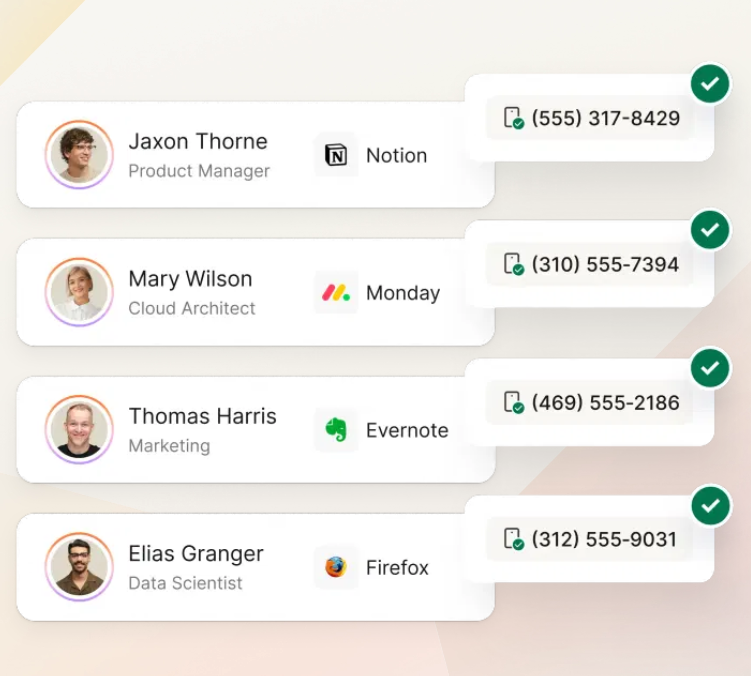
RingCentral and Vonage combined won't help if your team is reaching voicemail boxes and bounced emails all day. Prospeo's 7-day data refresh means your contact lists stay current - not 6 weeks stale. At $0.01 per email, it costs less than a single Vonage add-on.
Spend less than one call queue add-on and triple your connect rate.
FAQ
Is RingCentral or Vonage cheaper for small teams?
Vonage's Mobile plan starts lower - $13.99/user/mo on annual billing for 1-4 users versus RingCentral's $20. But add-ons for recording, call queues, and toll-free numbers close the gap fast. For teams under 10, neither is the best value. Consider Ooma or Nextiva instead.
Does Vonage have hidden fees?
Yes. Call recording ($4.99-$49.99/mo), call queues ($14.99/mo), toll-free numbers ($39.99/mo), and business inbox ($9.99/mo) are all paid extras. A 20-person team adding these common features pays $105+/month on top of base pricing.
Is RingCentral HIPAA compliant?
RingCentral lists HIPAA among its compliance certifications and will sign a Business Associate Agreement. Vonage doesn't offer a comparable BAA at the VBC tier, making RingCentral the default for healthcare and regulated industries.
Is Vonage being discontinued?
Not officially, but Ericsson has written down $4.1B+ of Vonage's $6.2B acquisition price and is pivoting investment toward network APIs. Gartner describes Vonage as "managed for profitability," signaling limited future product development for VBC.
How do I verify contact data before switching VoIP providers?
Bad data wastes more money than the wrong phone plan. Run your lists through a verification tool before you commit to any platform - you'll learn more about your actual connect rate problem in an afternoon than you will from a month of VoIP demos.