

Every Activity a Sales Manager Should Own in 2026
It's 4 PM on a Thursday. You've spent the day putting out CRM fires, sitting through a meeting with no clear owner, and coaching a rep who's spiraling. You haven't had a single planned coaching conversation all week. That Reddit thread about "what a normal day in sales leadership looks like" reads like a horror story - and plenty of managers live some version of it.
The fix isn't working harder. It's building a cadence that protects your highest-leverage sales manager activities from the chaos.
The Short Version
- Coaching is the job. Everything else is infrastructure that supports it. Top managers spend roughly 30-40% of their time coaching; admin and reporting will eat 20-30% without guardrails.
- Cadence beats philosophy. Block your operating rhythm on the calendar before anything else fills the space.
- Track 5 KPIs, not 15. More dashboards don't mean more clarity.
There are 619,500 sales managers in the U.S. earning a median $138,060/year according to the Bureau of Labor Statistics - and a huge chunk of them get pulled into reactive work instead of the activities that actually move revenue.
The 7 Roles Every Manager Plays
SBI's framework breaks the job into seven distinct roles:
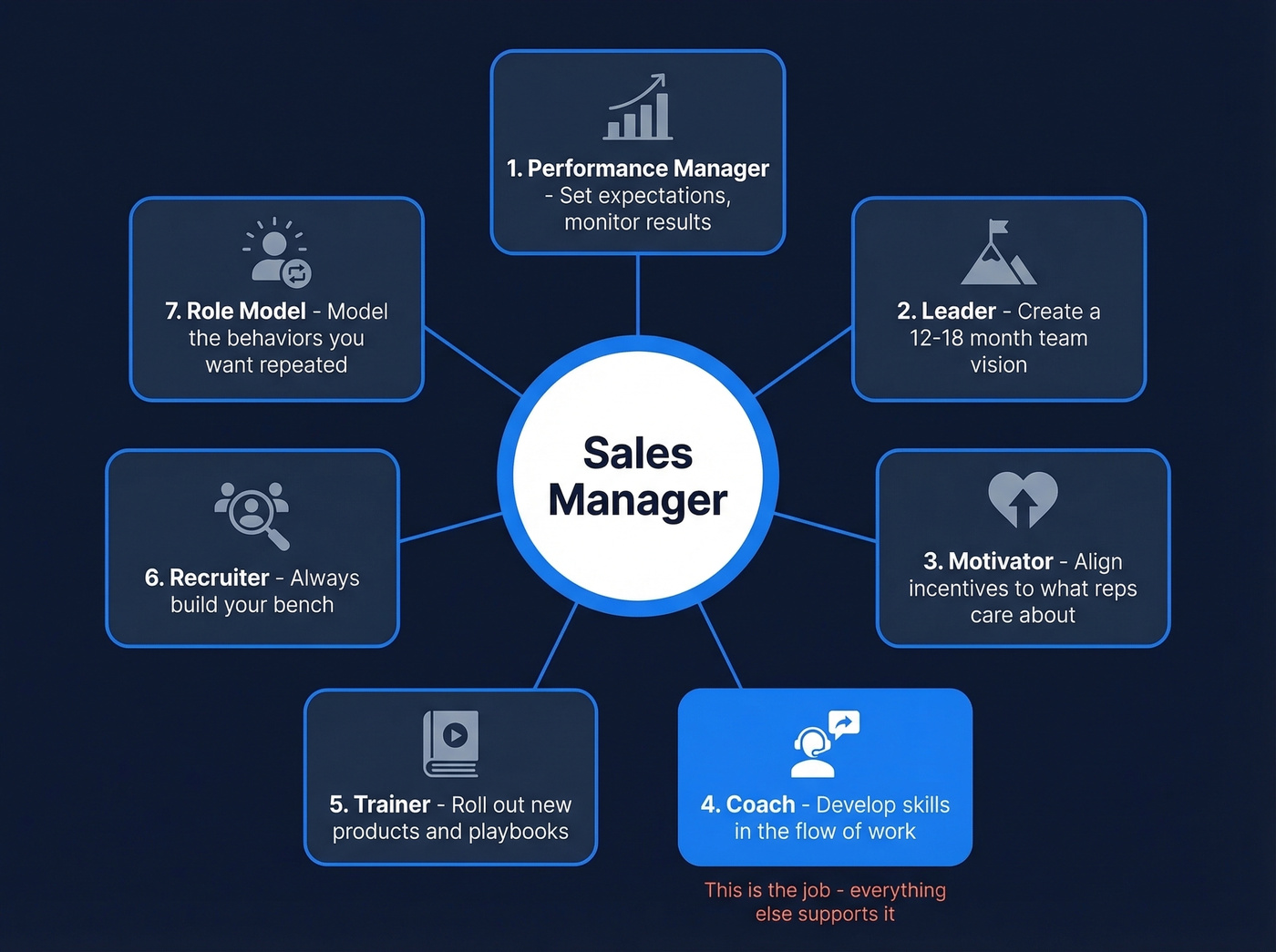
- Performance Manager - set expectations, monitor results, hold people accountable
- Leader - create a 12-18 month team vision reps can see themselves in
- Motivator - figure out what each rep actually cares about and align incentives
- Coach - observe, ask questions, develop skills in the flow of work
- Trainer - roll out new products, processes, and playbooks
- Recruiter - always build your bench, even when fully staffed
- Role Model - model the behaviors you want repeated
Most managers default to performance manager and firefighter. The best ones rotate through all seven deliberately, and they're honest about which roles they're neglecting in any given week.
Your Operating Cadence: Daily to Quarterly
If it's not on the calendar, it doesn't happen. We've seen this pattern over and over - managers who "plan to coach" never block the time and end up in reactive mode all quarter. The Factor 8 cadence framework is the best starting point we've found.
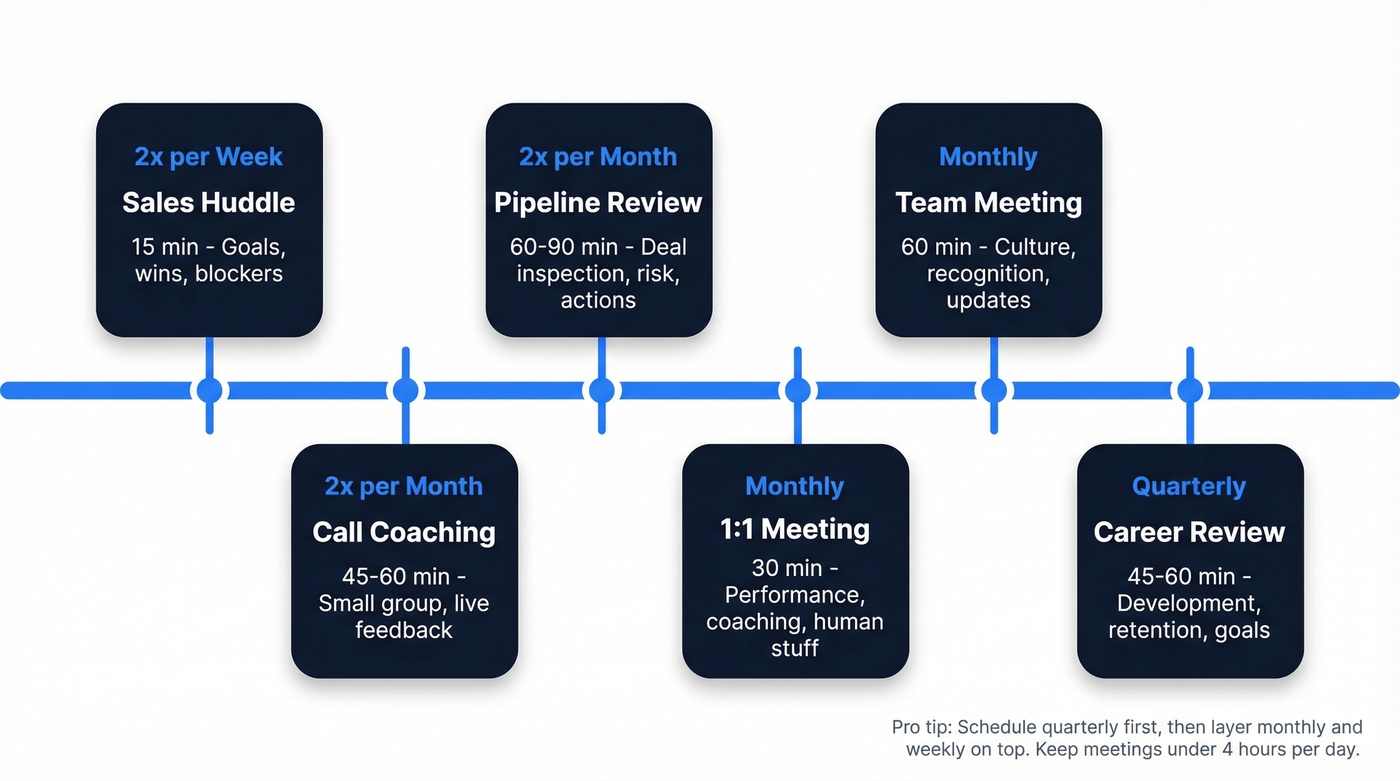
| Cadence | Activity | Duration | Focus |
|---|---|---|---|
| 2x/week | Sales huddle | 15 min | Goals, wins, blockers |
| 2x/month | Call coaching | 45-60 min | Small group, live feedback |
| 2x/month | Pipeline review | 60-90 min | Deal inspection, risk, actions |
| Monthly | 1:1 meeting | 30 min | Performance + coaching + human |
| Monthly | Team meeting | 60 min | Culture, recognition, updates |
| Quarterly | Career review | 45-60 min | Development, retention, goals |
Schedule quarterly reviews first, then layer monthly and weekly sessions on top. Keep total meetings under four hours a day and leave the rest open for reactive work. That buffer matters - without it, one escalation blows up your entire week.

Half your reps' activity is wasted on bad contact data. Prospeo's 98% email accuracy and 7-day refresh cycle mean every dial, every send, and every sequence actually reaches a real buyer - so your pipeline reviews show real progression, not phantom deals.
Stop coaching reps through bounced emails. Start coaching them through closed deals.
Activities That Actually Move Numbers
The 30-Minute 1:1 Reps Actually Value
The biggest failure mode? Turning 1:1s into pipeline interrogations. Reps dread them, managers learn nothing new, and coaching never happens.
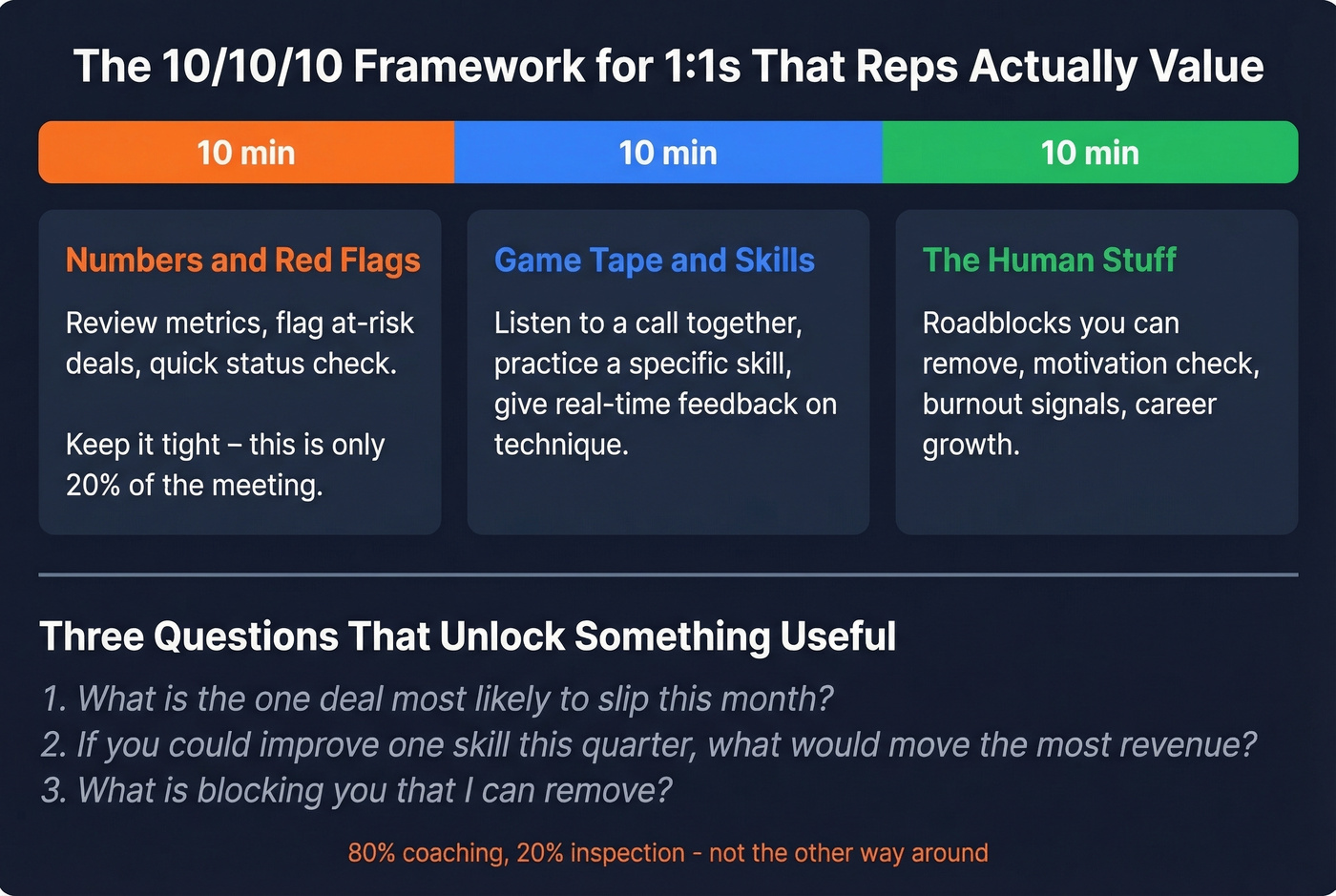
Use the 10/10/10 framework instead: 10 minutes on numbers and red flags, 10 minutes on game tape or a specific skill, 10 minutes on the human stuff - roadblocks, motivation, burnout. That's roughly 20% inspection and 80% coaching, which is the right ratio. When we started recommending this split to teams, the feedback was immediate: reps stopped canceling their 1:1s.
Three questions that unlock something useful:
- "What's the one deal most likely to slip this month?"
- "If you could improve one skill this quarter, what would move the most revenue?"
- "What's blocking you that I can remove?"
Pipeline Reviews That Catch Problems Early
73% of forecast misses trace back to poor pipeline reviews. That stat alone should change how you run them.
Weekly 1:1 reviews cover 3-5 high-value or at-risk deals in 30-45 minutes. Bi-weekly team reviews focus on 2-3 deals over 60-90 minutes with shared learning baked in. Pre-work is non-negotiable: reps update CRM before the meeting, and managers flag any deal with no activity in 14+ days.
The inspection flow goes like this: context, then qualification check, then progression evidence, then risk identification, then an action plan with owners and dates. If you leave without specific next steps assigned to specific people, you ran a status update, not a review.
Three Types of Coaching
Deal coaching improves decisions on live opportunities while there's still time to change the outcome. Skills coaching builds underlying capability - discovery, negotiation, value articulation - across all deals. Pipeline coaching improves portfolio health: coverage, risk concentration, prioritization.
Here's the standard that separates good managers from great ones: buyer evidence beats rep activity, and rep activity beats rep opinion. When a rep says "the deal feels good," push for evidence. What did the buyer actually say? What did they commit to?
Coaching delivers $4.53 for every $1 spent, yet only 26% of reps receive weekly coaching. That gap is your opportunity.
KPIs That Actually Matter
Pick five. Track them weekly. Act on them.
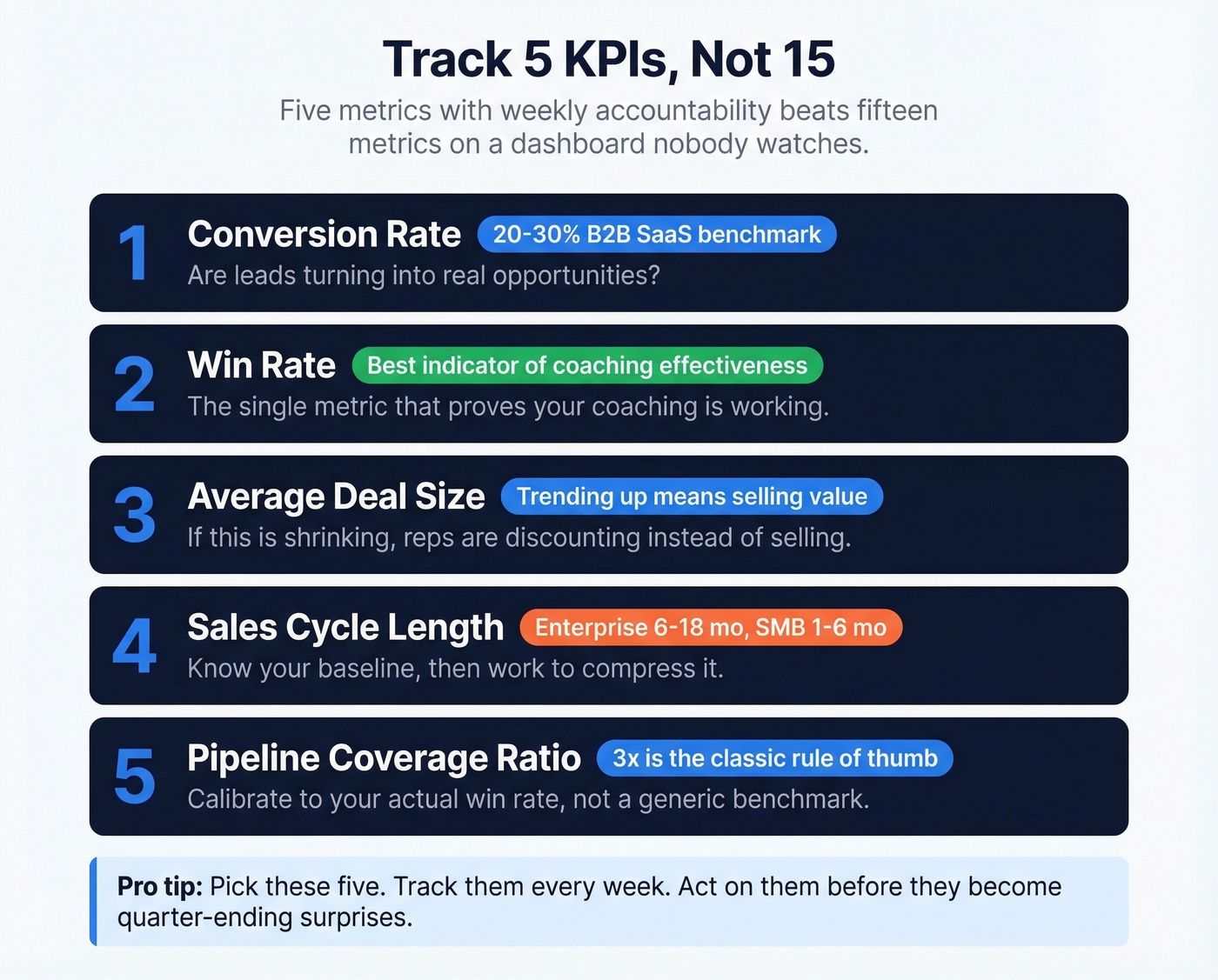
- Conversion rate - B2B SaaS benchmark sits around 20-30% (see conversion rate benchmarks)
- Win rate - the single best indicator of coaching effectiveness
- Average deal size - trending up means reps are selling value, not discounting
- Sales cycle length - enterprise runs 6-18 months, SMB 1-6 months; know your baseline
- Pipeline coverage ratio - 3x is the classic rule of thumb, but calibrate to your actual win rate (use pipeline health to spot risk early)
Fifteen metrics on a dashboard means nobody's watching any of them. Five metrics with weekly accountability means problems surface before they become quarter-ending surprises.
5 Mistakes That Derail Managers
1. Turning 1:1s into interrogations. Fix it with the 10/10/10 framework. Reps should leave feeling coached, not cross-examined.
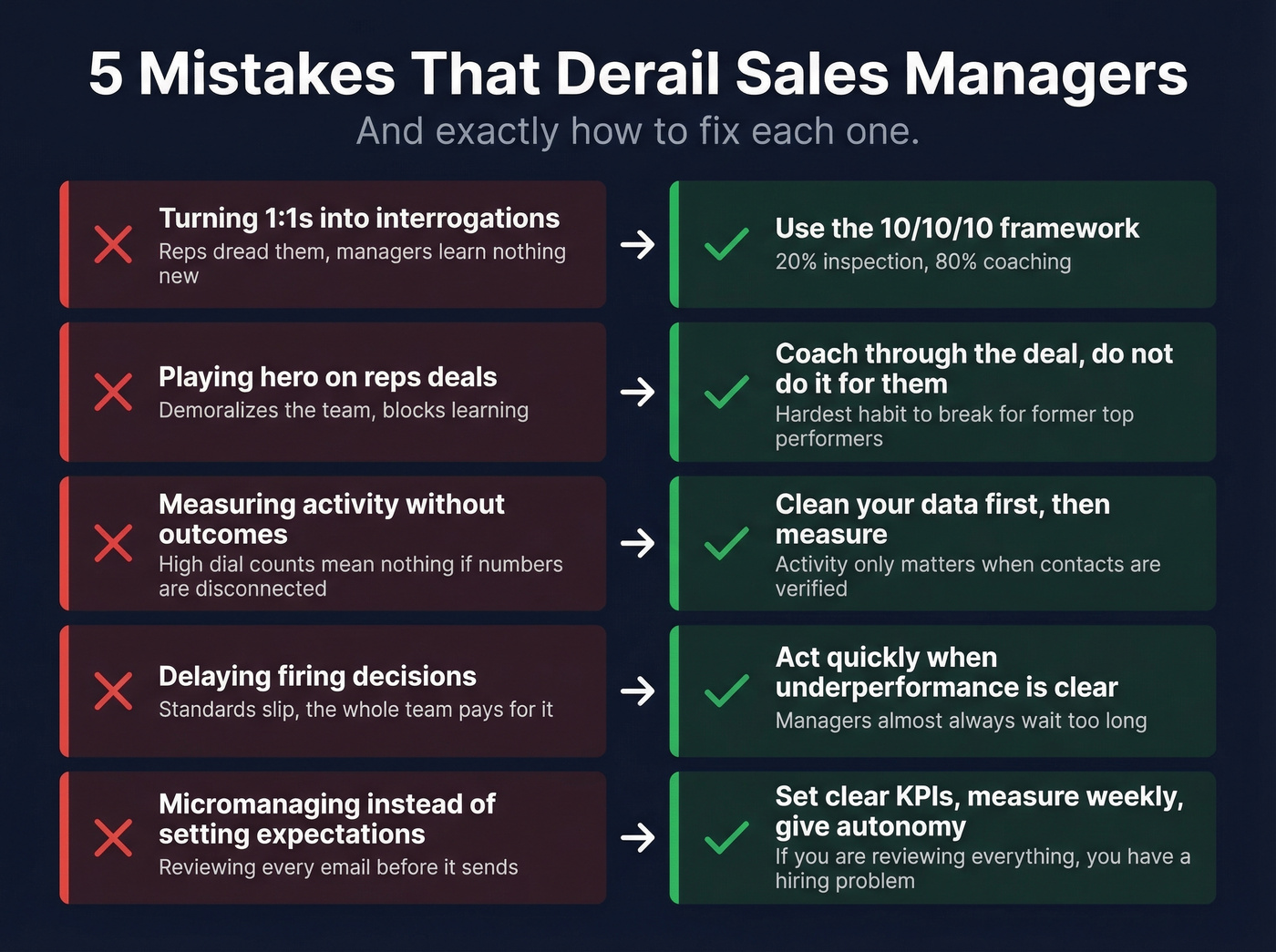
2. Playing hero on reps' deals. Stepping in to close deals demoralizes the team and blocks learning. Coach through the deal - don't do it for them. This is the hardest habit to break, especially for managers who were top-performing reps themselves.
3. Measuring activity without outcomes. High dial counts mean nothing if half the numbers are disconnected. Clean your data first. Prospeo's 98% email accuracy and 7-day refresh cycle mean activity actually converts to conversations instead of bouncing into the void.
4. Delaying firing decisions. Underperformance lingers, standards slip, and the rest of the team pays for it. One of the most common and costly management mistakes, and the consensus on r/sales is that managers almost always wait too long.
5. Micromanaging instead of setting expectations. Set clear KPIs, measure them weekly, and give reps autonomy. If you're reviewing every email before it sends, you've got a hiring problem, not a management problem (tighten sales performance management instead).
Give Your Reps Clean Data
Let's be honest: most sales manager activities don't fail because of bad process - they fail because the underlying data is garbage. Your reps' activity numbers are only as good as the contacts underneath them. Bad numbers inflate metrics, kill deliverability, and make every coaching conversation harder than it needs to be.
We've watched teams spend weeks building the perfect coaching cadence only to realize their reps were dialing disconnected numbers and emailing catch-all addresses that never got read. Skip the coaching overhaul if your contact data hasn't been audited in the last 90 days - fix the data first, then build the process on top of it (start with data enrichment services and an email deliverability guide).

You track win rates, cycle length, and coverage ratios - but none of those KPIs improve if reps are prospecting with stale data. Prospeo refreshes 300M+ profiles every 7 days and verifies every email through a 5-step process. Your activity metrics finally mean something.
Clean data is the highest-leverage sales manager decision you'll make this quarter.