

Sales Rep vs Account Executive: What's Actually Different?
There's a Reddit thread where a sales rep admits they inflate their title to "consultant" on cold calls because saying "sales rep" gets them hung up on instantly. Account executives carry the same quota pressure but rarely face that stigma. The gap between a sales rep and an account executive is real - and it shows up in everything from daily responsibilities to take-home pay.
Quick version: Sales reps (SDRs/BDRs in SaaS) prospect, qualify leads, and book meetings. Account executives own the full deal cycle from discovery through close. The clearest differentiator is comp: SDR median OTE sits around $85K, while AEs range from $130K to $300K+ depending on segment.
What Does a Sales Rep Do?
The term "sales rep" is broad enough to cover everything from a retail floor associate to a SaaS SDR. In B2B sales, it almost always maps to the SDR/BDR function - the front end of the pipeline.
Springboard breaks this into two flavors: inside sales reps who work remotely via phone and email, and outside sales reps who meet prospects face-to-face. In practice, most B2B sales reps today are inside reps doing some combination of:
- Prospecting target accounts and identifying decision-makers (see sales prospecting)
- Running initial discovery to qualify fit before passing to an AE (use a tighter lead scoring model)
- Booking meetings - the core KPI, and everything else feeds this number
- Keeping CRM data clean so pipeline reporting doesn't fall apart (more sales activities help than you think)
About 13% of all full-time U.S. jobs are in sales. The SDR/BDR seat is where most of those careers start.
What Does an Account Executive Do?
Indeed's job description template puts it bluntly: an AE is "essentially a Sales Representative" but one who "has more experience and works closely with other sales representatives as well as managers and additional higher-ups." That's a diplomatic way of saying AEs are the closers.
Where reps hand off qualified leads, AEs pick them up and run the full cycle. Discovery and demos - understanding the buyer's pain, mapping stakeholders, presenting the solution (use better discovery questions). Negotiation - handling objections, navigating procurement, structuring pricing. Closing - getting ink on paper and hitting the revenue number (a clean steps to close a sale process helps). And pipeline generation, because most AEs still self-source 20-40% of their pipeline, sometimes more.
In most B2B orgs, the split is simple: sales roles are measured on new revenue, while account management is built around retention and expansion after the sale. Some orgs blur the line, but the comp plan usually tells you which seat you're in. In plenty of AE job templates, an 80/20 split - mostly prospecting and new business, some account maintenance - is a common way employers describe the role.
SDR vs AE: Side-by-Side
Here's the thing: the title matters less than the comp plan. Two people with "Account Executive" on their business cards can have wildly different jobs depending on whether they're closing $15K SMB deals or $500K enterprise contracts. That said, the structural differences between these two roles are consistent across most orgs.
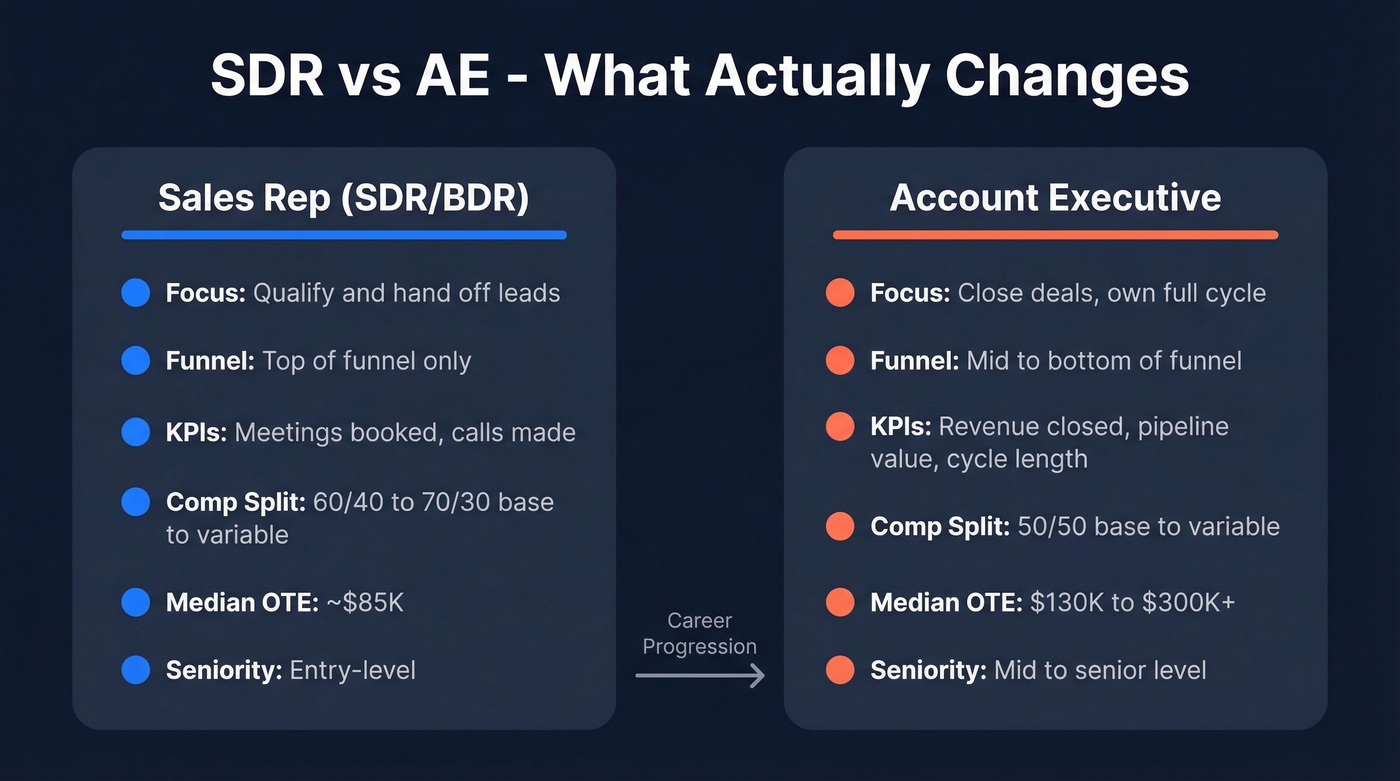
| Dimension | Sales Rep (SDR/BDR) | Account Executive |
|---|---|---|
| Primary focus | Qualify and hand off | Close deals |
| Funnel stage | Top of funnel | Mid to bottom |
| Typical KPIs | Meetings booked, calls made | Revenue closed, pipeline, cycle length |
| Comp split | 60/40 to 70/30 base/variable | 50/50 base/variable |
| Median OTE | ~$85K | $130K-$300K+ |
| Quota attainment | ~57% | ~41-47% |
| Seniority | Entry-level | Mid to senior |
| Daily tools | CRM, sequencer, contact data | CRM, sequencer, contact data |

Whether you're an SDR booking meetings or an AE self-sourcing pipeline, bad contact data kills your numbers. Prospeo gives both roles 300M+ profiles with 98% email accuracy and 125M+ verified mobile numbers - so every dial and every send actually reaches a real buyer.
Stop losing deals to bad data. Start with 75 free emails today.
Salary and Compensation
The comp data is where the SDR-to-AE gap becomes impossible to ignore. RepVue's 2026 salary guide, built from thousands of self-reported comp packages, paints a clear picture:
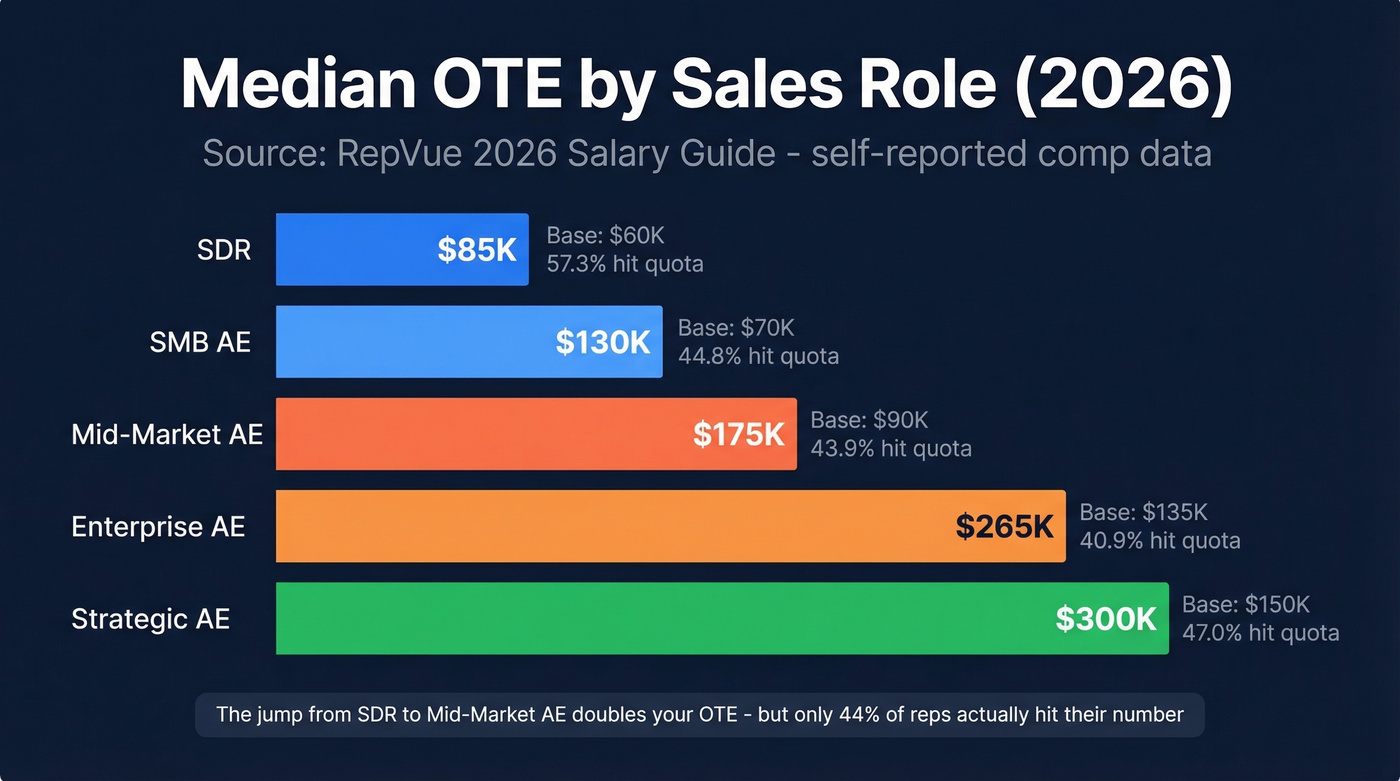
| Role | Median Base | Median OTE | Quota Attainment |
|---|---|---|---|
| SDR | $60,000 | $85,000 | 57.3% |
| SMB AE | $70,000 | $130,000 | 44.8% |
| Mid-Market AE | $90,000 | $175,000 | 43.9% |
| Enterprise AE | $135,000 | $265,000 | 40.9% |
| Strategic AE | $150,000 | $300,000 | 47.0% |
The comp structure shifts as you move up. SDRs typically run a 60/40 to 70/30 base-to-variable split, meaning most of their paycheck is guaranteed. AEs flip closer to 50/50 - half their earnings depend on closing deals.
Across core AE segments, quota attainment sits in the mid-40% range. That $175K mid-market OTE is the ceiling, not the floor. I've watched reps chase the AE title purely for the number, only to earn less than they did as a top-performing SDR because they couldn't close consistently. Factor that into your career math.
Hot take: If your company's average deal size stays below $30K, the SDR-to-AE comp jump is smaller than you think - and the stress increase is real. The AE title shines brightest in mid-market and enterprise cycles where OTE scales with deal complexity.
Where Each Role Sits in the Org
The standard B2B sales ladder runs: SDR/BDR, then AE, then AM/CSM, then sales leadership. It's clean on paper, messy in practice. Only about 25% of companies actually split their SDR function into dedicated inbound and outbound roles - most use blended reps who do both.
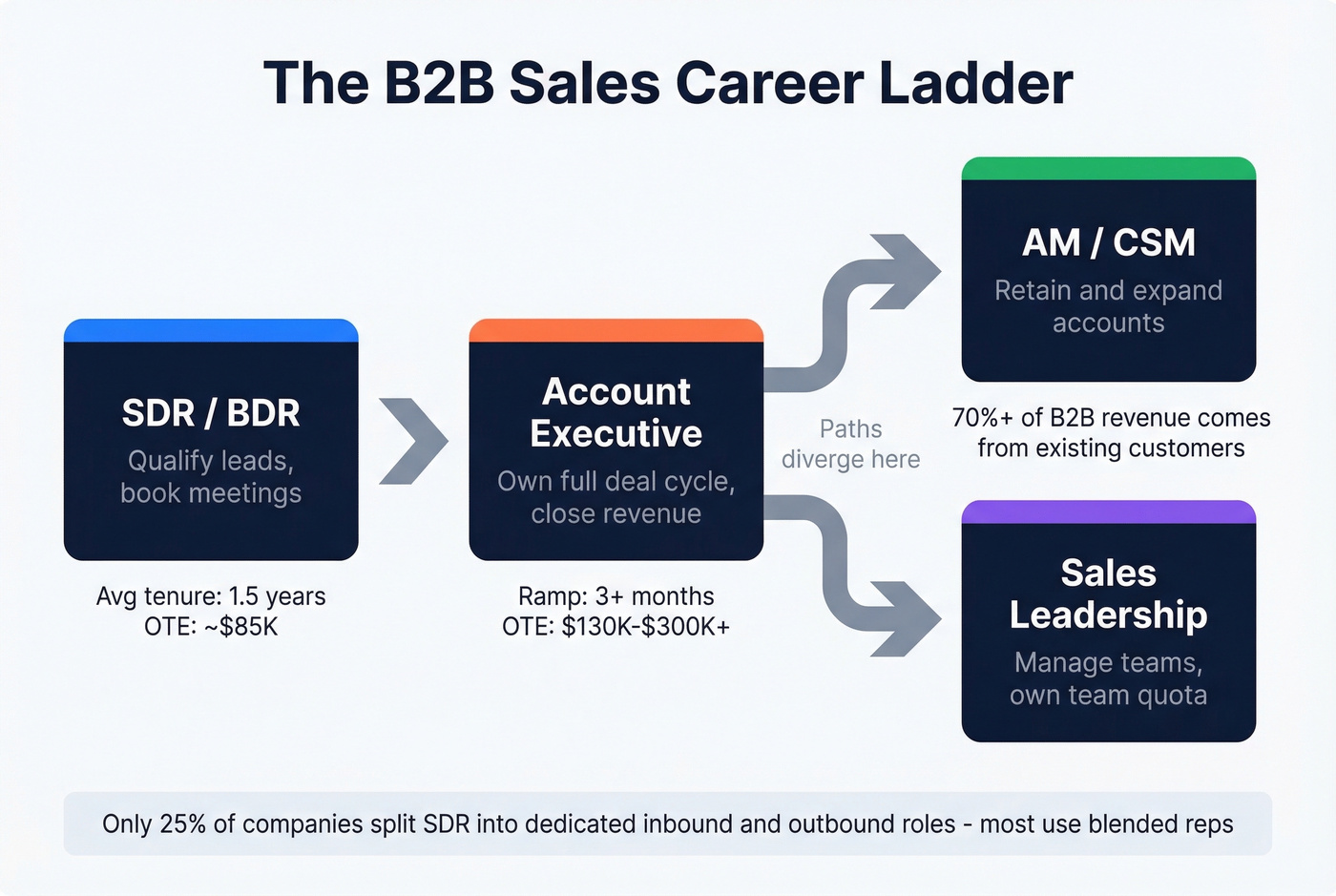
Average SDR tenure before promotion is roughly 1.5 years, with a 3+ month ramp period on top of that. After the AE seat, paths diverge. Some AEs move into account management, where over 70% of B2B revenue comes from existing customers. Others climb into management or stay as individual contributors in enterprise roles where the comp ceiling keeps rising.
How to Move from SDR to AE
Push for AE. The comp ceiling is dramatically higher, and the skills transfer to nearly every revenue role after it.
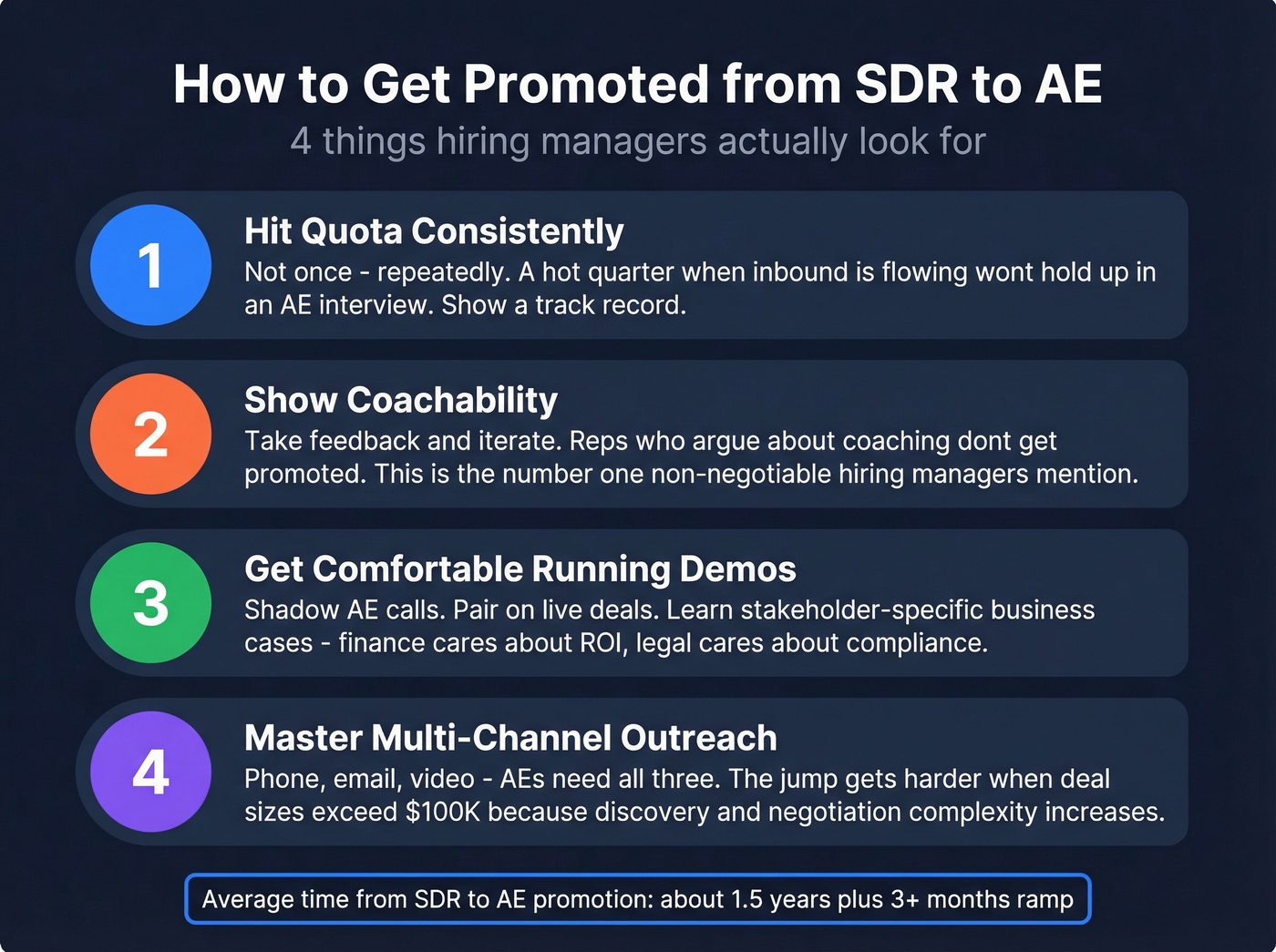
Hit quota consistently. Not once - repeatedly. Hiring managers want a track record, not a hot quarter. If you're only crushing it when inbound is flowing, that won't hold up in an AE interview.
Show coachability. Kaspr's research on SDR progression calls this a non-negotiable, and the consensus on r/sales echoes the same thing: reps who take feedback and iterate get promoted. Reps who argue don't.
Get comfortable running demos. Ask to shadow AE calls. Better yet, ask to pair with an AE on a live deal. Learning stakeholder-specific business cases - finance cares about ROI, legal cares about compliance - is what separates an SDR who books meetings from one who's ready to close.
Master multi-channel outreach. Phone, email, video - AEs need all three. In our experience, the SDR-to-AE jump gets meaningfully harder when deal sizes exceed $100K, because the discovery and negotiation skills required are substantially more complex. If you're at a company selling $15K deals, consider whether the AE seat there actually prepares you for the role you want next.
Tools Both Roles Need
Whether you're an SDR building lists or an AE running your own pipeline, the stack is three layers: a CRM like Salesforce or HubSpot, a sequencing tool for outreach, and a contact data platform for verified emails and direct dials (see SDR tools).
The contact data piece is where most teams leak pipeline. Bounced emails kill sequences, burn sender reputation, and waste the hours you spent researching accounts (fix the root causes with an email deliverability guide). We've seen teams cut bounce rates from 30%+ to under 5% just by switching to a platform with real verification behind it - Prospeo's 98% email accuracy and 7-day data refresh cycle are why we built the product the way we did. Whether you're an SDR uploading a CSV of target accounts or an AE who needs a direct dial for a VP before tomorrow's follow-up, bad data is the fastest way to miss quota.
Skip the tools that gate everything behind "talk to sales" calls if you're an individual contributor or a small team. You don't need a $30K annual contract to get accurate contact data.
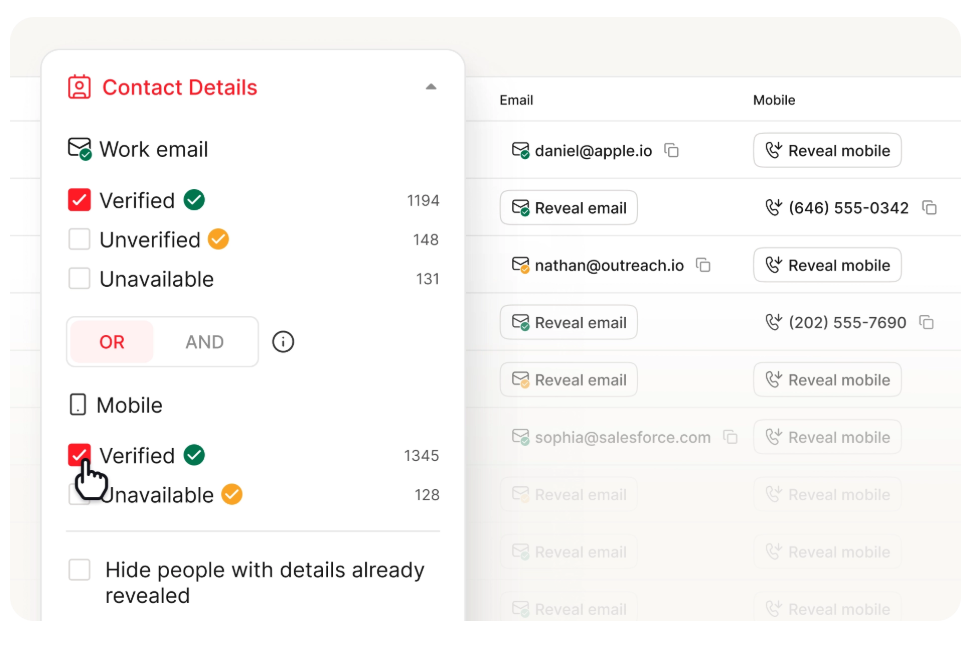
The fastest way to go from SDR to AE? Consistently crush quota. That's hard when half your emails bounce. Prospeo's 7-day data refresh and 5-step verification keep bounce rates under 4% - the same data Stack Optimize used to build a $1M agency with zero domain flags.
Hit quota consistently with contact data that actually connects.
FAQ
Is an account executive higher than a sales rep?
Yes. AEs own the close and carry revenue quotas, while SDRs/BDRs qualify leads and hand them off. The comp gap reflects this - SDR median OTE is $85K versus $130K+ for SMB-level AEs, scaling to $300K+ at the strategic level.
How long does it take to go from SDR to AE?
Average SDR tenure before promotion is about 1.5 years, plus a 3+ month ramp period. Consistent quota performance, coachability, and comfort running discovery calls are the key signals hiring managers look for.
Do account executives still prospect?
Most do. AEs typically self-source 20-40% of their pipeline using a CRM, sequencing tool, and a contact data platform for verified emails and direct dials. Bad data is the top pipeline killer for AEs running their own outbound - accurate contact information eliminates that bottleneck before it starts.