

What Makes ABM Campaigns Actually Succeed (And What Kills Them)
A RevOps lead we know ran an ABM pilot last year. Sales flagged "priority accounts" based on gut feel, marketing built personalized landing pages, and after three months the pipeline impact was zero. The accounts weren't in-market. The contact data was stale. The whole thing was expensive theater.
That story isn't unusual - it's the default ABM outcome. Here's what separates successful ABM campaigns that drive pipeline from the ones that burn budget.
Three Foundations, Quick Version
Every high-performing account-based program shares these:
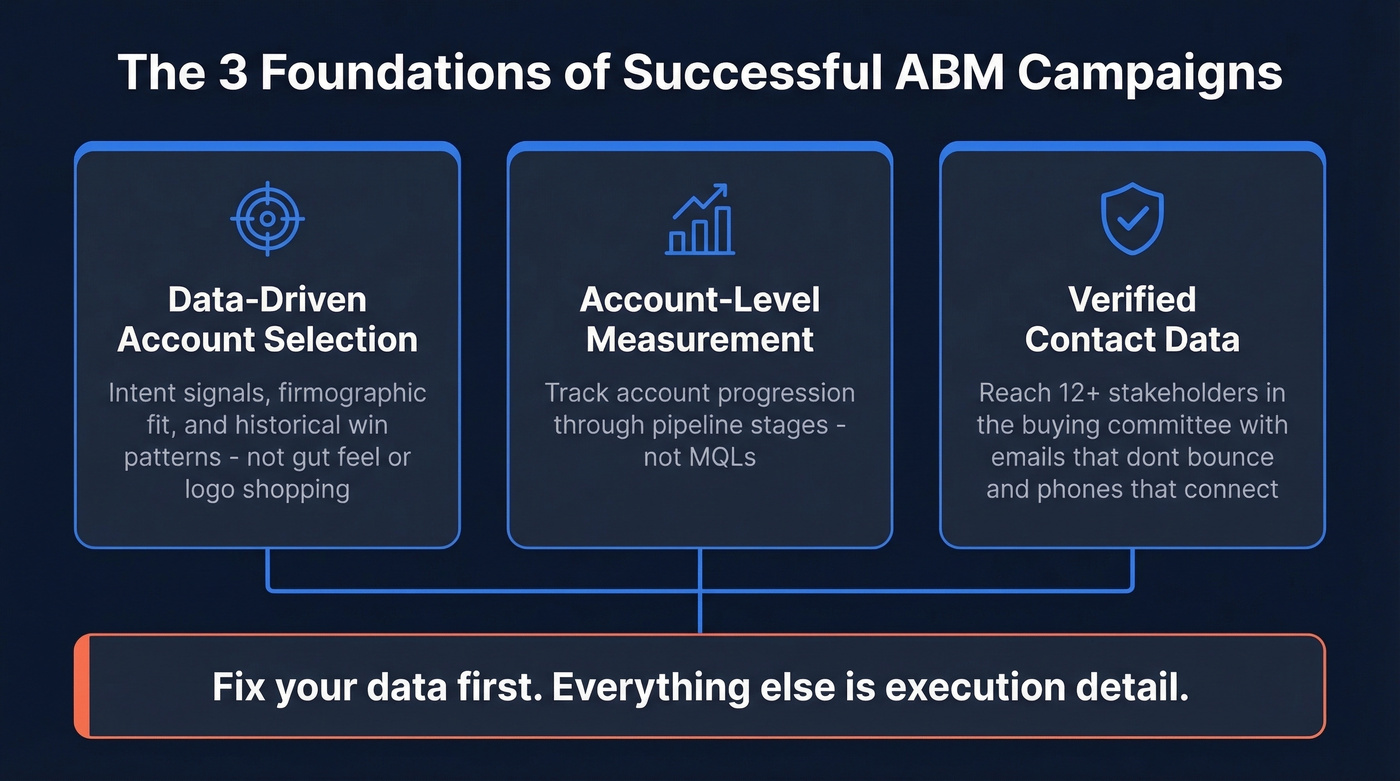
- Data-driven account selection. Intent signals, firmographic fit, and historical win patterns should dictate the list - not sales picking random logos they'd like to close.
- Account-level measurement. If you're still counting MQLs, you're measuring the wrong thing. Track account progression through pipeline stages.
- Verified contact data that reaches the buying committee. Enterprise deals involve 12+ stakeholders. If your emails bounce and your phone numbers are dead, your orchestration never lands.
Fix your data first. Everything else is execution detail.
Why Most ABM Underperforms
Here's the uncomfortable truth: most ABM programs are just outbound with a Demandbase login. The consensus on r/b2bmarketing is blunt - ABM is often outbound with a thin layer of personalization bolted on. And 40% of buyers now say AI makes it easier to self-educate, which means generic ABM touches get ignored faster than ever.
When teams target specific people within buying committees - not just accounts as abstract entities - conversion to booked meetings increases by up to 74%, with up to a 118% lift in pipeline conversion. But only 13% of teams hyper-personalize their marketing. We've seen this gap firsthand across dozens of ABM programs: the failure mode isn't strategy, it's depth.
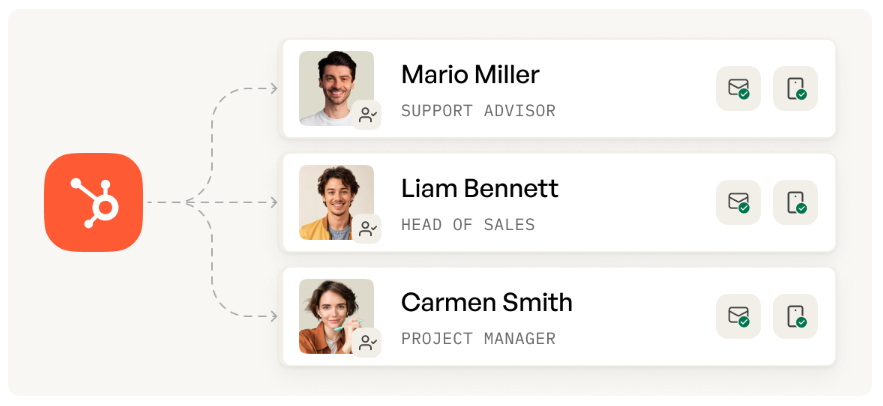
Look, teams buy an ABM platform, run display ads to a target account list, and call it account-based marketing. That's not ABM - it's programmatic with a smaller audience. The best account-based marketing campaigns reach the right buying group at each account with messaging that reflects their role, their pain, and their buying stage.
Real ABM Campaigns That Drove Pipeline
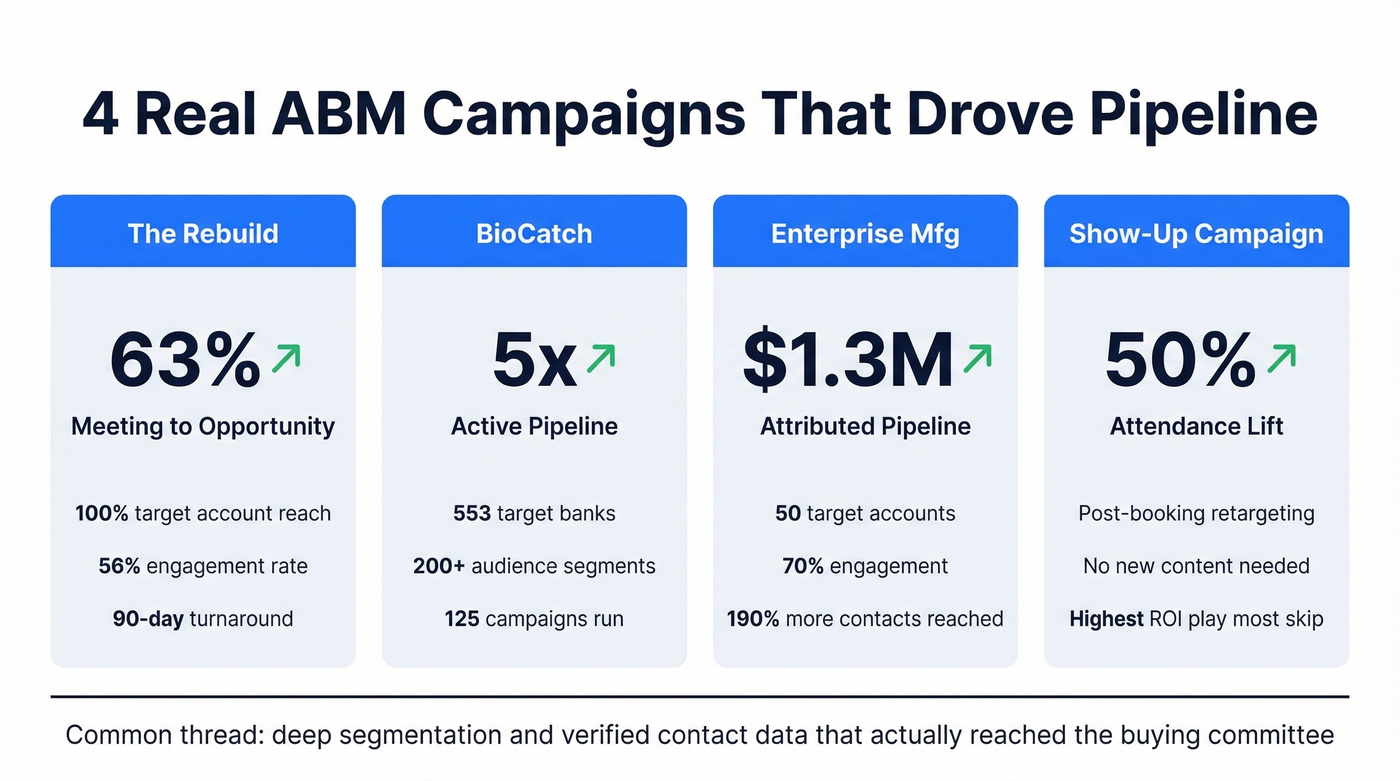
Four campaigns, four different scales, real numbers.
The Rebuild - 63% Meeting-to-Opportunity
Result first: 100% target account reach, 56% engagement, 63% meeting-to-opportunity conversion in 90 days. A practitioner on Reddit documented the rebuild after an initial pilot stalled on random account picks. The fix was replacing gut-feel targeting with intent data and historical sales notes using Salesforce, 6sense, HG Insights, Mutiny, and Marketo.
The lesson? Account selection is the campaign. Get that wrong and no amount of creative will save you.
BioCatch - 5x Pipeline Across 553 Banks
| Metric | Number |
|---|---|
| Target accounts | 553 global banks |
| Audience segments | 200+ |
| Campaigns run | 125 |
| Pipeline result | 5x active pipeline in 6 months |
The segmentation depth is what matters here - not one message for "banks," but granular segments by size, geography, and tech stack so each campaign spoke to a specific buyer context. BioCatch treated 553 accounts like 200+ distinct audiences, and the pipeline reflected it.
Enterprise Manufacturing - $1.3M From 50 Accounts
An Inverta case study documents a cloud services provider that built personalized content hubs for 50 enterprise manufacturing accounts: 70% engagement, 190% increase in successful contacts, $1.3M attributed pipeline. With buying committees 12+ deep, the content hub approach gave each stakeholder a reason to engage on their own terms rather than funneling everyone through the same generic webinar.
The Show-Up Campaign - 50% Attendance Lift
Skip this if you want complex orchestration. Influ2 found that running targeted ads after a meeting is booked - reinforcing the value prop and keeping your brand top-of-mind - increased attendance by 50%. No new content. No complex setup. Just retargeting people who already said yes.
This is the highest-ROI ABM play most teams overlook.
One more thing: direct mail still works for 1:1 ABM plays. Handwritten notes, small gifts, and printed one-pagers with QR codes to personalized landing pages can cut through when digital channels get noisy. Don't sleep on offline.

The ABM campaigns above share one thing: they reached the actual buying committee. Prospeo gives you 300M+ profiles with 98% email accuracy, 125M+ verified mobiles, and intent data across 15,000 topics - so you can build target account lists based on real buying signals, not gut feel.
Stop running ABM on stale data. Start with 75 free verified emails.
How to Measure ABM Campaign Results
The #1 reason ABM programs get killed isn't poor performance - it's poor measurement. Report ABM through a lead-gen lens and you'll always look like you're underperforming.
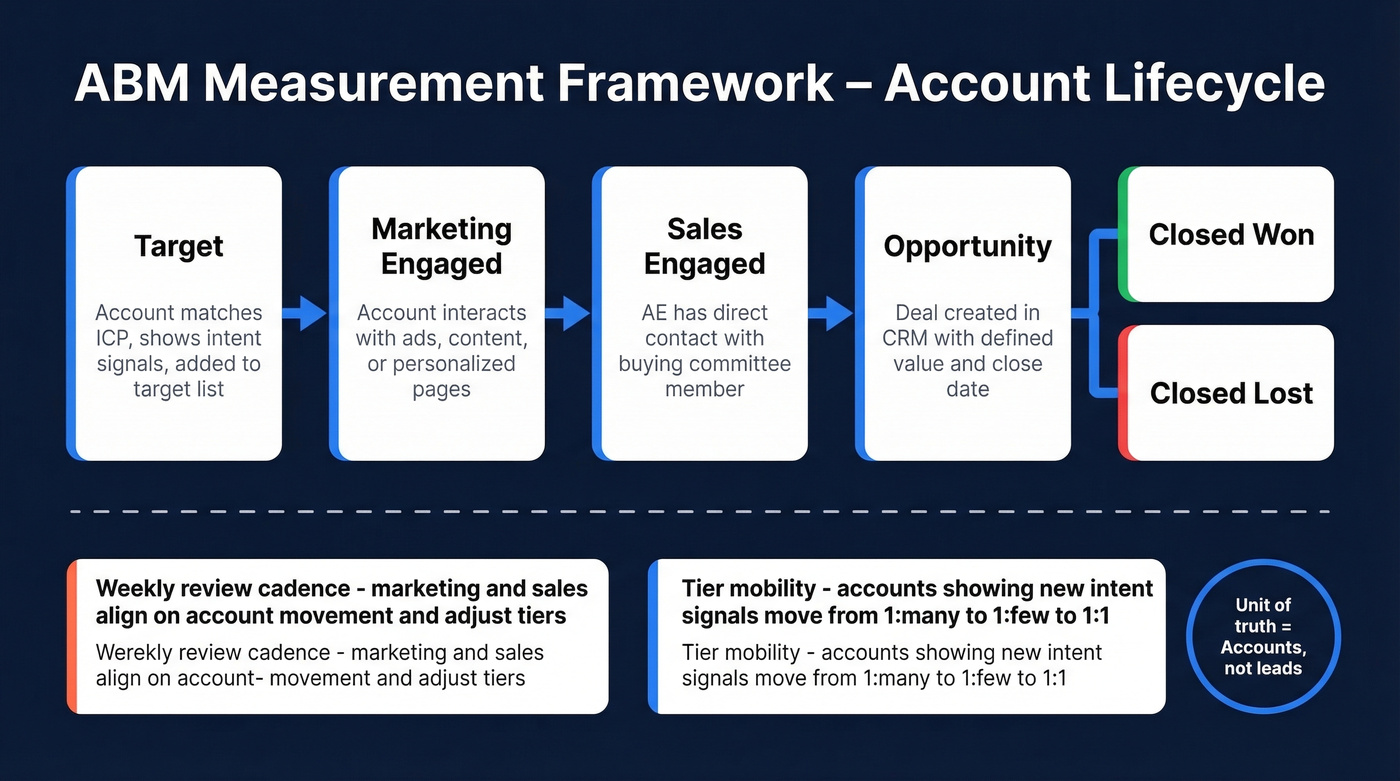
Use accounts as your unit of truth. Build a lifecycle: Target → Marketing Engaged → Sales Engaged → Opportunity → Closed Won/Lost. Each stage needs explicit definitions so marketing and sales agree on what "engaged" means. Then run a weekly review cadence where both teams align on account movement and adjust tier assignments - accounts showing new intent signals should move from 1:many awareness plays to 1:few or 1:1 engagement.
Attribution will fight you. Safari's ITP blocks cookies. Ad blockers kill tracking pixels. HubSpot's 90-day attribution window misses long-cycle deals. Accept that attribution will undercount ABM's impact and supplement with account-level before/after analysis.
For benchmarks: Cognism's internal ABM program generated $700K+ pipeline in a single half, with 47.9% MQL-to-pipeline conversion - 24% above their enterprise average - and 46% higher ACV on ABM accounts. Those numbers came from sustained tiered execution with tier mobility as accounts showed buying signals, not a one-quarter sprint.
The Data Foundation Nobody Talks About
Every ABM article talks about platforms and personalization. Almost none talk about the thing that kills campaigns before they start: bad contact data.
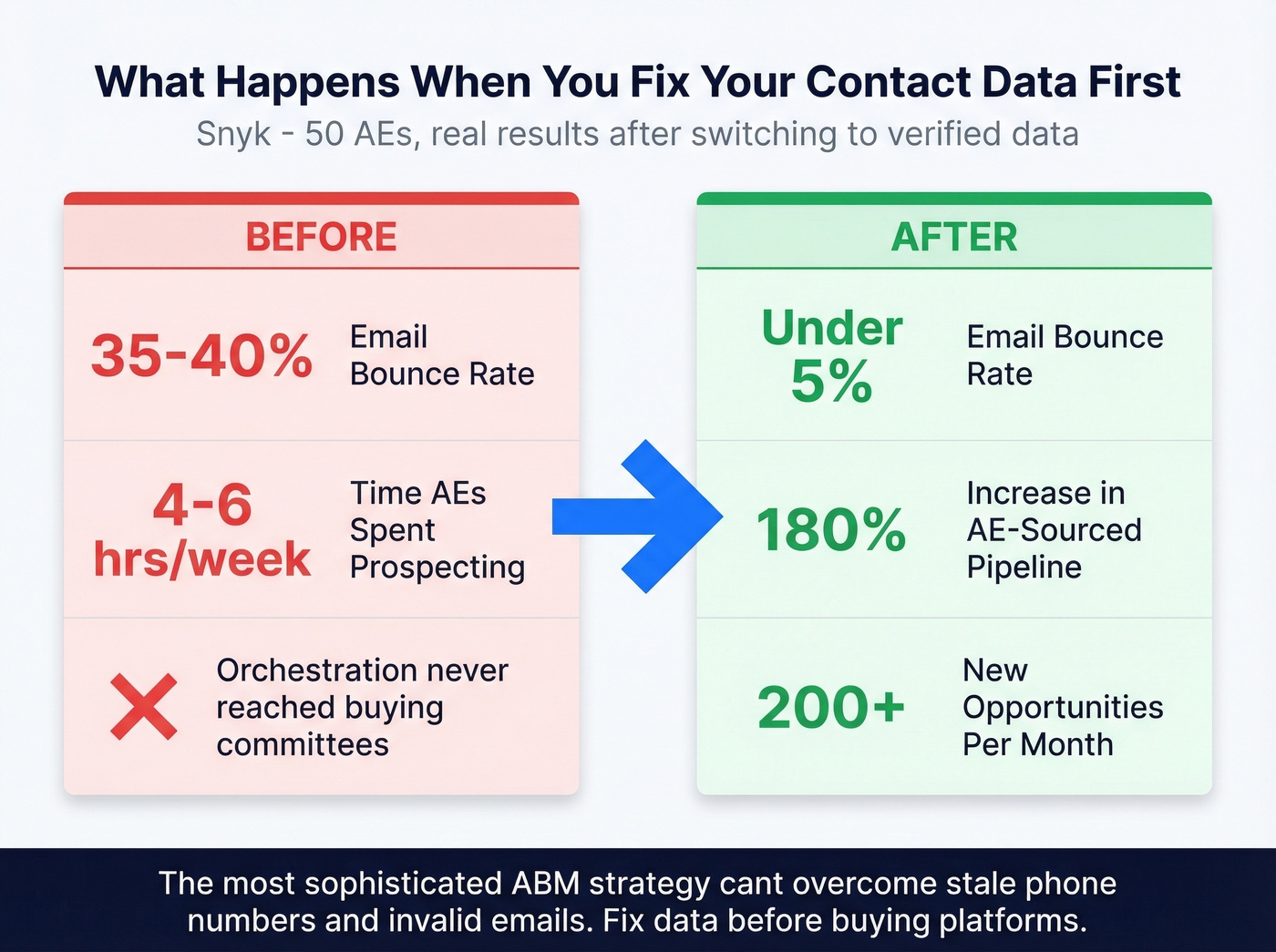
If 35-40% of your emails bounce, your multi-channel orchestration never reaches the buying committee. Snyk learned this the hard way - their 50-person AE team was prospecting 4-6 hours per week with bounce rates running 35-40%. After switching to Prospeo, bounce rates dropped under 5%, AE-sourced pipeline jumped 180%, and they generated 200+ new opportunities per month.

In our experience, most teams should fix their contact data before spending $25-100K+/year on an ABM platform contract. The most sophisticated ABM strategy in the world can't overcome stale phone numbers and invalid emails. Build your target account list based on who's actively researching your category - not just who fits your firmographic ICP - then verify every contact before sequencing. If you're rebuilding your data layer, start with data enrichment and a clean lead scoring model. Prospeo's intent data covers 15,000 topics via Bombora, so you can layer buying signals directly into list building without a separate intent vendor.
Snyk's 50 AEs cut bounce rates from 35% to under 5% and grew pipeline 180% - because verified data actually reached buying committees. Prospeo refreshes every 7 days and layers Bombora intent signals into list building, so your ABM orchestration lands where it matters.
Your ABM platform is worthless if your contact data is dead. Fix that first.
ABM Tech Stack at a Glance
| Category | Tool | Best For | Approx. Pricing |
|---|---|---|---|
| Data/Verification | Prospeo | Emails, mobiles, intent signals | Free tier; ~$0.01/email |
| ABM Platform | 6sense | Intent + orchestration | ~$30-100K+/yr |
| ABM Platform | Demandbase | ABM + advertising | ~$30-100K+/yr |
| ABM Platform | RollWorks | SMB-friendly ABM | ~$1-3K/mo |
| Intent Data | Bombora | Standalone intent signals | ~$25-50K/yr |
| Personalization | Mutiny | Website personalization | ~$1.5-5K/mo |
| CRM/Automation | Salesforce + Marketo | Enterprise orchestration | Enterprise pricing |
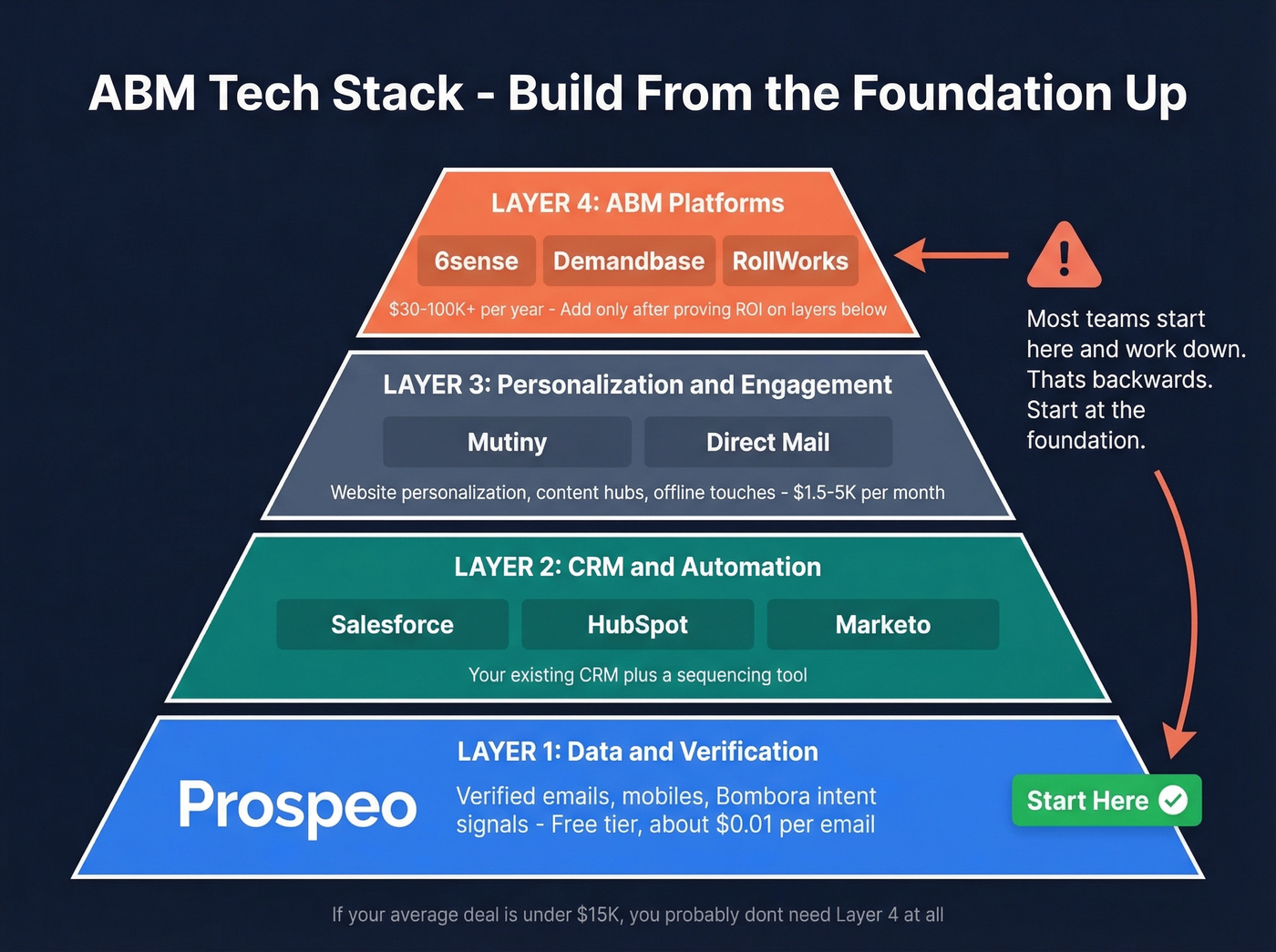
You don't need all of these. A team running their first ABM campaign in 2026 can start with verified contact data, their existing CRM, and a sequencing tool. If your average deal size is under $15K, you probably don't need a six-figure ABM platform at all - solid data and disciplined execution will outperform a bloated tech stack every time. Add platforms as you scale and prove ROI.
Let's be honest: we've watched teams spend $80K on an ABM platform before they had clean data in their CRM. That's building a house on sand. Start with the foundation.
If you want the outbound side to match the ABM strategy, borrow a few sales prospecting techniques and tighten your B2B cold email sequence so the buying committee actually responds.
FAQ
What makes ABM campaigns successful long-term?
Expect 6-12 months for early pipeline signals and roughly three years for ABM to reach full maturity due to stakeholder change management. Teams that kill programs after one quarter never see the compounding returns. The best programs invest in sustained, tiered execution rather than one-off sprints.
What's the biggest reason ABM campaigns fail?
Bad contact data. If 35-40% of your emails bounce, your orchestration never reaches the buying committee. Fixing data quality is the single highest-leverage move most teams can make before investing in platforms or creative.
How do you pick the right target accounts?
Combine firmographic fit, technographic signals, and intent data - then layer in historical win/loss patterns from your CRM. The best account lists reflect who's actively researching your category right now, not just who looks good on paper. For teams without a dedicated intent vendor, Prospeo's Bombora-powered intent data across 15,000 topics can serve as a starting point baked into your prospecting workflow.