


Best The Data City Alternatives in 2026
The Data City built something genuinely clever: Real-Time Industrial Classifications that make SIC codes look like relics from 1937 (because they are). Founded in Leeds in 2014, now 35 employees strong after a $2.51M Series A, it's a sharp tool for mapping the UK economy by sector. But at £8,000/year minimum for a UK-focused classification platform, it's not the right fit for every team - even with the 7-day free trial.
Here's the thing most people discover too late: identifying companies in a sector is only half the problem. The other half is reaching the right people at those companies. If that's where you're stuck, the best alternative might not be another classification tool at all.
Our Top Picks
- Beauhurst - Closest 1:1 replacement for deep UK private company intelligence with fundraising, patents, and hiring data.
- Prospeo - Best for turning sector company lists into verified outreach with emails and direct dials. Free to start.
- Dealroom - Best for VC and startup ecosystem mapping, with published pricing and a 3-day free trial.
Why Teams Switch from The Data City
The problem The Data City solves is real. Over 50% of FinTechs can't classify themselves under SIC 2007, according to the Kalifa Review, and only about 2.9% of UK businesses update their SIC code annually. The UK's ONS is expected to release SIC 2026 by March 2026, but with adoption rates that glacial, the gap between official codes and economic reality isn't closing anytime soon.
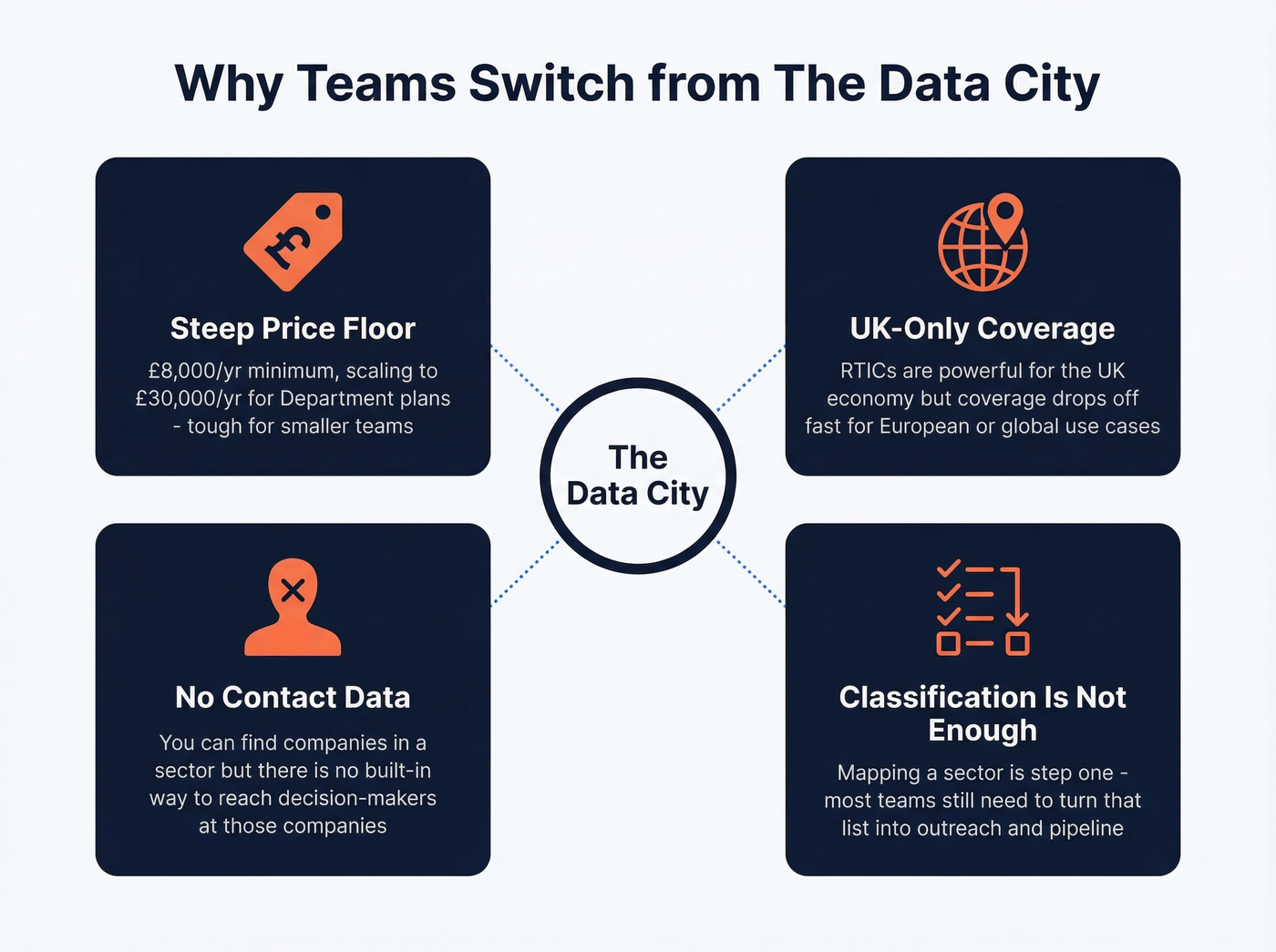
So The Data City's RTICs genuinely matter. But several friction points push teams to look elsewhere.
The price floor is steep. £8,000/year for the Solo plan, scaling to £30,000/year for Department - before add-ons like Jobs & Skills (Lightcast), which start at £2,000/year. For smaller teams or those outside policy research, that's a hard sell.
UK-centric coverage. RTICs are powerful for mapping the UK economy, but if you're working across Europe or globally, coverage thins out fast. We've heard this from multiple teams evaluating the platform for cross-border use cases.
No contact data. You can identify companies in a sector, but there's no built-in way to reach decision-makers. That's a workflow gap that forces you into a second tool anyway.
Classification alone isn't enough. Once you've mapped a sector, you still need to do something with that list. And "something" usually means outreach.
Let's be honest: The Data City is excellent at answering "which companies belong in this sector?" But most teams asking that question actually need the answer to a different one - "how do I reach the right people at those companies?"

Classification tools tell you which companies matter. Prospeo tells you who to contact and gives you 98% accurate emails and verified direct dials to reach them. Upload your sector company list, enrich it with 50+ data points per contact, and start outreach in minutes - not weeks.
Turn any company list into a verified prospect list for $0.01 per email.
Best The Data City Alternatives Compared
Beauhurst
Best for: UK private company intelligence - fundraisings, grants, patents, hiring signals, trade data. Skip if: You need international coverage or contact-level data for outreach.
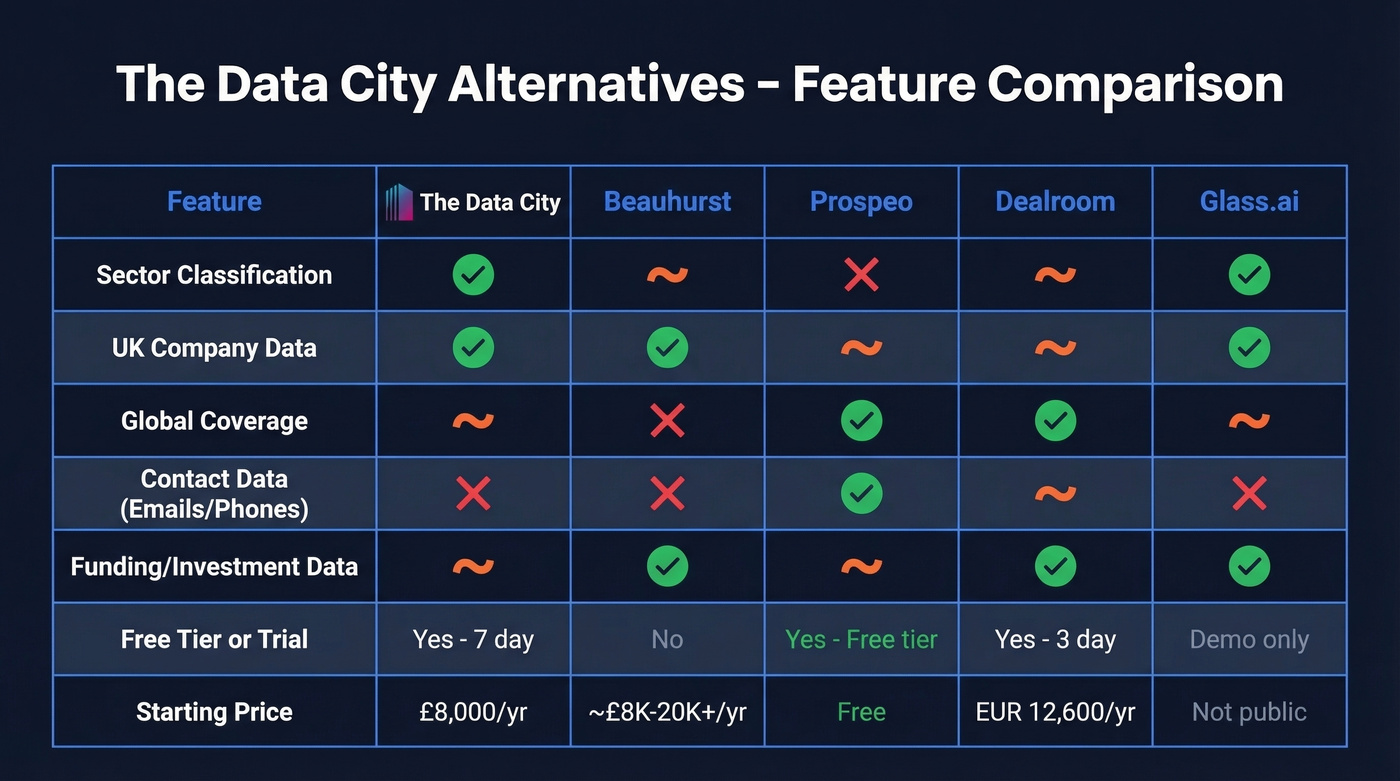
Beauhurst is the closest like-for-like competitor, and PitchBook lists them as a direct rival. Their four platform variants - Advise, Invest, Impact, and Sales - cover different use cases, from economic development to deal sourcing. The data depth on UK private companies is genuinely impressive: fundraising rounds, patent filings, hiring trends, and grant awards all in one place. G2 reviewers consistently praise the account management, with a 4.6/5 rating from 31 reviews.
Two gaps stand out, though. International coverage is limited - if you're mapping sectors outside the UK, you'll hit walls quickly. And the cost isn't trivial. Beauhurst doesn't publish pricing, but based on the sales-led model and what we've seen in similar UK data platforms, expect £8,000-£20,000+/year depending on seats and modules. No free trial; you'll need to book a demo. Beauhurst also explicitly states it's not a contact database, so even with great company intelligence, you'll need another tool to actually reach people.
If you’re evaluating tools mainly to enrich and activate lists, compare options in our guide to data enrichment.
Prospeo
Best for: Turning a sector company list into verified outreach - emails, mobile numbers, and enriched contact data.
The Data City maps sectors. Prospeo reaches the people at those companies. That's the workflow gap most classification tools leave open, and it's the step where deals actually start.

The database spans 300M+ professional profiles with 98% email accuracy and 125M+ verified mobile numbers delivering a 30% pickup rate. Filter by 30+ criteria including buyer intent powered by Bombora across 15,000 topics, technographics, headcount growth, and funding signals. Data refreshes every 7 days - the industry average is 6 weeks - which matters when you're prospecting into fast-moving sectors like FinTech or CleanTech where people change roles constantly.
Pricing is self-serve and transparent. There's a free tier with 75 verified emails and 100 Chrome extension credits per month. Paid plans run about $0.01 per email with no contracts. You can go from a company list to a verified prospect list in minutes: upload a CSV, enrich it with 50+ data points per contact (92% API match rate), and sync contacts to Salesforce, HubSpot, Lemlist, or Instantly using native integrations. When Snyk rolled this out across 50 AEs, bounce rates dropped from 35-40% to under 5% and AE-sourced pipeline grew 180%.
If your main bottleneck is deliverability, pair any finder with an email deliverability guide and a dedicated email verification workflow.
Dealroom
Best for: Startup ecosystem mapping, funding rounds, and market landscapes. Skip if: You need deep industrial classification or non-startup company data.
If your work centers on startup ecosystems and funding-stage progression, Dealroom is the default choice for investors and ecosystem builders. We tested it alongside several alternatives, and the UX for tracking funding rounds and market landscapes is noticeably cleaner than anything else in this space - the data visualization alone makes it worth evaluating.
Premium starts at EUR 12,600/year for 3+ seats with 10,000 export credits per user. Premium Plus runs EUR 17,000/year and adds 3,000 business email credits, 30,000 export credits per user, and CRM integration via Zapier or API. A 3-day free trial with no credit card required makes it one of the few platforms here that lets you test before committing.
If you’re building outbound motions from these lists, use proven sales prospecting techniques to turn research into meetings.
Glass.ai
Best for: Evidence-based company tracking with full provenance for every data point.
Glass.ai is the closest methodological competitor to The Data City's RTIC approach. It continuously crawls millions of web sources and provides traceable evidence for every classification and signal - headcount trends, hiring, funding, M&A, product launches, supply chain intelligence. Where The Data City builds taxonomies, Glass.ai builds evidence trails. In our evaluation, those evidence trails are the closest thing to The Data City's methodology we've found outside the RTIC ecosystem. Pricing isn't public; expect enterprise-level contracts in the £10,000-£30,000+/year range.
Clearbit
Clearbit offers AI-powered 6-digit NAICS and 4-digit SIC assignment across 50M+ companies. It's oriented toward GTM teams who need company categorization baked into their marketing and sales workflows, not policy researchers or economic development teams. Expect mid-market pricing around $15K+/year depending on package. If you're already in the HubSpot ecosystem, the native integration makes this a natural fit.
If you’re comparing vendors for company and contact coverage, see our breakdown of B2B company data providers.
Crunchbase
At around $49/month with a 7-day free trial, Crunchbase Pro is the lightweight entry point for startup discovery and basic company research. Great for quick lookups and funding data, but it lacks the industrial classification depth that makes The Data City or Glass.ai valuable for sector analysis. Public discussion of The Data City is sparse - Reddit results are dominated by unrelated references - which makes hands-on testing and G2 reviews more valuable than community sentiment here.
Pricing at a Glance
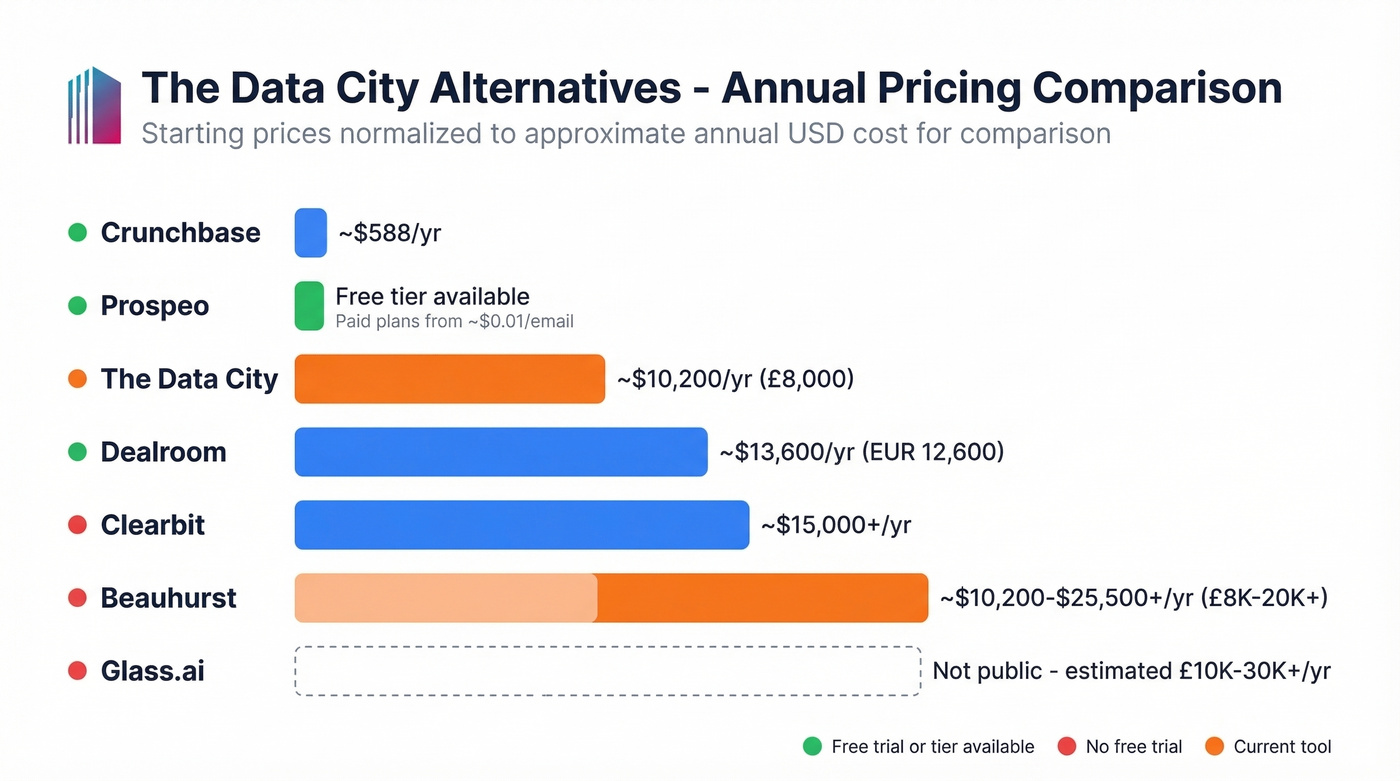
| Tool | Starting Price | Free Trial | Best For |
|---|---|---|---|
| The Data City | £8,000/yr | 7-day | UK sector classification |
| Beauhurst | ~£8K-£20K+/yr | No | UK company intelligence |
| Prospeo | Free; ~$0.01/email | Yes (free tier) | Sector to outreach |
| Dealroom | EUR 12,600/yr (3+ seats) | 3-day | Startup ecosystem mapping |
| Glass.ai | Not public | Demo | AI evidence-based tracking |
| Clearbit | ~$15K+/yr | N/A | GTM categorization |
| Crunchbase | ~$49/mo | 7-day | Startup discovery |
Which Alternative Fits Your Use Case?
UK policy, economic research, or grant mapping? Beauhurst, or stay with The Data City. They're solving similar problems from different angles, and switching costs are real if your workflows depend on RTICs.
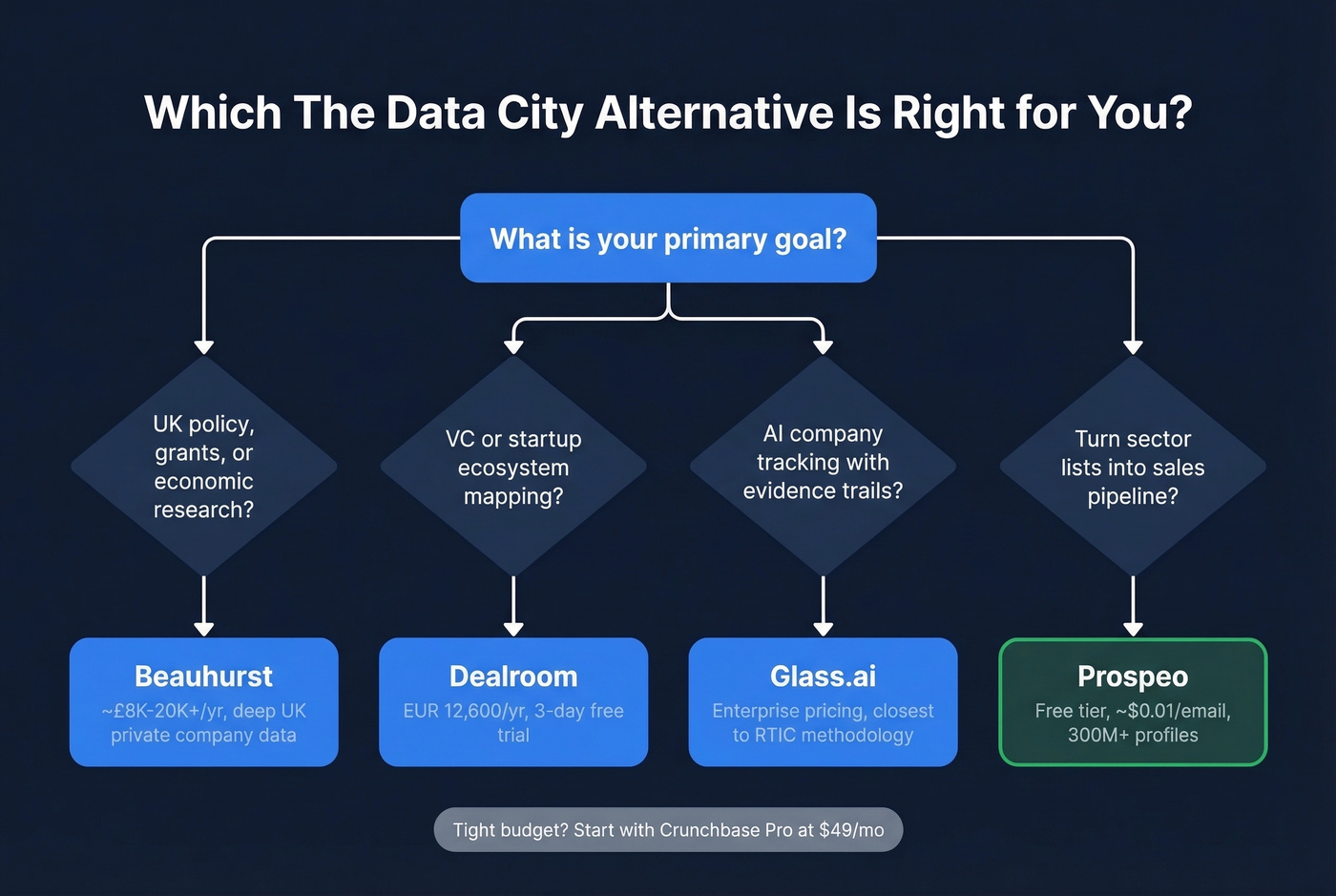
VC/startup ecosystem mapping? Dealroom. Published Premium-tier pricing, clean UX, strong for funding-stage analysis.
AI company tracking with evidence trails? Glass.ai. Closest to The Data City's methodology but with broader signal monitoring.
Turning sector intelligence into sales pipeline? You've identified the companies - now you need verified emails and direct dials for the decision-makers. That's where Prospeo fits. If you need a repeatable process, start with a lead generation workflow.
For teams on tight budgets who just need basic company discovery, Crunchbase Pro at $49/month is the low-risk starting point. It won't replace RTIC-level classification, but it'll get you moving.
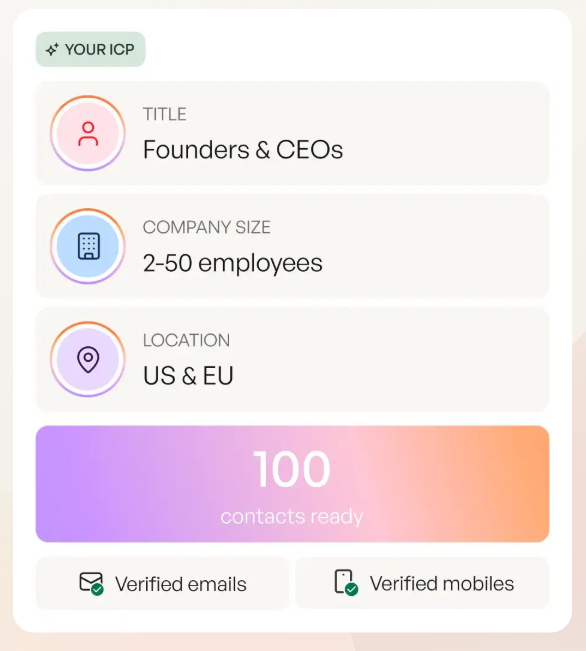
The Data City identifies sectors. But sectors don't reply to emails - people do. Prospeo's 300M+ profiles with 125M+ verified mobiles and 7-day data refresh close the gap between knowing a company exists and booking a meeting with its decision-maker.
Stop mapping sectors you can't reach. Start prospecting them.
FAQ
What does The Data City do?
The Data City uses Real-Time Industrial Classifications (RTICs) to categorize UK companies into emerging sectors like FinTech, CleanTech, and AI - solving the problem of outdated SIC codes where over 50% of FinTechs can't classify themselves under SIC 2007. Founded in Leeds in 2014, plans start at £8,000/year.
Is there a free alternative to The Data City?
No free tool offers RTIC-level classification. Crunchbase has a limited free tier for company discovery. If your goal is reaching contacts at companies you've already identified rather than building the taxonomy itself, Prospeo's free tier (75 verified emails/month) bridges that gap without cost.
What's the difference between RTICs and SIC codes?
SIC codes are static, single-label classifications created in 1937 and rarely updated - only 2.9% of UK businesses change theirs annually. RTICs assign multiple codes to a company based on its web presence and update continually using machine learning with human experts-in-the-loop, capturing emerging sectors that SIC codes simply don't have categories for.
Can I use The Data City for sales prospecting?
Not directly. The Data City identifies which companies belong in a sector but doesn't provide contact data like emails or phone numbers. Teams typically pair it with a contact data tool to bridge that gap and turn sector intelligence into actual pipeline.