

The Time Objection Isn't About Time - Here's What It Actually Means
Three calls into your morning block and you've already heard it twice: "Now's not a good time." Your manager says push through it. But pushing through a time objection literally shuts down the part of the prospect's brain that makes buying decisions - the prefrontal cortex goes offline when someone feels pressured, and the amygdala takes over with fight, flight, or freeze.
Timing is a proxy for priority, confidence, or urgency. A lot of "timing" objections get amplified by bad targeting and stale context. Whether it's a genuine scheduling conflict or a polite brush-off, the response matters more than the push.
The Short Version
Two different sales objections hide behind the same phrase - diagnose which one before you respond. Pause 5x longer than feels comfortable. Analysis of 67,149 calls proved this separates top reps from average ones. Use "Acknowledge, Get Curious, Address" - not "overcome." And if 30%+ of your calls trigger timing objections, the problem is your list, not your script.
Two Objections, Same Words
"Now's not a good time" means one of two completely different things. The first: "I personally don't have bandwidth right now." The second: "This isn't a priority for us to buy."
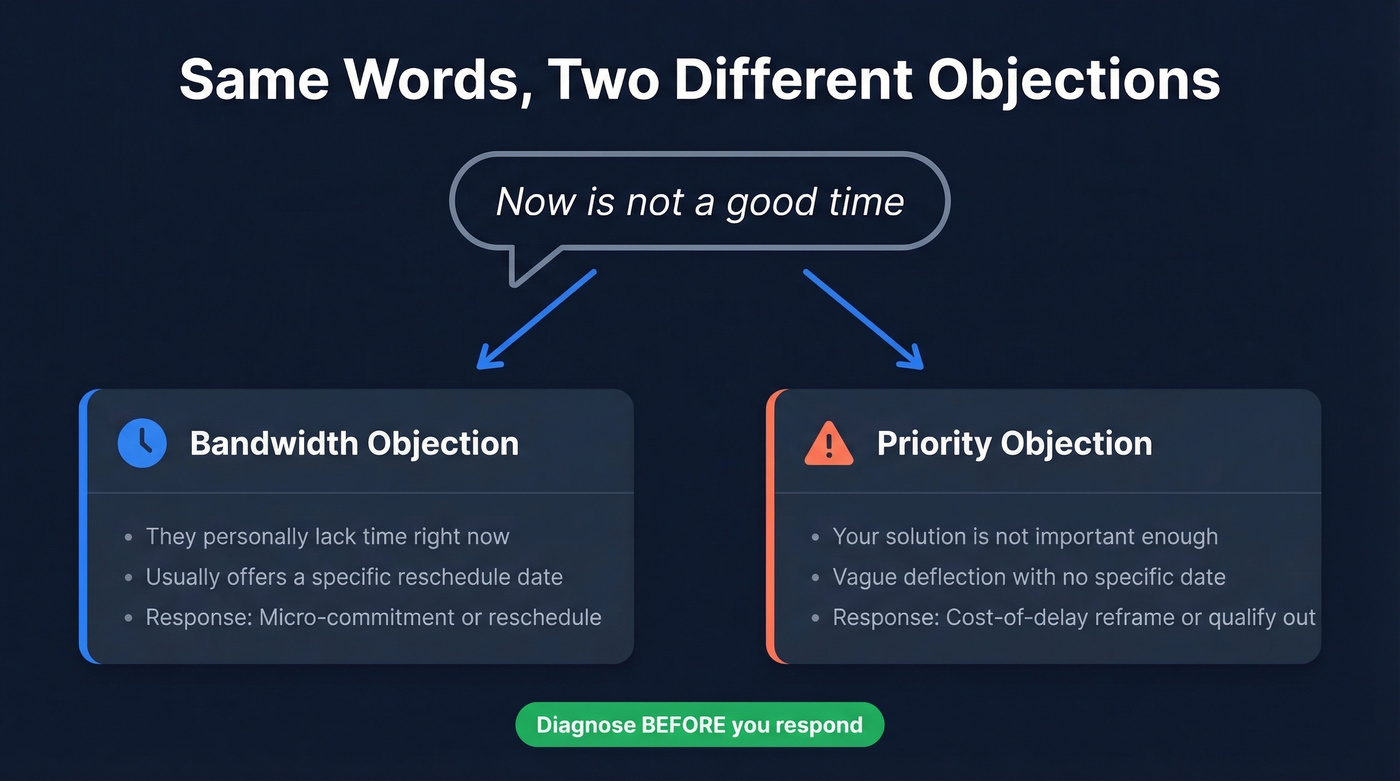
Same words. Radically different responses.
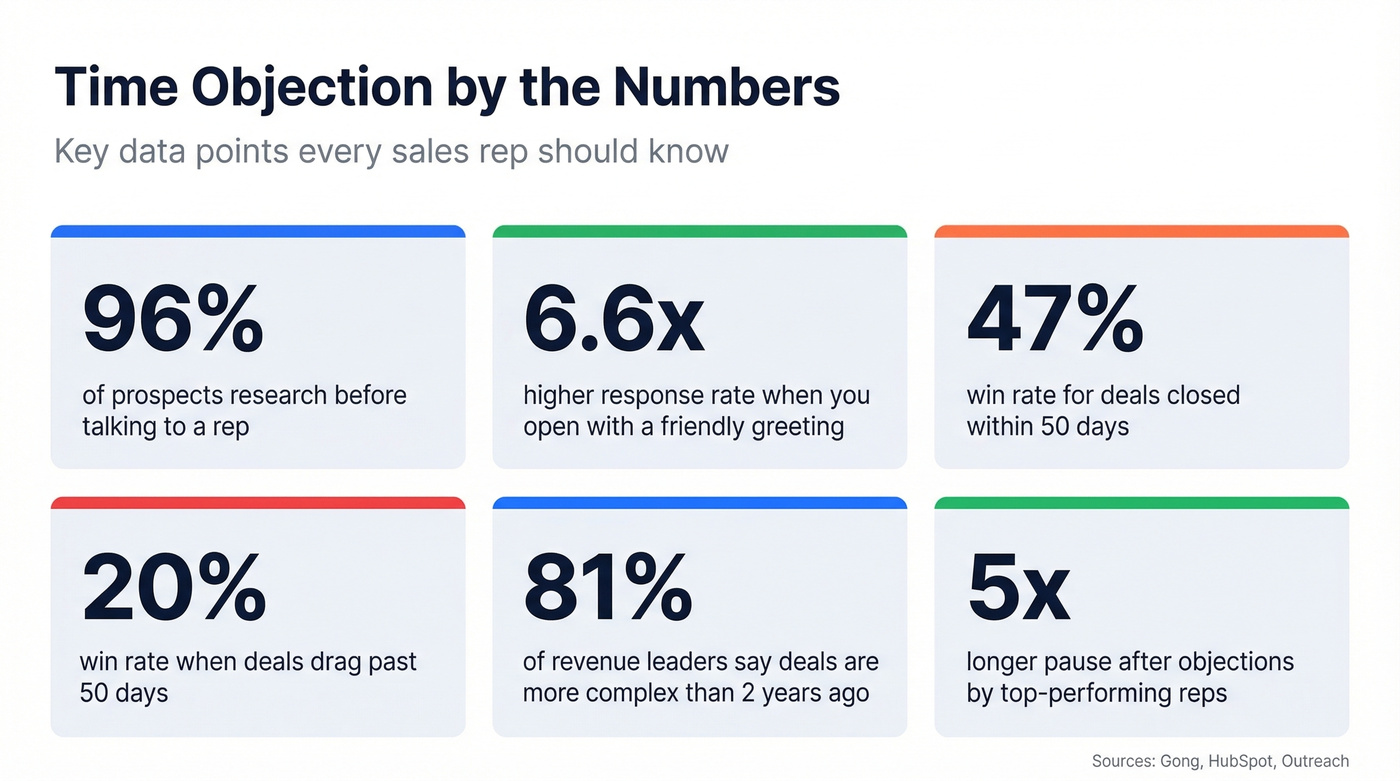
Nobody's too busy for a call that says "your competitor just signed with us." They're too busy for calls that don't matter. That's the real split - bandwidth vs. priority. Before you respond, run a quick diagnostic from Docket.io's framework: is this a priority problem, a confidence problem, or an urgency problem? Each demands a different play, and 81% of revenue leaders say deals are more complex than they were two years ago, meaning these objections are only increasing.
Why Pressure Backfires
Here's the thing: when a prospect feels cornered, their amygdala fires. The prefrontal cortex - the part that evaluates proposals and makes buying decisions - goes dark. You're physically making it harder for them to say yes by pushing harder.
This explains why 96% of prospects research before engaging with a rep and 71% prefer independent research over talking to sales. Reps who open with a friendly greeting see 6.6x higher response rates. Friendliness signals safety, not pressure. Think of it like the Mr. Miyagi approach to objection handling: patience and indirect technique beat brute force every time.
Real Reschedule or Soft No?
A real reschedule comes with a specific alternate date, usually within a week. "Can you call me Thursday at 2?" That's real. "Let's reconnect next quarter" with no date? Soft no.
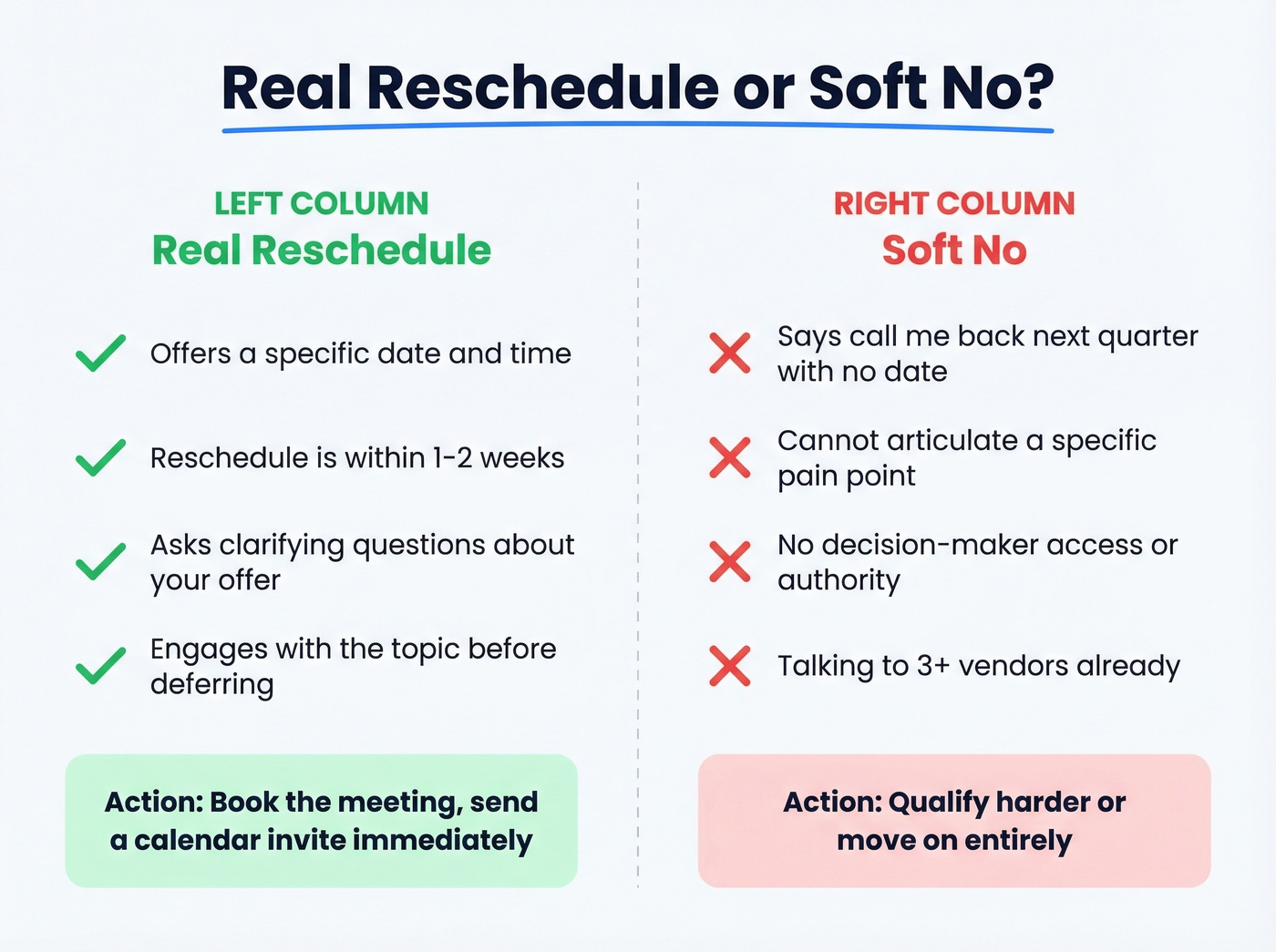
The consensus on r/sales is blunt: "Call me back in 3 months" usually means never. And Gong's research adds a layer - "not the right time" frequently indicates worry about change management, not a calendar conflict. They're not too busy. They're afraid of disruption.
Sometimes the objection is legitimate. If they can't articulate a pain point and there's no decision-maker access, stop selling and move on.

If 30%+ of your calls trigger timing objections, your list is the problem. Prospeo tracks 15,000 intent topics so you call buyers who are actively researching solutions - not cold contacts with zero urgency. Layer intent signals with job changes, headcount growth, and technographics across 300M+ profiles.
Replace "now's not a good time" with "tell me more" - start with better data.
Scripts for Every Timing Scenario
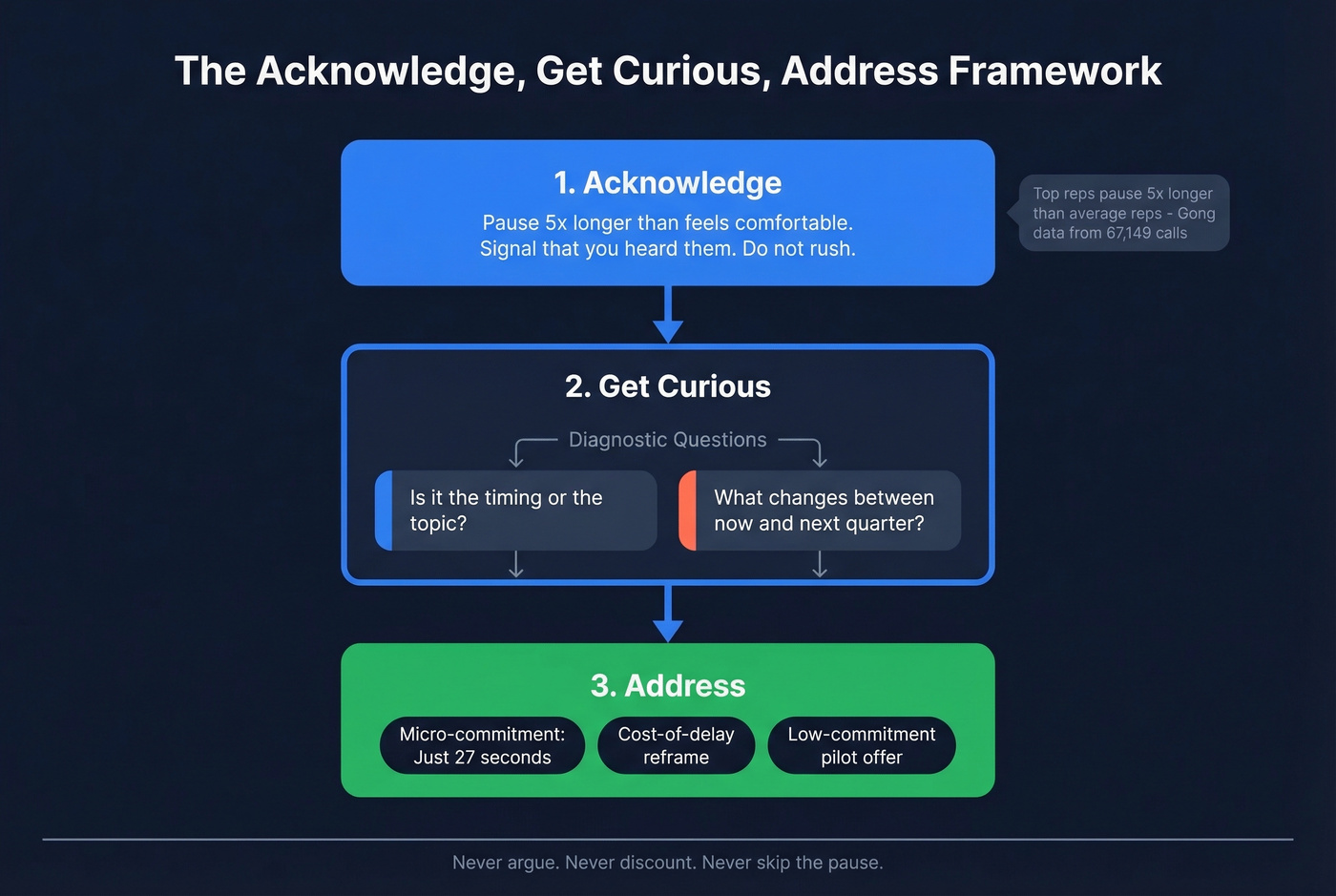
Here's the Acknowledge, Get Curious, Address framework in action.
The Pause (Do This First)
Top reps pause 5x longer after an objection than average reps. Five times. That silence feels excruciating, but it signals confidence and gives the prospect space to elaborate. Don't rush to fill the gap.
"I Don't Have Time Right Now"
This is the bandwidth objection. Respect it, but test it.
Micro-commitment: "Totally fair - just 27 seconds. If it's not relevant, I'll drop it immediately." Nobody says 27 seconds. That specificity is a pattern interrupt that buys you a few extra moments of attention because the brain can't help but notice the odd number.
Diagnostic question: "Is it the timing or the topic that doesn't feel right?" This single sentence separates the two objection types in real time.
"Now's Not a Good Time to Buy"
Outreach data shows deals closed within 50 days hit a 47% win rate - past that threshold, win rates crater to 20%. Delay kills deals. We've seen teams lose six-figure opportunities simply because nobody quantified the cost of waiting.
Cost-of-delay reframe: "Quick question - what's the cost of keeping the current process running for another quarter?"
Low-commitment next step: "What if we ran a two-week pilot with zero commitment? You'd see the impact before any budget conversation."
"Call Me Back Next Quarter"
"Absolutely - is there a specific date in Q3 that works, or is this more of a 'let's see how things shake out' situation?" If they give you a date, schedule it. If they can't - and they can't articulate a pain point, have no decision-maker access, or are talking to three-plus vendors - you've got your answer. Move on.
"I'm Not the Right Person"
This one's closely related to the timing brush-off. Prospects often use "bad timing" as a polite way to say they lack buying authority. Don't treat it as a dead end. Ask: "Who on your team would own a decision like this?" You're not losing a prospect - you're gaining a referral path to the actual decision maker.
What NOT to Do
Don't believe the first objection. Many timing stalls are smokescreens. Dig with a clarifying question before accepting it.
Don't rush to respond. Remember the pause data - 5x longer. Objections are emotional, not logical. Answering too fast signals you're not listening.
Don't offer a discount. Leading with price concessions devalues your product and trains prospects to stall. Lead with ROI instead.
Don't argue. The moment it feels adversarial, you've lost. Period.
Timing Pushback in Email
Cold email objection handling is fundamentally different - you can't pause, you can't read tone. And with 49% of buyers preferring phone for first outreach, email timing pushback is even harder to diagnose because you're already in the less-preferred channel.
Zig Ziglar's five-obstacle taxonomy maps well here: no need, no money, no hurry, no desire, no trust. "Not a good time" lives squarely in the "no hurry" bucket. Each follow-up should address one obstacle specifically. The GMass framework gets this right: email one addresses need, email two addresses urgency, email three addresses trust. "Just following up" addresses nothing - skip it entirely and lead with a new angle each time.
If you're building a sequence, borrow proven sales follow-up templates and adapt them to each objection bucket.
Fix the Root Cause: Your List
Let's be honest - most teams don't have a time objection problem. They have a data problem. If 30%+ of your calls trigger timing pushback, you're calling the wrong person or the right person with stale context. Reaching someone who isn't the decision maker guarantees a brush-off. The "not the decision maker" objection and the "bad timing" objection are two sides of the same coin when your list is outdated.
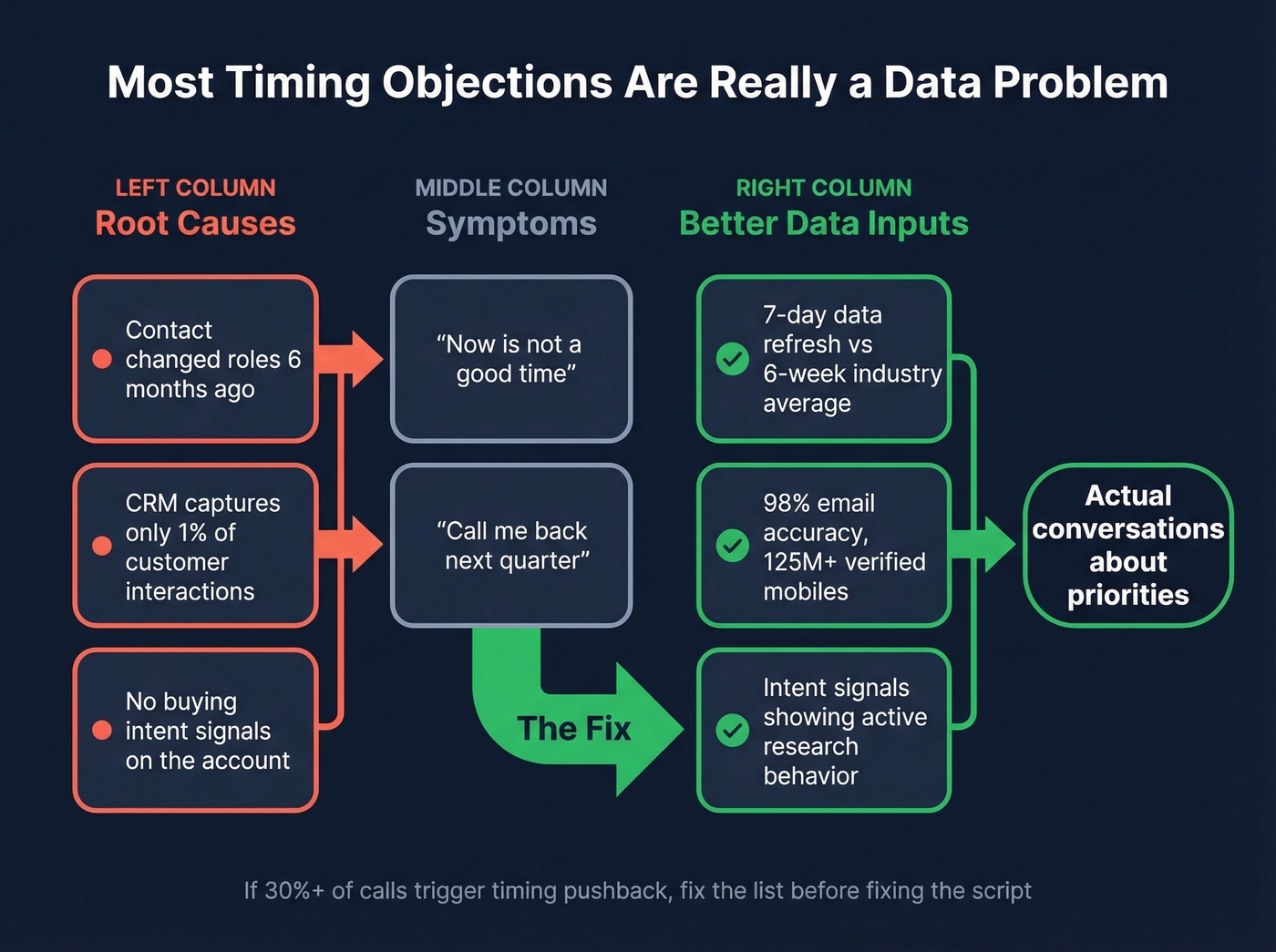
You check your CRM and discover the contact changed titles six months ago, moved departments, or left entirely after an acquisition. CRM systems capture only about 1% of customer interactions, so reps are flying blind on context that would've prevented the objection in the first place.
We've seen teams cut timing objections dramatically just by cleaning their contact list. Prospeo refreshes 300M+ professional profiles every 7 days - compared to the 6-week industry average - so you're reaching the right person with current info. With 98% email accuracy and 125M+ verified mobile numbers, you're starting conversations with people who are actually in the role you think they're in. That alone eliminates a huge chunk of "now's not a good time" before it ever happens.
If you want to fix this systematically, start with data enrichment and a repeatable lead generation workflow that keeps records current.
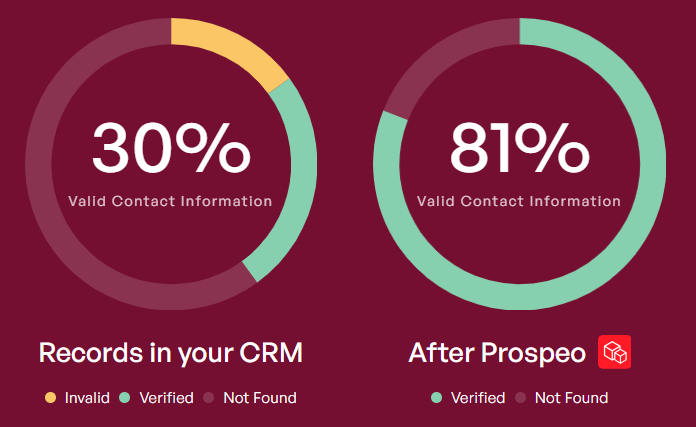
Every timing objection that's really a soft no cost you pipeline. Prospeo's 7-day data refresh means you're calling verified contacts at companies showing real buying signals - not stale leads recycled from a 6-week-old database. 98% email accuracy. 30% mobile pickup rate. Conversations that actually happen.
Stop perfecting your rebuttal script and fix the data feeding your dialer.
FAQ
What percentage of cold call objections are timing-related?
Practitioners estimate timing variants make up roughly half of all early-call objections - consistently the most common first objection on outbound dials. If your rate exceeds 30%, audit your list quality before rewriting scripts.
Should I actually call back when they say "next quarter"?
Only if they offered a specific date and time. A vague "next quarter" is usually a soft no. Qualify harder before hanging up by asking what changes between now and then.
Can better contact data reduce timing objections?
Yes. Stale lists mean you're reaching the wrong person or someone who's already left the role. Fresh, verified data turns "now's not a good time" into an actual conversation about priorities because you're reaching someone who's relevant and current.
How do I handle "I don't have the authority"?
Ask who owns the budget or the initiative, offer to send a one-page summary they can forward, and request an intro. You're turning a gatekeeper into an internal champion. This deflection is a cousin of the time objection, and the fix is the same: route to the right person.