

What Top Sales Performers Do Differently - Backed by Data
It's Thursday afternoon. Your rep has 40 dials left on the list, and 8 of the last 12 numbers were wrong. Meanwhile, 96% of prospects have already researched your product before they'll even take a call - and 71% prefer doing their own research over talking to a rep at all. The gap between top sales performers and everyone else isn't talent. It's systems. The data proves it.
The Numbers: Top vs. Average Reps
A ValueSelling Associates and Selling Power survey of 150+ B2B senior sales leaders quantified what separates the best reps from the rest:
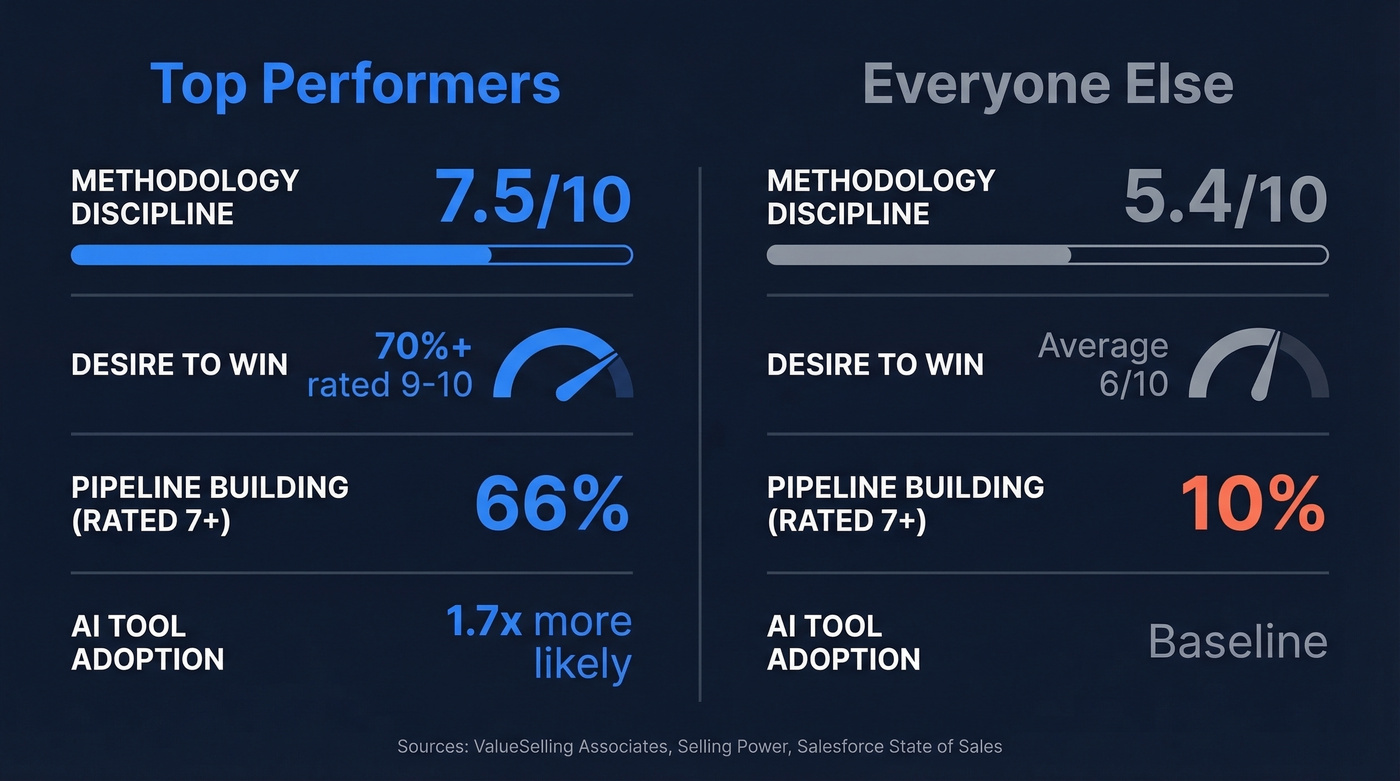
| Metric | Top Performers | Everyone Else |
|---|---|---|
| Methodology discipline | 7.5/10 | 5.4/10 |
| Desire to win | 70%+ rated 9-10 | Average 6/10 |
| Pipeline-building (rated 7+) | 66% | 10% |
| AI tool adoption | 1.7x more likely | Baseline |
That last row comes from Salesforce's State of Sales data - high performers are 1.7x more likely than underperformers to use prospecting agents. These aren't personality traits. They're measurable, coachable behaviors.
The Daily Operating System
Top performing salespeople organize their day around three priorities: prospect, follow up live deals, and serve existing customers to generate future opportunities. Everything else is noise.
The enemy is Parkinson's Law - work expands to fill the time available. Without time-boxing, a rep's "prospecting block" becomes two hours of CRM cleanup and Slack messages. We've watched it happen on dozens of teams.
As a practical benchmark: SMB reps can run 50-80 outbound touches per day when the list is clean and the messaging is tight. Enterprise reps working complex deals need fewer but more personalized touches - 15-25 per day with genuine research behind each one, the kind where you've actually read the prospect's last earnings call or recent job posting before picking up the phone.
The proof is in the results. One sales team implemented strict time-boxed calling blocks and closed $64,000 in revenue during a single 90-minute session. Their close rates improved 9% within 60 days and exceeded 12% within 12 months. It takes 5-10 touches to move a prospect forward - the best reps systemize this instead of leaving it to chance.
One counterintuitive pattern: many high performers actively turn down management promotions. They know their edge is in execution, not oversight, and they protect it fiercely.
Why Cycle Compression Matters
Here's a stat that should change how you run your pipeline: deals closed within 50 days carry a 47% win rate. After 50 days, that drops to roughly 20%. Time kills deals. And 34% of revenue teams report sales cycles stretching 1-2 full quarters.
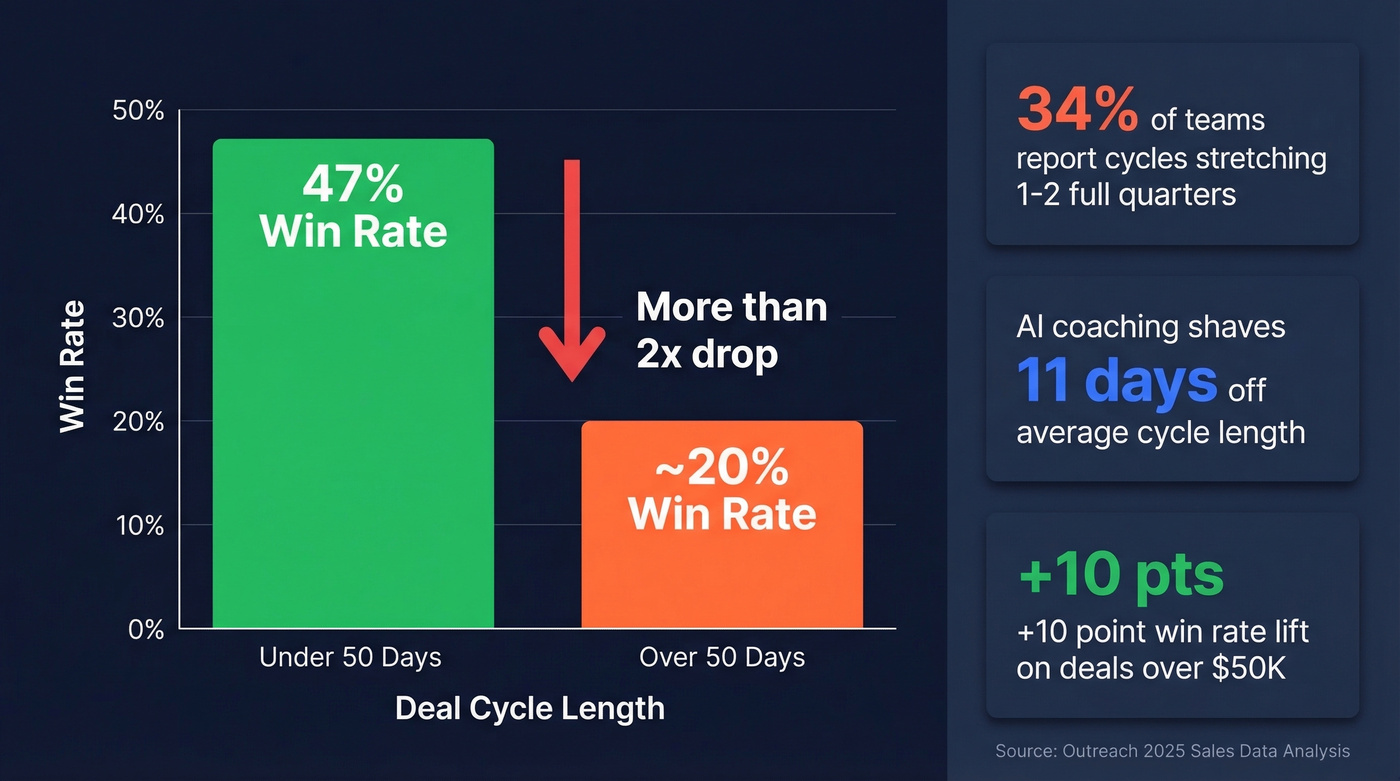
Top performers compress cycles by multi-threading accounts early, removing friction from the buying process, and creating urgency through business-case alignment - not artificial deadlines. AI coaching tools are accelerating this further, shaving 11 days off average cycle length and lifting win rates by 10 points on deals over $50K.
73% of B2B buyers actively avoid sellers who send irrelevant outreach. Relevance isn't a nice-to-have. It's the mechanism that accelerates every stage of the deal.

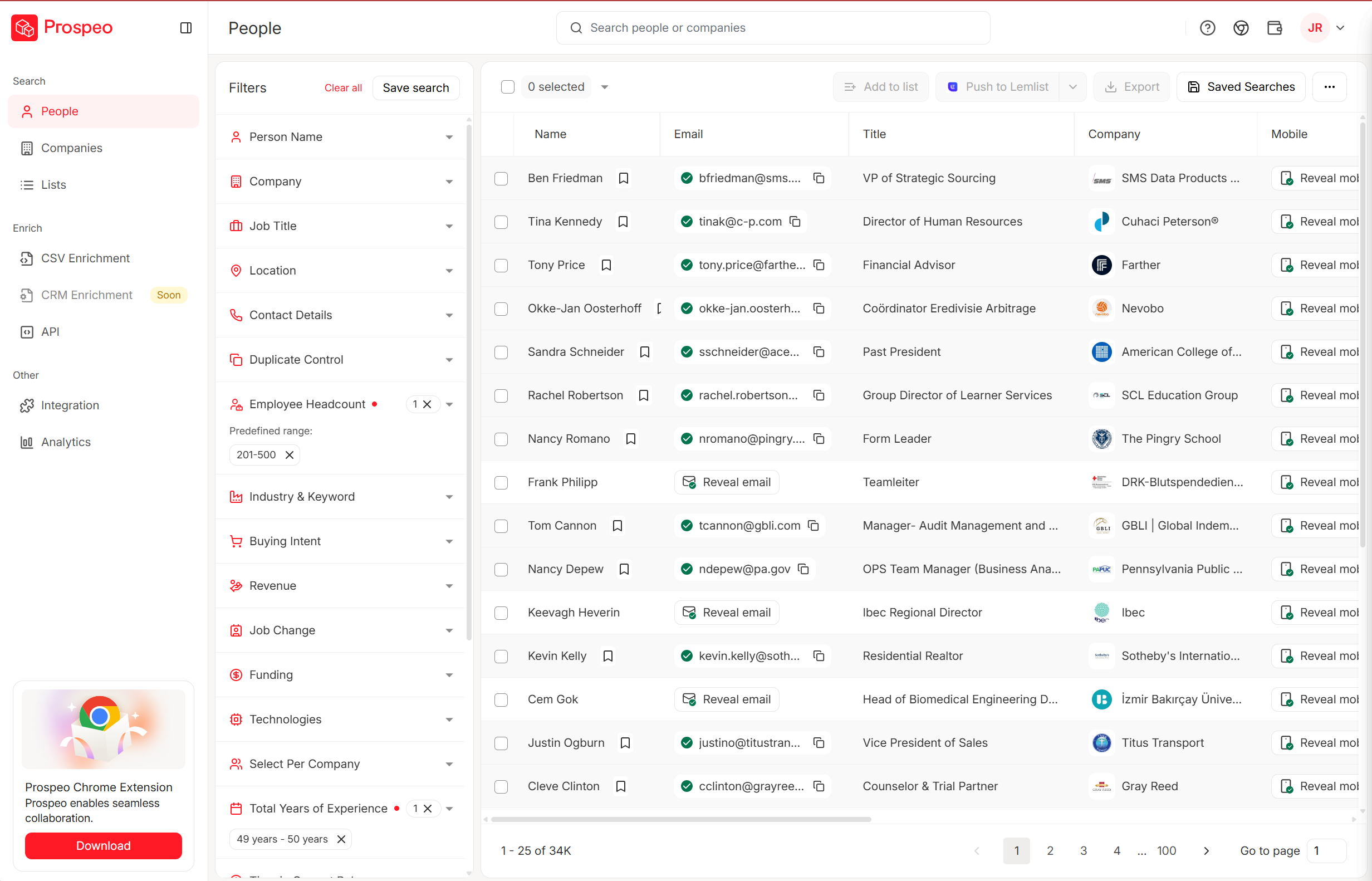
Relevance starts with reaching the right person. Prospeo's 300M+ profiles refresh every 7 days - not every 6 weeks - so your reps never burn a prospecting block on dead contacts. Teams using Prospeo book 26% more meetings than ZoomInfo users.
Give your reps the data edge that separates the top 20%.
The Tech and Data Edge
Reps spend 60% of their time on non-selling tasks. Admin, internal meetings, CRM hygiene - everything except the conversations that generate revenue. Sellers who partner with AI sales tools are 3.7x more likely to meet quota, and 45% of teams are already running a hybrid AI-SDR model.
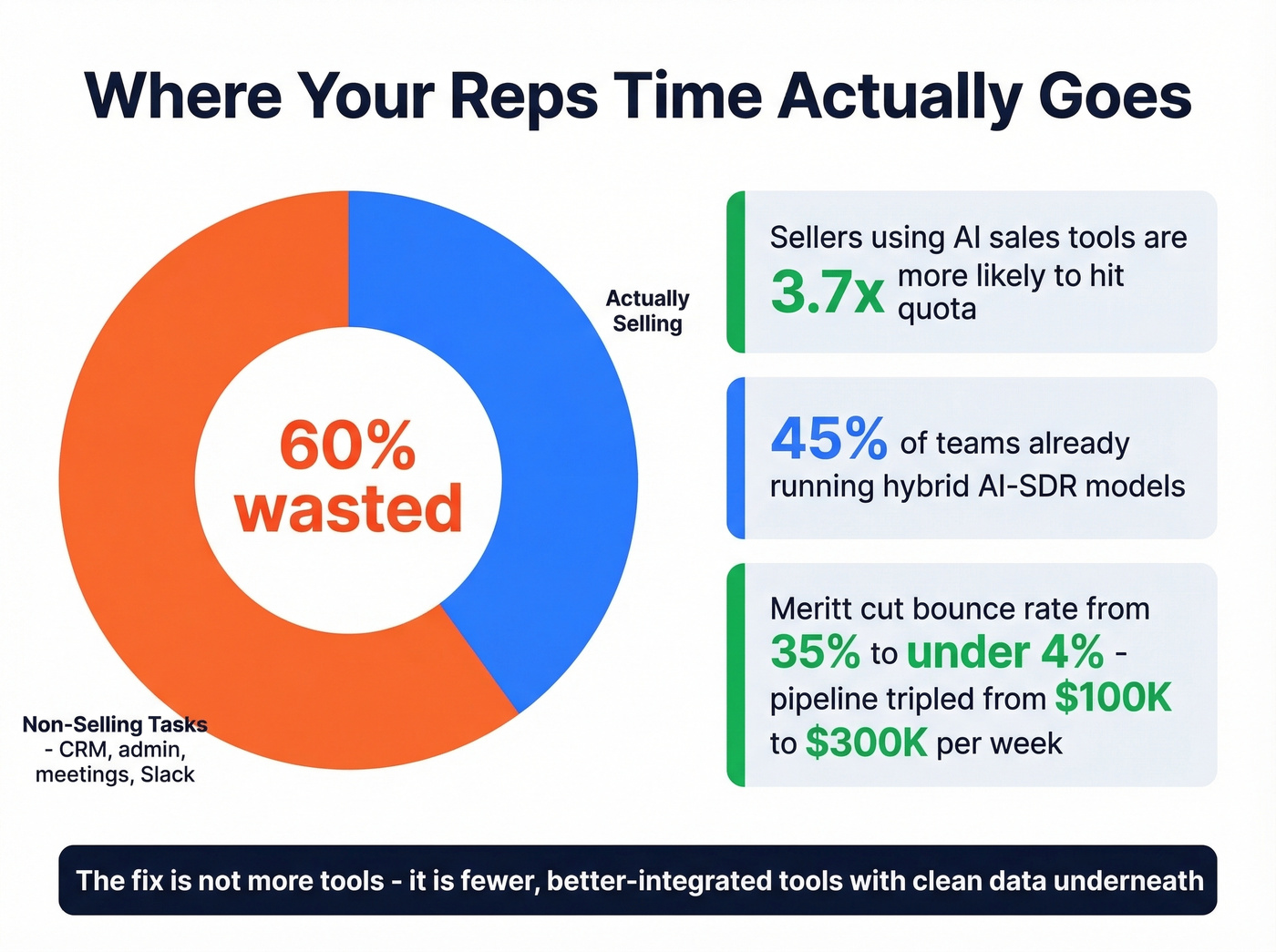
But the tool consolidation principle matters more than any single feature. Fewer tools that integrate tightly beat 15 disconnected point solutions every time. If one platform covers 80%+ of your use cases, consolidate.
Here's the thing most teams skip: data quality is the invisible multiplier underneath all of this. If a big chunk of your emails bounce, it doesn't matter how disciplined your prospecting block is - you're burning time and domain reputation simultaneously. We've seen teams transform their pipeline just by fixing this foundation. Meritt switched to Prospeo and went from a 35% bounce rate to under 4% - their pipeline tripled from $100K to $300K per week. When every contact is current, the entire system performs.
Anti-Patterns That Keep Reps Average
If the habits above describe what works, these are the patterns that keep reps stuck in the middle of the pack:
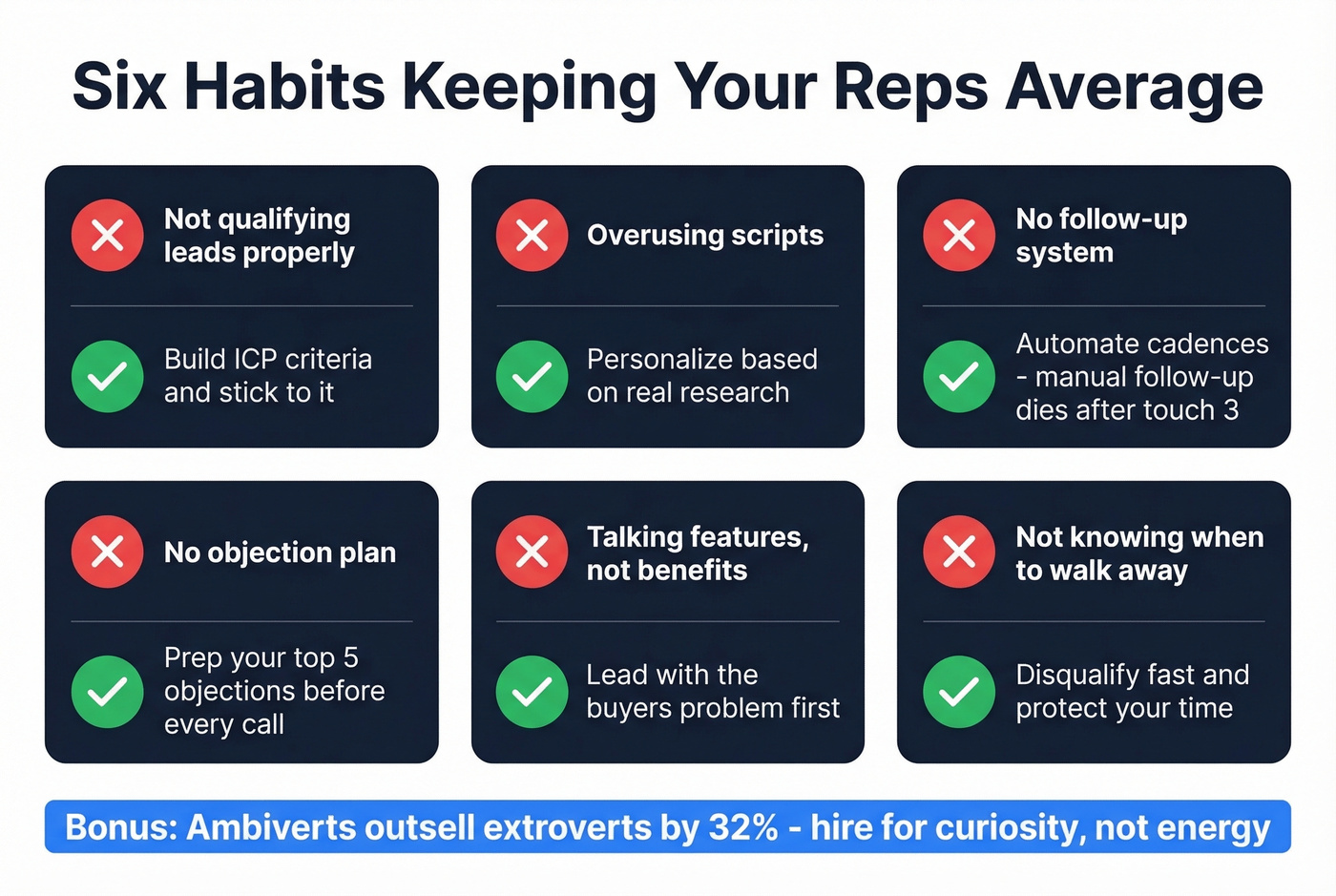
- Not qualifying leads properly - Build your ICP criteria and stick to it. Stop chasing every inbound lead equally.
- Overusing scripts - Personalize based on research. Buyers can hear a script from the first sentence.
- No follow-up system - Automate cadences. Manual follow-up dies after touch three. (If you need a starting point, use these sales follow-up templates.)
- No objection plan - Prep the top 5 objections before every call. Improvising costs you deals.
- Talking features, not benefits - Lead with the buyer's problem. Nobody cares about your product until they believe you understand their situation.
- Not knowing when to walk away - Disqualify fast and protect your time. A dead deal in your pipeline is worse than no deal at all.
And one contrarian closer for sales managers: ambiverts outsell extroverts by 32%. Stop hiring for energy. Start hiring for curiosity.
Let's be honest: if your average deal size is under $15K and your reps are spending more time configuring tools than talking to buyers, your tech stack is the problem - not the solution. The best reps in the world can't outperform bad data and bloated workflows.
Start With the System
The 80/20 rule in sales is real - a small slice of the team often drives a disproportionate share of results. In our experience working with thousands of sales teams, the highest-ROI first move is always the same: fix the data your reps work from every morning. That's the foundation top sales performers build on, and everything else compounds from there.
If you want a practical way to operationalize this, start by tightening your lead generation workflow, tracking pipeline health, and standardizing sales execution across the team.
Your reps already spend 60% of their day on non-selling tasks. Don't let bad data eat into the other 40%. Meritt cut their bounce rate from 35% to under 4% with Prospeo and tripled weekly pipeline to $300K. At ~$0.01/email with 98% accuracy, fixing your data foundation is the highest-ROI move you'll make this quarter.
Stop letting bad data keep good reps average.
FAQ
What percentage of sales reps hit quota?
Industry estimates put full quota attainment at 40-60% depending on segment and year. The gap is driven by methodology discipline, pipeline quality, and tech adoption - not effort alone.
What habits do top salespeople share?
Daily time-boxed prospecting, systematic follow-up across 5-10 touches, consistent use of a sales methodology (scored 7.5/10 vs. 5.4 for average reps), and disciplined pipeline management. The common thread is structure, not charisma.
What tools do the best sales reps use?
CRM platforms like Salesforce or HubSpot, engagement tools for sequencing, and accurate B2B data providers for verified emails and direct dials. The key is fewer, well-integrated tools rather than a sprawling stack that creates more admin than it eliminates.