

How to Write a Warm Intro Email That Actually Gets a Response
You've been on the receiving end of this: someone you met once at a happy hour CC's you on an email introducing you to their cousin's cofounder who's "doing something really cool in AI." No context, no ask, no opt-in. Now you're stuck deciding whether to ignore it, decline awkwardly, or take a meeting you don't want.
That's a warm intro email done wrong. Done right, warm introductions pull 10-34% response rates compared to 7-10% for cold emails. But only if you don't butcher the execution.
What Makes a Warm Introduction Work
Every effective warm introduction has four elements:
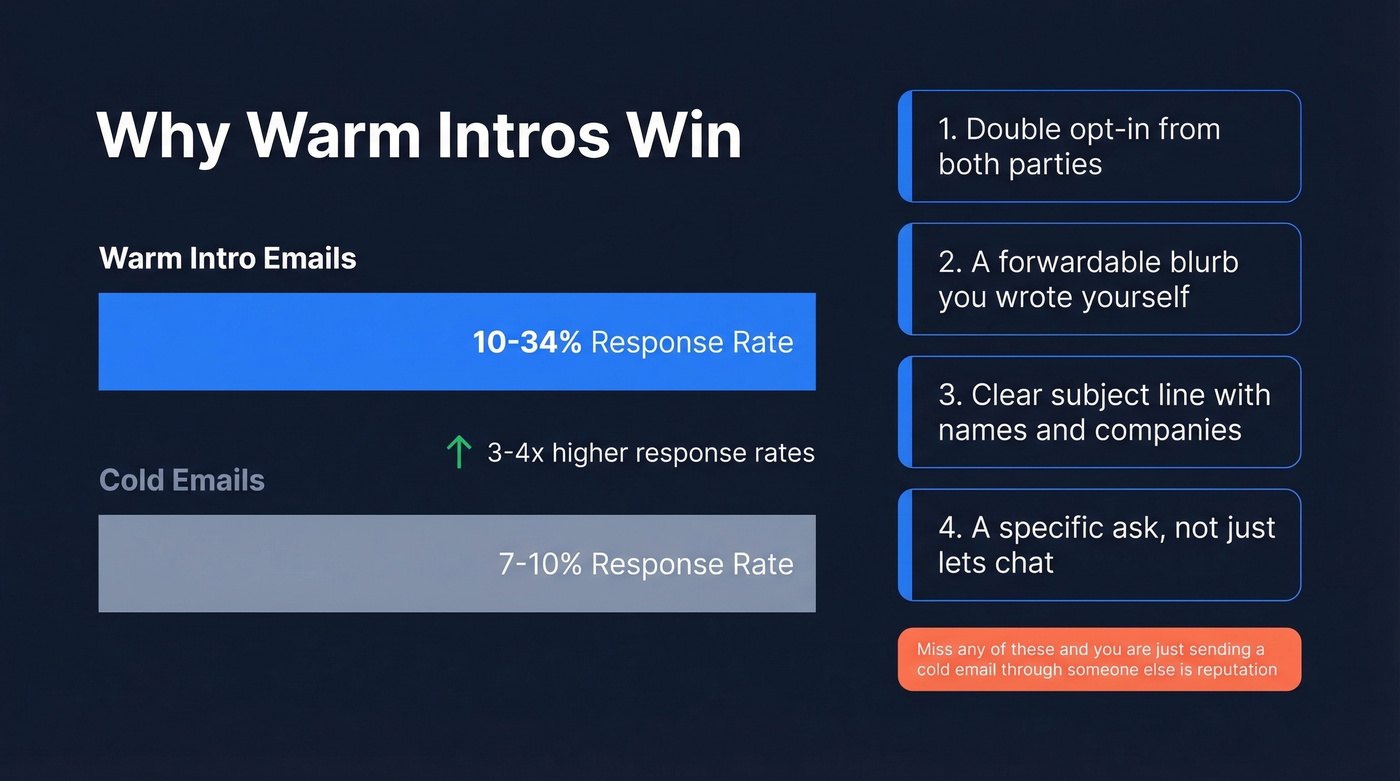
- Double opt-in - both parties agreed before it was sent
- A forwardable blurb - you wrote the connector's job for them
- A clear subject line - names, companies, purpose (see more email subject line examples)
- A specific ask - not "let's chat sometime" but an actual next step
Miss any of these and you're just sending a cold email through someone else's reputation. The reason warm intros outperform cold outreach is transitive trust - the connector's credibility transfers to both sides. Abuse that trust and you won't get a second chance.
How to Write a Warm Intro Email
Nail the Subject Line
47% of recipients decide whether to open based on the subject line alone, and personalized subject lines get opened 22% more often. Don't get creative. Use the formula professionals recognize instantly:
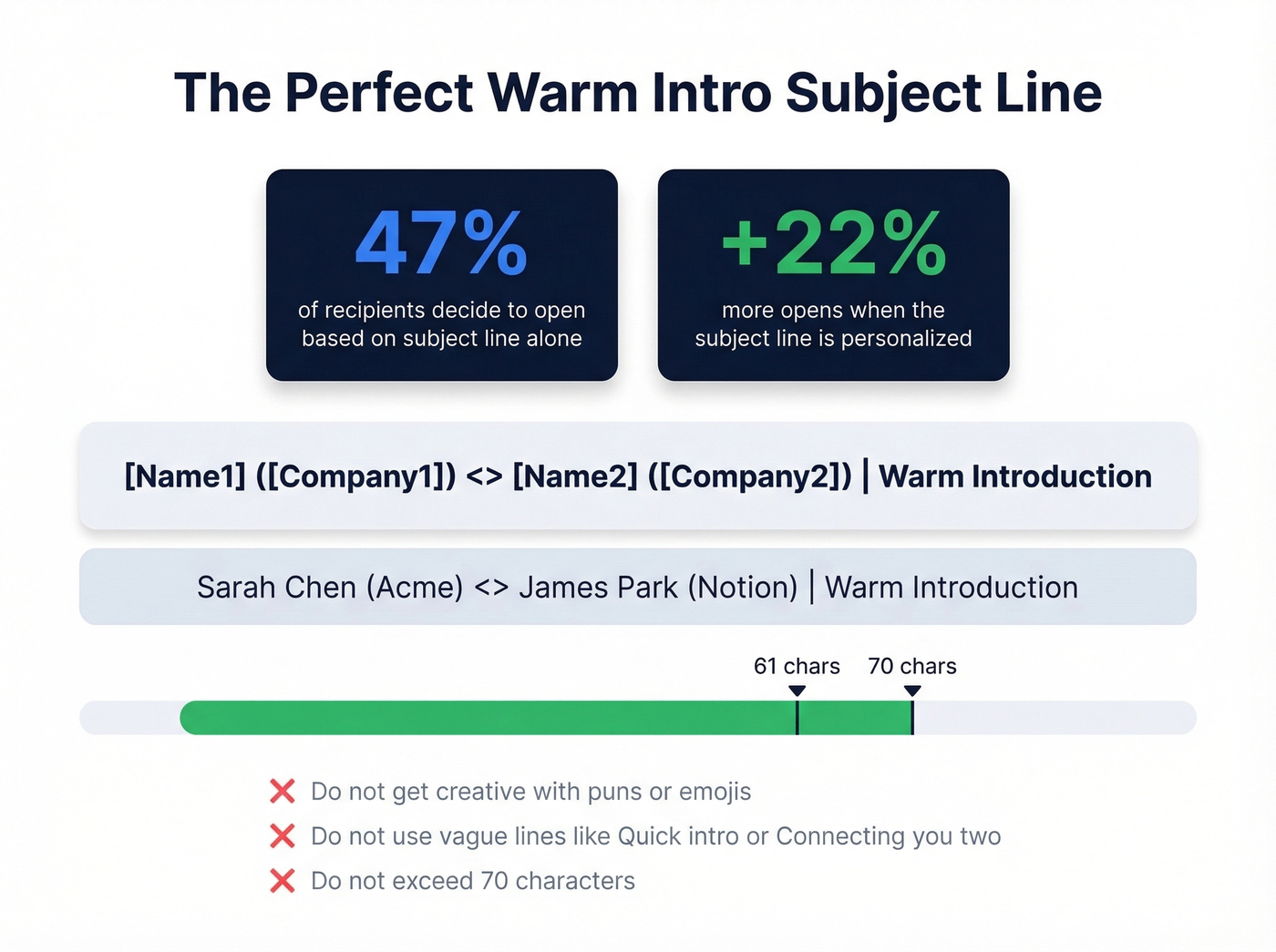
Name1 (Company) <> Name2 (Company) | Warm Introduction
Keep it between 61-70 characters. That's it.
Get to the Point
Open with why you're making this introduction. One sentence: "I'm connecting you two because [specific reason]." No preamble about how great your weekend was, no throat-clearing about how you've been meaning to do this for weeks. (If you need help tightening the copy, use this email copywriting guide.)
Write Concise Intros
Two short paragraphs - one per person. Name, role, company, and the one thing that makes this connection relevant. Three sentences max per person. If you can't explain why these two people should talk in three sentences, you probably shouldn't be making the intro.
Hand Off and Get Out
End with "I'll let you two take it from here" or suggest a specific next step. Don't linger on the thread. Your job as connector is done. If you want a clean next-step line, borrow from these handoff email templates.
Verify Before You Send
Check titles, company names, and verify the email address before asking your connector to risk their reputation. A bounced intro email is worse than no intro at all - it wastes social capital and makes everyone look sloppy. Prospeo checks emails in real time with 98% accuracy, so verification takes seconds and prevents that silent failure. (More on preventing bounces: email bounce rate.)
Always Double Opt-In
Single opt-in intros are lazy and disrespectful. No exceptions.
When you CC someone on an intro they didn't agree to, you force them into three bad choices: ignore it and look rude, decline and create awkwardness, or take a meeting they never wanted. This isn't email etiquette - it's basic respect for someone's time.
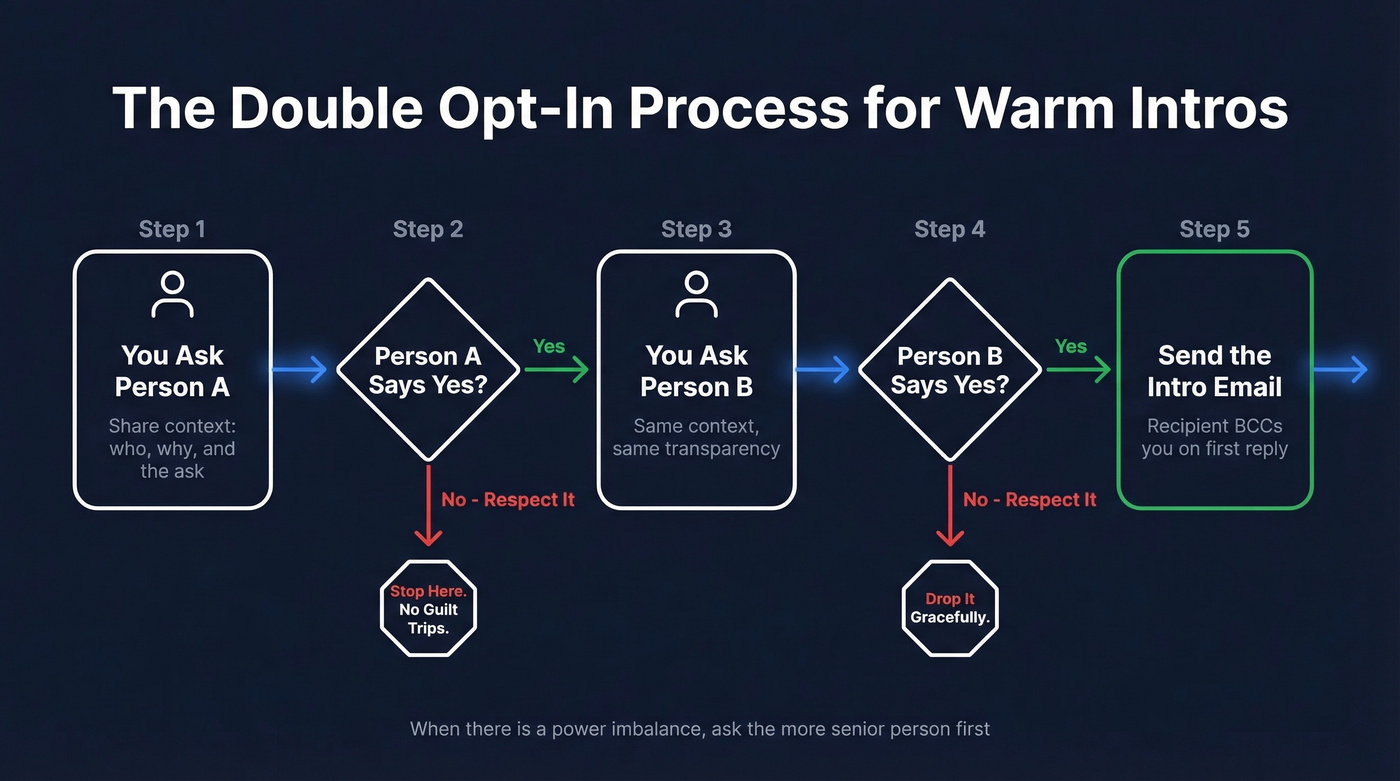
Here's the right process:
- Ask each person separately with context - who the other person is, why you want to connect them, and what the ask is.
- Wait for both to say yes. If either declines, respect it. No guilt trips.
- Send the intro. The recipient puts you on BCC in their first reply, so you're not stuck on a scheduling thread for two weeks.
When there's a power imbalance - say you're introducing a first-time founder to a partner at a16z - ask the more senior person first. If they're not interested, you've saved the junior person from an awkward non-response.

A warm intro only works if the email actually lands. One bounce wastes your connector's social capital and kills the deal before it starts. Prospeo verifies emails in real time with 98% accuracy - so every introduction you send reaches the right inbox.
Verify your contact's email in seconds before you ask for the intro.
Templates and Samples
Template 1: Permission Request to Your Connector
Subject: Quick ask - can I intro you to [Name] at [Company]?
Hey [Connector],
I'd love to introduce you to [Name], [Title] at [Company]. They're [one sentence on what they do and why it's relevant]. Would you be open to a quick intro? Happy to send a blurb you can forward.
Template 2: Standard Introduction
Subject: [Name1] ([Company1]) <> [Name2] ([Company2]) | Warm Introduction
[Name1], [Name2] - excited to connect you two.
[Name1] is [Title] at [Company1], where they [one sentence]. [Name2] is [Title] at [Company2], focused on [one sentence on relevance].
I think you'd have a great conversation about [specific topic]. I'll let you two take it from here.
Template 3: Fundraising Intro
This one matters more than the others because the stakes are higher - founders burn connector goodwill fast when fundraising intros are sloppy.
Subject: Intro: [Founder] ([Startup]) <> [Investor] | Series [X]
[Investor], I'd like to introduce [Founder], CEO of [Startup].
[Startup] [what it does]. [Why it matters]. [Founder] previously [relevant background].
Traction:
- [Metric 1: e.g., $1.2M ARR, 3x YoY]
- [Metric 2: e.g., 40 enterprise customers]
Deck here: [DocSend link]. I'll let you two take it from here.
Template 4: The Forwardable Blurb
[Name] runs [Company], which [what it does in plain English]. They're looking to connect with [type of person] because [specific reason tied to recipient's interests]. [One sentence on why this is worth 15 minutes.]
This is the template most people skip - and it's the most important one. Your connector shouldn't have to figure out how to pitch you. Write it for them. We've seen intros die simply because the connector couldn't articulate the "why" and kept putting it off until the moment passed.
Template 5: Post-Intro Response
[Connector] - thanks for the intro! Moving you to BCC.
[Name], great to meet you. [One sentence acknowledging the connection]. I'd be happy to [specific next step]. Here are a few times that work: [times].
When NOT to Ask for an Introduction
Here's the thing: a strong cold email always beats a weak warm intro. Hunter Walk nailed this, and we've seen it play out repeatedly.
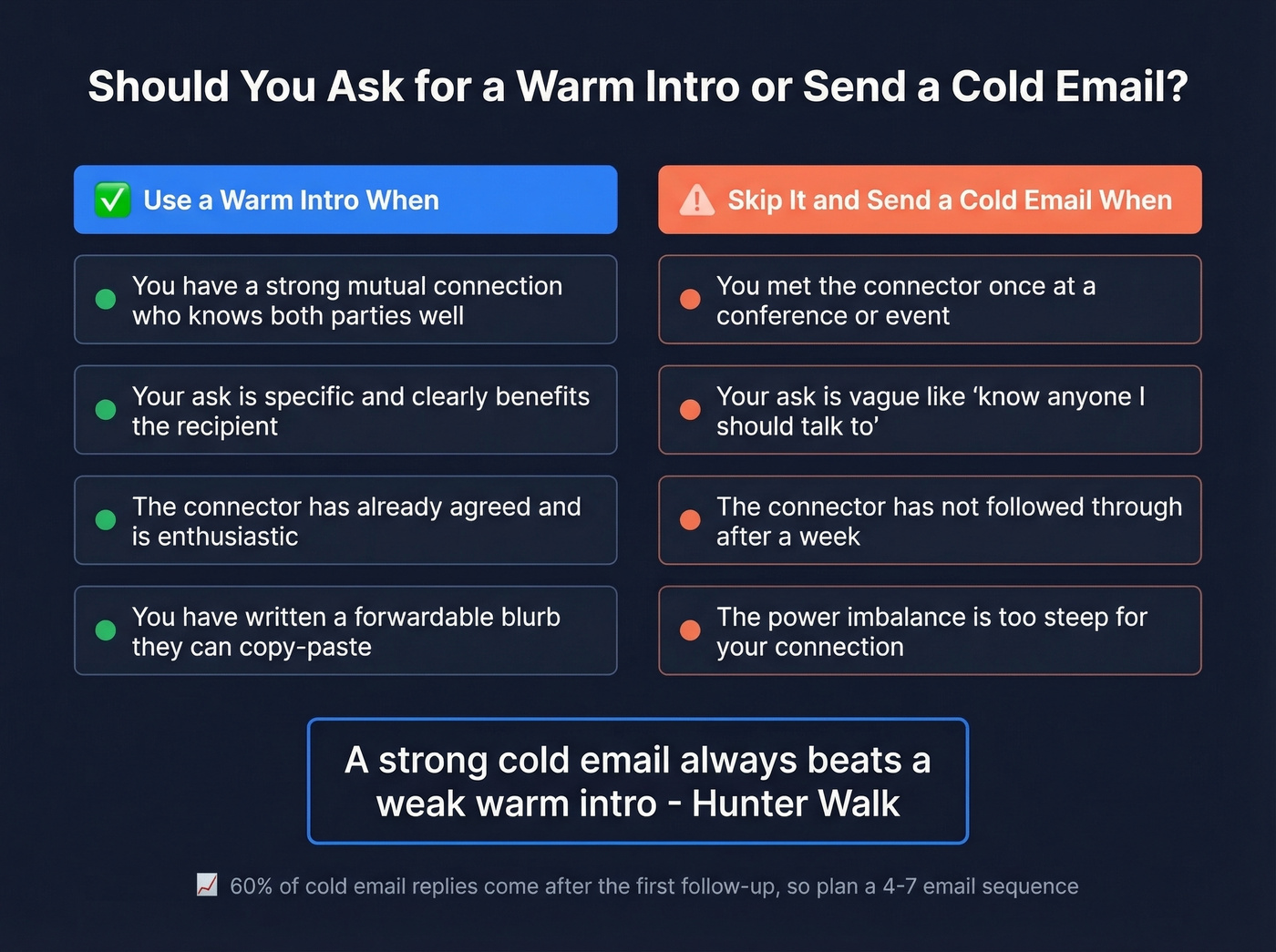
If your mutual connection is someone you met once at a conference, that's not a warm introduction - it's a cold email with a name drop. If your ask is vague ("know anyone I should talk to?"), that's homework you're assigning someone else. And if the power imbalance is too steep, you'll burn weeks waiting for a connector who never follows through.
A thread on r/ycombinator captures this perfectly - one founder sent 100+ cold emails to VCs and got 2-3 replies, but the warm intro path wasn't any better because the connectors weren't strong enough. The consensus was blunt: stop waiting for permission and just write a better cold email.
Skip the warm intro and invest that energy in a tight, personalized cold email when your connection to the connector is thin, your ask is vague, or you've been waiting more than a week for the connector to follow through. About 60% of cold email replies come after the first follow-up, so plan a 4-7 email sequence (use these cold email follow-up templates) rather than pinning everything on a single introduction that might never get sent. If you're building the full flow, start with a B2B cold email sequence.
Mistakes That Kill Your Introduction
Let's be honest - the forwardable blurb is where most warm intros fall apart. You're asking someone to spend their social capital on you. The least you can do is write the copy for them. (If you need more reply-driving patterns, see emails that get responses.)
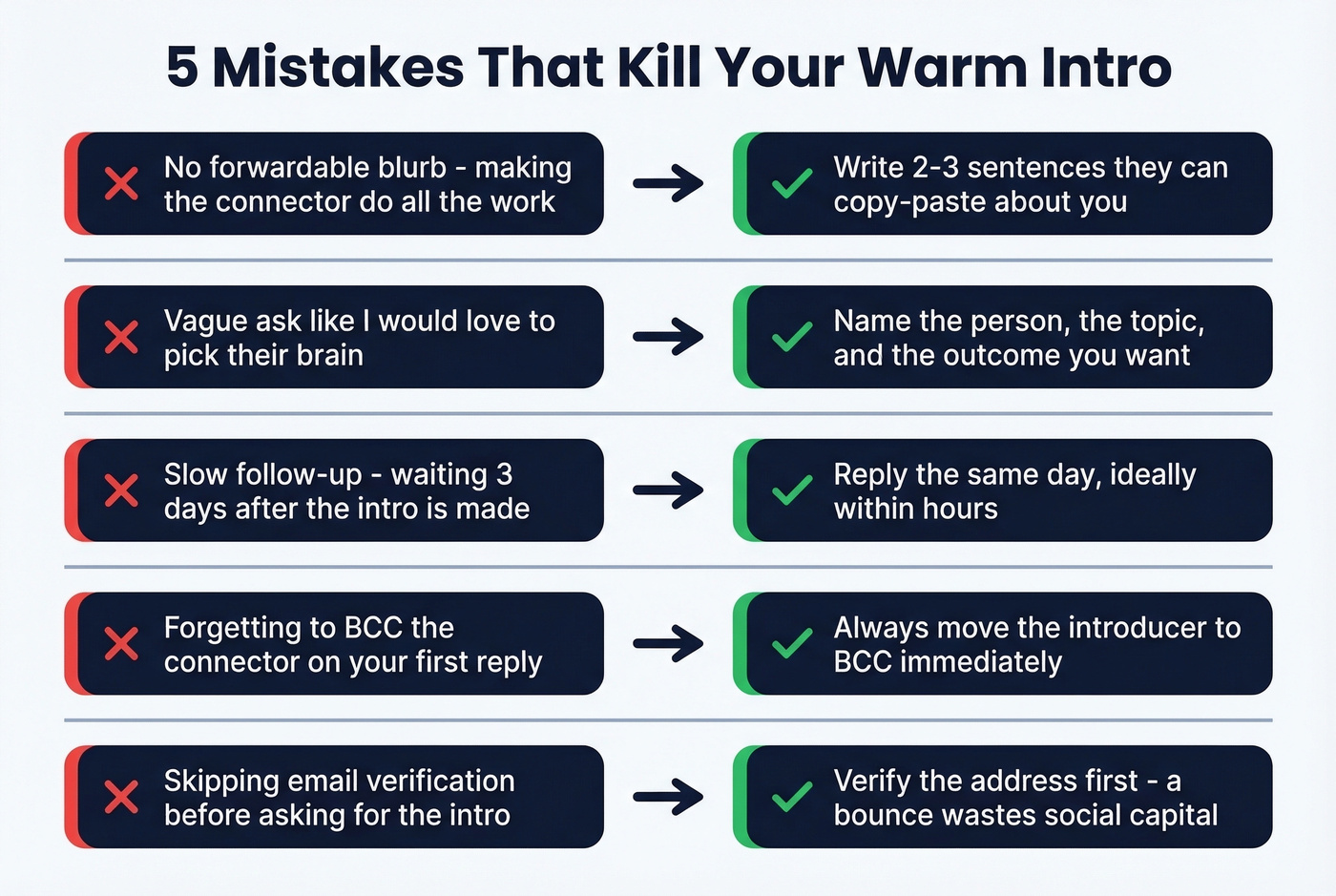
Beyond that, vague asks destroy intros fast. "I'd love to pick their brain" tells the connector nothing. Name the person, name the topic, name the outcome you want.
Slow follow-up is equally deadly. If someone makes an intro and you wait three days to respond, you've made your connector look bad. Reply the same day, ideally within hours. And after the intro is made, BCC the introducer on your first reply - nobody wants 14 scheduling emails cluttering their inbox. When you do follow up, send a personalized message that references the specific context your connector provided, because generic replies signal you didn't care enough to pay attention.
Sometimes the warm intro path stalls - your connector ghosts, the connection is too thin, or the timing slips. That's when a direct, personalized cold email wins. Prospeo gives you 143M+ verified emails and 30+ filters to find the right decision-maker without waiting on anyone.
Stop waiting for intros. Find verified emails and reach buyers directly.
What's the difference between a warm intro and a cold email?
A warm intro comes through a mutual connection who vouches for both parties, while a cold email is direct outreach with no prior relationship. Warm intros see 10-34% response rates vs. 7-10% for cold emails because the connector's trust transfers to both sides.
Should I always use double opt-in?
Yes. Single opt-in forces the recipient into awkward choices: ignore, decline, or take a meeting they never wanted. Always confirm both parties want the connection before sending. It takes 60 seconds and protects everyone's reputation.
How do I write a forwardable blurb?
Write 2-3 sentences your connector can copy-paste: who you are, what you do, and why the recipient would benefit from connecting. Focus on the recipient's interests, not yours. The easier you make the connector's job, the more likely they are to actually send it.
How do I verify the email address before an intro?
Use a real-time verification tool to check the address before asking your connector to send anything. A bounced email wastes everyone's time and credibility - your connector won't make that mistake for you twice.