

6sense vs Common Room: Which GTM Intelligence Platform Do You Actually Need?
The 6sense vs Common Room debate keeps coming up in sales communities, but here's the thing - they're barely competitors. 6sense is an enterprise ABM engine built around anonymous account-level intent. Common Room is a person-level signal aggregator designed for PLG and community-led motions. Forcing an either/or decision misses the point entirely, and picking wrong could cost you $60K you won't get back.
30-Second Verdict
- Pick 6sense if you run enterprise ABM with dedicated RevOps and a budget north of $60K/year. It's the strongest platform for anonymous web intent at scale.
- Pick Common Room if you're a PLG or community-led team that needs person-level signals across product, social, and community channels. Starts at $1K/mo, deploys in days.
- Plot twist: they integrate natively. You might need both.
What Each Tool Actually Does
6sense is an account-level intelligence platform. Its Signalverse engine ingests anonymous web visits, third-party intent signals, and firmographic data to score accounts by buying stage. The real value? Predicting which accounts are in-market before they fill out a form, then orchestrating ABM plays across ads, email, and sales workflows. It's heavy machinery, and it works best when you have the team to run it.
Common Room takes a fundamentally different approach. It aggregates person-level signals across dozens of sources - GitHub activity, Slack communities, product usage, G2 reviews, social mentions, job changes, and more. Person360 profiles stitch these signals together so you can identify the specific humans engaging, not just the company logos. The sales intelligence market is projected to hit $8.19B by 2030, and these two tools are carving out opposite ends of it.
Feature Comparison
| Capability | 6sense | Common Room | Edge |
|---|---|---|---|
| Signal granularity | Account-level | Person-level | Common Room |
| Signal sources | Web + third-party intent | Dozens (GitHub, Slack, product, social, G2) | Common Room |
| Intent provider | Proprietary + third-party (varies by package) | Bombora (6 topics on Starter) | 6sense |
| Implementation | 4-12 weeks | ~48 hours for basic tracking | Common Room |
| Free tier | 50 data credits/mo | None (14-day trial) | 6sense |
| CRM integrations | Salesforce, HubSpot | Salesforce, HubSpot | Tie |
| AI capabilities | Predictive scoring, AI agents | Signal scoring, auto-segmentation | 6sense |
The gap that jumps out is implementation time. 6sense is a serious infrastructure commitment - you're connecting Salesforce, marketing automation, intent feeds, and configuring predictive models. In our experience, the 4-12 week estimate is optimistic without dedicated Revenue Operations alignment support. Common Room can have basic community tracking running in a day or two, though full CRM workflow setup takes longer.

Both 6sense and Common Room surface buying signals - but neither gives you the verified contact data to act on them. Prospeo bridges that gap with 143M+ verified emails at 98% accuracy and 125M+ mobile numbers, refreshed every 7 days. At ~$0.01 per lead, it costs less than a single 6sense add-on.
Turn intent signals into booked meetings with data that actually connects.
Pricing Breakdown
| Platform | Entry Price | Mid-Market | Enterprise |
|---|---|---|---|
| 6sense | ~$10,600/yr (low end) | $60-100K/yr | $100-300K+ |
| Common Room | $1K/mo ($12K/yr) | Custom | Custom |
6sense still won't publish pricing in 2026. The median buyer pays $58,310/year across 204 tracked contracts - and costs climb fast with add-ons for advertising, AI agents, or expanded data packages. Vendr buyers negotiate an average 17% discount, so push back on the first quote. Hard.
Common Room is dramatically more accessible. Starter runs $1K/mo billed annually, gets you 35K contacts, 2 seats, 240K IP enrichments/year, and 6 Bombora topics. Team and Enterprise tiers are custom-priced.
Who Should Pick Which
Pick 6sense if you run enterprise ABM with a $60K+ annual tooling budget, have dedicated RevOps for a multi-week implementation, need anonymous web visitor deanonymization at scale, and want predictive account scoring. It carries a 4.0/5 on G2 across 882 reviews. Worth noting: the most common "Cons" tags include 133 mentions of "Inaccurate Data" and 82 of "Data Quality" - so don't expect the contact data to be turnkey.
Pick Common Room if you run PLG, community-led, or open-source go-to-market motions and need person-level visibility that deploys in days on a $12K/yr starting budget. It holds a 4.5/5 G2 rating across 106 reviews. The learning curve gets flagged by about 20 reviewers, but that's typical for any multi-source signal platform.
Let's be honest: if you're a 15-person startup debating between these two, 6sense isn't the answer. The implementation alone will eat a quarter before you see value. Common Room gets you running in a week.
Use Both Together
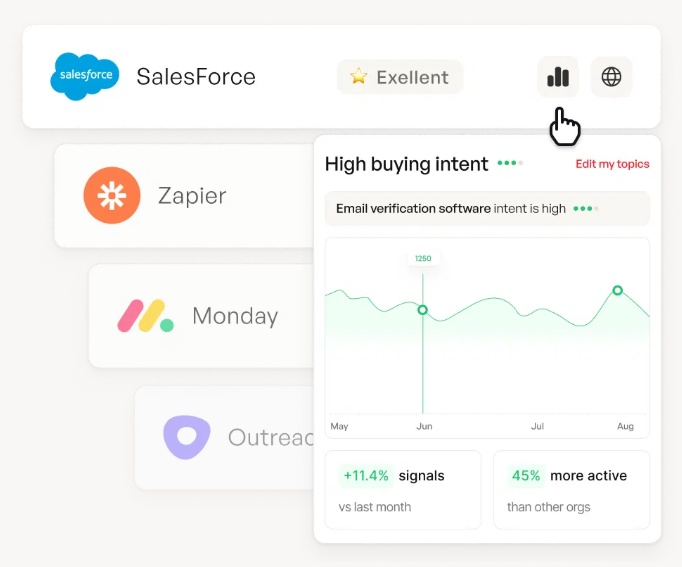
Here's the angle most comparison articles miss: Common Room has a native 6sense integration on all plans. It layers 6sense's account-level intent on top of Common Room's person-level signals, so you see both "this account is surging on intent" and "this specific person just starred your GitHub repo and visited pricing." Setup requires 6sense data accessible via Salesforce or HubSpot fields mapped into Common Room - not plug-and-play, but not a six-month project either.
We've seen teams get the integration running in under two weeks when both tools are already connected to the same CRM. The combined view is genuinely more useful than either tool alone, especially for mid-market deals where you need both the account-level buying signal and the individual champion signal to time outreach correctly.
The Contact Data Gap Neither Tool Fills
Neither platform is primarily a contact data provider - and that's exactly where deals stall. You identify a high-intent account, you see the person-level signals, and then you need a verified email and direct dial to actually start a conversation.
Prospeo fills this gap with 98% email accuracy across 143M+ verified emails and 125M+ verified mobile numbers on a 7-day refresh cycle. It also tracks 15,000 Bombora intent topics natively, so you can layer buyer intent with the signals from either platform. At roughly $0.01 per lead, it costs a fraction of what either 6sense or Common Room charges - and integrates directly with Salesforce, HubSpot, and outreach tools like Instantly and Lemlist.
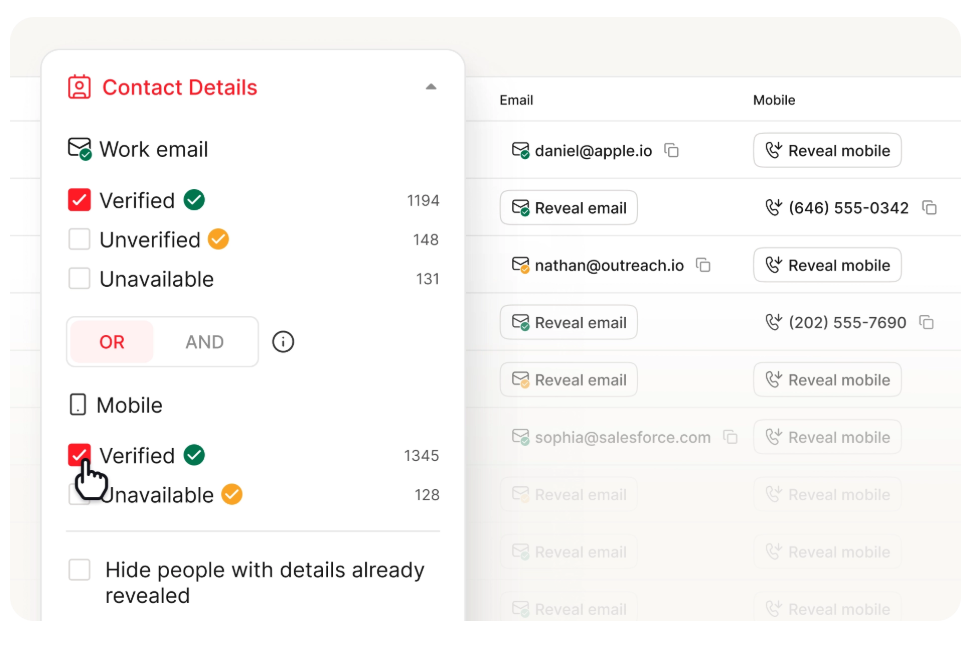
Spending $60K+ on 6sense or layering Common Room signals means nothing if your reps can't reach the right person. Prospeo tracks 15,000 Bombora intent topics natively and pairs them with 98% accurate emails and 30% mobile pickup rates - no enterprise contract required.
Stop paying enterprise prices for the last mile of contact data.
FAQ
Can you use 6sense and Common Room together?
Yes. Common Room's native 6sense integration combines account-level intent with person-level community and product signals via Person360, giving you both the "which company" and "which person" layers in one view. It's available on all Common Room plans.
Does 6sense have a free plan?
6sense offers a free Sales Intelligence plan with 50 data credits per month, including company and people search, alerts, and a Chrome extension. Common Room doesn't have a free tier but offers a 14-day Team trial.
How do you act on intent signals without contact data?
Pair either platform with a verified contact data provider like Prospeo to get accurate emails and direct dials for decision-makers at flagged accounts. The free tier (75 emails/month) lets you test the workflow before committing budget - and 98% accuracy means fewer bounces burning your domain reputation.