How to Prospect in Sales - The System That Actually Fills Your Pipeline
A RevOps lead we know ran a pipeline audit last quarter. Her team had three sequencers, two data providers, and a $45k/year tech stack. They were booking four meetings a week. The problem wasn't effort or tools - nobody had built an actual system. They were prospecting by vibes.
Here's the uncomfortable truth about learning how to prospect in sales: 69% of B2B salespeople don't have enough leads to make quota. And reps spend shockingly little time actually selling - Salesforce research puts it at roughly 30%, while another benchmark pegs it at 37.67%. The rest evaporates into admin, data cleanup, and chasing contacts that bounce. Prospecting doesn't fail because reps are lazy. It fails because the underlying system - data, targeting, sequencing, measurement - is broken or doesn't exist.
Let's fix that.
What You Actually Need
You don't need ten tools. You need three:
- A verified data source - one you trust enough to skip manual email checks. Prospeo's 98% email accuracy and 7-day refresh cycle make it the obvious pick here. (If you still need a backstop, use an email checks workflow.)
- A sequencer - Instantly, Smartlead, Outreach, Salesloft - whatever handles multi-channel cadence for your team size. If you're comparing options, start with these cold email marketing tools.
- A CRM - Salesforce, HubSpot, even a well-maintained spreadsheet if you're early stage.
When evaluating any tool in your stack, prioritize CRM integration, verified contact data, multichannel history tracking, and engagement alerts. Everything else is nice-to-have. (If you're rebuilding from scratch, use a B2B sales stack blueprint.)
The 6-Step Sales Prospecting Framework
Step 1: Define Your ICP
Every wasted hour traces back to a vague ICP. Don't just say "mid-market SaaS companies." Nail down industry, headcount range, tech stack, funding stage, and the job titles that actually sign contracts. A list of 200 perfect-fit accounts outperforms 2,000 loosely targeted ones every time. If you want a more structured approach, use account-based prospecting to force clarity.
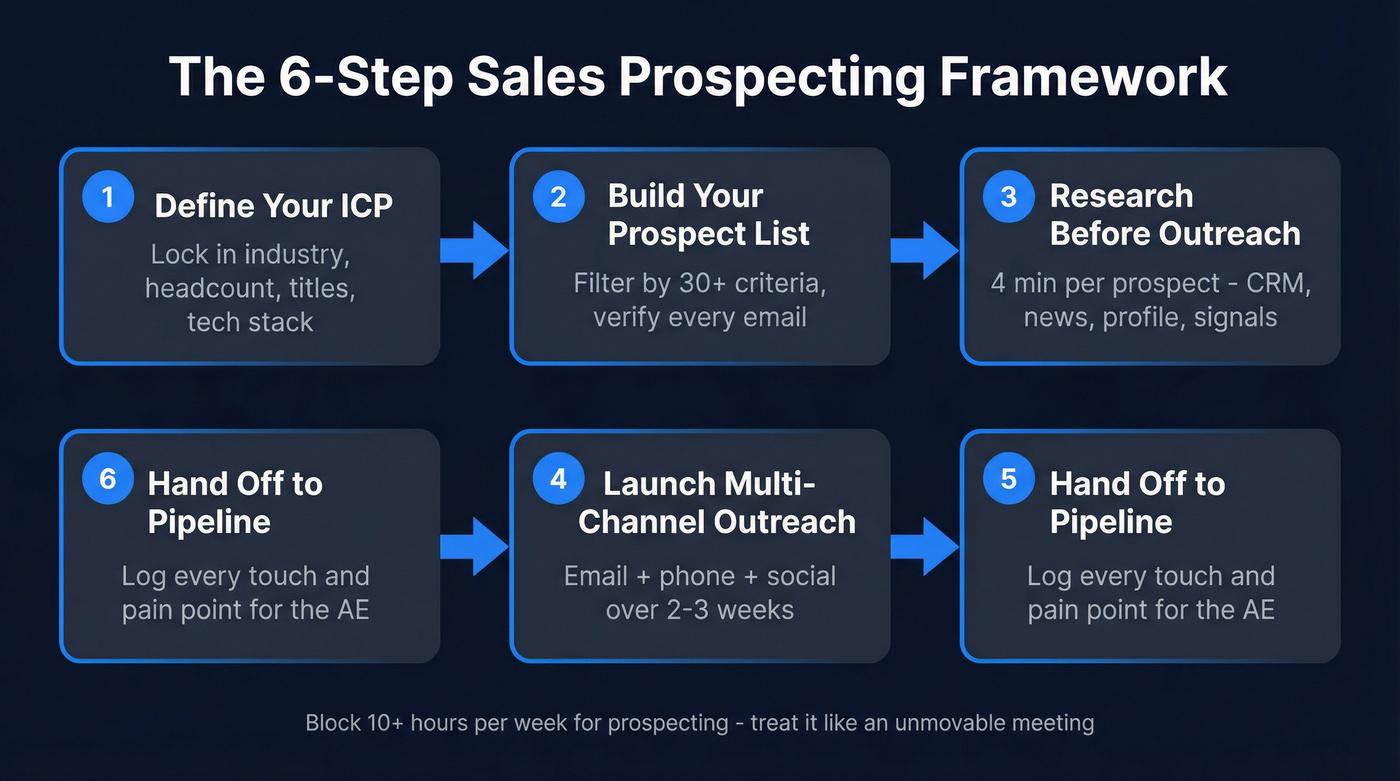
Block at least 10 hours per week for prospecting - treat it like a meeting that can't be moved. The reps who protect this time consistently outperform those who prospect "when they have a minute," and the consensus on r/sales backs this up repeatedly. This discipline is the core of prospecting time management: fewer hours chasing bad leads, more hours in real conversations.
Step 2: Build Your Prospect List
Once your ICP is locked, you need contacts with verified data attached. This is where most teams leak time - they pull a list, skip verification, and watch emails bounce on day one. (If you're seeing decay, this is usually B2B contact data decay in action.)
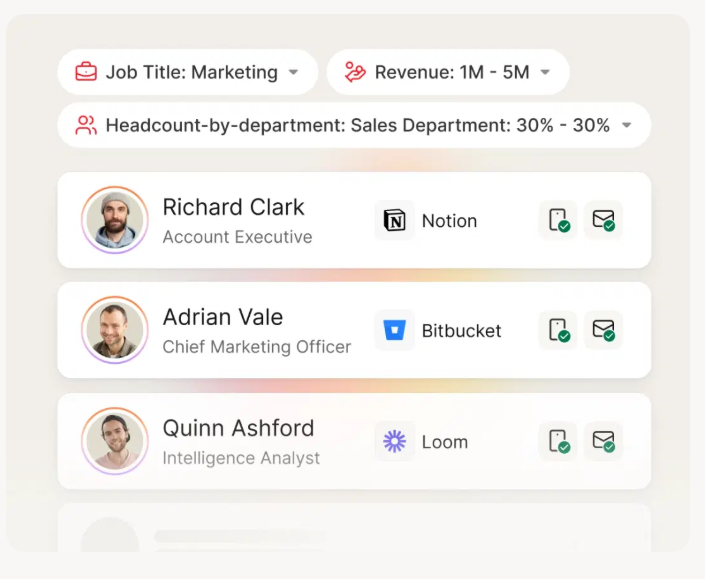
Prospeo's B2B database filters by 30+ criteria including buyer intent, technographics, job change signals, headcount growth, department headcount, funding, and revenue, so your lists mirror your ICP exactly. Every email runs through a 5-step verification process before export. You're not cleaning data after the fact; it arrives clean. When list-building starts with verified data, the entire downstream process - sequencing, calling, booking - runs faster. For more options, compare sales prospecting platforms.
Step 3: Research Before You Reach Out
Buyers say 58% of sales meetings aren't valuable. The valuable ones start with a rep who did their homework. Give yourself 4 minutes per prospect, structured like this:
- 1 min: Check CRM history for prior touches or colleague interactions
- 1 min: Scan company news - funding, product launches, leadership changes
- 1 min: Review their professional profile for recent posts, job changes, shared connections
- 1 min: Check tech stack and hiring signals for timing clues
This is the "always be curating" mindset applied to sales. You're not just collecting names - you're building a living dossier of context that makes every outreach attempt more relevant. If you want a tighter system, use a prospect research before outreach checklist.
Step 4: Launch Multi-Channel Outreach
No single channel wins alone. The best cadences combine email, phone, and social touches over 2-3 weeks. Start with email (lowest friction), follow up with a call (highest signal), and layer in social touches for warmth. We'll break down each channel below. If you need a template-driven cadence, start with a sales cadence example.
Step 5: Qualify Ruthlessly
Not every reply is a deal. Use BANT or MEDDIC to separate genuine opportunities from tire-kickers. A calendar full of unqualified demos is worse than an empty one - it burns rep time and creates false pipeline. Skip this step if you enjoy explaining to your VP why 80% of your "pipeline" went dark. (For a deeper breakdown, use a lead qualification framework.)
Step 6: Hand Off to Pipeline
Log every touch, every piece of intel, and the specific pain point that got them to agree to a meeting. The AE picking up this deal shouldn't have to re-discover anything. Sloppy handoffs kill deals that good prospecting created.
Prospecting Methods That Work in 2026
| Channel | Avg. Response Rate | Signal-Personalized | Touches Needed |
|---|---|---|---|
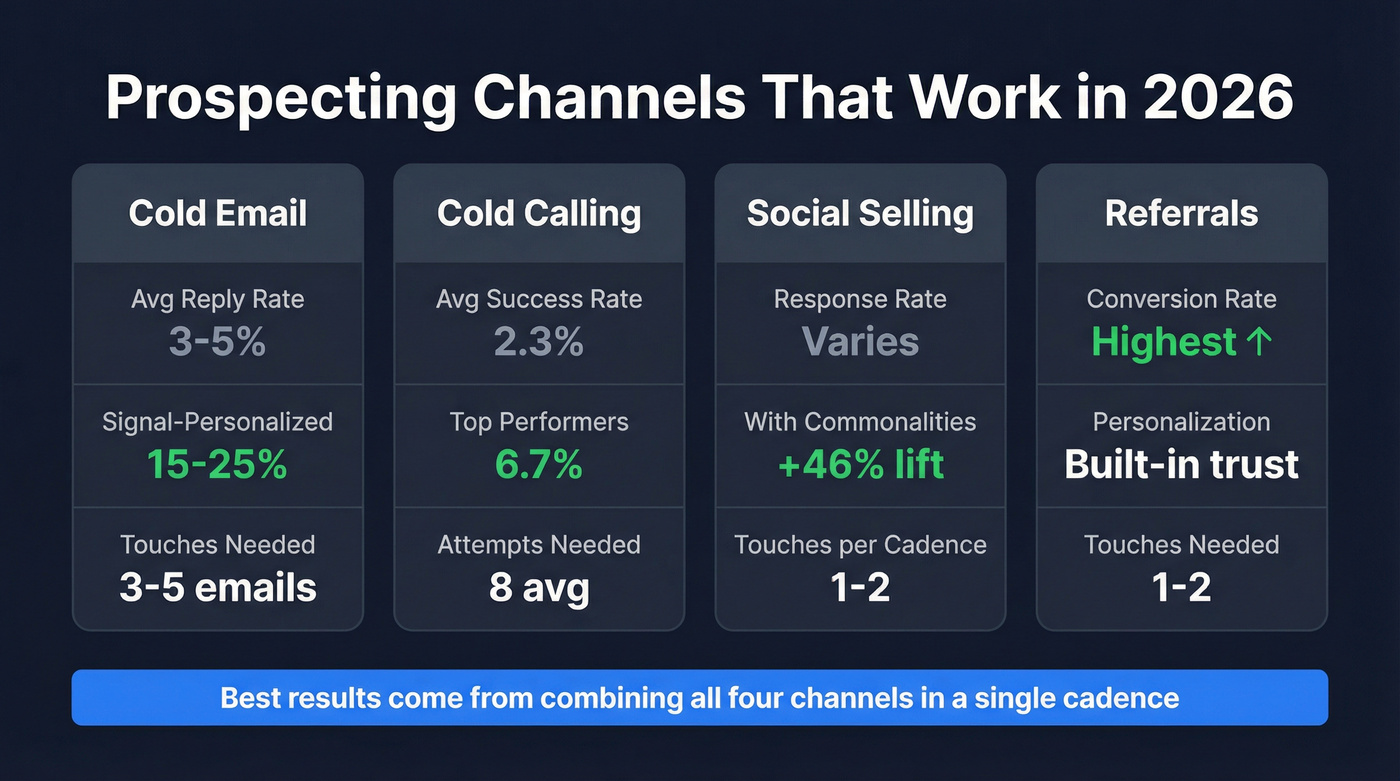
| Cold Email | 3-5% reply | 15-25% reply | 3-5 emails over 2-3 weeks |
| Cold Calling | 2.3% success | ~6.7% (top performers) | 8 attempts avg. |
| Social Selling | Varies | +46% with commonalities | 1-2 per cadence |
| Referrals | Highest conversion | N/A | 1-2 touches |
Cold Email
The industry average reply rate sits at 3-5% reply. Teams using signal-personalized emails - triggered by job changes, funding rounds, or intent spikes - hit 15-25%. That gap is the entire difference between a struggling pipeline and a healthy one. If you want more levers to pull, use these cold email tactics.
Here's a skeleton that works:
Subject: [Specific trigger] at [Company]
Hi [Name], saw that [Company] just [trigger - new hire, funding round, product launch]. When that happens, teams usually run into [specific problem your product solves].
We helped [similar company] [specific result]. Worth a 15-min call this week?
Swap the trigger for every prospect. Generic "I noticed your company is growing" gets deleted. A concrete reference to their Series B or their new VP of Engineering gets read.
Cold Calling
57% of C-level executives and VPs still prefer hearing from reps by phone. The low 2.3% average success rate reflects bad data and poor targeting, not a dead channel. It takes an average of 8 attempts to reach a prospect - most reps give up 5 calls too early. If you want a tighter playbook, use a B2B cold calling guide.
One of the biggest levers is phone number quality. Verified mobile numbers deliver a 30% pickup rate compared to 12.5% or less from many competing providers. That's not a marginal difference - it's the difference between reaching one in three people and reaching one in eight.
Social Selling
Mentioning at least one commonality - shared connections, same school, mutual group - drove a 46% lift in acceptance rates. Comment on their posts, engage with their content, then reach out with context. One or two social touches per cadence is enough. The goal is to stay on your prospect's radar without becoming noise. For a systemized approach, see how to do social selling.
Referrals and Intent Signals
Referrals convert at the highest rate of any channel, and most reps dramatically underuse them. After every closed deal, ask for two introductions. Build it into your process so it's automatic, not an afterthought.
Intent data takes a different approach - identifying companies actively researching solutions in your category. Organizations using signal-qualified leads report 47% better conversion rates, 43% larger deal sizes, and 38% more closed deals per quarter. This is where B2B prospecting is heading: away from spray-and-pray, toward precision timing. For teams that want to layer intent into their workflow, Prospeo tracks 15,000 topics via Bombora and combines that with job role and company growth signals so you can time outreach to the moment a prospect is actively evaluating.

Step 2 breaks down without verified data. Prospeo's 30+ ICP filters and 5-step email verification mean your lists arrive clean - 98% accurate, refreshed every 7 days, ready to sequence on day one.
Stop cleaning lists. Start booking meetings.
How AI Changes Prospecting in 2026
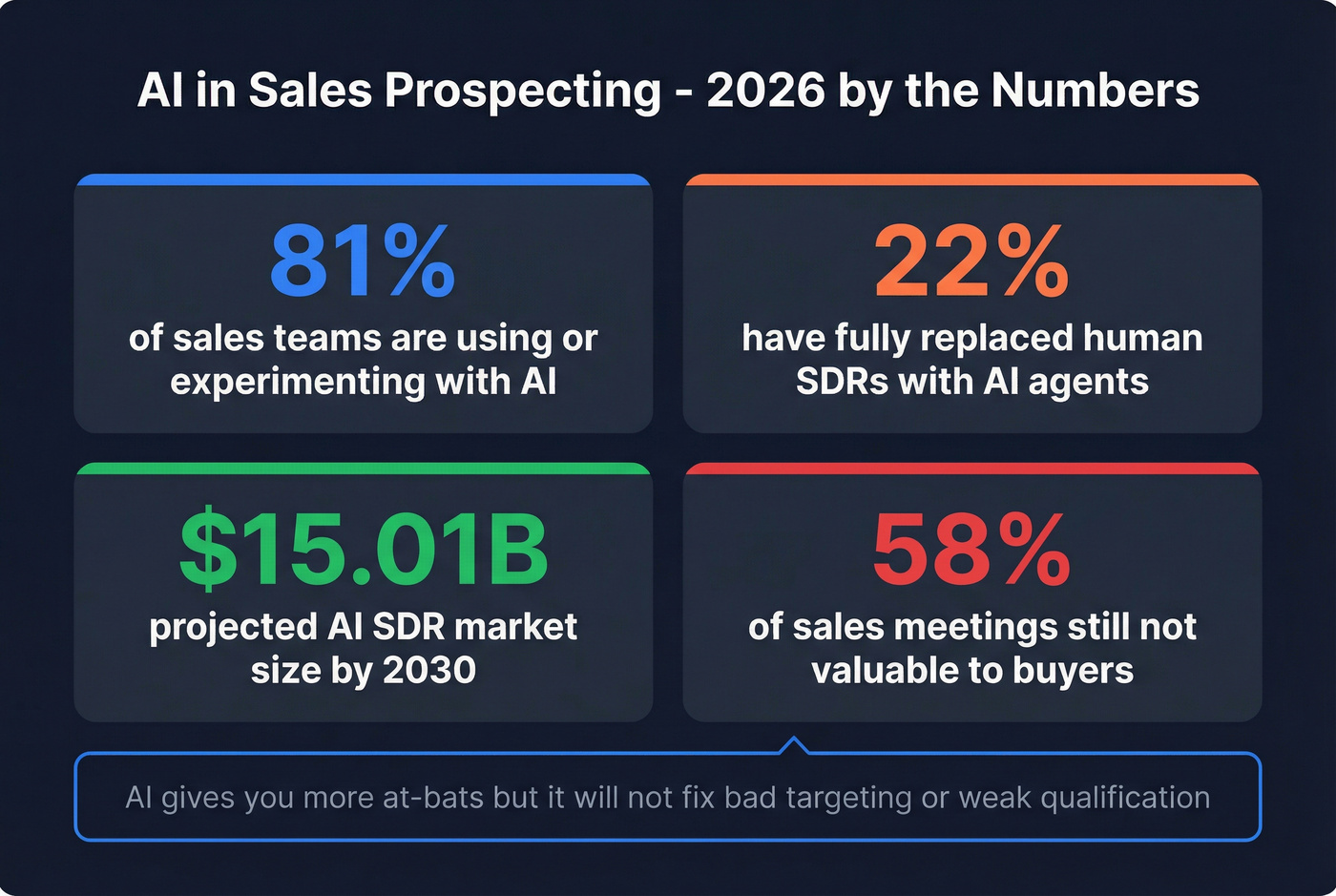
81% of sales teams have implemented or are experimenting with AI, and 22% have fully replaced human SDRs with AI agents. The AI SDR market is projected to hit $15.01B by 2030. This isn't hype anymore - it's infrastructure. If you're building this into your stack, start with AI multi-channel prospecting.
The real win is time recovery. AI compresses research, personalization, and admin so reps spend more hours in actual conversations. On the outbound side, the biggest gains come from AI prioritizing leads based on engagement history and generating first-draft emails that reps refine in seconds rather than minutes.
Here's the thing, though: AI will get you more at-bats, but it won't fix bad targeting or weak qualification. Buyers still say 58% of meetings aren't valuable. If your ICP is vague and your data is stale, AI just helps you waste time faster.
5 Mistakes That Kill Your Pipeline
Giving Up Too Soon
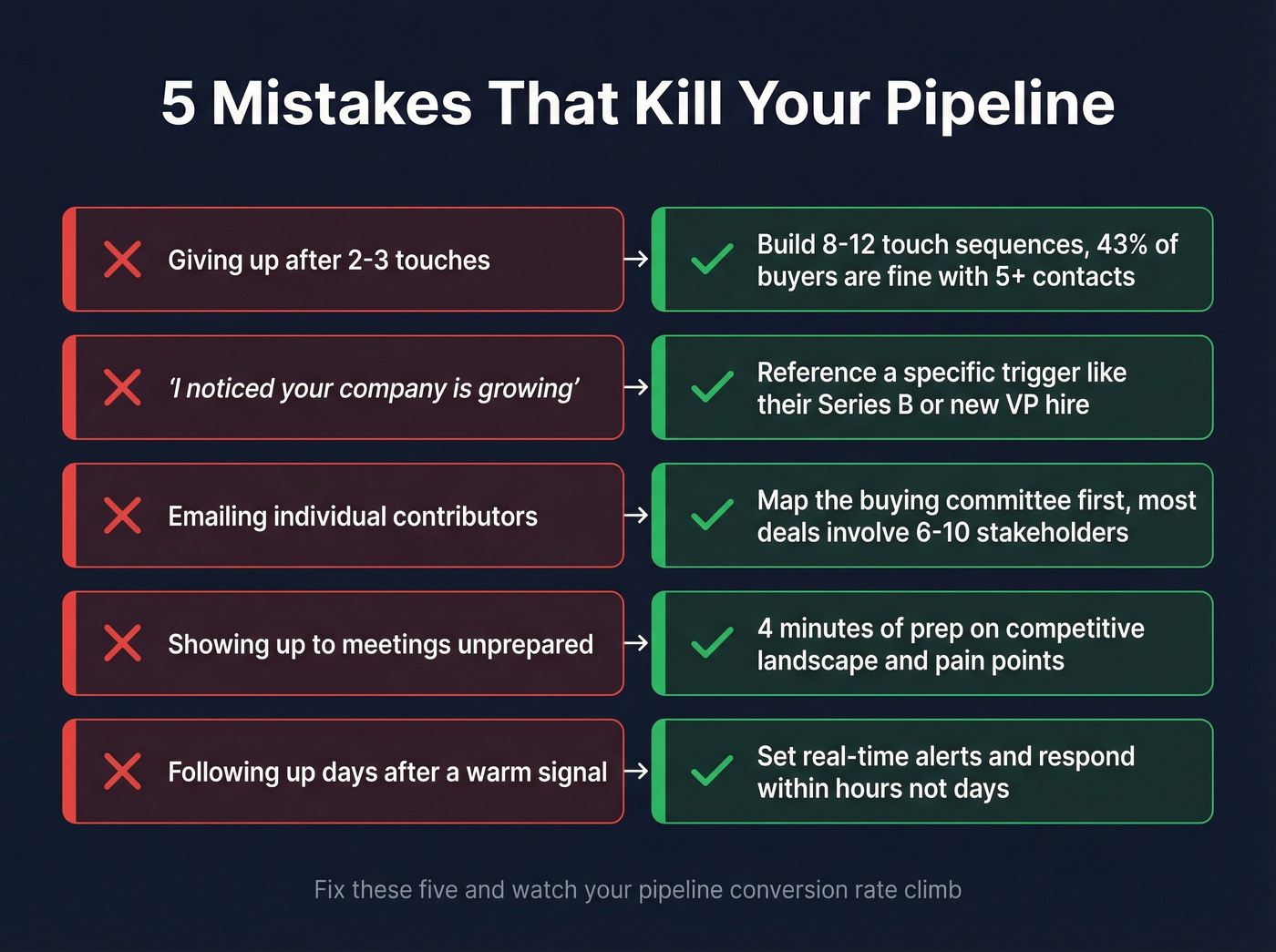
43% of buyers who accept meetings say it's fine to contact them five or more times. Most reps stop after two or three. Build 8-12 touch sequences and trust the process.
Generic Outreach
"I noticed your company is growing" isn't personalization. Reference a specific trigger - a new hire, a funding round, a tech stack change. One concrete detail separates you from the 50 other reps in their inbox.
Targeting the Wrong People
If you're emailing individual contributors when the VP signs the check, you're wasting sequences. Most B2B deals involve 6-10 stakeholders - map your buying committee before you start outreach.
Not Preparing for the Meeting
The most common frustration reps share in Reddit threads and sales communities isn't about technique - it's about showing up unprepared and blowing a meeting they worked weeks to book. Review the prospect's competitive landscape and the specific pain point that got them to say yes. Four minutes of prep can save four weeks of pipeline work.
Slow Follow-Up
When a prospect replies, clicks a link, or accepts a connection request, the window of interest is narrow. Responding within hours - not days - dramatically increases your chances of converting that interest into a booked meeting. Set up real-time alerts so no warm signal goes cold.
The Data Quality Problem
We've seen this pattern dozens of times: a team invests in a sequencer, writes great copy, builds a solid cadence - and watches campaigns collapse because the underlying data is garbage. High bounce rates don't just kill individual campaigns. They damage your sending domain's reputation, which tanks deliverability for every future email you send. If you're troubleshooting this, start with an email deliverability guide.
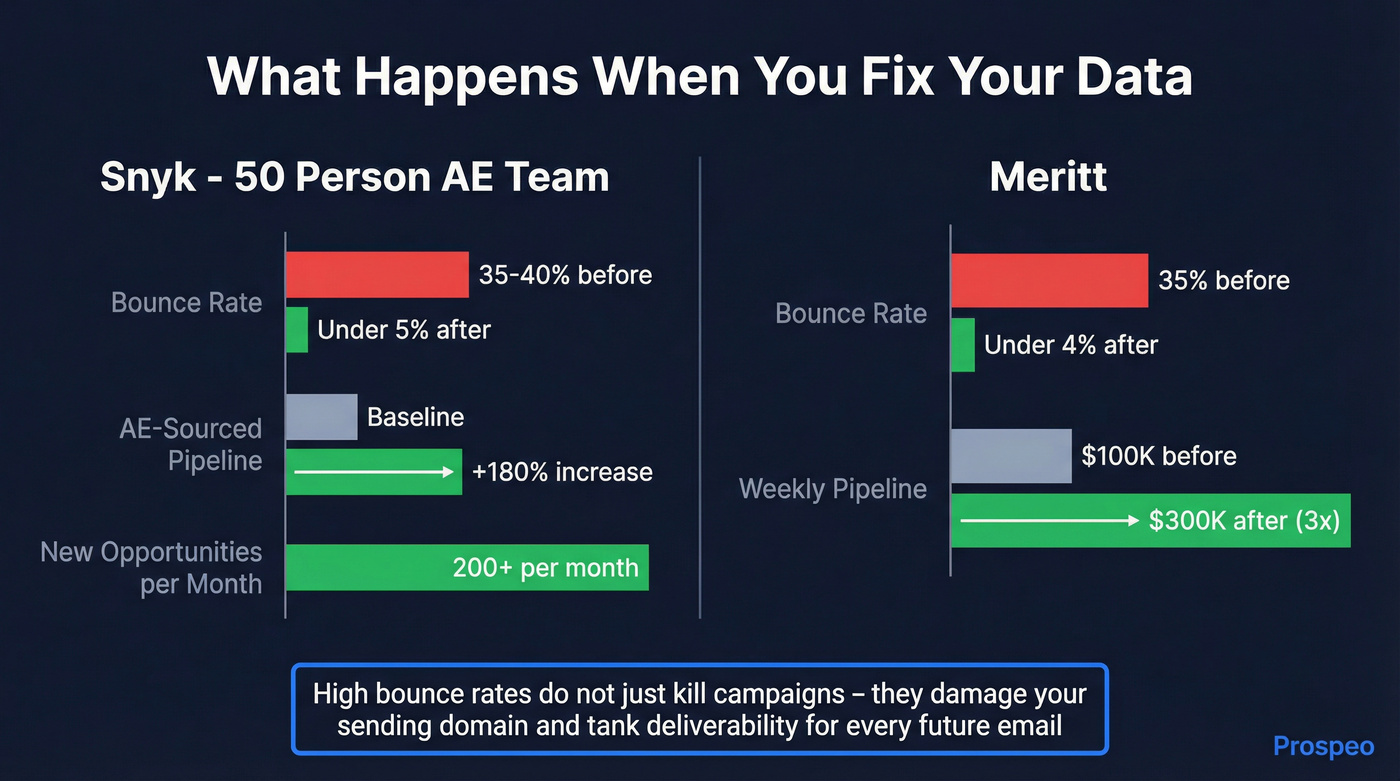
Real numbers tell the story. Snyk's 50-person AE team went from 35-40% bounce rates to under 5% after switching to verified data, with AE-sourced pipeline up 180% and 200+ new opportunities per month. Meritt tripled pipeline from $100K to $300K per week, with bounce rates dropping from 35% to under 4%. These aren't marginal improvements - they're the difference between a pipeline that works and one that's slowly destroying your domain reputation.
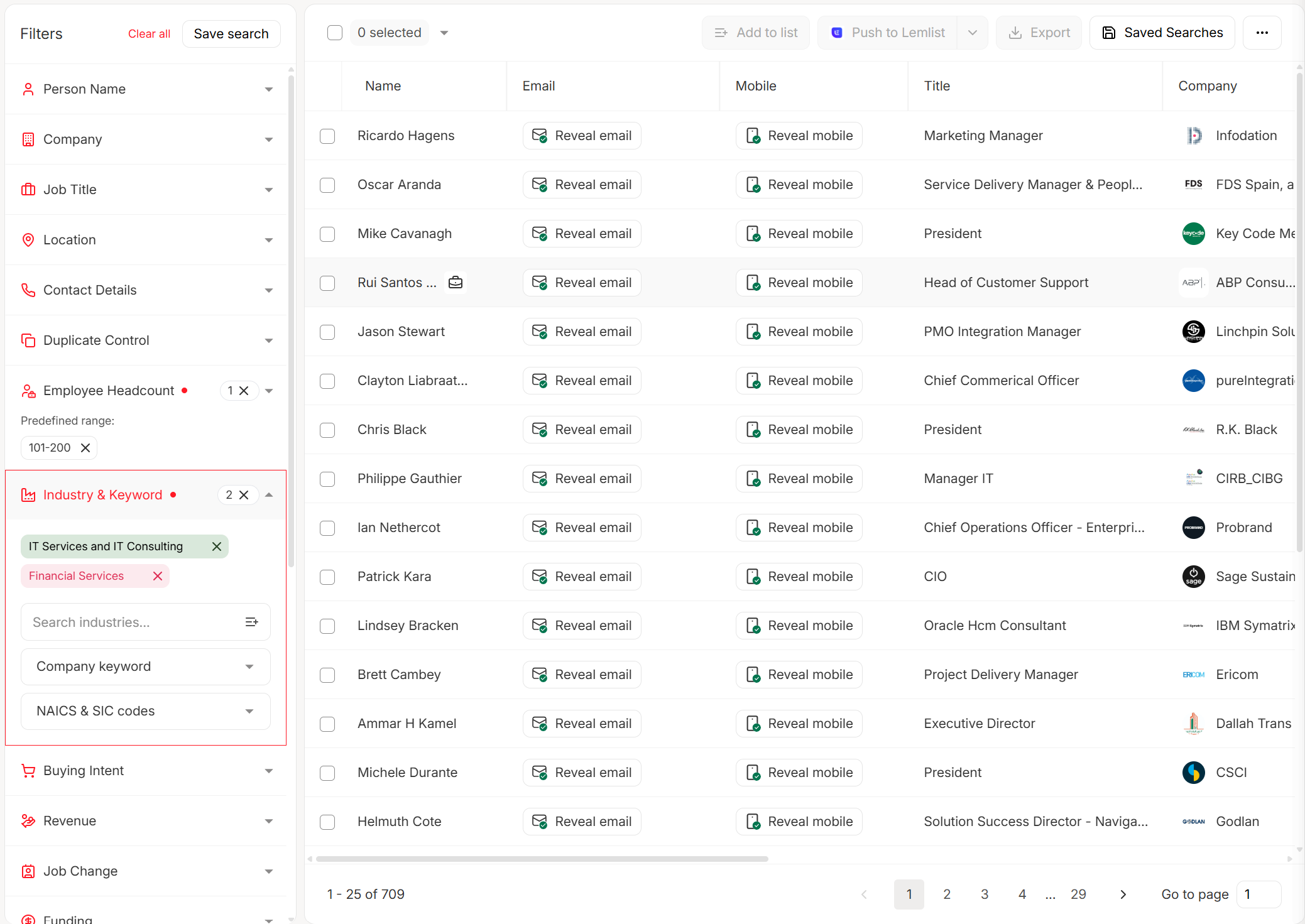
Bad phone data is why cold calling feels dead. Prospeo's 125M+ verified mobile numbers deliver a 30% pickup rate - that's reaching one in three prospects instead of one in eight.
Reach the prospects your competitors can't get on the phone.
Measuring Prospecting Effectiveness
Track three numbers weekly:
| KPI | What It Tells You | Healthy Range |
|---|---|---|
| Reply rate | Message quality + targeting | 3-5% baseline, 15-25% signal-personalized |
| Connect rate | Data quality + timing | 15-25% |
| Conversion to meeting | Qualification + relevance | 2-5% of total touches |
Effective cold email sequences run 3-5 messages over 2-3 weeks. If your reply rate is below 5%, the problem is usually targeting or data quality, not copywriting. If connect rate is low, your phone numbers are stale. Measure weekly, adjust monthly, and resist the urge to overhaul everything after one bad week.
FAQ
What's the difference between a lead and a prospect?
A lead fits your target market but hasn't been vetted. A prospect is a lead you've qualified - they have budget, authority, need, and timeline to buy. Prospects deserve sequenced outreach; leads need scoring first.
How many touches does it take to book a meeting?
Plan for 8-12 touches across email, phone, and social over 2-3 weeks. 43% of buyers say five-plus contacts is perfectly acceptable, yet most reps quit after two or three attempts.
Is cold calling still effective in 2026?
Yes. 57% of C-level executives and VPs prefer phone contact. The low 2.3% average success rate reflects stale phone data and poor targeting, not a broken channel. With verified mobile numbers, top teams hit 6-7% connect rates.
What's the best way to start prospecting?
Lock your ICP, get verified contact data, and build a multi-channel cadence. System first, tactics second. Once the framework is in place, prospecting becomes a repeatable process rather than a guessing game.
Prospecting isn't a talent problem. It's an engineering problem - build the system, feed it clean data, and the pipeline follows.