

=== CURRENT ARTICLE (slug: bdr-software) ===
The Best BDR Software in 2026: Build a Stack That Actually Performs
A RevOps lead we know ran a 3-tool bake-off last quarter. The "best" database created 4,000 duplicate contacts in Salesforce in five days. The cheapest tool had better phone connect rates. The lesson: your BDR software stack isn't about picking the highest-rated tool - it's about how the pieces fit together.
BDRs now average 21 attempts per contact across a 53-day cadence. If the data feeding those touches is bad, you're burning domain reputation on bounces and wasting dials on dead numbers. The stack is the strategy.
2026 BDR Benchmarks
A 6sense survey of 262 BDRs gives us the clearest performance snapshot available. Teams hit ~88% of quota on average, but supported BDRs hit 95% versus 80% for unsupported ones. Activity is up: 21 attempts per contact (from 17), split across 5 social touches, 8 calls, and 8 emails.
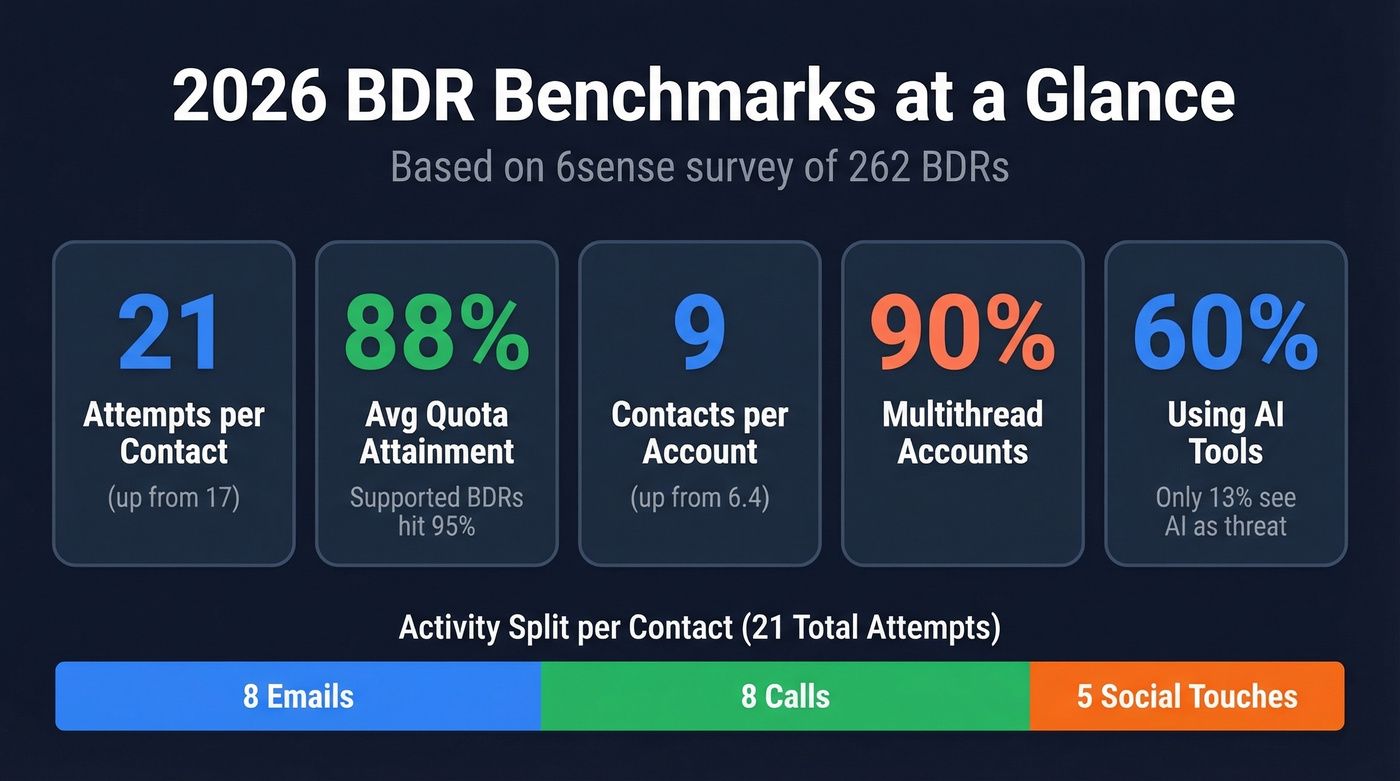
Multithreading is standard now - 90% of BDRs reach an average of 9 contacts per account, up from 6.4. And 60% are using AI tools, though only 13% see AI as a threat. BDRs are doing more, across more channels, to more people. That makes data quality the bottleneck, not effort.
Our Top Picks
- Best for data accuracy: Prospeo - 98% verified emails, 7-day refresh, self-serve from ~$0.01/lead
- Best budget all-in-one: Apollo.io - prospecting + sequences + a lightweight CRM from $0/month
- Best for enterprise data breadth: ZoomInfo - one of the deepest US databases, but $15k-$45k+/year
Best Tools by Stack Layer
Prospecting & Data
If your bounce rate is above 5%, your sequencer isn't the problem. Your data provider is. We've seen this play out across dozens of client stacks - splitting data and engagement tools outperforms all-in-ones by a wide margin. The consensus on r/sales backs this up: one user said they'd "break the bank" on data because even 10-20% better accuracy changes everything downstream.
Prospeo
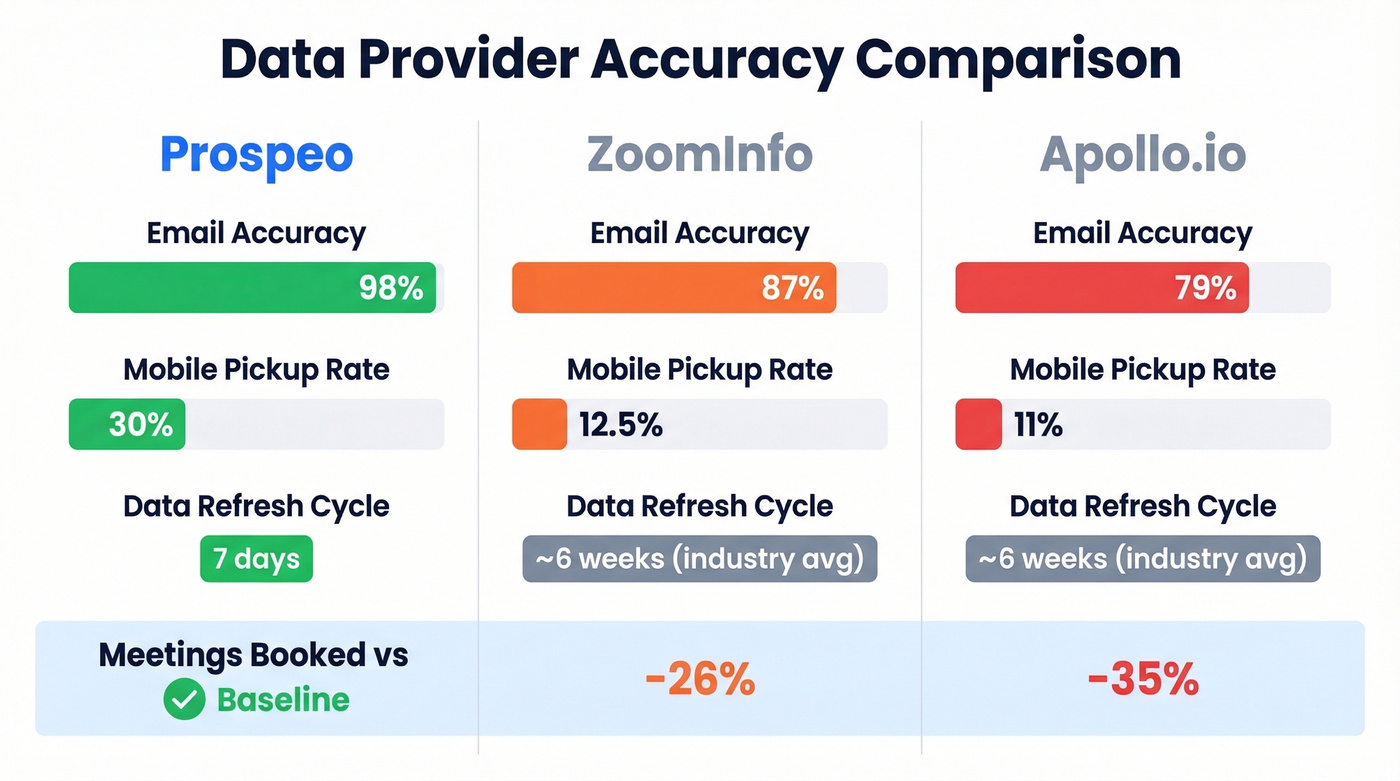
Prospeo covers 300M+ professional profiles, 143M+ verified emails, and 125M+ verified mobile numbers - all refreshed on a 7-day cycle while the industry average sits at six weeks. Email accuracy runs 98% versus 87% for ZoomInfo and 79% for Apollo. Mobile pickup rate: 30%, compared to 12.5% for ZoomInfo and 11% for Apollo. Teams using Prospeo book 26% more meetings than ZoomInfo users and 35% more than Apollo users, which tracks with the data quality gap.
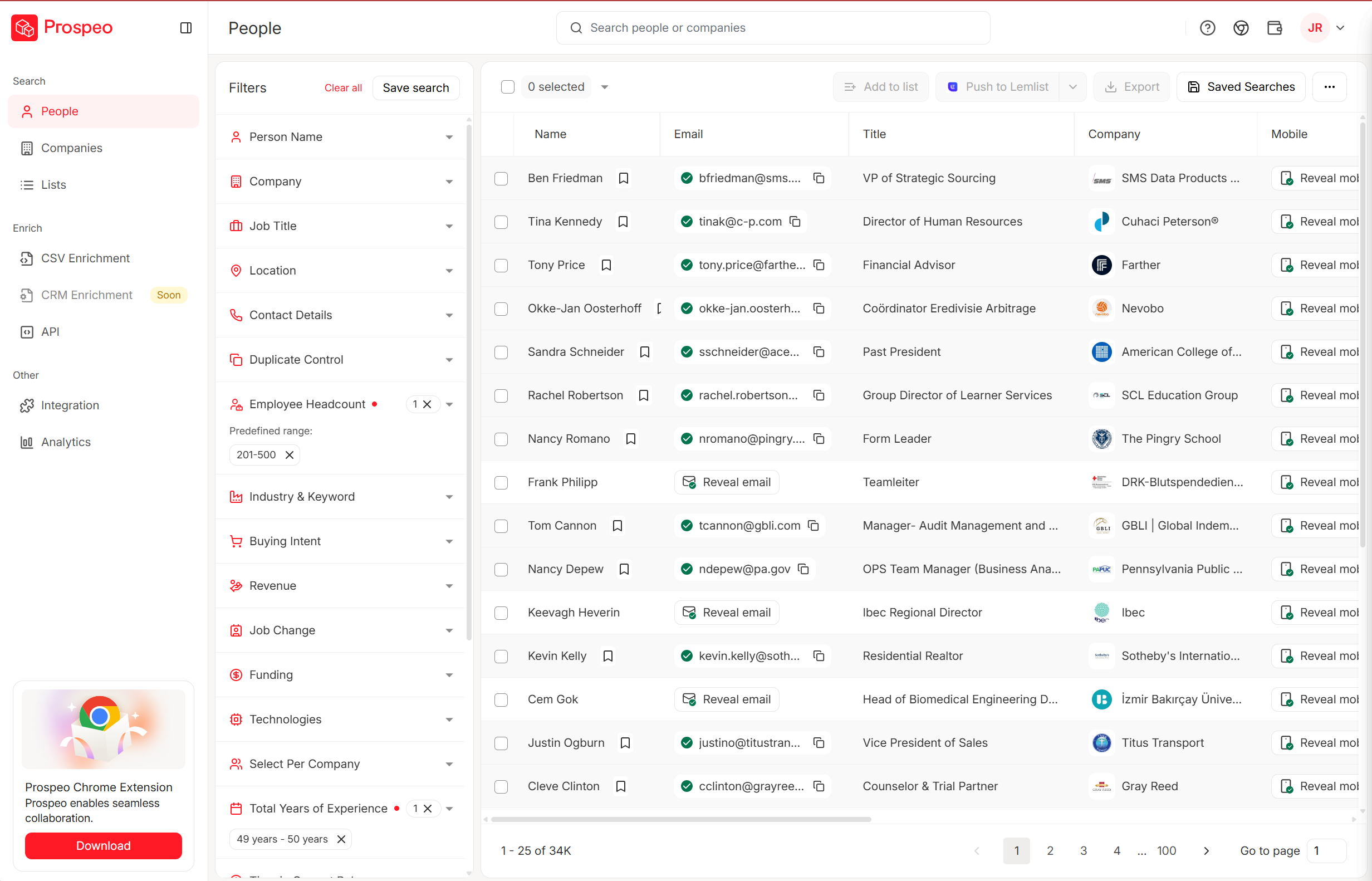
Search filters include 30+ options: buyer intent powered by 15,000 Bombora topics, technographics, job changes, headcount growth, and funding signals. Snyk's team saw their bounce rate drop from 35-40% to under 5% after switching, generating 200+ new opportunities per month. That's not a marginal improvement - that's a different pipeline entirely.
Native integrations plug into Salesforce, HubSpot, Outreach, Salesloft, Clay, and Instantly. The free tier gives you 75 verified emails per month. Paid plans work out to roughly $0.01 per lead, no contract required.
Use this if: You need the highest-accuracy data layer without an enterprise contract.
Apollo.io
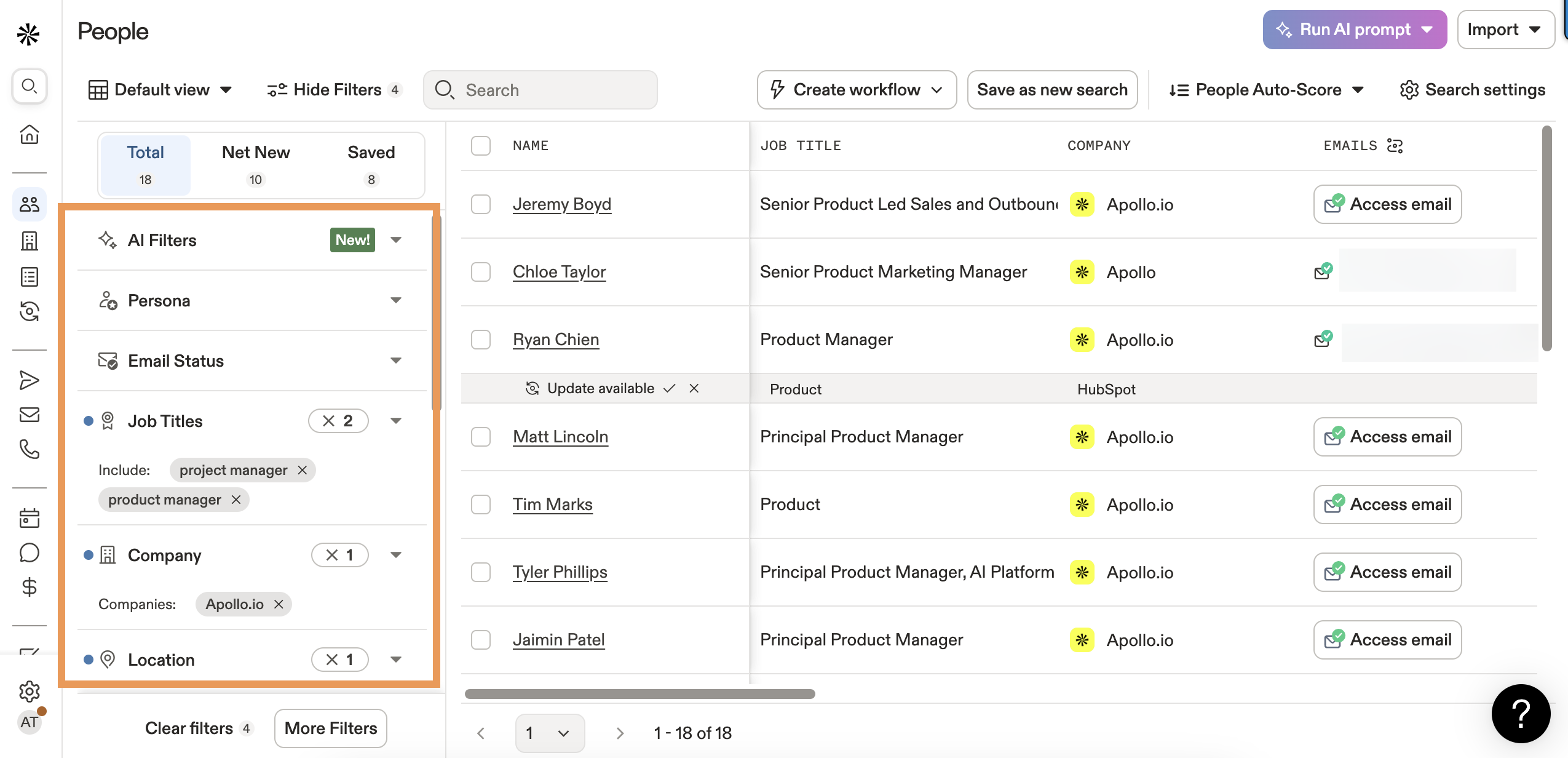
Apollo is the obvious starting point for teams that want one tool under $100/mo. The free plan includes prospecting, basic sequences, and a lightweight CRM. Paid plans start at $49/user/mo (Basic) and $79/user/mo (Professional).
A new BDR can be running sequences within an hour - that speed-to-value is real. The tradeoff: email accuracy lags behind dedicated data platforms, and the dialer isn't as advanced as Salesloft's or Outreach's. For a 3-person team that needs to move fast on a tight budget, it's hard to beat. We've recommended it to early-stage teams more than any other single tool.
Skip this if: You're running 50+ calls/day or need enterprise-grade data accuracy.
ZoomInfo
ZoomInfo has one of the deepest US B2B databases. What's debatable: whether you need it. Professional plans run $15k-$18k/year for 1-3 seats. Advanced hits $22k-$28k. Elite goes $35k-$45k+. Annual contracts only, and 10-20% renewal uplifts are common.
Here's the thing: if your average deal size is under $10k, you almost certainly don't need ZoomInfo-level data. The #1 Reddit complaint is paying for intent, org charts, and workflow modules you never activate. For teams under 10 reps, it's overkill.
Sales Engagement
Outreach is the most customizable workflow engine in the category - complex branching sequences, A/B testing at scale, granular CRM sync rules. But Reddit users consistently flag real UX pain: Gmail sync failures, sent emails that can't be viewed, and a Snooze button placed dangerously close to Schedule that causes lost work. Pricing typically runs $100-$150/user/mo on annual contracts. Best for technical teams that'll invest in setup.
Salesloft delivers 80% of Outreach's power with a more intuitive interface. The dialer is strong, onboarding is faster, and reps complain less. Pricing is similar at $100-$150/user/mo annually. Skip it only if you need deeply customizable workflow logic - Outreach still wins there. For most teams, choosing the right engagement platform is the single highest-impact decision after data quality.
Enrichment & Workflows
Clay's waterfall enrichment across 100+ data providers is genuinely powerful - it tries one source, then the next, stacking providers to maximize coverage. Starter plans begin at $134/mo, but the credit system makes costs unpredictable and the learning curve is steep. If you're comfortable building workflows that look more like spreadsheets than software, Clay rewards that investment. If not, you'll spend more time configuring than prospecting.
If you're comparing providers, start with data enrichment services and then map the workflow to your stack.
CRM
HubSpot's free CRM is the default for bootstrap sales development stacks, and for good reason - it works. Sales Hub Starter at $20/mo is a common next step for early-stage teams.
Enterprise teams default to Salesforce (typically $75-$300/user/mo depending on edition), but for sub-10-person orgs, HubSpot free does the job. If you’re still evaluating options, these examples of a CRM can help you sanity-check fit and pricing.
Calling & Intelligence
Gong is worth it once your team makes 50+ calls/day and you need to understand why some reps book 3x more meetings. Custom pricing, typically ~$100-$150/user/mo annually. Below that call volume, the ROI doesn't justify the spend. If calling is a core channel for you, build around a repeatable cold calling system before adding more tools.
AI BDR Tools - Hype Check
Let's be honest: most "AI BDR" tools are email sequencers with a GPT wrapper. Artisan's Ava runs around ~$2,000/mo and pricing isn't public. Instantly is more honest about what it is - cold email at scale for $30-$97/mo.
If you want a deeper breakdown of what’s real vs. wrapper, see our guide to AI cold email outreach.
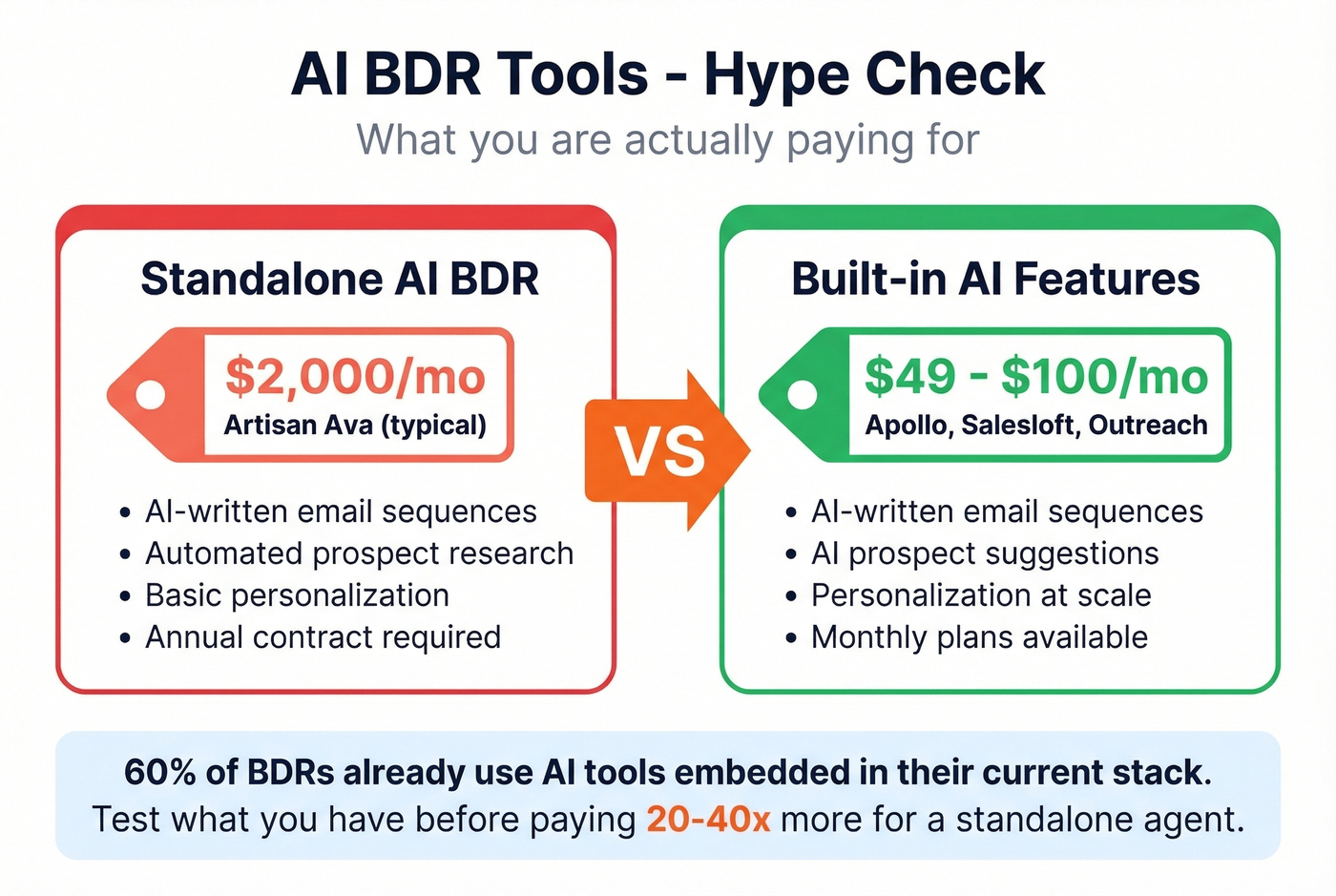
Don't pay $2k/mo for what Apollo does at $49. If you want AI-assisted outreach, start with the AI features already built into your existing sequencer - 60% of BDRs already use AI tools embedded in their current stack, per 6sense's data.

BDRs average 21 attempts per contact. If your data bounces at 10%+, that's 2 wasted touches per prospect - multiplied across your entire pipeline. Prospeo's 98% email accuracy and 7-day refresh cycle mean every dial and every send hits a real person.
Stop burning cadence touches on dead data. Start with 75 free verified emails.
Snyk's 50 AEs dropped their bounce rate from 35-40% to under 5% and generated 200+ new opportunities per month. At ~$0.01/lead with no annual contract, Prospeo gives BDR teams enterprise-grade data without the enterprise price tag.
Book 26% more meetings than ZoomInfo users - at 90% less cost.
Pricing at a Glance
| Tool | Starting Price | Contract | Self-Serve? |
|---|---|---|---|
| Prospeo | Free / ~$0.01/email | None | Yes |
| Apollo.io | Free / $49/user/mo | Monthly avail. | Yes |
| ZoomInfo | ~$15,000/year | Annual only | No |
| Outreach | ~$100/user/mo | Annual | No |
| Salesloft | ~$100/user/mo | Annual | No |
| Clay | Free / $134/mo | Monthly avail. | Yes |
| HubSpot | Free / $20/mo | Monthly avail. | Yes |
| Gong | ~$100/user/mo | Annual | No |
| Artisan | ~$2,000/mo | Annual est. | No |
| Instantly | $30/mo | Monthly avail. | Yes |
Build Your Stack: 3 Budget Scenarios
Bootstrap ($0-$50/mo): Prospeo free tier + Apollo free + HubSpot CRM free. Verified data, basic sequences, and a CRM for nothing. Start here. If you’re trying to keep spend at zero, these free lead generation tools can fill gaps.
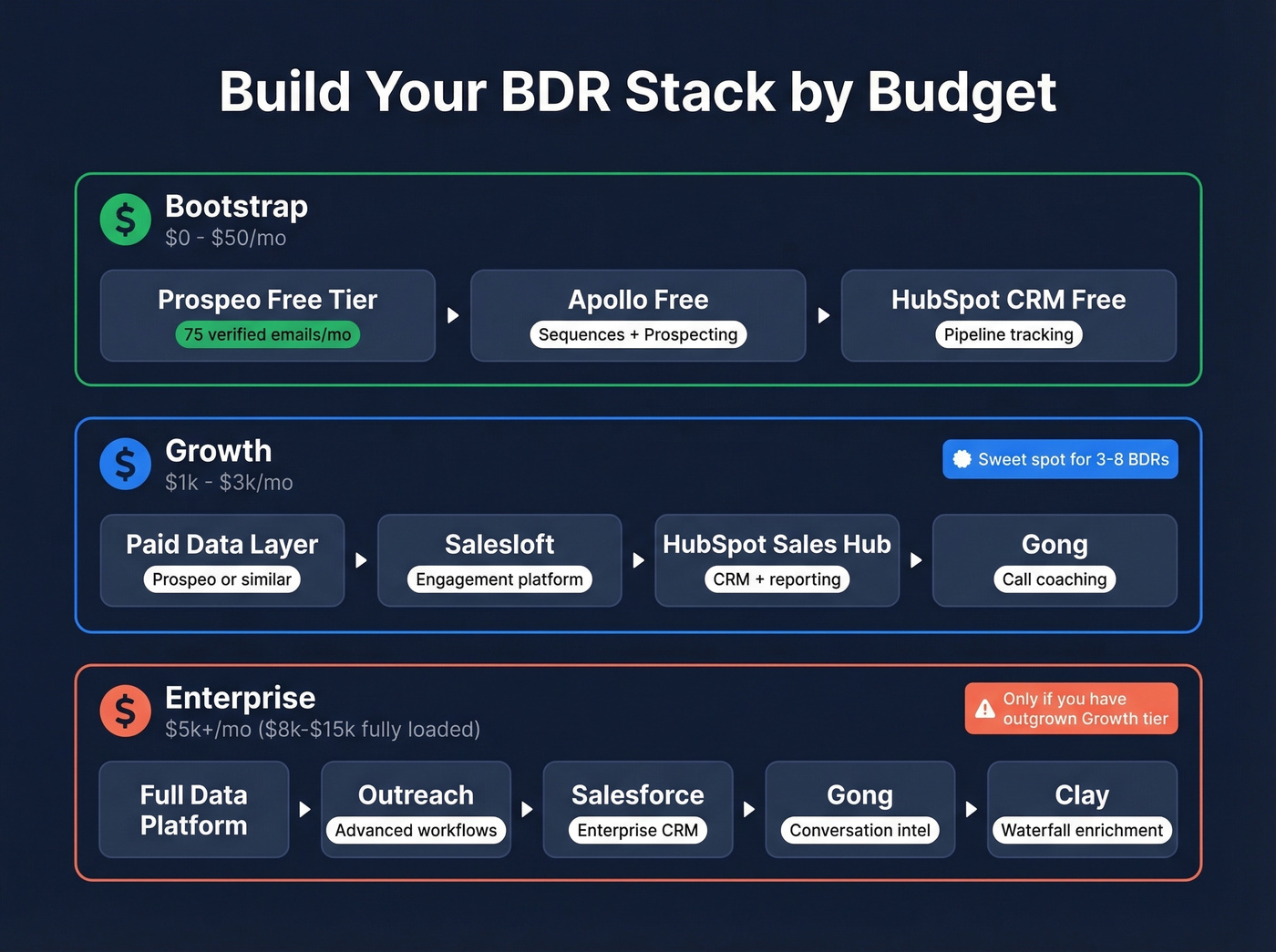
Growth ($1k-$3k/mo): Paid data layer + Salesloft + HubSpot Sales Hub + Gong. This is the sweet spot for 3-8 BDRs who need real engagement tooling and call coaching without enterprise pricing. In our experience, teams at this tier see the biggest jump in meetings booked per dollar spent. To tighten execution, track the right lead generation metrics and fix the biggest sales pipeline challenges first.
Enterprise ($5k+/mo): Full data platform + Outreach + Salesforce + Gong + Clay. Maximum data coverage, advanced workflows, and conversation intelligence. Budget $8k-$15k/mo fully loaded. Don't go here until you've outgrown the growth stack - we've watched teams overspend on enterprise tools they only use at 30% capacity. If you’re scaling outbound, align the stack to proven sales prospecting techniques and keep your email deliverability clean as volume rises.
BDR Software FAQ
What is BDR software?
Any tool that helps business development reps find prospects, run outreach, track conversations, and manage pipeline. Most teams use 3-5 tools - a data provider, a sales engagement platform, and a CRM at minimum.
What's the best free BDR tool?
Apollo.io for all-in-one prospecting and sequences. For data accuracy alone, Prospeo's free tier gives 75 verified emails/month at 98% accuracy - the strongest free option for teams that prioritize deliverability.
Do BDRs need a separate dialer?
Only above 50+ calls/day. Below that threshold, built-in dialers in Salesloft, Outreach, or Apollo handle the volume without adding another line item to your tech stack.
How much should a BDR tech stack cost?
A functional stack costs $0-$50/mo using free tiers. Mid-market teams typically spend $1k-$3k/mo for paid data, a sequencer, and call intelligence. Enterprise stacks run $8k-$15k/mo fully loaded.
Are AI BDR tools worth the price?
Most AI BDR tools charge $1,500-$2,000/mo for capabilities already built into $49-$100/mo sequencers. Test the AI features in your existing platform before paying for a standalone agent.