

8 Benefits of a Go-to-Market Strategy (With the Data to Prove Them)
The median SaaS company now spends $2 in sales and marketing for every $1 of new ARR. That ratio jumped 14% in a single year. A study of 83,719 CPG SKUs found 40% weren't selling within two years of launch - and that's across categories with massive distribution budgets.
The benefits of a go-to-market strategy show up when you flip those numbers. Companies that nail GTM execution attack the exact causes behind that 40% failure rate, cut acquisition costs through channel discipline, and grow faster. Top-quartile companies hit 93% YTD ARR growth recently, up from 78% two years prior.
Let's break down what that looks like in practice.
What a GTM Strategy Actually Is
A go-to-market strategy is the plan for how a product reaches its buyer - pricing, positioning, channels, sales motion, and post-sale expansion. It's broader than a marketing strategy, which is just one component inside it.
Here's the thing: a GTM strategy isn't a document. It's a hypothesis you build, test against real buyers, and iterate. The best GTM teams treat it like a product - always shipping, never "done."
8 Data-Backed GTM Strategy Advantages
1. Faster Revenue Growth
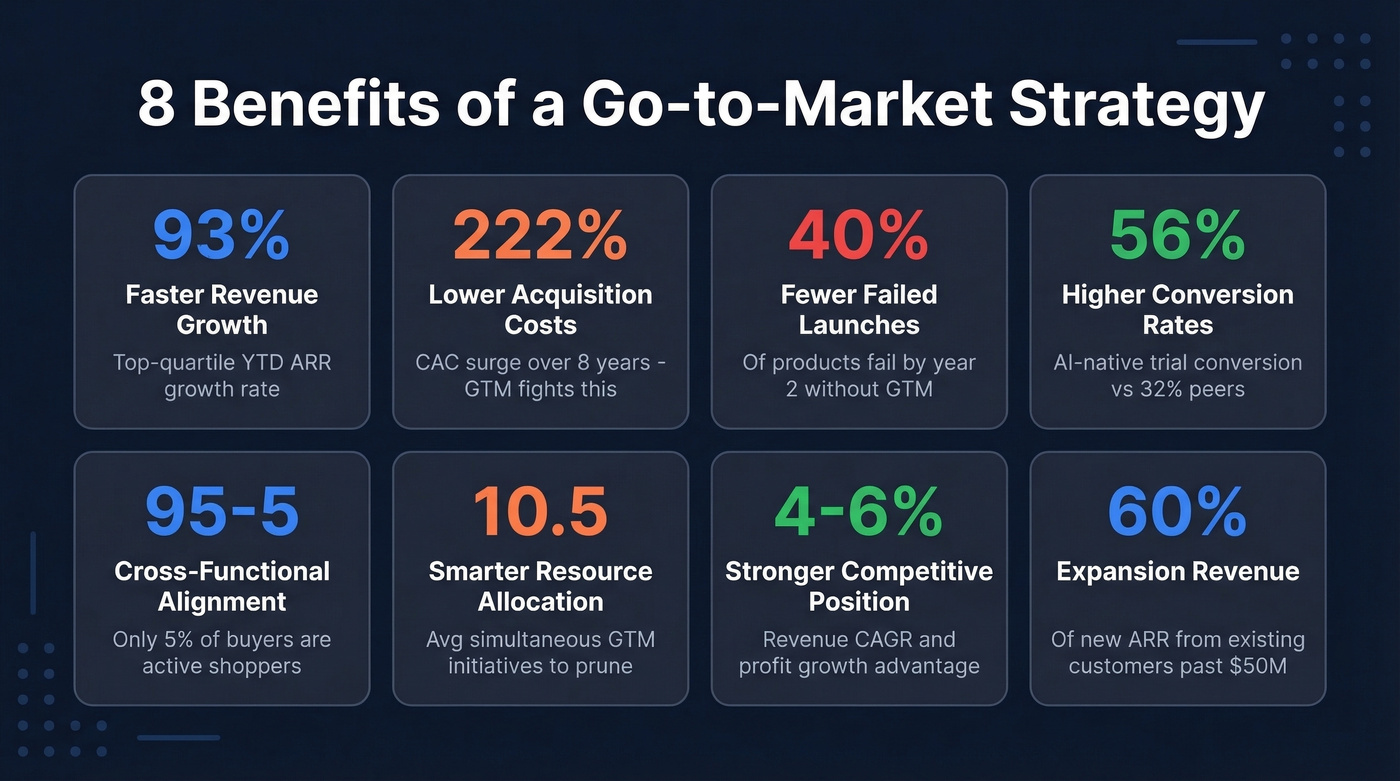
Top-quartile SaaS companies in the $25M-$100M ARR range posted 93% year-to-date growth, up from 78% two years earlier. That jump came from tighter GTM execution - knowing exactly who you're selling to, through which channels, at what price point. Growth compounds when the motion is deliberate rather than reactive.
2. Lower Acquisition Costs
Customer acquisition costs have surged 222% over the past eight years. The benchmark separating healthy companies from struggling ones: LTV:CAC of at least 3:1 and CAC payback under 12 months.
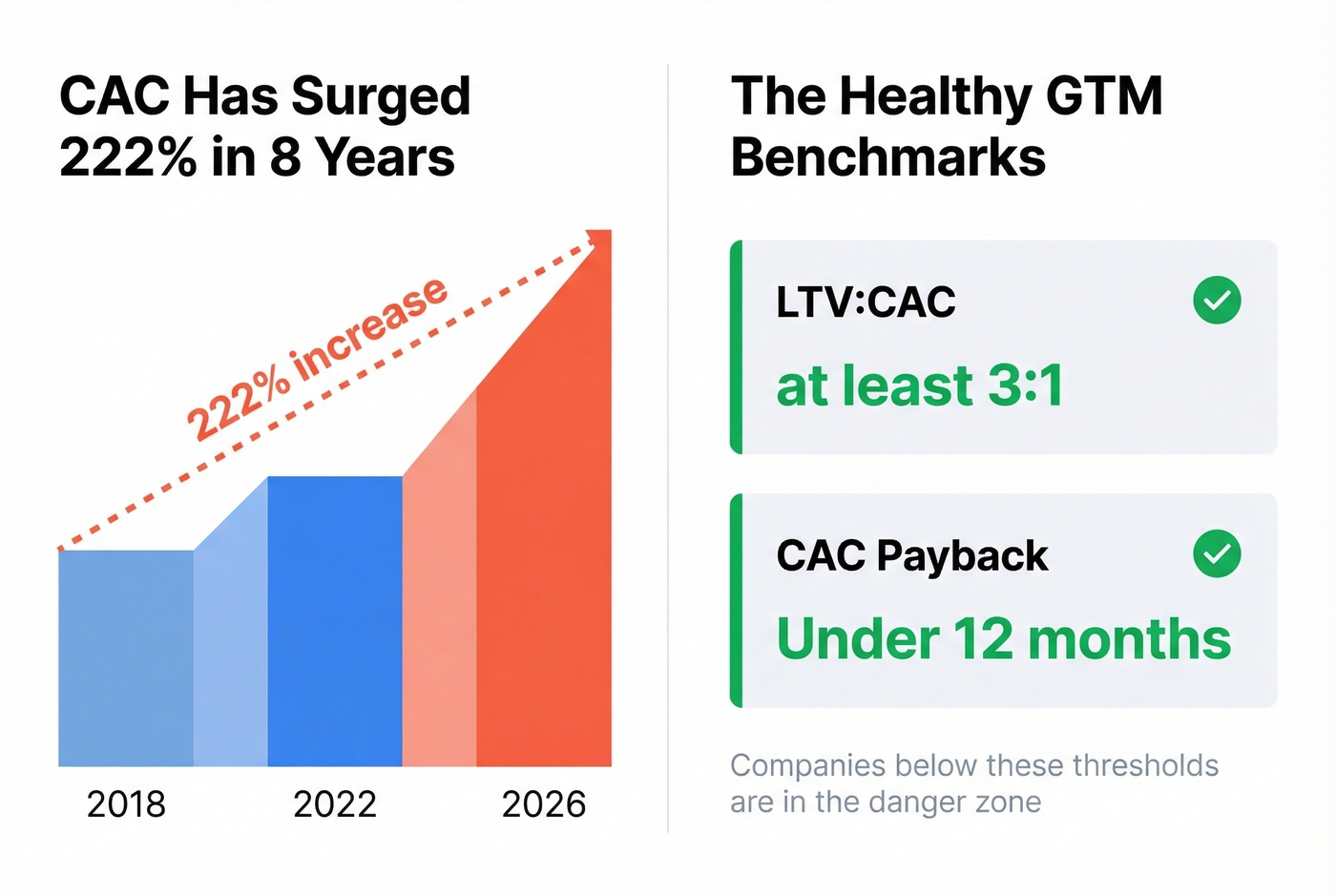
A GTM strategy forces you to pick your battles - which segments, which channels, which motions - instead of spraying budget everywhere. We've watched teams cut CAC by 30-40% just by narrowing from "all mid-market" to two or three well-defined ICPs with distinct messaging.
3. Fewer Failed Launches
That 83,719-SKU study deserves a closer look: 25% of products fail within year one, 40% by year two. McKinsey's data makes the stakes even clearer - startups converting fewer than 10% of ideal customers are 50% less likely to survive five years.
The common failure causes - wrong positioning, poor channel choices, and enablement gaps - are exactly what a go-to-market plan addresses before launch day. Not after you've burned through your first $500K.
4. Higher Conversion Rates
AI-native companies at $100M+ ARR convert free trials and POCs at 56% versus 32% for non-AI-native peers. These companies build their GTM around how buyers actually evaluate - trials, POCs, self-serve - and the conversion data reflects it. With 70% of GTM teams now adopting AI workflows, the gap will only widen.
5. Cross-Functional Alignment
Only 5% of your potential buyers are actively shopping in any given quarter - the 95-5 rule. That means 95% of your market needs to be warmed, nurtured, and remembered. That's not a job for marketing alone.
GTM strategy forces product, sales, marketing, and CS to pull in the same direction toward the same accounts. Even great strategy falls apart when teams execute in silos - and we've seen it happen more often than we'd like to admit.
6. Smarter Resource Allocation
The average software company runs 10.5 simultaneous GTM initiatives - five core channels plus five-and-a-half experimental ones. Ten mediocre efforts, no clear winners.
A real GTM framework gives you the criteria to kill what isn't working before it drains budget. Three great channels beat ten scattered ones every time. This sounds obvious, but look at your own team's Slack channels and tell me there aren't six "experiments" nobody's evaluated in months.
7. Stronger Competitive Positioning
BCG research found that companies with mature GTM outperform laggards by roughly 4% revenue CAGR and 6% profit growth. That's compounding advantage over years.
Positioning isn't a tagline exercise. It's a strategic choice about where you win and where you deliberately don't compete. The companies pulling ahead aren't trying to be everything to everyone - they're dominating a specific wedge and expanding from there. (If you want a deeper framework, start with B2B brand positioning.)
8. Expansion Revenue
Beyond $50M ARR, 60% of new ARR comes from existing customers. A GTM strategy that only covers acquisition is half a strategy.
The best frameworks build expansion in from day one - pricing tiers that encourage upsell, CS-to-sales handoffs, and usage-based triggers that surface opportunities before renewal. If your GTM plan ends at "closed-won," you're leaving the majority of your revenue potential on the table. (Related: upsell vs cross-sell in SaaS.)

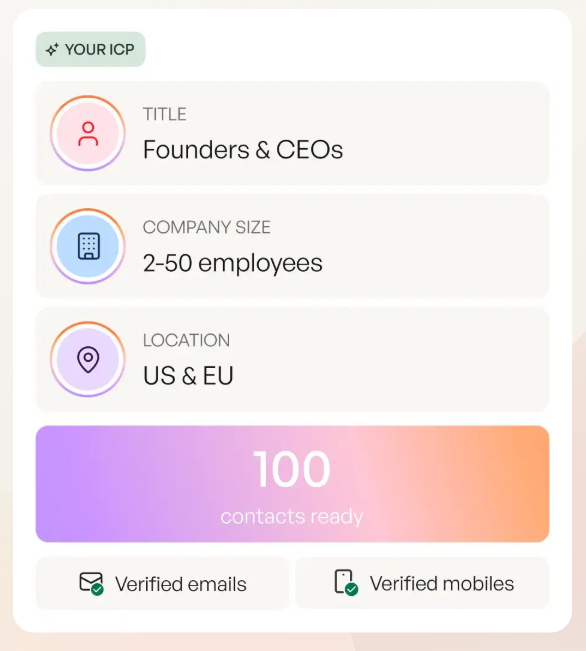
A GTM strategy cuts CAC when you reach the right buyers on the first attempt. Prospeo's 98% email accuracy and 125M+ verified mobile numbers mean your outbound motion connects - not bounces. Teams using Prospeo book 26% more meetings than ZoomInfo users.
Stop burning GTM budget on bad data. Start with contacts that connect.
Picking the Right GTM Motion
Not every company needs the same motion. The decision comes down to product complexity and deal size:
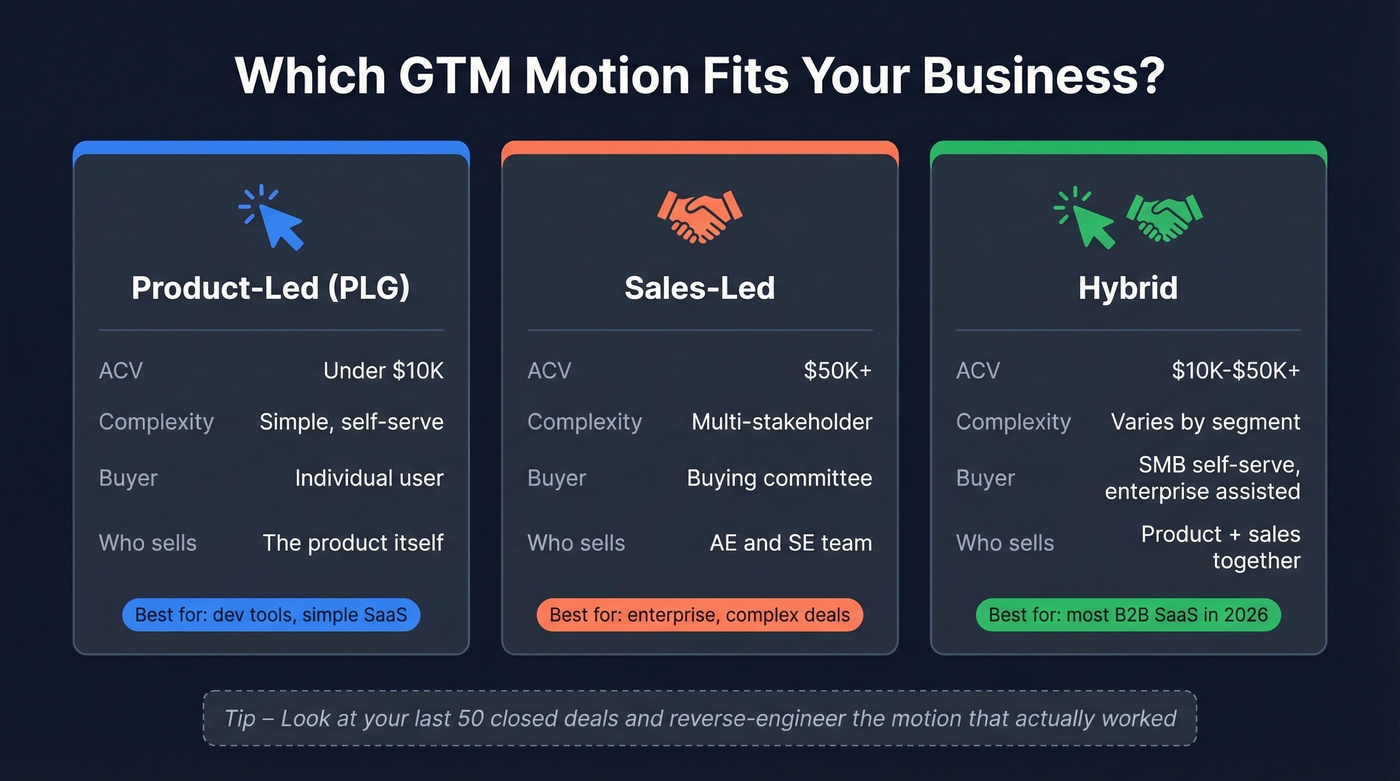
- Product-led (PLG): Simple products, ACV under $10K. The product does the selling.
- Sales-led: Complex products, larger deals with multi-stakeholder buying committees.
- Hybrid: Most B2B SaaS companies in 2026 run hybrid - self-serve for SMB, sales-assisted for enterprise.
We see the same mistake constantly: teams picking a motion based on what's trendy rather than what matches their buyer's actual purchasing behavior. Even email outreach patterns reflect this - timeline-based hooks pull a 10.01% reply rate versus 4.39% for problem hooks, yet most teams default to the latter because it "feels" more strategic.
Skip the trend-chasing. Look at your last 50 closed deals and reverse-engineer the motion that actually worked.
Mistakes That Erase Every Benefit
A GTM strategy only works if you avoid the five failure modes that kill most plans:
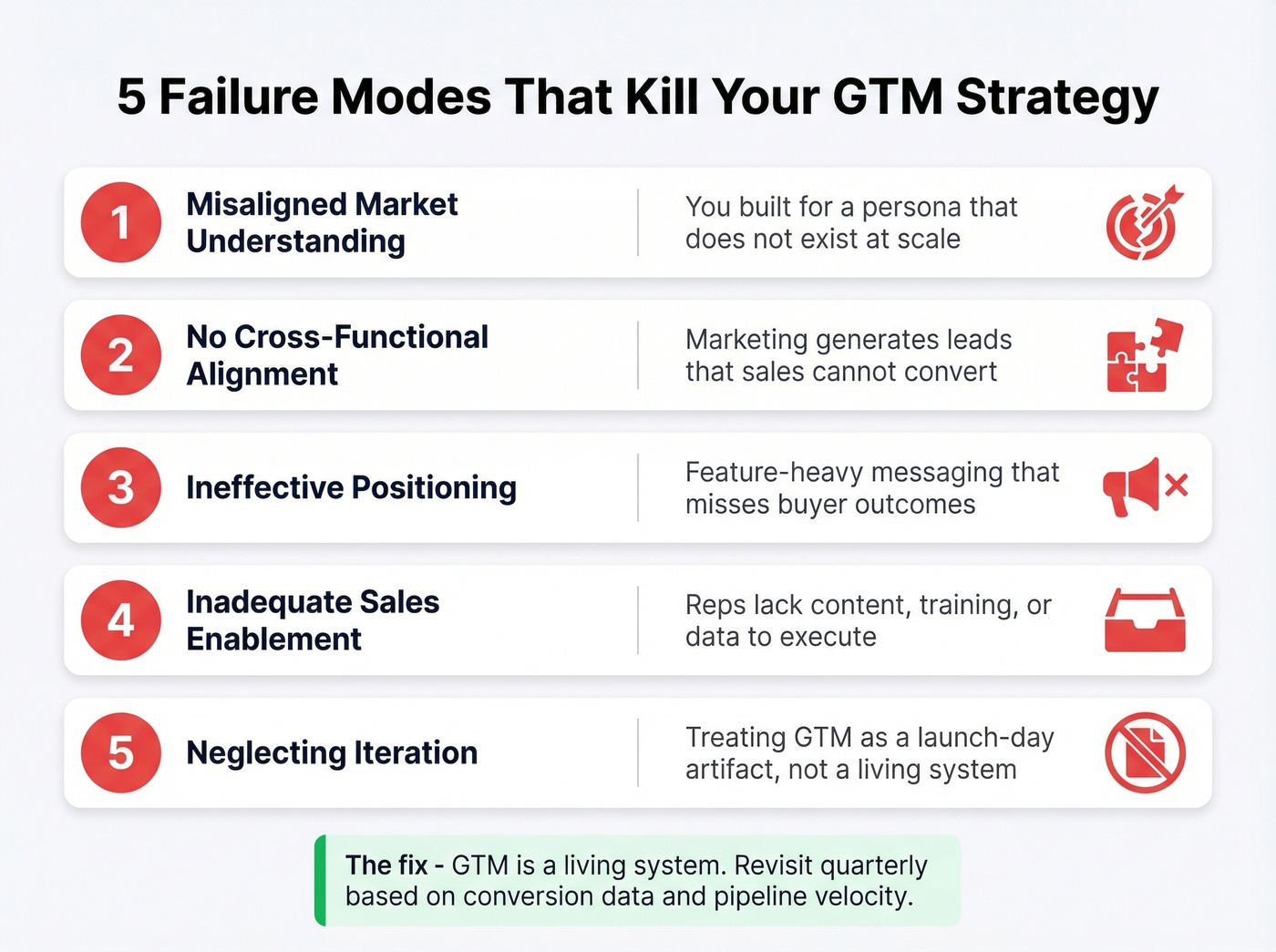
Misaligned market understanding. You built for a persona that doesn't exist at scale. This one's brutal because it often doesn't surface until you've already hired a sales team and burned through two quarters of pipeline targets. (If you need a sizing sanity check, start with addressable market.)
No cross-functional alignment. Marketing generates leads that sales can't convert because nobody agreed on ICP. The consensus on r/sales is that this single issue causes more GTM failures than bad products do.
Ineffective positioning. Feature-heavy messaging that misses the outcomes buyers care about.
Inadequate sales enablement. Reps lack the content, training, or data to execute the motion you designed. (See: marketing enablement.)
Neglecting iteration. Influ2's founder learned this firsthand - their PLG motion worked for the first 20 clients, then they had to pivot to sales-led when prospects couldn't self-serve. GTM is a living system, not a launch-day artifact.
The Execution Gap
Here's where most GTM strategies fall apart: the gap between "we know who to target" and "we can actually reach them." You've built your ICP, mapped your accounts, chosen your motion - and then your first outbound sequence bounces at 35%. Cold email reply rates have already dropped from 6.8% to 5.8% year-over-year. Bad data makes that worse.
In our experience, teams that struggle with GTM execution don't lack strategy. They lack the data infrastructure to act on it. Prospeo closes that gap with 98% email accuracy and a 7-day data refresh cycle - so your carefully built ICP definitions translate into actual conversations, not bounced emails. Real results: Meritt tripled their pipeline from $100K to $300K per week after switching, dropping bounce rates from 35% to under 4%. (If bounce rates are a recurring issue, use this email bounce rate guide to diagnose the root cause.)

Expansion revenue and cross-functional alignment depend on clean, current data. Prospeo refreshes every 7 days - not the 6-week industry average - so your ICP lists, enrichment workflows, and sales triggers stay accurate as your GTM motion scales.
Execute your GTM strategy on data that's never more than a week old.
FAQ
Why is a go-to-market strategy important?
It directly impacts survival. Launch data shows 40% of new products stop selling within two years, and CAC has risen 222% over the past eight years. A GTM strategy reduces wasted spend, prevents avoidable launch mistakes, and aligns teams around a motion that actually converts.
How long does it take to build a GTM strategy?
An initial framework takes two to four weeks for most teams. But GTM is iterative - Influ2 pivoted their entire motion after just 20 clients. Plan to revisit quarterly based on conversion data and pipeline velocity.
What's the difference between a GTM strategy and a marketing strategy?
A GTM strategy covers the full path from product to paying customer - pricing, channels, sales motion, positioning, and expansion. Marketing strategy is one engine inside that larger system, focused specifically on demand generation and brand awareness.
What tools help execute a GTM strategy?
Execution requires accurate contact data, CRM infrastructure, and outreach tooling. For the data layer, you need a platform with verified emails and direct dials so outbound teams can act on their ICP definition immediately. Pair that with a CRM like HubSpot or Salesforce and a sequencing tool for full-funnel coverage.