

The Best Email Finder Extensions in 2026
You exported 500 contacts from your email finder extension last week. 47 bounced. Your ESP flagged your domain, and now you're spending two weeks warming it back up instead of booking meetings. The global cold email bounce rate sits around 7.5%, but anyone running serious outbound needs that number under 5% to keep their domains healthy.
Finding the best email finder extension isn't about feature lists. It's about which one won't torch your sender reputation. You need one good tool and a verification step that actually works (and a plan to improve sender reputation).
Our Top Picks
| Pick | Tool | Best For | Starting Price |
|---|---|---|---|
| #1 | Prospeo | Email accuracy + data freshness | Free (75 emails/mo) |
| #2 | Hunter | Domain-based pattern search | Free (50 credits/mo) |
| #3 | Apollo | Free-tier volume (with caveats) | Free (setup-dependent) |
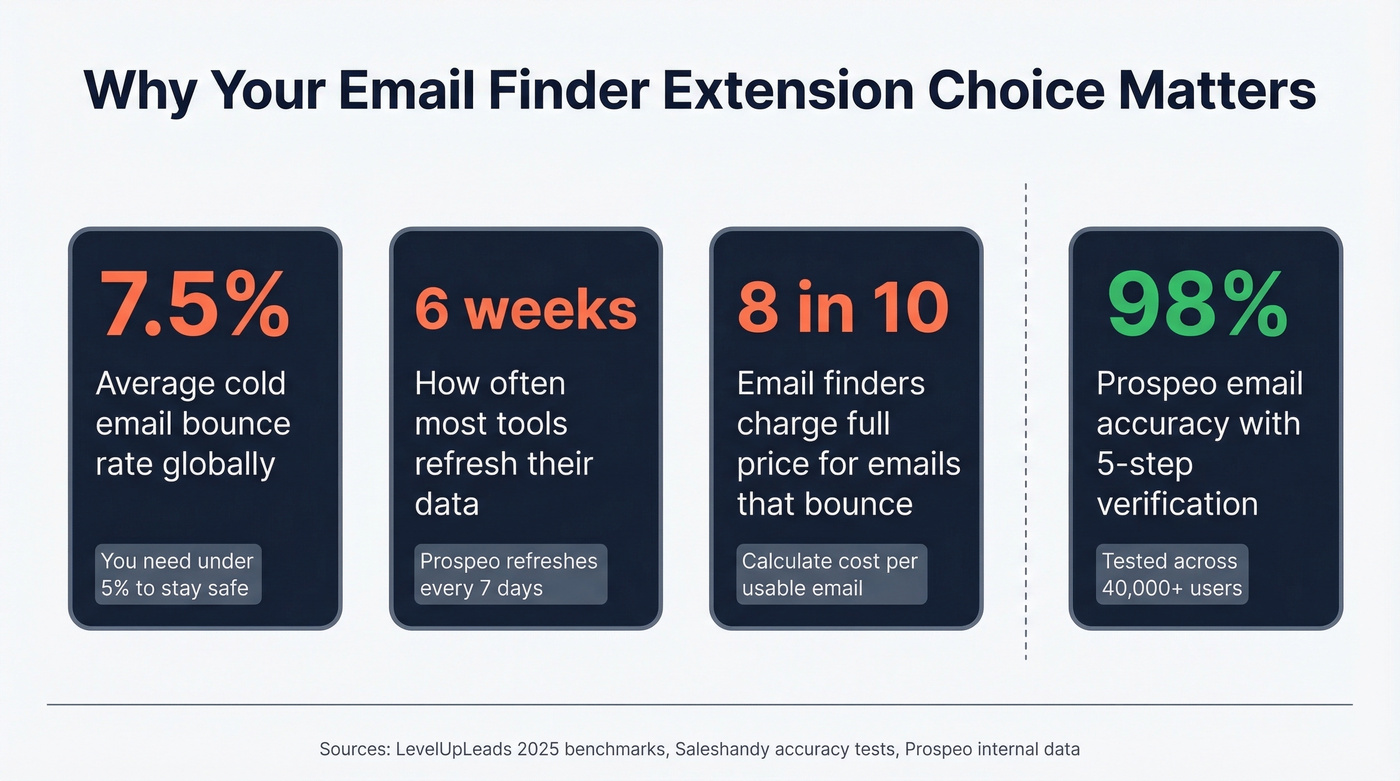
If we had to install one extension today, it's Prospeo - 98% email accuracy and a 7-day data refresh cycle. If we needed a second for domain lookups, Hunter.
Side-by-Side Comparison
| Tool | Accuracy | Free Tier | Paid From | Best For |
|---|---|---|---|---|
| Hunter | 90% | 50 credits/mo | $34/mo (annual) | Domain search |
| Apollo | 91% | 100-10,000 credits/mo | $49/user/mo | Volume prospecting |
| Snov.io | 79% | 50 free searches/mo | $29.25/mo | International leads |
| Kaspr | 90% | Unlimited B2B emails + 5 phones + 5 direct emails | $49/user/mo | EU/GDPR compliance |
| Lusha | 92% | 70 credits/mo | ~$40-60/user/mo | Quick phone lookup |
| ContactOut | 85% | 5 emails/day | $49/mo (annual) | Recruiting |
| Cognism | 90% | None | ~$1,000-3,000/mo | Enterprise EU data |
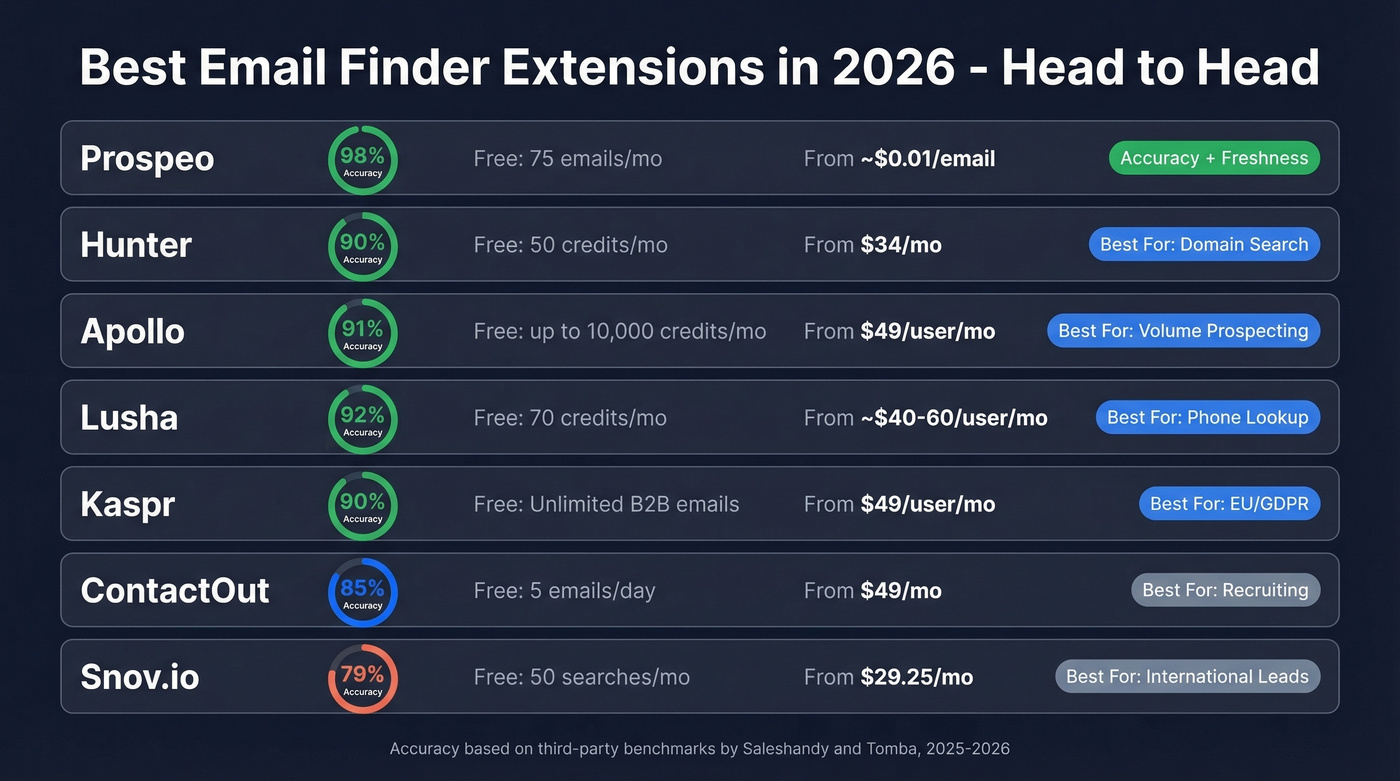
We excluded tools like Saleshandy Lead Finder and PhantomBuster that are platforms first and extensions second (if you're comparing more options, see our roundup of email search tools).

Most email finder extensions verify once and move on. Prospeo runs every email through a proprietary 5-step process - catch-all handling, spam-trap removal, honeypot filtering - refreshed every 7 days. That's why teams like Meritt cut bounce rates from 35% to under 4% and tripled pipeline.
Get 75 verified emails free and see what 98% accuracy feels like.
Each Extension, Reviewed
Prospeo
Prospeo's Chrome extension - used by 40,000+ people - finds verified emails and phone numbers from any website or professional profile in one click. The 98% email accuracy comes from a proprietary 5-step verification process that includes catch-all handling, spam-trap removal, and honeypot filtering. Most tools verify once and call it done. Prospeo runs every record through its own infrastructure, independent of third-party email providers (if you want to go deeper on verification, compare email reputation tools and bouncer alternatives).
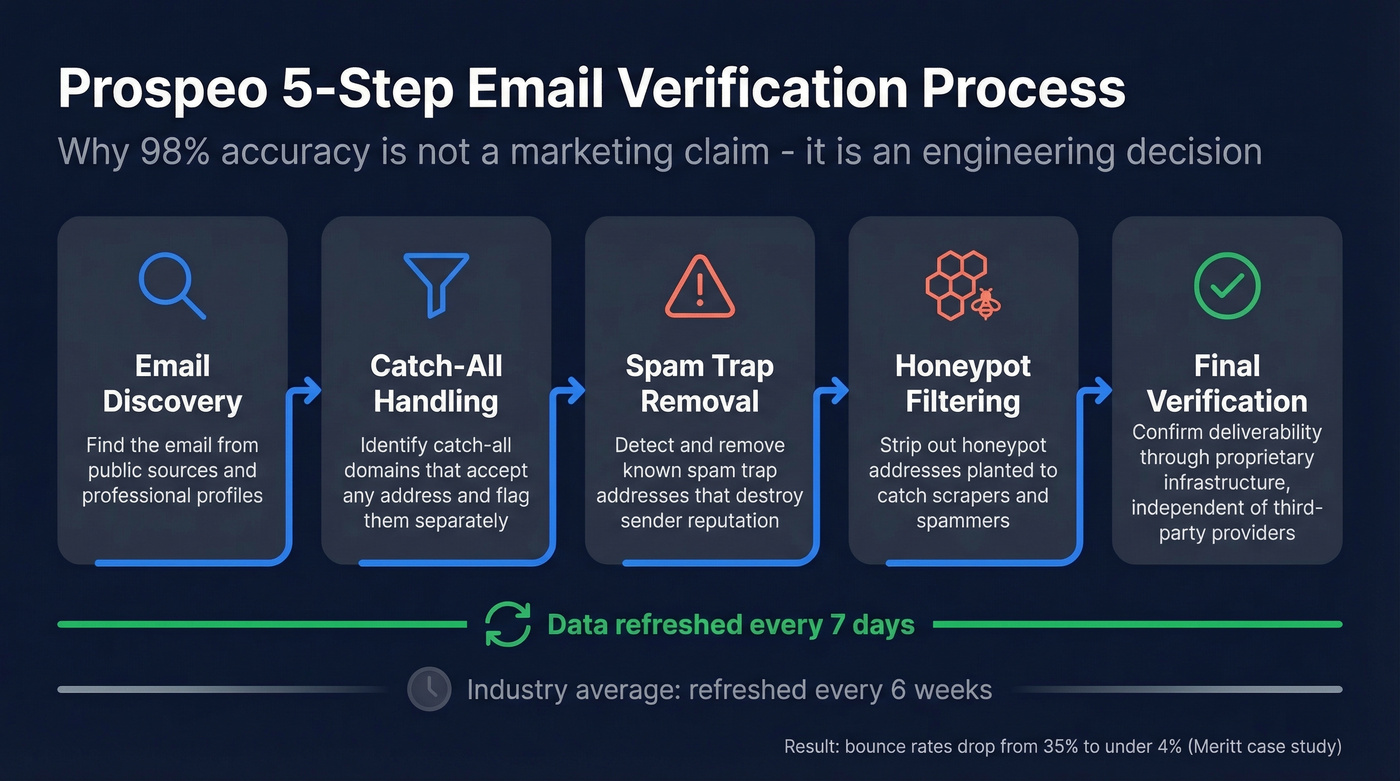
The data freshness gap is what really separates it. Records refresh every 7 days; the industry average is 6 weeks. That's the difference between hitting a VP who changed jobs last month and bouncing off a dead inbox. Meritt saw their bounce rate drop from 35% to under 4% after switching, and their pipeline tripled from $100K to $300K per week.
Use this if you're running outbound at scale and can't afford domain damage from stale data. The free tier gives you 75 verified emails plus 100 extension credits per month. Paid plans work out to roughly $0.01 per email, with native pushes to Salesforce, HubSpot, Smartlead, Instantly, and Lemlist (more on stack choices in our guide to the best SDR tools).
Hunter
Hunter is strongest when you want clean domain-based discovery plus a verification workflow that's easy to reason about. Give it a company domain and it maps the email format, returning the addresses it can find associated with that domain. In a 100-contact accuracy test by Saleshandy, Hunter hit 90% on known contacts, and verification costs just 0.5 credits per email. The API and integrations are clean - it plays well with everything.

The tradeoff is database size. A Tomba benchmark of 5,000 searches found Hunter's find rate at just 37.6% - it couldn't locate emails for nearly two-thirds of queries. Paid plans start at $34/mo on annual billing for 2,000 credits, which burn fast if you're doing both search and verification.
Here's the thing: Hunter works better as a verification layer than a standalone finder. Pair it with a larger database and you've got a solid workflow (or compare options in our list of Hunter alternatives).
Apollo
Apollo has one of the biggest databases on this list and one of the most generous free tiers - on paper. The free plan is marketed around "unlimited email credits," but in practice your monthly access depends on setup: you can unlock up to 10,000 credits/month with a verified corporate domain email, and you'll see much lower limits without that. The free plan also has a broader monthly credit cap covering email, mobile, and enrichment usage, and export credits are capped at 10.
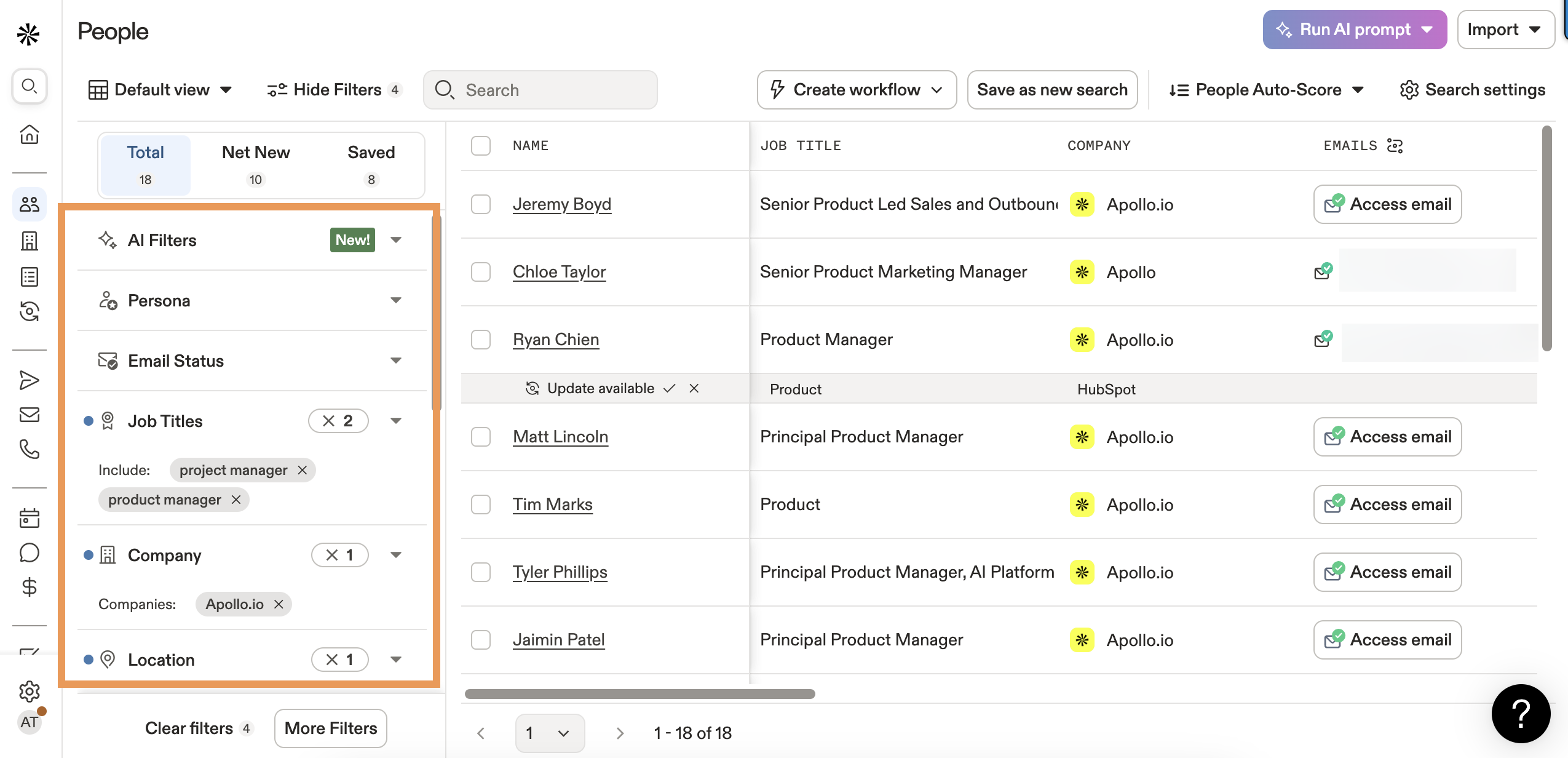
Use this if you need volume and you're prospecting primarily in North America. Paid plans start at $49/user/month on annual billing.
Skip this if data freshness matters to you. The Reddit consensus on Apollo is consistent: big database, but "data feels bad sometimes" with "lots of bounces on older contacts." Apollo's breadth is impressive, but stale records are a real problem for anyone tracking bounce rates closely (see: email bounce rate).
Snov.io
Snov.io bundles email finding, verification, and drip campaigns into one platform - appealing if you don't want to stitch together three separate tools. The Starter plan runs $29.25/mo on annual billing with 1,000 credits.
Accuracy is the weak spot. That same Saleshandy benchmark put Snov.io at 79%, noticeably below Hunter and Apollo. And the add-on for automation is a separate $69/mo, which changes the economics fast. For teams that just need finding and verification, there are cheaper options with better hit rates.
Kaspr
Kaspr is part of the Cognism group and focuses on European data quality. If you're selling into the EU and GDPR compliance isn't optional, this is worth a look. The free plan includes unlimited B2B email credits but only 5 phone and 5 direct email credits. Paid plans start at $49/user/month.
Skip this if you need US-heavy data - PhantomBuster's safety framework rates Kaspr as medium risk due to mixed behavioral patterns.
Lusha
Lusha is fast, clean, and intuitive - 92% accuracy in that same benchmark, with 70 free credits/month. But phone numbers cost 10 credits each, so your 70 free credits buy exactly 7 phone numbers. The credit economics are brutal at scale. PhantomBuster rates Lusha as high risk for always-on background activity. Paid plans run ~$40-60/user/month.
Look, if your average deal size is under $10k, Lusha's phone credits will eat your margin alive. Stick with email-only tools and save the phone budget for enterprise deals (or use data enrichment services to fill gaps after you verify).
ContactOut
ContactOut targets recruiters who need phone and email directly on profile pages, not sales teams. The free tier gives you 5 emails per day. The $49/month "Email" plan is marketed as "unlimited" but caps at 2,000 emails/month - read the fine print.
Cognism
Enterprise-grade EU and UK data. Annual contracts, custom pricing typically $1,000-3,000/month. Worth evaluating for 20+ person SDR teams focused on EMEA. Everyone else should look elsewhere.
How to Choose the Right Extension
Data freshness. A 7-day refresh cycle is the benchmark. Most tools refresh around 6 weeks, which means the contact who changed jobs three weeks ago is still showing their old email. In our experience, stale data is the single biggest cause of preventable bounces - more than bad verification, more than catch-all domains (if you're building a repeatable system, map this into a broader lead generation workflow).
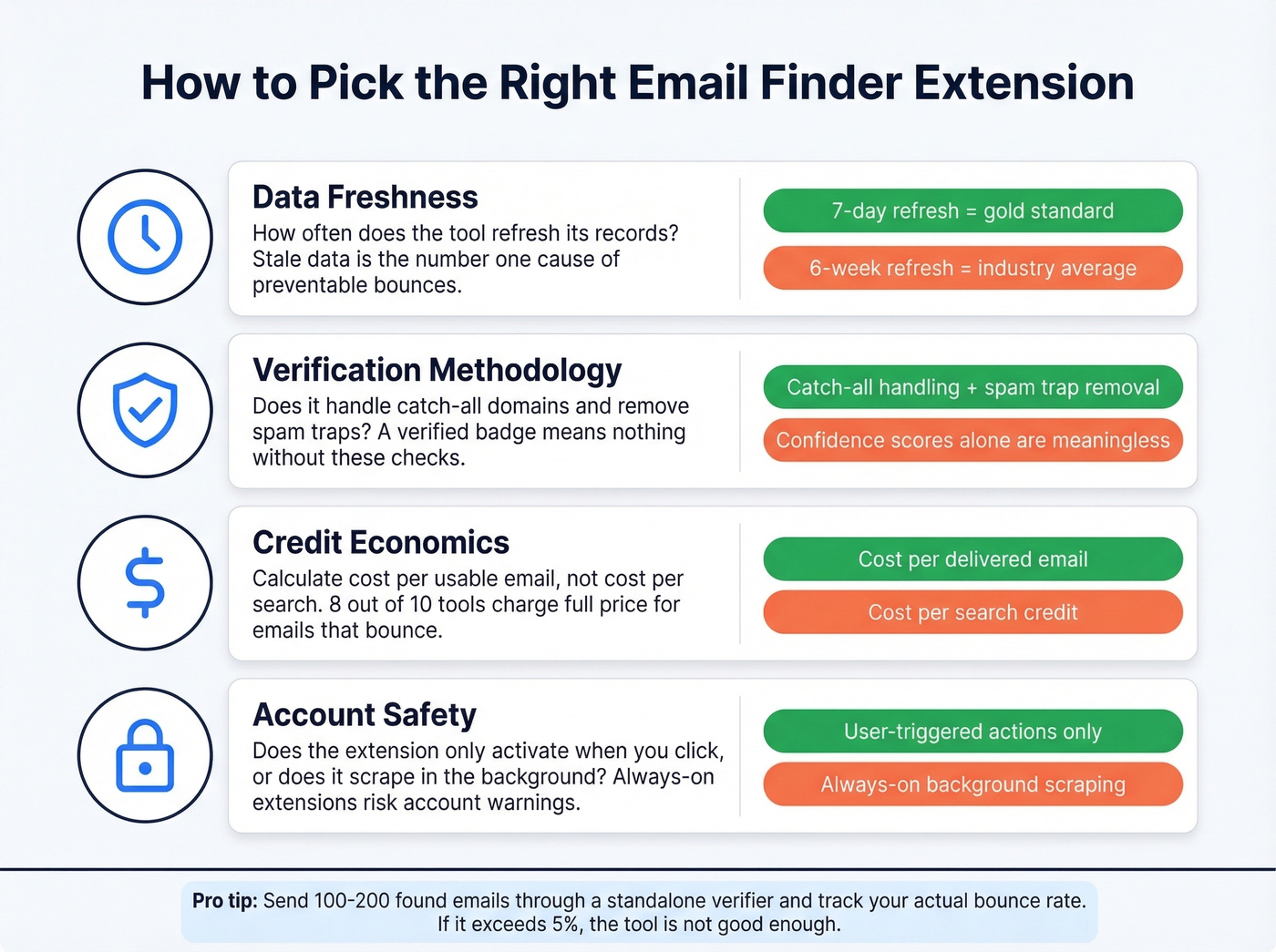
Verification methodology. Not all "verified" badges are equal. Look for catch-all domain handling and spam-trap removal specifically. A tool that marks catch-all emails as "verified" is setting you up for bounces. One large-scale test of 95,000 cold emails found that bounce-rate-based accuracy is the only metric that matters - the tool's own confidence score is often meaningless.
Credit economics. Calculate cost per usable email, not cost per search. 8 out of 10 email finder tools charge full price for emails that bounce. If a tool charges 1 credit per search and 40% of searches return nothing useful, your effective cost per lead just more than doubled (this is also why teams invest in lead enrichment after capture).
Account safety. Even well-built Chrome extensions for finding emails can put your account at risk if they run in the background without your input. Extensions that only activate when you click are safer than always-on background scrapers. One user on r/b2bmarketing reported getting a warning after their extension triggered behavioral pattern analysis. Stick with tools that use user-triggered actions and realistic rate limits (and if you're scaling outreach, follow a proven B2B cold email sequence structure).
You just read through 7+ extensions. Here's the math: at $0.01 per email with 98% accuracy, Prospeo costs less than a single bounced email costs your domain reputation. 40,000+ extension users already made the switch.
Stop comparing tools and start booking meetings with verified contacts.
FAQ
Are email finder extensions legal?
Yes - these extensions find publicly available business contact information. Reputable tools are GDPR compliant with opt-out enforcement and DPAs on request. The legal risk comes from how you use the data, not from finding business emails. Sending unsolicited spam to personal addresses is where you get into trouble.
Can a free email finder extension handle real outbound?
Free tiers work for testing workflows, not running campaigns. Hunter gives you 50 credits/month, Prospeo offers 75 verified emails with full enrichment, and Lusha's 70 credits buy exactly 7 phone numbers. If you're sending 500+ emails per day, budget $30-100/month for a paid plan with real verification.
How do I test if an extension's data is accurate?
Send 100-200 found emails through a standalone verification tool, then track your bounce rate after the first send. If bounces exceed 5%, the finder's data is stale or its verification is weak. Real deliverability is the only test that matters - ignore the tool's own confidence scores.
What's the safest type of email finder extension?
Extensions that activate only on manual click are safest. Always-on background scrapers trigger behavioral analysis and risk account restrictions. Look for tools with realistic rate limits and user-triggered actions - Prospeo and Hunter both follow this pattern.