

The Best Sales System Isn't a Tool - It's a Framework
Reps spend roughly 30% of their time actually selling. The other 70% goes to admin, data entry, and toggling between tabs. Meanwhile, 69% of reps miss quota. That's not a people problem - it's a system problem.
If you're looking for a point-of-sale system, Forbes evaluated 20 POS systems for retail. This guide is about B2B: the process, methodology, and connected tools that turn pipeline into revenue.
Our Picks (TL;DR)
You need three tools, connected. Not fifteen.
| Layer | Top Pick | Price | Why |
|---|---|---|---|
| CRM | HubSpot / Salesforce | Free-$350/user/mo | HubSpot for smaller teams; Salesforce for larger orgs |
| Data | Prospeo | Free-~$39/mo | 98% email accuracy, verified mobiles |
| Outreach | Smartlead / Instantly | ~$39-$94/mo | Deliverability-first sending |
You can build a lean stack for around $60-$200/month per rep depending on CRM tier and seats, plus your data costs. For multi-channel sequences spanning email, phone, and social, Outreach or Salesloft are common enterprise alternatives. Everything else - intent data, revenue intelligence, enrichment workflows - layers on top once the foundation works.
What Is a Sales System?
A sales system isn't a CRM. A CRM is one component - the record-keeping layer. A real system has five parts: lead generation, a sales conversation framework, a follow-up cadence, client onboarding, and retention. These map to three layers every team needs to define: a repeatable process that governs how deals move, a methodology that dictates how reps qualify and advance, and a tech stack that executes both.
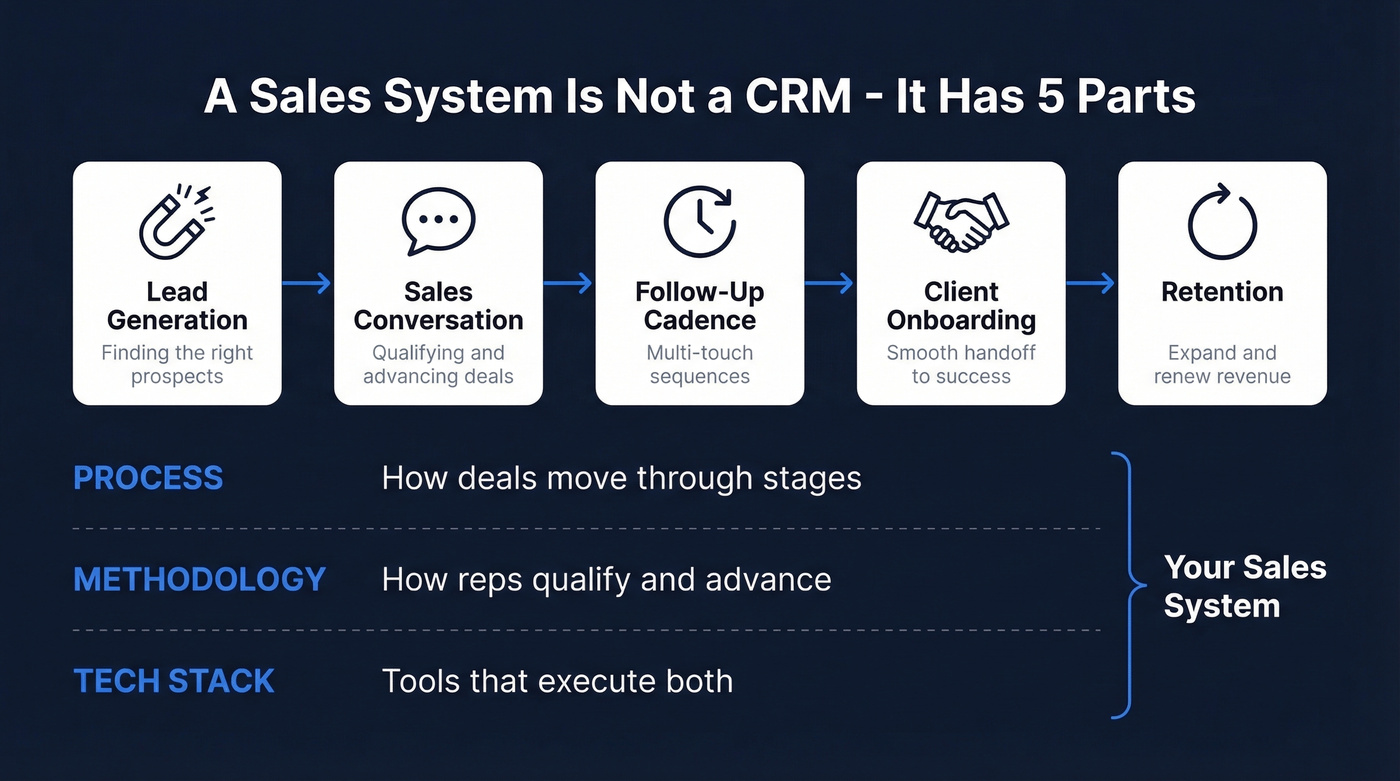
Most teams buy tools without defining the process those tools should serve. A static playbook is a PDF in a shared drive nobody opens. A dynamic one lives inside your CRM, surfacing the right talk track at the right stage - so reps just execute instead of guessing.
Stack vs. Actual System
Here's a workflow we've seen too many times: ZoomInfo export to CSV, upload to Outreach, verify emails in Hunter, enrich in Clearbit, log in Salesforce. Six tools, 69 minutes, and a rep who hasn't talked to a single prospect yet. Teams running stacks like this spend 40-50% of their day managing tools instead of selling.
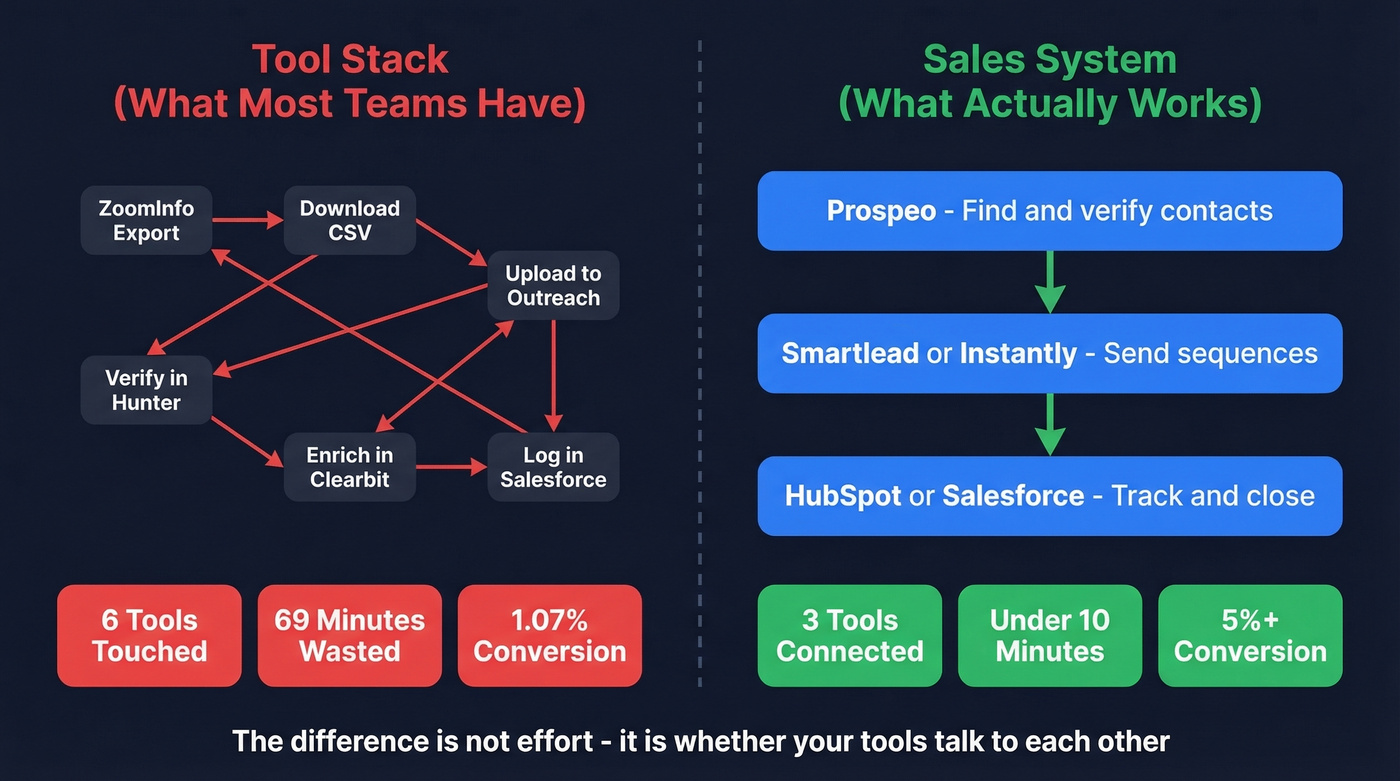
The performance gap is real. Single-touch outreach converts at roughly 1.07%. Coordinated multi-channel sequences push past 5%. The difference isn't effort - it's whether your tools talk to each other.
Three diagnostic questions worth asking:
- How many tools does a rep touch to send one outbound sequence?
- Where does engagement history live - one system or scattered across five?
- When an integration breaks, how long before someone notices?
If the answers make you uncomfortable, you don't have a system. You have a stack.

You just read the diagnostic: if reps touch six tools to send one sequence, you have a stack - not a system. Prospeo collapses the data layer into one step: 300M+ profiles, 98% email accuracy, verified mobiles, and native integrations with HubSpot, Salesforce, Smartlead, and Instantly. No CSV gymnastics. No broken enrichment chains.
Stop toggling between tabs. Start closing deals.
Tools by Layer
CRM Layer
HubSpot is one of the fastest CRMs to onboard. It's a strong fit for smaller teams that want to be live in days, not months - skip it if you need deep customization or complex CPQ workflows. The free tier covers core contact and deal management. Starter runs $20/seat/mo billed annually, Professional unlocks what most mid-market teams need at $100/seat/mo, and Enterprise lands at $150/seat/mo.
Salesforce is the pick for larger teams with an implementation budget - $25K+ is typical for a proper rollout. Skip it if you don't have a dedicated admin. Starter Suite begins at $25/user/mo, but realistic all-in costs with add-ons run $250-$350/user/mo. The AppExchange's 7,000+ integrations are the moat; nothing else comes close for ecosystem depth.
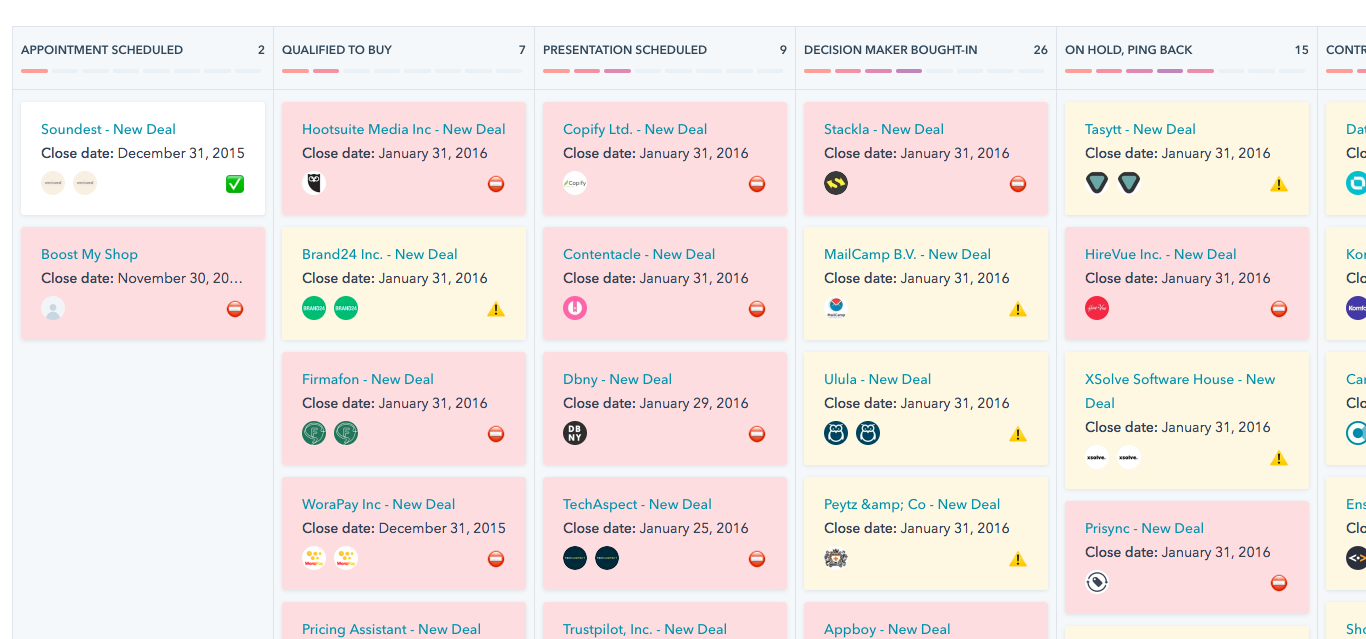
We excluded Freshsales, Close, Insightly, and Dynamics 365 - solid tools, but they don't offer enough differentiation over HubSpot or Salesforce to justify the evaluation time for most teams. Zoho CRM at $14-$52/user/mo is the budget pick. Pipedrive at $14-$99/user/mo is one of the simplest pipeline tools on the market but lacks marketing and service depth.
| CRM | Starting Price | Best For |
|---|---|---|
| HubSpot | Free; $20/seat/mo | Smaller teams |
| Salesforce | $25/user/mo (Starter) | Enterprise / larger teams |
| Zoho CRM | $14/user/mo | Budget-conscious teams |
| Pipedrive | $14/user/mo | Simple pipeline management |
Data & Prospecting Layer
This is where we've spent the most time testing, because bad data poisons everything downstream. A 35% bounce rate doesn't just waste credits - it torches your domain reputation, and recovering from that takes months.
Prospeo covers 300M+ professional profiles with 143M+ verified emails at 98% accuracy and 125M+ verified mobile numbers with a 30% pickup rate. Data refreshes every seven days - the industry average is six weeks, which means most providers serve you stale contacts while charging more. The proprietary email-finding infrastructure doesn't rely on third-party providers, and a 5-step verification process handles catch-all domains, spam traps, and honeypots before a contact ever reaches your CRM.

The proof point that matters: Snyk's 50-person AE team switched and dropped their bounce rate from 35-40% to under 5%. AE-sourced pipeline jumped 180%, generating 200+ new opportunities per month. At roughly $0.01 per email with a free tier to start, the ROI math is straightforward. Contacts flow directly into Salesforce, HubSpot, Smartlead, Instantly, Lemlist, and Clay - no CSV gymnastics required.
Apollo is the easiest all-in-one starting point for teams that want data and basic outreach in one place. Free tier, paid plans from ~$49-$99/mo. The consensus on r/salestechniques is that Apollo's data has gaps in certain industries and smaller markets, but for North American mid-market prospecting, it gets you moving fast.
Clay is the tool for teams that need weirdly specific prospect lists. It chains enrichment steps like LEGO pieces - powerful if you have someone who enjoys building workflows, frustrating if you don't. Expect ~$149/mo and up.
Bad data doesn't just waste credits - it torches your domain and kills your entire system. Prospeo's 5-step verification and 7-day refresh cycle mean your CRM stays clean and your outreach actually lands. Snyk's 50 AEs dropped bounce rates from 35% to under 5% and added 200+ opportunities per month.
Fix the data layer and the rest of your sales system follows.
Outreach & Intelligence
Smartlead (~$39-$94/mo) handles sending and deliverability - mailbox rotation, warm-up, the infrastructure that keeps your domain clean. Instantly is a solid alternative in the same price range. Both plug directly into your data source, so verified contacts flow straight into sequences without manual imports.
Gong sits in the revenue intelligence layer - call recording, deal analytics, coaching insights. It's a "layer on once your foundation works" tool, not a starting point. If you're still figuring out your process, Gong will just show you exactly how inconsistent things are.
Choose Your Methodology
Tools without methodology are just expensive dashboards. 81% of sales teams are investing in AI - but AI without a system just automates chaos faster. Match your framework to your sales motion:
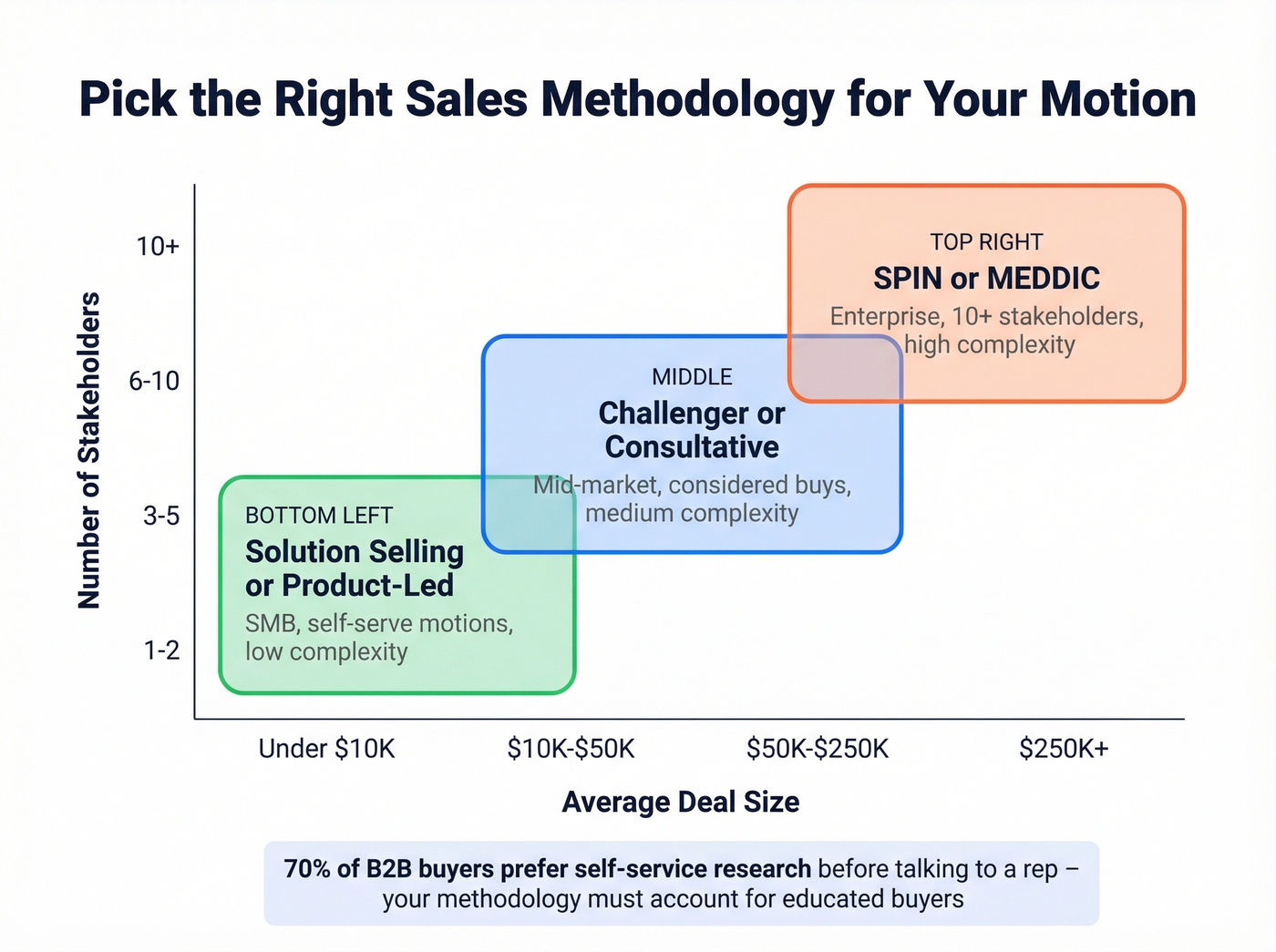
| Methodology | Best For | Complexity |
|---|---|---|
| SPIN / MEDDIC | Enterprise, 10+ stakeholders | High |
| Challenger / Consultative | Mid-market, considered buys | Medium |
| Solution / Product-Led | SMB, self-serve motions | Low |
Let's be honest about something: 70% of B2B buyers now prefer self-service digital interactions for research and evaluation. That doesn't mean methodology is dead - it means your methodology needs to account for buyers who've already done their homework before they ever talk to a rep. MEDDIC still matters for enterprise complexity. But if your average deal size sits below $10K, a lighter framework that respects the buyer's self-education wins every time.
Audit Before You Buy
Before you add anything new, benchmark what you have. We've seen teams spend six months evaluating tools and zero time defining their process. Flip that ratio.
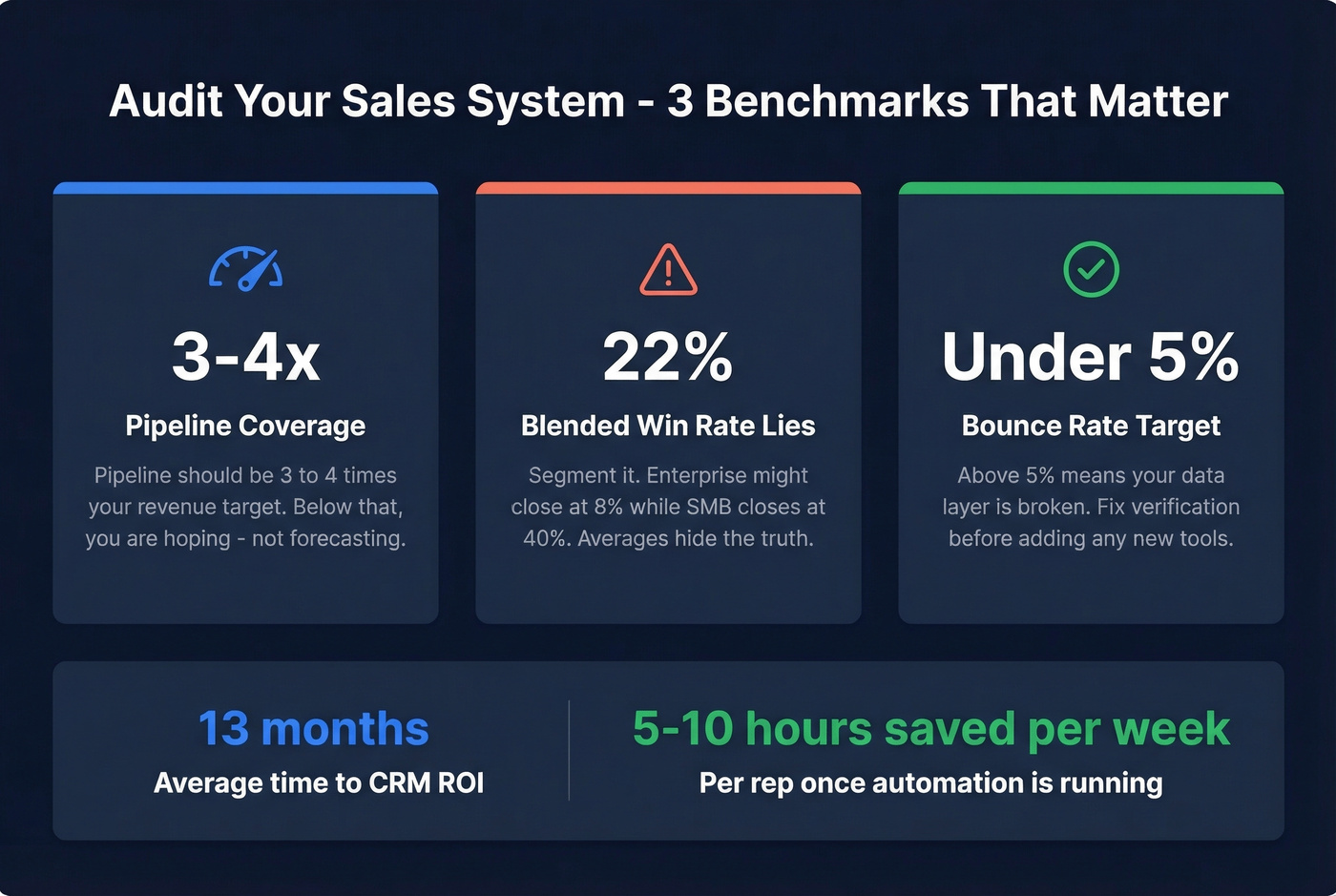
- Pipeline coverage: 3-4x your revenue target. Below that, you're hoping, not forecasting.
- Win rate and cycle length: track both by segment. Averages lie - a blended 22% win rate hides the fact that enterprise deals close at 8% and SMB at 40%. (If you need benchmarks, start with sales conversion rate and sales pipeline benchmarks.)
- CRM hygiene: if your bounce rate is above ~5%, your data and verification workflow needs fixing before anything else. (Use email bounce rate and improve sender reputation as your baseline.)
The average CRM implementation hits positive ROI in about 13 months. Automation saves 5-10 hours per week per rep once it's running. The best sales system is the one where process comes first and tools serve it - not the other way around.
FAQ
What's the difference between a sales system and a CRM?
A CRM records what happened. A sales system defines what should happen - combining a repeatable process, a qualification methodology, and connected tools that execute both. Think of the CRM as one layer inside a larger operating framework.
How much does a full B2B sales system cost in 2026?
CRM runs $10-$350/user/month depending on tier. Add a data tool like Prospeo (starts free, ~$39/mo for teams) and outreach software ($39-$94/month). A 10-person team typically lands between $500 and $3,000/month total.
Do I need separate tools for prospecting and CRM?
Yes. CRMs manage relationships - they don't find new contacts. A dedicated prospecting tool with verified data feeds clean contacts into your CRM so reps sell instead of fixing bounced emails.
Can small teams build an effective sales system on a budget?
HubSpot's free CRM, Prospeo's free tier (75 emails + 100 Chrome extension credits/month), and Smartlead at $39/month give a solo rep or small team a complete three-layer system for under $80/month - with room to scale as you grow.