

Best Sales Voicemail Greetings That Get Replies (Not Callbacks)
80% of sales calls go to voicemail. Most reps treat that as a failure. It's not - it's a channel, and you're probably wasting it.
A 300M+ cold call analysis found something counterintuitive: the best sales voicemail greetings don't generate callbacks. They drive email replies, lifting reply rates from 2.73% to 5.87%. That's a completely different game than hoping someone dials you back. And since many prospects read the transcript instead of listening, your voicemail needs to read well on a screen, not just sound good in someone's ear.
The Quick Version
Stop optimizing for callbacks. Leave a maximum of two voicemails per prospect. Keep VM #1 under 15 seconds, VM #2 under 30. Pair every voicemail with a same-day email - that's where the actual reply happens. Most deals take 8+ touches before a meeting; voicemail is one of them. And before you dial, verify your numbers. Dead lines make every voicemail script worthless.
What 300M Calls Reveal
Gong Labs analyzed 300M+ cold calls to evaluate voicemail impact. Here's the thing: leaving voicemails actually reduces your future connect rate by 28%. Prospects who've heard your message pick up less often (5.17% vs. 7.18%). You're revealing you're a salesperson.
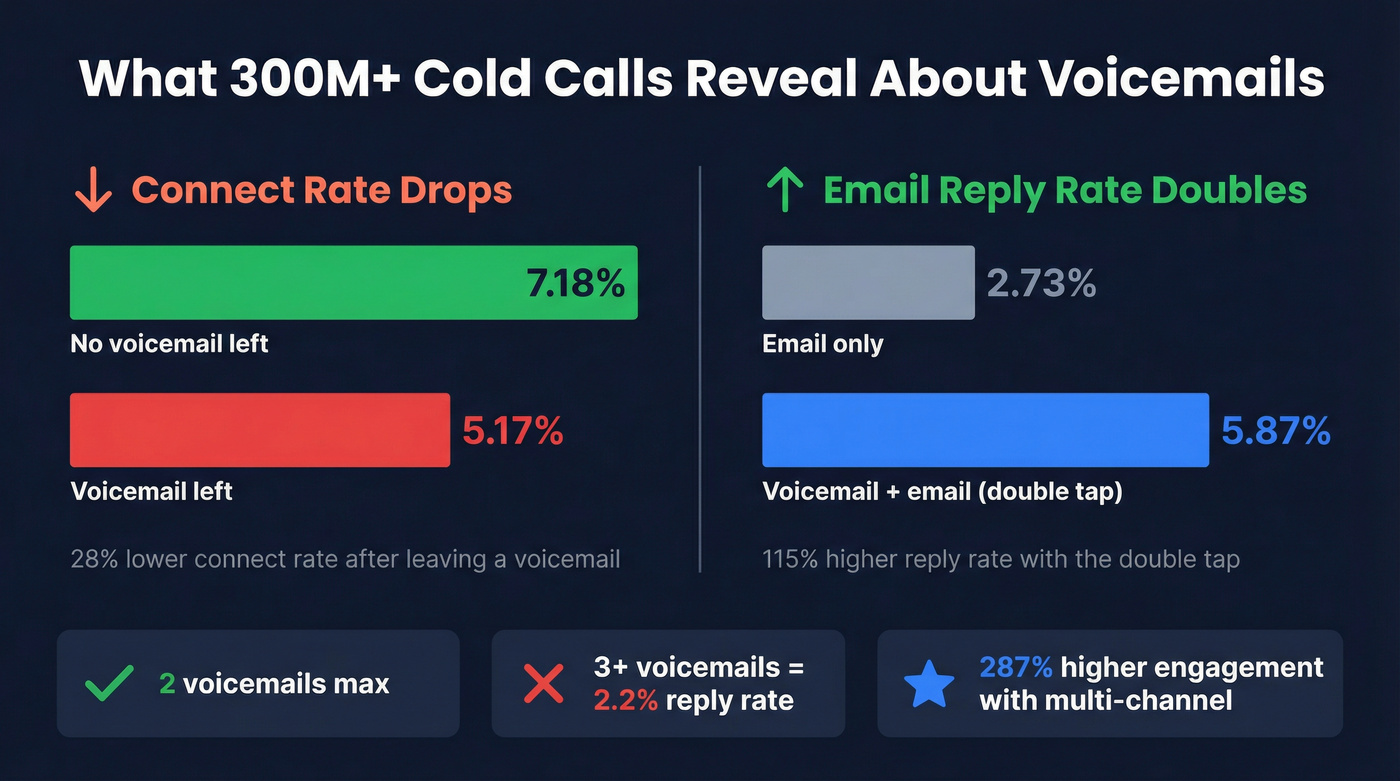
But the tradeoff is worth it. Email reply rates more than double when you pair voicemails with outbound emails. The "double tap" - voicemail plus same-day email - is one of the highest-leverage plays in outbound because it lifts email reply rates from 2.73% to 5.87%. Two voicemails is the ceiling. Three or more drops your email reply rate to 2.2%, which is worse than never leaving a voicemail at all.
Personalized voicemails achieve 41% higher callback rates than generic ones, and multi-channel outreach drives 287% higher engagement versus single-channel.
Voicemail Mistakes That Kill Replies
Most voicemail failures aren't script problems - they're execution problems.
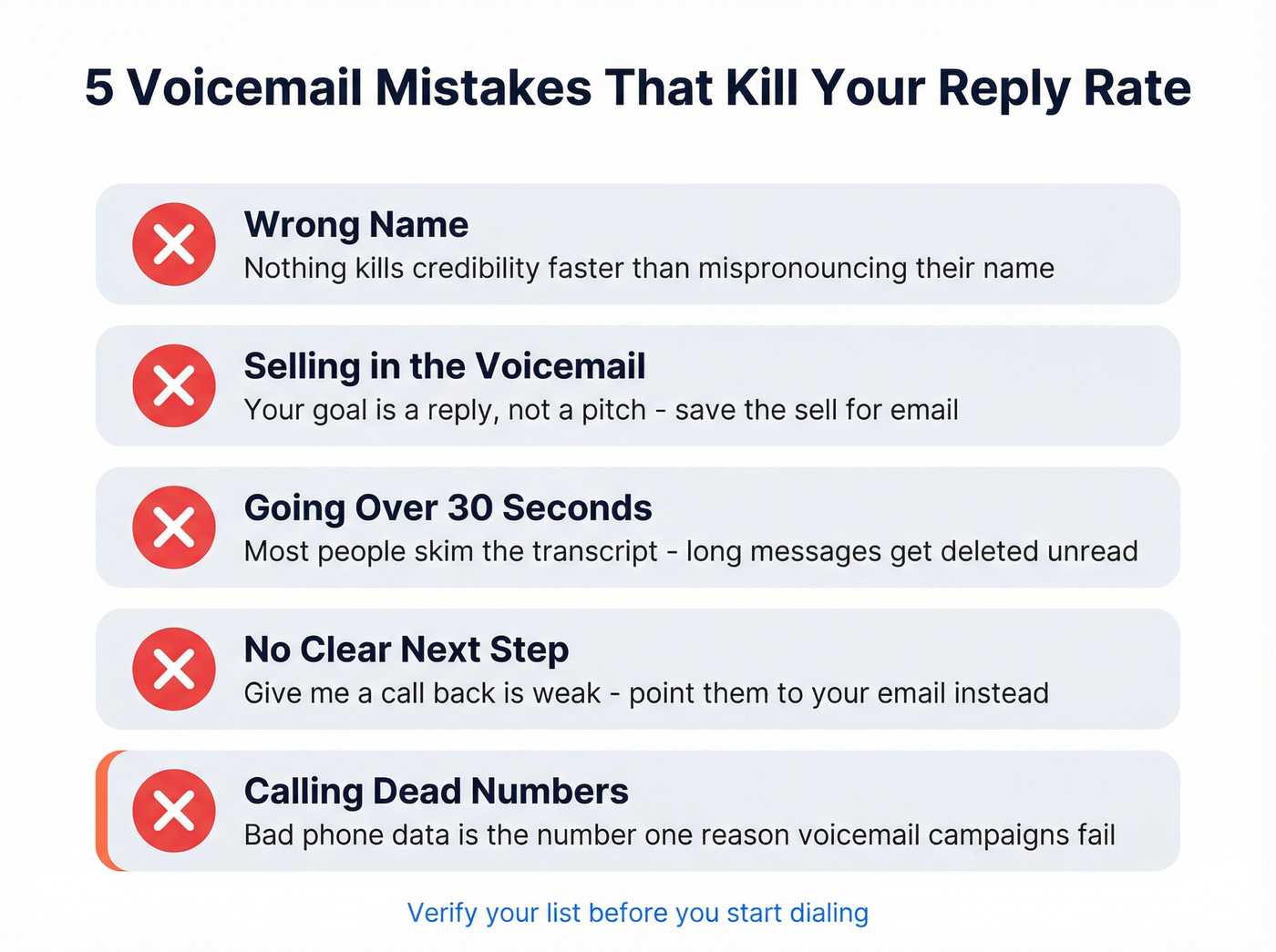
- Wrong name. Nothing kills credibility faster. If you can't pronounce it, look it up.
- Selling in the voicemail. Your goal is a reply, not a pitch. As one sales trainer put it: "Your goal is not to sell the product - it's to get a callback."
- Going over 30 seconds. Many mobile users skim the transcript. Long voicemails get deleted before they're read.
- No CTA. "Give me a call back" is weak. "I'll send you an email with details" gives them an easy next step. If you need copy, steal a few sales follow-up templates and adapt them to voicemail.
- Calling dead numbers. Every voicemail left on a wrong number is pure waste. In our experience, bad phone data is the single biggest reason voicemail campaigns underperform - not scripts, not timing, not tone. Verify your list before you start dialing.
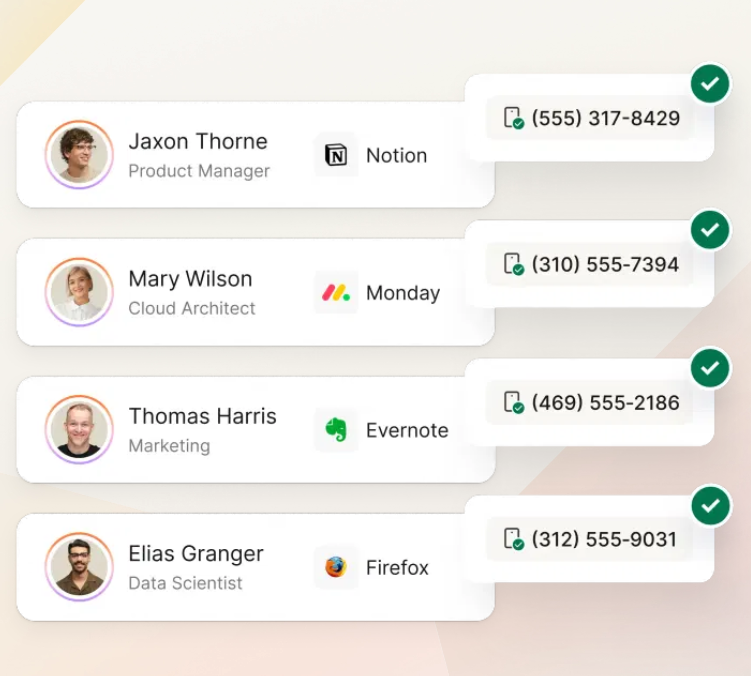

The data is clear: bad phone numbers kill voicemail campaigns before your script even matters. Prospeo gives you 125M+ verified mobile numbers with a 30% pickup rate - so every voicemail you leave actually reaches a real person.
Stop leaving voicemails on dead lines. Start with verified numbers.
Greeting Scripts and Templates
Before you record anything: stand up. It changes your vocal energy. Slow down - most reps rush through their number like they're being timed. And smile while you speak. It sounds ridiculous, but the difference is audible.
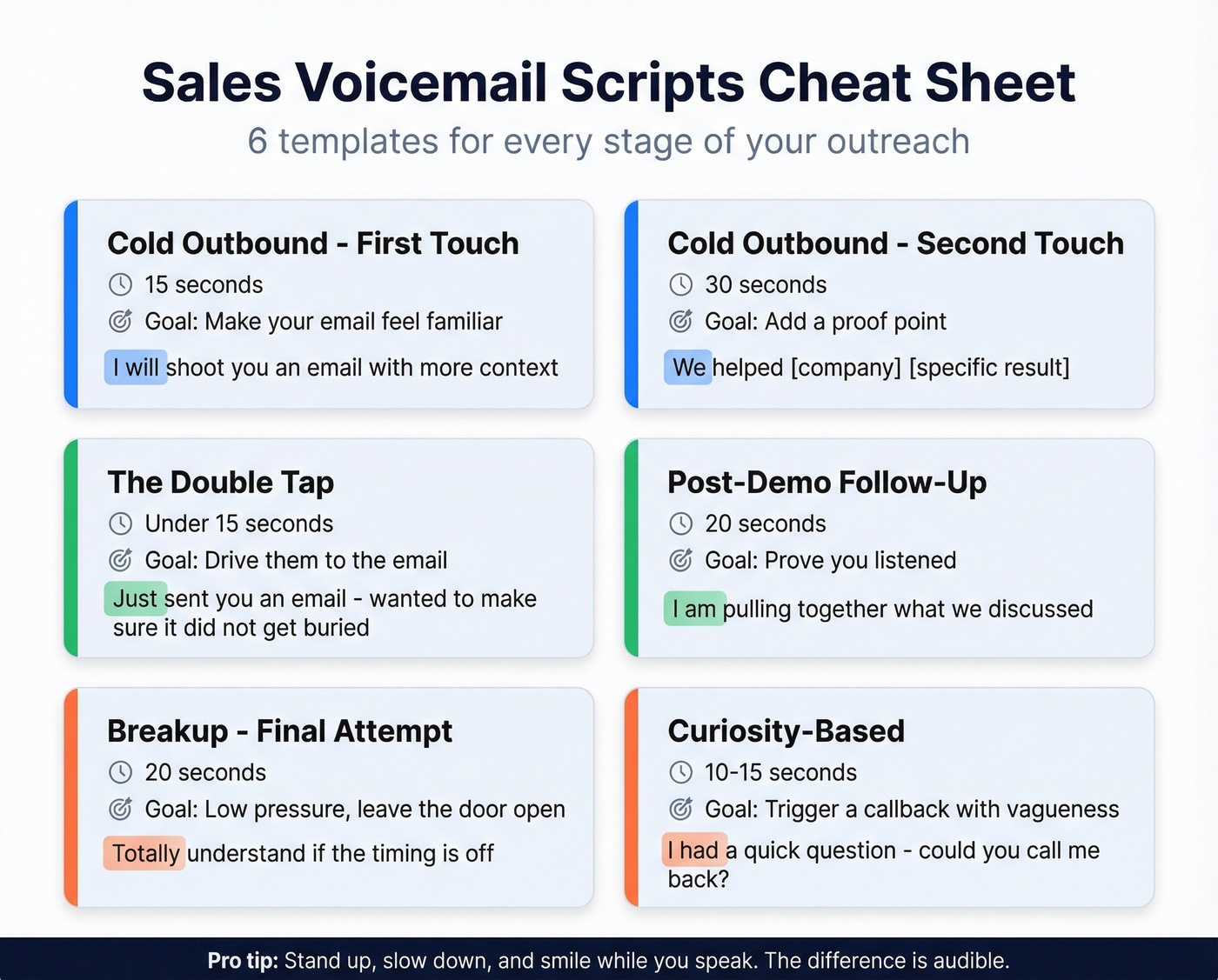
Cold Outbound - First Touch
~15 seconds. Context only, no pitch.
"Hi [Name], it's [Your Name] from [Company]. I'm reaching out about [specific trigger - new hire, funding round, tech stack change]. I'll shoot you an email with more context. Talk soon."
VM #1 exists to make your follow-up email feel familiar, not cold. Don't try to do more than that. If you're building a repeatable motion, a simple cold calling system helps keep touches consistent.
Cold Outbound - Second Touch
~30 seconds. Add a proof point.
"Hey [Name], [Your Name] again from [Company]. I left you a note last week about [topic]. We helped [similar company] [specific result - cut ramp time, increase pipeline, etc.]. I'll send one more email with the details - would love 15 minutes if it's relevant. My number is [number]."
This is your one shot at a longer message. Make the proof point specific - "we helped Acme cut ramp time by 40%" beats "we help companies like yours." A great business voicemail script always leads with a result the prospect cares about, not a feature list. (Same principle as strong sample elevator pitches: outcome first, details second.)
The Double Tap (Voicemail + Email)
This is where the 287% multi-channel engagement lift comes from. Leave the voicemail, then send the email within the hour. The voicemail points to the email. The email does the selling. If your email copy is weak, tighten it with proven email subject lines examples and a cleaner ask.
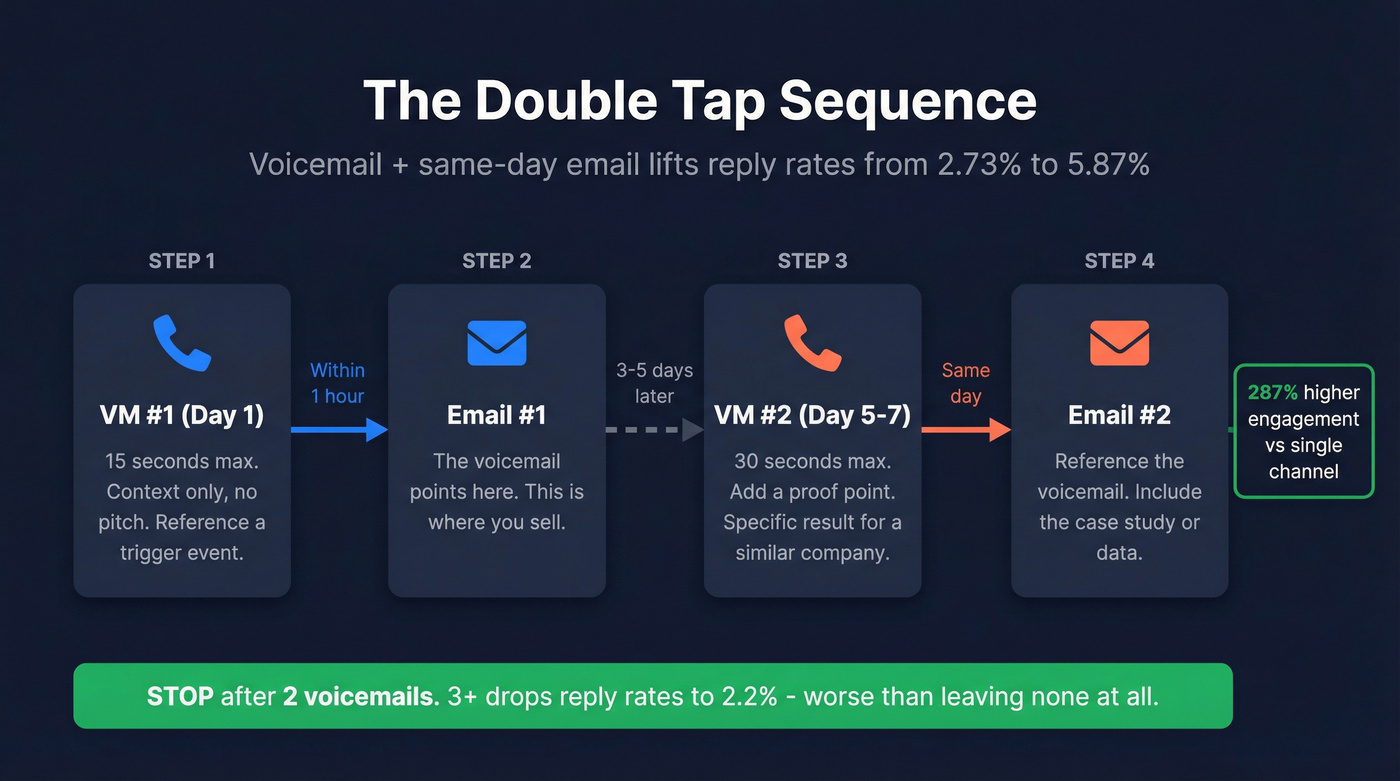
"Hi [Name], [Your Name] from [Company]. Just sent you an email about [topic] - wanted to make sure it didn't get buried. Take a look when you get a chance. [Number] if you want to chat."
Post-Demo Follow-Up
This one works because it proves you were paying attention and gives a concrete next step. No "just checking in." If you want a tighter process, use a product demo checklist so your follow-up always maps to what they cared about.
"Hey [Name], great conversation yesterday. I'm pulling together [the proposal / the case study / the pricing] we discussed. You'll have it by [day]. Call me at [number] if anything comes up before then."
Breakup / Final Attempt
"Hi [Name], [Your Name] from [Company]. I've reached out a few times and haven't heard back - totally understand if the timing's off. I'll leave the door open on my end. If [problem you solve] comes up down the road, you've got my number: [number]."
Use this after your second voicemail and 2-3 unanswered emails. Low pressure, no guilt. This one generates replies weeks later more often than you'd expect - people remember the rep who didn't push.
Curiosity-Based (From r/sales)
A practitioner on r/sales broke down a strategy that generates roughly 15 callbacks from 25-35 researched voicemails per week, converting 3-5 into conversations.
"Hi [Name], I'm calling in regards to your oversight of the [specific team/department]. I had a quick question - could you give me a call back at [number]?"
The intentional vagueness triggers curiosity. When they call back, act slightly confused - "remind me, what do you oversee again?" - and let them talk about their role. This only works if you've done the research. Spray-and-pray will get you blocked. If you need a better research workflow, borrow a few sales prospecting techniques that fit your ICP.
Humor-Based (Use Sparingly)
"Hey [Name], [Your Name] from [Company]. I promise I'm not a robot - though my dialer might disagree. Quick question about [topic]. I'll send you an email. [Number] if you'd rather just talk."
Humor lowers defenses, but it's high-risk. If your industry skews formal - finance, healthcare - skip this one. For teams selling to startups or marketing orgs, it can be the voicemail that actually gets played out loud to a colleague.
Professional Greetings for Your Own Line
This is the other side - what prospects hear when they call you back. Most reps never update their default greeting, which is a missed opportunity. When someone does call back, a polished professional greeting signals you're worth talking to. (It also helps to log these touches somewhere reliable; even basic contact management software beats sticky notes.)
Personal extension:
"Hi, you've reached [Full Name], [Title] at [Company]. Leave your name and number and I'll get back to you within the hour. For a faster response, email me at [email]."
After-hours:
"Thanks for calling [Company]. Our team is available [hours]. Leave a message, or email us at [email] for a quicker reply. We'll get back to you next business day."
Out-of-office:
"Hi, you've reached [Full Name]. I'm out of the office until [date]. For anything urgent, reach [colleague name] at [number]. Otherwise, leave a message and I'll return your call when I'm back."
Keep all three clean and short. Most callbacks come through on mobile, and the greeting gets transcribed. Rambling or unclear greetings look unprofessional in text.
Save Time With Voicemail Drops
Manually recording voicemails eats 60-90 minutes per day. Pre-recorded voicemail drops let you leave a message with one click. Tools like Klenty, Kixie, and JustCall support this - expect to pay $30-$150/user/month depending on the dialer. Some vendors claim drops boost callback rates by up to 30%, though the real win is time saved. If you're leaving 20+ voicemails a day, drops are usually worth it. If you're evaluating your stack, start with a shortlist of SDR tools that cover dialing + sequencing.
Let's be honest: if your average deal size is under $8K, you probably don't need a $150/seat dialer with AI transcription and sentiment analysis. A $35/month tool with reliable voicemail drop is often the better fit because your reps will actually use it every day instead of fighting the UI.
The double tap only works if your email lands too. Prospeo pairs 125M+ verified mobiles with 98%-accurate emails - so your voicemail-plus-email sequence hits real inboxes, not bounces. At $0.01 per email, bad data is no longer an excuse.
Nail the double tap with verified phones and emails in one platform.
FAQ
How long should a sales voicemail be?
Fifteen seconds for a first touch, up to 30 for a second. Gong's 300M-call study shows anything longer hurts reply rates. Mobile users skim the transcript rather than listen, so brevity wins twice - shorter audio and a cleaner transcription.
How many voicemails should I leave per prospect?
Two maximum. Three or more drops email reply rates to 2.2% - below the baseline of never leaving one at all. After two, switch to email, social, or direct mail to keep the sequence alive.
What makes a voicemail greeting effective?
Brevity, specificity, and a clear next step. The strongest greetings reference something real about the prospect - a trigger event, a mutual connection, a specific problem - and point to an email rather than asking for a callback. Write for the transcript, not the audio.
Should I leave voicemails if I have bad contact data?
No. Every voicemail to a wrong number is wasted effort and burns your daily calling time. Verify your list first with a tool like Prospeo's mobile finder, which refreshes 125M+ mobile numbers every 7 days so you're calling real, current contacts instead of dead lines.