

The Best Books for Salespeople - Organized by What You Actually Sell
Most "best books for salespeople" lists look suspiciously like every list published in 2019. The same 12 titles, reshuffled, a fresh date slapped on top. Some lists even lead with the author's own book - convenient, but not helpful. Challenger Sale. SPIN Selling. Never Split the Difference. Rinse, repeat.
Those books deserve to be on the list. But the list itself is lazy - no role segmentation, no reading order, no honest take on which titles are worth your time at your specific career stage. When Revenue.io ran a bracket-style tournament with 7,000 sales professionals voting, the results were revealing: prospecting books swept the top five. Fanatical Prospecting, New Sales. Simplified., Gap Selling, Sell with a Story, and High-Profit Prospecting. Not mindset books. Not negotiation classics. Pipeline discipline won, and it wasn't close.
We've sorted 25+ titles by what you actually do every day - prospecting, discovery, enterprise deals, negotiation, leadership - with a reading order for each role and an honest opinion on every title. Five books implemented fully will outperform forty books skimmed. Let's find your five.
If You Only Read 5 Sales Books
- Fanatical Prospecting (Jeb Blount) - pipeline discipline across every channel
- The Challenger Sale (Dixon & Adamson) - the strategic framework that reshaped B2B selling
- Never Split the Difference (Chris Voss) - negotiation tactics you'll use in every deal
- Gap Selling (Keenan) - problem-centric discovery that actually closes
- New Sales. Simplified. (Mike Weinberg) - new business development without the fluff
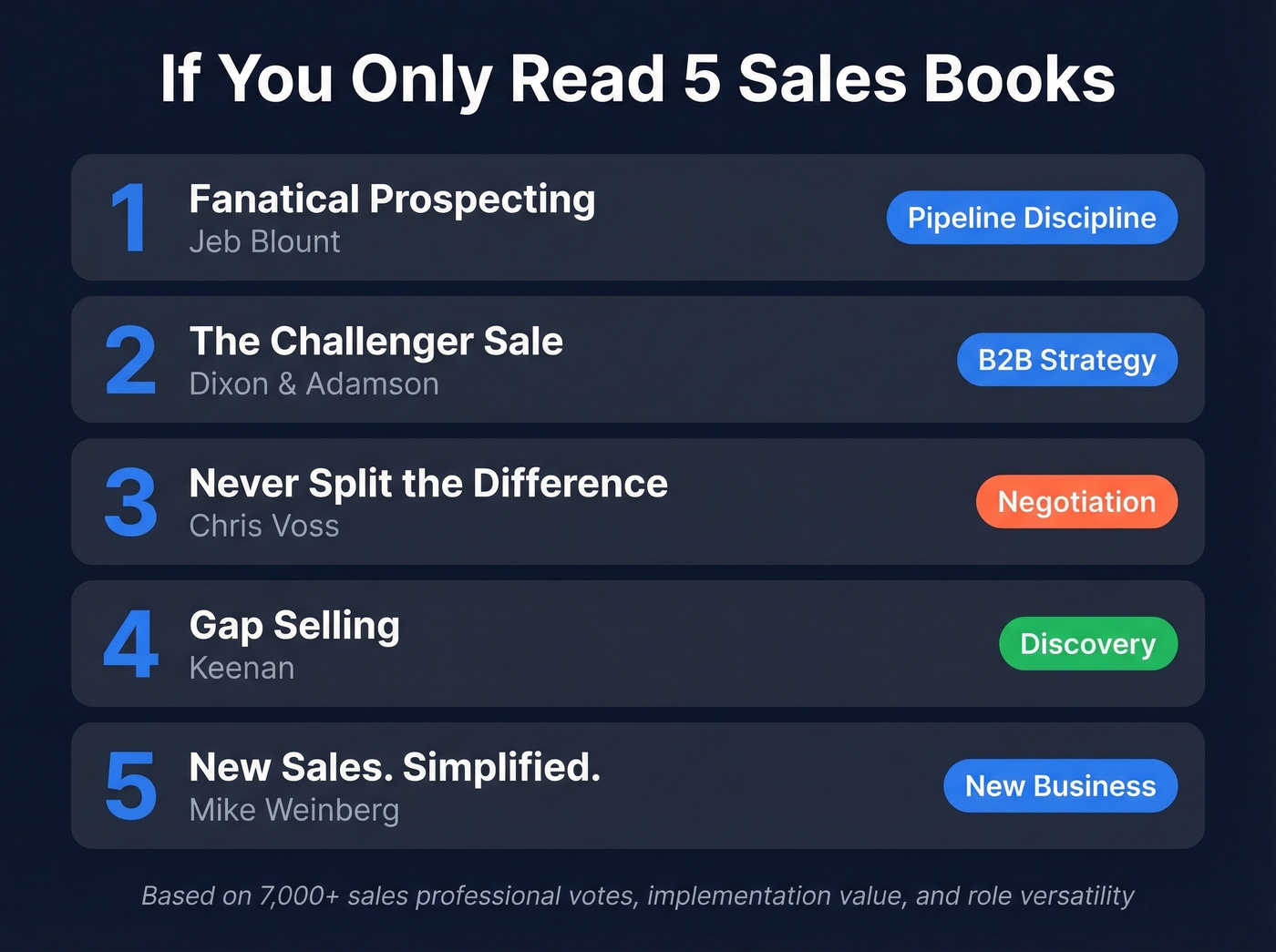
New SDR? Start with #1. Enterprise AE? Skip to the complex sales section below. Manager building a team? Jump to leadership.
How to Actually Read Sales Books
Most reps buy sales books. Fewer read them. Almost nobody implements them.
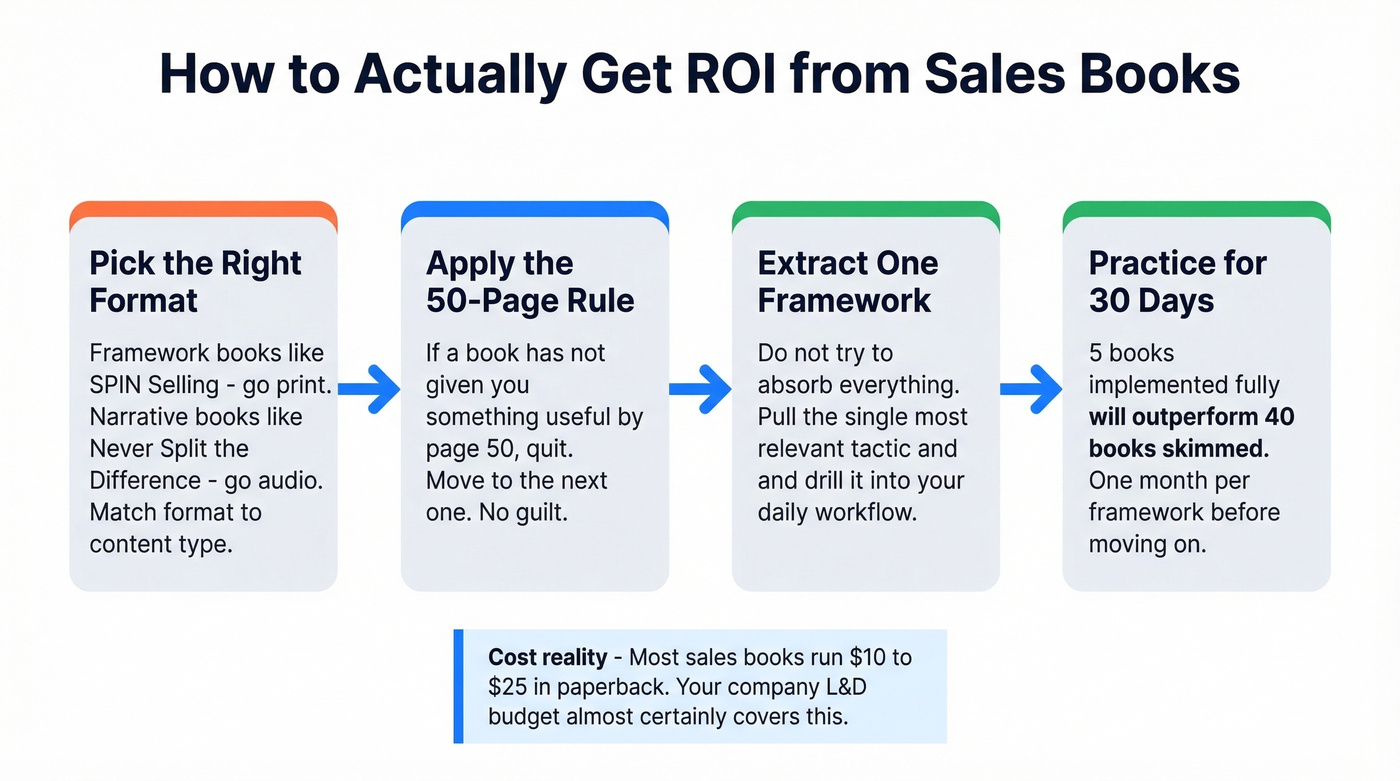
Audio vs. print matters more than you think. Framework-heavy titles like SPIN Selling or MEDDICC need print or Kindle - you'll want to flip back, highlight the question frameworks, and reference them during prep. Narrative titles like Never Split the Difference or The Psychology of Selling work beautifully on audio. Voss is a natural storyteller; his audiobook is better than the print version.
The 50-page rule. If a book hasn't given you something useful by page 50, quit. Life's too short, and there are better reads waiting.
One framework per book, practiced for 30 days. Don't try to absorb everything. Extract the single most relevant framework, drill it into your workflow for a month, then move on. That's how reading actually changes your numbers.
Cost reality. Most sales books run $10-25 in paperback, $8-15 on Kindle. An Audible membership is about $15/month for one credit. Your company's L&D budget almost certainly covers this - ask.

Blount says an empty pipeline is the root of all sales failure. But fanatical prospecting with bad data just means fanatical bouncing. Prospeo delivers 98% email accuracy across 300M+ profiles - refreshed every 7 days - so every hour you spend prospecting actually connects.
Stop reading about pipeline discipline and start building one that converts.
The Best Sales Books by Category
Prospecting & Pipeline
This is where the 7,000-vote Revenue.io tournament landed, and it's where most reps should start. Pipeline solves everything. A mediocre closer with a full pipe outperforms a brilliant closer with an empty one. (If you're rebuilding yours, start with these sales prospecting techniques.)
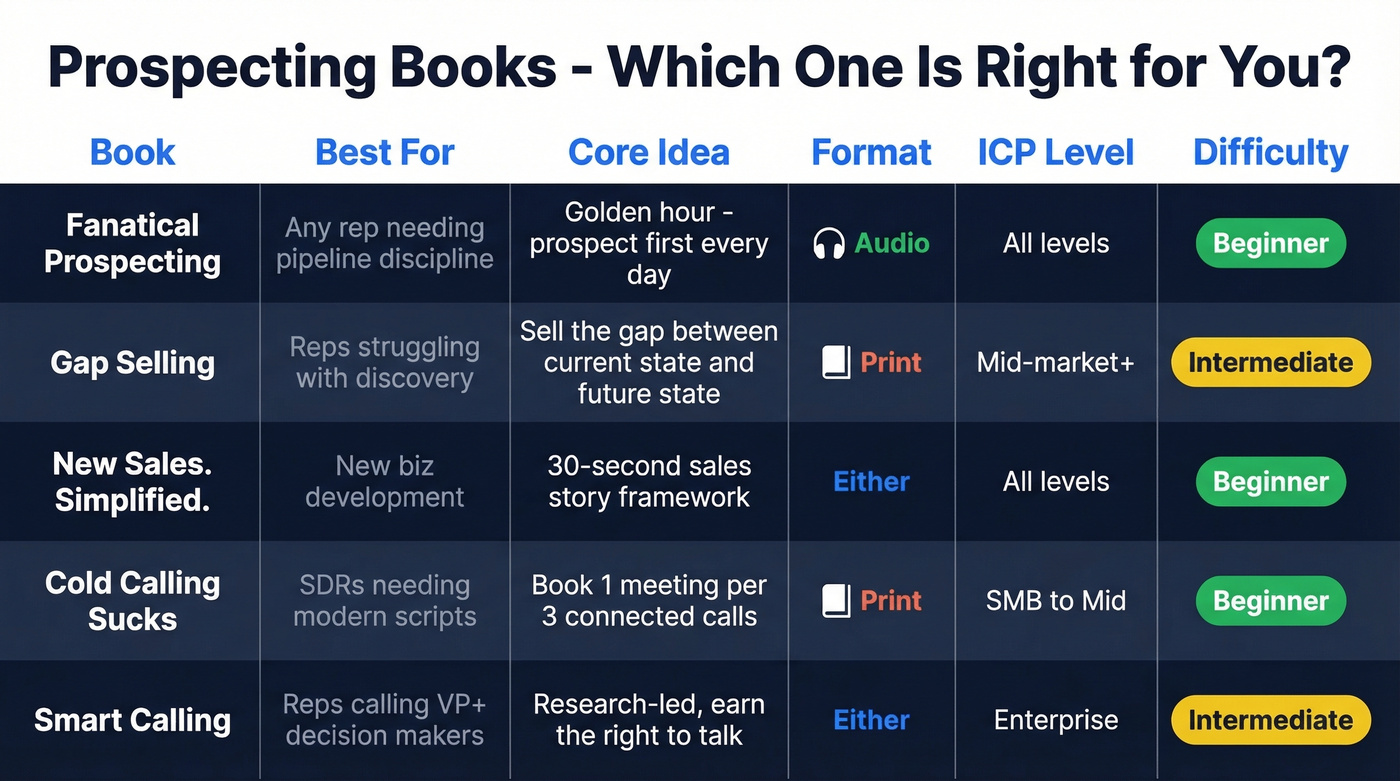
Fanatical Prospecting - Jeb Blount (2015) Best for: Any rep who needs pipeline discipline. Over 500,000 copies sold, and for good reason. Blount's core thesis is brutally simple: an empty pipeline is the root cause of all sales failure. The "golden hour" concept - dedicating your first hour every day to pure prospecting before email, Slack, or meetings hijack your attention - is the single most actionable idea in any sales book we've come across. Blount narrates the audiobook himself, and his energy is infectious. Go audio on this one.
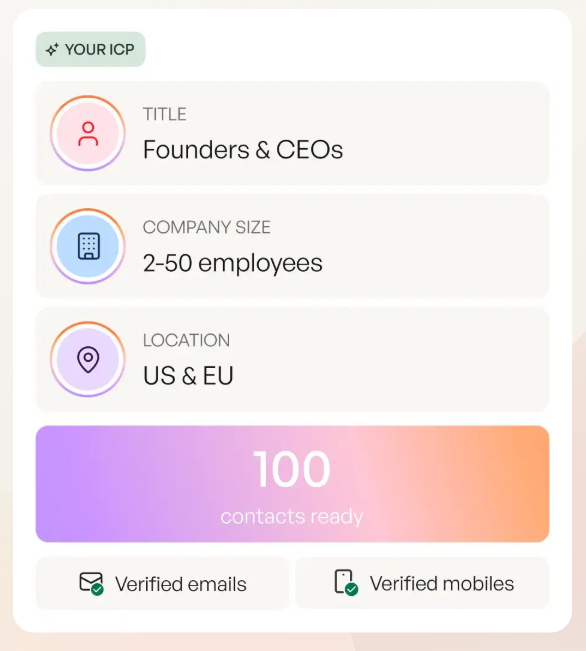
Here's the thing about Blount's message, though: discipline without execution infrastructure is just busy work. You can prospect fanatically, but if 25% of your emails bounce, you're burning hours. That's where verified contact data matters - tools like Prospeo exist specifically to close that gap between effort and results. (If bounces are killing you, fix your email bounce rate first.)
Gap Selling - Keenan (2018) Best for: Reps who struggle with discovery calls.
Keenan flips the script: stop selling your product and start selling the gap between where the prospect is and where they need to be. The bigger the gap, the more urgency. The more urgency, the faster the deal closes. Pair this with The Challenger Sale - Challenger gives you the strategic framework, Gap Selling gives you the practical execution layer. Keep this one in print; you'll want the gap analysis worksheets at your desk. (To operationalize it, build a tighter set of discovery questions.)
Two titles that round out the prospecting shelf deserve quick mentions. New Sales. Simplified. by Mike Weinberg (2012) is the anti-complexity voice in sales - his "sales story" framework, a concise customer-problem narrative you can deliver in 30 seconds, is something most reps never build properly. (If you need examples, steal from these sample elevator pitches.) Sell with a Story by Paul Smith (2016), which placed #4 in the Revenue.io tournament, teaches you to structure prospect conversations as narratives rather than pitches. If your cold outreach feels robotic, Smith's framework fixes that.
Cold Calling Sucks (And That's Why It Works) - Armand Farrokh & Nick Cegelski (2023) Best for: SDRs who need modern cold call scripts. The freshest prospecting book on this list. Farrokh and Cegelski built 30 Minutes to President's Club into one of the most popular sales podcasts, and this book distills their call frameworks. Mastering its approach can get you into the top 10% of reps who book one meeting for every three connected cold calls. Keep it in print - the call scripts need visual reference. (If you're new to the channel, start with cold calling for beginners.)
Smart Calling vs. High-Profit Prospecting: Both target reps calling senior decision-makers, but they take different paths. Art Sobczak's Smart Calling (2nd edition, 2020) is intelligence-led - research the prospect, build a relevant opening, earn the right to a conversation. Mark Hunter's High-Profit Prospecting (2016), which placed #5 in the Revenue.io tournament, focuses on filling the pipeline with high-value opportunities rather than high-volume dials. If your ICP is VP+ at mid-market or enterprise, go Sobczak. For teams that need to prioritize which prospects deserve their time at all, go Hunter. (To systematize the motion, build a repeatable cold calling system.)
Discovery & Qualification
Discovery is where deals are won or lost. A bad discovery call poisons everything downstream - the demo, the proposal, the negotiation.
SPIN Selling - Neil Rackham (1988) Nearly four decades old and still the gold standard. Rackham's four question types - Situation, Problem, Implication, Need-payoff - were derived from observing more than 35,000 sales calls. The key insight most people miss: Situation questions, the ones reps default to, are the least valuable. Implication questions - "What happens to your pipeline if that data keeps bouncing?" - are where deals accelerate. Print only; the question frameworks need to be studied, not passively heard. The consensus on r/sales is that it's still the best sales book of all time, and we'd agree.
The Challenger Sale - Matthew Dixon & Brent Adamson (2011) The teach-tailor-take control model changed how an entire generation thinks about selling. Challengers don't just respond to customer needs - they reshape how customers think about their problems. This book is essential reading, but it's hard to implement alone. The framework is strategic, not tactical. Pair it with Gap Selling for the practical "how do I actually run this discovery call" layer.
Quick take - MEDDICC: The Ultimate Guide (Andy Whittom et al., 2022): This isn't a book you read for pleasure. It's a desk reference for qualifying enterprise opportunities. If your deals involve procurement, legal review, and six-month cycles, MEDDICC prevents you from wasting quarters on deals that were never going to close. Skip it if your sales cycle is under 60 days.
Enterprise & Complex Sales
Enterprise selling is a different sport. The skills that make you a great SMB closer - speed, charm, product demos - can actually hurt you when you're navigating a buying committee of seven stakeholders across four departments. (If you're moving upmarket, this enterprise B2B sales guide will help.)
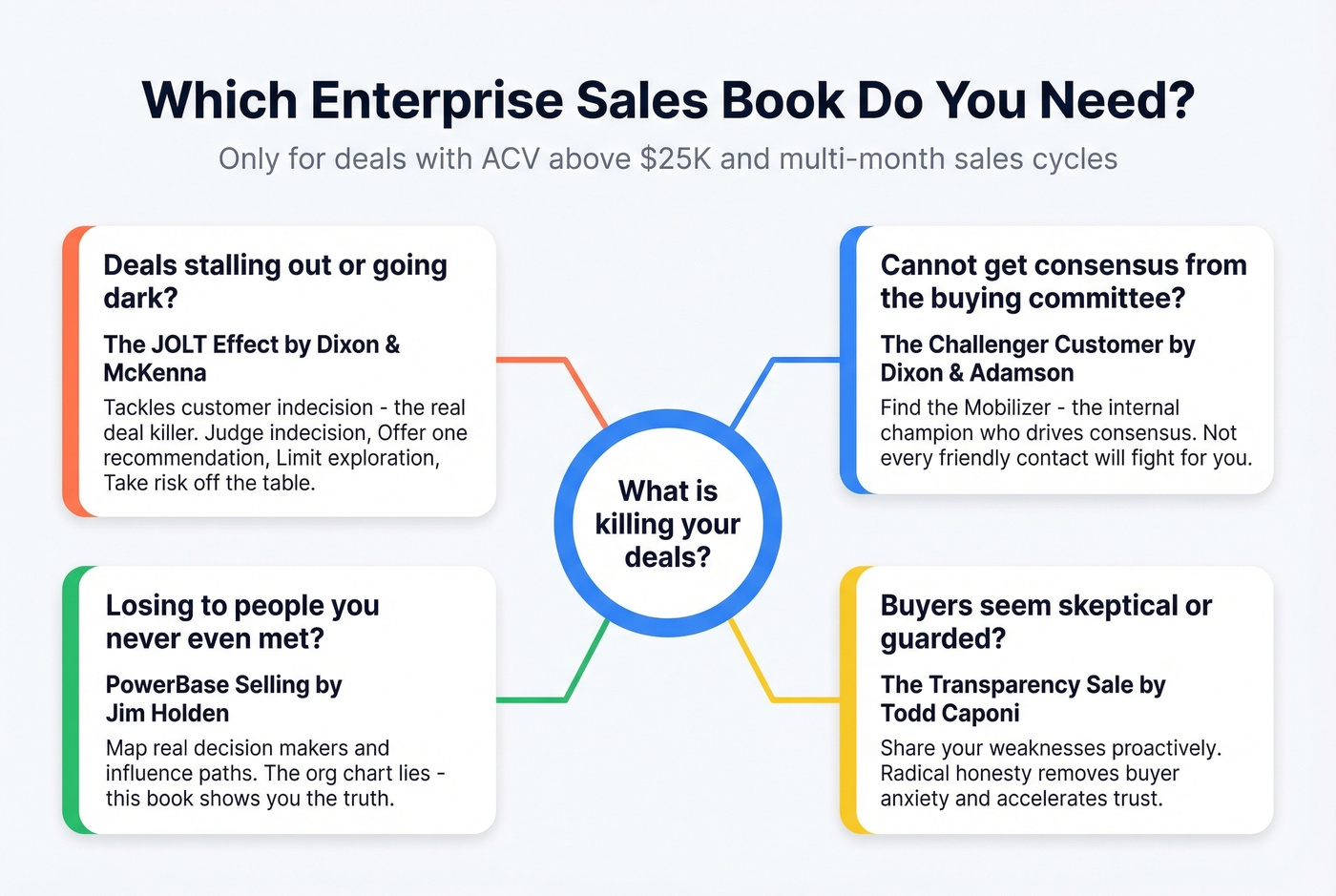
If your average contract value is under $25K, skip this section entirely. These titles are built for six-figure deals with multi-month cycles. Read them too early and you'll overcomplicate a selling motion that should stay simple.
The JOLT Effect - Matthew Dixon & Ted McKenna (2022) Best for: Reps losing deals to "no decision" rather than competitors.
The core premise: the biggest threat to enterprise deals isn't a competitor - it's customer indecision. The JOLT framework addresses this directly. Judge the level of indecision, Offer a specific recommendation (don't give three options), Limit exploration, and Take risk off the table. If a meaningful chunk of your pipeline dies to "went dark" or "decided to stay with status quo," read this first. We've watched this book change how entire teams think about stalled deals.
The Challenger Customer - Matthew Dixon & Brent Adamson (2015) The sequel to The Challenger Sale tackles the other side of the table. Enterprise buying committees typically involve 6-7 stakeholders, and the "Mobilizer" concept - identifying the internal champion who will actually drive consensus - is the book's most valuable contribution. Not every friendly contact is a Mobilizer. Learning to tell the difference saves quarters of wasted effort.
PowerBase Selling - Jim Holden (1999) This one doesn't show up on most lists, but it should. Holden's framework for identifying true decision-makers and influence paths is invaluable when you're selling into organizations where the org chart lies. If you've ever lost a deal because someone you never met vetoed it, this book explains why.
The Transparency Sale - Todd Caponi (2019) Caponi's thesis is counterintuitive: proactively sharing your product's weaknesses builds trust faster than hiding them. In enterprise sales, where buyers do extensive due diligence anyway, radical honesty accelerates deals because it removes the "what are they not telling us?" anxiety. A short, punchy read that'll shift your instincts.
Negotiation & Closing
Never Split the Difference - Chris Voss (2016) Best for: Every salesperson, regardless of role. Voss was the FBI's lead international kidnapping negotiator. His techniques - tactical empathy, mirroring, calibrated questions ("How am I supposed to do that?"), and labeling emotions - transfer directly to sales conversations. The audiobook is exceptional; hearing the tonal techniques makes them click in a way print can't. This is the one book on this list that genuinely everyone should read, and it regularly appears on best-of-all-time rankings across every major publication. (If you want a practical primer, start with anchor in negotiation.)
Exactly What to Say - Phil M. Jones (2017) Jones provides specific word-for-word phrases for common selling moments. "I'm not sure if it's for you, but..." and "What would you need to see to..." are deceptively simple but effective. You can finish it in under two hours and use the phrases on your next call. For SDRs and newer reps who freeze up, this is the fastest ROI on the list.
Getting More - Stuart Diamond (2010) Diamond teaches negotiation as relationship management, not tactical manipulation. For enterprise AEs managing procurement, legal, and executive stakeholders simultaneously, this is more nuanced than Voss's tactical approach. Read Voss first for the fundamentals, Diamond second for the complexity.
Mindset & Psychology
The Psychology of Selling - Brian Tracy Tracy's self-concept theory - that your sales performance is directly limited by how you see yourself as a salesperson - sounds like motivational fluff until you realize it explains why some reps plateau at exactly the same number quarter after quarter. The practical exercises for building a "sales self-image" are genuinely useful for newer reps. Audio is the way to go; Tracy's a great speaker.
How to Win Friends & Influence People - Dale Carnegie (1936) Ninety years old and still the best book on building rapport ever written. Carnegie's principles - genuine interest, remembering names, making people feel important - are foundational skills that every sales methodology assumes you already have. If you haven't read it, read it before anything else on this list.
To Sell Is Human by Daniel Pink (2012) and $100M Offers by Alex Hormozi (2021) both deserve shelf space, but for different people. Pink's research reframes selling as a universal human skill - excellent for founders and non-sales professionals who resist the "salesperson" identity. Hormozi's book dominates Amazon's best business sales books charts and teaches you how to construct irresistible offers through value stacking and pricing psychology. Real talk: if you're an SDR trying to book meetings next Tuesday, Hormozi won't help you tomorrow. Read it eventually, but don't prioritize it over Fanatical Prospecting or Gap Selling.
Sales Leadership & Management
The Sales Acceleration Formula - Mark Roberge (2015) Best for: First-time sales managers and VPs building teams. Roberge built HubSpot's sales org from zero to $100M in revenue using a data-driven approach to hiring, training, and coaching. His hiring scorecard framework alone - ranking candidates on coachability, curiosity, prior success, intelligence, and work ethic - has been adopted by hundreds of SaaS companies. If you're building or inheriting a sales team, start here. (For a broader operating system, see our guide to sales leadership.)
The Sales Development Playbook - Trish Bertuzzi (2016) Bertuzzi wrote the definitive guide to structuring SDR teams - inbound vs. outbound roles, territory models, ramp timelines, and comp structures. It's tactical and specific in a way that most leadership books aren't. I still reference the ramp timeline chapter when onboarding new hires. (Pair it with a practical 30-60-90 day plan for sales reps.)
Selling with Noble Purpose - Lisa Earle McLeod (2012, updated 2020) McLeod's research shows that salespeople who connect their work to customer impact outperform quota-focused peers. For enterprise sales leaders managing long cycles and complex relationships, this reframe helps with retention and C-level credibility.
New Releases Worth Your Time (2023-2026)
Most "2026 sales book lists" are recycling titles from 2011-2016 with a fresh header. Two genuinely recent titles earn their place.
Cold Calling Sucks (And That's Why It Works) (2023) is covered in the prospecting section - it's the most impactful new sales book in recent years, built for the SDR generation that grew up on podcasts.
Beat the Bots - Anita Nielsen (2020) Nielsen tackles the AI question head-on: what can human salespeople do that automation can't? Her answer focuses on emotional intelligence, creative problem-solving, and relationship depth - the skills that become more valuable as AI handles data, admin, and initial outreach. If you're anxious about where sales is heading, this book provides a practical roadmap. It's also one of the few sales books written by a woman for a field that badly needs more diverse voices on the shelf.
Which Books Match Your Role?
Not every book is right for every role. Here's a structured reading order based on where you are.
| Role | Start Here | Then Read | Advanced | Bonus |
|---|---|---|---|---|
| SDR (first 90 days) | Fanatical Prospecting | How to Win Friends | Exactly What to Say | |
| AE (1-3 years) | The Challenger Sale | Gap Selling | Never Split the Difference | |
| Enterprise AE | The Challenger Customer | The JOLT Effect | MEDDICC | PowerBase Selling |
| Sales Manager/VP | Sales Acceleration Formula | Selling with Noble Purpose | The Challenger Sale |
For SDRs, the path is intentional: build pipeline discipline first, then learn relationship fundamentals, then add specific language patterns. Enterprise AEs are learning to navigate buying committees, overcome indecision, qualify rigorously, and map political power structures. Managers need the operational playbook before the inspirational framework.
We've seen teams assign the "Start Here" book as mandatory reading during onboarding, then let reps self-select from there. It works better than a generic "read these 10 books" mandate that nobody follows.
From Reading to Doing
The gap between "I read a great sales book" and "I booked 15 meetings this week" is execution infrastructure. Every prospecting book on this list teaches the same core truth: consistent, disciplined outreach wins. But discipline applied to bad data is just organized waste. (If you're tightening your stack, start with the best SDR tools.)
Pick one book. Extract one framework. Practice it for 30 days with verified data. That's the formula - and it's how the best books for salespeople actually translate into quota.
Smart Calling and High-Profit Prospecting both demand one thing: reaching the right decision-makers. Prospeo's 125M+ verified mobile numbers hit a 30% pickup rate - that's 3x the industry average. Pair the frameworks from these books with direct dials that actually ring.
The best cold call script is useless if you're dialing the wrong number.
FAQ
What's the best sales book for beginners?
Fanatical Prospecting for SDRs who need pipeline discipline from day one. How to Win Friends & Influence People for foundational relationship skills. Start with whichever matches your biggest gap - if you're not booking enough meetings, it's Blount. If meetings happen but rapport doesn't, it's Carnegie.
Are sales books still worth reading in the AI era?
Yes - more than ever. AI handles data, admin, and initial research brilliantly, but discovery, negotiation, and trust-building remain deeply human skills. Beat the Bots by Anita Nielsen addresses this directly. Pair the human skills from these books with AI-powered tools for verified contact data, and you cover both sides.
How many sales books should I read per year?
Five to seven, implemented fully, beats twenty skimmed every time. Extract one framework per book, practice it for 30 days, then move to the next. Reading without implementation is entertainment, not professional development. Focus on the five-book shortlist at the top and go deep rather than wide.
What's the best format - audiobook, Kindle, or print?
Framework-heavy titles like SPIN Selling and MEDDICC need print or Kindle - you'll reference the models repeatedly. Narrative and mindset reads like Never Split the Difference and The Psychology of Selling are better on audio, especially when the author narrates. Kindle wins for highlighting and searchability.
How do I apply what I read to actual prospecting?
Extract one framework per book and practice it for 30 days before moving on. Pair reading with tools that remove friction - verified emails eliminate the "bad data" excuse, so you can focus purely on whether the framework works. The books teach the skill; clean data makes the skill productive.