

BookYourData vs Mailcheck: Database or Verifier?
Most people comparing BookYourData and Mailcheck are asking the wrong question. These aren't competitors - they're entirely different categories of tool. BookYourData is a B2B contact database where you buy leads. Mailcheck is an email verification service where you clean lists you already have. Comparing them is like comparing a grocery store to a food safety inspector.
The real question: do you need contacts, verification, or both?
30-Second Verdict
- Need a B2B contact database - BookYourData. 250M+ contacts, real-time 8-step verification on export, pay-as-you-go.
- Already have lists, just need to clean them - Mailcheck. Cheap, fast, API-first.
Feature Comparison at a Glance
| Feature | BookYourData | Mailcheck |
|---|---|---|
| Primary function | B2B contact database | Email verification |
| Database size | 250M+ contacts | N/A (no database) |
| Verification | Included on export | Standalone service |
| Pricing model | Pay-per-contact | Monthly subscription |
| G2 rating | 4.9/5 (394 reviews) | 5.0/5 (5 reviews) |
| Best for | Buying verified leads | Cleaning existing lists |
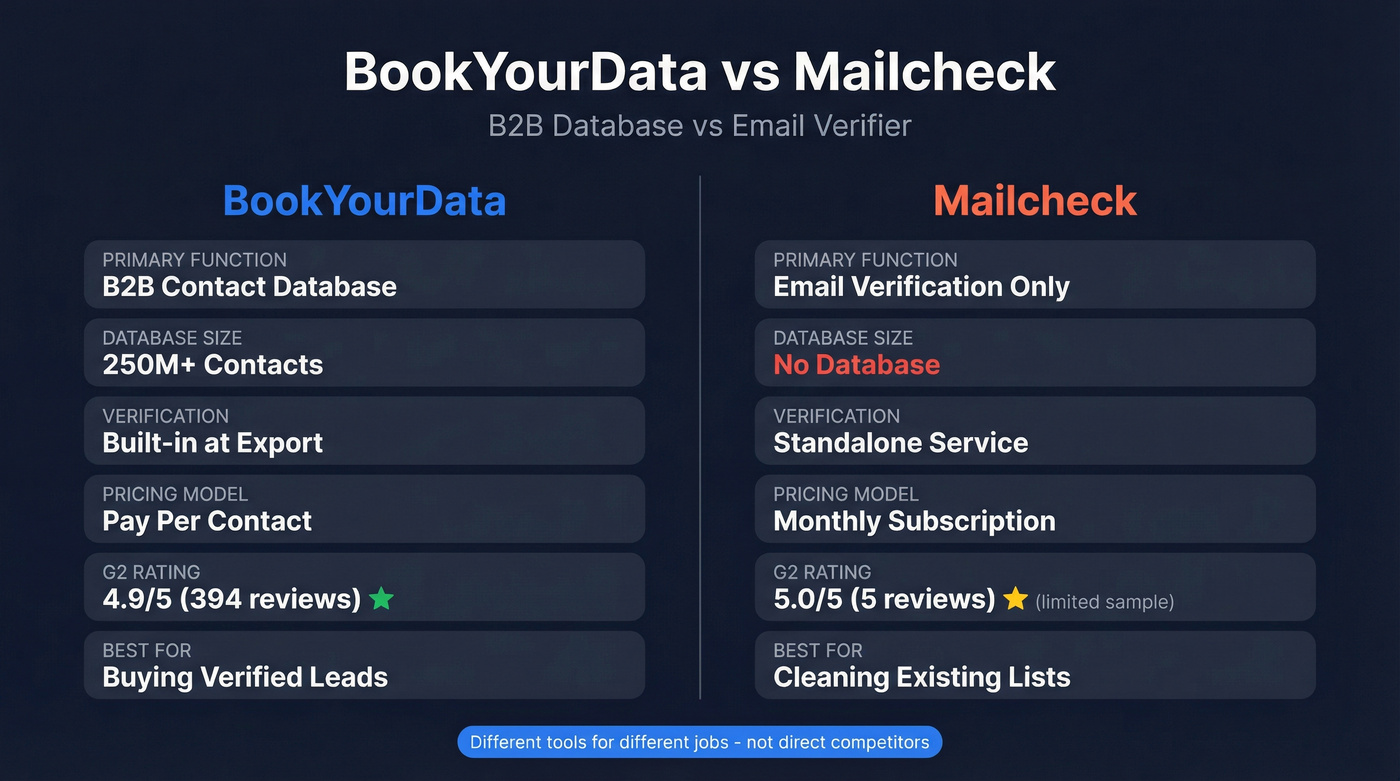
Mailcheck's perfect 5.0 G2 rating looks impressive until you notice it's from five reviews. BookYourData's 4.9 from 394 reviews tells you far more about real-world reliability.
BookYourData Overview
BookYourData is a pay-as-you-go B2B contact database covering 250M+ contacts across 250 countries. Records are triple-verified, and there's real-time 8-step verification on export - you only pay for deliverable contacts. They back it with a 97% accuracy guarantee.

The accuracy holds up in practice. A Reddit user tested 500 contacts each from multiple providers under identical conditions - BookYourData came in at a 2.4% hard bounce rate versus ZoomInfo's 9.2%. Catch-all domains are where most verifiers diverge, and BookYourData validates them at download, which partly explains the gap.
We've tested a lot of pay-as-you-go databases, and BookYourData's credit-refund guarantee is genuinely rare. The tradeoff? No in-platform outreach tools, and costs climb at high volume - 100K contacts runs $5,499. For teams running large-scale campaigns, that adds up fast, and you're still left stitching together a separate outreach tool on top of it.

BookYourData charges $0.05-$0.40 per contact. Prospeo delivers 300M+ profiles at ~$0.01/email with 98% accuracy and built-in catch-all verification - no separate verifier needed.
One platform. Sourcing and verification. Starting at zero dollars.
Mailcheck Overview
Mailcheck processes up to 1M emails in about 15 minutes. That speed is its headline feature. You upload a list, it checks which emails are valid, and it returns a trust-rate score between 0 and 100% - anything below 50% is risky, anything above is considered valid.
What sets Mailcheck apart from basic SMTP-check tools is its social-network validation layer, which cross-references emails against public sources and social profiles. Reviewers on AppSumo (4.7/5 from 17 ratings) consistently praise the simplicity, and the free tier gives you 100 validations with a card on file or 10 without.
Here's the concern, though. The review footprint is thin everywhere you look - G2 has 5 reviews, Trustpilot has 3 (4.0/5), and at least one AppSumo reviewer reported the tool couldn't process a basic list. Native integrations are limited, so expect to rely on the API or CSV uploads.
Pricing Breakdown
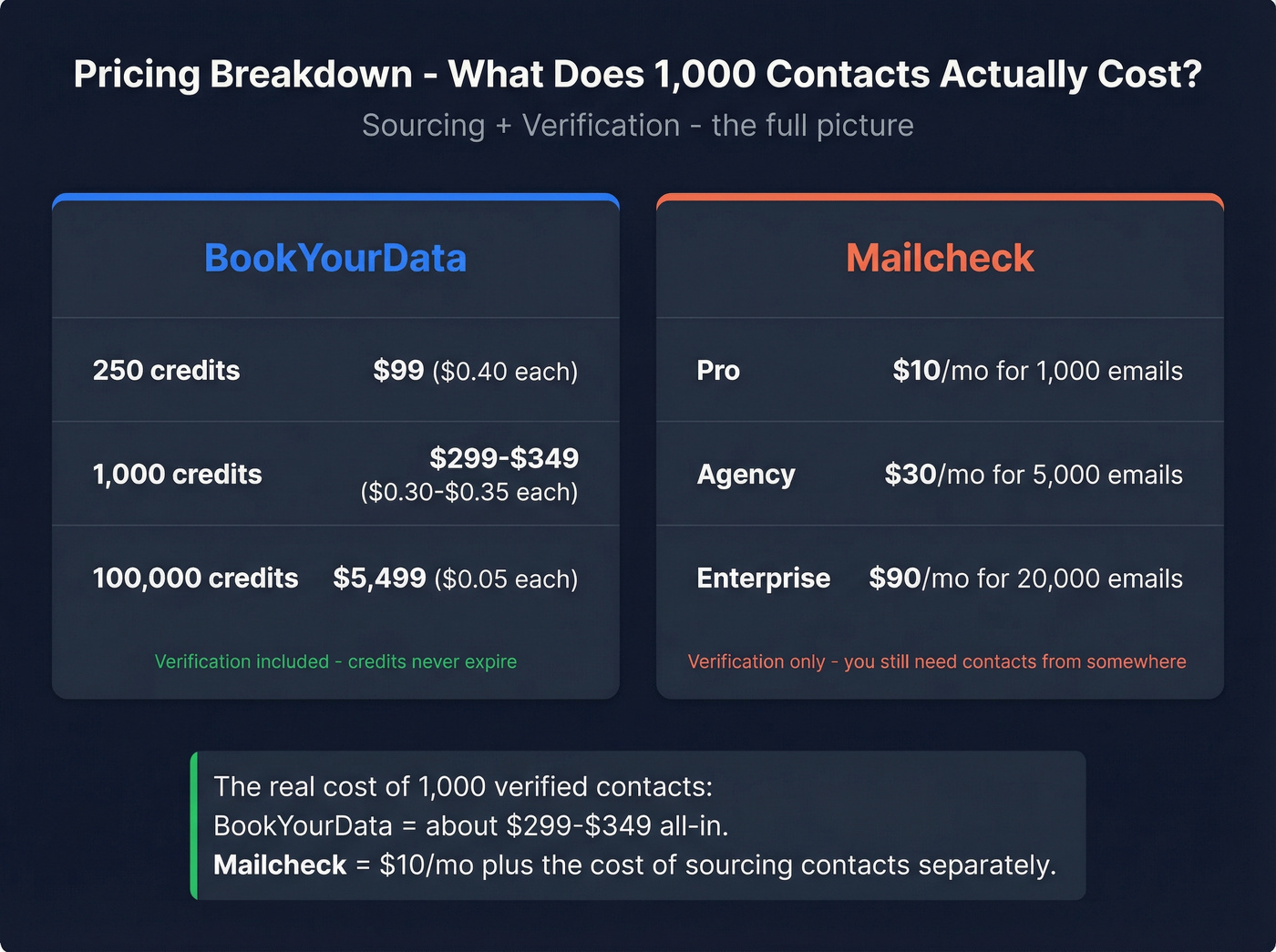
BookYourData (pay-per-contact, credits never expire):
| Credits | Price | Per Contact |
|---|---|---|
| 250 | $99 | $0.40 |
| 1,000 | ~$299-$349 | ~$0.30-$0.35 |
| 100,000 | $5,499 | ~$0.05 |
Mailcheck (monthly subscription):
| Plan | Price | Included | Overage |
|---|---|---|---|
| Pro | $10/mo | 1,000 | $0.005/email |
| Agency | $30/mo | 5,000 | $0.004/email |
| Enterprise | $90/mo | 20,000 | $0.003/email |
These prices aren't directly comparable because the tools do different jobs. To source and verify 1,000 contacts, BookYourData costs about $299-$349 all-in. Mailcheck costs $10/month for 1,000 validations - but you still need contacts from somewhere.
For context, standalone verifiers like NeverBounce charge ~$8/1,000 and ZeroBounce starts at $39 for 2,000 emails. Mailcheck's $10/month for 1,000 validations is competitive on price, though its track record is thinner than either of those alternatives.
Let's be honest: if your average deal size is under five figures, you probably don't need a separate database and a separate verifier. A single platform that handles both will save you more in time than you'll ever save shopping for the cheapest per-email rate.
The Third Option: One Platform for Both
If you're weighing a database against a verifier, you probably need both capabilities. Prospeo combines them - 300M+ professional profiles with 98% email accuracy, a 5-step verification process that handles catch-all domains and spam traps, and data that refreshes every 7 days versus the 6-week industry average. The free tier gives you 75 emails per month plus 100 Chrome extension credits with no contracts and no sales calls.
If you're building lists from scratch, it's also worth reviewing sales prospecting techniques so your targeting stays tight.
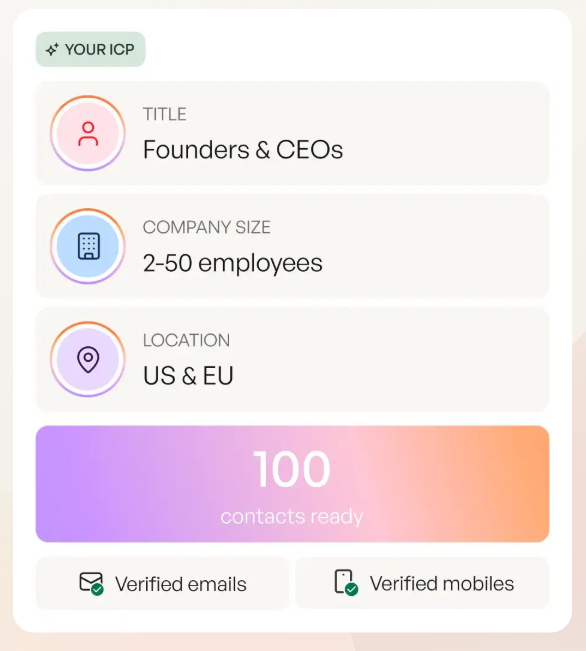
Beyond verification, Prospeo layers in 30+ search filters - buyer intent powered by Bombora, technographics, job changes, headcount growth - so you're not just getting clean emails, you're targeting the right people at the right time.
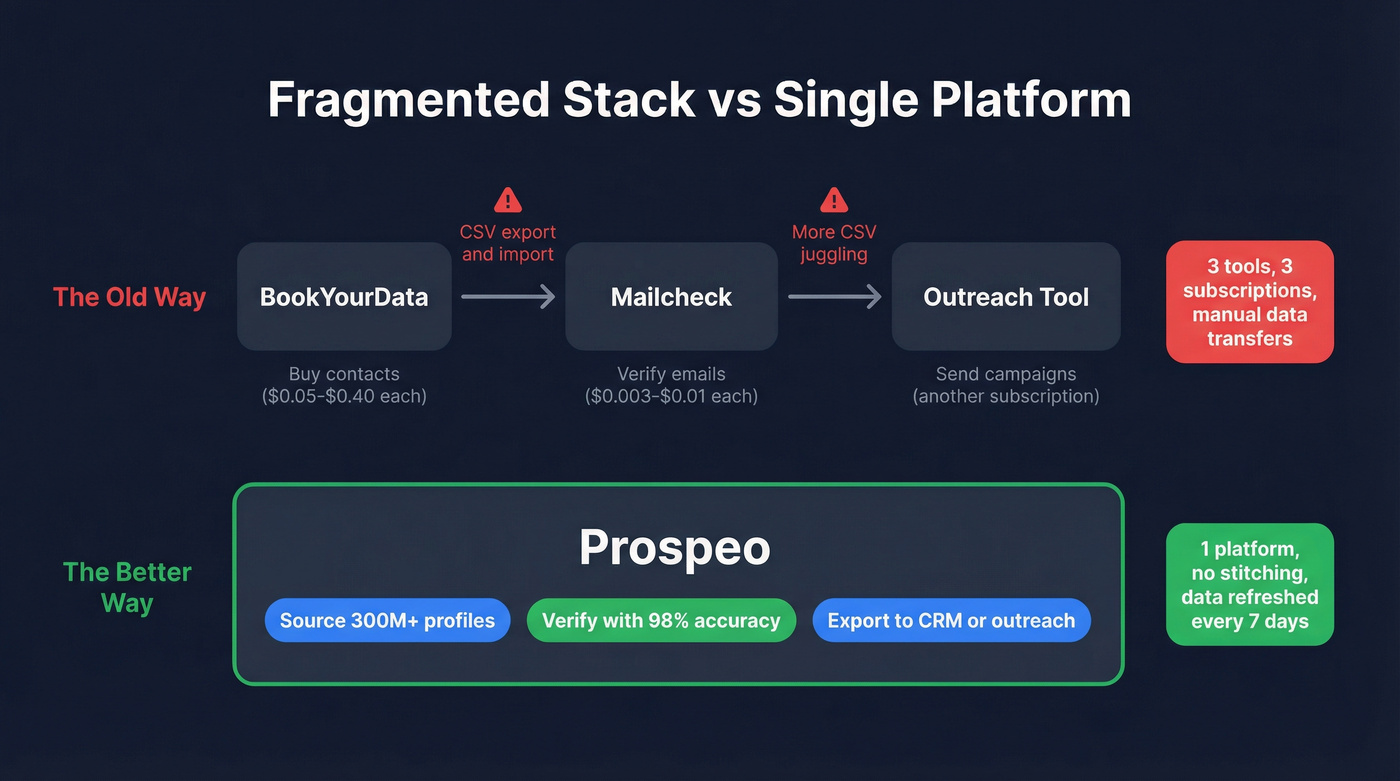
Why pay for a database and a verifier separately? Prospeo combines 300M+ profiles, 5-step verification, and 30+ filters like buyer intent and technographics - with data refreshed every 7 days, not every 6 weeks.
Ditch the fragmented stack and prospect from a single platform.
Which One Should You Pick?
You need a B2B contact database. BookYourData. Strong accuracy, global coverage, no subscription required.
If you're evaluating options, compare it against other sales prospecting databases before you commit.
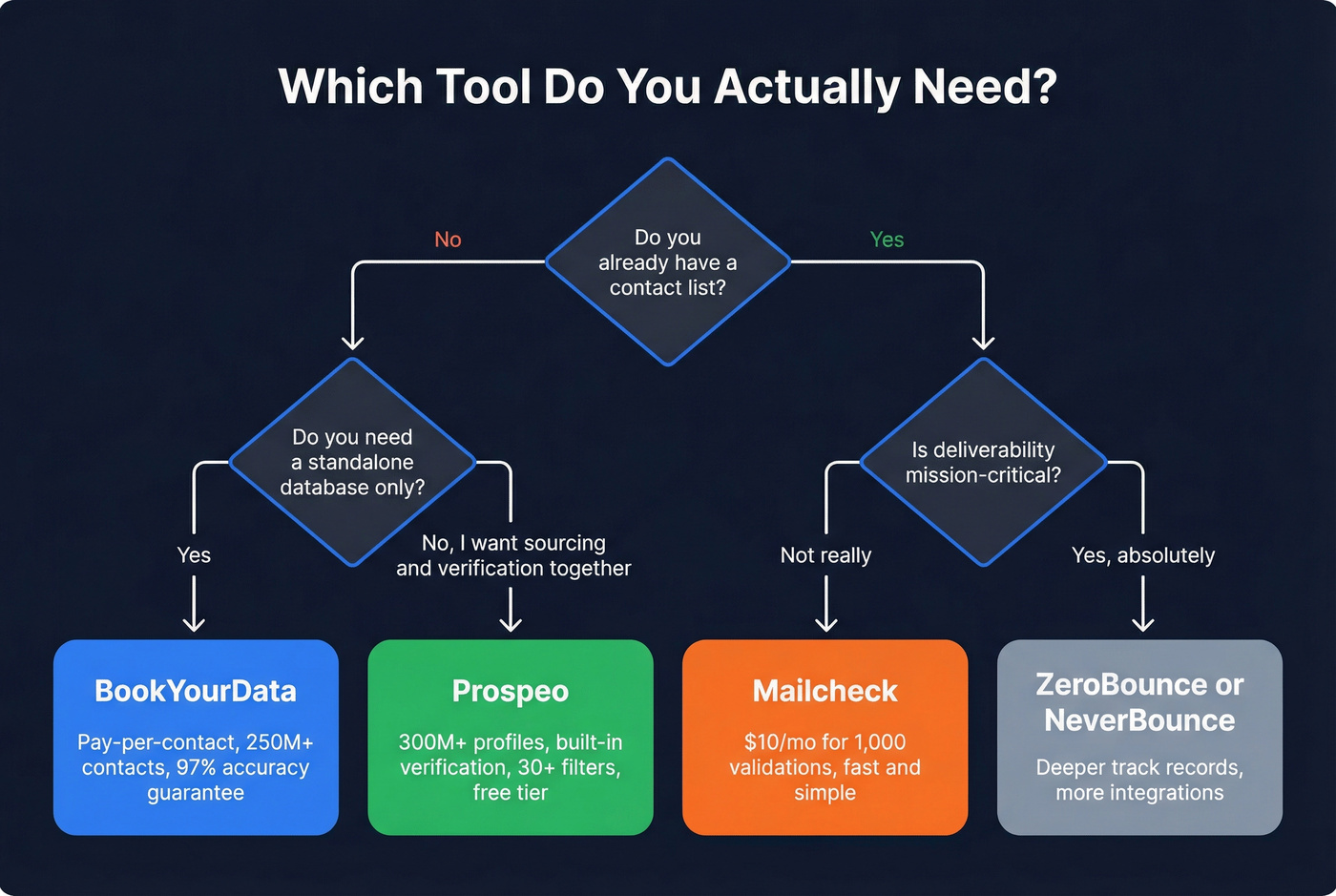
You already have lists and just need verification. Mailcheck works at the price, but consider ZeroBounce or NeverBounce if you want deeper track records and more integrations. Skip Mailcheck entirely if you're running high-volume campaigns where deliverability is mission-critical - the thin review footprint is a real risk.
If deliverability is the priority, start with an email deliverability guide and track your email bounce rate before scaling volume.
You want one platform for sourcing and verification. In our experience, most outbound teams are better off with a single platform than stitching two tools together. The time you burn managing integrations between a database and a verifier almost always costs more than the tools themselves.
If you're standardizing your stack, it helps to map your lead generation workflow and decide where enrichment fits.
The fact that this comparison exists at all highlights the real problem: too many teams run fragmented stacks when they don't need to.
FAQ
Are BookYourData and Mailcheck the same type of tool?
No. BookYourData is a B2B contact database - you buy leads from it. Mailcheck is an email verification tool - you upload existing lists to clean them. They serve different stages of the prospecting workflow and don't compete directly.
Does BookYourData include email verification?
Yes. BookYourData verifies contacts in real time at download and offers a 97% accuracy guarantee with credit refunds if accuracy falls short. This only applies to contacts purchased from their database - it won't verify external lists.
Is there a tool that handles both sourcing and verification?
Prospeo combines a 300M+ contact database with 98% email accuracy and built-in 5-step verification, starting with a free tier of 75 emails per month. It also includes 125M+ verified mobile numbers and native integrations with Salesforce, HubSpot, and major outreach platforms.
Is Mailcheck reliable enough for large campaigns?
Mailcheck handles up to 1M emails in about 15 minutes, but its review footprint is thin - just 5 G2 reviews and 3 on Trustpilot. For high-volume campaigns where deliverability is critical, tools like ZeroBounce or NeverBounce offer deeper track records and more native integrations.