

Buyer Journey Touchpoints: What the Latest Data Actually Shows
Your buyers interact with your brand dozens of times before a rep gets involved - and most of those touchpoints are invisible to your CRM. 61% of B2B buyers now prefer a completely rep-free experience, per Gartner's survey of 632 buyers.
Meanwhile, 6sense's data shows buyers average 16 interactions per person with the winning vendor, and first meaningful contact now happens at 61% of the journey, down from 69%. Your window is shrinking. If you're not mapping what happens before that first sales call, you're flying blind through the majority of the deal cycle.
What Are Buyer Journey Touchpoints?
A touchpoint is any interaction where a buyer engages with your brand - reading a blog post, attending a webinar, opening an email, sitting through a demo. It's distinct from an impression, which is passive exposure like a display ad they scrolled past. Touchpoints require attention or action.
What makes B2B touchpoint mapping harder than B2C is the buying group. A typical purchase involves 6-10 stakeholders, each on their own research path, consuming different content at different times. Multiply those 16 interactions per person across a committee of eight, and you're looking at 128+ touches per deal - most of which never show up in Salesforce.
How Many Touchpoints Before a B2B Sale?
Here's the data, pulled from Focus Digital's cross-industry analysis.
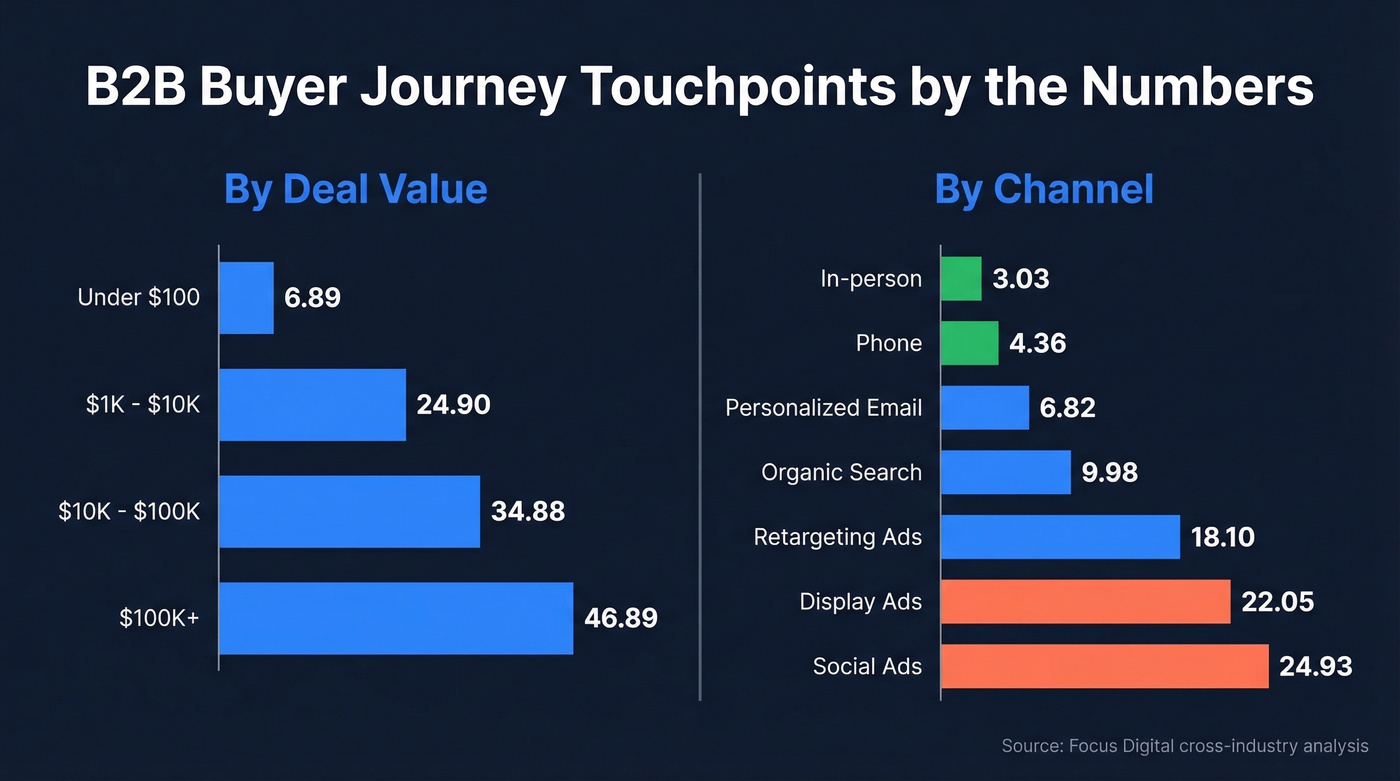
Touchpoints by deal value:
| Deal Value | Avg. Touchpoints |
|---|---|
| Under $100 | 6.89 |
| $1K-$10K | 24.90 |
| $10K-$100K | 34.88 |
| $100K+ | 46.89 |
Touchpoints by channel:
| Channel | Avg. Touchpoints |
|---|---|
| In-person | 3.03 |
| Phone | 4.36 |
| Personalized email | 6.82 |
| Organic search | 9.98 |
| Retargeting ads | 18.10 |
| Display ads | 22.05 |
| Social ads | 24.93 |
Digital channels dominate the volume, and it isn't close. A 2024 HockeyStack report puts B2B SaaS deals at 266 touchpoints and 2,879 impressions on average, with $100K+ deals reaching about 417 touchpoints. That's not a typo.
And here's the frustrating part: 86% of B2B purchases stall mid-process, and buyers define requirements 83% of the time before they ever talk to sales. The touches are happening. You're just not seeing them.
Touchpoints by Buyer Journey Stage
Awareness
Dark social dominates here. Slack groups, podcast mentions, peer DMs - channels you'll never see in Google Analytics. Last-click attribution buries these early influences entirely.
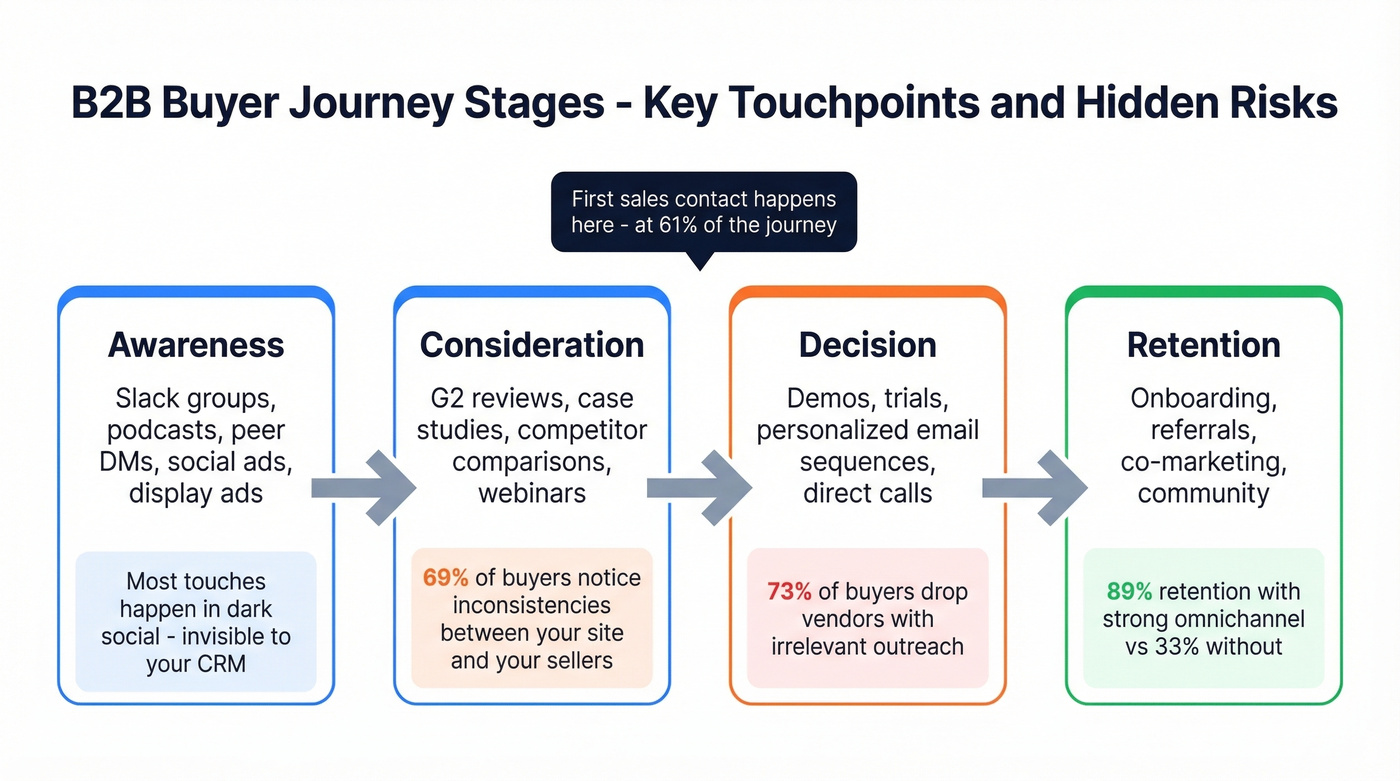
Here's a trick we've found works: replace dropdown "how did you hear about us?" fields with free-text. You'll be surprised what shows up. Social ads and display campaigns generate volume at this stage, but the interactions that actually shape purchase intent happen off-platform, in conversations you don't control and can't track through standard analytics.
Consideration
This is where trust gets tested. Buyers hit review sites like G2 and Capterra, read case studies, and compare you against alternatives. The stat that should worry you: 69% of buyers notice inconsistencies between what your website says and what your sellers say. That's not a minor gap - it's a deal killer. We've seen companies lose six-figure deals over a pricing page that contradicted a slide deck from two quarters ago.
Decision and Outreach
73% of B2B buyers will drop you if your outreach feels irrelevant. Demos, trials, and personalized sequences only work when they reach the right person with the right message. This is where bad contact data quietly destroys pipeline - your sequence can be perfect, but if the email bounces or the phone number's dead, none of it matters.
Retention and Advocacy
Most journey maps stop here. That's a mistake, because this is where the biggest ROI hides. Strong omnichannel strategies drive 89% customer retention versus 33% for weak execution. The cheapest touchpoints you'll ever create are referrals, co-marketing, and community participation - if you earn them.

Your buyers complete 61% of the journey before talking to sales. When you finally reach out, a bounced email or dead phone number wastes every touchpoint that came before it. Prospeo's 98% email accuracy and 125M+ verified mobiles ensure your outreach lands.
Don't let bad data erase 46 touchpoints of earned trust.
Why Perfect Touchpoints Still Fail
Let's be honest: most teams would get more value from a spreadsheet they update every six months than from a journey-mapping platform nobody logs into after the initial workshop.
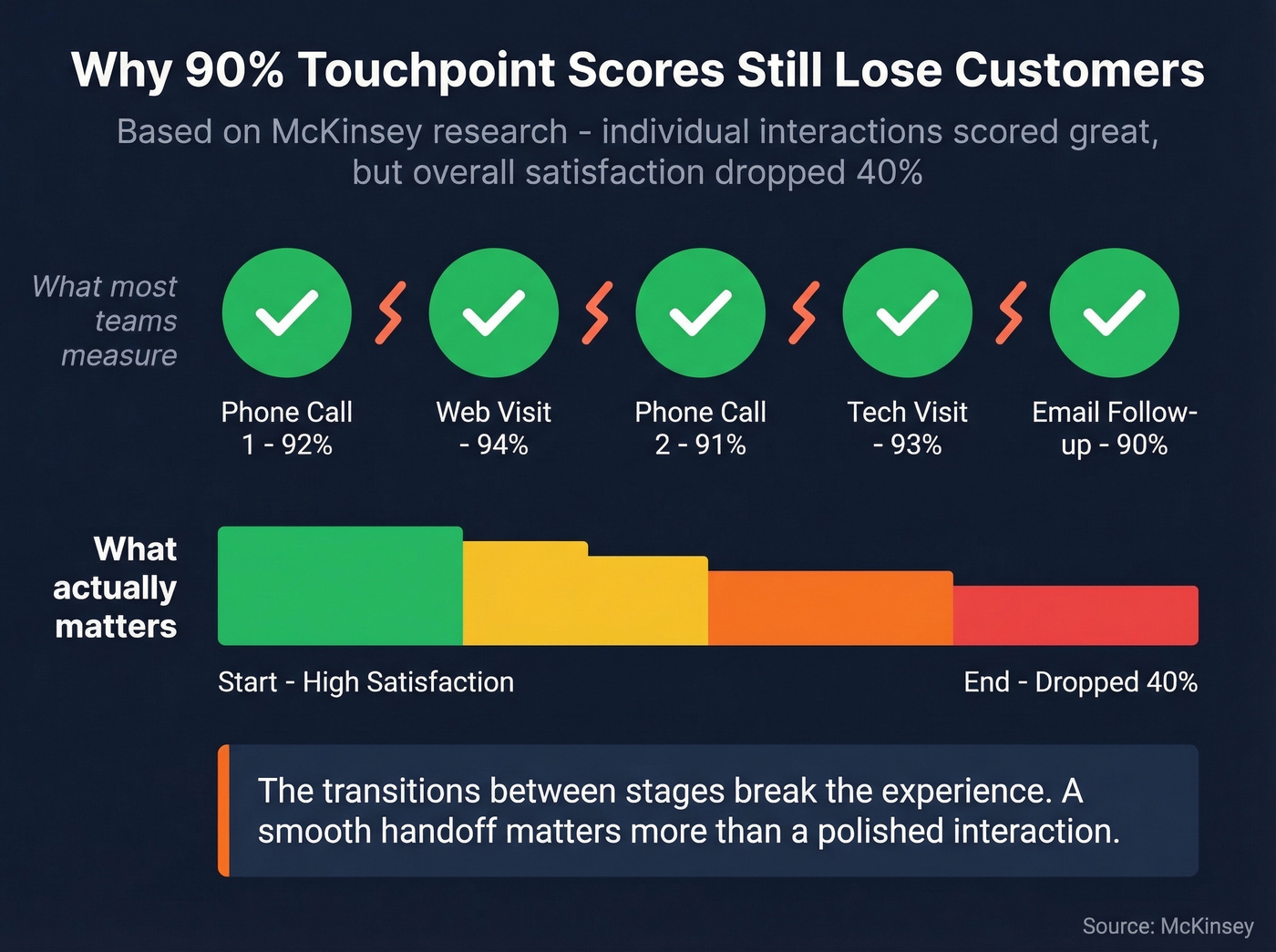
McKinsey documented an onboarding journey spanning three months, nine phone calls, a technician visit, plus web and mail interactions. Each individual touchpoint scored 90%+ satisfaction. Overall customer satisfaction? It still dropped almost 40%.
The lesson isn't subtle. It's the transitions between stages that break the experience - awareness to consideration, demo to purchase, purchase to onboarding. Optimizing interactions in isolation misses the point entirely. In our experience, tracking buyer frustration at each transition reveals more than any touchpoint-level metric ever will, because a smooth handoff between stages matters more than a polished interaction within one.
How to Map Touchpoints Effectively
Build a touchpoint audit worksheet with columns for Stage, Persona, Touchpoint, Channel, Owner, Goal, KPI, Friction Score, and Priority. Review it every six months. The goal is to expose gaps - places where buyers stall, loop back, or drop off entirely.
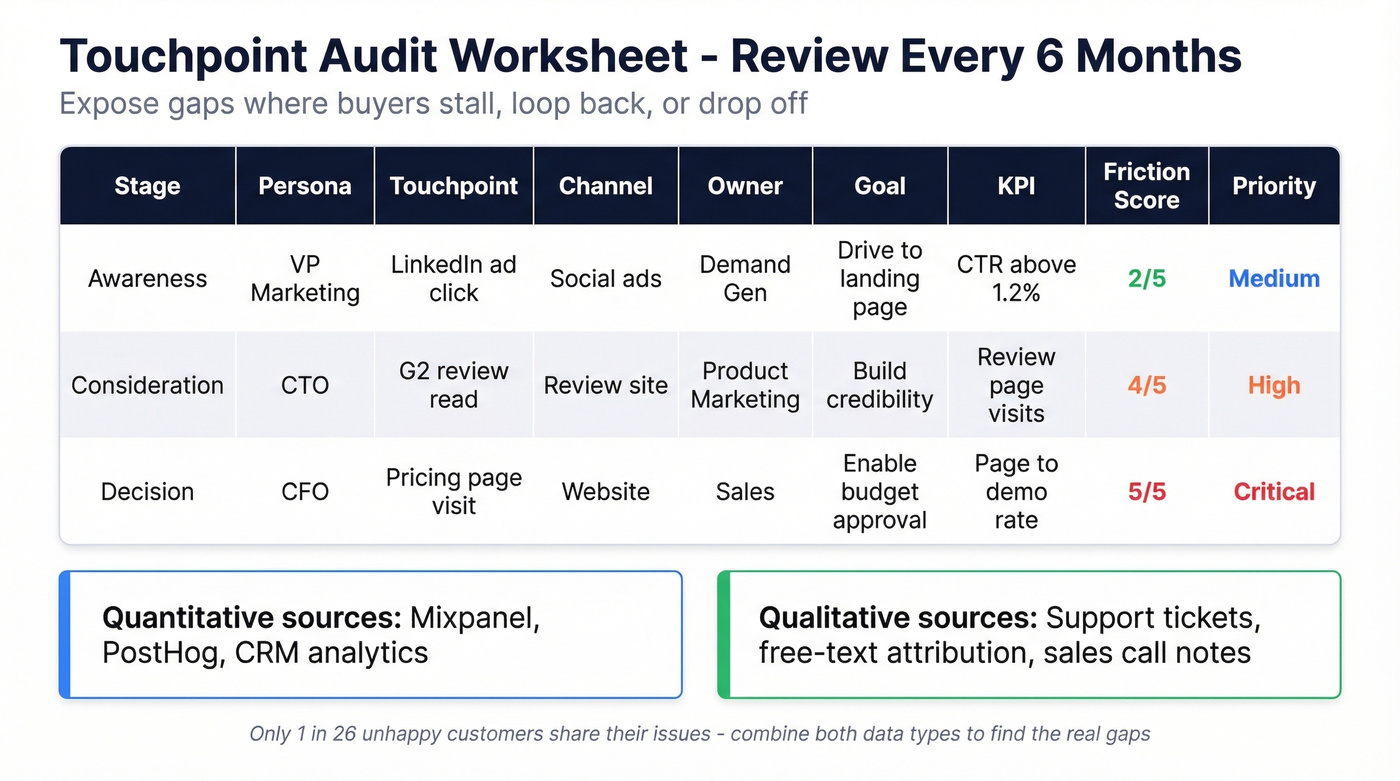
Combine quantitative analytics from tools like Mixpanel or PostHog with qualitative inputs: support tickets, free-text attribution fields, and sales call notes. Only 1 in 26 unhappy customers actually shares their issues. You can't rely on surveys alone. The patterns that emerge from combining these sources - a spike in support tickets right after onboarding, a cluster of "heard about you on a podcast" responses that never show up in UTM data - are where the real insights live.
Mapping 6-10 stakeholders per deal means nothing if your contact data is stale. Prospeo refreshes every record on a 7-day cycle - 6x faster than the industry average - so your sequences reach the right buyer at the right stage.
Reach every stakeholder in the buying group, not just the ones with outdated emails.
Mistakes That Kill Your Touchpoint Strategy
Assuming linear journeys. 75% of B2B buyers say their last purchase was too complex for a neat funnel. Stop drawing straight lines. If you still need a framework, start with an AIDA view and then layer in loops.
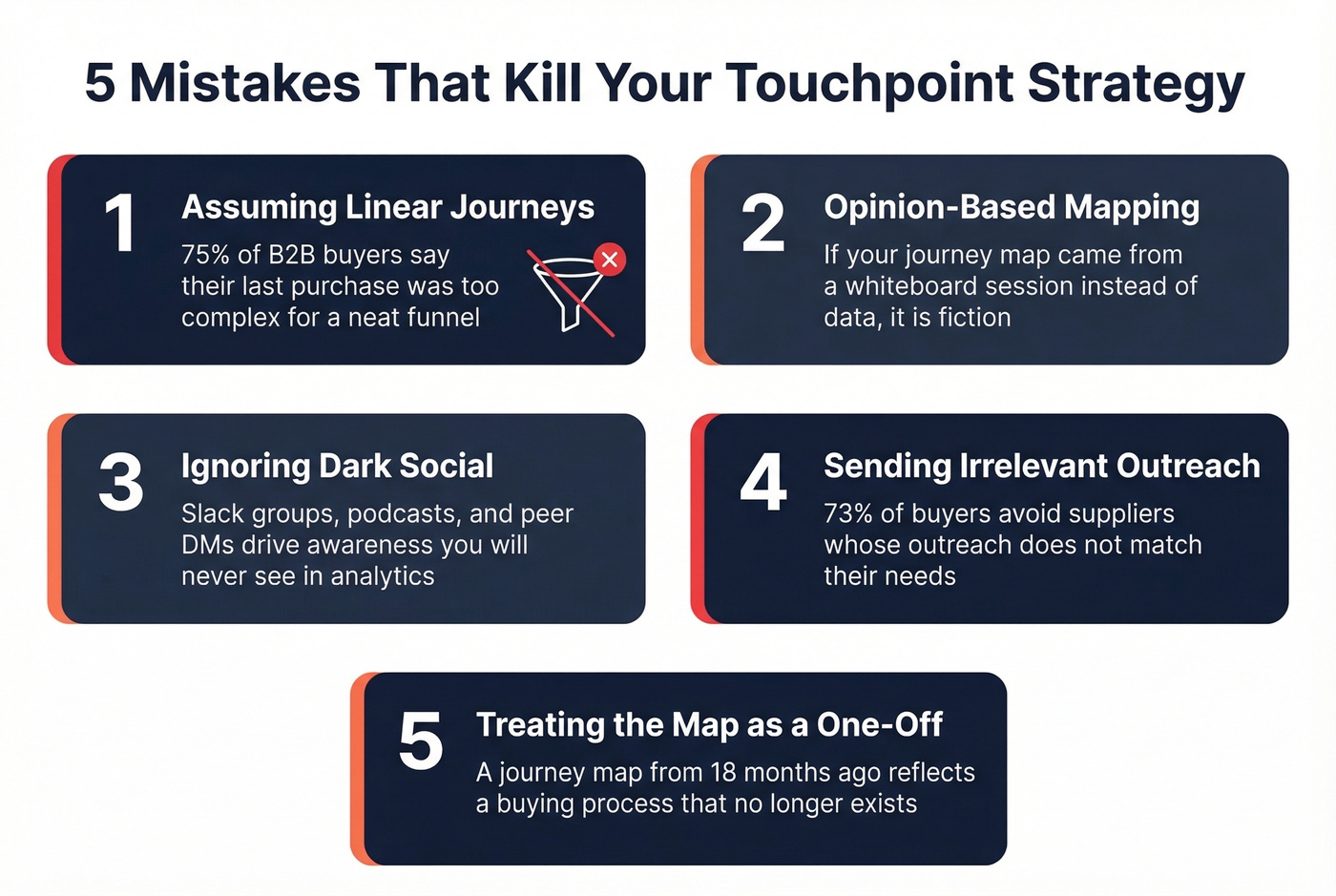
Opinion-based mapping. If your journey map came from a whiteboard session instead of data, it's fiction. Useful fiction, maybe, but fiction. If you want a more defensible approach, borrow from data-driven selling and treat the map like a living dataset.
Ignoring dark social. Slack groups, podcasts, and peer DMs drive awareness you'll never see in analytics. Skip this channel and you're missing the first half of the story.
Sending irrelevant outreach. 73% of buyers avoid suppliers whose outreach doesn't match their needs. Personalize or don't bother - and make sure your contact data is fresh enough that personalization actually lands. Prospeo's 7-day refresh cycle exists specifically because stale data turns a great sequence into spam. If you're rebuilding sequences, use proven sales follow-up templates and tighten your sequence management.
Treating the map as a one-off. A journey map from 18 months ago reflects a buying process that no longer exists. Revisit your paid channel performance quarterly to catch shifts in where ads actually move buyers forward. This is also where pipeline health metrics keep you honest.
FAQ
How many touchpoints does a B2B buyer need before purchasing?
Sub-$100 purchases average 6.89 touchpoints; $100K+ enterprise deals average 46.89. B2B SaaS deals specifically average 266 touchpoints across the full buying group, per HockeyStack's 2024 analysis.
What's the difference between a touchpoint and an impression?
A touchpoint requires active engagement - clicking, reading, replying, or attending. An impression is passive exposure, like a display ad loading on a page the buyer scrolled past without interacting.
How do you track touchpoints you can't attribute?
Use free-text "how did you hear about us?" fields at signup or demo request, then correlate direct traffic spikes with content drops or influencer mentions. Dark social channels like Slack communities and podcasts rarely show up in analytics otherwise. The consensus on r/sales is that self-reported attribution, while imperfect, catches signals that no martech stack can.
What tools help ensure outreach touchpoints actually land?
Your outreach sequence is only as effective as your contact data. Tools with high verification rates and short refresh cycles - Prospeo runs a 7-day cycle versus the 6-week industry average - keep your personalized emails and direct dials reaching the right stakeholder instead of bouncing.