

The 8 Best Buyer Persona Generators Worth Using in 2026
Most buyer persona generators are convenience layers over LLM prompts. You describe your target customer, the tool formats it into a nice-looking document, and you feel productive for 20 minutes. Structure has value - but the real question isn't which tool makes the prettiest persona card. It's what happens after you hit "export."
Most generators stop at a document. Very few help you find the actual humans who match that persona. That's the gap this list closes.
Quick disambiguation: "buyer persona" tools and "AI persona/avatar" tools flood the same search results right now. We're covering the first category - tools that help you define and document your ideal customer profile, not chatbots that roleplay as digital agents.
Our Picks at a Glance
| Use Case | Pick | Why |
|---|---|---|
| Personas to real prospects | Prospeo | 30+ filters, verified contacts |
| Best free all-rounder | HubSpot Make My Persona | Free, AI + legacy wizard |
| Best data-driven personas | Delve AI | Auto-generates from Google Analytics traffic |
| Best for team workshops | UXPressia | Collaboration, dot voting |
| Best DIY option | ChatGPT + real data | Free, flexible, bring your own data |
The 8 Best Tools for Creating Buyer Personas
Prospeo - Turn Personas Into Real Prospect Lists
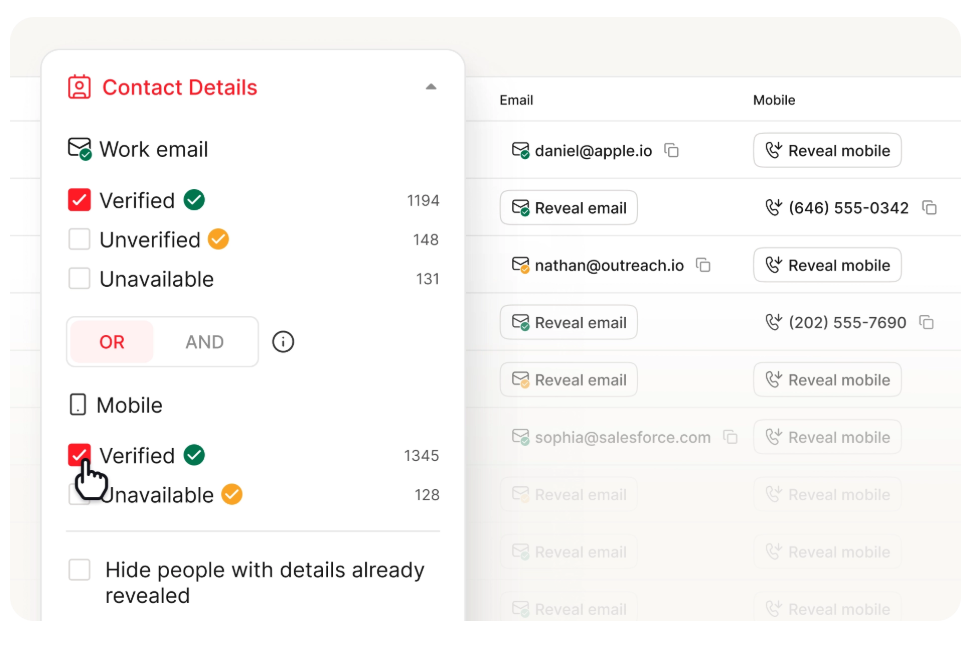
Every other tool on this list helps you describe your ideal buyer. Prospeo helps you find them. Once you've defined "VP of Marketing at 200-person SaaS companies interested in ABM," Prospeo's B2B database lets you filter by those exact attributes - job title, industry, company size, headcount growth, technographics, and intent data powered by Bombora across 15,000 topics - then export a verified list.
The database covers 300M+ professional profiles with 98% email accuracy and a 7-day data refresh cycle. A persona document gathering dust in Google Drive doesn't generate pipeline. A list of 500 verified contacts matching your persona does. The Chrome extension (40K+ users) lets you pull verified contacts directly from company websites as you research.

Use this if: You've already defined your persona and need to find real people who match it. The free tier gives you 75 emails/month plus 100 Chrome extension credits/month to test. Pricing starts free, with paid plans running about $0.01 per email. No contracts, no sales calls.
HubSpot Make My Persona - The Default for a Reason
Let's get the main limitation out of the way: output feels rigid and standardized. If your input is generic ("marketing managers at mid-size companies"), you'll get a generic persona back.
That said, HubSpot's Make My Persona earns its default-recommendation status. It's completely free, requires no credit card, and has no limit on personas created. The tool runs two modes - an AI-powered flow where you describe your buyer in plain language and it auto-populates fields, plus a legacy step-by-step wizard for teams that prefer guided forms. Output covers demographics, goals, pain points, information sources, and communication preferences. Export as PDF or share via link.
Use this if: You need a structured starting point and don't want to pay anything. Skip this if: You need data-backed personas that update automatically.
Delve AI - Reads Your Actual Traffic
Delve AI is rated 4.8/5 from 22 reviews on G2, and the praise centers on one thing most persona tools don't do: it connects to your Google Analytics and generates personas from actual visitor behavior. Instead of you guessing who your buyers are, it analyzes your traffic data and builds personas automatically. Setup can take under two minutes via OAuth, and persona generation can run within ten minutes.
What makes this genuinely different is the "living document" angle. Analytics-connected personas update as your audience shifts - they aren't static exports that rot in a shared drive. Delve AI also offers a Digital Twin chat feature that lets you interact with generated personas, and its output is enriched by tens of thousands of previously generated personas across its user base. Lower-traffic sites get less detailed output, manual editing is limited, there are no CRM integrations, and competitor persona data is estimated from public sources.
Pricing: $0 (free, 1 persona), $39/mo (Starter, 3 personas), $99/mo (Growth, 10 personas + competitor data), custom for agencies.
UXPressia - Built for Workshops, Not Solo Founders
If persona creation is a team sport at your company, UXPressia is the standout. Text and voice comments, discussion threads, dot voting, stickers - it's built for cross-functional workshops where product, marketing, and sales hash out who they're actually selling to. There's even a "chat with personas" feature for simulating conversations with your created personas in real time.
Templates are deeply customizable with 20+ section types including graphs, sliders, and embedded content. AI persona generation comes with request quotas: 30/month on Free, 60 on Pro, 100 on Business.
Pricing per user: $0 (free, 3 personas), $36/mo (Pro, unlimited personas), $95/mo (Business, adds integrations including Google Analytics, Google Sheets, Mixpanel, Slack, MS Teams, Jira, and Azure DevOps). Solo founders who just need a quick persona doc should look elsewhere.
Miro - For Teams Already Living in Miro
Miro's persona templates work best when your team already uses Miro for everything else. The strength isn't the persona template itself - it's linking personas to buyer journey maps, backlogs, and strategy boards in one visual workspace. Free tier gives you 10 AI credits per team per month and three editable boards.
If you're running a product or UX team that does collaborative whiteboarding, Miro fits naturally. For a sales team looking for buyer personas to fuel outbound, it's overkill. Miro's persona features are a side dish, not the main course. Paid plans start around $8-$10/user/month.
ChatGPT - The DIY Option
If you already pay for ChatGPT Plus ($20/mo), you don't need a separate persona tool. You need a better prompt and real data to feed it.
The workflow that produces useful output: paste real customer reviews from Trustpilot, Reddit, or support tickets into ChatGPT, then ask it to extract recurring themes by frequency and generate a persona grounded in those patterns. This review-grounding method produces dramatically better output than a cold "create a buyer persona for my SaaS product" prompt.
A practical next step we've seen work well - and the consensus on r/sales backs this up - is pasting the generated persona back into ChatGPT or Claude, instructing it "you are this persona," and roleplaying product decisions against it. Great for pressure-testing messaging before you spend money on ads.
Skip this if: You want a structured, shareable format without manual formatting work.
M1-Project (Elsa AI) - B2B-Specific Generator
M1-Project's Elsa AI is a free B2B-focused generator that emails you the completed persona after you input your product description, target audience, and business goal. It's email-gated, which is mildly annoying, but the B2B-specific framing produces more relevant output than generic tools.
Canva - Design-First Templates
Canva offers persona templates, not a generator. If your team needs polished visual persona cards for presentations or brand guidelines, Canva's template gallery works. Canva Pro runs around $13-$15/mo. Don't expect AI-generated insights - this is a design tool with persona layouts, nothing more.
Pricing Comparison
Most of these tools are free or freemium. The real cost is time, not money - the hours you spend on research and validation dwarf any subscription fee.
| Tool | Free Tier | Paid Starting Price | AI Included |
|---|---|---|---|
| Prospeo | 75 emails/mo + 100 extension credits/mo | ~$0.01/email | Intent filters |
| HubSpot Make My Persona | Unlimited personas | $0 (fully free) | Yes |
| Delve AI | 1 persona | $39/mo | Yes (auto-gen) |
| UXPressia | 3 personas, 30 AI/mo | $36/user/mo | Yes (quotas) |
| Miro | 3 boards, 10 AI/mo | ~$8-$10/user/mo | Yes (limited) |
| ChatGPT/Claude | Free tiers available | $20/mo (Plus) | Yes |
| M1-Project | Free (email-gated) | Freemium + upsell | Yes |
| Canva | Free templates | ~$13-$15/mo (Pro) | No |

A buyer persona doc is a hypothesis. A list of 500 verified contacts matching that persona is pipeline. Prospeo's 30+ filters - job title, company size, intent data across 15,000 topics - turn your persona into real people with 98% accurate emails.
Build the persona anywhere. Find the people on Prospeo.
Build Your Persona Before Picking a Tool
A generator formats your knowledge. It doesn't replace research. Skip the research step and you'll get a beautifully formatted fiction.
Here's the thing: if your average deal size is under $5k, you probably don't need a dedicated tool at all. A Google Doc with five real customer interviews will outperform any AI-generated persona card. These tools matter when you're scaling outbound or aligning multiple teams around a shared ideal customer profile.
Here's the process that actually works:
- Mine your CRM. Pull conversion patterns, deal sizes, sales cycle lengths, and win/loss reasons. Which job titles close fastest? Which industries churn? (If you need a baseline, start with these lead generation metrics.)
- Talk to real customers. Five interviews beat fifty assumptions. Ask about their buying process, not just their pain points.
- Survey across five categories. Demographics, professional background, goals and motivations, challenges and objections, and communication preferences. Qualtrics' methodology covers this well.
- Layer in behavioral data. Website analytics, email engagement patterns, content consumption. This is where Delve AI earns its keep - turning raw traffic into living personas that update as your audience shifts.
- Analyze patterns, then generate. Now use a tool to format what you've learned. The persona should reflect your customers, not your assumptions.
One distinction worth knowing: a buyer persona focuses specifically on purchase decision attributes - evaluation criteria, objections, and role in the buying committee. A customer persona covers the full engagement lifecycle. You need both for sales enablement and marketing automation to work together.
Persona Mistakes That Waste Your Time
The Mirror Effect. If your persona suspiciously resembles your CEO's assumptions about the ideal customer, you skipped research. This is the most common failure mode we see.
Too many personas. Start with 2-3. Most teams create seven, use none, and wonder why messaging feels scattered.
No negative personas. Defining who you don't want to sell to is just as valuable. It saves reps from chasing bad-fit deals.
Aspirational vs. actual. Your persona should describe your best current customers, not the dream enterprise buyer you haven't landed yet. We've watched teams burn entire quarters chasing a persona built on wishful thinking rather than closed-won data - it's a frustrating pattern that repeats across companies of every size.
Marketing-only thinking. Personas aren't just for content strategy. Sales, product, and CS teams need them too - or you end up with silos where every department targets a different buyer.
From Persona to Pipeline
Most persona tools stop at the same place: a document. The persona says "VP of Engineering at 100-500 person fintech companies evaluating DevOps tools." Great. Now what?
This is where most teams stall. They've got "Marketing Mary" defined down to her podcast preferences, but no way to find 500 real Marketing Marys with verified email addresses. Take the attributes from your persona - job title, industry, company size, intent signals, technographics - and plug them into a B2B database with filters that match. Layer in intent data to time your outreach to buyers actively researching your category. You go from a theoretical persona to a real prospect list in minutes, not weeks.
If you're building lists at scale, it also helps to understand firmographic filters and how they map to your persona fields.
Most persona generators stop at a PDF. Prospeo starts where they end. Filter 300M+ profiles by the exact attributes in your persona - role, industry, headcount growth, tech stack, buyer intent - and export verified contacts at $0.01/email. Data refreshes every 7 days, not 6 weeks.
Your persona isn't done until you can email the people who match it.
FAQ
Are buyer persona generators accurate?
They're as accurate as the data you feed them. Tools like Delve AI that pull from Google Analytics produce more grounded output than those relying solely on your text description. A generator working from real CRM data and customer interviews will always outperform one running on assumptions alone.
How many buyer personas do I need?
Start with 2-3. One well-validated persona beats five fictional ones. Add more only when you have distinct buying patterns - different industries, deal sizes, or buying committee structures - that a single persona can't capture.
Can I just use ChatGPT instead of a dedicated tool?
Yes, if you ground it in real customer data like reviews, interviews, and CRM patterns. The review-grounding method produces better output than a cold prompt. Dedicated tools add structure, shareability, and analytics integration, not intelligence.
What's the difference between a buyer persona and an ICP?
An ICP defines the ideal company - industry, size, revenue, tech stack. A buyer persona defines the individual decision-maker within that company - their goals, pain points, evaluation criteria, and role in the buying committee.
How do I find real people who match my persona?
Use a B2B data platform with filters matching your persona attributes. Prospeo lets you search by job title, industry, company size, intent signals, and technographics across 300M+ profiles, then export verified contacts at 98% email accuracy. The free tier includes 75 emails/month.