

Buying Experience: What It Is, Why It's Broken, and How to Fix It
You sent 500 cold emails last quarter. 87 bounced. A big chunk of the rest never reached the inbox, and the ones that did were irrelevant - wrong person, wrong timing, wrong company.
That's not a sales problem. It's a buying experience problem.
The best purchasing journeys in 2026 are the ones where the buyer barely notices the process. The real improvement isn't adding touchpoints - it's removing them. Consider: 67% of B2B buyers prefer a rep-free experience, 73% actively avoid suppliers who send irrelevant outreach, and the vendor on the buyer's Day One shortlist wins 80% of the time. If you want to fix yours, start with your data quality, publish your pricing, and stop swarming people who filled out one form.
What Is a Buying Experience?
The buying experience is the buyer's perception of the entire purchasing process - from recognizing a need, through exploring options, to making the final purchase. It covers every touchpoint: the first ad they see, the website they browse, the rep who calls, the proposal they review, and the contract they sign.
Don't confuse it with customer experience. Customer experience is everything post-sale - onboarding, support, renewals. The buying experience is everything that gets them to say yes. Most companies obsess over the post-sale side and neglect the part that determines whether there's a customer at all.
What the 2026 Data Says
B2B Purchase Journey in Numbers
B2B buying cycles compressed from 11.3 months to 10.1 months between 2024 and 2025, and first contact shifted from 69% to 61% of the journey. The winning vendor is already on the buyer's Day One shortlist 95% of the time. The pre-contact favorite wins roughly 80% of deals. By the time a buyer talks to your rep, they've already decided.
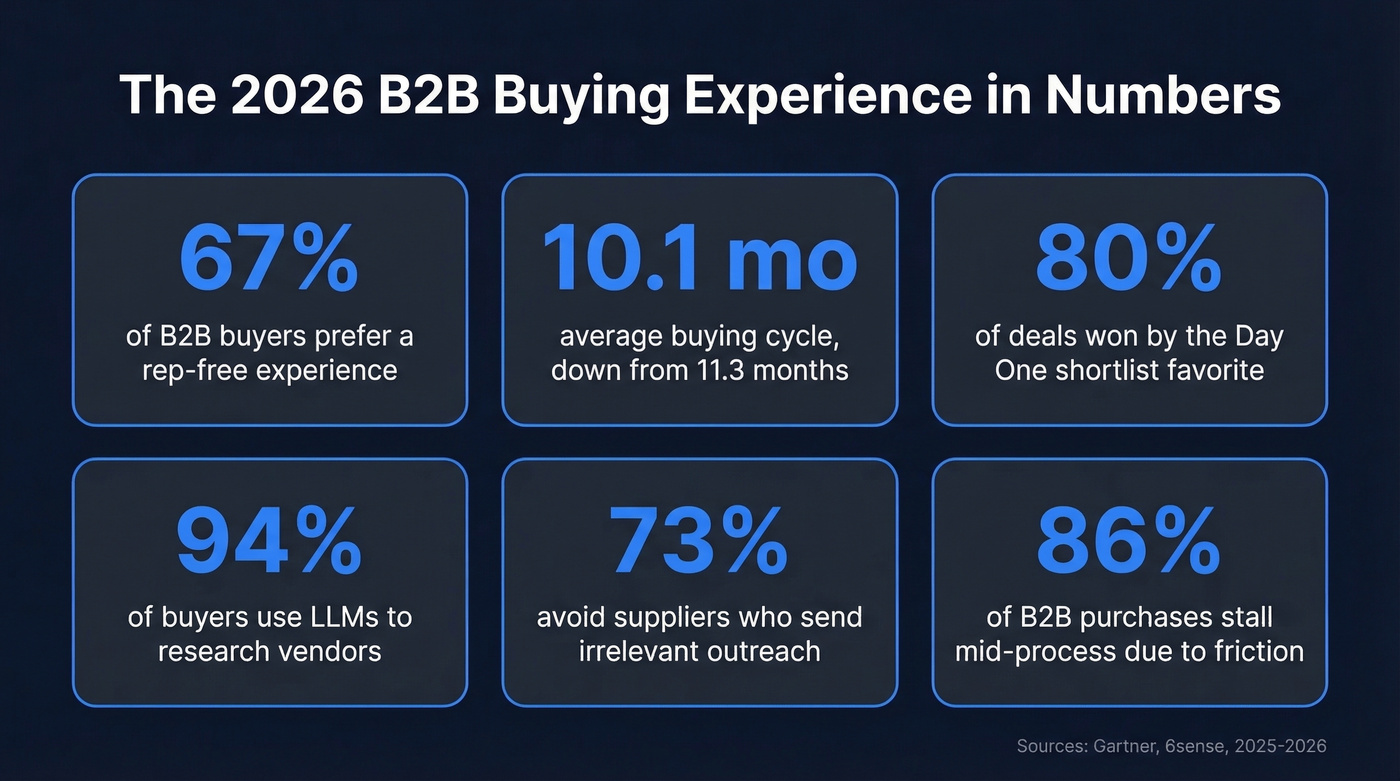
67% of B2B buyers now prefer a rep-free experience - up from 61% just a year earlier. 94% use LLMs to research vendors, 83% define requirements before talking to sales, and nearly 90% say AI features were part of solutions they acquired. Gartner also found that confident buyers are twice as likely to report a high-quality deal, meaning a smoother purchase process doesn't just close more deals - it closes better ones.
Consumer Side
On the consumer side, J.D. Power's Sales Satisfaction Index hit 793 out of 1,000 - up from 786 the prior year. But satisfaction isn't uniform. Mass-market EV buyers scored just 790 compared to 848 for ICE buyers, a gap that shows how much the purchase process itself shapes perception, not the product. 74% of shoppers say AI made their shopping more efficient by cutting time spent searching, comparing, and deciding.

Bad data is the #1 buying experience killer. When 87 of your 500 emails bounce, buyers don't see a seller - they see spam. Prospeo's 98% email accuracy and 7-day refresh cycle cut bounce rates from 35% to under 4%, so every message reaches a real person at the right company.
Stop ruining your buying experience before it starts.
What Kills a Buying Experience
Here's the thing: 73% of B2B buyers actively avoid suppliers who send irrelevant outreach, and 69% report inconsistencies between what the website says and what the seller tells them. When your marketing says one thing and your rep says another, trust evaporates. And 86% of B2B purchases stall during the process - not because the product is wrong, but because friction, confusion, or buyer's remorse kicks in before the deal closes.
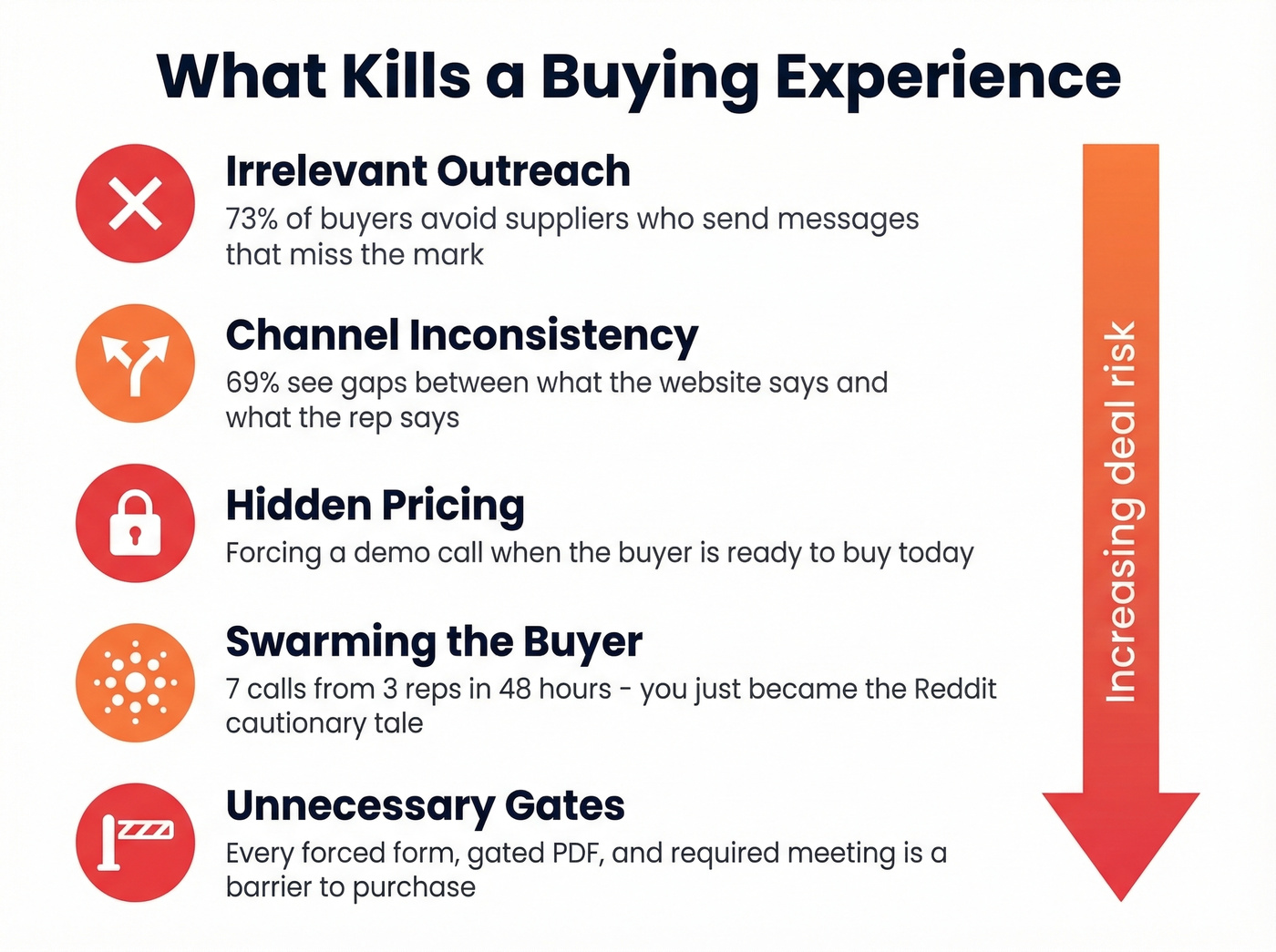
Every unnecessary gate, every forced demo, every hidden pricing page is a barrier that pushes buyers toward competitors who lower obstacles instead of raising them.
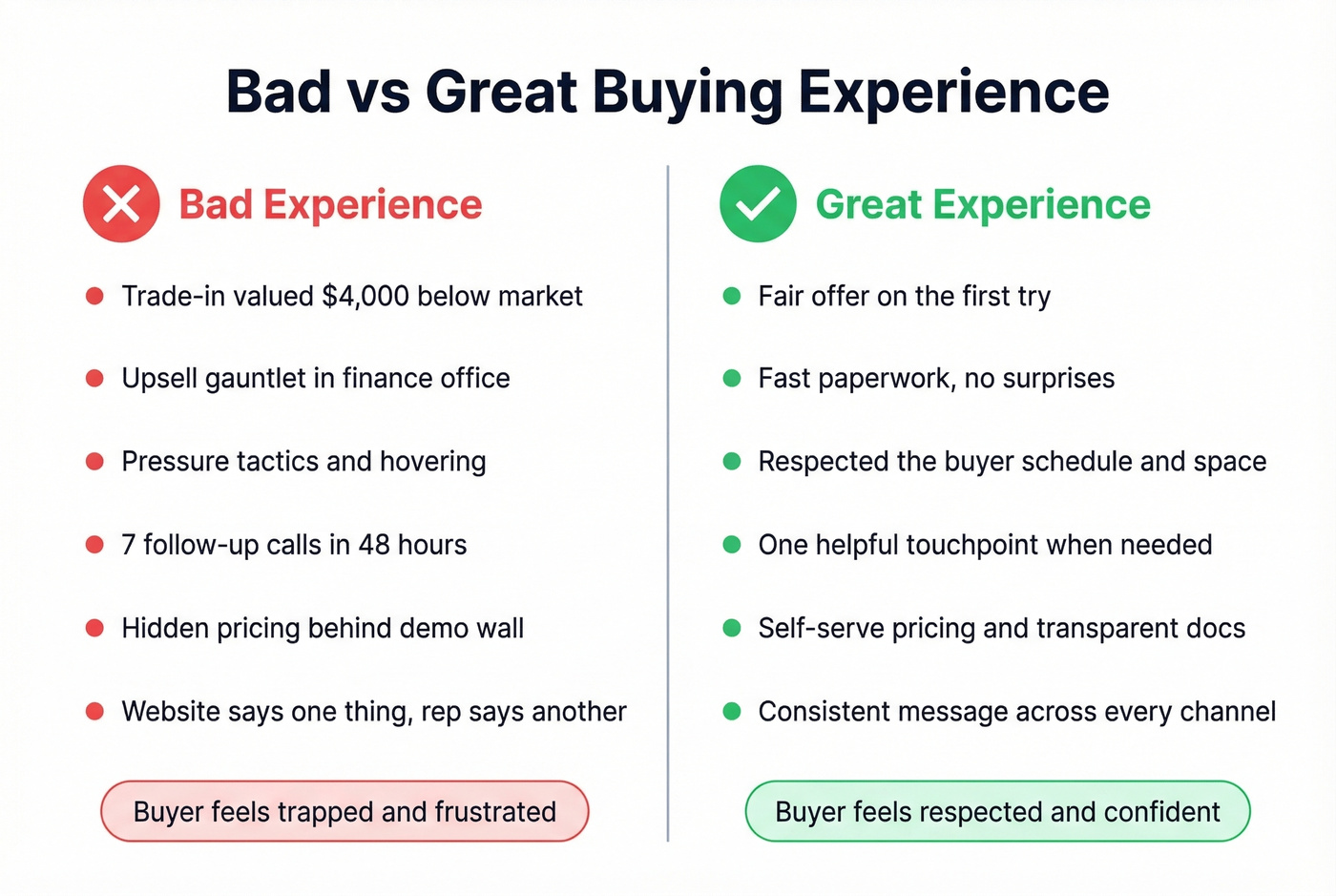
In our experience, the number-one deal killer isn't price. It's irrelevant outreach. One Reddit user described trying to buy a Polestar: the dealer valued their trade-in $4,000 below CarMax, ran them through an upsell gauntlet, then pressured them in the finance office. Their summary: "I just want to buy a car." That's not selling. That's swarming.
What a Great One Looks Like
Contrast that with another car buyer's experience: the dealer honored their schedule, had the keys ready, didn't hover, met their budget on the first offer, and finished paperwork fast. No pressure, no games, no follow-up bombardment. The buyer felt respected - and that's the whole game.
In ecommerce, Sephora saw an 11% increase in returning users after personalized push notifications, and ASOS boosted conversion by 13% with individualized landing pages. 71% of customers expect personalization, and 76% get frustrated when they don't find it. The pattern is the same across channels: the buyer gets what they need, when they need it, without jumping through hoops.
How to Improve Your Buying Experience
Most problems here aren't strategic. They're operational. Here are five levers, ranked by impact. The through-line: remove friction instead of adding touchpoints.
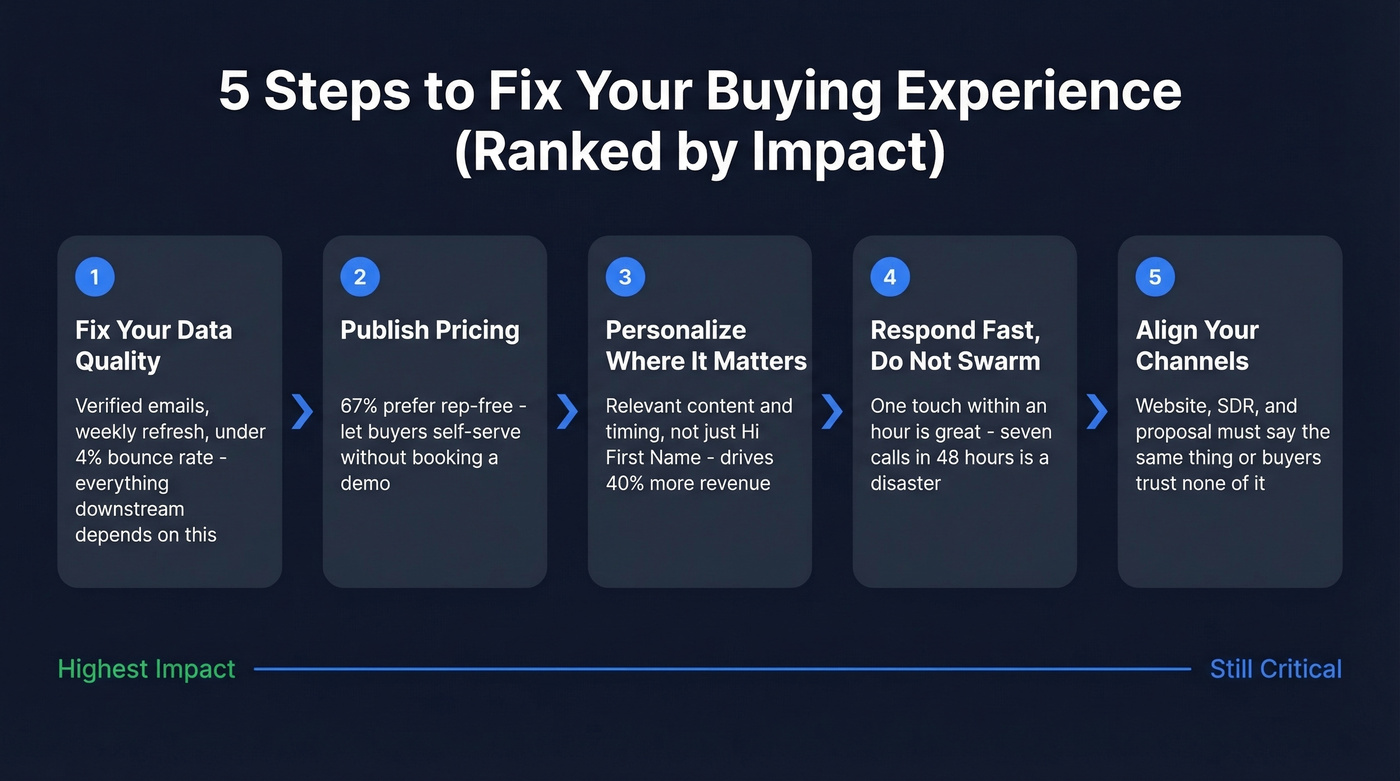
1. Fix your data quality. Everything downstream depends on this. Bad data means bounced emails, wrong numbers, and messages to people who left the company six months ago. We've seen teams go from a 35% bounce rate to under 4% just by switching to verified data with a weekly refresh cycle - and tightening up email deliverability at the same time - Prospeo's 98% email accuracy and 7-day refresh make that possible without talking to sales or signing a contract.

2. Publish pricing and let buyers self-serve. 67% prefer rep-free. If your buyer can't figure out what you cost without booking a demo, you've already lost the ones who were ready to buy today. This is the fastest way to deliver a better digital purchase process.
3. Personalize where it matters. Fast-growing companies generate 40% more revenue from personalization than slower-growing competitors. That doesn't mean "Hi {first_name}" in a cold email. It means relevant content, relevant timing, and relevant offers based on what the buyer actually needs. A values-based approach - rooted in transparency, respect for the buyer's time, and genuine helpfulness - outperforms aggressive tactics every time. (If you need a system for it, start with personalized outreach.)
4. Respond fast but don't swarm. One touchpoint within an hour of an inquiry? Great. Seven calls from three reps in 48 hours? You just became the cautionary tale on Reddit. The consensus on r/sales is pretty clear: buyers remember how you made them feel, and "overwhelmed" isn't the feeling you're going for. If your team needs structure, use sales follow-up templates and set a sane cadence.
5. Align your channels. 69% of B2B buyers see inconsistencies between the website and what sellers say. If your pricing page says one thing and your SDR says another, the buyer trusts neither. Let's be honest - most companies know this and still don't fix it because marketing and sales operate from different playbooks. This is where sales process optimization pays for itself.
Here's my hot take: if your average deal size is under five figures, you almost certainly don't need a complex multi-touch sales process. Publish pricing, let people self-serve, and reserve human interaction for the buyers who actually want it. Skip the elaborate nurture sequences if your product is straightforward enough to explain on a landing page. The best buying experience is the one your buyer barely notices.
67% of buyers prefer rep-free. That means your first impression is your data - the right contact, the right company, the right timing. Prospeo gives you 30+ filters including buyer intent, job changes, and headcount growth so your outreach feels relevant, not random. At $0.01 per email, no contracts, no demo required.
Deliver the self-serve buying experience your prospects actually want.
FAQ
What's the difference between buying experience and customer experience?
The buying experience covers everything from need recognition through purchase; customer experience covers everything after - onboarding, support, renewals. Most companies over-invest post-sale and under-invest in the process that determines whether there's a customer at all.
Why do most B2B buyers prefer a rep-free experience?
67% of B2B buyers prefer rep-free because they want to research, compare, and decide on their own timeline using LLMs, peer reviews, and vendor content. Companies that lower barriers - self-serve pricing, ungated content, transparent documentation - win Day One shortlist spots. For teams that do reach out, verified contact data ensures those touches are relevant rather than intrusive.
How does data quality affect the buying experience?
Bad contact data means bounced emails, wrong numbers, and irrelevant outreach - and 73% of B2B buyers avoid suppliers who do this. When your first touchpoint is a bounce or a message to someone who left the company, you've damaged the relationship before it starts. Clean, verified data is the foundation of any frictionless purchase process.